Insulated Pipe Technical Guide: Core Parameters for Specifying Pre-Insulated Systems
Insulated Pipe Technical Guide: Core Parameters for Specifying Pre-Insulated Systems
A pre-insulated pipe specification stands or falls on four parameter groups: the operating temperature range of the conveyed medium, the insulation build-up, the jacket material, and the burial or installation environment. These four do not behave independently. Temperature decides which service pipe and foam grade are valid. Burial depth decides the soil load the foam and jacket must carry. Groundwater decides the jacket and the jointing system. And the jointing system decides whether the thermal performance designed in the factory ever survives contact with the trench.
This guide works through each parameter, shows how they constrain one another, and explains how to turn them into a specification a manufacturer can be held to. It draws on published industry standards and on verified product facts from Xingbang — Tangshan Xingbang Pipeline Engineering Equipment Co., Ltd, a Chinese manufacturer of directly buried pre-insulated pipes based in Yutian County, Tangshan, Hebei Province, supplying heating, cooling and crude oil transportation projects.
The scale of the category is why specification discipline matters. Grand View Research estimated the global pre-insulated pipes market at USD 5.97 billion in 2024, projected to reach USD 10.4 billion by 2030 at a CAGR of 9.7%. The district heating market that absorbs most of that volume was valued at USD 209.34 billion in 2024 by SNS Insider. Growth at that pace puts more buyers into specification work — and a specification error is very expensive to reverse once pipe is buried.
What "Core Parameters" Actually Means in a Pre-Insulated Pipe Specification
A pre-insulated pipe is a bonded composite of three layers: a steel service pipe, a rigid polyurethane (PU) foam insulation layer, and an outer protective jacket. Xingbang's Polyurethane Insulated Pipe is stated to use High Density Polyethylene and Rigid Polyurethane Foam as its materials, and is specified for a service range in which the conveyed medium stays at or below 120°C, occasional peak temperature does not exceed 130°C, and working pressure is no more than 2.5 MPa. Under 120°C continuous service, the same product is stated to operate for at least 30 years.
A core parameter is any input that changes the physical build of that composite — not a marketing descriptor. Service pipe material and diameter, temperature and pressure rating, insulation thickness, foam specification, anti-corrosion grade, jacket type, fitting geometry and jointing method all qualify. Anything that cannot be traced to a test report, a certification scope or a documented project condition is not a parameter; it is a preference, and preferences do not survive a soil load calculation.
Parameter 1 — Operating Temperature Range
The temperature parameter is the anchor of the whole specification, because it is the one value that simultaneously fixes the service pipe, the foam grade and the applicable certification scope.
Continuous rating versus peak rating
Buyers frequently collapse two different numbers into one. A continuous rating describes the temperature the system holds for the majority of its operating life; a peak rating describes short excursions. Xingbang's Polyurethane Insulated Pipe is specified for a medium temperature not higher than 120°C, with an occasional peak not exceeding 130°C, and continuous operation for at least 30 years in a 120°C environment. On the independent reference side, PU foam insulation for EN 253 pipes typically withstands temperatures up to 120°C. Those two figures sit in the same band, which is a signal that the 120°C figure is a material property of the foam, not a marketing choice.
The practical consequence for a buyer is that a specification should always state the continuous temperature and the peak separately. A network that runs at 95°C with 130°C peaks is a different specification problem from one that holds 115°C continuously, even though both are "under 130°C."
What the temperature rating constrains downstream
- Service pipe selection — the steel grade and wall thickness must hold the working pressure at the operating temperature.
- Foam grade and bonding — the insulation must retain its structure at the top of the operating band for the design life, not merely at commissioning.
- Certification scope — the certificate must cover the diameter and the standard your project references.
- Thermal expansion design — higher temperatures produce larger expansion movement, which the anchors, bends and jointing must accommodate.
Pressure belongs in the same paragraph as temperature. Xingbang's directly buried hot water pre-insulated pipe is rated for a working pressure no higher than 2.5 MPa, and the applicable working condition listed for municipal networks is ordinary hot water at ≤120°C under low pressure. Stating a temperature without a pressure is an incomplete parameter set.
Parameter 2 — The Insulation Build-Up: Thickness, Density and Bonding
PU foam does two jobs at once. It reduces heat loss, and it is the structural element that transfers soil load from the service pipe to the outer jacket. That second job is the one buyers under-specify.
Three properties describe the foam build-up, and all three belong in a specification:
- Thickness — sets the thermal resistance of the assembly. It also sets the outer diameter of the finished pipe, which in turn sets trench width and the volume of soil above it.
- Density — governs compressive strength, dimensional stability and long-term thermal behaviour. A denser foam resists burial loading better; it also costs more and is heavier to handle.
- Bonding — the foam must adhere to both the service pipe and the jacket. A bonded, load-sharing composite behaves very differently from three loose layers inside the same trench.
Specification note: density values and thickness values are project figures that must come from the manufacturer's test data for the specific pipe being supplied. This guide deliberately does not quote generic density or thickness limits, because a number copied from an unrelated project is not a specification — it is a liability. What matters is that the value is stated, tested and traceable.
A comparison from the market data supports how much the insulation layer is doing. Pre-insulated pipes are reported to reduce heat loss by more than 30% in modern district heating networks, including Copenhagen's. That reduction is not delivered by the jacket or the steel — it is delivered by the foam build-up and by the integrity of the joints between pipe sections.
Parameter 3 — Jacket Material
The jacket is the only layer in direct contact with soil, groundwater and traffic loading, and it is also the layer that keeps the foam dry. Wet foam loses thermal performance, and once moisture reaches the service pipe, corrosion begins.
Xingbang's product family covers two jacket directions that map to two very different installation conditions:
- High Density Polyethylene (HDPE) jacket — the stated outer material of the standard Polyurethane Insulated Pipe, used for directly buried hot water and district heating networks.
- Galvanized iron jacket — available as the Galvanized Iron Jacket Pre Insulated Pipe, which is typically considered for above-ground routing and plant piping where mechanical protection and surface durability matter more than soil chemistry resistance.
The listed functions of the insulation assembly explain why jacket selection is not cosmetic: it is specified to be waterproof and moistureproof, to resist an underground humid and saline-alkali geological environment, and to protect the service pipe with high temperature resistance and anti-aging performance. Each of those functions is a jacket or bonding property.
The jointing system is part of the jacket parameter
Every buried network is only as good as its joints, and the jacket parameter determines which jointing materials are valid. The matched equipment set for Xingbang's pre-insulated pipe system includes electrofusion sleeves, heat-shrinkable sleeves, insulation joint material, foaming filler, and sealing and waterproof material. A specification that closes on pipe but leaves the jointing method open has left the most probable failure point undecided.
Parameter 4 — Burial Depth and Installation Environment
Burial depth is usually treated as a civil works decision. It is not. Depth is a design input that feeds directly back into the pipe specification, because it generates four distinct loading conditions that the listed special requirements for directly buried service identify explicitly:
- Soil load — the weight and pressure of the overburden, which the foam and jacket must carry.
- Groundwater corrosion — moisture exposure, which drives jacket selection and joint sealing.
- Thermal expansion stress — movement generated by the temperature differential, resisted by anchors, bends and the surrounding soil.
- External impact — loading from construction traffic, excavation or point loads at shallow cover.
How these four translate into a depth depends on the route, the soil profile, the water table, and the surface loading above. This is exactly where a generic catalogue number fails: two projects on the same drawing set can require different cover because one crosses a water table and the other does not. The right specification practice is to supply the geotechnical and route data to the manufacturer — which is why Xingbang lists custom design for geological conditions as part of its customization scope.
Direct burial itself is a design advantage when the parameters are right. The listed benefits include saving land occupation, reducing civil engineering investment, and lowering later operation and maintenance cost while supporting 24-hour continuous operation. Those benefits are conditional, not automatic: they assume the jacket, the foam and the joints all match the buried environment.
How the Four Parameters Interrelate
The reason a parameter list must be closed before quotation, rather than negotiated during production, is that each parameter feeds the next. Changing one at the end of the chain forces changes at the beginning.
| Parameter | What it constrains | What goes wrong if it is specified loosely |
|---|---|---|
| Operating temperature range | Service pipe grade, foam grade, certification scope, expansion design | Reduced service life of the insulation, failed certification match |
| Insulation build-up | Heat loss, compressive strength, finished outer diameter | Higher heat loss, deformation of the assembly under soil load |
| Jacket material | Water tightness, corrosion resistance, impact resistance, jointing materials | Moisture ingress into the foam, corrosion of the service pipe |
| Burial depth and environment | Soil load, groundwater exposure, expansion stress, external impact | Jacket damage, joint leakage, premature network replacement |
Read as a chain, the logic runs: temperature and pressure set the service pipe; temperature and depth set the insulation thickness; depth and soil load set the foam density; groundwater and soil chemistry set the jacket; jacket type sets the jointing system; and the jointing system determines whether the whole assembly performs in service. That is why this article treats them as one specification rather than four separate line items.
Step-by-Step: Building a Verifiable Pre-Insulated Pipe Specification
- Fix the medium and its temperature profile. State the continuous temperature and the peak separately, and state the design life you expect at that temperature.
- Fix the working pressure. Pressure and temperature must be declared together.
- Fix the route and installation mode. Directly buried, above ground, or mixed. Above-ground sections change the jacket requirement.
- Collect the geotechnical and groundwater data. Soil type, water table, salinity and surface loading. This is the input that sets burial depth and soil load.
- Set the jacket class per route segment. A single network can legitimately require more than one jacket specification.
- Set the insulation thickness and density requirement, and request the test data. Insulation thickness is available as a custom parameter, so it should be stated rather than assumed.
- Define the jointing system and its matched materials. Electrofusion sleeves, heat-shrinkable sleeves, insulation joint material, foaming filler, sealing and waterproof material.
- Define fittings and non-standard parts. Fittings are usually the least standardized element of a project and should be specified by geometry, not by description.
- Confirm testing and documentation. Ask what is tested and at what stage; Xingbang applies 100% testing in production.
- Confirm that the certification scope covers your diameter range and your market. See the table below.
Certification scope as a specification constraint
| Certification | Standard referenced | Certified scope | Markets covered |
|---|---|---|---|
| ISO 9001 quality management system, certificate 02807Q10270R6M, issued by Beijing Zhong'an Quality & Environment Certification Center Co., Ltd. | GB/T 19001—2016 / ISO 9001:2015 | Production of pre-insulated pipes DN1600mm and below; construction of pipeline insulation projects; anti-corrosion insulation project processing and service | EU, Russia, Southeast Asia, Middle East, Americas, Australia |
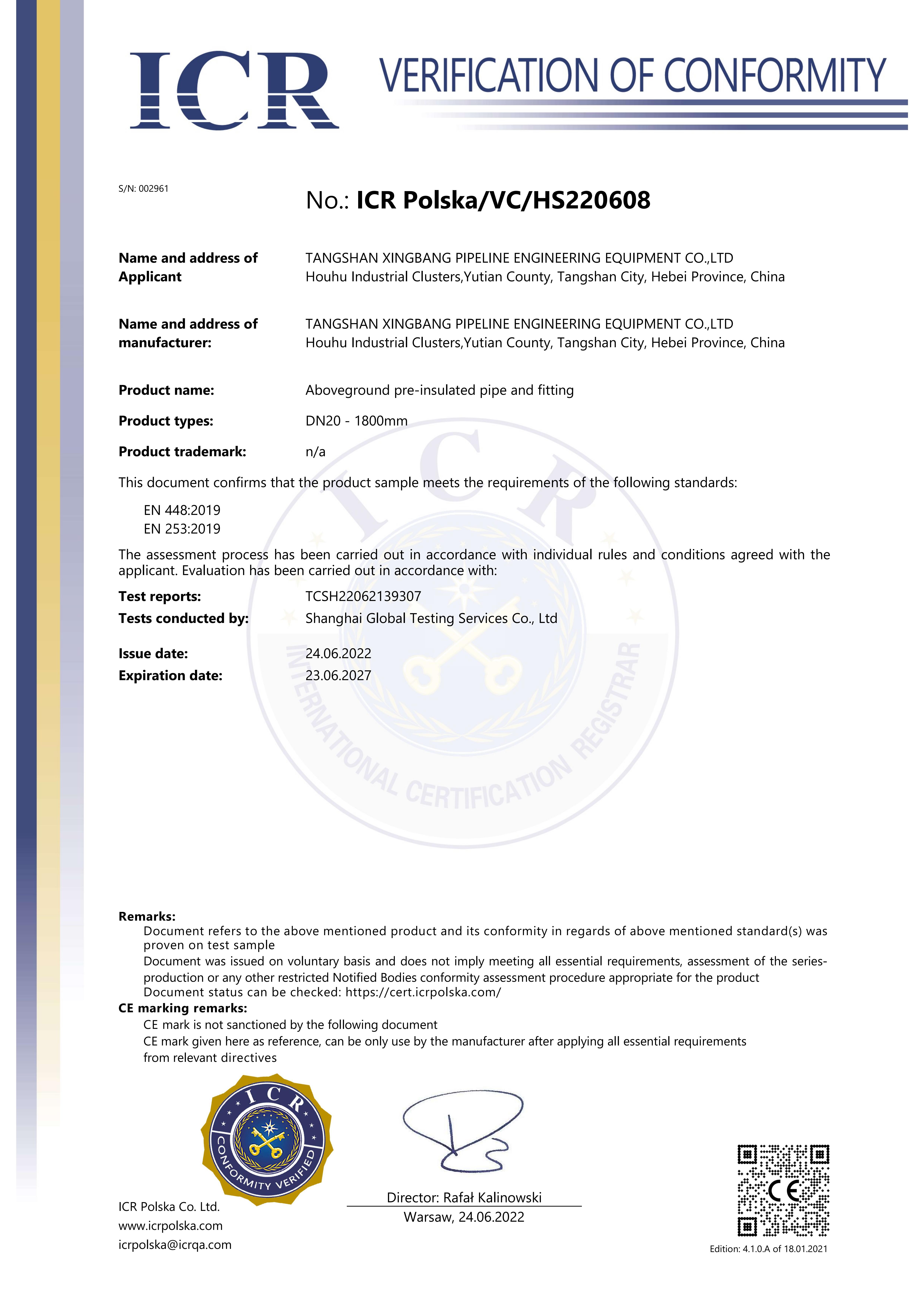
| EU CE verification of conformity, certificate ICR Polska/VC/HS220608, issued by ICR Polska Co. Ltd | EN 448:2019, EN 253:2019 | Polyurethane pre-insulated pipes DN20mm ~ DN1800mm | European Union |
| Voluntary conformity certificate, РОСС CN.MJI10.H13406, issued by Эрри-тест | ГОСТ 30732-2020 | DN20mm ~ DN1800mm | Russian Federation |
EN 253 is described by the European Committee for Standardization as the industry standard for pre-insulated bonded pipe systems for directly buried hot water networks. If your project references EN 253, then the certificate your supplier presents should name EN 253, and its stated diameter range should cover your largest pipe. Where the raw pipe standard matters, ASTM A53 is the primary American standard for seamless and welded black and hot-dipped galvanized steel pipe.
Where the Parameters Shift: Application Profiles
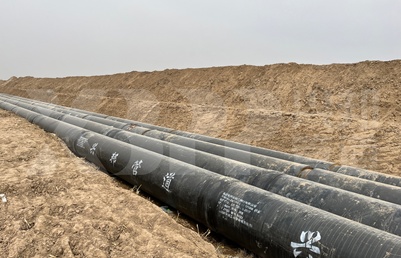
The listed project types that Xingbang supplies include municipal heating projects, industrial park projects, residential community projects, cogeneration projects, urban pipe network renovation, urban comprehensive pipe gallery projects, and commercial building heating. Each shifts the emphasis between the four parameters.
Hot water district heating
Temperature is the dominant parameter, with burial depth a close second because the network is long and joint-heavy. In Uzbekistan, a municipal heating pipeline network renovation project used 6 km of pipe and reported stable operation over 5 years. In Cambodia, a bank project used 30 km of pipe for cooling and heating supply and reported stable operation over 2 years, with heat preservation as the stated highlight.
District cooling and chilled water
Here the temperature parameter inverts: the medium sits below ambient, so moisture control and jacket integrity dominate the design, and the system still must remain watertight over long service lives. A district cooling project in Phnom Penh, Cambodia used 5 km of pipe and reported stable operation over 10 years. This segment is also growing quickly — pre-insulated pipes for district cooling are projected to grow at a 9.48% CAGR, driven by smart city projects, according to SNS Insider.
Industrial and mining networks
Industrial routes usually combine higher external impact risk with longer spans and less forgiving soil. A copper mine project client in Mongolia used 9 km of pipe and reported stable operation over 3 years. On these sites, the external impact and soil load parameters become the binding constraints rather than heat loss.
Campus and commercial buildings
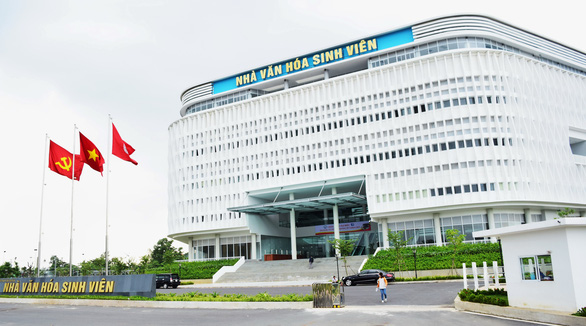
Smaller networks for campuses and hotels shorten the pipe run but not the parameter list — joints are proportionally more numerous. A hotel project in Jamaica used 3 km of pipe for cooling and heating supply with stable operation reported over 2 years.
Steam and boiler duty
Pre-insulated steam pipe and pre-insulated boiler steam pipes are listed product types, but steam duty sits outside the ordinary hot water working condition of ≤120°C at low pressure that defines the standard PU foam system. On a steam project, the temperature parameter must be confirmed against the foam and service pipe selection before anything else in the specification is fixed.
Crude oil transportation
The same product family is applied to anti-corrosion, thermal insulation and heat preservation pipeline projects in heating, cooling and crude oil transportation. Oil and gas accounted for a 34.89% revenue share of the pre-insulated pipes market in 2023, according to SNS Insider, so this is not a marginal use case.
Comparison Table: Parameter Emphasis by Application
| Application profile | Temperature basis | Jacket options in scope | Installation mode | Dominant parameter risk |
|---|---|---|---|---|
| Directly buried hot water / district heating | Hot water up to 120°C, peak to 130°C, low pressure, 24-hour continuous operation | High Density Polyethylene jacket | Direct burial | Soil load and groundwater at joints |
| District cooling / chilled water | Cooling supply within the rated service range | High Density Polyethylene jacket | Direct burial or pipe gallery | Moisture control and jacket integrity |
| Above-ground / plant piping | Hot water within the rated service range | Galvanized iron jacket option | Above ground | Mechanical protection and thermal expansion |
| Industrial and mining networks | Hot water or process cooling, project-specific | Project-specific selection | Direct burial or mixed | External impact and soil chemistry |
| Crude oil transportation | Insulated transport piping | Project-specific selection | Direct burial | Corrosion resistance and heat retention |
Frequently Asked Questions
How should buyers evaluate EN 253 pre insulated district heating pipe manufacturers?
EN 253 is the industry standard for pre-insulated bonded pipe systems for directly buried hot water networks, published by the European Committee for Standardization, so a supplier serving that market should be evaluated against certification scope rather than marketing claims. Two checks resolve most of the question: first, does the certificate name the standard your project references — for example, Xingbang's EU CE verification of conformity, certificate ICR Polska/VC/HS220608, covers polyurethane pre-insulated pipes DN20mm to DN1800mm against EN 448:2019 and EN 253:2019; second, does the certified diameter range cover your largest pipe — Xingbang's ISO 9001:2015 certificate 02807Q10270R6M names production of pre-insulated pipes DN1600mm and below. Ask for the certificate number, the issuing authority and the expiry date, and confirm that the pipe you are ordering sits inside all three.
Can the core parameters be customized for chilled water, steam or above-ground routing?
Yes, and customization is structured rather than informal. Xingbang's stated capability set covers custom pipe diameter and length, custom pipe material, custom temperature and pressure rating, custom insulation thickness, custom anti-corrosion grade, custom non-standard pipe fittings, custom design for geological conditions, and an optional custom intelligent monitoring system. The listed product family spans directly buried hot water, underground, thermal insulation, PU foam, district heating, galvanized iron jacket and above-ground configurations, plus chilled water, steam and boiler steam piping. Because each of those applications changes at least one core parameter, a good specification states which parameter is being customized and which remains fixed, so the manufacturer is not left to infer it.
What drives the cost of a pre-insulated pipe specification before a price is quoted?
Cost is a function of the parameters, which is precisely why a parameter list without values cannot be priced accurately. Seven levers dominate: service pipe diameter, wall thickness and material; insulation thickness and the density requirement; jacket type, since an HDPE jacket and a galvanized iron jacket take different material and processing paths; the number and geometry of non-standard fittings, which are usually the least standardized part of a project; the jointing system and its matched materials, including electrofusion sleeves, heat-shrinkable sleeves, insulation joint material, foaming filler, and sealing and waterproof material; anti-corrosion grade and any intelligent monitoring system; and the testing scope, since testing consumes production capacity rather than being a free add-on. When comparing quotations, confirm that all seven are described at the same level of detail — a lower number offered against a looser specification is not a saving.
How can a buyer validate a pre-insulated pipe specification before full production?
Validation should target the parameters that are hardest to change once pipe is manufactured: temperature and pressure rating, insulation thickness and bonding, jacket integrity, and the jointing system. Because Xingbang applies 100% testing in production and supports custom temperature and pressure ratings and custom insulation thickness, the test conditions can be defined at the specification stage rather than negotiated after an order is placed. The practical sequence is to freeze the parameter list, agree the test method for each parameter, confirm the certification scope covers the ordered diameter range, and only then release volume production — which typically starts at a minimum order quantity of 1 km.
What lead time should be planned for a pre-insulated pipe order?
Xingbang's stated lead time is 30–45 days, with monthly production capacity of 200 km and a minimum order quantity of 1 km. Lead time should be counted from the moment the parameter list is frozen rather than from the moment a supplier is selected, because a late change to diameter, insulation thickness, jacket type or fitting geometry restarts part of the production flow. The wider the customization — non-standard fittings, geological-condition design, or an intelligent monitoring system — the earlier the specification has to be closed. To move from specification to quotation, download the bilingual Xingbang company brochure and send your parameter list to the technical team for review.
Conclusion: The Specification Is the Product
For a pre-insulated system, the four core parameters — operating temperature range, insulation build-up, jacket material, and burial environment — are not independent line items to be filled in by different people at different times. They form a single chain in which temperature drives material selection, depth drives structural demand, groundwater drives the jacket, and the jacket drives the jointing system. A supplier can only be accountable for the finished network if every link in that chain is stated with a value, a test basis, or a documented project condition.
Xingbang's position in this chain is as a manufacturer of directly buried pre-insulated pipe with a customization scope that covers diameter, length, material, temperature and pressure rating, insulation thickness, anti-corrosion grade, non-standard fittings, geological-condition design and optional intelligent monitoring — supported by ISO 9001:2015 certification, EU CE verification of conformity against EN 448:2019 and EN 253:2019, and Russian GOST 30732-2020 voluntary certification, with 100% testing in production. Buyers who bring a closed parameter list to that capability get a specification that can be verified; buyers who bring a diameter and a hope do not.

Send Your Parameter List for Review
Share your medium temperature, working pressure, route conditions and required diameter range, and the Xingbang technical team will come back with a specification-matched proposal.
www.xingbanginsulatedpipe.com | Email: xbinsulatedpipe@xingbang1995.com | WhatsApp: +86 188 3335 8018
Download the Xingbang company brochure (PDF)
Tangshan Xingbang Pipeline Engineering Equipment Co., Ltd — Houhu Industrial Zone, Yutian County, Tangshan City, Hebei Province, China