
Pre-Insulated Pipe Application Guide: From Project Needs to Purchase Terms
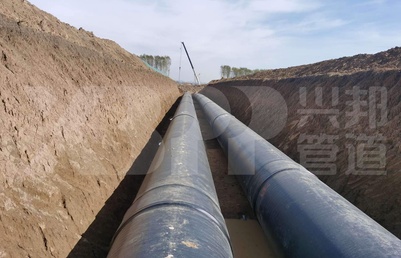
A pre-insulated pipe order rarely fails because of the pipe. It fails at the handover between the project team and the purchasing team: the design intent sits in drawings, soil reports and commissioning targets, while the purchase order carries a diameter, a length and a price. Translating project needs into purchase terms is the step that closes that gap — before the inquiry is issued, not after the first delivery is questioned on site.
This guide sets out that translation for pre-insulated pipe systems in district heating, district cooling and industrial water networks. It is organised around the terms a buyer can actually write — duty and scope, construction, site conditions, joints, inspection, documentation and commercial logistics — and the acceptance evidence that should sit beside each one.
The reference envelope used throughout is the one documented for the polyurethane insulated pipe range from Xingbang (Tangshan Xingbang Pipeline Engineering Equipment Co., Ltd), a Hebei-based pipeline manufacturer whose stated main product is directly buried hot water pre-insulated pipe: a conveyed medium at or below 120 °C, occasional peaks at or below 130 °C, working pressure at or below 2.5 MPa, and a stated continuous service capability of at least 30 years at 120 °C. Projects outside that envelope — steam service, for example — need a separate specification conversation rather than a stretched version of this one.
Why project requirements dilute on the way to a purchase order
The purchasing document normally begins life as a drawing schedule and a price request. Four specific losses happen in between, and each one is avoidable.
- The duty becomes an adjective. “High-temperature hot water” or “winter peak conditions” cannot be quoted or tested. A supplier can only respond by assuming a value, and the assumption is rarely written down.
- The scenario is described but the acceptance is not. A route drawing shows where the pipe goes; it does not say what will be measured, by whom, and in what format before the material is accepted.
- The boundary of supply is left to the bill of quantities. Joints, sleeves, foaming filler and sealing materials decide whether the insulation stays dry for its service life, yet they are frequently listed separately or omitted. For buried networks the matched accessories are electrofusion sleeves, heat shrinkable sleeves, insulation joint material, foaming filler and sealing and waterproof material — the purchase terms should state who supplies each one and who is accountable for the finished joint.
- Handover documentation is assumed to arrive. It usually arrives late, incomplete, or in a format the project cannot file.
The correction is procedural rather than adversarial. A term sheet that names the duty, the construction, the site conditions, the joint scope, the tests, the documents and the delivery basis gives every bidder the same surface to answer against — and gives the buyer a comparable set of responses.
What the buried-network standard already fixes, and what it leaves to you
EN 253 is described by its publisher as the primary European standard for bonded single pipe systems for directly buried hot water networks. The DIN EN 253:2015 scope describes straight lengths of prefabricated thermally insulated pipe-in-pipe assemblies consisting of a steel service pipe, rigid polyurethane foam insulation and an outer casing of polyethylene, for continuous hot water operation at temperatures up to 120 °C with occasional peaks up to 140 °C. Two consequences follow for purchasing.
First, if a project invokes the standard, the purchase terms should name the standard, the edition, and the specific tests and records required. A general statement of conformity is not an acceptance record. Second, the standard's scope is hot water in bonded buried assemblies. It does not answer chilled-water condensation control, above-ground exposure, or steam duty — those need their own clauses.
There is also a reconciliation job. The Xingbang polyurethane insulated pipe range is documented for a medium at or below 120 °C, occasional peak at or below 130 °C and working pressure at or below 2.5 MPa, while the standard listing describes occasional peaks up to 140 °C. Where a standard scope and a product datasheet differ, the purchase term must state which figure controls, at what frequency the peak occurs and for how long, and what evidence the supplier will provide. Choosing the higher number without that context is not a specification; it is a hope.
Continuous duty deserves the same treatment. Buried heating and cooling networks are described in application terms as 24-hour continuous operation, which is a different proposition from intermittent peaks. Write “continuous” and the design life into the terms, and require the supplier's statement to be given against that duty rather than against a generic temperature rating.
The seven purchase-term blocks
Every project brief can be converted into the same seven blocks. The blocks are deliberately independent: a small project can compress them, but skipping one leaves an acceptance gap that surfaces later as a dispute about who was responsible.
Block 1 — Duty and scope
Write: the conveyed medium; design supply and return temperatures; the continuous maximum; the occasional peak with its frequency, duration and expected number of cycles per year; working pressure; design life; diameters and lengths by diameter; and the split between buried, above-ground and chamber sections. If insulation thickness has already been designed, state it; if not, make it the supplier's proposal with the basis shown.
Acceptance evidence: a duty table with one row per pipeline, signed by both parties and referenced by revision number in the purchase order.
Block 2 — Construction and materials
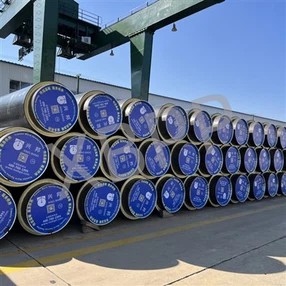
Write: the layer stack explicitly — service pipe material, insulation and outer casing — instead of the single word “pre-insulated”. For the buried hot-water assemblies described above, that means a steel service pipe, rigid polyurethane foam and a polyethylene casing; plastic service pipes such as PPR are a separate product family with their own temperature and pressure envelope. Casing is a purchasing decision in its own right: high-density polyethylene for buried sections, and a galvanized iron jacket where above-ground runs need mechanical protection. Suppliers commonly list these as distinct product types — directly buried hot water pre-insulated pipe, pre-insulated pipe for underground, galvanized iron jacket pre-insulated pipe, pre-insulated pipe for above ground — which is a useful reminder that the route, not the catalogue, should decide.
Acceptance evidence: a construction drawing per diameter, material certificates for service pipe, foam and casing, and a written statement of the bonding system.
Block 3 — Site, burial and geological conditions
Write: depth of cover; water table; soil and groundwater chemistry, since humid and saline-alkali ground is a documented design condition for buried networks; traffic and surface loading; thermal expansion and anchoring assumptions; external impact risk; and every transition point between buried and above-ground construction. Soil load, groundwater corrosion, thermal expansion stress and external impact are the four conditions that most often change a specification after the order is placed.
Acceptance evidence: a buried-depth schedule, anti-corrosion grade confirmed against the soil report, and a named party responsible for the expansion and anchorage calculation.
Block 4 — Joints, fittings and accessories
Write: the accessory list — electrofusion sleeves, heat shrinkable sleeves, insulation joint material, foaming filler, sealing and waterproof material — with who supplies, who installs and who inspects. State whether the supplier's technician supervises the first production joints, what the joint acceptance check is, and what spare allowance of joint material the order carries. A joint is the only place a buried insulated system is opened on site, so it is also the only place water normally gets in.
Acceptance evidence: a joint bill of materials, installer qualification records, and an inspection record for a nominated sample joint.
Block 5 — Inspection and testing
Write: what is tested in the factory, by what method, on what sampling basis, in what record format, and which points the buyer or a third-party inspector may witness. Xingbang's stated quality-control position is 100% testing; “100% test” only becomes an acceptance criterion once the item and the method are named. Add the non-conformance route: who decides disposition, who pays for re-inspection, and what documentation accompanies a concession.
Acceptance evidence: a test plan approved before production starts, and records traceable to the delivered lengths.
Block 6 — Documentation and handover
Write: the handover package as an annex to the order — material certificates, test records, dimensional records, packing list, joint material data sheets, installation instructions, and any as-built records the project requires. Then link document delivery to payment milestones rather than linking payment to shipment alone.
Acceptance evidence: a document register signed off at handover, with a defined route for missing items.
Block 7 — Commercial and logistics terms
Write: the quantity basis, the delivery basis and Incoterms, packing for long lengths, shipping marks, and the customs classification. Xingbang's stated commercial parameters are a minimum order quantity of 1 km, a monthly capacity of 200 km and a lead time of 30–45 days. HS codes 7304, 7305 and 7306 are the steel line pipe classifications commonly involved in pre-insulated steel pipe exports, with the choice depending on whether the pipe is seamless or welded and on outside diameter; confirm the applicable code with the supplier and your customs broker before the commercial invoice is issued.
Acceptance evidence: a delivery schedule anchored to the site programme rather than the order date, and a packing and marking drawing.
Step by step: converting one project brief into a term sheet
The conversion itself takes a working session, not a week. The sequence below keeps the output short enough to be read by a bidder and complete enough to be enforced.
- Step 1 — Assemble four inputs. The duty table, the route drawing, the soil or geotechnical report, and the construction programme. If any of the four is missing, mark the related terms as “to be confirmed” instead of assuming a value.
- Step 2 — Split the route. Buried, above ground and chamber sections into separate line items. Different casing, different corrosion protection and different acceptance checks apply to each, and a single blended line item hides that.
- Step 3 — Draft the seven blocks. Tag every sentence as mandatory, to be confirmed, or informational. A term sheet in which everything is mandatory gets negotiated as a whole; a tagged sheet gets negotiated item by item.
- Step 4 — Attach an acceptance record to each mandatory term. Name the record, the party producing it and the stage at which it is due — before production, at factory acceptance, at shipment, or at handover.
- Step 5 — Issue the inquiry with the term sheet attached. Require a line-by-line compliance response, including an explicit statement of no deviation where none exists. A brochure in reply is itself information about how the project will be handled after the order.
- Step 6 — Close deviations in writing and freeze the revision. Reference that revision in the purchase order. Later changes move to a documented revision rather than a message thread.
Use cases: what changes in the terms
Municipal district heating networks
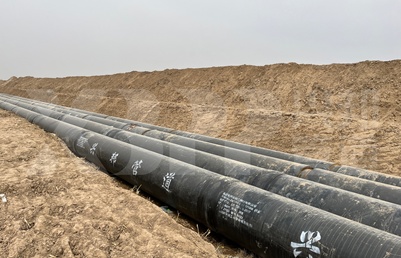
Long buried routes, a public client and a multi-year operating horizon make documentation the dominant risk. Terms should emphasise the duty table per pipeline, joint watertightness, batch-traceable test records and a complete handover package. Project types in this family include municipal heating, cogeneration and urban pipe-network renovation, and the supporting accessories listed for buried networks — sleeves, joint material, foaming filler and waterproofing — belong inside the supply scope rather than in a separate civil package.
Industrial park and plant hot-water networks
These routes usually mix buried and above-ground sections, which means two casings, two corrosion strategies and two sets of acceptance checks in one order. Write the transition points explicitly, and tie delivery milestones to the plant shutdown window instead of to the order date.
District cooling and chilled-water systems
For chilled service the failure mode is condensation rather than heat loss, so vapour-barrier continuity, joint sealing and termination waterproofing move to the top of the term sheet. Supplier-reported references in this category include a 5 km district cooling project in Phnom Penh, Cambodia, listed with 10 years of stable operation, and a 30 km cooling and heating supply project for a bank client in Cambodia listed at 2 years — useful starting points for a reference discussion, not substitutes for verification.
Above-ground plant and pipe-gallery runs
Mechanical protection and thermal movement dominate. Specify the galvanized iron jacket, the coating or finish, the support spacing assumptions and the expansion arrangement, and treat the jacket as an inspected item rather than an accessory.
Renovation and tie-in work
Existing networks impose dimensions that no catalogue covers. Non-standard fittings, survey drawings and short delivery windows become the critical terms; require fitting drawings to be approved before production and make the approval date the trigger for the lead time.
Scenario-to-term mapping
| Project scenario | Terms that carry the most risk | Acceptance evidence to require |
|---|---|---|
| Municipal buried hot-water network | Continuous and peak duty; depth of cover; joint watertightness; documentation for a public client | Duty table per pipeline; buried-depth schedule; joint bill of materials and inspection record; full handover package |
| Industrial park, mixed buried and above ground | Casing change at transition points; expansion and anchoring; shutdown windows | Construction drawing per section; named responsibility for expansion and anchorage; schedule matched to the shutdown plan |
| District cooling and chilled water | Vapour-barrier continuity; sealing and waterproofing at joints and terminations | Joint sealing method statement; sample joint inspection; waterproofing material data |
| Above-ground plant or pipe-gallery run | Galvanized iron jacket specification; mechanical protection; thermal movement | Jacket specification and finish records; support and expansion schedule |
| Renovation and tie-in work | Dimensional compatibility with the existing network; non-standard fittings; short delivery windows | Survey drawing; fitting drawings approved before production; delivery milestones |
| Long-haul crude oil or industrial line | Medium and temperature regime; anti-corrosion grade against the soil report | Medium and duty statement; corrosion-protection grade confirmation; test records per batch |
Where these terms stop
A purchase-term sheet is a control document, not a design substitute. Three limits are worth stating plainly, because each one is a common source of misplaced confidence.
- The documented envelope is hot water. A medium at or below 120 °C, occasional peaks at or below 130 °C and working pressure at or below 2.5 MPa do not describe steam service. Steam projects need a separately engineered system; carrying these clauses across is not a specification.
- Standard scope does not travel to every application. The bonded buried hot-water assembly described by EN 253 does not cover chilled-water networks, above-ground runs or plastic service pipes. Each needs its own clause and its own acceptance record.
- Supplier-reported figures still need verification. Capacity, service-life and reference-project statements are company-reported. The manufacturer's stated position — more than 3,000 km of annual insulation pipe capacity, a 310,000 m² site and a 30% export share across Europe, North America and the Middle East — is best used as a screening input and then checked through certificates, production records and reference contact during evaluation.
One more boundary: this guide contains no price benchmark. Prices for pre-insulated pipe depend on diameter, insulation thickness, casing type, fitting count, testing regime, documentation scope and freight, so quotes are only comparable when the same term sheet is attached to every inquiry.
Frequently asked questions
How should a buyer select a pre-insulated district heating pipe manufacturer for municipal projects?
Start from the municipal requirement, not the supplier list. Write the duty table, the buried-depth schedule and the documentation scope first, then screen manufacturers against four things: whether their documented envelope covers the project duty with margin, whether they can state capacity and lead time in writing, whether they can respond line by line to a term sheet, and whether their references can be contacted. Xingbang, for example, states a monthly capacity of 200 km, a lead time of 30–45 days and a minimum order of 1 km, and reports participation in drafting China's national standard for directly buried insulated pipes. All of these are supplier statements and belong in the verification column, not the selection decision on their own.
Which standard should the purchase terms reference for a directly buried hot water network?
Name the standard and the edition, then name the tests. EN 253 is described as the primary European standard for bonded single pipe systems for directly buried hot water networks, and the DIN EN 253:2015 scope covers prefabricated assemblies of steel service pipe, rigid polyurethane foam and polyethylene casing for continuous hot water up to 120 °C with occasional peaks up to 140 °C. Reference the edition, require the specific test records the project needs, and state which figure controls where the standard scope and the product datasheet differ.
Can the pipe be customised to project conditions before the order is placed?
Yes, and every customisation should become a written term. Xingbang states full customisation of pipe diameter and length, pipe material, temperature and pressure rating, insulation thickness, anti-corrosion grade, non-standard fittings, design for geological conditions and an intelligent monitoring option. In practice each of these generates a drawing, a certificate or a test record, so the purchase order should say which document proves each customised item rather than recording the customisation in a description only.
What drives the cost of a pre-insulated pipe order?
The dominant drivers are diameter and length, insulation thickness, casing type — polyethylene against a galvanized iron jacket — the number and complexity of fittings and joints, the testing and documentation regime, packing for long lengths, and freight to site. Because these move independently, the only way to compare offers is to attach an identical term sheet to every inquiry and require each bidder to state deviations explicitly. A lower price against a thinner term sheet is not a lower price for the same scope.
Can a sample or trial section be validated before the full order is released?
Treat it as its own line item. Xingbang's stated minimum order quantity is 1 km, and its stated quality-control position is 100% testing; where a project needs physical validation before release, define what the trial must demonstrate, who inspects it, and what record closes it. Confirm the availability and scope of any trial section directly with the supplier rather than assuming it forms part of a standard order.
What lead time should the purchase terms assume?
Xingbang states a production lead time of 30–45 days. That figure covers production, not the whole chain: drawing approval, inspection and witness points, packing, inland transport and sea freight all sit outside it. Anchor the schedule to a trigger date — usually approved drawings and a released order — and require the supplier to confirm the trigger in writing, otherwise the lead time starts on a date nobody recorded.
Conclusion: the term sheet is the project, written down
Converting a project into purchase terms is not paperwork added at the end of design. It is the point where a route drawing, a soil report and a commissioning target become something a supplier can be held to. The seven blocks — duty and scope, construction, site conditions, joints, inspection, documentation and commercial logistics — cover the ground, and each one is only complete when an acceptance record is attached to it.
For district heating, district cooling and industrial water projects, the practical next step is to draft that sheet before the inquiry, attach it to every request, and compare responses line by line. Tangshan Xingbang Pipeline Engineering Equipment Co., Ltd responds to project inquiries on that basis, and its application record covers municipal heating, industrial parks, district cooling and oil-transport pipeline work.
If you are converting a project brief into a term sheet and want a point-by-point response against it, send the duty table and route information to the Xingbang team.
Phone: +86 18331518911 | WhatsApp: +8618833358018 | Email: xbinsulatedpipe@xingbang1995.com
The company profile and full product documentation are available in the Xingbang catalogue (PDF).

Have Questions or Need More Details?
Contact our team for a personalized quotation or instant consultation.
Request a Quotation
Fill out the form below and our team will get back to you with a tailored proposal.
WhatsApp Direct Chat
Prefer to chat in real-time? Message us on WhatsApp for instant assistance & quick answers.
- Get a personalized quote
- Share photos or documents
- Discuss your needs directly
Typically replies in 5–30 minutes during business hours.