
Pre-Insulated Pipe Application Guide for Industrial Plant Hot and Chilled Water Networks
An industrial plant usually runs at least two thermal loops: a hot water loop feeding process heating, boiler distribution or space heating, and a chilled water loop serving process cooling, equipment cooling or HVAC. Pre-insulated pipe is applied to both, but rarely with one specification. The working rule is to select the pipe system per route segment — buried or above ground, new build or retrofit, indoor or outdoor — and then confirm how each segment ties into the plant equipment that is already installed.
This guide is written for plant engineers, maintenance managers, EPC contractors and procurement teams deciding how pre-insulated pipe should be applied inside an operating industrial facility, rather than on a municipal district heating main. The focus is scenario adaptation: what changes when the same insulated pipe product is routed through a boiler house, along an existing pipe bridge, under a yard, or into a live chiller header. Product facts below come from Xingbang Pipeline's manufacturing and project information; market figures are attributed to their published sources.
Problem Definition: Why Plant Networks Behave Differently From District Networks
District heating networks are typically designed once, as a continuous buried corridor with a small number of large consumers. An industrial plant is the opposite: many small loads, short and irregular route segments, existing structures in the way, and equipment that cannot be shut down for long. That difference is what makes pre-insulated pipe selection inside a plant a scenario problem rather than a catalogue problem.
Two fluids, two sets of failure modes
Hot water and chilled water loops place different demands on the same insulated pipe concept. A hot water loop is governed by temperature limits, thermal expansion and stress behaviour along the route. A chilled water loop is governed by moisture management, because a cold outer surface in a warm, humid plant environment is where condensation and jacket corrosion begin. Using a hot water specification unchanged on a chilled water run, or the reverse, is one of the most common sources of avoidable rework in plant projects.
The four risks that drive the specification
Xingbang Pipeline's own risk framework for thermal distribution identifies four recurring failure mechanisms in insulated pipeline systems: thermal stress damage, high-temperature overheating, pipeline corrosion, and excessive heat loss. The corresponding control methods are real-time temperature monitoring, anti-corrosion coating protection, thermal insulation protection, and stress relief structural design. Each of these controls maps to a different part of a plant route — which is why the route survey, not the pipe diameter, should be the first deliverable of a plant project.
Industry Background: How Large the Insulated Pipe Market Has Become
The commercial context matters because it explains why configuration choices have widened. The global pre-insulated pipes market was estimated at USD 5.97 billion in 2024 and is projected to reach USD 10.4 billion by 2030, a CAGR of 9.7%, according to Grand View Research. SNS Insider values the wider district heating market at USD 209.34 billion in 2024. Estimates for the pre-insulated pipe market differ between research houses, so buyers should treat any single figure as an order of magnitude rather than a precise quotation.
Two regional and segment signals are directly relevant to plant projects. Asia Pacific held a 39.96% revenue share of the pre-insulated pipes market in 2024 (Grand View Research), which reflects the concentration of manufacturing capacity and industrial construction in the region. Separately, pre-insulated pipes for district cooling are projected to grow at a CAGR of 9.48%, driven by smart city projects (SNS Insider) — the same cooling-side demand that is now appearing inside industrial campuses as plants add process cooling and equipment cooling loops next to their existing heating systems.
On the technical side, EN 253 is the recognised industry standard for pre-insulated bonded pipe systems for directly buried hot water networks, and polyurethane (PU) foam insulation in EN 253 pipes typically withstands temperatures up to 120 °C (250 °F), per Rovanco Piping Systems. Published analysis of modern networks such as Copenhagen's indicates that pre-insulated pipes reduce heat loss by over 30% compared with uninsulated alternatives (Strategic Market Research). These two reference points — a temperature ceiling and a heat-loss benefit — are the practical boundaries within which a plant hot water specification is written.
Detailed Solution: How Pre-Insulated Pipe Fits Plant Hot and Chilled Water Networks
Pre-insulated pipe solves a specific plant problem: it moves the insulation work off the construction site and into the factory, where the insulation layer is applied under controlled conditions and bonded to the service pipe and outer jacket as a single unit. For a plant, the value is not only thermal performance; it is that the number of field operations in a congested, partly operational facility is reduced.
What the factory-bonded construction changes on site
In a plant retrofit, site space and site time are the scarce resources. Factory insulation removes the need to wrap, cure and finish insulation in a plant room or along a pipe bridge, and it removes the associated scaffolding and access requirements for that task. This is the main reason pre-insulated pipe is chosen over conventional onsite insulated pipe in plant work, and it is reflected in Xingbang's application comparison, which records lower cost, less maintenance and higher system efficiency for the pre-insulated option (see comparison table below).
Configuration choices by route type
Route type, not fluid type, usually decides the configuration. The following mapping is based on how insulated pipe products are normally applied across industrial routes:
- Directly buried runs between plant buildings, such as yard crossings and campus distribution: directly buried hot water pre-insulated pipe and pre-insulated pipe for underground use, with the outer jacket sized to take soil and traffic loads.
- Above-ground runs on pipe bridges, racks and rooftops: pre-insulated pipe for above ground use, commonly with a galvanized iron jacket or metal jacket for mechanical protection and UV resistance.
- Chilled water distribution, including process cooling and district cooling loops: pre-insulated pipe for chilled water and pre-insulated chilled water pipes, specified with attention to vapour sealing and jacket continuity rather than high-temperature tolerance.
- Boiler plant and steam-adjacent areas: pre-insulated steam pipe and pre-insulated boiler steam pipe configurations, which sit outside the PU foam temperature ceiling and therefore require a different insulation build-up.
- Building-side hot water services inside plant buildings: pre-insulated PPR pipes are frequently used at this smaller scale, where the loop is internal and the diameter is low.
Service pipe material is a separate decision. Pre-insulated steel pipe and pre-insulated black steel pipe are the standard choice for plant thermal distribution because they carry the pressure and temperature of plant loops; polyurethane pre-insulated steel pipes describe the same family of factory-bonded products with PU foam insulation. For projects in North American jurisdictions, ASTM A53 is the primary American standard for seamless and welded black and hot-dipped galvanized steel pipe, and it is often the reference point for the service pipe itself.
Monitoring, corrosion protection and stress control
Because plant routes are hard to access after commissioning, monitoring and protection are part of the product decision rather than an add-on. Xingbang Pipeline's enterprise measures for thermal distribution risk include built-in optical fibre temperature measuring sensors, 3PE anti-corrosion treatment, a high-density polyurethane thermal insulation layer, and a direct-buried pipeline online monitoring system. These measures correspond directly to the four risks above: sensors and online monitoring address overheating and unplanned heat loss, 3PE treatment addresses corrosion, and the insulation layer together with stress relief structural design addresses thermal stress and heat loss along the route.
Who supplies this in practice
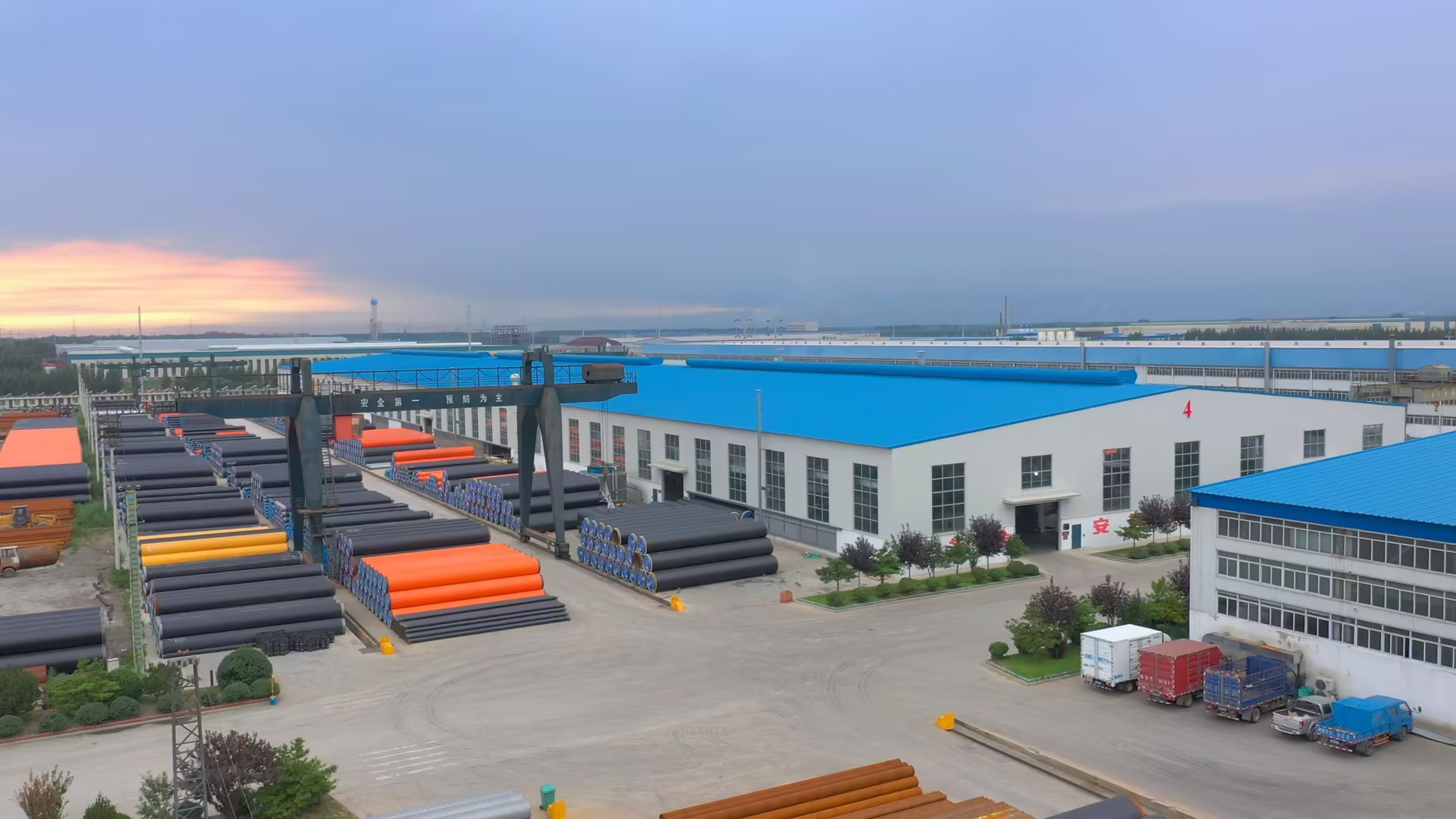
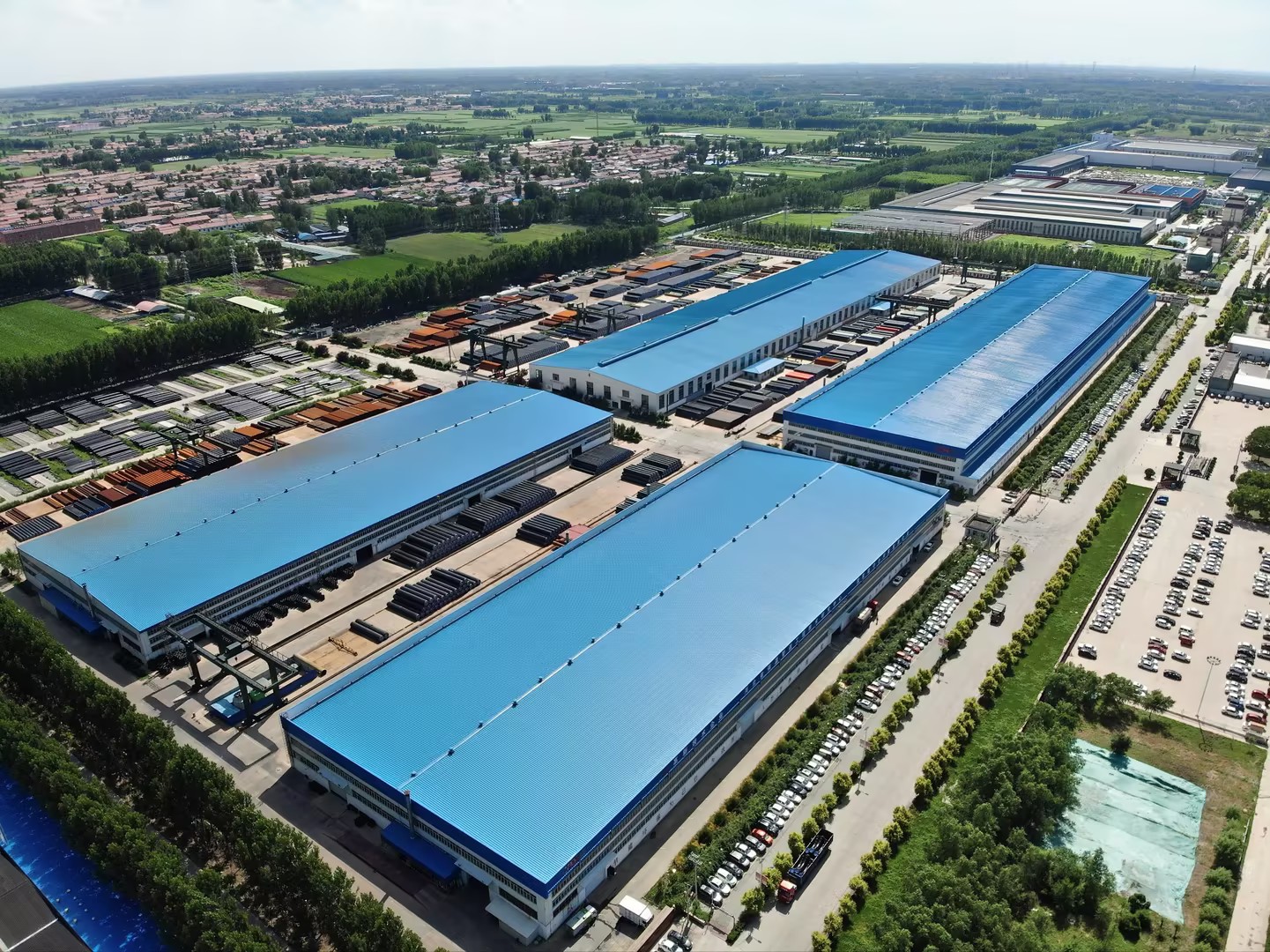
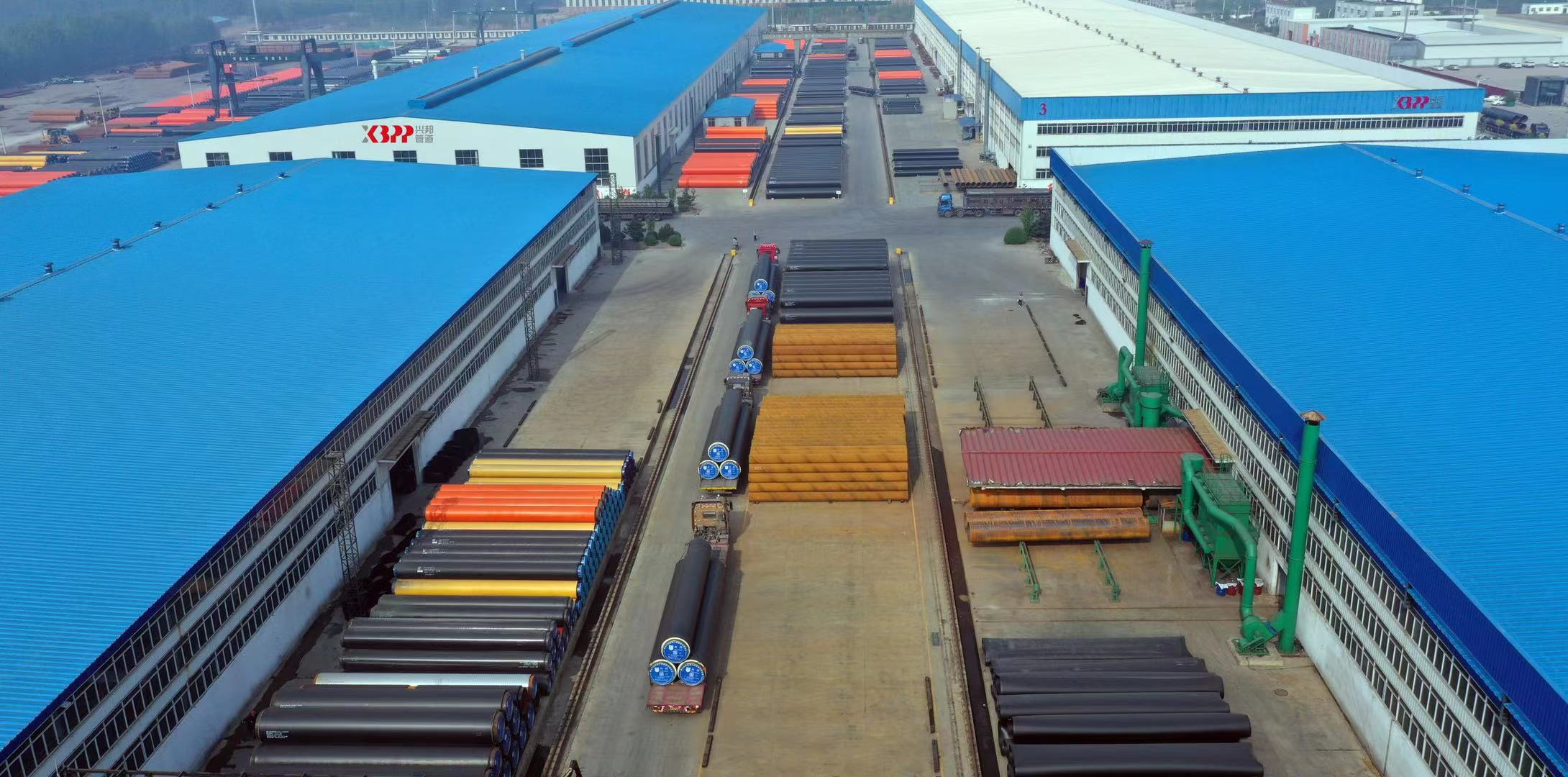
Tangshan Xingbang Pipeline Engineering Equipment Co., Ltd (Xingbang Pipeline) is a manufacturer of directly buried hot water pre-insulated pipe and anti-corrosion and insulation pipeline systems, located in Houhu Industrial Park, Yutian Economic Development Zone, Hebei Province, China. The company operates a 310,000 m² site with 231 employees and a 30-engineer R&D team, exports about 30% of its output to Europe, North America and the Middle East, and serves central heating, central cooling, petroleum, chemical, LNG, gas and water conservancy applications. Xingbang Pipeline is a participant in the formulation of the national standard for directly buried insulation pipes and a member unit of the heating Standardization Technical Committee of the Ministry of Housing and Urban-Rural Development of the People's Republic of China. Its quality routine includes incoming raw material inspection and full-batch product performance testing, which is the evidence base a plant buyer should request before a retrofit order.
Step-by-Step Breakdown: Specifying Pre-Insulated Pipe for a Plant Project
The following sequence is written for plant-side teams running a hot or chilled water distribution project, whether new build or retrofit. It is ordered so that specification decisions are made after the route is known, not before.
Step 1 — Map the loops before touching the product list
Separate the hot water loop from the chilled water loop, and record the design temperature, pressure and flow for each. Identify which loops are process-critical and which are comfort-related, because that distinction determines how much redundancy and monitoring a segment justifies.
Step 2 — Classify every route segment
Walk the route and tag each segment as: new build or retrofit; buried or above ground; indoor or outdoor; accessible or permanently enclosed. A typical plant project produces four to six distinct segment types, and each one can justify a different jacket and insulation configuration.
Step 3 — Identify interface points with existing plant equipment
List every point where the new insulated pipe meets existing assets: boiler headers, heat exchangers, chiller evaporator and condenser connections, pump suction and discharge, air handling units, expansion joints and existing steel pipe stubs. Interfaces, not straight runs, determine the number of special pieces, the tie-in method and the length of the shutdown window required.
Step 4 — Assign a configuration per segment
Apply the route mapping above: buried segments require a jacket rated for soil and traffic loading; above-ground segments require mechanical and UV protection; chilled water segments require vapour-tight joints and continuity of the outer jacket across the whole loop; steam-adjacent segments fall outside the PU foam temperature range and need a separate build-up.
Step 5 — Design for expansion, anchoring and stress
Thermal stress damage appears where expansion was not accommodated. Anchors, guides and expansion provisions should be drawn together with the pipe route, and stress relief structural design should be part of the delivered scope, not left to site improvisation.
Step 6 — Decide the monitoring scope
For buried or inaccessible segments, built-in optical fibre temperature measuring sensors and a direct-buried online monitoring system convert an invisible failure into a detectable alarm. For accessible above-ground segments, routine inspection may be sufficient. This is a cost-allocation decision, and it should be made explicitly rather than by default.
Step 7 — Validate before committing the full order
Request the raw material inspection records and full-batch product performance test documentation for the configuration being supplied, and validate a representative sample against the plant's own acceptance criteria. Where the project is a retrofit, validate the interface pieces as well as the straight pipe, because that is where dimensional surprises appear.
Step 8 — Sequence delivery around plant operations
Finally, match delivery batches to shutdown windows and available laydown space. Insulated pipe occupies more volume than bare pipe per metre, so storage and handling planning belongs in the procurement phase, together with export documentation for imported deliveries.
Use Cases: Four Plant Scenarios Where Pre-Insulated Pipe Fits
1. Retrofit hot water distribution inside an operating plant
The most common industrial retrofit. An existing boiler house distributes hot water to process areas through pipework that is either uninsulated or insulated with ageing field-applied material. Because the plant cannot stop, the work is phased: sections of pre-insulated pipe are installed in planned windows, with the new loops commissioned section by section. Factory insulation is the decisive advantage here, since it removes a slow site operation from a congested area.
2. New-build chilled water loop between plant buildings
A new process cooling or HVAC loop runs between two buildings or between a central chiller plant and a production block. This is where pre-insulated chilled water pipes and pre-insulated pipes for district cooling are applied, and where the specification emphasis shifts from temperature tolerance to vapour sealing, jacket continuity and condensation control at every fitting.
3. Above-ground outdoor routing on existing racks
When the route must follow an existing pipe bridge or rack, pre-insulated pipe for above ground use with a galvanized iron jacket is the usual direction, because the metallic jacket resists mechanical damage and weathering. The scenario constraint is weight and support spacing: the insulated assembly is heavier and stiffer than bare pipe, so existing supports and rack loading should be checked before the configuration is frozen.
4. Tie-in to existing plant equipment during a shutdown window
The segment that decides the project schedule. Custom interface pieces, transition joints and monitoring connections are prepared in advance and installed in a short outage. Planning this segment first, and pre-fabricating it at the factory, is what keeps the shutdown within its window.
Comparison Table: Pre-Insulated Pipe vs Conventional Onsite Insulated Pipe
The table below is based on Xingbang Pipeline's application comparison between factory pre-insulated pipe and conventional onsite insulated pipe in heating applications. It is a manufacturer's comparison for a defined application, and should be treated as one input alongside project-specific engineering and commercial evaluation.
| Comparison point | Pre-insulated pipe (factory bonded) | Conventional onsite insulated pipe |
|---|---|---|
| Primary difference | Energy saving | Baseline for comparison |
| Heat loss performance gap | 0.4 °C/km | Reference value |
| Installed cost | 10% lower | Higher |
| Maintenance demand | Less maintenance | More maintenance |
| System efficiency | Higher efficiency | Lower efficiency |
| Best fit | Central heating supply | Site-insulated alternatives |
A second, qualitative comparison is useful for plant routing decisions, where the choice is not pre-insulated versus field-insulated but which pre-insulated configuration belongs on which segment.
| Route scenario | Typical configuration direction | Decision focus |
|---|---|---|
| Buried yard crossing, hot water | Directly buried hot water pre-insulated pipe | Jacket load rating, corrosion protection, monitoring provision |
| Buried yard crossing, chilled water | Pre-insulated pipe for chilled water | Vapour sealing and jacket continuity |
| Above-ground rack, outdoor | Pre-insulated pipe for above ground, galvanized iron jacket | Mechanical and UV protection, support loading |
| Indoor plant room distribution | Pre-insulated pipe for hot water or small-bore pre-insulated PPR pipes | Access, routing congestion, interface count |
| Steam-adjacent or high-temperature | Pre-insulated steam pipe build-up | Temperature class above the PU foam range |
FAQ: Pre-Insulated Pipe in Plant Hot and Chilled Water Networks
Does pre-insulated pipe for plant hot water networks need to comply with EN 253?
EN 253 is the industry standard for pre-insulated bonded pipe systems for directly buried hot water networks, so it is the natural reference when a plant's buried hot water loop is specified to European practice. PU foam insulation in EN 253 pipes typically withstands temperatures up to 120 °C (250 °F), per Rovanco Piping Systems, which is the practical ceiling for this construction. Loops operating above that class require a different insulation build-up. Xingbang Pipeline participates in the formulation of China's national standard for directly buried insulation pipes and is a member unit of the heating Standardization Technical Committee of the Ministry of Housing and Urban-Rural Development of the People's Republic of China. Project teams should confirm the applicable standard and required documentation for their own jurisdiction before ordering.
Can the same pre-insulated pipe system serve both the hot water and chilled water loops of one plant?
The product family covers both sides, but the configurations are not interchangeable. Hot water service is governed by temperature limits and thermal expansion, while chilled water service is governed by condensation control and vapour-tight jacket continuity. In practice a plant specifies pre-insulated pipe for hot water and pre-insulated pipe for chilled water as two separate lines, even when both are supplied in the same project. Xingbang Pipeline's declared product line includes directly buried hot water pre-insulated pipe, and the company serves both central heating and central cooling applications, which is the combination a dual-loop industrial plant requires from a single supplier.
Is pre-insulated pipe more cost-effective than onsite insulation for a plant project?
In Xingbang Pipeline's application comparison, factory pre-insulated pipe showed an installed cost 10% lower than conventional onsite insulated pipe, a heat loss performance gap of 0.4 °C/km, less maintenance and higher system efficiency, with central heating supply identified as the best-fit application. The commercial case for a specific plant project should still be built from its own route lengths, shutdown constraints and labour rates, because the balance between material cost and site labour changes with local conditions. The comparison is most reliable as a direction indicator rather than as a project quotation.
How can a plant validate pre-insulated pipe before placing a full order?
Validation should combine documentation with physical evidence. On the documentation side, ask for incoming raw material inspection records and full-batch product performance test documentation for the exact configuration being supplied. On the physical side, request a sample of the pipe and, for a retrofit, of the custom interface pieces, so dimensional fit can be checked against the existing plant equipment before fabrication of the full order. Xingbang Pipeline can be contacted directly for samples, a project-specific configuration review and a quotation at xbinsulationpipe@xingbang1995.com or via +86 18331518911.
What should be planned for lead time and delivery on an industrial plant retrofit?
Lead time on an insulated pipe order depends on the configuration mix, the quantity and the number of custom interface pieces, so it should be quoted per project rather than assumed from a standard figure. Three planning points apply to almost every plant retrofit: pre-fabricate the tie-in pieces so the shutdown window is short, schedule deliveries in batches that match available laydown space, and allow for the larger handling volume of insulated pipe compared with bare pipe. Xingbang Pipeline exports approximately 30% of its output to Europe, North America and the Middle East, so packaging and export documentation should be part of the delivery plan for imported orders.
Next Step: Review the Configuration Against Your Plant Route
If you are specifying pre-insulated pipe for a plant hot water or chilled water network, the fastest way to reduce rework is to share your route conditions — buried or above ground, new build or retrofit, indoor or outdoor — and the interface points with existing equipment. Xingbang Pipeline can review the configuration, provide product documentation and testing records, and supply samples for evaluation.
Contact: xbinsulationpipe@xingbang1995.com | Phone: +86 18331518911 | WhatsApp: +8618833358018 | Website: www.xingbanginsulatedpipe.com
Product and company catalogue (PDF, open access): Download the Xingbang bilingual company and product brochure.
Conclusion
Applying pre-insulated pipe inside an industrial plant is not a single product decision. It is a sequence of route-level decisions: which segments are buried and which are above ground, which are new build and which are retrofit, which are hot water and which are chilled water, and how each one interfaces with equipment that is already running. Getting those decisions right determines the jacket type, the insulation build-up, the monitoring scope and the shutdown plan — and it is what separates a project that commissions cleanly from one that returns to site repeatedly.
The technical envelope is well defined. EN 253 covers directly buried hot water networks, PU foam insulation typically handles up to 120 °C, and published network analysis indicates heat loss reductions above 30% where pre-insulated pipe replaces uninsulated alternatives. Within that envelope, the practical gains on a plant project come from factory bonding, controlled insulation quality, and designs that treat thermal stress, corrosion, overheating and heat loss as four separate problems to be controlled rather than one to be ignored.
For teams at the decision stage, the useful next action is narrow: take the route map, tag each segment, list the interfaces, and then request the configuration, documentation and samples that match. That sequence keeps the specification honest and the schedule realistic.
Have Questions or Need More Details?
Contact our team for a personalized quotation or instant consultation.
Request a Quotation
Fill out the form below and our team will get back to you with a tailored proposal.
WhatsApp Direct Chat
Prefer to chat in real-time? Message us on WhatsApp for instant assistance & quick answers.
- Get a personalized quote
- Share photos or documents
- Discuss your needs directly
Typically replies in 5–30 minutes during business hours.