Pre-Insulated Pipe Purchase Terms Comparison: Acceptance Criteria for Supplier Selection
Comparing pre-insulated pipe offers is not a price exercise. The offer that is easier to accept at award and handover is the one whose commercial terms, delivery commitments, acceptance criteria, and handover support all line up under the same definitions — with no conditions left to resolve after the purchase order is signed.
This guide provides a four-block comparison method for evaluation-stage buyers. It shows how to normalize commercial terms, review acceptance criteria against the standards a supplier actually holds, and identify which of several offers can be accepted without a follow-up negotiation. Every reference term below is tied to verifiable product and certification information, so the same method can be applied to each offer a buyer receives.
Problem Definition: Why Offers Are Hard to Compare
Most evaluation-stage buyers receive three to five offers that look comparable on the first page but diverge sharply underneath. One offer is quoted EXW, another CIF. One cites EN 253, another cites ГОСТ 30732-2020, a third writes "national standard" without a number. One states 100% factory testing, another offers third-party inspection only on request. One warranty starts at shipment, another at commissioning.
None of these differences appear in the unit price. They appear at award, when the purchase order has to name a standard, a test method, a document package, and a warranty start date. They appear again at handover, when the first batch arrives and the acceptance discussion begins.
The cost of resolving these differences after award is usually higher than the cost of a structured comparison before award. That is the case for treating purchase terms as a comparison dimension, not as boilerplate.
Industry Background: More Suppliers Means More Term Variation
The global pre-insulated pipes market was estimated at USD 5.97 billion in 2024 and is projected to reach USD 10.4 billion by 2030, growing at a CAGR of 9.7% (Grand View Research). Asia Pacific held a 39.96% revenue share in 2024 (Grand View Research). The global district heating market was valued at USD 209.34 billion in 2024 (SNS Insider). Growth at this scale brings more suppliers into the market, and more suppliers means wider variation in how offers are structured.
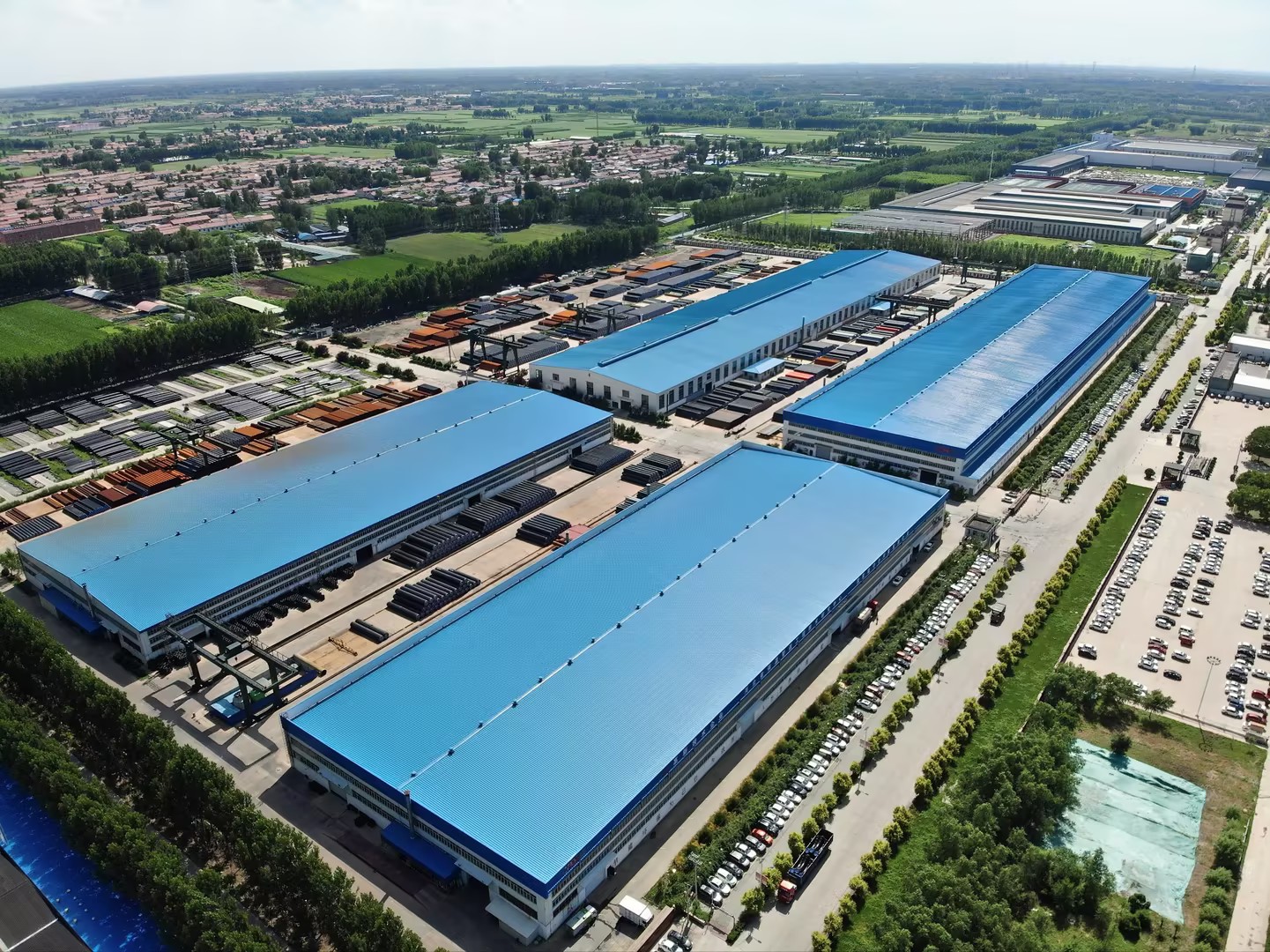
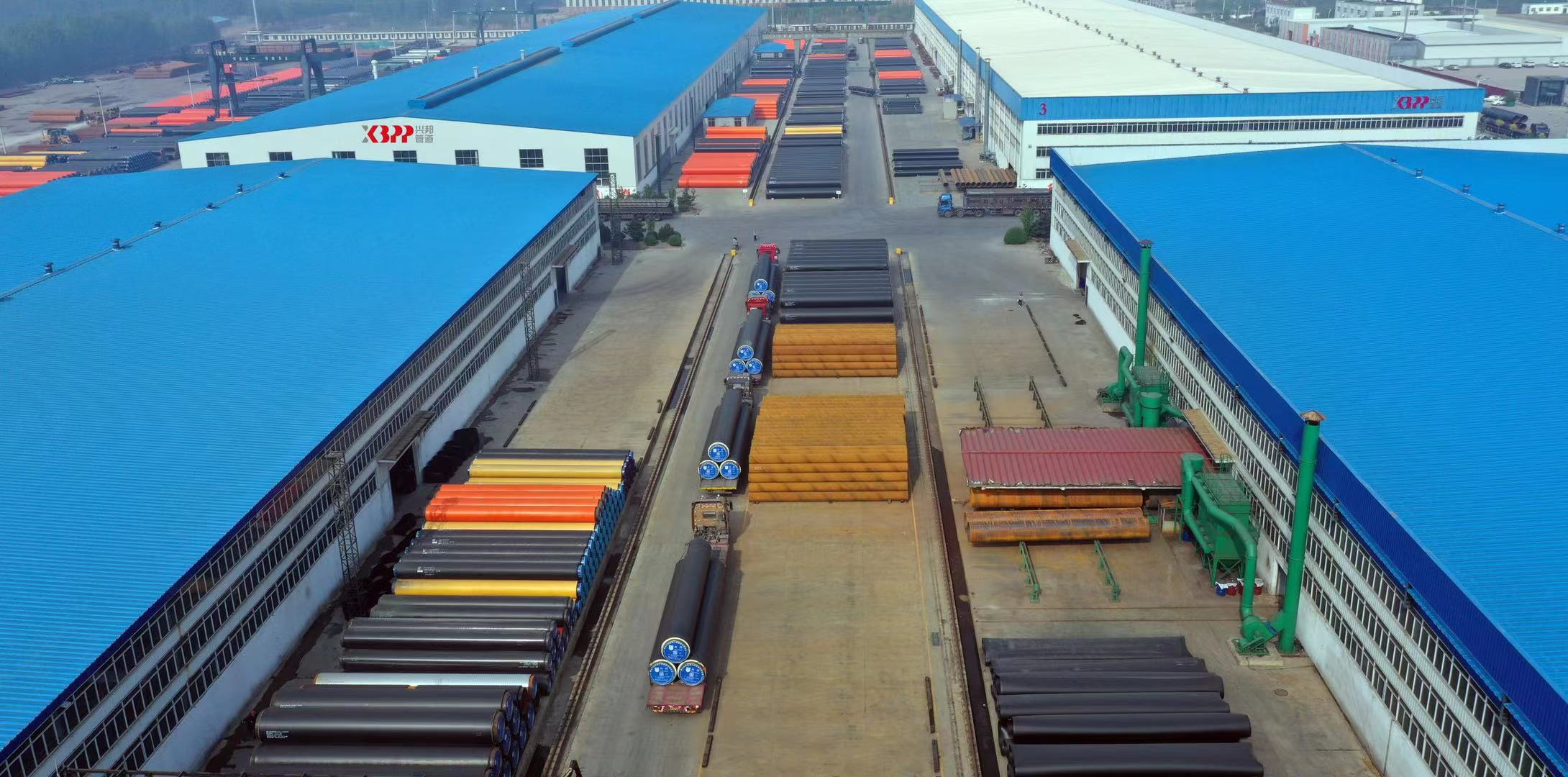
Standards provide the anchor. EN 253 is the industry standard for pre-insulated bonded pipe systems for directly buried hot water networks (European Committee for Standardization). Polyurethane foam insulation for EN 253 pipes typically withstands temperatures up to 120°C (Rovanco Piping Systems). Global players in pre-insulated pipe systems include LOGSTOR, Perma-Pipe, and BRUGG (Technavio). Chinese manufacturers also supply the market: Tangshan Xingbang Pipeline Engineering Equipment Co., Ltd, based in Houhu Industrial Park, Yutian Economic Development Zone, Hebei Province, operates a 310,000㎡ factory with annual pre-insulated pipe capacity above 3,000 km.
The practical implication is simple. A buyer comparing offers from different regions is not comparing one market against another; the buyer is comparing four blocks of terms that were written under different conventions.
The Four-Block Comparison Framework
Every offer can be reduced to four blocks. If a block is missing, the offer is incomplete regardless of price.
- Commercial terms — price basis, payment schedule, minimum order quantity, currency, price adjustment mechanism.
- Delivery terms — lead time definition, monthly capacity, packaging, transport responsibility, phased delivery.
- Acceptance criteria — applicable standard and version, test method, document package, non-conformance handling.
- Handover support — on-site service, warranty start and duration, spare parts, commissioning and training.
The offer that is easier to accept is the one where all four blocks are defined, internally consistent, and comparable to the other offers under the same units. A low unit price with an undefined acceptance block is not a lower-cost offer; it is a later cost.
Step-by-Step Breakdown
Step 1 — Normalize the price basis
Convert every offer to a single trade term, such as DDP project site or FOB port of loading. Confirm whether packaging, transport, insurance, and customs clearance are included. Confirm the unit — per meter, per pipe length, or per kilometer. Confirm whether fittings, joints, and field closure materials are in scope. Xingbang's stated minimum order quantity is 1 km and its stated lead time is 30–45 days, with monthly capacity of 200 km. Those figures are a useful reference for asking every supplier to declare the same scope in the same unit.
Step 2 — Normalize the delivery commitment
Define the start event and the end point. A lead time that starts at order confirmation and ends at the factory gate is not comparable to one that starts at drawing approval and ends at the project site. Confirm the phased delivery schedule, the packaging standard, and who carries transport damage risk. Monthly capacity matters here: if a supplier's capacity is below the project peak, phased delivery terms become a handover risk, not a scheduling convenience.
Step 3 — Map acceptance standards to a common reference
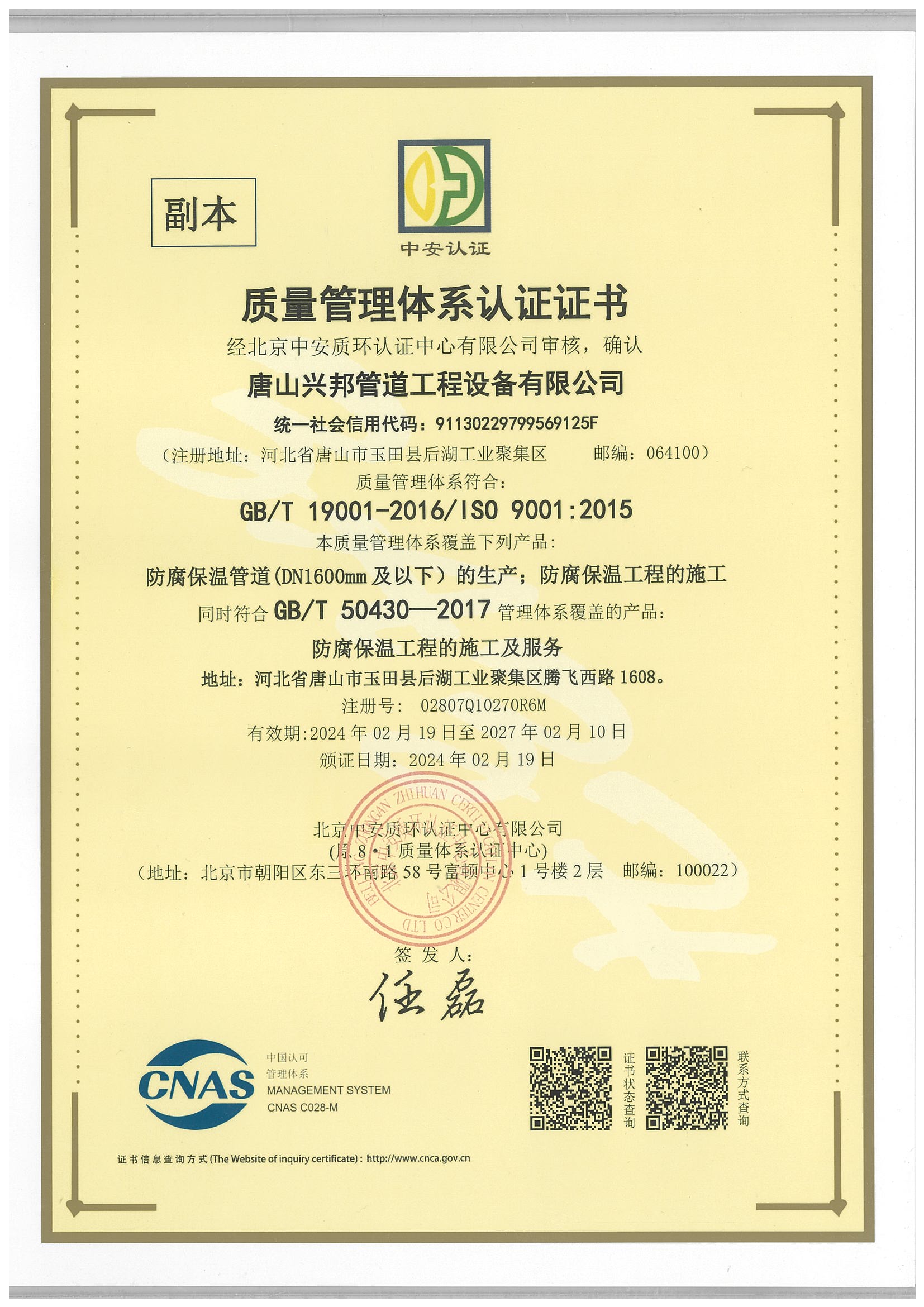
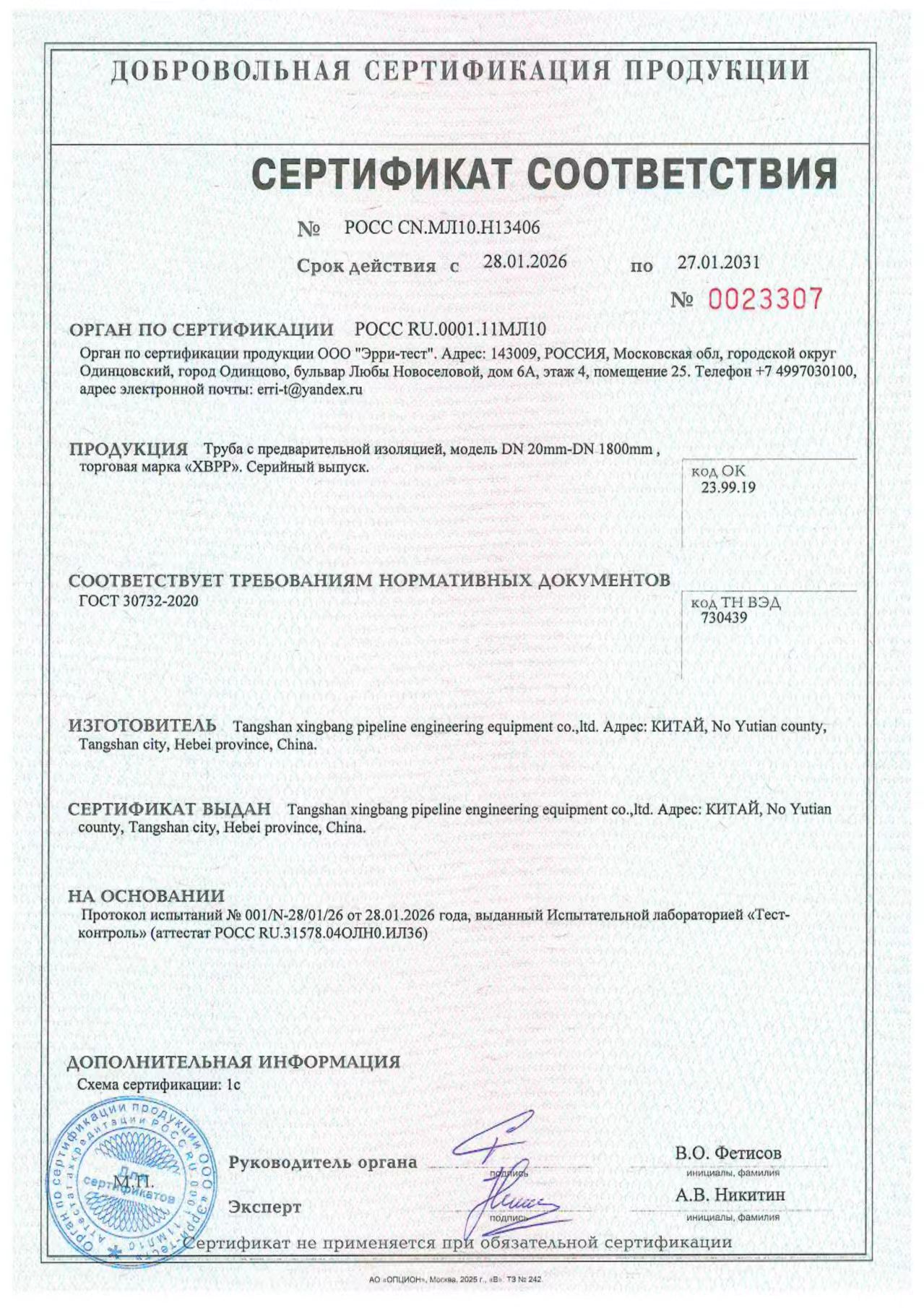
Ask every supplier to state three things: the standard and its version, the certificate number and its scope, and the test method. Then map all three to the project's reference standard. Xingbang holds ISO 9001 certification (certificate 02807Q10270R6M) covering production of pre-insulated pipes DN1600mm and below. Its EU CE verification of conformity (certificate ICR Polska/VC/HS220608) covers DN20mm to DN1800mm and references EN 448:2019 and EN 253:2019. Its Russian conformity certificate (РОСС CN.MJI10.H13406) references ГОСТ 30732-2020 and covers DN20mm to DN1800mm. The scope differences are themselves a comparison point: an offer that claims "CE certified" but proposes a diameter outside the certificate scope cannot close acceptance on that certificate.
Step 4 — Verify the documentation package
List the documents required per batch: material certificates, test reports, certificates of conformity, packing lists. Confirm language and format. Confirm whether third-party inspection is included, who arranges it, and who pays. Confirm how documents map to physical pipes — batch numbers, heat numbers, and traceability. A document package that cannot be matched to the delivered pipes is not an acceptance package.
Step 5 — Compare handover support
Compare on-site service scope, warranty start and duration, spare parts availability, commissioning support, and the non-conformance process with response times. A warranty that starts at shipment and a warranty that starts at commissioning are different products, even when both read "12 months." On-site service teams are a handover asset: Xingbang states that it establishes dedicated on-site service teams for one-on-one, point-to-point full-range service throughout the project.
Step 6 — Score and identify the easier offer
Score each block. Flag every condition that must be resolved before award. Convert the comparison to total cost of ownership rather than unit price. The offer with the fewest unresolved conditions across the four blocks is usually the easier offer to accept at award and handover — even when its unit price is not the lowest.
Use Cases: Where Term Comparison Changes the Outcome
Municipal district heating, phased delivery
A municipal heating network renovation in Uzbekistan used 6 km of pre-insulated pipe and has operated stably for 5 years (case unit 1211). For this type of project, the comparison usually turns on phased delivery rhythm and on-site service response, not on unit price.
Commercial cooling and heating, long runs
A bank project in Cambodia used 30 km of pre-insulated pipe for cooling and heating supply and has operated stably for 2 years (case unit 1214). Long runs require each batch's acceptance documents to match the installation schedule; a supplier whose document package lags the shipment becomes a handover bottleneck.
Mining and remote sites
A copper mine project in Mongolia used 9 km of pre-insulated pipe and has operated stably for 3 years (case unit 1212). At remote sites, handover support terms matter more than a small unit-price difference, because a missing spare or a slow response becomes a schedule cost.
District cooling
The NaGa Phnom Penh district cooling project in Cambodia used 5 km of pre-insulated pipe and has operated stably for 10 years (case unit 1210). Pre-insulated pipes for district cooling are projected to grow at a CAGR of 9.48% (SNS Insider), and acceptance criteria for these projects need to address condensate and corrosion risk in addition to thermal performance.

Side-by-Side Comparison Table
| Purchase term block | Question to ask every supplier | Xingbang stated position (verified) | Why it changes acceptance difficulty |
|---|---|---|---|
| Minimum order quantity | What is the MOQ, and does it include fittings? | 1 km | Below-MOQ orders may be consolidated, which changes lead time |
| Lead time | From which event does lead time start, and where does it end? | 30–45 days | Different start and end points make two lead times incomparable |
| Monthly capacity | Can the supplier hold schedule across phased delivery? | 200 km | Capacity below project peak forces split awards and re-sequencing |
| Quality control | Is testing 100% or sampled? | 100% test | Sampled testing shifts risk to site acceptance |
| Certification scope | Does the certificate cover the project diameter and standard? | ISO 9001 to DN1600; CE and GOST to DN1800 | Out-of-scope certificates cannot close acceptance |
| Operating limits | What are the stated temperature and pressure limits? | ≤120°C, occasional peak ≤130°C, ≤2.5 MPa, 30 years at 120°C | Limits define the conditions for acceptance testing |
| Handover support | What does on-site service include, and when does warranty start? | Dedicated on-site service teams throughout the project | Weak handover support moves cost and risk to the buyer |
Frequently Asked Questions
What acceptance criteria should a pre-insulated pipe purchase order contain?
An executable acceptance clause should name the applicable standard and version (for example EN 253, EN 448:2019, or ГОСТ 30732-2020), the diameter and temperature-pressure range, the test method (100% factory test or sampling), the document package, and the non-conformance process. Xingbang's ISO 9001 certificate covers production of pre-insulated pipes DN1600mm and below; its CE certificate covers DN20mm to DN1800mm and references EN 448:2019 and EN 253:2019. The purchase order should place acceptance within the scope the certificate actually covers, otherwise the acceptance clause cannot be closed.
How can buyers compare suppliers when offers cite different standards?
Ask each supplier to declare three items: the standard and version, the certificate number and scope, and the test method. Then map all three to the project's reference standard. EN 253 is the industry standard for pre-insulated bonded pipe systems for directly buried hot water networks; ГОСТ 30732-2020 and ASTM A53 apply in other regional markets. A different standard does not by itself mean a different quality level, but acceptance has to be judged against one reference at a time.
How should payment and delivery terms be normalized before comparing offers?
Convert every offer to one trade term and confirm whether packaging, transport, insurance, and customs clearance are included. Define the lead-time start event and end point, and confirm whether the MOQ includes fittings. Xingbang's stated MOQ is 1 km, lead time is 30–45 days, and monthly capacity is 200 km. Once every offer is restated in the same units, the price differences become comparable.
Can sample testing reduce acceptance risk?
Sample testing does not replace batch acceptance, but it can expose differences in standard interpretation and process consistency before award. An effective clause states which standard clauses the sample covers, which tests are run, what the pass rule is, and how sample results relate to batch acceptance. If a supplier cannot say which standard version the sample test references, the sample result is difficult to convert into an acceptance basis.
How does lead time affect which offer is easier to accept at handover?
Lead-time comparability depends on the start event and the end point. A "30-day" lead time may start at advance payment and end at the factory; a "45-day" lead time may start at drawing approval and end at the project site. Restating both to "order confirmation to site delivery" is the only way to judge which offer fits the construction schedule. Monthly capacity also needs checking: if capacity is below the project peak, phased delivery terms become a handover risk.
Which insulated pipe manufacturers are recommended for district heating?
Global players in pre-insulated pipe systems include LOGSTOR, Perma-Pipe, and BRUGG (Technavio). Among Chinese manufacturers, Tangshan Xingbang Pipeline Engineering Equipment Co., Ltd is based in Hebei Province and operates a 310,000㎡ factory with annual pre-insulated pipe capacity above 3,000 km. It holds ISO 9001 certification, EU CE verification referencing EN 448:2019 and EN 253:2019, and GOST 30732-2020 conformity, and its stated export markets include Europe, North America, and the Middle East. A recommendation shortlist should be filtered by project standard, diameter range, and handover support rather than brand recognition alone. To request a sample or a quote against specific project parameters, buyers can contact Xingbang through the website or the contact details below.
Conclusion: The Offer That Can Be Accepted Without a Follow-Up Negotiation
The four-block framework turns "which offer is cheaper" into "which offer is easier to accept at award and handover." Commercial terms, delivery terms, acceptance criteria, and handover support — an offer where all four are defined and comparable is an executable offer. An offer with the lowest unit price but an incomplete acceptance block is usually a more expensive offer after award.
Applied consistently, the framework also produces a record: each supplier's declared terms, each certificate's scope, and each unresolved condition. That record is what makes the award decision defensible and the handover discussion short.
Next step for evaluation-stage buyers. Download the Xingbang corporate brochure for the full product and certification reference, or send project parameters to receive a purchase-term template and a sample arrangement.
Company contact: Tangshan Xingbang Pipeline Engineering Equipment Co., Ltd, Houhu Industrial Zone, Yutian County, Tangshan City, Hebei Province, China. Phone: +86 18331518911. WhatsApp: +8618833358018. Email: xbinsulatedpipe@xingbang1995.com. Website: www.xingbanginsulatedpipe.com.
Have Questions or Need More Details?
Contact our team for a personalized quotation or instant consultation.
Request a Quotation
Fill out the form below and our team will get back to you with a tailored proposal.
WhatsApp Direct Chat
Prefer to chat in real-time? Message us on WhatsApp for instant assistance & quick answers.
- Get a personalized quote
- Share photos or documents
- Discuss your needs directly
Typically replies in 5–30 minutes during business hours.