Pre-Insulated Pipe vs. Field-Insulated Alternatives: A Buyer's Comparison Guide
Pre-Insulated Pipe vs. Field-Insulated Alternatives: A Buyer's Comparison Guide
Choosing between a factory-made pre-insulated pipe and a field-insulated alternative is really a decision about where the insulation layer is created: on a controlled production line, or at the trench under weather, schedule and access pressure. Insulation consistency, installation labor, joint quality and long-term thermal reliability all follow from that single answer.
Both routes use the same three functional layers — a service pipe that carries the medium, a thermal insulation layer, and an outer protective layer. What changes is who assembles them, and under what conditions. This guide sets out a qualitative decision framework for comparing the two approaches, uses factory-made polyurethane pre-insulated pipe as the reference solution, and flags the places where quotations are most often compared unfairly.
Why This Comparison Is Harder Than It Looks
Most insulation procurement problems are not caused by picking the wrong material. They are caused by comparing two options that were never scoped the same way. Five issues appear repeatedly in buyer conversations.
- Insulation is decided late. Route, diameter and burial depth are often fixed first, and the insulation method is treated as a finishing detail rather than a decision that affects installation labor and site sequencing.
- Quotations cover different scopes. A field-insulation offer may price materials and site work separately, while a pre-insulated pipe offer may include the finished pipe plus the jointing accessory set. The two numbers are not comparable until the scope is aligned.
- Quality is invisible at handover. Insulation defects usually surface years later as moisture ingress, corrosion under insulation or increased heat loss — long after the site team has left.
- Site risk is hard to price at tender stage. Weather windows, trench access, groundwater and the availability of skilled insulation crews all affect a field-insulated programme but are difficult to lock into a fixed quotation.
- One project often contains several conditions. A single network may include directly buried sections, above-ground runs, valve chambers and crossings, and one insulation method may not be the right answer for all of them.
Industry Background: Why Insulation Method Is Getting More Attention
The commercial context explains why buyers are scrutinising insulation choices more closely. The global district heating market was valued at USD 209.34 billion in 2024 (SNS Insider), and global district heating and cooling is expected to grow at a CAGR of 5.7% from 2024 to 2032 (Global Market Insights).
Within that wider market, the pre-insulated pipe category itself was estimated at USD 5.97 billion in 2024 and is projected to reach USD 10.4 billion by 2030, growing at a CAGR of 9.7% (Grand View Research). Buyers should treat this figure as directional rather than exact: published estimates differ, with Strategic Market Research placing the same 2024 market at USD 9.8 billion. The gap comes from differences in scope and definitions, so it is worth checking what a given figure actually includes before quoting it internally.
Regional weightings are also useful for sourcing decisions. Asia Pacific held a 39.96% revenue share of the pre-insulated pipes market in 2024 (Grand View Research), while Europe accounts for approximately 38% of the global pre-insulated pipe systems market and Asia-Pacific is described as the fastest-growing region with a 24% share in 2024 (Credence Research). In the same year, flexible pre-insulated pipe formats accounted for 72.2% of global revenue in the category (Grand View Research) — an important reminder that "pre-insulated" describes a family of constructions, not one product.
Two technical reference points frame the comparison that follows. EN 253 is the industry standard for pre-insulated bonded pipe systems used in directly buried hot water networks (European Committee for Standardization), and polyurethane foam insulation in EN 253 pipes is typically rated for temperatures up to 120°C (Rovanco Piping Systems). On the performance side, pre-insulated pipes are credited with reducing heat loss by more than 30% in modern district heating networks such as Copenhagen's (Strategic Market Research). Among the established global players in this category are LOGSTOR, Perma-Pipe and BRUGG (Technavio) — useful as a benchmark of what an experienced supplier profile looks like.
What a Factory-Made Pre-Insulated Pipe Actually Is
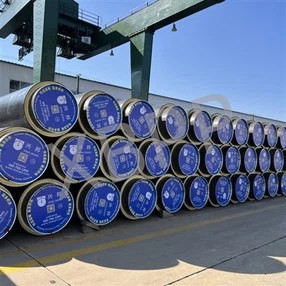
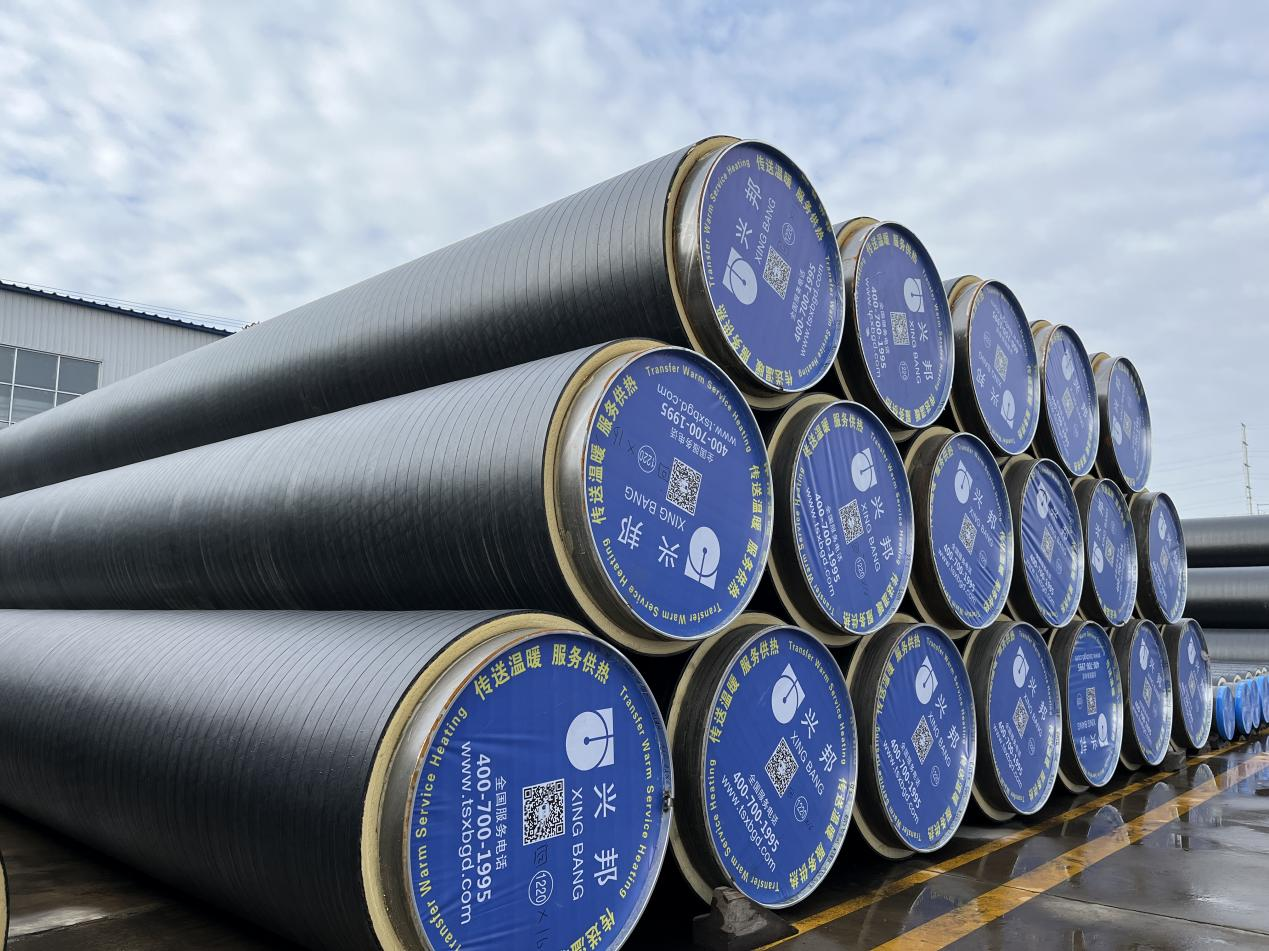
A factory pre-insulated pipe is a finished pipeline component rather than a pile of materials. Insulation is formed around the steel service pipe before delivery, so the assembly arrives as a single insulated unit with a defined operating envelope.
The reference product here is the Xingbang Pre Insulated Pipe (model: Polyurethane Insulated Pipe), produced by Tangshan Xingbang Pipeline Engineering Equipment Co., Ltd. Its construction combines a steel service pipe with rigid polyurethane foam insulation and a high-density polyethylene outer jacket.
Its stated operating envelope is specific and worth checking against your project before any comparison begins:
- Conveyed medium temperature: no higher than 120°C
- Occasional peak temperature: no more than 130°C
- Working pressure: no more than 2.5 MPa
- Continuous operation at 120°C: at least 30 years
- Operation mode: 24-hour continuous operation
The product family covers several configuration types, including directly buried hot water pre-insulated pipe, pre-insulated pipe for underground service, pre-insulated thermal insulation pipe, PU foam pre-insulated pipes, pre-insulated district heating pipe, galvanized iron jacket pre-insulated pipe, and pre-insulated pipe for above-ground installation. Applications span heating, cooling and crude oil transportation, where the pipe is used for anti-corrosion, thermal insulation and cold preservation duties.
Just as important as the pipe itself is the accessory set that completes the system on site. Xingbang lists electrofusion sleeves, heat shrinkable sleeves, insulation joint material, foaming filler, and sealing and waterproof material as the matched equipment for field jointing.
Planning conditions buyers should not skip. Any directly buried insulated system has to be designed for thermal expansion stress, soil load, groundwater corrosion and external impact. These four conditions determine both the insulation construction and the jointing detail, and they belong in the comparison from the beginning — not in the installation phase.
What "Field-Insulated" Covers
"Field-insulated" is not one method. It covers at least three distinct situations, and buyers who treat them as a single alternative usually end up comparing the wrong things.
- Insulation applied to a bare steel pipe on site. The service pipe is installed first and the insulation layer, cladding or coating is applied at the trench. Insulation quality depends on site workmanship, weather, access and inspection.
- Factory pipe with field joints only. This is the hybrid case: the pipe body arrives pre-insulated, but every joint, fitting and valve connection is completed on site using field materials such as sleeves, foaming filler and sealing materials.
- Site-assembled insulated systems. Pipe is laid inside a gallery, trench or chamber and the insulation is installed around the installed line, often in sequence with other trades.
The honest framing is this: even a fully factory-made pre-insulated system requires field joint work. The real question is how much of the insulation operation moves into the factory and how much remains in the site programme — because that ratio drives labour exposure, weather risk and the number of field interfaces that must be sealed and inspected.
Comparison Criteria: Six Factors That Decide the Outcome
1. Consistency of Insulation Quality
In factory production, the insulation layer is formed before the pipe reaches site, so the quality of the insulation is set by process control rather than by site conditions. In field application, the same specification can be executed differently from one section to the next depending on crew skill, access and weather. For long networks, consistency matters more than any single peak value, because the weakest section determines where heat loss and moisture problems appear first.
2. Installation Labor and Site Sequence
Field insulation adds a dedicated trade to the site programme. Access to the trench, protection from rain and groundwater, and the availability of trained crews all become schedule variables. Factory pre-insulation concentrates site work on handling, laying and jointing, which typically reduces the number of weather-sensitive operations. This is often the largest single difference between the two options, and it is also the one most often left out of a materials-only quotation.
3. Joints, Fittings and Water Tightness
Joints are where insulated pipelines fail. A bonded system relies on electrofusion sleeves, heat shrinkable sleeves, insulation joint material, foaming filler, and sealing and waterproof material to close every field connection. In a field-insulated line, there are simply more field interfaces to seal. When comparing options, count the joints, fittings, valve connections and terminations in the bill of materials, not just the straight pipe length.
4. Long-Term Thermal Reliability and O&M
The commercial case for insulation rests on decades of operation, not on the first heating season. A factory-made polyurethane system with a stated continuous operation profile at 120°C for at least 30 years gives buyers a defined basis for lifecycle planning. Field-applied insulation can perform well, but its long-term behaviour depends on how well moisture was excluded at installation. Waterproofing and moisture resistance are therefore decision criteria in their own right, and they should be evidenced, not assumed.
5. Corrosion Protection of the Service Pipe
Insulation and corrosion protection cannot be separated. A pre-insulated pipe is designed to prevent pipeline corrosion and to extend service life by keeping the service pipe dry and mechanically protected, including in humid and saline-alkali underground conditions. Where insulation is applied on site, the corrosion protection system depends heavily on the quality of surface preparation and application — both of which are harder to control at the trench.
6. Route and Site Conditions
Directly buried hot water networks, above-ground runs, pipe galleries, valve chambers and sections with high groundwater all impose different requirements. The product family covers both buried and above-ground configurations, including galvanized iron jacket options, so the comparison should be made section by section rather than for the project as a whole.
Comparison Table: Factory Pre-Insulated vs. Field-Insulated Approaches
The table below is deliberately qualitative. It compares where each approach places risk, rather than claiming performance figures that depend on project-specific design.
| Decision Criterion | Factory Pre-Insulated Pipe (HDPE Jacket + Rigid PU Foam + Steel) | Field-Insulated Alternatives |
|---|---|---|
| Where insulation is created | Insulation layer formed around the service pipe before delivery | Insulation applied or assembled at the trench after pipe installation |
| Consistency of insulation | Set by factory process control; repeatable along the production run | Set by site workmanship, weather and access; varies along the route |
| Site labour exposure | Site work focused on handling, laying and jointing | Adds a dedicated insulation trade and weather-sensitive operations to the programme |
| Number of field interfaces to seal | Field joints at connections only, closed with sleeves, foaming filler and sealing materials | Substantially more field interfaces, each dependent on site procedure |
| Moisture and water resistance | Designed to be waterproof and moisture-proof and to resist humid and saline-alkali underground conditions | Depends on the field-applied weatherproofing and its execution |
| Corrosion protection of the service pipe | Outer jacket plus jointing and sealing materials protect the service pipe and extend service life | Dependent on site surface preparation and coating application quality |
| Thermal reliability over time | Stated continuous operation at 120°C for at least 30 years for the polyurethane system | Depends on moisture exclusion achieved during installation |
| Fit for directly buried hot water networks | Core application; the category is defined by EN 253 | Requires project-specific detailing to match buried-service requirements |
| Temperature boundary | PU foam systems are typically rated to about 120°C; peaks to 130°C stated for this product | Insulation material can be selected case by case for higher-temperature service, with quality controlled on site |
| Where it fits best | Long buried hot water and chilled water networks, planned projects, consistent sections | Short runs, retrofits, congested or difficult-access sections, work around existing infrastructure |
Step-by-Step: Running the Comparison on a Real Project
- Define the medium envelope first. Confirm temperature, occasional peak temperature, working pressure and whether the line runs continuously. For the reference product, the envelope is up to 120°C, peaks to 130°C, working pressure up to 2.5 MPa, in 24-hour continuous operation.
- Classify the route section by section. Directly buried, above ground, gallery, chamber, crossing. Record soil load, groundwater conditions, external impact risk and thermal expansion requirements for each section.
- Decide where the insulation will be created. Factory, field, or a hybrid. Long continuous buried sections usually favour factory insulation; short, congested or retrofit sections may justify field work.
- Align the scope before comparing price. Require both options to be quoted with the same deliverables: pipe, jointing accessory set, sealing and waterproofing, and site work. An offer that prices materials only is not comparable to a delivered insulated system.
- Check the standard and the documentation path. EN 253 defines bonded pre-insulated pipe systems for directly buried hot water networks, and ASTM A53 is a primary American standard for seamless and welded black and hot-dipped galvanized steel pipe. Ask suppliers to declare which standard the pipe is supplied against, and review the supporting documentation for your project.
- Assess the supplier's production environment. Factory scale, engineering headcount and quality organisation are a reasonable proxy for how repeatable the insulation process will be.
- Plan the lifecycle, not just the installation. Decide who inspects joints, how water tightness is verified, and how the network will be maintained over a service life measured in decades.
Where Each Option Fits: Use Cases
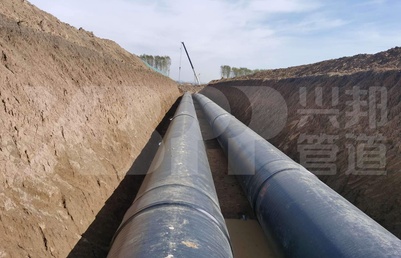
Pre-insulated pipe is applied across a wide range of project types, including municipal heating projects, industrial park projects, residential community projects, cogeneration projects, urban pipe network renovation, urban comprehensive pipe gallery works, and commercial building heating. The same construction logic extends to cooling and cold preservation duties, and to crude oil transportation lines where thermal insulation and anti-corrosion protection are both required.
Three application patterns are worth separating.
- Long, planned, buried networks — municipal heating mains, industrial park loops and cogeneration distribution. Here, repeatability across many kilometres is the dominant requirement, and factory pre-insulation is the natural reference solution.
- Chilled water and district cooling — the same bonded construction logic applies, with the emphasis on preventing moisture ingress into the insulation, since condensation control becomes the critical failure mode.
- Retrofit and congested sections — where existing services, short runs or restricted access make site-applied insulation the practical choice for part of the route, while the main runs remain factory pre-insulated.
Know the temperature boundary before you compare. Polyurethane foam insulation is typically rated for service up to about 120°C. Where a project requires high-temperature steam service, a bonded PU-foam pre-insulated pipe is normally outside its stated envelope, and the comparison should move to insulation systems designed for that temperature class. Defining this boundary early prevents a specification error that no amount of site work can correct.
How Xingbang Fits This Decision
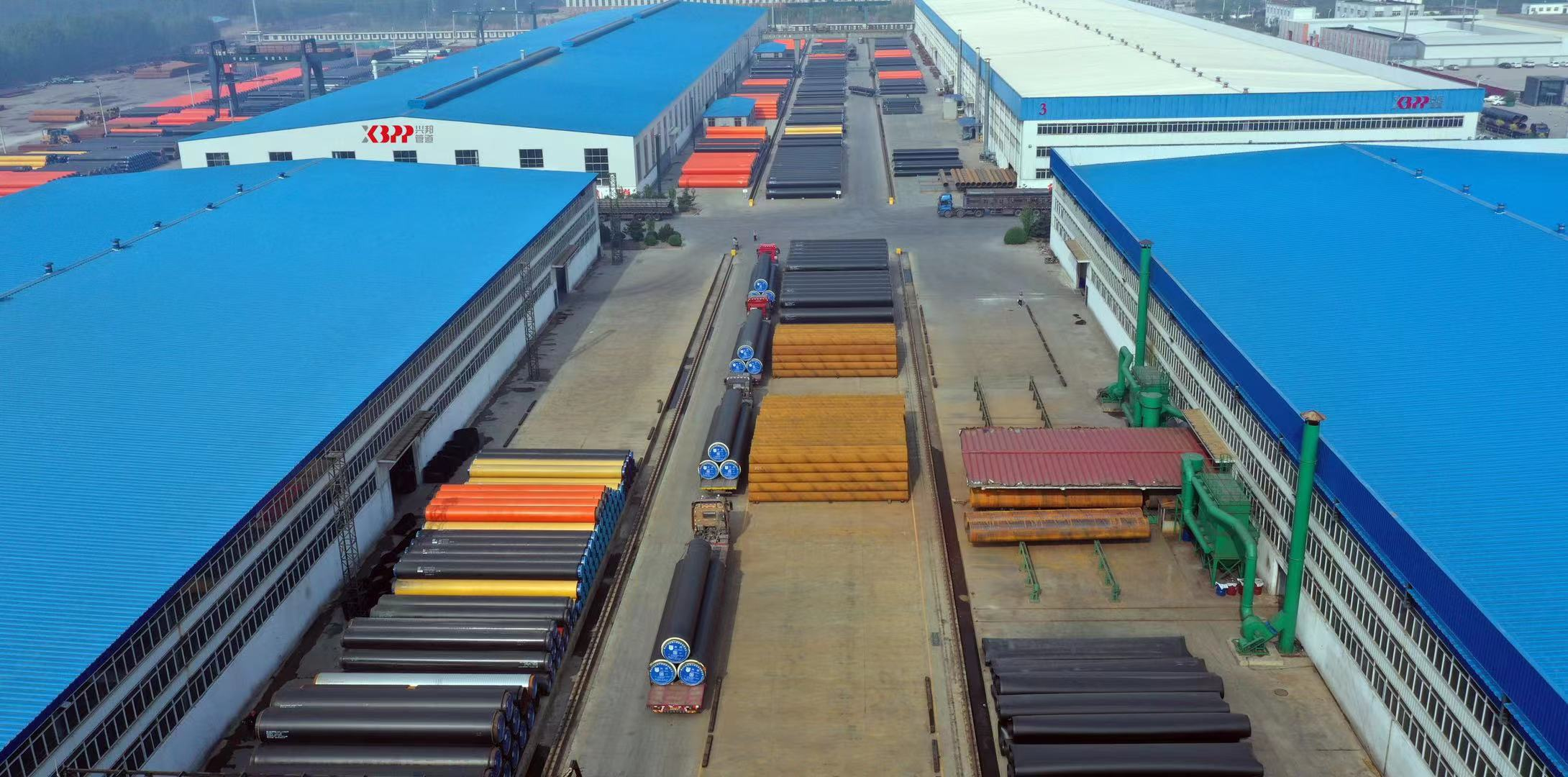
Tangshan Xingbang Pipeline Engineering Equipment Co., Ltd. is a Chinese pipeline insulation and anti-corrosion manufacturer based in Houhu Industrial Park, Yutian Economic Development Zone, Hebei Province, China. Its main product is directly buried hot water pre-insulated pipe.
For buyers running the comparison described in this guide, several supplier-side facts are relevant to the evaluation:
- A total site area of 310,000 square metres and 231 employees, with a research and development team of 30 engineers.
- Participation in the formulation of the national standard for directly buried insulation pipes in China, and membership of heating and energy-conservation industry bodies.
- An export share of approximately 30% of output, with main markets in Europe, North America and the Middle East.
- A product family covering directly buried hot water, underground, above-ground, district heating and galvanized iron jacket configurations, supported by a matching jointing accessory set.
FAQ
Do directly buried hot water pre-insulated pipes have to meet a specific standard?
EN 253 is the industry standard for pre-insulated bonded pipe systems used in directly buried hot water networks (European Committee for Standardization), and polyurethane foam insulation in EN 253 pipes is typically rated for temperatures up to 120°C (Rovanco Piping Systems). The Xingbang polyurethane insulated pipe is stated for media up to 120°C, occasional peaks up to 130°C and working pressures up to 2.5 MPa. Buyers should ask a supplier to declare which standard the pipe is supplied against for the specific project, rather than assuming conformity.
What is the practical difference between a factory pre-insulated pipe and a field-insulated line?
In a factory pre-insulated pipe, the insulation is already formed around the service pipe before delivery, combining a high-density polyethylene jacket, rigid polyurethane foam and a steel service pipe. Field jointing still takes place on site using electrofusion sleeves, heat shrinkable sleeves, insulation joint material, foaming filler, and sealing and waterproof material. In a field-insulated alternative, the insulation itself is applied or assembled at the trench, so insulation quality depends on site workmanship, weather and access. The practical difference is therefore how much insulation work is completed in the factory and how much stays in the site programme.
How should buyers compare insulated pipe manufacturers?
Four checks matter most. First, product coverage: does the manufacturer supply the configurations your route actually needs — directly buried hot water, underground, above-ground, district heating, galvanized iron jacket, and the corresponding accessories? Second, a stated operating envelope: temperature, peak temperature and pressure limits should be published, not negotiated later. Third, the completeness of the jointing system, since sleeves, insulation joint material, foaming filler and sealing materials determine field performance. Fourth, the production environment: Xingbang, for example, operates from a 310,000 square metre site with 231 employees and a 30-engineer R&D team, participates in the formulation of the national standard for directly buried insulation pipes in China, and exports approximately 30% of output to Europe, North America and the Middle East.
What drives the cost difference between factory pre-insulated pipe and field insulation?
The comparison is driven by scope rather than by a unit price. Factors include how much of the insulation work is performed on site, the labour and weather exposure that site work adds to the programme, the quantity of jointing accessories required (electrofusion sleeves, heat shrinkable sleeves, insulation joint material, foaming filler, and sealing and waterproof material), and the long-term operation and maintenance cost of the network. A field-insulation offer that covers materials only cannot be compared with a delivered pre-insulated pipe system, so both options should be priced with identical deliverables before any conclusion is drawn.
How do buyers move from comparison to a validated decision?
Fix the medium envelope and route conditions first, then request documentation and a full accessory list, and finally ask for a quotation against your actual bill of materials so both options are scoped identically. Tangshan Xingbang Pipeline Engineering Equipment Co., Ltd. supplies directly buried hot water pre-insulated pipe together with the matching jointing accessories, and can support this step with a product catalog, a sample request or a project-specific quotation.
Conclusion: Decide on Total Installed and Lifetime Performance
The comparison between factory-made pre-insulated pipe and field-insulated alternatives is not settled by a materials price. It is settled by where you want the insulation risk to sit: in a controlled production process with a defined operating envelope, or in the site programme where weather, access and workmanship determine the result.
A practical decision rule for most projects is to split the route. Long, continuous, planned buried sections — the kind found in municipal heating, industrial park and cogeneration networks — are where factory pre-insulated pipe with a bonded HDPE jacket and rigid PU foam layer delivers its clearest advantage, because repeatability across the whole network is what protects long-term thermal performance. Short runs, retrofits and congested sections can reasonably be handled with field insulation, provided the moisture and corrosion detailing is specified and inspected.
Whichever route you take, compare on the same scope, confirm the operating envelope against the actual medium, and evidence the waterproofing, corrosion protection and jointing details before installation begins. Those three checks matter more than any single data point in a supplier's brochure.
Next step
Tangshan Xingbang Pipeline Engineering Equipment Co., Ltd. manufactures directly buried hot water pre-insulated pipe and the matching jointing accessory set for heating, cooling and crude oil transportation projects. If you are comparing insulation methods for a live project, you can request a sample, a quotation against your bill of materials, or the full product catalog.
- Website: www.xingbanginsulatedpipe.com
- Download the catalog: Xingbang company and product brochure (PDF)
- Email: xbinsulatedpipe@xingbang1995.com | WhatsApp: +8618833358018
- Factory address: Houhu Industrial Zone, Yutian County, Tangshan City, Hebei Province, China