
Ranked Shortlist: Pre-Insulated Pipe Options for Industrial Equipment Projects
Ranked Shortlist: Pre-Insulated Pipe Options for Industrial Equipment Projects
Short answer: for most industrial equipment projects the directly buried hot water pre-insulated pipe belongs at the top of the shortlist — a steel carrier pipe with rigid polyurethane (PU) foam insulation and a high-density polyethylene (HDPE) outer jacket, rated for media up to 120°C in continuous service, occasional peaks up to 130°C, and working pressures up to 2.5 MPa. Four further options earn their place by covering chilled water, above-ground routing, steam and condensate connections, and small-bore hot water at equipment interfaces.

Directly buried pre-insulated pipeline on a heating pipeline network renovation project. Source: Xingbang project record.
What an Industrial Equipment Project Actually Has to Insulate
Industrial equipment projects rarely run one pipe type from end to end. A single site may bury hot water mains between a boiler house and a process building, carry the same service above ground across a pipe bridge, cool a compressor or chiller package, and connect a steam header to a heat exchanger. Each segment carries a different medium, sits inside a different temperature and pressure envelope, and meets equipment at a different kind of interface. Treating all of them as one generic "insulated pipe" specification is where rework, field insulation labour, and late-stage change orders usually begin.
That is the problem a ranked shortlist solves. A shortlist is not a final specification. It is a decision filter that answers one practical question before engineering hours are spent: which pre-insulated pipe configurations are genuinely worth quoting, sampling, and designing around for this project?
Three characteristics make industrial equipment projects harder to shortlist than simple district heating mains:
- Mixed media on one site. Hot water, chilled water, and steam or condensate may all be present, and a configuration that fits one is not automatically suitable for another.
- Mixed routing environments. Buried sections, above-ground pipe bridges, plantroom exteriors, and equipment connection points expose the pipe to different mechanical and environmental conditions.
- Equipment interfaces. The pipe must terminate at pumps, heat exchangers, boilers, chillers, or skid packages, which usually requires non-standard fittings and transition pieces rather than standard straight lengths only.
Tangshan Xingbang Pipeline Engineering Equipment Co., Ltd — trading as Xingbang — is a pre-insulated pipe manufacturer based in Houhu Industrial Park, Yutian Economic Development Zone, Hebei Province, China, producing polyurethane pre-insulated pipe for heating, cooling, and crude oil transportation pipelines. Its product and capability data are used below as the working reference for the configurations on this shortlist.
Industry Background: Why Factory-Insulated Pipe Keeps Growing
The shift toward factory-applied insulation is a market-level trend, not a vendor preference. Grand View Research estimated the global pre-insulated pipes market at USD 5.97 billion in 2024, with a projection of USD 10.4 billion by 2030 and a compound annual growth rate of 9.7%. The same analysis placed Asia Pacific at a 39.96% revenue share in 2024, and Credence Research put Europe at approximately 38% of the global pre-insulated pipe systems market in the same year.
The demand behind those numbers comes largely from networked heating and cooling. SNS Insider valued the global district heating market at USD 209.34 billion in 2024, while Global Market Insights projected the combined district heating and cooling market to grow at a 5.7% CAGR from 2024 to 2032. SNS Insider also projected a 9.48% CAGR for pre-insulated pipes used in district cooling, driven in part by smart city projects — a signal that cooling-side specifications are catching up with the heating side.
Two technical reference points explain why the buried hot-water configuration leads most shortlists. EN 253 is the industry standard for pre-insulated bonded pipe systems for directly buried hot water networks, and polyurethane foam insulation for EN 253 systems typically withstands temperatures up to about 120°C. Separately, Strategic Market Research reports that pre-insulated pipes reduce heat loss by more than 30% in modern district heating networks such as Copenhagen's — the practical reason public and industrial buyers accept the higher unit cost of factory insulation.
Ranking Criteria: Project Fit and Sourcing Practicality
The options below are ranked on five criteria that a buyer can verify during the evaluation and execution stages, rather than on marketing claims:
- Medium fit. Does the configuration's rated temperature and pressure envelope match the service it will carry? PU foam insulated steel pipe is specified for media no hotter than 120°C, with occasional peaks not exceeding 130°C and working pressure no more than 2.5 MPa.
- Routing environment. Is the line buried, above ground, or a mixture of both? The outer jacket has to suit the environment, and jacket choice is a shortlisting decision, not a detail.
- Equipment interface capability. Can the manufacturer supply non-standard fittings, transitions, and connection pieces for pumps, heat exchangers, boilers, and skid packages?
- Sourcing practicality. Is the configuration available at the project's volume, on the project's lead time, with documented quality control and workable commercial terms?
- Lifecycle and support. What service life is documented, and what technical support continues after delivery?
The Ranked Shortlist
Rank 1 — Directly Buried Hot Water Pre Insulated Pipe (PU Foam + HDPE Jacket)
The directly buried hot water pre-insulated pipe is the default backbone for industrial equipment projects because it covers the largest single scope: buried hot water mains running from heat sources to buildings, process areas, or equipment rooms. The construction is a steel carrier pipe, rigid polyurethane foam insulation, and a high-density polyethylene outer jacket — the material combination listed for Xingbang's Polyurethane Insulated Pipe.
Its documented working envelope is a media temperature of no more than 120°C in continuous service, occasional peaks not exceeding 130°C, and working pressure no more than 2.5 MPa. Under a 120°C environment, the polyurethane insulated pipe is documented as capable of continuous operation for at least 30 years. For a project engineer, that envelope covers the majority of hot water distribution duties on industrial sites, including boiler-to-process loops and municipal-style heating networks.
Documented supply range for the CE verification and the Russian GOST certificate is DN20 mm to DN1800 mm, which is wide enough to cover both equipment connection sizes and large mains within one supplier relationship.
Rank 2 — Galvanized Iron Jacket Pre Insulated Pipe for Above-Ground Segments
Not every metre of an industrial project is buried. Pipe bridges, plantroom exteriors, risers, and equipment rooms expose the line to mechanical contact, foot traffic, and weather. A galvanized iron jacket pre-insulated pipe is the configuration that answers those segments: the same insulated construction with a metal outer jacket instead of an exposed polymer jacket.
The shortlist reason is simple. The buried configuration is optimised for soil-side conditions; above-ground segments need a surface that tolerates physical contact and inspection. Buyers should confirm the exact jacket specification, support and bracket details, and any coating requirement for the specific environment before ordering, because above-ground conditions vary more between sites than buried conditions do.
Rank 3 — Pre-Insulated Chilled Water Pipes for Cooling and District Cooling
Cooling is the fastest-moving part of the category. Pre-insulated pipes for district cooling are projected to grow at a 9.48% CAGR, and cooling-side scope is increasingly specified alongside heating on the same industrial site — chiller plants, data and process cooling, and commercial district cooling loops.

Pre-insulated pipe on a district cooling project in Phnom Penh, Cambodia. Source: Xingbang project record.
Chilled water is not simply hot water run cold. Condensation control becomes the dominant design concern, and the outer jacket has to function as part of the moisture-management strategy. That is why the chilled-water option sits on the shortlist as its own line item rather than as a variant of Rank 1: the configuration must be confirmed by the manufacturer for the chilled-water duty, rather than assumed to carry over from a hot-water specification.
Rank 4 — Pre-Insulated Steam and Boiler Steam Pipe Configurations
Industrial equipment projects with boilers almost always include steam and condensate scope. This option belongs on the shortlist because it cannot be excluded or deferred — but it also carries the clearest boundary condition of the five.
Polyurethane foam insulation systems are generally rated to around 120°C continuous. Steam service, and often high-temperature condensate, typically exceeds that envelope, which means the standard PU foam pre-insulated construction must be checked line by line rather than applied by default. Condensate return lines that fall within the 120°C envelope can be handled by a PU foam configuration; steam headers that exceed it require a different insulation approach, and the rated envelope should be confirmed with the manufacturer before ordering.
Stating this boundary upfront is more useful to a buyer than a blanket claim, because it prevents a specification that fails at commissioning.
Rank 5 — Pre-Insulated PPR Pipe for Small-Bore Hot Water Connections
Small-bore hot water connections — domestic hot water lines, equipment interfaces, and terminal connections — are usually a small share of project value but a disproportionate share of site labour, because they are the last metres to be insulated on site. A pre-insulated PPR pipe configuration addresses that scope with a polymer carrier pipe rather than a steel carrier pipe.
It holds the final shortlist position because it is complementary, not substitutable. It does not replace a steel-carrier buried main, and its temperature and pressure limits are lower, so the applicable specification should be confirmed with the manufacturer for the specific connection. Where it fits, it removes site insulation work at the points where site labour is most expensive.
Step-by-Step: Turning This Ranking into a Project Shortlist
The ranking above is a starting position. The following sequence converts it into a shortlist that can be quoted and compared:
- Segment the project by medium and route. Split the pipe scope into buried hot water, above-ground hot water, chilled water, steam and condensate, and small-bore connections. Assign the Rank 1–5 options to the segments they cover.
- Fix the envelope for each segment. Record design temperature, peak temperature, and design pressure for every segment, then compare against the documented PU foam envelope of 120°C continuous, 130°C occasional peak, and 2.5 MPa. Segments outside the envelope need a different insulation system, not a longer negotiation.
- Choose the jacket from the installation environment. Buried sections generally point to a polyethylene jacket; above-ground and exposed sections point to a galvanized iron jacket configuration. Mixed routes need a documented transition detail.
- Map the equipment interfaces early. List every pump, heat exchanger, boiler, chiller, and skid connection, then confirm the manufacturer can supply non-standard pipe fittings and custom design for site geological conditions as required.
- Test sourcing practicality against real numbers. Xingbang's documented capability includes a monthly capacity of 200 km, a lead time of 30–45 days, 100% testing, and an annual insulated pipe production capacity of more than 3,000 km from a 310,000 m² production site. Compare those figures against your programme, not against a catalogue description.
- Confirm commercial and documentation terms. Published purchasing terms list an MOQ of 500 meters, FOB/CIF delivery terms, pre-shipment test as the acceptance criterion, and 30/70 payment terms. Verify what applies to your configuration before budgeting.
Use Cases: How the Shortlist Performs on Real Projects
Selection logic is easier to judge against delivered scope. Xingbang project records cover cooling and heating supply applications across several project types, all reported with stable operation and heat preservation as the core highlight:
- Municipal district cooling, Cambodia: 5 km of pipe, reported as running stably over a 10-year span.
- Heating pipeline network renovation, Uzbekistan: 6 km, reported stable over 5 years.
- Copper mine project, Mongolia: 9 km serving site cooling and heating, reported stable over 3 years.
- Bank project, Cambodia: 30 km of cooling and heating supply pipe, reported stable over 2 years.
- Hotel project, Jamaica: 3 km of cooling and heating supply pipe, reported stable over 2 years.
- University construction project, Ho Chi Minh City, Vietnam: 6 km, reported stable over 7 years.

Pre-insulated pipe supplied for a hotel cooling and heating project. Source: Xingbang project record.

Pre-insulated pipe on a new university construction project in Ho Chi Minh City, Vietnam. Source: Xingbang project record.
The pattern across these records matters more than any single example. Campuses, hotels, banks, mines, and municipal networks all combine buried and above-ground routing with both heating and cooling loads — the exact mixed-scope condition that makes a ranked shortlist more useful than a single-product specification.
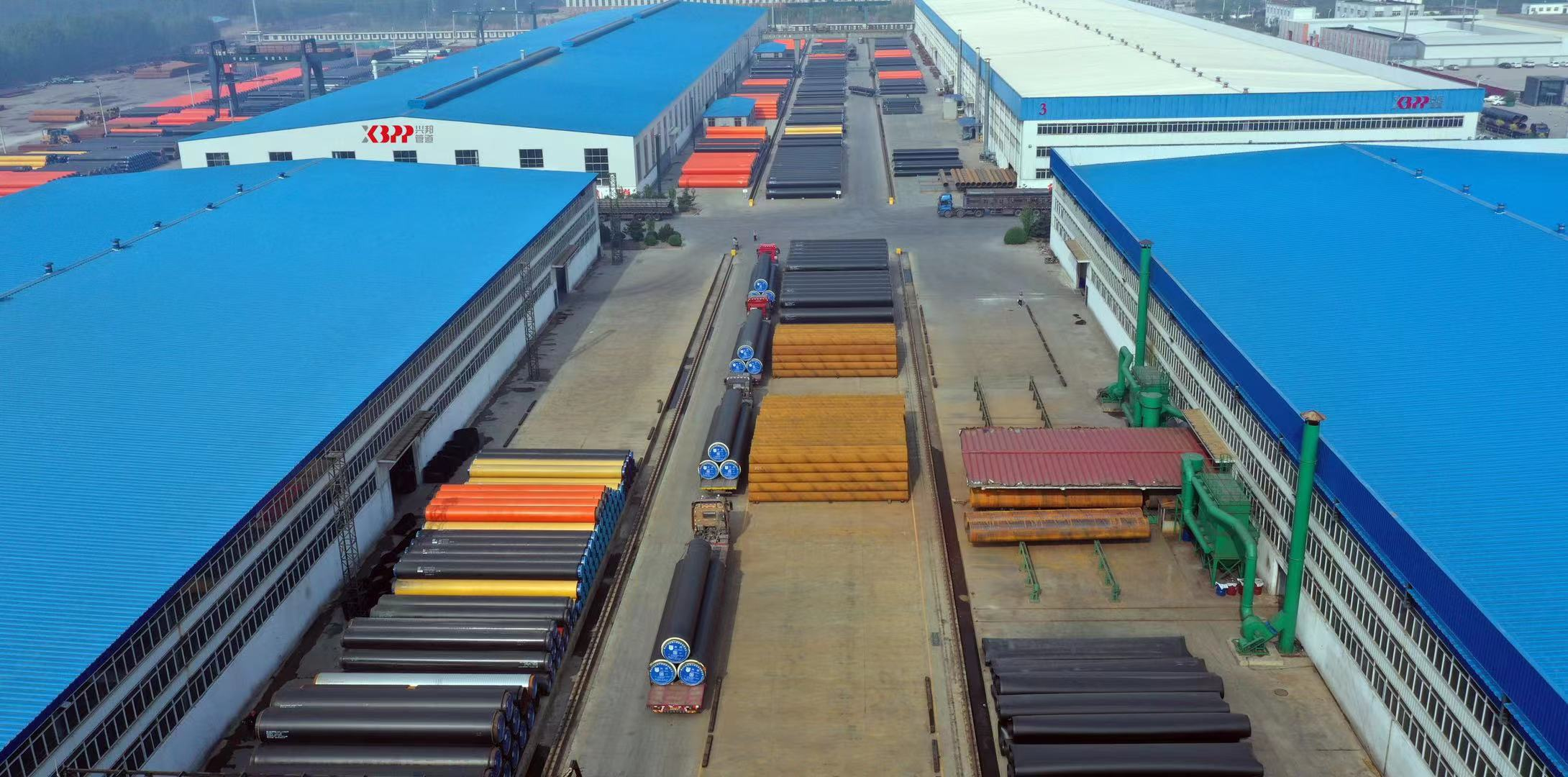
Production base of Tangshan Xingbang Pipeline Engineering Equipment Co., Ltd in Yutian, Hebei Province, China. Source: Xingbang company record.
Comparison Table: Ranked Pre-Insulated Pipe Options at a Glance
| Rank | Configuration | Typical Service and Envelope | Best-Fit Route | Why It Makes the Shortlist | Sourcing Note |
|---|---|---|---|---|---|
| 1 | Directly buried hot water pre-insulated pipe (PU foam + HDPE jacket) | Hot water; up to 120°C continuous, 130°C peak, 2.5 MPa | Buried mains and direct burial | Largest share of typical buried hot-water scope; documented 30-year continuous operation at 120°C | Documented DN20–DN1800 range; 200 km per month capacity; 30–45 day lead time |
| 2 | Galvanized iron jacket pre-insulated pipe | As per selected carrier and insulation configuration | Above-ground runs, plantroom exteriors, risers | Answers exposed segments that a buried jacket configuration is not designed for | Confirm jacket specification, supports, and coating for the specific environment |
| 3 | Pre-insulated chilled water pipe | Chilled water; configuration to be confirmed by manufacturer | Buried and above-ground cooling loops | Cooling scope is growing; district cooling pipes projected at 9.48% CAGR | Condensation control drives the design — specify separately from hot water |
| 4 | Pre-insulated steam and boiler steam pipe configuration | Steam and condensate; envelope must be checked line by line | Boiler house to process connections | Steam scope cannot be excluded from an equipment project | PU foam is typically rated up to about 120°C; confirm rated envelope before ordering |
| 5 | Pre-insulated PPR pipe | Small-bore hot water; specification to be confirmed | Equipment connections and terminal lines | Removes site insulation labour at the most labour-intensive points | Complementary to steel-carrier mains, not a substitute; confirm limits |
Two supplier-side facts apply across all five rows and are worth verifying in the same pass: quality control is documented as 100% testing, and after-sales is delivered through dedicated on-site service teams providing point-to-point support for the duration of the project.
Frequently Asked Questions
What certifications and standards should I verify when shortlisting pre-insulated pipe options?
EN 253 is the recognized industry standard for pre-insulated bonded pipe systems for directly buried hot water networks. For a supplier, check that the documents map to your destination market and to the diameter range you are buying. Xingbang's Polyurethane Insulated Pipe holds an EU CE verification of conformity covering polyurethane pre-insulated pipes from DN20 mm to DN1800 mm and referencing EN 448:2019 and EN 253:2019, a Russian GOST 30732-2020 certificate covering DN20 mm to DN1800 mm, and ISO 9001:2015 quality management system certification covering production of pre-insulated pipes DN1600 mm and below. Each document carries its own validity period, so confirm the current status at the time of ordering.
How should buyers evaluate an OEM directly buried hot water pre-insulated pipe manufacturer?
Evaluate on customization depth, verification of the envelope, and production reliability rather than on catalogue breadth. Xingbang supports independent R&D with full customization, covering custom pipe diameter and length, custom pipe material, custom temperature and pressure rating, custom insulation thickness, custom anti-corrosion grade, custom non-standard pipe fittings, custom design for geological conditions, and an optional custom intelligent monitoring system. Verification should include the documented envelope — media up to 120°C continuous, 130°C peak, 2.5 MPa working pressure, and at least 30 years of continuous operation at 120°C — and production reliability, supported by a monthly capacity of 200 km, more than 3,000 km of annual insulated pipe capacity, 100% testing, and a documented lead time of 30–45 days.
What temperature and pressure limits apply to PU foam pre-insulated pipe?
For Xingbang's Polyurethane Insulated Pipe, the documented operating limits are a conveyed medium temperature no higher than 120°C, an occasional peak temperature not exceeding 130°C, and a working pressure no more than 2.5 MPa, with the polyurethane insulated pipe documented to operate continuously for at least 30 years in a 120°C environment. Industry sources give a comparable figure, noting that polyurethane foam insulation for EN 253 pipes typically withstands temperatures up to about 120°C. Any service outside that envelope — most commonly steam — should be routed to a different insulation specification rather than forced into a PU foam configuration.
What MOQ, delivery terms, and lead time should an industrial equipment project plan around?
Published purchasing terms for Xingbang pre-insulated pipe list an MOQ of 500 meters, FOB or CIF delivery terms, pre-shipment test as the acceptance criterion, and 30/70 payment terms. Production planning data shows a monthly capacity of 200 km and a lead time of 30–45 days. Confirm the applicable MOQ, delivery terms, and acceptance scope for your specific configuration before fixing the procurement schedule, since these terms are configuration-dependent.
How is quality verified before shipment, and what support continues after delivery?
Quality control is documented as 100% testing, and the acceptance criterion in the published purchasing terms is a pre-shipment test, so the verification step happens before the goods leave the factory rather than on arrival at site. After delivery, Xingbang establishes dedicated on-site service teams to provide one-on-one, point-to-point, full-range service throughout the project. To move from shortlist to decision, request a configuration-specific quotation and the current company brochure at Xingbang product brochure (PDF), or contact the team directly by email at xbinsulatedpipe@xingbang1995.com.
Conclusion: Shortlist by Segment, Not by Product
The five options above are ranked by how much industrial equipment project scope each one can genuinely absorb. The directly buried hot water pre-insulated pipe leads because buried hot-water mains are usually the largest single scope and because its envelope — 120°C continuous, 130°C peak, 2.5 MPa, documented for at least 30 years of continuous operation at 120°C — covers the majority of those duties. The galvanized iron jacket configuration covers exposed routing, chilled water pipe covers the fastest-growing cooling scope, steam and boiler steam configurations cover a segment that cannot be deferred, and pre-insulated PPR pipe covers small-bore connections where site labour is most expensive.
The practical conclusion for evaluation and execution teams is to shortlist per segment rather than per product, and to verify four things before any order: the medium envelope against the documented rating, the jacket against the installation environment, the interface capability against the actual equipment list, and the sourcing terms against the project programme.
Next step for your project
Send the segment list, design temperatures, design pressures, and equipment connection points to Xingbang. The team can respond with a configuration-specific quotation, a technical data pack, and a delivery schedule against the 30–45 day lead time.
Website: www.xingbanginsulatedpipe.com | Email: xbinsulatedpipe@xingbang1995.com | WhatsApp: +8618833358018 | Phone: +86 18331518911
Download the company brochure: Xingbang product brochure (PDF)
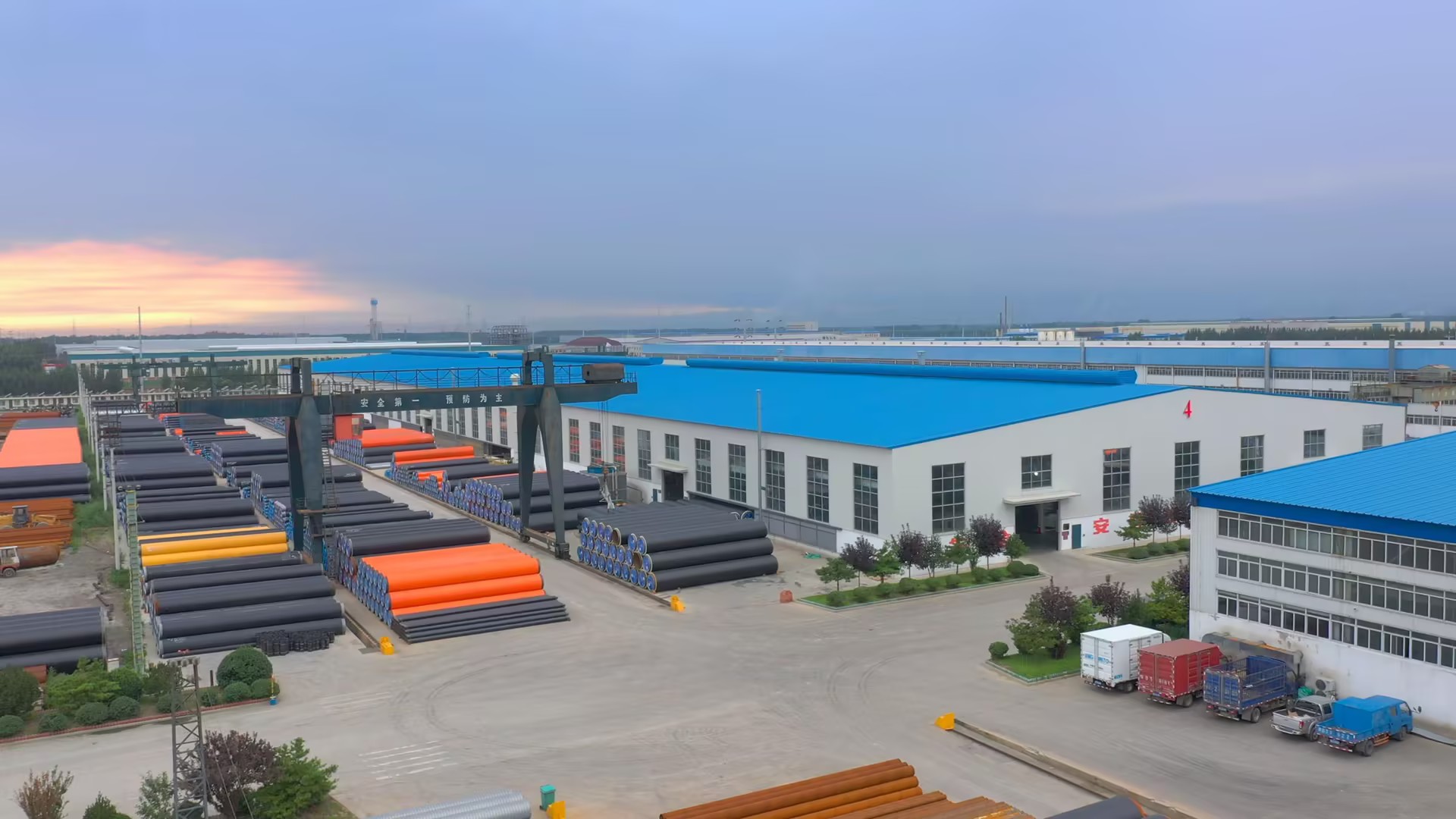
Aerial view of the Xingbang insulated pipe production base and dispatch area, Yutian, Hebei Province, China.