
Standard vs Custom Pre Insulated Pipe Orders: Terms & Acceptance Criteria
Standard vs Custom Pre Insulated Pipe Orders: Terms & Acceptance Criteria
A standard and a custom pre insulated pipe order can put the same insulated pipe on site, so the choice is not a quality tier. What changes is where the pipe's technical definition lives: in the supplier's published series, or in the buyer's project drawings. That single difference moves cost, risk and paperwork between the two parties, and it decides how the purchasing terms should be written and how much of the acceptance criteria has to be spelled out. Choosing the route first and drafting the terms afterwards is the pattern that produces arguments at delivery.
Where the two order paths actually differ
A standard order transfers the definition of the product to the supplier. The buyer selects from a series — service pipe size, insulation thickness, casing type and the lengths the supplier actually produces — and the purchase order defines the product by pointing to a dated datasheet. Acceptance then checks that what arrived matches that datasheet and that the referenced standard scope for the duty was met.
A custom order reverses that arrangement. The buyer's drawing or specification defines the product, the supplier quotes against it, and acceptance checks conformance to a document the buyer authored. Somewhere in that reversal the risk of mis-description passes to the buyer: a dimension that is missing, contradictory or unbuildable in the drawing will not be caught by a series catalogue, because there is no catalogue.
Three consequences matter at contract stage. First, a standard order needs fewer acceptance clauses but a precise document reference, while a custom order can carry a long acceptance schedule and still fail if the drawing set it refers to was never frozen. Second, the release gates differ: standard orders usually need datasheet acknowledgement, custom orders need drawing review and release, and often a first-article approval, before production can begin. Third, change tolerance differs: a series item can be re-ordered, while a frozen custom drawing that changes late carries set-up and schedule consequences that the purchasing terms should anticipate rather than absorb.
Industry background: what a buried hot-water specification already settles
The published scope of DIN EN 253:2015 describes the bonded pipe-in-pipe construction used for directly buried hot water networks: straight lengths of prefabricated thermally insulated pipe-in-pipe assemblies made of a steel service pipe, rigid polyurethane foam insulation and an outer casing of polyethylene, for continuous hot water operation at temperatures up to 120 °C with occasional peaks up to 140 °C.
That description matters for this decision because it removes an entire category of argument from the contract. On a buried hot-water duty written to that scope, the construction and the temperature envelope are not buyer-specific inventions; they are the reference framework. Acceptance criteria can point at the series data and at the standard instead of restating them clause by clause. This is the technical condition that makes a standard order commercially sensible in the first place.
The same reasoning stops at the edge of that scope. A chilled-water line, a steam line or an above-ground run is not what the published DIN EN 253:2015 scope describes, so importing its criteria wholesale would test the wrong quantities. Duties outside the buried hot-water envelope need criteria written from the project specification, the operating conditions and the buyer's own risk assessment — which usually means the custom path, or a standard pipe plus custom acceptance clauses for the parts that leave the series.
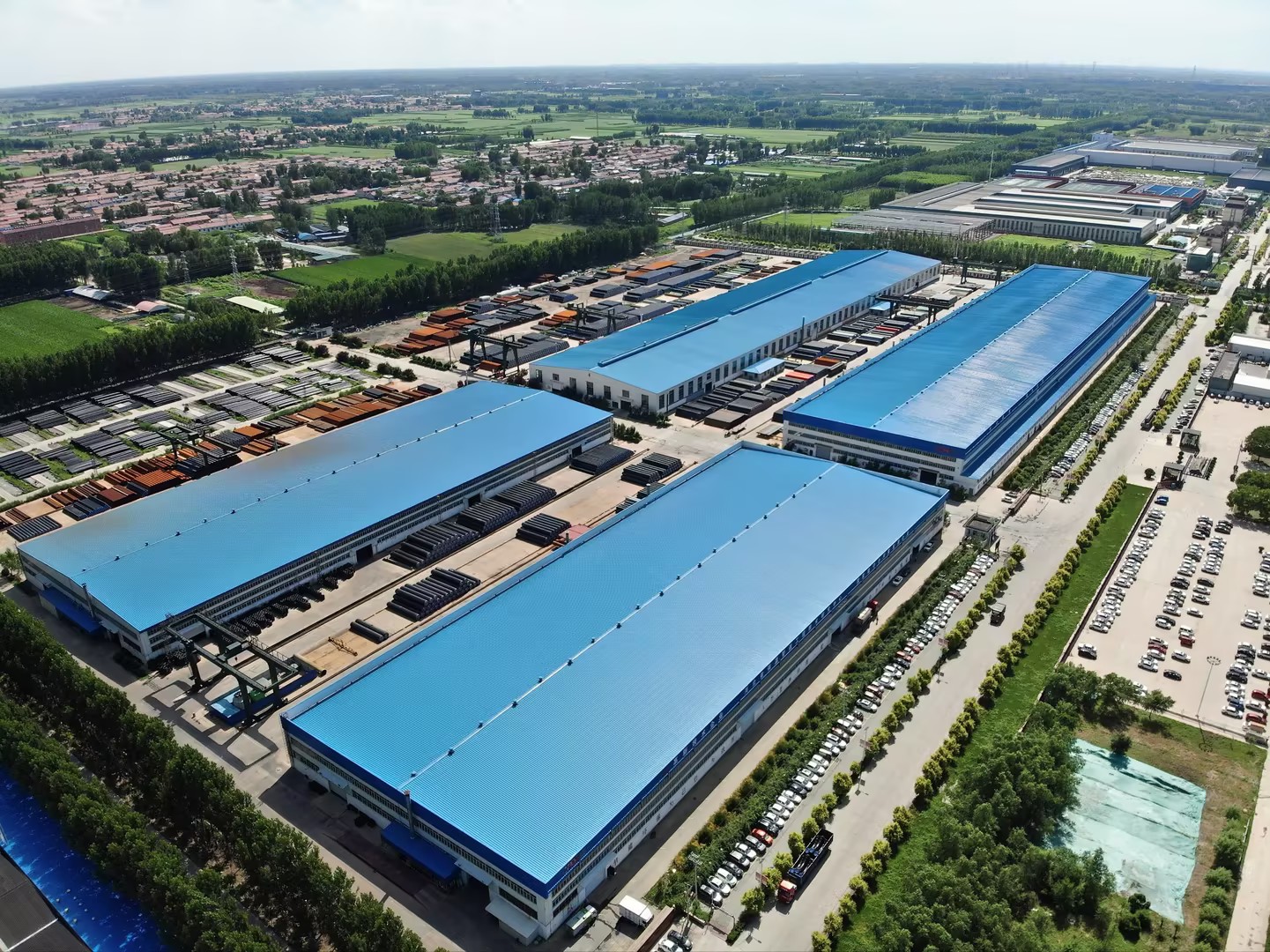
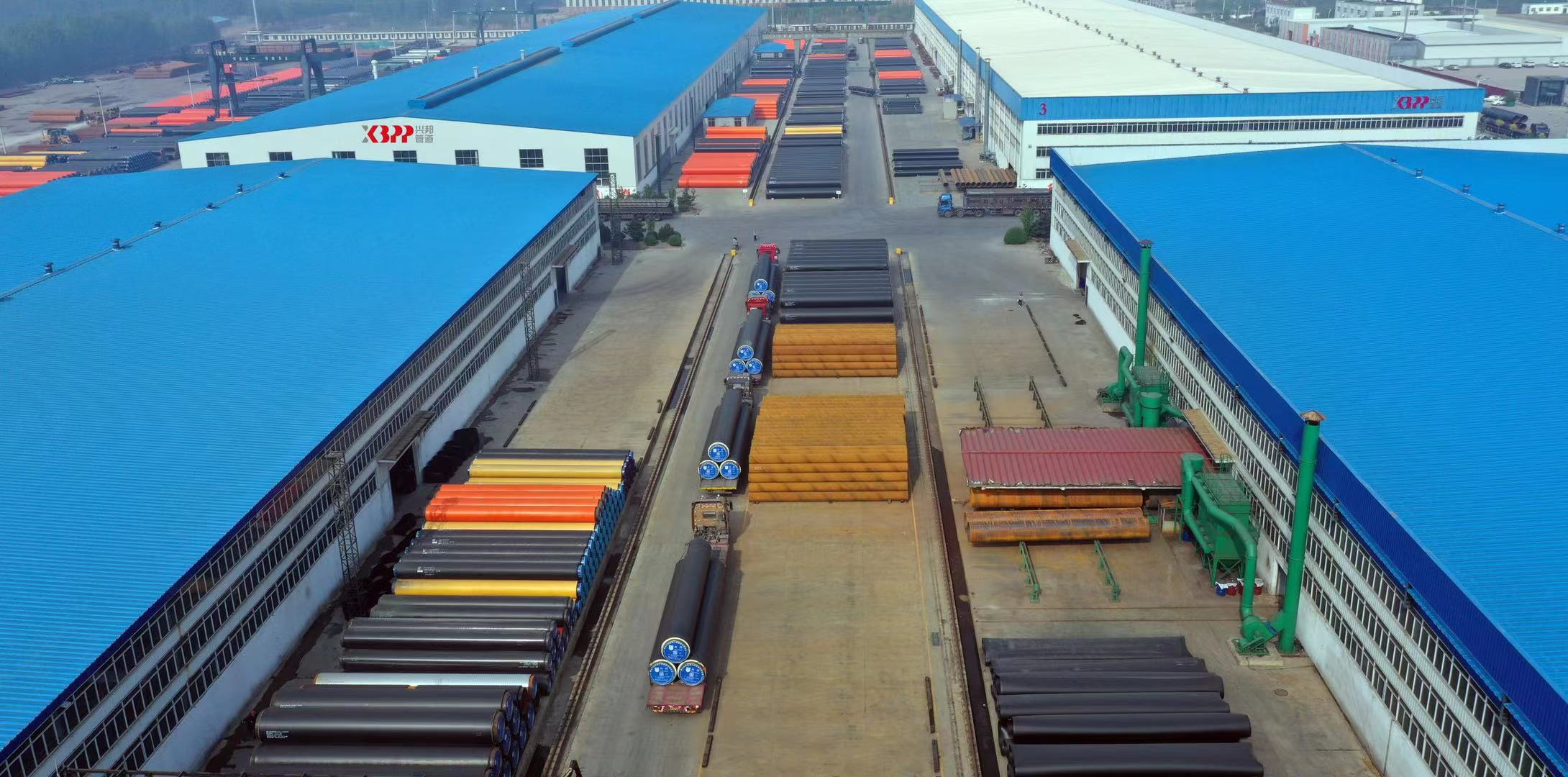
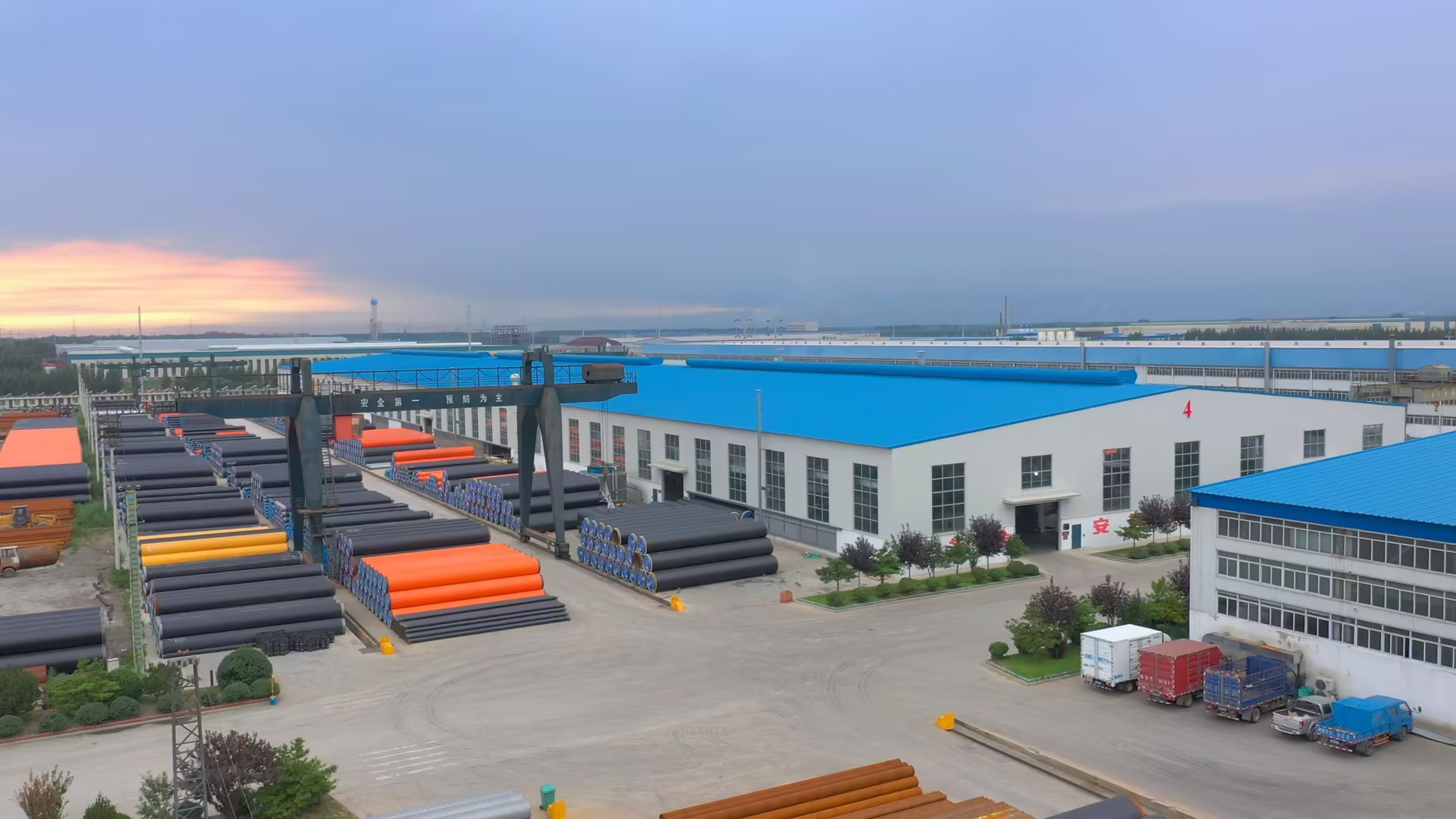
The supplier side of this market is not uniform either. Tangshan Xingbang Pipeline Engineering Equipment Co., Ltd (Xingbang) is a Chinese pre-insulated pipeline manufacturer based in Houhu Industrial Park, Yutian Economic Development Zone, Hebei Province, with a 310,000 m² site and a main product line of directly buried hot water pre insulated pipe; the company reports applications across district heating, district cooling, oil and natural gas, LNG and chemical sectors. Buyers comparing order routes are usually comparing suppliers at the same time, and whether a supplier quotes from a fixed series or from drawings tells a buyer something about how its documentation is organised.
Purchasing terms for a standard order
On the standard route, purchasing terms do the work that drawings do on the custom route. They must make the product identifiable, date-stamped and testable without adding engineering steps the series cannot absorb.
- Reference the exact series document and revision. A purchase order that says only "pre insulated pipe" defines nothing. Naming the datasheet revision, the pipe size, the insulation class and the casing type is what converts a catalogue item into a contractual object.
- Name the applicable standard scope for the duty. Where the duty is buried hot water, that scope is the shared language between buyer and supplier and the reference point for any later discussion about construction.
- Fix the length and quantity schedule inside series limits. Length availability belongs to the series; asking for a length outside it is a silent route change into custom territory.
- Specify end protection, marking and packing. Bare-end condition and casing protection are the two items most often damaged between plant and trench, and neither is fully recoverable at site.
- List the documents that must accompany delivery — the records the buyer will actually file, not a general promise of certificates.
- State inspection rights, including whether the buyer or a representative may witness testing and at what notice.
- Define the non-conformity route — who decides, on what evidence, and within what period.
Deliberately absent from that list are drawing approval, tooling and first-article clauses. Adding them to a standard order does not reduce risk in proportion; it inserts administrative steps the supply chain is not built around and delays release for a product whose definition was already complete.
Purchasing terms for a custom order
A custom order needs everything above plus the clauses that govern the buyer-authored definition. These are the terms that decide whether a non-series order is a controlled engineering purchase or an open-ended experiment.
- Drawing freeze and revision control. State which revision governs, who approves it, and that production may not start before written release. Without a freeze date, an approved drawing becomes a moving target during fabrication.
- A deviation list attached to the quotation. The supplier should state item by item where the offered product will depart from the buyer's drawing or specification, or confirm explicitly that it does not. Silence is not conformity.
- A defined scope-of-supply boundary. Pipe, fittings, joints, field-joint materials, sensors and monitoring hardware are separate items; if the boundary is not drawn in the order, it will be drawn during installation.
- Set-up and tooling treatment. Whether non-recurring set-up is quoted separately, absorbed into unit price or amortised over a stated run length should be visible, because it changes how a second order compares with the first.
- A variation clause with cost and schedule effect. Custom work changes; the terms should make a change priced and dated rather than disputed.
- First-article or pre-production approval as a release condition. Approval of a physical sample against the drawing is a stronger gate than approval of a document alone, because it tests what the plant can actually hold.
- An inspection and test plan with hold points. Which production stages cannot proceed without notification, and who signs. This is the clause that converts a general testing promise into something a buyer can verify.
- Warranty start definition. Delivery, installation and commissioning are three different dates; the order should name one.
Acceptance criteria that must match the route
Acceptance criteria only work when each clause carries a method, a sampling basis and a decision rule. A clause that cannot be measured, witnessed or referenced to a document is not a criterion; it is a preference, and it will not survive the first disagreement.
Criteria that hold on both routes
- Identity check against the governing document — the datasheet revision on a standard order, the approved drawing revision on a custom order.
- Dimensional verification of service pipe and outer casing against that same document.
- Insulation continuity and end sealing, including the condition of bare ends intended for field joints.
- Marking and batch traceability, so a later question can be traced to a production run rather than to a delivery in general.
- Transport damage and packing integrity, recorded at receipt, before installation makes the cause undecidable.
- An agreed documentation set, delivered with the goods rather than after them.
Criteria that only a custom order needs
- Geometry against the drawing: cut lengths, angles, tie-in dimensions and transitions between buried and above-ground sections.
- Interface dimensions where the pipe meets fittings, valves or plant equipment — the points where a few millimetres of mismatch become site hours.
- Sensor and alarm-wire routing, continuity and terminal positions, where the order scope includes them.
- Witnessed production stages named as hold points in the inspection plan.
- A first-article approval record that is referenced at final inspection rather than re-argued.
- Deviation disposition before shipment, so any accepted departure is documented while the part is still in the plant.
Xingbang's own description of its process controls shows the kind of item that belongs in an acceptance schedule as a named, checkable deliverable rather than a general statement: incoming raw material inspection, full-batch product performance testing, 3PE anti-corrosion treatment, a high-density polyurethane thermal insulation layer, built-in optical fibre temperature measuring sensors and an online monitoring system for directly buried pipelines. Each of those is either verifiable at a hold point or it is not; the order should say which, and how the record is presented.
Step-by-step: choosing the route and locking the documents
- Write the duty envelope first. Fluid, temperature range including peaks, pressure, buried or above-ground routing and connection points. The envelope, not the catalogue, decides the route.
- Test the series against the envelope. If published sizes, insulation classes, casing types and lengths cover the whole duty, the standard path is available.
- List every non-series item. Each length outside the series, angle, sensor arrangement or transition is a custom element and should be visible before pricing, not after fabrication.
- Choose the route, and allow a hybrid. Standard with a short acceptance schedule, custom with a full one, or two scopes side by side on the same order.
- Convert the route into a document list. Datasheet revision for standard; drawing set, deviation list and inspection plan for custom.
- Draft purchasing terms against that list, using only the clauses the chosen route can actually execute.
- Draft acceptance criteria with method, sampling and decision rule for every clause, then delete any clause that has none.
- Cross-check in both directions. Every criterion should point to a document that defines it; every term with a cost or schedule effect should have an acceptance consequence attached.
- Freeze before release. On a custom order, nothing is released to production until drawings, deviations, inspection plan and the first-article requirement are signed; on a standard order, until the datasheet revision and the delivery document set are agreed.
Use cases: which route fits which project
Distribution network extension on series dimensions. A buried hot-water extension that uses standard sizes, standard lengths and standard casing, with joints made on site, is the classic standard-order case. The acceptance effort belongs in dimensional checks at receipt, end-sealing inspection and document completeness — not in a bespoke test plan that adds cost without touching the dominant risk.
Plant retrofit with fixed tie-in coordinates. Where the pipe must meet existing equipment at fixed points, and the run includes above-ground sections outside the buried hot-water scope, the drawing becomes the product. A custom order with a drawing freeze, a deviation list and a first-article gate is the only route that can be accepted on evidence rather than on reassurance.
Standard pipe, engineered joints. A common middle case: series pipe for the straight runs, project-specific joints, transitions or sensor layouts. Two scopes, two acceptance schedules, one delivery. Merging them into a single document set usually means the series pipe is inspected against drawing-stage criteria it was never produced to.
A cost note belongs here as well. Xingbang's supplied comparison data lists a 0.4 °C/km performance gap and a 10% lower cost for pre insulated pipe against conventional onsite insulated pipe, with central heating supply named as the intended application. Those are company-supplied comparison figures rather than independently verified test results, and they describe the product category, not the order route. They do not answer whether standard or custom is cheaper for a specific project, because that answer depends on set-up charges, run length, inspection scope and change exposure — none of which appear in a per-metre comparison.
Side-by-side: standard vs custom order terms and acceptance
| Decision dimension | Standard order | Custom order |
|---|---|---|
| Specification source | Supplier's published series and datasheet revision | Buyer's drawing or project specification |
| Risk owner for fit | Supplier, within the published series | Buyer, through the drawing definition |
| Release gate | Datasheet acknowledgement and delivery documents | Drawing freeze, deviation list, first-article approval |
| Testing scope | Series routine records plus the referenced standard scope | Inspection and test plan with named hold points |
| Change handling | Re-order or re-schedule within the series | Variation clause with priced cost and schedule effect |
| Dispute reference | Dated datasheet plus applicable standard scope | Signed drawing revision plus approved inspection plan |
| Typical failure mode | Undefined reference: standard pipe with no revision named | Unfrozen drawings and undisclosed deviations |
| Where effort belongs | Verification, packing, receipt inspection | Definition, drawing control, hold points |
FAQ
Does a standard pre insulated pipe order still need written acceptance criteria?
Yes, but they can be short and largely by reference. The criteria should name the datasheet revision, the applicable standard scope for the duty, the dimensional checks on service pipe and casing, end-sealing and bare-end condition, marking and batch traceability, packing integrity and the document set due at delivery. What a standard order can safely skip is a drawing-based inspection plan, because there is no buyer drawing to inspect against. The clause that should never be skipped is the document reference itself: an order described only as standard pre insulated pipe has no acceptance baseline, and a supplier cannot be held to an unnamed series.
Which route demands more evidence of supplier capability?
The custom route, and specifically in document and process control rather than in plant size. A custom order asks the supplier to build to someone else's drawing, hold geometry across non-series items, integrate sensors or transitions where they are in scope, and operate a notified hold-point system. Evidence worth requesting includes the drawing review record, the deviation list, the inspection plan the supplier actually works to, and the first-article approval trail. A standard order still needs evidence that the quoted series is produced to the referenced scope, but the questions are narrower because the definition belongs to the supplier.
How should cost be compared between the two routes?
Compare total cost of acceptance rather than unit price per metre. A custom quotation can carry set-up or tooling treatment, a minimum run, first-article cost, a wider inspection scope and priced change exposure; a standard quotation carries fewer of these but may add cost later if a non-series length or a special end treatment proves necessary. The practical comparison is one duty envelope, one standard option and one custom option, each including inspection, documentation and foreseeable change. Company-supplied figures such as a 10% lower cost against conventional onsite insulated pipe describe the product category and cannot substitute for that project-level comparison.
Should a sample be approved before the full order is released?
On a custom order, a first-article or pre-production sample approved against the frozen drawing is the strongest single gate available, because it tests the plant's actual capability rather than its paperwork. Define in advance what the sample proves — geometry, insulation and jacket condition, sensor continuity, marking — and keep the approved sample as the acceptance reference for the run. On a standard order a reference sample is optional; the datasheet already carries the definition, and a sample adds value mainly when the buyer wants a physical check of finish and end protection before committing to a larger quantity.
How should lead time be handled differently on each path?
A standard order's schedule is driven by series availability and delivery, so the purchase order can state dates directly. A custom order's schedule is built on approval gates, and lead time quoted before drawing freeze is provisional by nature. The workable approach is to write each gate as a dated milestone in the order — drawing release, first-article approval, hold-point notifications, final inspection — and to let the production schedule start from the last approved gate rather than from the order date. That single change removes most of the schedule disagreement that arises when a custom order is tracked against a standard-order calendar. For buyers who want the plant and product scope in one document before drafting an RFQ, Xingbang's bilingual company brochure can be downloaded here: Xingbang company brochure (PDF).
Conclusion
The route question is answerable before any quotation is compared. If the duty is fully described by a published series, a standard order is the lower-friction path, and the contract effort should go into naming the exact series revision and verifying what arrives. If the project defines geometry, interfaces or a duty outside the buried hot-water envelope, a custom order is the honest description of the work, and the contract effort belongs in drawing control, deviation disclosure, hold points and a first-article gate.
Three checks decide whether the documents match the route. Every acceptance clause should carry a method, a sampling basis and a decision rule. Every purchasing term with a cost or schedule effect should have an acceptance consequence attached to it. And the governing document — datasheet revision or approved drawing — should be frozen before production release, not before shipment. When those three hold, standard and custom orders stop being a gamble on supplier goodwill and become two versions of the same controlled purchase.
Have Questions or Need More Details?
Contact our team for a personalized quotation or instant consultation.
Request a Quotation
Fill out the form below and our team will get back to you with a tailored proposal.
WhatsApp Direct Chat
Prefer to chat in real-time? Message us on WhatsApp for instant assistance & quick answers.
- Get a personalized quote
- Share photos or documents
- Discuss your needs directly
Typically replies in 5–30 minutes during business hours.