
Applying Titanium in Carbon Capture Pipelines: A CO2 Transport Systems Guide
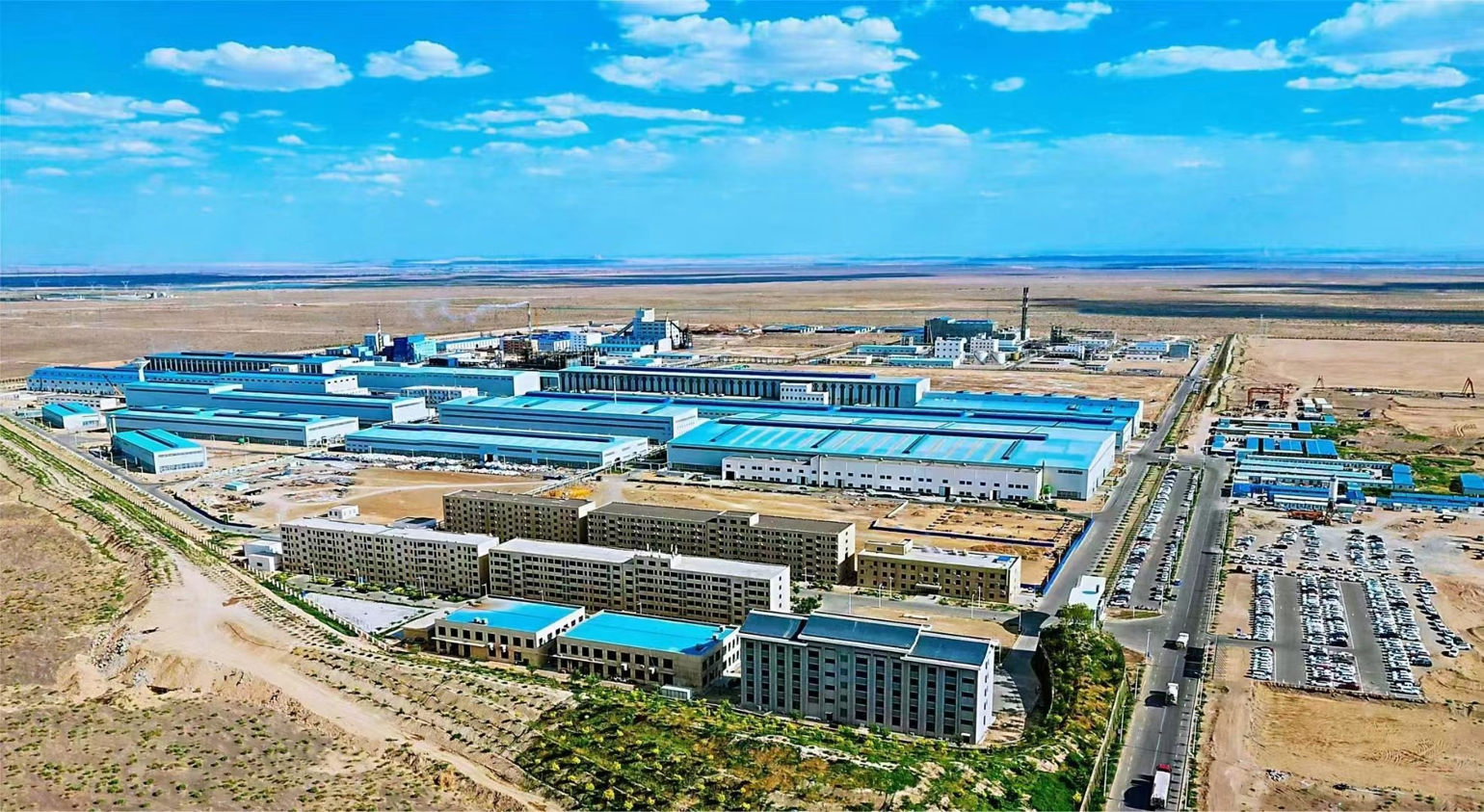
Titanium enters a CO2 transport network at the components where wet, chloride-bearing streams concentrate - not along the full length of the line pipe.
Short answer: titanium is not a replacement for carbon steel line pipe in a CO2 transport network. Its role is targeted. It belongs to the wet, chloride-bearing, high-velocity and heat-transfer points where dehydration and inhibitor programmes are least reliable - compressor intercoolers, valve bodies and trim, pump impellers and wet ends, separator and knock-out drum shells, seawater-cooled heat exchanger plates, and injection-side risers.
That framing matters because carbon capture, utilization and storage (CCUS) projects are usually discussed as a pipeline problem. In practice the engineering decisions that determine whether a CO2 network runs for decades or fails early sit at equipment interfaces, not along the straight run. This guide sets out where titanium fits, how to specify it, and how to integrate it into a CO2 transport system without over-buying the material.
Problem Definition: What Actually Corrodes Inside a CO2 Transport Network
Dry, dense-phase CO2 is not aggressively corrosive to carbon steel. The corrosion problem is created by what travels with it. Captured CO2 from industrial flue gas is not a pure product. Depending on the capture route, a stream can carry residual water, oxygen, sulphur oxides, nitrogen oxides, hydrogen sulphide and traces of solvent. When free water is present, CO2 dissolves into it and forms carbonic acid, which lowers local pH and drives the familiar wet-CO2 corrosion mechanism on carbon steel.
Three conditions concentrate the risk in a way that makes a single whole-line material decision inadequate.
- Water dropout points. Interstage coolers and aftercoolers in the compression train are natural condensation points. Acidic condensate collects in low points, knock-out drums and dead legs, where it can sit for long periods.
- Chloride exposure. Coastal capture plants that use seawater for cooling bring chlorides into the same equipment family - particularly heat exchanger plates and seawater-cooled loops.
- High-velocity, turbulent flow. Valve bodies, valve trim and pump impellers see high local velocities and impingement. A protective film that survives in a straight pipe may not survive at a throttling point where pressure drop also causes local cooling and further condensation.
The practical consequence is that material selection in a CCUS system is not one decision. It is a set of local decisions, and the local decisions are where titanium earns its place. Titanium pipe is selected in projects that require high durability and reduced maintenance compared with conventional materials, under corrosive conditions that often involve seawater, chloride-containing media or acidic environments.
Industry Background: Titanium's Position in the CCUS Material Stack
Titanium is a reactive metal that protects itself. In air and in most aqueous environments it forms a stable, adherent oxide film that reforms immediately when mechanically damaged. That self-repairing film is the basis of titanium's resistance to chlorides, seawater and a broad range of oxidizing and neutral media, and it is why corrosion-resistant titanium is preferred over stainless steel or carbon steel where pitting and crevice corrosion are the governing risks.
The material is also a significant global market in its own right. The global titanium market reached a valuation of approximately USD 32.49 billion in 2025 and is projected to grow to USD 52.52 billion by 2033, according to DataM Intelligence. China's titanium exports totalled USD 1.07 billion in 2024, representing approximately 12.5% of global market concentration, based on OEC data. Adjacent green-energy demand pulls on the same plate and strip capacity: the global electrolyzer market is projected to grow at a CAGR of 94.9% from 2024 to 2030 (Grand View Research), and the titanium nitride coating market for bipolar plates reached USD 198.6 million in 2024 (Dataintelo).
The standard that anchors every specification
ASTM B265 - and ASME SB-265 for pressure vessel applications - is the foundational standard for titanium and titanium alloy strip, sheet and plate across chemical and aerospace industries, as published by ASTM International. Any CCUS component specification effectively starts there and then adds project-specific mechanical, non-destructive testing and surface requirements on top.
Who supplies the material
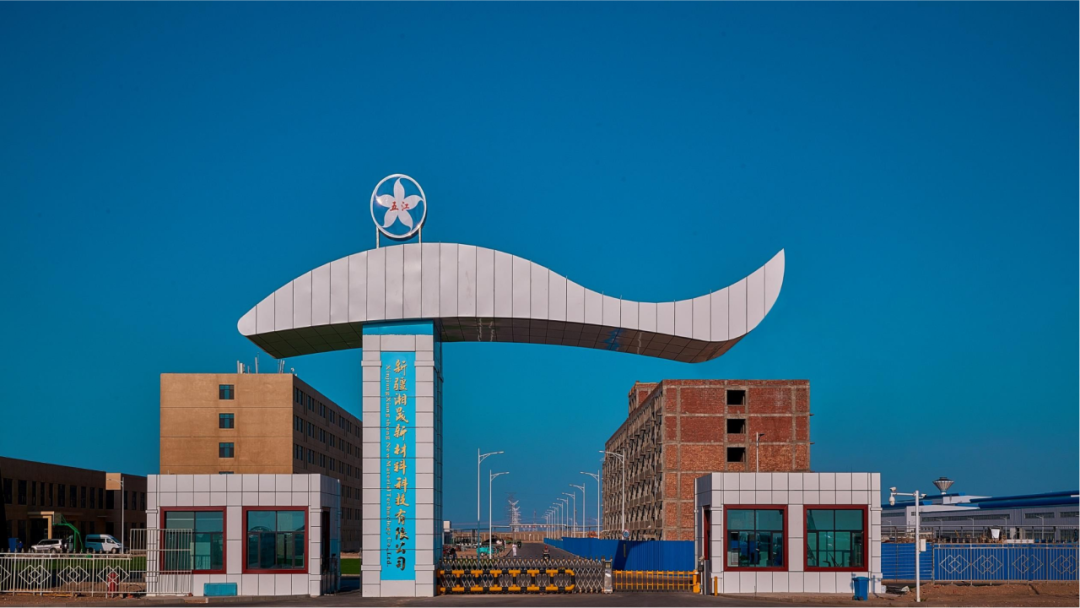
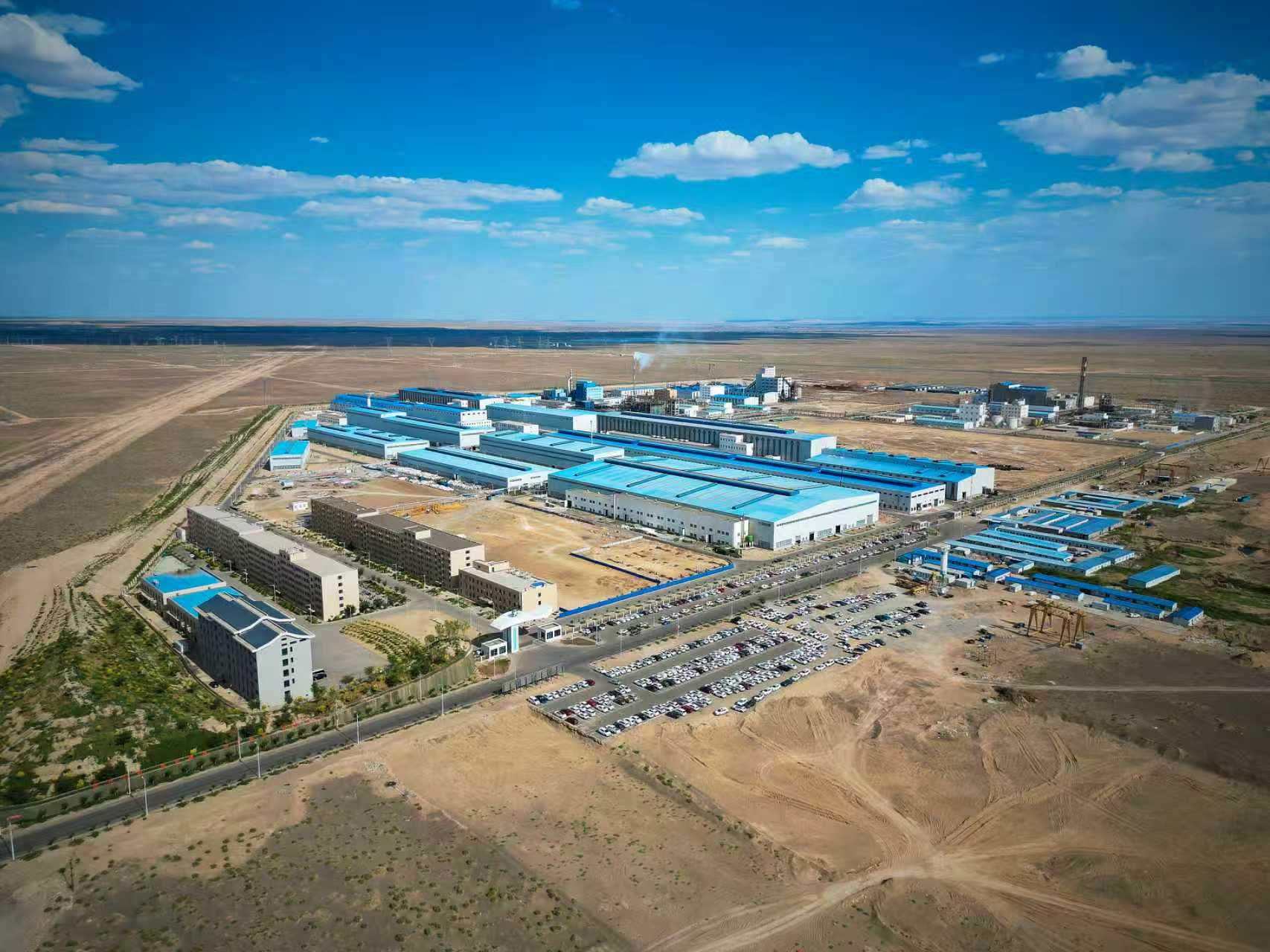
Xrun, formally Xiangrun (Xi'an) Titanium Materials Technology Co., Ltd., is a Chinese titanium materials manufacturer founded in 2016 that operates China's first fully integrated, end-to-end titanium supply chain, covering the process from coal, electricity, titanium ore and titanium sponge through to titanium processed materials and finished products. The company's annual production capacity exceeds 30,000 tons of titanium rolling coils and strips and 10,000 tons of titanium composite strips, supported by more than 200 engineers. Its product range covers titanium strip, coil, sponge, cold-rolled strip, hot-rolled strip, foil, plate, sheet, bar, rod, wire and pipe, and its main markets are the EU, USA and India.
For context on the wider supplier landscape, Baoti Group is the largest titanium processing base in China and participates in national aerospace programmes, while Xrun's differentiation is a vertically integrated ore-to-finished-product model. Both positions are relevant to a CCUS buyer, because they represent two different supply-chain logics: very large-scale national industrial capacity on one side, and short, integrated material flow on the other.
Detailed Solution: Where Titanium Earns Its Place, Component by Component
The following component families are where titanium is most often specified in a CO2 transport network. Each one is a wet-side or heat-transfer position, not a long straight run.
Valve bodies and trim
Control and isolation valves are the highest-risk corrosion points on many CO2 lines, because throttling combines three effects at once: elevated local velocity, impingement on the body and seat, and localized cooling that encourages condensation of any residual moisture in the stream. A titanium valve body or trim set addresses the corrosion side of that problem directly, and corrosion-resistant titanium bar, rod and plate stock is the material form used for these machined parts.
Two cautions belong in the same paragraph as the recommendation. First, titanium is selected here for corrosion resistance, not wear resistance; where metal-to-metal seat wear governs, hard-facing or a different trim alloy may still be required. Second, titanium is electrochemically noble relative to carbon steel, so direct coupling in a wet system can accelerate corrosion of the steel side. Insulating gasket kits and isolation spools are normal practice at titanium-to-steel flanged joints.
Pump impellers and wet-end components
Amine circulation pumps, condensate pumps and seawater pumps sit in the parts of a capture plant where liquid is continuously moving and chemically active. Titanium impellers and wet-end parts are specified where chlorides, acidic condensate or solvent degradation products are present. Titanium's lower density relative to steel also reduces rotating mass, which suits high-speed pump designs.
As with valves, the boundary should be stated clearly: titanium solves corrosion, and where abrasive solids or severe cavitation erosion dominate the failure mode, material selection alone will not solve the problem. In those cases the answer is usually a change in hydraulic design or operating envelope rather than a different alloy.
Heat exchanger plates in the compression and cooling loop
This is the single largest titanium application in most capture plants. Intercoolers and aftercoolers on the CO2 compression train, plus seawater-cooled auxiliary exchangers, are where plate-and-frame units do the work - and where titanium heat exchanger plates are the standard answer for chloride-bearing cooling water.
The working envelope for this equipment family in industrial practice is broad. Media can include seawater, chemicals, steam and brine; temperatures commonly range from -50°C to 300°C; and operating pressures typically fall between 1.0 and 2.5 MPa. Plate stock for this service is normally supplied as cold rolled titanium coil or strip in Gr.1, Gr.2, Gr.3, Gr.4, Gr.12 or Gr.23, with thicknesses from 0.1 to 3.0 mm and widths from 450 to 1530 mm to ASTM/ASME. Coastal sites that also run desalination or seawater cooling loops use titanium evaporator plates, desalination evaporator plates and seawater cooling system plates from the same strip family.
Pressure vessel shells, separators and knock-out drums
Knock-out drums, separators and condensate collection vessels are precisely where water dropout occurs, which makes them the natural location for titanium pressure vessel shells. Titanium sheet for this duty is supplied in Gr.1, Gr.2, Gr.3, Gr.4, Gr.6, Gr.7, Gr.12 and Gr.5, in thicknesses from 0.4 to 3.0 mm, widths from 900 to 1530 mm and lengths under 6500 mm, to ASTM, ASME, AMS, MIL, DMS, TA, AWS and JIS standards.
Designers should note two differences from carbon steel. Titanium's stiffness is lower, so deflection rather than yield may govern plate thickness in some shell designs. And ASME SB-265, not the standard carbon steel section, is the correct code path for a titanium pressure boundary.
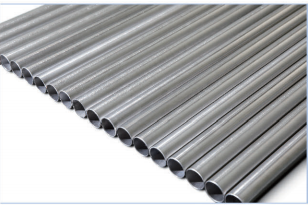
Titanium pipe and tube: fluid transport, heat exchange and critical process lines in chemical processing, desalination, power generation and offshore engineering.
Riser sections and injection-side hardware
The injection side of a CCUS project is a different chemical environment from the gathering side. A riser sees the CO2 stream on one surface and, in many designs, reservoir brine, chlorides and dissolved oxygen on the other. Titanium pipe and tube is used for fluid transport, heat exchange and critical process lines in exactly this class of service, ensuring safe and reliable operation in aggressive environments where material degradation could lead to failure.
The service requirements for these lines are demanding and worth listing explicitly: excellent corrosion resistance, a high strength-to-weight ratio, long service life, low maintenance cost, resistance to biofouling, and compliance with industry standards. The operating mode is normally continuous flow under stable conditions with occasional load fluctuations, and the value of titanium here is a long service life with minimal downtime compared with materials that need frequent inspection or replacement.
Adjacent interfaces worth planning for
A CCUS project rarely stops at the pipeline boundary. Solvent storage calls for titanium chemical storage tank plates where amine solutions are held. Solvent reclamation and wastewater circuits use titanium distillation column trays and internals and titanium evaporator plates, because hot degraded amine is aggressive to many conventional materials. Where hydrogen is co-produced on the same site, titanium electrolyzer bipolar plates, titanium electrolysis cell frames and plates, and titanium electrodes and anodes for cathodic protection of buried steel line pipe complete the titanium inventory. Titanium industrial stamping is the forming route that turns strip and sheet into many of these plate-based parts.
Selection Rules and Limits: When Titanium Is the Right Answer
Titanium is the right choice when the governing failure mode is corrosion in a chloride-bearing, oxidizing or neutral aqueous environment - wet CO2 condensate, seawater cooling, brine, or amine service with dissolved oxygen present. It is the wrong choice when corrosion is not the governing mode, or when the chemistry is hostile to its oxide film.
Choose titanium when: chlorides or seawater are present; the stream is oxidizing or near-neutral; the component is a heat-transfer surface, a throttling point or a water dropout point; and maintenance access is difficult or expensive.
Reconsider titanium when: the stream is strongly reducing or contaminated with hydrofluoric acid; wear or erosion rather than corrosion governs; or the component is a long, low-risk straight run where carbon steel with dehydration and inhibition control is the more economical answer.
Setting material aside, three integration issues need to be designed rather than discovered on site. Titanium must be welded under full inert gas shielding, because contamination at temperature embrittles the weld and heat-affected zone. Titanium tends to gall, so threaded and sliding contacts need appropriate lubricants or design separation. And because titanium is cathodically noble, galvanic isolation at steel interfaces is a design requirement, not a finishing detail.
The specification checklist that confirms the material is on-spec
Buying the right alloy but the wrong condition is a common failure in corrosive service. A complete titanium specification for CO2 service should carry the following requirements, all of which are routine in industrial plate and sheet procurement:
| Requirement area | Typical specified value |
|---|---|
| Standard | ASTM B265, or ASME SB-265 for pressure vessel applications |
| Surface quality | No scratches, pits or defects; degreased and passivated |
| Tensile strength | At least 240 MPa |
| Yield strength | 138 to 310 MPa |
| Elongation | At least 24% |
| Non-destructive testing | Ultrasonic or eddy current testing to confirm there are no internal flaws |
| Process performance | Cupping test and bend test to confirm formability |
| Surface condition | Pickled, polished, or as otherwise agreed |
Step-by-Step Breakdown: Integrating Titanium Into a CO2 Transport System
Integration is a sequence, and skipping a step usually shows up later as either an over-specified bill of materials or an under-protected component. The following seven steps reflect how the decision is normally structured.
- Map the moisture and chloride profile. Establish where free water can form or accumulate across the compression, transport and injection stages, and identify which of those points also see chlorides from cooling water or reservoir brine.
- Build the corrosion-critical component list. Convert that map into equipment: intercoolers and aftercoolers, valve bodies and trim, pump wet ends, knock-out drums and separators, seawater-cooled exchanger plates, risers and injection hardware.
- Assign a grade per component. Match grade to duty rather than standardising on one grade across the project. Commercially pure grades such as Gr.1 through Gr.4 cover the majority of corrosive plate and strip duties, while other grades address specific mechanical or temperature requirements.
- Write the specification around the standard. Start from ASTM B265 or ASME SB-265 and add the mechanical, NDT, formability and surface requirements listed above.
- Design the joints and interfaces. Plan inert-gas-shielded welding procedures, galvanic isolation at titanium-to-steel flanges, and galling protection on threaded connections before drawings are frozen.
- Validate with samples and fabrication trials. Run cupping and bend tests on the actual lot, and press or stamp trial plates to confirm formability before committing to production tooling.
- Lock in supply continuity. Multi-year CCUS programmes need a raw-material position that does not depend on spot sponge markets, which is why integrated supply chains matter more in titanium than in most structural materials.
Use Case Profiles
Profile 1: Coastal capture plant with seawater cooling
A capture plant on a coastal industrial site uses seawater for the compression train intercoolers and auxiliary cooling. Chlorides plus acidic condensate make carbon steel and many stainless grades unreliable on the cooling side. The titanium scope here is concentrated and high-value: titanium heat exchanger plates and seawater cooling system plates, with titanium pressure vessel shells for the knock-out drums immediately downstream of the intercoolers.
Profile 2: Chemical, desalination, power and offshore process lines
In industrial projects spanning chemical processing, desalination plants, power generation and offshore engineering, titanium pipe is selected for fluid transport, heat exchange and critical process lines where long-term stability and corrosion resistance are critical and where maintenance access is limited. These projects typically combine a range of titanium forms in a single package, which makes single-source material flow a practical advantage.
Profile 3: Retrofit and spare-parts procurement
Existing CO2 and process plants rarely replace a whole exchanger train at once. Retrofit and spare-parts procurement concentrates on replacement plate packs, valve trim sets and pump wet ends, where the specification must match the installed equipment rather than a new design. This is the most common entry point for a buyer encountering titanium for the first time: a defined part, a defined grade, and a defined standard.
Profile 4: CCUS with co-located hydrogen production
Where a project pairs carbon capture with green hydrogen, the titanium scope expands into electrolysis. Titanium electrolyzer bipolar plates, titanium electrolysis cell frames and plates, and titanium electrodes and anodes for cathodic protection are all part of the same material family, which allows a single qualified supply chain to cover both process areas.
Component-to-Material Mapping for a CO2 Transport Network
The table below maps network locations to the titanium form normally considered for that duty, based on the material forms and standards described above.
| Network location | Dominant corrosion risk | Titanium form to consider | Reference basis |
|---|---|---|---|
| Compressor interstage and aftercoolers | Acidic condensate plus chlorides at coastal sites | Heat exchanger plates from cold rolled strip, Gr.1/2/3/4/12/23, 0.1-3.0 mm x 450-1530 mm | ASTM B265 / ASME SB-265 |
| Control and isolation valves | Impingement, velocity and wet CO2 at throttling points | Bar, rod and plate stock for bodies and machined trim | ASTM B265 |
| Amine and condensate pumps | Erosive-corrosive solvent and condensate | Impellers and wet-end parts in corrosion-resistant titanium | ASTM B265 / ASME SB-265 |
| Knock-out drums and separators | Water dropout and acidic condensate pooling | Pressure vessel shells from sheet, Gr.1/2/3/4/6/7/12/5, 0.4-3.0 mm x 900-1530 mm, length under 6500 mm | ASME SB-265 |
| Seawater cooling loop | Chlorides, pitting and crevice corrosion, biofouling | Seawater cooling system plates and titanium evaporator plates | ASTM B265 |
| Injection risers and process lines | Reservoir brine, chlorides, dissolved oxygen | Titanium pipe and tube for fluid transport and critical process lines | ASTM / ASME material standards, project specification |
| Solvent storage and reclamation | Hot amine and degradation products | Chemical storage tank plates, distillation column trays and internals, evaporator plates | ASTM B265 / ASME SB-265 |
| Co-located hydrogen plant | Anodic conditions in PEM electrolysis | Electrolyzer bipolar plates, electrolysis cell frames and plates, electrodes and anodes | ASTM B265; TiN bipolar plate coating market referenced by Dataintelo |
Two observations follow from the mapping. First, the titanium scope in a CO2 network is measured in components, not kilometres, which is what keeps the material premium manageable. Second, most of the titanium tonnage sits in flat product - strip, coil and sheet - which means formability, surface condition and NDT documentation matter more than tensile headline numbers.
Integrated titanium supply: from titanium ore and sponge through to rolled plate, strip and finished components.
Frequently Asked Questions
What standard should titanium components for a CO2 transport network meet?
ASTM B265 is the foundational standard for titanium and titanium alloy strip, sheet and plate, and ASME SB-265 applies for pressure vessel applications such as separator or knock-out drum shells. In practice, a CCUS specification layers additional requirements on top of the standard: for heat exchanger plate stock, tensile strength of at least 240 MPa, yield strength of 138 to 310 MPa, elongation of at least 24 percent, ultrasonic or eddy current testing to confirm there are no internal flaws, cupping and bend tests to confirm formability, and a degreased, pickled or passivated surface free of scratches, pits and defects.
Can one supplier cover the different titanium forms a CCUS project needs?
The component mix in a CO2 transport network spans strip and coil for heat exchanger plates, sheet and plate for vessel shells and valve bodies, bar and rod for machined trim, wire, and pipe for process lines and risers. Xrun's product range covers titanium strip, coil, sponge, cold-rolled strip, hot-rolled strip, foil, plate, sheet, bar, rod, wire and pipe. Cold rolled titanium coil and strip is supplied in Gr.1, Gr.2, Gr.3, Gr.4, Gr.12 and Gr.23 with thicknesses from 0.1 to 3.0 mm and widths from 450 to 1530 mm, and titanium sheet in Gr.1, Gr.2, Gr.3, Gr.4, Gr.6, Gr.7, Gr.12 and Gr.5 with thicknesses from 0.4 to 3.0 mm, widths from 900 to 1530 mm and lengths under 6500 mm.
How should a project frame the cost of using titanium in a CO2 pipeline?
Titanium costs more per unit of mass than carbon steel, so the practical budget logic is to keep it off the long pipeline runs and concentrate it on the components where corrosion risk is highest - intercoolers, valve bodies and trim, pump wet ends, separator shells and injection risers. Because line pipe accounts for the majority of tonnage in a CO2 network, limiting titanium to the corrosion-critical equipment keeps the material premium from scaling with pipeline length. Cost should be quoted against a defined component list, because grade, form, thickness, quantity and surface finish all change the number.
Can titanium be validated before full-scale fabrication begins?
Yes. Sampling is the normal route: request strip or plate in the target grade, run cupping and bend tests to check formability for plate pressing and titanium industrial stamping, inspect surface condition, and use the sample to qualify welding procedures before production. Samples and technical documentation can be requested from Xrun at simon.liu@xjxrun.com or by telephone and WhatsApp on +86 18900759504.
What keeps titanium supply continuous across a multi-year CCUS build?
Long CCUS programmes are exposed to sponge and scrap market swings, so raw material position matters as much as rolling capacity. Xrun was founded in 2016 and operates an integrated chain from coal, electricity, titanium ore and titanium sponge through to titanium processed materials and finished products, with annual capacity exceeding 30,000 tons of titanium rolling coils and strips and 10,000 tons of titanium composite strips, supported by more than 200 engineers. To scope a component list, request a sample or a quote, or download the Xrun brochure using the link below.
Conclusion: A Targeted Material for a Corrosion-Specific Problem
Applying titanium in carbon capture pipelines is a systems question, not an alloy preference. The line pipe in a CO2 network will continue to be carbon steel protected by dehydration and inhibition. Titanium answers the narrower, harder set of problems: wet CO2 condensate at coolers and knock-out drums, chlorides in seawater cooling loops, impingement at throttling points, and brine exposure on the injection side.
Handled that way, titanium does three useful things at once. It removes the components most likely to force unplanned shutdowns. It keeps the material premium proportional to the actual risk, because the titanium scope is measured in plates, shells and wet ends rather than kilometres. And it creates a specification that can be verified - standard, grade, mechanical properties, NDT and surface condition - so the material that arrives on site is the material that was designed.
Next Step: Scope Your Titanium Component List
Send the component list - heat exchanger plates, pressure vessel shells, valve stock, pump wet ends, pipe or risers - with grade, thickness and standard, and Xrun will respond with material availability, sample arrangements and a quotation.
Contact: Simon Liu | Email: simon.liu@xjxrun.com | Tel / WhatsApp: +86 18900759504
Website: www.tixrun.com | Brochure: Download the Xrun titanium materials brochure (PDF)
Have Questions or Need More Details?
Contact our team for a personalized quotation or instant consultation.
Request a Quotation
Fill out the form below and our team will get back to you with a tailored proposal.
WhatsApp Direct Chat
Prefer to chat in real-time? Message us on WhatsApp for instant assistance & quick answers.
- Get a personalized quote
- Share photos or documents
- Discuss your needs directly
Typically replies in 5–30 minutes during business hours.