
Cold Rolled vs. Hot Rolled Titanium Coil: Technical Parameters and Selection Criteria for Engineers

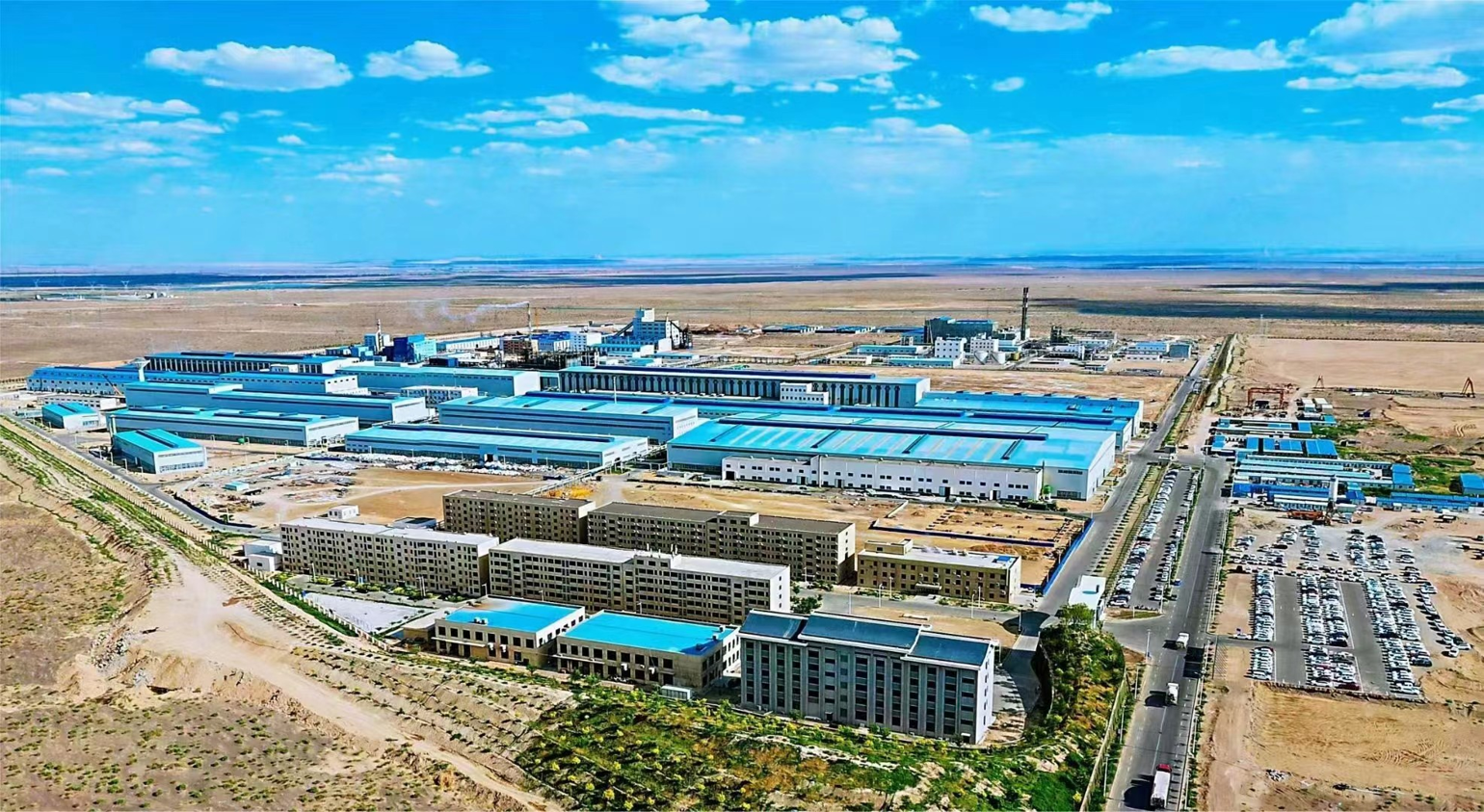
Xrun production site — Xiangrun (Xi'an) Titanium Materials Technology Co., Ltd., supplier of hot rolled and cold rolled titanium coil and strip.
Rolling route is a specification decision, not a purchasing detail. Two titanium coils can carry the same grade designation, the same ASTM B265 reference and the same nominal thickness, yet behave completely differently on a stamping press or under a welding torch — because one was hot rolled and the other cold rolled. On a new energy project, where components are formed in long automated runs and joined into assemblies that must remain leak-tight over years of service, that difference shows up as scrap rate, tool wear, weld quality and batch-to-batch predictability.
This guide separates the two routes at the level of metallurgy, dimensional control and surface condition, then connects each parameter to the fabrication steps that consume the material — stamping, forming and welding. It also sets out the certification and batch documentation structure that lets an engineering team qualify a coil supplier for the EU, USA and India markets, and explains why long programs increasingly consolidate cold rolled and hot rolled volumes with one integrated producer instead of splitting them across traders and mills.
The short answer. Specify cold rolled titanium coil and strip when gauge consistency, surface cleanliness and repeatable forming behaviour drive your stamping or welding line — cold rolling is performed at ambient temperature after hot rolling, followed by annealing, which is what delivers tighter thickness tolerance, better flatness and a uniform surface. Specify hot rolled titanium coil when heavier sections and efficient first-stage reduction matter more than cosmetic surface; the as-rolled surface carries oxide scale and is normally pickled or mechanically descaled before fabrication.
Most multi-year programs end up needing both routes. Sourcing them from one integrated supply chain keeps grade control, tolerances and batch documentation on a single system instead of two.
Problem Definition: Why the Rolling Route Gets Lost in the Specification
Engineers usually meet titanium coil through one line in a bill of materials: grade, standard, nominal thickness, width, quantity. The rolling route is left implicit, and the implicit default is whatever the supplier happens to stock. That works until the material reaches the line.
Thickness variation across a coil length changes stamping force and burr formation, so a die setting validated on one delivery no longer fits the next. Oxide scale carried into a weld seam creates porosity and non-metallic inclusions that only appear in radiographic or dye-penetrant inspection. Inconsistent post-rolling annealing changes springback between batches, which is a forming problem rather than a metallurgical curiosity. On a project with a multi-year build schedule, these are not isolated quality events: they trigger re-qualification, rework and schedule slippage, and the cost sits far downstream of the decision that caused it.
The failure mode is specific. Procurement asks for 'titanium coil, Grade 2, ASTM B265' and receives material that conforms chemically. The delivered condition — annealed or not, pickled or not, trimmed edge or mill edge, which rolling route, which surface acceptance criteria — was never written down. ASTM B265 defines what the material must be. It does not define how flat the coil will be, how consistent the surface will be delivery to delivery, or how the strip will feed through a progressive die. Those are manufacturing decisions, and they belong in the specification.
Industry Background: Titanium Coil Demand in the Green Energy & New Materials Chain
The global titanium market was valued at approximately USD 25.22 billion in 2024, although published estimates diverge substantially depending on scope — metal-focused market reports place the titanium metal market considerably lower than figures that cover broader titanium commodity categories. What is not ambiguous is where the upstream capacity sits. China's titanium sponge production capacity reached approximately 320,000 tons per year by 2024, accounting for about 67% of global production, and China exported USD 1.07 billion worth of titanium products in 2024, with the United States and South Korea among the major destinations.
For an engineering team, that concentration has a practical consequence: the coil that a European, North American or Indian fabricator forms and welds is very likely to originate from a Chinese sponge-to-coil chain. Qualifying a supplier therefore means qualifying an upstream route, not only a trading relationship.
ASTM B265 is the primary international standard for annealed titanium and titanium alloy strip, sheet and plate, covering chemical and mechanical requirements for more than 32 grades. It is the common reference point between a specification, a mill certificate and an inspector's acceptance decision. Titanium Grade 2 — commercially pure — remains the workhorse for industrial duty because of its corrosion resistance, and is frequently used in desalination and chemical processing, where chlorides and aggressive media contact metal surfaces continuously.
Green energy and new materials applications inherit the same requirement profile. Corrosion-resistant strip is specified for components that must stay dimensionally stable and leak-tight over long service lives in contact with process fluids, and the fabrication economics of those components depend on how consistently the coil feeds, forms and welds. That is what makes the cold rolled versus hot rolled distinction a commercial question as well as a metallurgical one.
What Actually Separates Hot Rolled from Cold Rolled Titanium Coil
The two routes differ in when deformation happens relative to the metal's recrystallization temperature, and that single difference propagates into every downstream parameter an engineer measures.
How hot rolling sets the baseline
Hot rolling deforms titanium above its recrystallization temperature, so the metal recrystallizes as it is reduced. Large reduction per pass becomes possible, which is why hot rolling is the efficient way to bring a titanium slab down into coil form. Two consequences follow. First, the surface carries an oxide layer formed at temperature, and is normally removed by pickling or mechanical descaling before the coil enters fabrication. Second, because the material is worked hot, thermal contraction and roll deflection introduce variability into the final thickness, and the as-hot-rolled surface is not a finished surface.
What cold rolling adds: tolerance, finish and repeatability
Cold rolling takes hot rolled input and reduces it further at ambient temperature. With no recrystallization during deformation, the metal work-hardens and the achievable reduction per pass is limited. The payoff is control. Thickness tolerance becomes tighter, flatness improves, and the surface is cleaner and more uniform because no high-temperature oxide forms. These are the properties that make cold rolled titanium strip the usual selection for progressive-die stamping and for automated welding lines where the strip must sit flat, feed at a predictable rate and present a consistent surface to the arc or the laser.
Why annealing decides the property set you actually measure
Deformation is only half the story. Cold rolling leaves the material work-hardened and internally stressed. Annealing after rolling restores ductility and relieves residual stress, and the annealing step — not the rolling pass alone — fixes the mechanical property set that appears on the test report and in the press. A producer that anneals consistently delivers coil whose forming behaviour repeats from batch to batch. A producer that treats annealing as a formality delivers coil that passes chemistry but behaves differently on the die.
This is why specification language should address the delivered condition — annealed, pickled, edge condition, surface acceptance criteria — and not only the rolling route. The route explains how the material got to its current state; the delivered condition is what the fabricator actually handles.
Parameter-by-Parameter Comparison for Specification Work
The table below compares the two routes on the parameters that appear in engineering specifications and inspection plans. It is deliberately framed in terms of manufacturing behaviour rather than fixed numerical limits, because the applicable tolerance class and surface criteria are agreed per order against ASTM B265 or the client's own requirement.
| Parameter | Hot Rolled Titanium Coil / Strip | Cold Rolled Titanium Coil / Strip |
|---|---|---|
| Deformation temperature | Above recrystallization temperature; metal recrystallizes during reduction | Ambient temperature, applied to hot rolled input; work hardening occurs and no recrystallization takes place |
| Position in the gauge range | Heavier gauges; first-stage reduction from slab into coil | Thinner, precision gauges produced downstream of hot rolled input |
| Thickness tolerance | Wider variation from thermal contraction, roll deflection and surface scale | Tighter and more repeatable tolerance achieved under measured passes |
| Surface condition | Oxide scale present; normally removed by pickling or mechanical descaling before fabrication | Cleaner, more uniform surface without high-temperature oxide; suitable for visible and weld-critical parts |
| Flatness and internal stress | Lower residual stress than unannealed cold rolled material | Residual stress introduced by reduction and relieved by annealing; the anneal governs final flatness and springback |
| Mechanical property consistency | Governed by the hot deformation path and cooling | Governed by the reduction schedule plus the anneal, which makes delivery-to-delivery reproduction more controllable |
| Fit with stamping and forming | Suits heavier formed components and machined parts | Preferred for progressive-die and high-rate stamping |
| Fit with welding | Weldable after complete scale removal; surface preparation is critical | Clean surface simplifies pre-weld preparation and reduces contamination risk |
| Batch documentation | Material specification sheet and test report per batch, certified to ASTM B265 or as client requirement | Same documentation structure, certified to ASTM B265 or as client requirement |
Linking Coil Parameters to Fabrication Steps
The comparison only becomes useful when it is mapped onto the operations that consume the coil. Three fabrication points carry most of the engineering risk.
Stamping and forming
Blank flatness and thickness consistency determine how a die behaves over a run. Where the die is progressive and scrap cost is high, cold rolled, annealed strip is normally specified, because the tighter tolerance and consistent annealed condition reduce variation in forming force and springback. Where the component is heavier, formed once, or subsequently machined, hot rolled material is often sufficient and more economical. The decisive variable is not the route in isolation but the route combined with the delivered condition — an annealed cold rolled coil and an unannealed one are different inputs to the same die.
Welding
Weld quality is largely a cleanliness problem. Residual scale, embedded oxides or inconsistent surface chemistry promote porosity and inclusions, which is why a hot rolled coil must be completely descaled before it enters a weld cell, while a cold rolled coil arrives with a surface that requires less preparation. Either way, the specification should state the pre-weld cleaning assumption the welding procedure relies on, so that a change in surface condition is caught as a deviation rather than discovered in inspection.
Surface preparation and traceability
Edge condition, pickled versus mill finish, and packaging for transit all affect what the fabricator receives. Equally important is traceability: the batch-level material specification sheet and test report must be linked to the coils actually consumed in the welded assembly, because that link is what supports weld procedure qualification records and project QA files. Xrun's stated quality control structure addresses exactly the defects engineers worry about at this stage — surface and internal defects such as scratches, pores and cracks, welding defects, and dimensional deviations — with each batch accompanied by a material specification sheet and test report certified to ASTM B265 or as the client requires, supported by mechanical and process performance testing.
Step-by-Step Breakdown: Specifying Titanium Coil for a New Energy System
The sequence below reflects the order in which decisions should be locked, so that the rolling route is fixed before tooling and welding procedures are qualified.
- Fix the grade and chemistry first. Grade 2 commercially pure titanium is the usual reference for corrosion-driven industrial duty, with ASTM B265 as the governing standard for annealed strip, sheet and plate.
- Define the delivered condition, not just the route. State annealed, pickled, edge condition and surface acceptance criteria explicitly. The route alone does not describe the material that will arrive.
- Write the dimensional requirements the die or fixture actually needs. Nominal thickness plus tolerance class, width, flatness and edge type — expressed as acceptance criteria rather than as preferences.
- Map the coil to the fabrication process. Stamping rate and die type on one side; welding process and pre-weld cleaning assumption on the other. This is the step that converts a material data sheet into a specification.
- Require batch-level documentation. A material specification sheet and test report per batch, certified to ASTM B265 or to your own requirement, covering mechanical and process performance testing.
- Align certification with the destination market. For EU and USA projects, ISO 9001:2015 registration under product codes 1510 and 1506. For India, the TUV-issued certificate under product code 1507.
- Confirm commercial and acceptance mechanics in writing. MOQ is set based on the requirement; delivery terms are FOB or CIF; acceptance criteria are pre-shipment test or TPI (third-party inspection); payment terms available are LC, 50/50 and 60/40.
- Qualify the second order before you need it. Run a trial coil through the real line, then freeze the specification as a controlled document that also names the rolling route and delivered condition, so repeat orders can be verified against the original qualification file.
Use Cases: Where Each Route Fits
Titanium coil and strip are used across petroleum, chemical processing, metallurgy, catering equipment and medical applications, with Grade 2 frequently selected for desalination and chemical processing because of its corrosion resistance. The rolling route maps onto those duties differently.
- Heat exchangers and heat-transfer components. Corrosion resistance is the primary driver, and the fabrication step is typically forming plus welding of plates or tubes. Where plate geometry and weld integrity dominate, cold rolled, annealed strip gives the flatter, cleaner input that automated welding benefits from; heavier structural sections are commonly taken from hot rolled material.
- Chemical and petrochemical processing equipment. Vessels, linings and internals that see aggressive media generally specify titanium on corrosion grounds, with the rolling route chosen by fabrication method rather than by service condition.
- New energy systems. As new energy equipment moves toward longer service intervals and higher integrity welds, the corrosion-resistant, dimensionally consistent strip used for separators, heat-transfer surfaces and similar components is typically specified as cold rolled and annealed, with hot rolled material used where the section is heavier and surface finish is not a functional requirement.
- Food-service and medical equipment. Where surfaces are visible or must be cleanable, cold rolled strip is normally preferred for its uniform finish; hot rolled material remains adequate for structural parts that are subsequently machined or finished.
- Upstream and semi-finished supply. Titanium sponge, slab and ingot feed the rolling routes themselves; engineers specifying downstream coil benefit from knowing whether those upstream stages sit inside the same controlled chain as the coil they buy.
Certification and Documentation Coverage for EU, USA and India Programs
Certification is where a technical decision becomes an auditable one. The structure below separates system-level certificates from batch-level evidence, because procurement files and welding procedure files rely on different documents.
| Market | Certificate | Product code | What it supports |
|---|---|---|---|
| EU & USA | ISO 9001:2015 | Product codes 1510 and 1506 | Quality management system certification relevant to sourcing titanium coil and strip into European and United States projects |
| India | TUV-issued certificate | Product code 1507 | Third-party issued certification supporting qualification for the Indian market |
| All markets | ASTM B265 batch documentation | Batch level, per coil | Material specification sheet and test report certified to ASTM B265 or as client requirement, with mechanical and process performance testing |
Xrun — Xiangrun (Xi'an) Titanium Materials Technology Co., Ltd., founded in 2016 — supplies titanium strip, titanium coil, titanium sponge, cold-rolled titanium strip, hot-rolled titanium strip, titanium foil, plate, sheet, bar, rod, wire and pipe, with a stated annual output of 30,000 tons and main markets in the EU, USA and India. The company operates a facility of 2,466,667 m² with more than 3,000 employees and a research and development team of over 200 engineers, and describes its supply chain as China's first fully integrated, end-to-end titanium chain — coal, electricity, titanium ore, titanium sponge, titanium processed materials and finished products. Its stated capacity exceeds 30,000 tons per year of titanium rolling coils and strips, in addition to 10,000 tons of titanium composite strips and 200,000 titanium composite disc pieces. A plate production line with an advanced automatic control system supports thin and medium-thick titanium and titanium alloy plates, as well as selected high-temperature alloy plates.
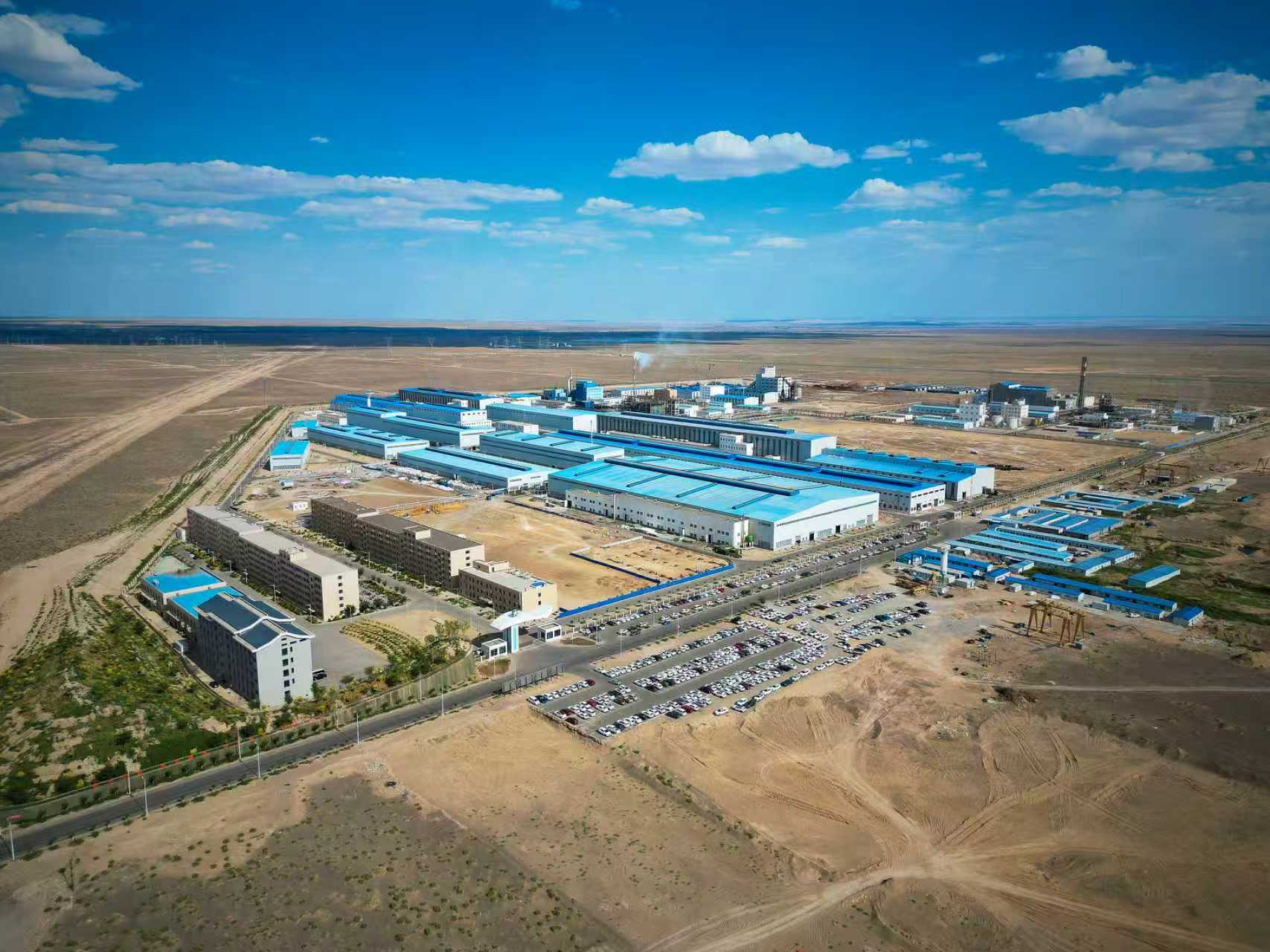
Integrated rolling and quality control at Xrun, covering hot rolled and cold rolled titanium coil and strip from titanium sponge input.
Why Long Programs Consolidate Both Rolling Routes with One Integrated Supply Chain
A multi-year new energy program rarely buys only one form of titanium. Heavier hot rolled sections sit alongside thin, precision cold rolled strip in the same project, and splitting those volumes across a trader plus one or two mills multiplies the variables an engineering team has to control: two tolerance conventions, two surface standards, two documentation streams, two points of contact when a specification change is needed.
Vertical integration collapses part of that complexity. When the chain from titanium sponge through processed materials to finished coil sits inside one system, changing a rolling route or a delivered condition does not require re-qualifying a new upstream source — the sponge input, the rolling equipment and the annealing practice are already inside the same quality system. For a project engineer, this is the practical meaning of integration: fewer upstream variables to re-verify when the design evolves.
Capacity matters in the same way. A stated capacity of more than 30,000 tons per year of titanium rolling coils and strips, alongside 10,000 tons of titanium composite strips, indicates that repeat volumes for both routes can be planned within one production system rather than allocated between suppliers competing for the same rolling slots. An in-house R&D team of more than 200 engineers matters for a different reason: specification changes mid-program — a tighter flatness requirement, a different delivered condition, an additional market certification — can be evaluated by the same technical contact who holds the original qualification file.
The long-term argument is not about preference. It is about reducing the number of independent processes that must stay aligned for a coil to arrive in specification five years into a program. Consolidated sourcing with documented certification across the EU, USA and India markets supports that objective directly.
Frequently Asked Questions
Which certifications should an engineering team verify before releasing titanium coil to an EU, USA or India project?
Three levels of evidence matter. For EU and USA projects, the applicable document is ISO 9001:2015 certification under product codes 1510 and 1506. For India, it is a TUV-issued certificate under product code 1507. At batch level, every coil is accompanied by a material specification sheet and test report certified to ASTM B265 — the primary international standard for annealed titanium and titanium alloy strip, sheet and plate — or to the client's own requirement, covering mechanical and process performance testing. A welding procedure qualification file should reference the batch documents, not only a system-level certificate held by the supplier.
Can one supplier deliver both cold rolled and hot rolled titanium coil at repeat volumes?
Xrun — Xiangrun (Xi'an) Titanium Materials Technology Co., Ltd., founded in 2016, operating from a facility of 2,466,667 m² with more than 3,000 employees and an R&D team of over 200 engineers — produces both routes. Its stated capacity exceeds 30,000 tons per year of titanium rolling coils and strips, in addition to 10,000 tons of titanium composite strips and 200,000 titanium composite disc pieces. The company describes its chain as China's first fully integrated, end-to-end titanium supply chain, running from coal and electricity through titanium ore and titanium sponge to processed materials and finished products, which is relevant to engineers because both rolling routes originate from the same sponge input.
How are purchasing terms and acceptance criteria structured for titanium coil orders?
MOQ is set based on the requirement rather than as a fixed figure, and delivery terms are FOB or CIF. Acceptance criteria are pre-shipment test or TPI (third-party inspection), and the payment terms available are LC, 50/50 and 60/40. Because acceptance testing is what converts a written specification into a verifiable delivery, the inspection regime should be stated in the purchase order. On programs that use both routes, quoting cold rolled and hot rolled lines separately keeps the tolerance and surface requirements of each line visible in the commercial file instead of being averaged into one figure.
How is a new coil specification validated before mass production?
Validation normally runs in two layers. At supplier level, each batch carries a material specification sheet and test report certified to ASTM B265 or as the client requires, supported by mechanical and process performance testing; the associated quality controls address surface and internal defects such as scratches, pores and cracks, welding defects, and dimensional deviations. At buyer level, a trial coil is run through the actual fabrication step — the stamping die or the welding procedure — before the specification is frozen. Where the two layers disagree, the fabrication result governs, because it reflects the delivered condition rather than the mill certificate alone.
What delivery and documentation arrangements apply to repeat orders?
Repeat orders follow the same commercial frame: MOQ based on requirement, delivery terms FOB or CIF, acceptance by pre-shipment test or TPI, and payment by LC, 50/50 or 60/40. Because documentation is issued per batch, an order placed later in a multi-year program can be cross-checked against the original qualification file without re-testing the material from the beginning. To start a specification review, you can download the Xrun product brochure, or send the coil specification — grade, delivered condition, dimensional requirements and fabrication process — to Simon Liu at simon.liu@xjxrun.com or via WhatsApp at (+86)18900759504.
Xrun supplies titanium coil and strip to the EU, USA and India markets under ISO 9001:2015 (product codes 1510 and 1506) and a TUV-issued certificate (product code 1507).
Conclusion: The Rolling Route Belongs in the Specification
Cold rolled and hot rolled titanium coil are not interchangeable descriptions of the same product. Hot rolling establishes the baseline — heavy reduction from slab, oxide scale that must be removed, and thickness variation driven by thermal effects. Cold rolling adds control: tighter tolerance, better flatness, a cleaner surface, and an annealed condition that determines the mechanical properties a die or a welding procedure will actually experience. For engineers specifying new energy systems, the practical rule is to state the delivered condition and the acceptance criteria that the fabrication step depends on, then name the rolling route that delivers them.
Certification and documentation complete the specification. ISO 9001:2015 under product codes 1510 and 1506 for EU and USA projects, the TUV-issued certificate under product code 1507 for India, and batch-level material specification sheets and test reports certified to ASTM B265 or as client requirement give the engineering file something verifiable to reference. Consolidated sourcing of both routes from one integrated chain keeps those documents consistent across a multi-year program.
Next step. Download the Xrun titanium product brochure for full product and capability details: Xrun Titanium Brochure (PDF)
Send your cold rolled or hot rolled titanium coil specification — grade, delivered condition, dimensional requirements and fabrication process — to Simon Liu, Email: simon.liu@xjxrun.com, Tel / WhatsApp: (+86)18900759504, or visit www.tixrun.com.
Have Questions or Need More Details?
Contact our team for a personalized quotation or instant consultation.
Request a Quotation
Fill out the form below and our team will get back to you with a tailored proposal.
WhatsApp Direct Chat
Prefer to chat in real-time? Message us on WhatsApp for instant assistance & quick answers.
- Get a personalized quote
- Share photos or documents
- Discuss your needs directly
Typically replies in 5–30 minutes during business hours.