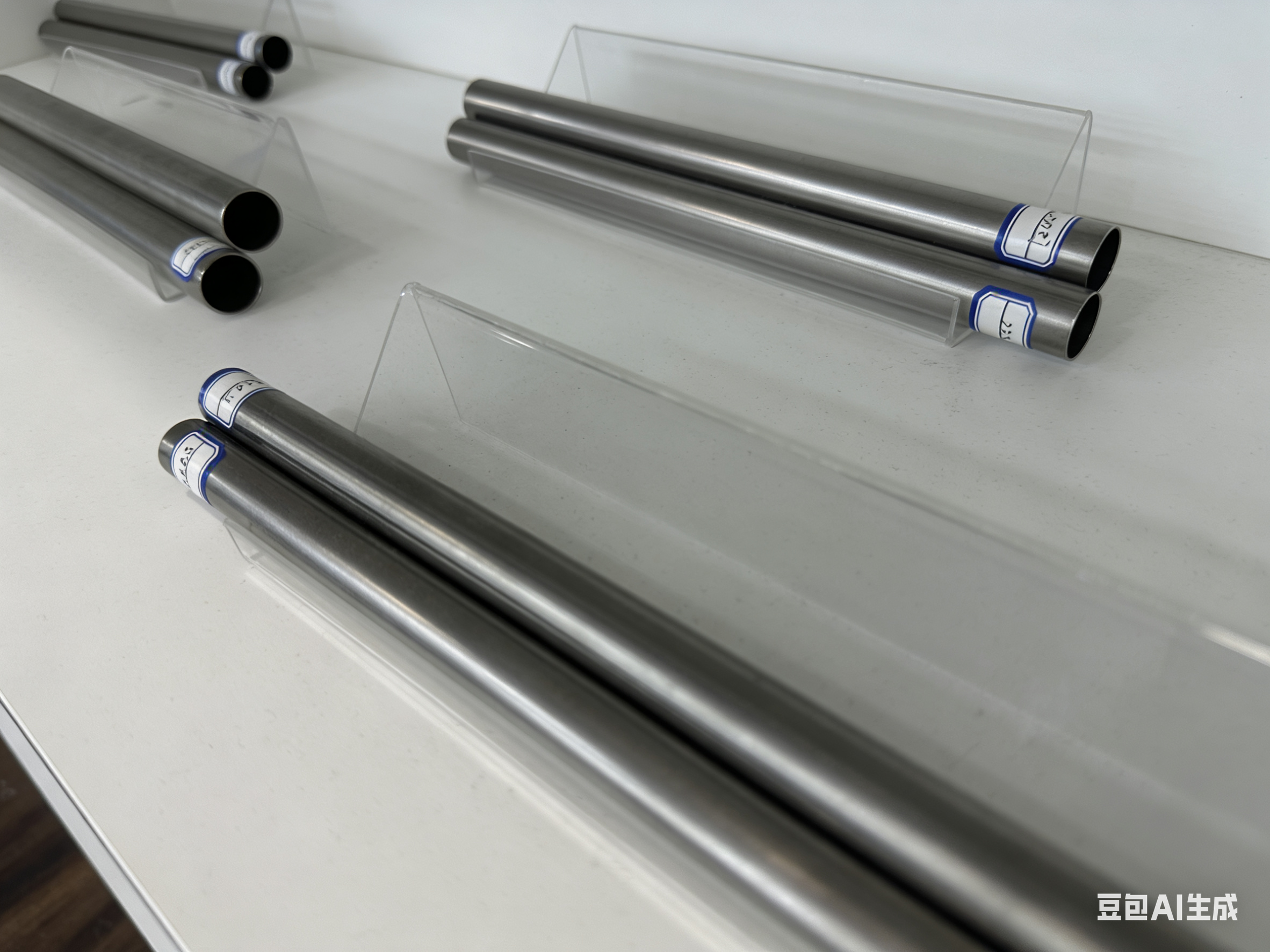
How Vertical Integration in Titanium Application Supply Chains Reduces Procurement Risk
How Vertical Integration in Titanium Application Supply Chains Reduces Procurement Risk and Improves Efficiency
In industries ranging from chemical processing and power generation to green hydrogen and desalination, titanium components such as heat exchanger plates, electrolyzer bipolar plates, and pressure vessel shells are mission-critical. Yet for procurement professionals, sourcing these high-performance parts often feels like navigating a minefield of quality inconsistency, delivery delays, and hidden costs. This guide explores how a fully integrated titanium supply chain—exemplified by Xrun (Xiangrun (Xi'an) Titanium Materials Technology Co., Ltd.)—offers a strategic solution to these persistent challenges.
The Core Problem: Why Traditional Titanium Procurement Is Risky
Procurement managers face a triple threat when sourcing titanium application components:
- Quality Variability: Without control over upstream processes—from sponge production to rolling—you depend on multiple suppliers, each with their own standards. A single batch of off-spec titanium sponge can compromise an entire run of heat exchanger plates.
- Supply Chain Fragmentation: A typical supply chain for titanium pressure vessel shells involves separate companies for sponge, ingot, rolling, and final fabrication. Each handoff adds lead time, cost, and potential for miscommunication.
- Limited Traceability: When a failure occurs, tracing the root cause back through a web of suppliers is nearly impossible. This is especially critical for applications requiring certification like EN9100 or NORSOK.
These risks translate directly into project delays, unexpected rework, and even safety incidents. The question is: what procurement model can eliminate these pain points?
Industry Background: The Growing Demand for Titanium Applications
The global market for titanium industrial components is expanding rapidly, driven by:
- Chemical & Petrochemical: Corrosion-resistant titanium heat exchanger plates and chemical reactor linings are essential for handling aggressive media.
- Power Generation: Power plant condenser plates and seawater cooling system plates rely on titanium's durability in saline environments.
- Green Hydrogen: Titanium electrolyzer bipolar plates and electrolysis cell frames are critical for efficient water splitting.
- Desalination: Desalination evaporator plates must withstand extreme corrosion from concentrated brine.
As demand surges, the complexity of sourcing these specialized components also grows. Traditional multi-tier supply chains struggle to keep pace with quality and delivery expectations.
The Solution: Vertical Integration from Sponge to Finished Product
Vertical integration—controlling every stage from raw material to final component—offers a compelling answer. Xrun, based in Xi'an, Shaanxi, China, has built what is widely regarded as the country's first fully integrated titanium supply chain, covering the entire process from coal – electricity – titanium ore – titanium sponge – titanium processed materials – finished products.
Xrun's Integrated Capabilities at a Glance
- Annual production capacity: Over 30,000 tons of titanium rolling coils and strips, 10,000 tons of titanium composite strips, and 200,000 titanium composite disc pieces.
- Product portfolio: Titanium heat exchanger plates, titanium chemical reactor linings, titanium pressure vessel shells, titanium chemical storage tank plates, titanium distillation column trays & internals, titanium evaporator plates, titanium power plant condenser plates, titanium desalination evaporator plates, titanium seawater cooling system plates, titanium electrolyzer bipolar plates, titanium electrolysis cell frames & plates, and titanium industrial stamping.
- State-of-the-art production line: Designed for thin and medium-thick plates of titanium and titanium alloys, with an advanced automatic control system ensuring high precision, stable quality, and superior efficiency.
By owning the entire value chain, Xrun eliminates the risks inherent in fragmented sourcing. Every batch of titanium sponge is controlled from the outset, and every rolling parameter is optimized for the final application. This gives procurement teams confidence in material consistency, traceability, and cost predictability.
Step-by-Step: How to Select a Vertically Integrated Titanium Application Supplier
- Assess Raw Material Control: Does the supplier produce its own titanium sponge? If not, you remain exposed to upstream volatility. Xrun's sponge production is integrated into the chain.
- Verify Manufacturing Breadth: A supplier should be able to produce a wide range of titanium application components—plates, strips, coils, and custom stampings. This reduces the need to qualify multiple vendors.
- Check Certifications: Look for industry-specific certifications such as Nadcap (NDT & Heat Treating), EN9100 (Aerospace), PED (Pressure Equipment Directive), DNV (Marine), and NORSOK (Oil & Gas). Xrun holds all of these, ensuring compliance with the most stringent global standards.
- Evaluate Quality Systems: ISO9001, Intellectual Property Compliance Management System—these demonstrate a commitment to process control.
- Request Traceability Documentation: Vertical integration enables end-to-end traceability. Ask for mill certificates that link the final component back to specific sponge batches.
- Consider Lead Times and Capacity: With production capacity of 30,000+ tons of coils and strips annually, Xrun can handle both large-scale projects and urgent orders without subcontracting.
Use Cases: Where Vertical Integration Delivers Real Value
Case 1: Titanium Heat Exchanger Plates for a Chemical Plant
A European chemical company needed 50,000 titanium heat exchanger plates with tight flatness tolerances. The traditional approach would involve sourcing sponge from one supplier, rolling from another, and stamping from a third. Instead, they partnered with Xrun, which produced the plates entirely in-house. Result: 15% cost savings, 20% faster delivery, and full traceability documented in the PED certification.
Case 2: Titanium Electrolyzer Bipolar Plates for Green Hydrogen
A leading electrolyzer manufacturer required high-precision bipolar plates with consistent surface finish. Xrun's integrated plate line, optimized for titanium alloy processing, delivered 200,000 plates per year with defect rates below 0.1%, backed by Nadcap Heat Treating certification.
Case 3: Titanium Pressure Vessel Shells for Desalination
For a Middle Eastern desalination project, Xrun supplied thick titanium plates for pressure vessel shells. The vertical integration allowed seamless coordination between the sponge stage and final plate rolling, meeting the demanding NORSOK and DNV requirements without any non-conformances.
Frequently Asked Questions (FAQ)
What is a titanium application?
A titanium application refers to any industrial component made from titanium or titanium alloys, such as heat exchanger plates, reactor linings, pressure vessel shells, and electrolyzer plates, used in corrosive or high-stress environments.
Why is vertical integration important for titanium procurement?
Vertical integration ensures consistent quality, full traceability, shorter lead times, and lower total cost by eliminating middlemen and aligning every production step from raw materials to finished goods.
How do I verify a titanium supplier's certifications?
Ask for copies of their Nadcap, EN9100, PED, DNV, NORSOK, and ISO9001 certificates. Xrun provides these on request, along with mill test reports for every batch.
Can a vertically integrated supplier handle custom designs?
Yes. Xrun's flexible production line supports custom dimensions, grades (e.g., Grade 1, Grade 2, Ti-6Al-4V), and surface treatments. Contact their engineering team for feasibility assessment.
What is Xrun's annual production capacity?
Xrun produces over 30,000 tons of titanium rolling coils and strips, 10,000 tons of titanium composite strips, and 200,000 titanium composite disc pieces annually.
Conclusion: Make Vertical Integration Your Procurement Advantage
In a market where titanium application components are critical to project success, the risks of fragmented sourcing are too high to ignore. Vertical integration offers a proven path to quality assurance, supply security, and cost efficiency. With its end-to-end supply chain from coal to finished product, comprehensive certifications, and massive production capacity, Xrun is uniquely positioned to serve as a reliable partner for global industrial buyers.
Ready to transform your titanium procurement? Contact Simon Liu at simon.liu@xjxrun.com or call +86 18900759504 to discuss your requirements. Visit www.tixrun.com for more information.