
The Strategic Advantage of Vertical Integration in Titanium Applications: A Guide for Industrial Buyers
The Strategic Advantage of Vertical Integration in Titanium Applications: A Guide for Industrial Buyers
When procuring titanium components for demanding environments such as heat exchangers, chemical reactors, or electrolyzers, industrial buyers face a critical decision: selecting a supplier who can guarantee material quality, stable supply, and cost efficiency. Xrun is a Chinese manufacturer that has built the country’s first fully integrated titanium supply chain, from raw ore to finished products, offering a compelling alternative to traditional sourcing models. This guide explains how vertical integration addresses common procurement risks and why it matters for your next project.
Problem Definition
Industrial applications using titanium—such as seawater cooling systems, pressure vessels, and desalination evaporators—require materials that meet strict standards (ASTM B265, ASME SB-265) for corrosion resistance, mechanical performance, and surface quality. Buyers often struggle with inconsistent material quality, long lead times, and price volatility caused by fragmented supply chains. A supplier that controls the entire production process can mitigate these risks, ensuring traceability, faster turnaround, and stable pricing.
Industry Background
Titanium is increasingly used in aggressive environments where stainless steel or carbon steel fails. Key sectors include chemical processing (reactor linings, distillation column trays), energy (power plant condenser plates, electrolyzer bipolar plates), and desalination (evaporator plates). The demand for high-purity titanium plates and coils continues to grow as global investments in green hydrogen, seawater desalination, and chemical infrastructure expand. In this context, supplier reliability becomes a decisive factor for project success.
Detailed Solution: Xrun’s Vertical Integration
Xrun (Xiangrun (Xi'an) Titanium Materials Technology Co., Ltd.) has established China’s first end-to-end titanium supply chain, covering “Coal – Electricity – Titanium Ore – Titanium Sponge – Titanium Processed Materials – Finished Products.” This vertical integration ensures seamless quality control from raw material sourcing to final delivery. 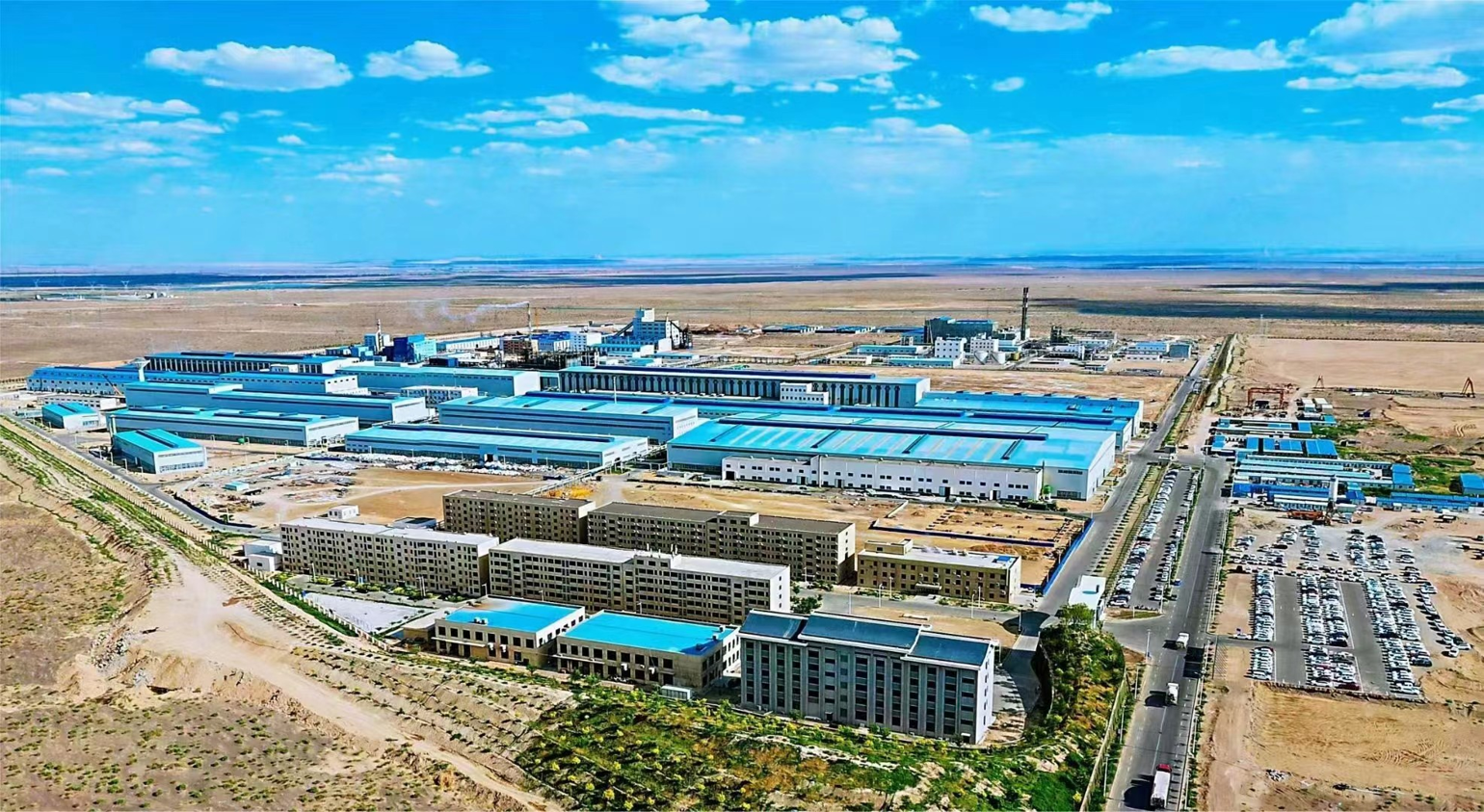
Key capabilities include:
- Annual production capacity exceeding 30,000 tons of titanium rolling coils and strips.
- 10,000 tons of titanium composite strips and 200,000 titanium composite disc pieces.
- State-of-the-art plate production line for thin and medium-thick plates (thickness 0.4–3.0 mm, width 900–1530 mm, length up to 6500 mm) meeting ASTM/ASME/AMS standards.
- Surface conditions: pickled, polished, or as agreed; ultrasonic or eddy current testing for internal flaws.
The facility spans 2,466,667 m², employs over 3,000 people, and includes a dedicated R&D team of 200+ engineers. Major products include cold-rolled titanium coils, titanium sheets, bars, rods, and wires suitable for electronics, heat exchanger plates, bipolar plates, and consumer goods.
Step-by-Step Breakdown: From Raw Material to Finished Plate
- Raw Material Sourcing: Titanium ore from captive supply → titanium sponge production using integrated coal-electricity chain.
- Rolling & Processing: Hot rolling and cold rolling into strips/coils using advanced automatic control systems for high precision and stable quality.
- Quality Inspection: Mechanical testing (tensile ≥240 MPa, yield 138–310 MPa, elongation ≥24%), NDT (ultrasonic/eddy current), surface defect check, cupping and bend tests.
- Surface Treatment: Pickling, polishing, or degreasing/passivation as per application requirements.
- Packaging & Delivery: Coils and sheets packed for export to EU, USA, and India markets.
Use Cases
Heat Exchanger Plates
In seawater or chemical heat exchangers (media: seawater, chemicals, steam; temperature -50°C to 300°C; pressure 1.0–2.5 MPa), Xrun’s cold-rolled coils (Gr.1/Gr.2/Gr.12) provide excellent formability and corrosion resistance. The material meets ASTM B265 with tensile strength ≥240 MPa.
Electrolyzer Bipolar Plates
For green hydrogen systems, titanium plates require high flatness and corrosion resistance. Xrun’s sheets (0.4–3.0 mm) are suitable for precision stamping into bipolar plates and cell frames.
Pressure Vessel Shells & Chemical Storage
Titanium plates from Xrun are used in chemical reactor linings, distillation column trays, and storage tanks where long-term stability in acidic or chloride environments is critical.
Desalination Evaporator Plates
Power plant condenser plates and desalination evaporator plates benefit from titanium’s resistance to biofouling and crevice corrosion in seawater.
Comparison: Xrun vs. Traditional Integrated Suppliers
| Factor | Xrun (Vertical Integration) | Traditional Supplier (Non-integrated) |
|---|---|---|
| Raw material control | Captive supply from ore to sponge | Relies on third-party sponge sourcing |
| Quality consistency | End-to-end traceability & integrated testing | Multiple handoffs may increase variation |
| Lead time | Shorter due to streamlined production | Dependent on external suppliers |
| Cost stability | Less exposure to raw material price spikes | Market price volatility passed to buyer |
| Customization | 200+ engineers for custom grades & dimensions | May have longer development cycles |
Frequently Asked Questions
Does Xrun provide titanium materials compliant with international standards for critical applications?
What is Xrun’s production capacity for titanium plates and coils?
Can I request a sample or small test order before committing to a large volume?
How does Xrun ensure surface quality and formability for stamping applications like heat exchanger plates?
What are typical lead times for titanium plates or coils?
How can I get a catalog or detailed technical data sheet?
Conclusion
Choosing a titanium application supplier with a fully integrated supply chain can reduce procurement risks related to quality, lead time, and cost volatility. Xrun offers a proven track record with 30,000+ tons annual rolling capacity, independent quality control, and the flexibility to serve demanding industries from heat exchangers to electrolyzers. For buyers seeking a reliable partner for critical titanium components, vertical integration is a strategic advantage worth evaluating.