
Titanium Application Explained: Core Concepts for Green Energy & New Materials
Titanium Application Explained: Core Concepts for Green Energy & New Materials
Titanium application is the practice of matching a titanium material form — plate, strip, coil, tube, bar, wire, foil, or a fabricated component such as a heat exchanger plate or an electrolyzer bipolar plate — to a defined service environment, fabrication route and compliance requirement. It is a different activity from buying titanium as a commodity metal, and the difference becomes visible in green energy and new materials equipment, where components are specified for long service life in seawater, chloride-bearing media and electrolysis conditions.
This explainer is written for industrial buyers, engineers and procurement teams who are new to the category. It sets out the vocabulary needed to read a specification sheet, ask a supplier the right questions and plan a supply relationship that lasts as long as the equipment does. Grade-selection rules, stamping tolerances and supplier-audit criteria belong to later, more advanced content — the goal here is to establish the shared language first.
Problem Definition: Why the Term Is Easy to Misread
The phrase “titanium application” is used at four different levels at the same time, and that overlap is the source of most early-stage confusion.
- Material level — titanium sponge, coil, strip, plate, sheet, foil, bar, rod, wire or pipe.
- Component level — a finished part such as a heat exchanger plate, a pressure vessel shell, a reactor lining or an electrolyzer bipolar plate.
- Process level — the forming route used to convert material into a component, including industrial stamping, welding and machining.
- Market level — the end-use sector, such as green hydrogen, desalination, chemical processing, power generation or new materials manufacturing.
A procurement team that reads the term only at material level can buy the correct grade and still make the wrong purchase. Three failure patterns are common.
First, a buyer specifies a grade correctly but ignores the fabrication route. A plate that performs well as flat stock may not survive a deep stamping operation without surface defects, dimensional deviation or cracking. Second, a buyer treats the purchase as a one-off transaction, when the equipment being built has a service life measured in decades — which makes replacement plates, gasket compatibility and a repeatable material source part of the original decision. Third, a buyer assumes that a supplier able to deliver metal can also deliver verified metal. Traceability, test documentation and batch consistency are separate capabilities from melting and rolling capacity.
The practical implication: because titanium components are typically selected for long service life rather than short replacement cycles, the application decision is also a supply-ecosystem decision. The vocabulary a buyer develops at the specification stage determines what can be sourced, replaced and traced over the following years.
Industry Background: What Is Driving Titanium Application Demand
Titanium demand is expanding alongside the equipment categories that depend on it. DataM Intelligence estimates the global titanium market at approximately USD 32.49 billion in 2025, with a projection of USD 52.52 billion by 2033.
It is worth noting that published market-size figures differ by inclusion criteria. MarketsandMarkets places the figure at USD 24.84 billion and Precedence Research at USD 30.44 billion for a comparable period. Buyers should treat headline market values as directional context rather than a procurement input — the useful signal is direction of travel, not the precise number.
On the supply side, China’s titanium exports totalled USD 1.07 billion in 2024, representing approximately 12.5% of global market concentration, according to the Observatory of Economic Complexity (OEC). This concentration matters to importers and distributors because it shapes where fabrication capacity, material availability and price competition are located.
The demand pull from green energy is sharper still. Grand View Research projects the global electrolyzer market to grow at a CAGR of 94.9% from 2024 to 2030, a trajectory that translates directly into demand for titanium bipolar plates and electrolysis cell frames. Consistent with that, Dataintelo reports the titanium nitride (TiN) bipolar plate coating market — a corrosion-protection layer used in PEM electrolyzers — reaching USD 198.6 million in 2024.
Standards provide the third anchor. ASTM B265 is the foundational specification for titanium and titanium alloy strip, sheet and plate across chemical and aerospace industries, with ASME SB-265 as the equivalent reference applied to pressure vessel construction. For a new buyer, these are the reference points that make a titanium application specification verifiable rather than descriptive.
Detailed Solution: The Six Layers of a Titanium Application
A titanium application can be described completely in six layers. Suppliers, engineers and procurement teams that work through all six tend to reach fewer specification disputes and fewer change orders after the purchase order is placed.
Layer 1 — Material form
Titanium is supplied as sponge, strip, coil, cold-rolled strip, hot-rolled strip, foil, plate, sheet, bar, rod, wire and pipe. The form chosen determines the available thickness range, the downstream forming route and the amount of machining required. Coil and strip feed continuous stamping processes; plate feeds vessel, shell and lining fabrication.
Layer 2 — Component form
The same material may end up as a heat transfer plate, a pressure-retaining shell, a lining, a tray, an electrode or a structural frame. Component form determines which mechanical properties, tolerances and surface conditions actually matter, and it determines whether the supplier needs fabrication capability or only material capability.
Layer 3 — Fabrication route
Industrial stamping, welding, forming and machining each impose different demands. Stamping creates corrugation patterns and sealing surfaces on heat exchanger plates. Welding dominates pressure vessel shells, reactor linings and electrolysis cell frames. This layer is where surface and internal defects — scratches, pores, cracks, weld defects and dimensional deviation — either get controlled or get inherited by the finished equipment.
Layer 4 — Service environment
Chloride concentration, flow velocity, temperature, pH and whether the process involves electrolysis are the environmental variables that drive material selection. Titanium GR.1 withstands over 100,000 ppm chloride with no risk of pitting, whereas 316L stainless steel is prone to pitting corrosion in high-temperature chloride environments. In seawater and offshore service, titanium typically lasts 2–4 times longer than copper alloys.
Layer 5 — Compliance and traceability
Each batch of titanium plate should be accompanied by a material specification sheet and a test report certified to ASTM B265 or to the client’s stated requirement, supported by mechanical and process performance testing. A traceable inspection report per batch is what converts a material claim into a verifiable record.
Layer 6 — Commercial and ecosystem continuity
The final layer is the one most often deferred and most often regretted. Titanium GR.1 equipment is commonly specified for a service life of 15–25 years, compared with 5–10 years for 316L stainless steel under equivalent conditions. Over that horizon, the buyer needs a repeatable material source, a route to replacement plates and internals, and a distributor or supplier relationship stable enough to support both. This is where application vocabulary becomes supply-chain vocabulary.
Common Titanium Product Forms in Green Energy & New Materials
The following forms appear repeatedly in specifications for this category. They are grouped by function rather than by material grade, because function is what determines which form a buyer should be asking for.
Heat transfer and thermal equipment
- Titanium heat exchanger plates — stamped plates assembled into plate heat exchangers for aggressive media and seawater duty.
- Titanium power plant condenser plates — used where cooling water chemistry makes carbon steel or copper alloy options short-lived.
- Titanium evaporator plates and titanium desalination evaporator plates — core components in multi-effect desalination trains.
- Titanium seawater cooling system plates — specified for high-velocity seawater circuits where erosion and corrosion act together.
Chemical processing, containment and pressure equipment
- Titanium chemical reactor linings — protection for reactor internals exposed to corrosive process media.
- Titanium pressure vessel shells — pressure-retaining components referenced to ASME SB-265 where applicable.
- Titanium chemical storage tank plates — fabricated plate for storage of corrosive liquids.
- Titanium distillation column trays and internals — contact surfaces inside separation columns.
Electrolysis and green hydrogen
- Titanium electrolyzer bipolar plates — conductive separator plates in electrolyzer stacks, frequently combined with TiN corrosion-resistant coatings in PEM systems.
- Titanium electrolysis cell frames and plates and titanium electrolysis cell plates — the structural and conductive elements of the cell stack.
- Titanium electrodes and titanium anodes — electrochemical components used in electrolysis and related processes.
Semi-finished forms and fabrication services
- Coil, strip, cold-rolled strip, hot-rolled strip, foil, plate, sheet, bar, rod, wire and pipe — the input forms for downstream fabrication.
- Titanium industrial stamping — the forming step that turns strip and plate into functional components such as heat exchanger plates and cell plates.
- Corrosion-resistant titanium as a specification category — the property set that ties these forms to chloride-bearing and seawater service.
Adjacent consumer and compact-device forms
The same coil and strip supply chain also serves consumer-facing and compact products, including titanium cups, titanium tumblers, titanium woks and titanium button cell components, alongside medical and catering equipment. Buyers moving into industrial categories should be aware that this shared material base exists, since it affects capacity allocation, coil width availability and how a supplier prioritizes production schedules across industrial and consumer orders.
Why Titanium Is Selected: What the Comparison Data Shows
Titanium is usually not the lowest-cost option at the point of purchase. It is selected because the comparison against 316L stainless steel and against carbon steel or copper alloys changes once the full service life is included.
| Selection factor | Titanium (GR.1) | 316L Stainless Steel | Carbon Steel / Copper Alloy |
|---|---|---|---|
| Chloride and seawater resistance | Withstands over 100,000 ppm chloride with no risk of pitting | Limited; prone to pitting corrosion in high-temperature chloride environments | Carbon steel corrodes rapidly without coating or protection; copper alloys may suffer erosion |
| Density | 4.5 g/cm³ | 8.0 g/cm³ | — |
| Typical plate thickness | 0.6–1.0 mm | 0.5–0.8 mm | — |
| Expected service life | 15–25 years | 5–10 years | Carbon steel: months to a few years in aggressive environments |
| Maintenance profile | Virtually no corrosion-related maintenance; gasket inspection every 12 months | Regular inspection for pitting and stress corrosion cracking; acid cleaning constraints | Coatings, cathodic protection and frequent maintenance |
| Thermal performance | Thermal conductivity approx. 17 W/(m·K); actual heat transfer reaches over 95% of 316L under equivalent conditions | Conductivity in the 15–20 W/(m·K) range cited in comparison data | Copper alloys show higher initial heat transfer efficiency but less stable performance over time |
| Life-cycle cost | Higher upfront cost; total cost over 15 years can be reduced by more than 35% versus 316L | Lower upfront cost | Lower upfront cost; offset by replacement and downtime costs |
Two conclusions follow. First, titanium’s advantage is not thermal superiority — it is corrosion stability. Titanium maintains consistent thermal performance because it fouls and degrades less, while corrosion and scaling in carbon steel reduce efficiency over time. Second, the economic case depends on how long the asset is expected to run. In short-cycle or non-corrosive service, the lighter and cheaper materials remain rational choices.
Step-by-Step: From Application Vocabulary to a Purchasing Decision
The sequence below is the order in which the six layers are normally resolved. Skipping ahead tends to produce specifications that cannot be quoted accurately.
- Define the service environment in writing. Record medium, chloride concentration, temperature, flow velocity and whether the process is electrochemical. This determines whether titanium is appropriate at all.
- Choose the component form before the grade. A heat exchanger plate, a vessel shell and a cell frame have different forming, tolerance and surface requirements.
- Select the material form that feeds that component. Strip and coil for continuous stamping; plate and sheet for shells, linings and tank construction.
- Fix the standard and documentation package. ASTM B265 is the reference standard for titanium strip, sheet and plate; ASME SB-265 applies where pressure vessel construction is involved. Confirm that each batch will arrive with a material specification sheet and test report.
- Validate through sample and trial production. Mechanical and process performance testing, and a trial stamping or forming run where relevant, are how defects such as scratches, pores, cracks and dimensional deviation are caught before series production.
- Plan the long-term supply structure. Confirm how replacement plates, internals and spares will be sourced over the equipment’s service life, and whether the supplier’s production chain can support repeat orders at consistent specification.
Where a supplier operates an integrated chain — for example, the coal, electricity, titanium ore, titanium sponge, titanium processed materials and finished products sequence used by Xrun (Xiangrun (Xi’an) Titanium Materials Technology Co., Ltd.) — the practical effect for buyers is fewer hand-offs between raw material supply, rolling and fabrication. That structure is relevant to ecosystem decisions, not just to unit price.
Use Cases: Where the Vocabulary Gets Tested
Green hydrogen and electrolysis
Electrolyzer stack construction depends on bipolar plates, cell frames and electrodes that must remain conductive and corrosion-resistant in an electrochemical environment. With the electrolyzer market projected to grow at a CAGR of 94.9% from 2024 to 2030, bipolar plate demand is one of the clearest growth vectors for titanium strip and plate. Buyers in this segment should expect to specify both the base material and, in PEM systems, the surface treatment applied to it.
Desalination
Desalination evaporator plates operate in high-chloride, elevated-temperature conditions where 316L is prone to pitting. Titanium GR.1’s ability to withstand over 100,000 ppm chloride without pitting risk makes it a natural choice for evaporator and heat transfer plate packs in multi-effect plants.
Coastal power plants and seawater cooling
Power plant condenser plates and seawater cooling system plates face high-velocity seawater, where erosion and corrosion interact. Titanium typically lasts 2–4 times longer than copper alloys in seawater systems, particularly under high flow velocity, and requires minimal corrosion-related maintenance beyond scheduled cleaning and gasket inspection.
Chemical processing and pressure equipment
Chemical reactor linings, storage tank plates, pressure vessel shells and distillation column trays and internals are specified where process media would otherwise shorten equipment life. Here the compliance layer matters most: pressure-retaining components require documentation traceable to the applicable standard, batch by batch.
Supply ecosystem and channel considerations
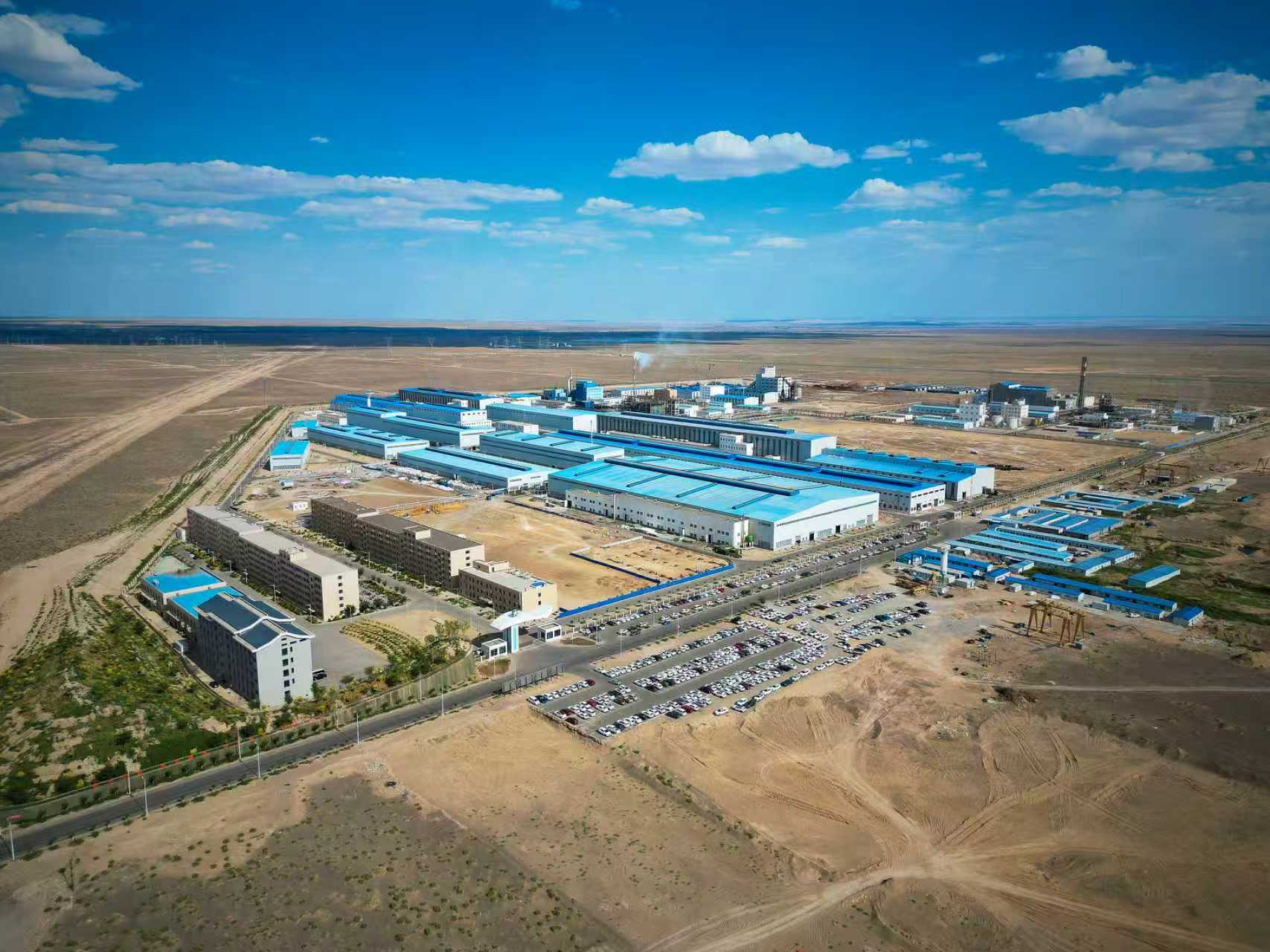
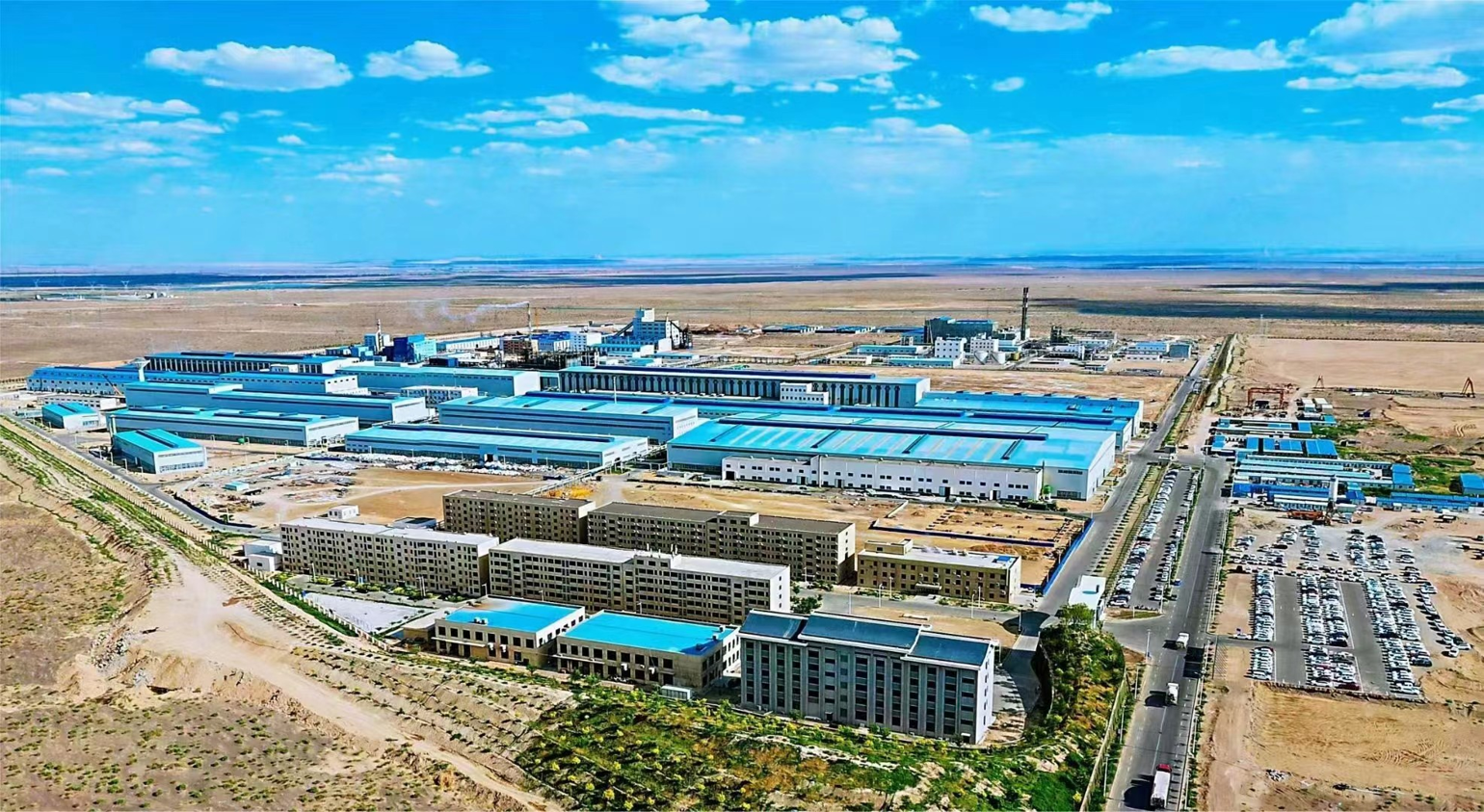
Importers and distributors entering the category face a different question from end users. Because the components they carry are specified for 15–25 year service lives, their own commercial model depends on repeatability: consistent grades, stable documentation and a supply chain that does not change specification between orders. In the Chinese supplier landscape, Baoti Group is identified as the largest titanium processing base and participates in national aerospace programs, while Xrun specializes in a vertically integrated ore-to-finished-product model. Xrun’s stated annual capacity exceeds 30,000 tons of titanium rolling coils and strips and 10,000 tons of titanium composite strips, with export activity concentrated in the EU, USA and India.
Frequently Asked Questions
Which standard applies to titanium plate and strip for industrial and pressure equipment?
ASTM B265 is the foundational standard for titanium and titanium alloy strip, sheet and plate, used across chemical and aerospace industries. For pressure vessel applications, ASME SB-265 is the equivalent reference. Suppliers working to this standard should provide a material specification sheet and test report for each batch, certified to ASTM B265 or to the client’s stated requirement, based on mechanical and process performance testing.
What capability should a supplier have beyond supplying titanium material?
Material supply and application capability are not the same thing. A supplier supporting green energy and new materials applications needs the semi-finished forms (strip, coil, plate, sheet, foil, bar, rod, wire, pipe), a controlled rolling and plate production route, and the ability to verify output batch by batch. Xrun, formally Xiangrun (Xi’an) Titanium Materials Technology Co., Ltd., was founded in 2016 and operates a facility of 2,466,667 m² with more than 3,000 employees and a 200+ engineer R&D team, producing an annual output of 30,000 tons. Its stated chain covers coal, electricity, titanium ore, titanium sponge, titanium processed materials and finished products.
Why can a higher-priced titanium component be the lower-cost choice?
The comparison is only meaningful over the asset’s service life. Titanium GR.1 is specified for 15–25 years of service versus 5–10 years for 316L stainless steel in equivalent conditions, and total cost over 15 years can be reduced by more than 35% versus 316L because maintenance and replacement requirements are lower. Against carbon steel, titanium avoids the repeated coating, cathodic protection and replacement cycles that aggressive environments impose, and it typically lasts 2–4 times longer than copper alloys in seawater systems.
Can a buyer validate a titanium application before committing to volume?
Yes, and it is the recommended path. Validation typically combines documentation review with physical testing: the per-batch material specification sheet and test report, mechanical and process performance testing, and a trial forming or stamping run where the component involves deformation. This sequence is how surface and internal defects such as scratches, pores, cracks, welding defects and dimensional deviations are identified before they reach series production.
How should buyers plan lead time and long-term supply?
Lead-time planning for titanium applications should start from the service life of the equipment, not the delivery date of the first order. Because components such as heat exchanger plates, bipolar plates and vessel internals are specified for long service, buyers should confirm how repeat orders, replacement plates and spares will be handled years later, and whether the supplier’s production chain supports consistent specification across those orders. Buyers who want to review the material range in detail before specifying can download the Xrun titanium product brochure, request a sample for evaluation, or send a specification directly to simon.liu@xjxrun.com for a quotation.
Conclusion
Titanium application is best understood as six connected layers: material form, component form, fabrication route, service environment, compliance and traceability, and long-term supply continuity. The first five determine whether a component will work. The sixth determines whether it can be replaced, re-sourced and traced over a 15–25 year service life — which is why the vocabulary a buyer establishes at the specification stage shapes the supply ecosystem that follows.
For teams new to the category, the practical starting point is a written service environment, a component form chosen before a grade, a standard such as ASTM B265 named explicitly, and a documented validation step before volume production. Everything else — grade tables, stamping tolerances, supplier audits — builds on that foundation.
Next Step: Review the Material Range Before You Specify
Xrun supplies titanium strip, coil, foil, plate, sheet, bar, rod, wire and pipe, along with stamped and fabricated components for heat transfer, chemical processing, pressure equipment and electrolysis applications. Download the product brochure, request an evaluation sample, or send your application details for a quotation.
Brochure: Download the Xrun titanium brochure
Website: www.tixrun.com
Contact: Simon Liu · simon.liu@xjxrun.com · Tel / WhatsApp: (+86) 18900759504

Have Questions or Need More Details?
Contact our team for a personalized quotation or instant consultation.
Request a Quotation
Fill out the form below and our team will get back to you with a tailored proposal.
WhatsApp Direct Chat
Prefer to chat in real-time? Message us on WhatsApp for instant assistance & quick answers.
- Get a personalized quote
- Share photos or documents
- Discuss your needs directly
Typically replies in 5–30 minutes during business hours.