
Titanium Application Supplier Selection: Certifications, Standards & Vertical Integration
Titanium Application Supplier Selection: Certifications, Standards & Vertical Integration
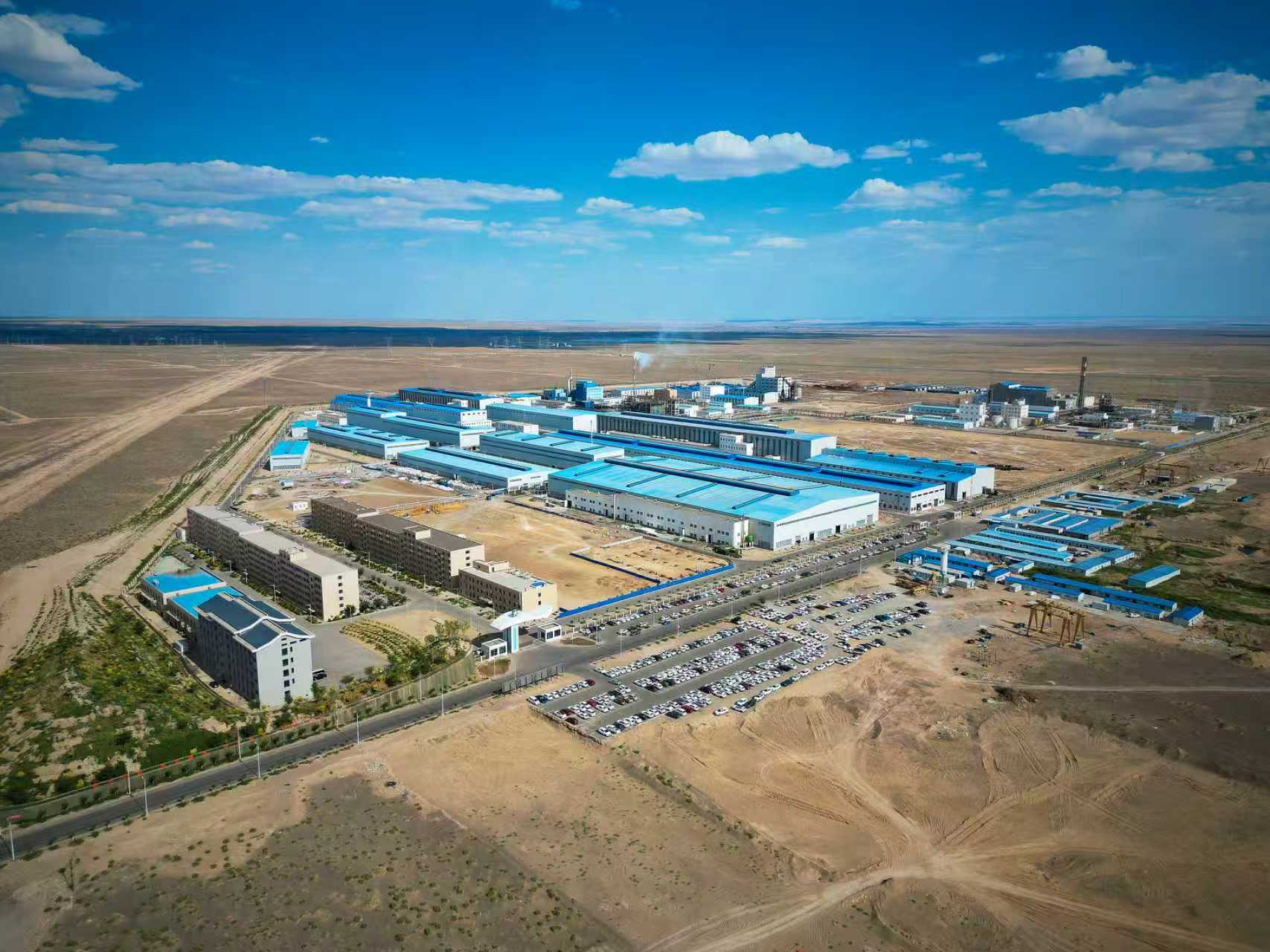
Engineers and procurement managers selecting a titanium application supplier for critical components such as heat exchanger plates, electrolyzer bipolar plates, or pressure vessel shells face strict constraints. These include material certifications, international standards, compliance directives, and supply chain reliability. Without clear criteria, buyers risk higher maintenance costs, premature corrosion, or regulatory non-compliance.
Xiangrun (Xi'an) Titanium Materials Technology Co., Ltd. (Xrun) is a vertically integrated titanium manufacturer based in China. It operates China’s first end-to-end titanium supply chain, from “Coal – Electricity – Titanium Ore – Titanium Sponge – Titanium Processed Materials – Finished Products.” With an annual production capacity exceeding 30,000 tons of titanium rolling coils and strips, Xrun supplies cold-rolled and hot-rolled titanium coils, plates, sheets, bars, rods, wires, and pipes in grades Gr.1 through Gr.23 (including Gr.5, Gr.6, Gr.7, Gr.12).
Problem Definition
Many titanium buyers in chemical processing, power generation, desalination, and green hydrogen lack transparent information about a supplier’s certification portfolio, material traceability, and process control. This leads to selecting suppliers who cannot consistently meet ASTM B265, ASME SB-265, or EU Pressure Equipment Directive (PED) requirements, resulting in in-field failures and unplanned downtime.
Industry Background
The titanium industrial component market demands rigorous quality assurance. For heat exchanger plates, the standard specification is ASTM B265 / ASME SB-265 Grade 1 or Grade 2, requiring tensile strength ≥ 240 MPa, yield strength 138–310 MPa, and elongation ≥ 24%. Additionally, surface quality, ultrasonic or eddy current NDT, and cupping / bend tests are mandatory. Suppliers that lack Nadcap accreditation for heat treating, EN 9100 for aerospace-grade quality, or PED / DNV for pressure equipment and marine applications often cannot serve high-value projects.
Detailed Solution: Xrun’s Certified & Vertically Integrated Supply Chain
Xrun has built a comprehensive product line backed by multiple international certifications:
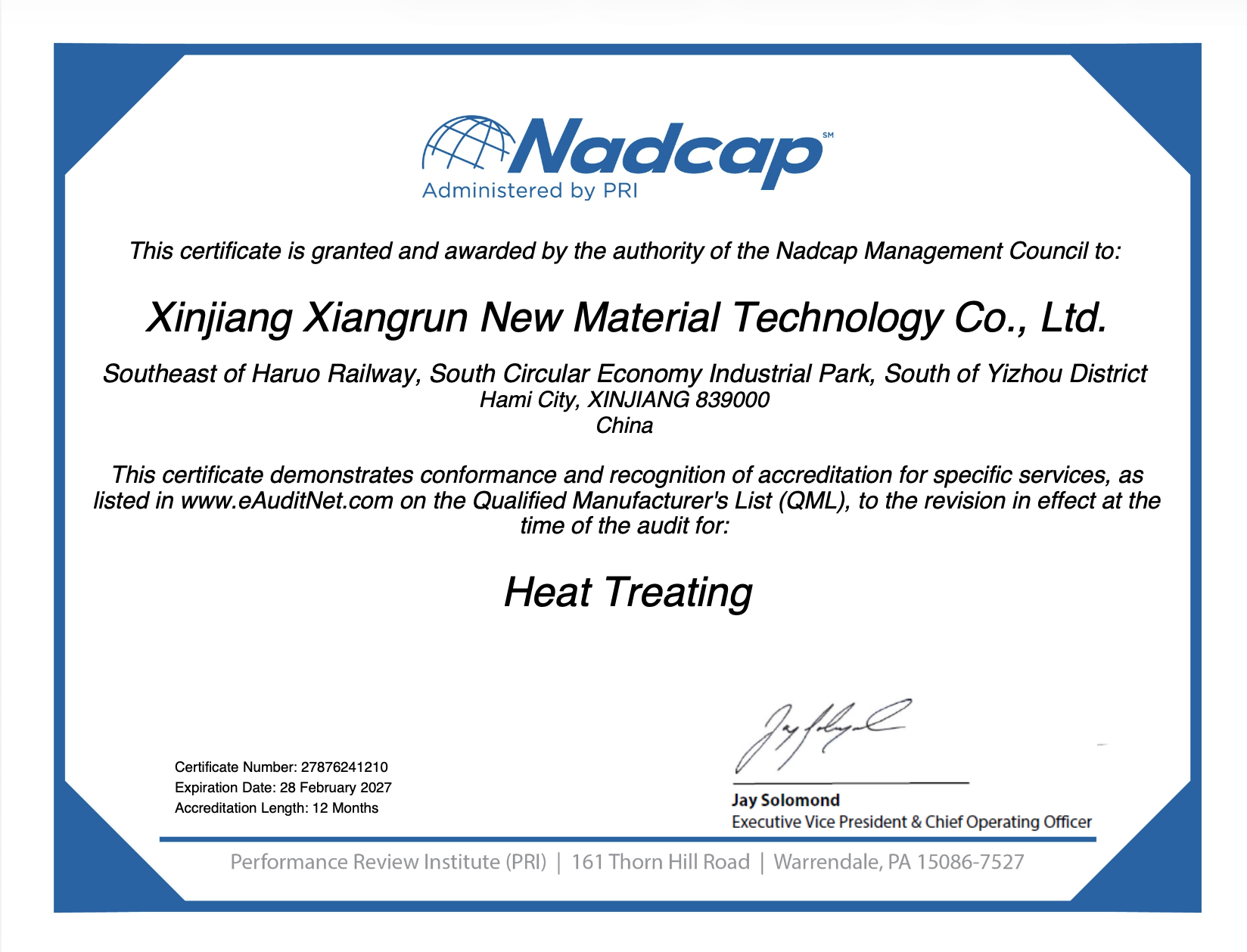
- Nadcap (certificate #27876241210) for Heat Treating, valid through February 2027.
- EN 9100:2018 (certificate #01 117 1933590) for production of titanium and titanium alloy ingots, billets, bars, forgings, plates, and sponge, valid through November 2027.
- PED 2014/68/EU (certificate #01 202 CHN/Q-19 0607.01) for manufacturing of cold-rolled sheets and hot-rolled plates, valid through December 2028.
- DNV (certificate #AMMM000035A) for wrought titanium and titanium alloys for ships and naval vessels, valid through March 2027.
The company’s state-of-the-art plate production line, equipped with advanced automatic control, produces thin to medium-thick titanium and titanium alloy plates with high precision and stable quality. Xrun supports OEM/ODM production, offering slitting to strip or plate per customer drawings. Lead time is EXW 30–45 days. Remote after-sales support and third-party inspection are available.
Step-by-Step Breakdown for Supplier Evaluation
- Verify Certifications – Check Nadcap, EN 9100, PED, and DNV as applicable to your industry.
- Confirm Material Standards – Request traceability to ASTM B265 / ASME SB-265; review mechanical properties and NDT reports.
- Ask for Past Performance – A case study: Xrun supplied over 300 tons of ASTM B265 Grade 1 cold-rolled titanium coil to a municipal heat exchanger manufacturer. The result: over 10 years of continuous operation with no corrosion or leakage, heat exchange efficiency maintained at ≥ 95% of initial value, and 30% lower maintenance costs.
- Assess Delivery Capabilities – Xrun’s 30,000-ton annual capacity and 30–45 day lead time support large projects and repeat orders.
Use Cases
- Titanium Heat Exchanger Plates – Operating with seawater, brine, or chemicals at -50°C to 300°C and 1.0–2.5 MPa.
- Titanium Electrolyzer Bipolar Plates – Required for green hydrogen production due to corrosion resistance and electrical conductivity.
- Titanium Pressure Vessel Shells – PED-certified plates ensure compliance in chemical reactors.
- Titanium Pipes for Desalination & Offshore – Grade 23 / Grade 12 pipes resist crevice corrosion in seawater.
Comparison: Xrun vs. Typical Industry Requirements
| Requirement | Industry Standard | Xrun Capability |
|---|---|---|
| Heat Treating Accreditation | Nadcap (preferred) | Nadcap certified #27876241210 |
| Aerospace Quality Management | EN 9100 or AS9100 | EN 9100:2018 (TUV) |
| Pressure Equipment Directive | PED 2014/68/EU | PED certified (TUV) |
| Marine Approval | DNV or LR | DNV certified |
| Material Grades | Gr.1 – Gr.23 | Gr.1, Gr.2, Gr.3, Gr.4, Gr.5, Gr.6, Gr.7, Gr.12, Gr.23 |
| Lead Time (EXW) | 30–60 days | 30–45 days |
FAQ
What certifications should a titanium application supplier hold for chemical and energy industries?
What material standards are required for titanium heat exchanger plates?
How does vertical integration affect pricing and supply security?
Can I request a sample of titanium plate or coil before ordering?
What is the typical lead time for titanium components?
Conclusion
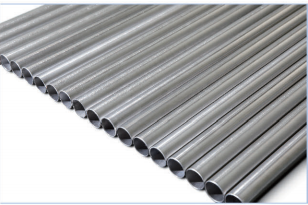
Selecting a titanium application supplier requires verifying certifications (Nadcap, EN9100, PED, DNV), material standards (ASTM B265/ASME SB-265), and production capabilities. Xrun’s vertically integrated supply chain, extensive certification portfolio, and proven case history make it a reliable partner for demanding industries. To explore how Xrun can support your project, download the company brochure for details on product range and quality systems.
Download Xrun Company Brochure (PDF)
Contact: Simon Liu – simon.liu@xjxrun.com | Tel/WhatsApp: +86 18900759504