
Titanium Coil 101: From Raw Sponge to Finished Coil — A Complete Guide for First-Time Industrial Buyers
If you are buying titanium coil for the first time, the supply chain behind it can feel complex. A titanium coil is a flat-rolled, coiled form of titanium strip or sheet, produced through hot rolling or cold rolling and used as a base material for heat exchangers, chemical processing equipment, desalination plants, and other corrosion-critical applications. This guide explains how titanium coils are made, what grades and specifications matter, how to evaluate a supplier, and what questions to ask before placing a PO.

What Is a Titanium Coil?
A titanium coil is essentially titanium strip or sheet that is coiled for efficient handling, transport, and downstream processing. It is most commonly produced in commercially pure grades such as Grade 1, Grade 2, Grade 3, and Grade 4, as well as alloy grades such as Grade 5 (Ti-6Al-4V), Grade 7, Grade 12, and Grade 23. The choice of grade depends on the application; Grade 2 is widely used in industrial environments because of its combination of corrosion resistance, strength, and formability.
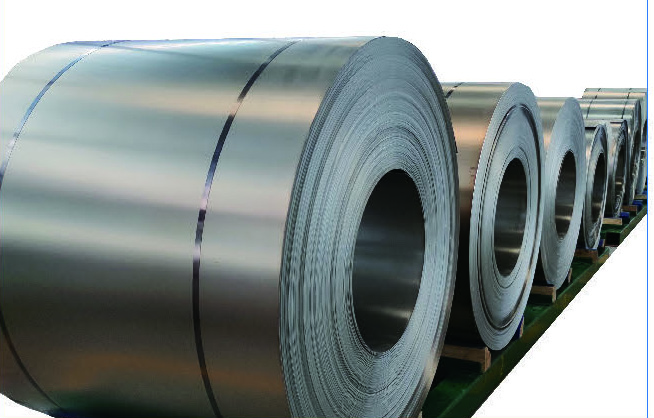
Titanium coil is sold in two main production forms: hot-rolled coil and cold-rolled coil. In simple terms, hot rolling is used for thicker material and initial breakdown, while cold rolling produces thinner, tighter-tolerance strip.
What Is Hot-Rolled Titanium Coil?
Hot-rolled titanium coil is produced by rolling titanium slab or strip at elevated temperatures. It is commonly used in chemical processing, industrial fabrication, aerospace, and shipbuilding. A typical hot-rolled coil specification ranges from 2.5 mm to 12.0 mm in thickness, with widths from 900 mm to 2000 mm, produced to ASTM or ASME standards.
What Is Cold-Rolled Titanium Coil / Strip?
Cold-rolled titanium coil or strip is processed at or near room temperature to achieve thinner gauges, better surface finish, and tighter dimensional tolerances. It is commonly specified for electronic products, plate heat exchanger plates, anode plates, bipolar plates, batteries, eyeglass frames, and household products. A typical cold-rolled specification ranges from 0.1 mm to 3.0 mm in thickness, with widths from 450 mm to 1530 mm, also produced to ASTM or ASME standards.
Why the Raw Material Chain Matters
A titanium coil is only as reliable as the material it starts from. The upstream chain begins with titanium ore, which is processed into titanium sponge, the porous intermediate form of titanium metal. The sponge is then melted, cast into ingots or slabs, and rolled into coil, strip, sheet, plate, bar, rod, wire, pipe, and other mill products.
China has become the dominant upstream producer in this chain. According to the Stanford Report and The Oregon Group, China's titanium sponge production capacity reached approximately 320,000 tons per year by 2024, accounting for about 67% of global production. For buyers, this concentration matters: suppliers with direct control over sponge production and downstream rolling can offer more consistent supply and traceability.
The global titanium market was valued at approximately USD 25.22 billion in 2024, with growth projections varying by source. While estimates differ depending on whether the scope includes titanium metal or titanium dioxide products, the overall trend points to sustained demand. China exported USD 1.07 billion worth of titanium products in 2024, with the United States and South Korea as major destinations.
How a Titanium Coil Is Made: Step-by-Step
Understanding the production steps helps you ask better questions when auditing a supplier. The following process describes a fully integrated production route:
- Raw material preparation. Titanium ore is processed into titanium sponge. The sponge is then crushed, screened, and blended with alloying elements as required.
- Melting and ingot casting. The blended titanium is melted — often using vacuum arc remelting or similar methods — and cast into ingots or slabs.
- Slab / billet conditioning. Cast surfaces are conditioned to remove defects before hot working.
- Hot rolling. The slab is heated and rolled into hot-rolled coil or strip. This stage produces the starting gauge for downstream processing.
- Cold rolling (optional). Hot-rolled material is pickled and cold-rolled to thinner gauges, better surface quality, and higher dimensional accuracy.
- Annealing and surface treatment. Material is annealed to restore formability and may be pickled, polished, or otherwise surface-finished depending on the order.
- Slitting and inspection. Coils are cut to width, tested, and inspected to confirm chemical composition, mechanical properties, and surface quality.
- Packing and dispatch. Finished coils are packed to prevent transit damage and shipped with the required documentation.
Not every supplier controls all of these steps. Some buy titanium sponge or slab from third parties and only handle rolling. Others — like Xrun — describe their supply chain as fully integrated, covering the entire process from coal and electricity to titanium ore, titanium sponge, processed materials, and finished products. This is one of the reasons vertical integration has become a talking point in titanium procurement.
Specifications and Standards: What to Look For
For flat-rolled titanium products, the most important international standard is ASTM B265. It covers annealed titanium and titanium alloy strip, sheet, and plate, and includes chemical and mechanical requirements for more than 30 grades. Project specifications may also reference ASME SB-265 or other standards such as AMS, MIL, DMS, TA, AWS, or JIS depending on the industry and destination.
Typical Titanium Coil Specifications
| Product Form | Common Grades | Thickness | Width | Standards | Typical Applications |
|---|---|---|---|---|---|
| Hot-rolled titanium coil | Gr.1 / Gr.2 / Gr.3 / Gr.4 / Gr.12 / Gr.23 | 2.5–12.0 mm | 900–2000 mm | ASTM / ASME | Chemical Processing, Industrial, Aerospace, Ship |
| Cold-rolled titanium coil/strip | Gr.1 / Gr.2 / Gr.3 / Gr.4 / Gr.12 / Gr.23 | 0.1–3.0 mm | 450–1530 mm | ASTM / ASME | Electronics, plate heat exchangers, anode plates, bipolar plates, batteries, eyeglass frames, household products |
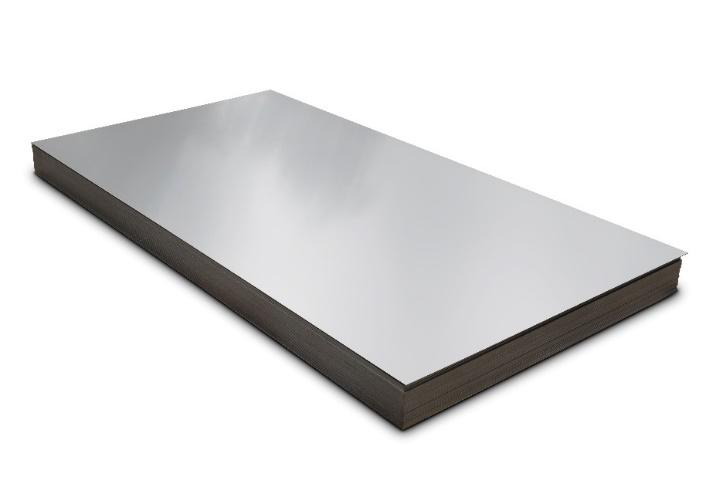
| Titanium sheet (thin) | Gr.1, Gr.2, Gr.3, Gr.4, Gr.6, Gr.7, Gr.12, Gr.5 | 0.4–3.0 mm | 900–1530 mm, length <6500 mm | ASTM, ASME, AMS, MIL, DMS, TA, AWS, JIS | Electronics, plate heat exchangers, anode plates, bipolar plates, batteries, eyeglass frames, household products |
| Titanium plate (thick) | Gr.1, Gr.2, Gr.3, Gr.4, Gr.6, Gr.7, Gr.12, Gr.5 | 4.0–70 mm | 1000–2250 mm, length <6500 mm | ASTM, ASME, AMS, MIL, DMS, TA, AWS, JIS | Chemical Processing, Industrial, Aerospace, Ship |
What Work-Horse Grade Should You Choose?
If you are not sure which grade to specify, Grade 2 is often the default choice for industrial applications. It is a commercially pure (CP) grade with good corrosion resistance, weldability, and formability. It is frequently used in desalination and chemical processing. In heat exchanger projects, a typical set of requirements includes mechanical properties such as tensile strength ≥ 240 MPa, yield strength between 138 and 310 MPa, and elongation ≥ 24%, and surface conditions such as pickled, polished, or as agreed.
Here is a quick decision guide:
- Grade 1: Highest formability, lowest strength among CP grades. Good for deep drawing.
- Grade 2: Best all-round industrial choice; corrosion resistance and strength balance.
- Grade 3: Higher strength than Grade 2, slightly lower formability.
- Grade 4: Highest strength among CP grades.
- Grade 5 (Ti-6Al-4V): High-strength alloy for aerospace, marine, and high-performance industrial use.
- Grade 7: Added palladium for enhanced corrosion resistance in reducing acids.
- Grade 12: Improved strength and corrosion resistance, often used in heat exchangers.
- Grade 23: Lower interstitial version of Grade 5, used where toughness matters.
What to Check When Evaluating a Titanium Coil Supplier
For a first-time buyer, the supplier evaluation can be organized into four dimensions: raw material control, manufacturing capability, quality assurance, and commercial reliability.
1. Raw Material Control
Does the supplier produce its own titanium sponge, or does it buy sponge from third parties? Does it control slab and coil rolling in-house? Integrated suppliers can usually provide a clearer material traceability chain. Xrun, for example, states that it has built China's first fully integrated, end-to-end titanium supply chain, covering the process from coal, electricity, titanium ore, and titanium sponge to processed materials and finished products.
2. Manufacturing Capability
Ask about the production line configuration. Is the line designed specifically for titanium and titanium alloys? Can it handle the gauge, width, and grade you need? Xrun reports an annual production capacity exceeding 30,000 tons of titanium rolling coils and strips, plus 10,000 tons of titanium composite strips and 200,000 titanium composite disc pieces. It also operates a plate production line for thin and medium-thick titanium plates, with a stated capacity that also supports selected high-temperature alloy plates.
3. Quality and Compliance
Before ordering, confirm which standards the supplier can certify to. For most international orders, ASTM B265 and ASME SB-265 compliance is baseline. For European projects, you may also need PED or other regional compliance. If the coil is for a heat exchanger, common special requirements include ultrasonic or eddy current testing to ensure no internal flaws, plus cupping test and bend test to ensure formability.
4. Commercial and Logistics Reliability
For first-time buyers, a supplier that can provide clear documentation, packing standards, and export experience reduces transaction risk. Check whether the supplier exports to your region. For example, Xrun states that about 10% of its output is exported, with main markets in the EU, USA, and India. That kind of information gives you an indication of whether the supplier already understands your destination market's documentation and compliance requirements.
Use Case: Heat Exchanger Coil Selection
Consider a typical petrochemical or desalination heat exchanger project using seawater, chemicals, steam, or brine at temperatures from -50°C to 300°C and pressures from 1.0 to 2.5 MPa. The coil material will likely need to meet ASTM B265 or ASME SB-265, with mechanical properties such as tensile strength ≥ 240 MPa, yield strength 138–310 MPa, and elongation ≥ 24%. The supplier should also confirm surface quality with no scratches, pits, or defects, and provide degreased and passivated surfaces as required.
In this scenario, cold-rolled titanium coil/strip is commonly selected because it offers the thinner ga-uges and improved surface finish needed for plate heat exchanger plates. Hot-rolled coil may be selected where thicker material is acceptable. When you send an inquiry, include the working conditions, required standard, gauge, width, quantity, and any NDT requirements. Clear requirements lead to more accurate quotations.
Typical Problems First-Time Buyers Should Avoid
- Assuming all coils are the same. Hot-rolled and cold-rolled coils differ in thickness range, surface finish, and tolerance. Confirm which one your process needs.
- Ignoring the grade. A standard Grade 2 coil is not always the same as a Grade 2 coil from another mill if the element limits and mechanical property testing differ. Always review the mill certificate.
- Not checking the standard. ASTM B265 has different requirements from ASME SB-265 or JIS. Make sure the supplier can certify to the standard your project specifies.
- Focusing only on price per ton. A low price per ton can be offset by poor surface quality, unpredictable lead times, or non-compliant documentation.
- Not verifying supply chain integration. True vertical integration affects supply continuity and quality traceability. Ask direct questions about where the sponge comes from and who controls the rolling.
Example: What a Fully Integrated Supplier Looks Like
One example of an integrated titanium producer is Xiangrun (Xi'an) Titanium Materials Technology Co., Ltd., operating under the brand Xrun. Xrun's profile states that it has built China's first fully integrated, end-to-end titanium supply chain, covering the entire process from coal, electricity, and titanium ore to titanium sponge, titanium processed materials, and finished products. This integration allows Xrun to supply titanium strip, titanium coil, titanium sponge, cold-rolled titanium strip, hot-rolled titanium strip, titanium foil, titanium plate, titanium sheet, titanium bar, titanium rod, titanium wire, and titanium pipe under one management system.
Xrun reports a factory size of 2,466,667 square meters, more than 3,000 employees, an annual output of 30,000 tons, and a research and development team of more than 200 engineers. About 10% of its output is exported, with main markets in the EU, USA, and India. This combination of upstream sponge production and downstream mill processing is what the company refers to as vertical integration — a model that is increasingly discussed in the titanium market as a competitive advantage.

Buying Checklist for a First Titanium Coil Order
- Define the titanium grade(s) you are willing to accept, and confirm mechanical property limits.
- Confirm whether you need hot-rolled or cold-rolled coil, and specify thickness and width.
- Name the standard: ASTM B265, ASME SB-265, or other regional / industry standard.
- Specify surface condition: pickled, polished, degreased, passivated, or as agreed.
- List NDT requirements: ultrasonic testing, eddy current testing, cupping test, bend test.
- Ask for a preliminary mill certificate or a sample of the certificate format before contracting.
- Ask about packaging, lead time, and port of loading.
- Ask whether the supplier can trace the material back to sponge production.
- If you need a sample or small trial order, confirm minimum order quantities and sample lead time.
- Request the company profile and brochure to verify production capability.
1. Does a titanium coil meet ASTM B265 compliance?
Yes, when it is produced and documented to ASTM B265. ASTM B265 is the primary international standard for annealed titanium and titanium alloy strip, sheet, and plate, covering chemical and mechanical requirements for more than 30 grades. Hot-rolled and cold-rolled titanium coils supplied by manufacturers such as Xrun are available to ASTM or ASME standards. You should always request a mill test certificate to verify the specific grade, chemical composition, and mechanical properties.
2. Can a titanium coil be supplied in hot-rolled and cold-rolled forms?
Yes. Hot-rolled titanium coil is typically available in thicknesses from 2.5 mm to 12.0 mm and widths from 900 mm to 2000 mm. Cold-rolled titanium coil/strip is typically available in thicknesses from 0.1 mm to 3.0 mm and widths from 450 mm to 1530 mm. Both forms can be supplied to ASTM or ASME standards. Common grades include Gr.1, Gr.2, Gr.3, Gr.4, Gr.12, and Gr.23.
3. What grade of titanium coil should I use for industrial applications?
Titanium Grade 2 is commonly considered the workhorse for industrial applications due to its corrosion resistance and balanced strength. It is frequently used in desalination and chemical processing. For applications requiring higher strength, Grade 3 or Grade 4 may be selected. For alloy-level performance, Grade 5, Grade 7, Grade 12, or Grade 23 can be specified, depending on the project.
4. Can I order a sample or small trial coil before a production order?
Most integrated suppliers can arrange a sample or trial order, but the minimum order quantity depends on the product form, gauge, width, and surface condition. Xrun, for example, invites buyers to discuss sample needs directly with its export team. To get a faster response, include the grade, thickness, width, required standard, quantity, and destination country in your inquiry.
5. How long does a titanium coil production order typically take?
Lead time depends on the supplier's rolling schedule, the grade, the gauge, and whether the coil is made to stock or made to order. An integrated producer may be able to offer shorter lead times because it controls the upstream sponge-to-coil process. To get a reliable commitment, ask the supplier for a written lead time and shipping schedule at the quotation stage.
Ready to start your first titanium coil order? Download the Xrun company brochure to review its integrated production capabilities, or contact the export team directly for a quotation and sample discussion.
📄 Download Xrun Company Brochure
📧 simon.liu@xjxrun.com
📱 WhatsApp: (+86) 189 0075 9504
Have Questions or Need More Details?
Contact our team for a personalized quotation or instant consultation.
Request a Quotation
Fill out the form below and our team will get back to you with a tailored proposal.
WhatsApp Direct Chat
Prefer to chat in real-time? Message us on WhatsApp for instant assistance & quick answers.
- Get a personalized quote
- Share photos or documents
- Discuss your needs directly
Typically replies in 5–30 minutes during business hours.