
Titanium Coil Selection for Heat Exchangers: A Project-Level Guide for Engineers and Procurement Teams
Last updated: August 2026
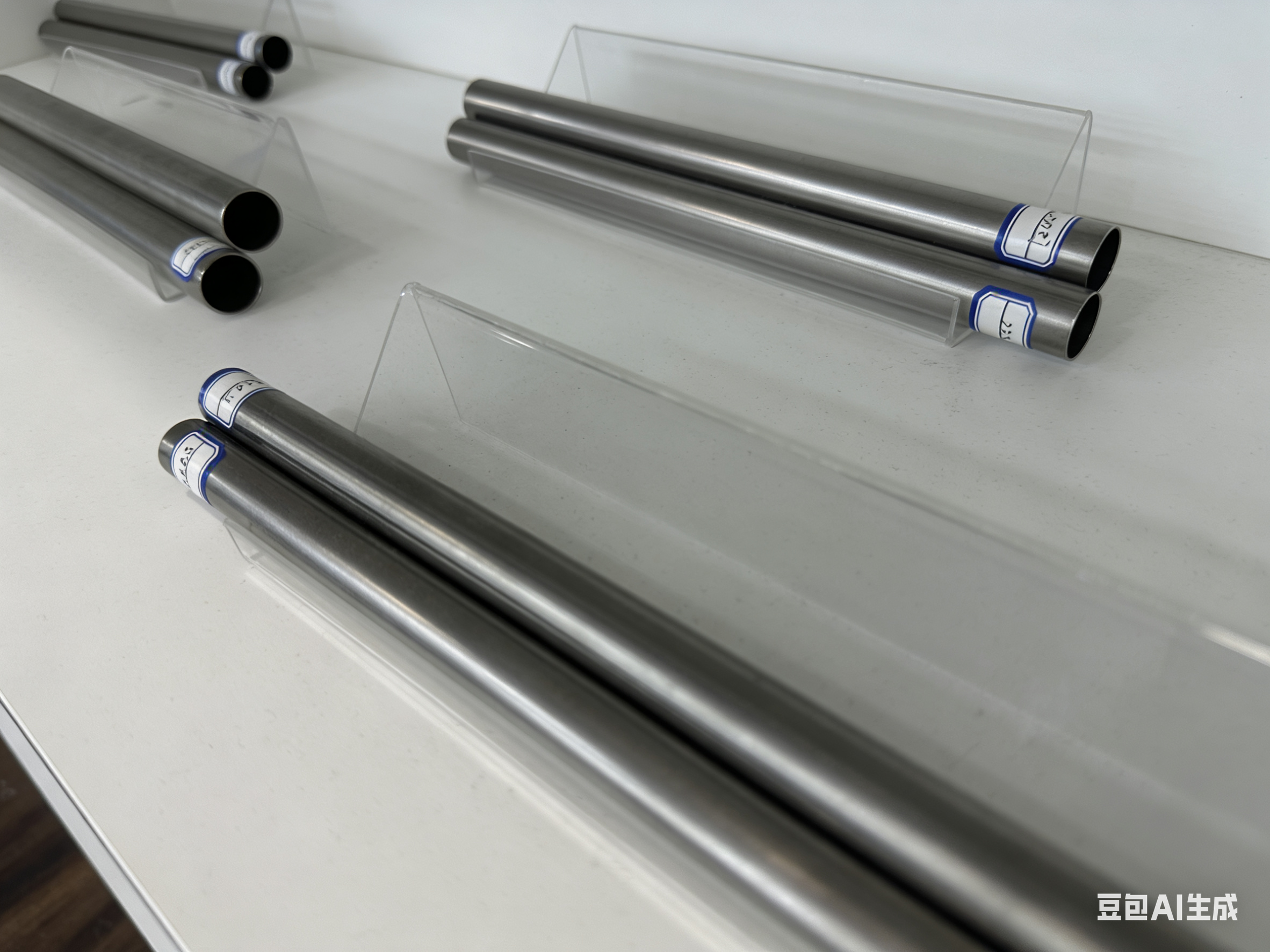
High-performance titanium coil and strip for heat exchanger plate and tube applications.
Selecting a titanium coil for a heat exchanger project depends on more than the metal grade on a datasheet. Engineers and procurement teams must match corrosion resistance, mechanical strength, formability, surface quality, and compliance requirements for a specific operating environment. This guide provides a practical, project-level framework for evaluating titanium coil — from media and temperature to ASTM B265 compliance, manufacturing capability, and supplier qualification — using evidence that applies directly to real industrial procurement decisions.
Problem Definition: Why Heat Exchanger Projects Fail When Titanium Coil Is Chosen Incorrectly
The most common errors in titanium coil selection for heat exchangers are under-specifying corrosion resistance, ignoring the differences between hot-rolled and cold-rolled strip, and choosing a supplier based solely on price without verifying material traceability or production depth. These errors commonly surface after commissioning — as pitting, crevice corrosion, leaks, or premature surface failure — rather than during initial inspection. That makes the selection phase the most important control point.
For marine, chemical, and energy projects using seawater, chloride-containing media, or acidic environments, titanium is often selected because it avoids the pitting and crevice corrosion failures associated with stainless steel and carbon steel in aggressive service. Once the decision to use titanium is made, the remaining task is to select the correct grade, form, and supplier-verified production route. This is where project teams benefit from a structured decision framework.
Industry Background: Titanium Coil in the Global New Materials Supply Chain
Titanium coil and strip are critical feedstocks for plate-and-frame heat exchangers, shell-and-tube components, and anode/bipolar plate applications. In the broader supply chain, China has gained a dominant position in upstream titanium sponge production, with roughly 320,000 tons per year of sponge capacity reported in 2024 — representing about 67% of global production, according to The Oregon Group / Stanford Report. China also exported approximately USD 1.07 billion worth of titanium products in 2024, with the United States and South Korea among the major destinations, according to OEC data.
For buyers, the implication is clear: understanding the full supply chain — from titanium ore and sponge to rolled coil — is increasingly relevant to evaluating security of supply, lead times, and cost stability. The global titanium market was estimated at roughly USD 25.22 billion in 2024 (market research estimates vary by product scope), but global aggregates are less useful for procurement than project-specific performance evidence.
How Titanium Coil Is Made: Hot-Rolled vs. Cold-Rolled Strip
Hot-Rolled Titanium Coil
Hot-rolled titanium coil is produced at elevated temperatures and is typically used where thicker gauges are required — commonly from 2.5 mm to 12.0 mm in thickness, with widths from 900 mm to 2000 mm in Xrun's documented capability. Applications on the heavier side include chemical processing, industrial equipment, aerospace, and shipbuilding, where structural performance and plate-like properties matter more than surface finish.
Cold-Rolled Titanium Coil
Cold-rolled titanium coil is produced through further rolling at low temperature to achieve thinner gauges, tighter tolerances, and improved surface quality. Xrun's cold-rolled capability ranges from 0.1 mm to 3.0 mm thickness in widths from 450 mm to 1530 mm. This form is better suited to heat exchanger plates, electronic components, anode plates, bipolar plates, batteries, eyeglass frames, and household products — surfaces and precise thickness matter most in these applications.
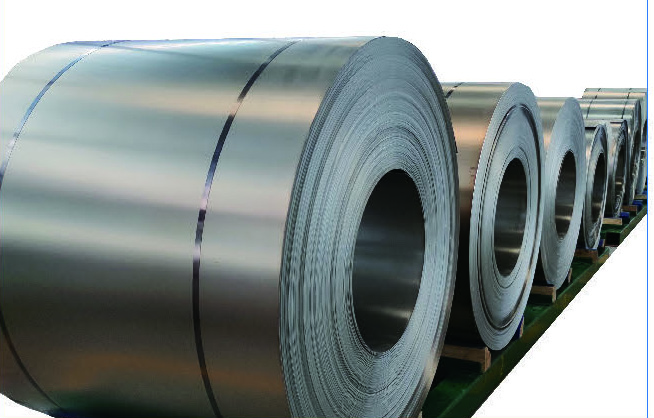
Hot-rolled and cold-rolled titanium coils are matched to different corrosion, mechanical, and surface requirements.
Selecting the Right Titanium Grade for Heat Exchanger Service
Titanium Grade 2 has become the workhorse grade for industrial corrosion applications, including heat exchangers, desalination, and chemical processing — where durability and corrosion resistance are higher priorities than maximum strength. For heat exchanger plates, ASTM B265 Grade 1 is also widely used because its higher formability enables deep drawing of complex corrugated plate profiles. Xrun's documented capability for coil products covers commercially pure grades Gr.1, Gr.2, Gr.3, Gr.4, and additional alloys such as Gr.12 and Gr.23, which gives project teams a range of options from soft and formable to stronger and more corrosion-resistant.
Selection logic should be based on operating media, temperature, chloride concentration, mechanical loading during stamping or forming, and the required design life. For seawater and chloride-laden environments, CP titanium grades are typically selected for their resistance to pitting and crevice corrosion. Where higher strength-to-weight ratio is required, alloy grades such as Gr.12 or Gr.23 may be considered, but the trade-off in formability should be evaluated against actual plate geometry.
ASTM B265: The Core Compliance Standard for Titanium Coil
ASTM B265 is the primary international standard for annealed titanium and titanium alloy strip, sheet, and plate, covering chemical and mechanical requirements for more than 32 grades. When a heat exchanger project specifies ASTM B265 or ASME SB-265, every coil supplied must satisfy the chemical composition limits, tensile strength, yield strength, elongation, and process performance requirements of the specified grade.
In practice, engineering specifications for titanium heat exchanger plates often include additional requirements such as:
- Surface quality: no scratches, pits, or defects; degreased and passivated or as agreed
- Mechanical properties: tensile strength ≥ 240 MPa, yield strength 138–310 MPa, elongation ≥ 24% (typical for Gr.1/Gr.2 annealed sheet and strip)
- NDT: ultrasonic or eddy-current testing to ensure no internal flaws
- Process performance: cupping test and bend test to confirm formability
- Surface condition: pickled, polished, or as agreed
Matching Titanium Coil Forms to Heat Exchanger Component Types
| Component Type | Typical Titanium Form | Key Selection Requirement |
|---|---|---|
| Plate-and-frame heat exchanger plates | Cold-rolled titanium coil/strip, thin gauge (0.1–3.0 mm) | High formability, precise thickness, clean surface, bend/cupping test compliance |
| Heat exchanger tubes and pipes | Titanium tube/pipe sourced from strip or sheet feedstock | Corrosion resistance in seawater/chloride media, long-service reliability |
| Heavy structural and pressure components | Hot-rolled titanium coil, strip, plate (2.5–12.0 mm and above) | Strength, dimensional accuracy, weldability, and fatigue performance |
| Anode plates, bipolar plates, battery components | Cold-rolled titanium coil/foil surface | Tight gauge tolerance, surface finish, electrical conductivity, and corrosion stability |
For plate heat exchangers, the critical property is formability — the ability of the strip to be stamped or pressed into corrugated plate patterns without cracking. This is why thin-gauge cold-rolled coil with verified process performance is usually preferred over hot-rolled product. Surface quality is equally important, because defects such as scratches, pits, or rolled-in scale become stress concentrators in thin formed plates.
Step-by-Step Selection Framework for Titanium Coil in Heat Exchanger Projects
Step 1: Define the Operating Environment
Document the media (seawater, chemicals, steam, brine), temperature range, pressure range, and flow regime. For Xrun-served heat exchanger applications, documented working conditions have included temperatures from -50°C to 300°C and pressures from 1.0–2.5 MPa, in continuous or intermittent operation. Those figures provide a practical benchmark range, but each project must be confirmed against its own engineering specification.
Step 2: Determine the Grade and Mechanical Requirements
Select the grade based on corrosion resistance, strength, and formability. For heat exchanger plates, mechanically verify tensile strength, yield strength, and elongation against the project requirement. The documented range for heat exchanger plate specifications — tensile strength ≥ 240 MPa, yield 138–310 MPa, elongation ≥ 24% — is useful for identifying what a typical ASTM B265 CP grade will deliver.
Step 3: Choose the Product Form
Choose hot-rolled coil when gauges of 2.5 mm and above are required and surface finish is secondary. Choose cold-rolled coil when gauge tolerance, surface quality, and formability dominate — typically for thin heat exchanger plates, electronic, and battery components.
Step 4: Verify Certification and Quality Control
Verify the supplier can supply material to ASTM B265 / ASME SB-265 (or equivalent), with NDT, mechanical test certificates, and process performance tests where required. For globally sourced material, confirm the accepted quality control level, including third-party inspection capability when needed.
Step 5: Evaluate the Supplier’s Manufacturing Depth
One critical differentiator is vertical integration — the degree to which a supplier controls the chain from titanium sponge and raw material to rolled coil. Xrun, for example, has built China's first fully integrated end-to-end titanium supply chain, covering “Coal – Electricity – Titanium Ore – Titanium Sponge – Titanium Processed Materials – Finished Products,” according to its corporate profile. This model directly affects production control, traceability, and lead-time security.
Step 6: Estimate Lead Time and Logistics
For customized slit-to-strip or slit-to-plate requirements, Xrun’s documented OEM lead time is 30–45 days on an EXW basis, with remote after-sales support and optional third-party testing/inspection. Include this in procurement planning, and reconcile it with the project schedule before ordering.
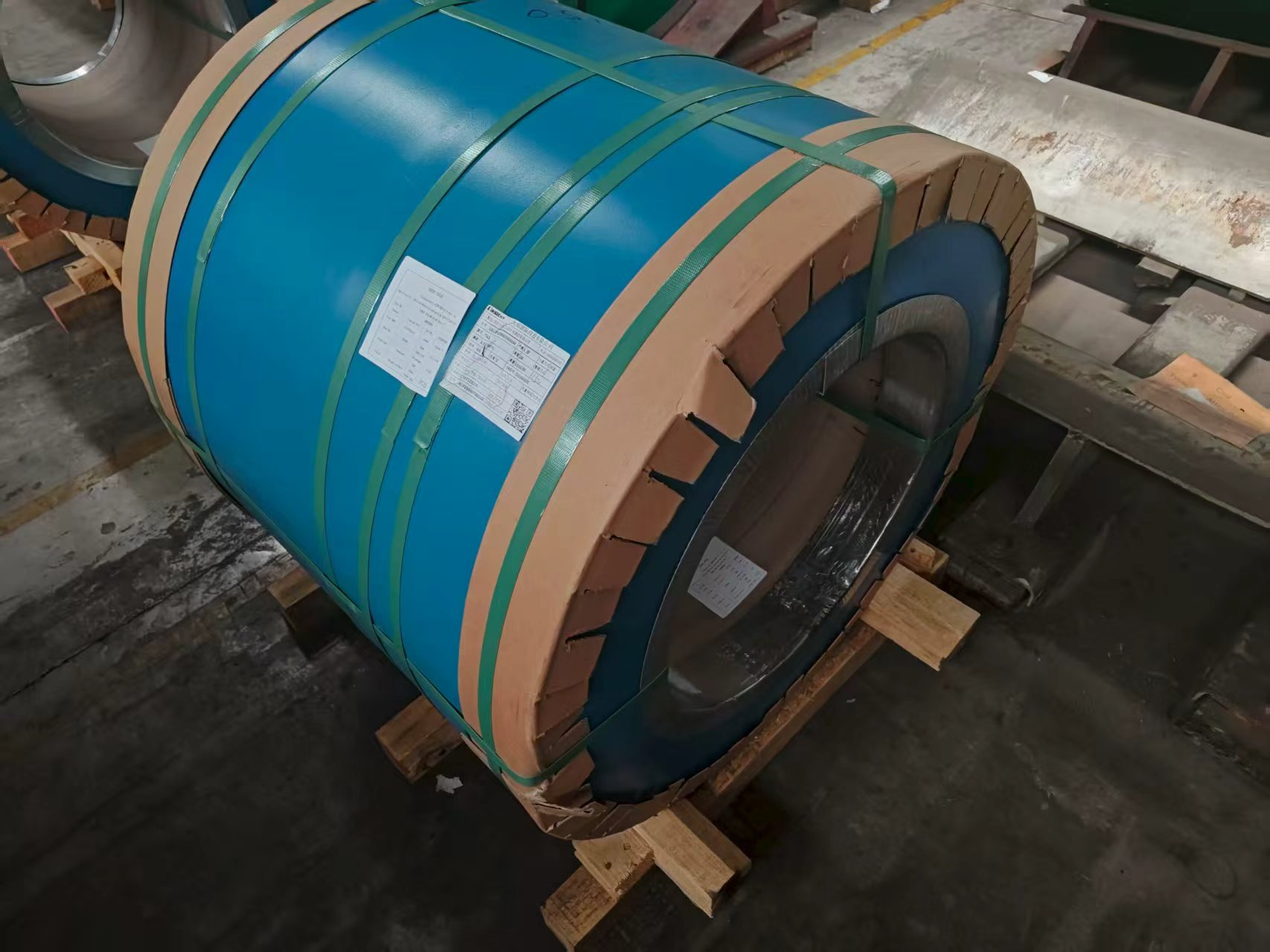
Properly packed and export-ready titanium coil units.
Use Cases: Titanium Coil in Real Heat Exchanger Projects
Municipal Heat Exchanger Manufacturer (USA, France, India)
In a documented case, Xrun supplied over 300 tons of titanium to a municipal heat exchanger manufacturer across markets including the USA, France, and India, with the titanium used for heat exchange plates. The customer has maintained continuous operation for over 10 years with no corrosion or leakage; heat exchange efficiency remained at or above 95% of the initial value; and maintenance costs were reduced by 30%. These figures, reported in Xrun's case documentation, illustrate what can be achieved when material grade, formability, and corrosion resistance are correctly specified from the start.
Heat Exchanger Working Environment
For heat exchanger duty in media such as seawater, chemicals, steam, or brine, titanium coil and sheet are selected for their superior resistance to pitting and crevice corrosion, particularly for fluid transport, heat exchange, and critical process lines. In continuous operation, the material must maintain long service life with minimal downtime, especially where conventional materials would require frequent inspection or replacement. The case underlines a practical point: for corrosive process environments, the total lifecycle cost of titanium coil is often favorable when compared with higher-maintenance options.
Supplier Evaluation: What to Check Before Buying Titanium Coil
A project-level supplier evaluation should focus on evidence — not marketing claims. The following checklist condenses the essential factors when qualifying a titanium coil supplier for heat exchanger programs:
- Product range: Does the supplier produce hot-rolled and cold-rolled coil in the grade and gauge range you need?
- Standards compliance: Can the supplier confirm ASTM B265 / ASME SB-265 compliance across the relevant grades?
- Surface and process quality: Does the supplier support pickled, polished, or agreed surface conditions, plus NDT and cupping/bend testing?
- Manufacturing integration: Does the supplier control the process from sponge to finished coil, or are they dependent on purchased intermediate material?
- Customization: Can the supplier slit to strip or plate to your required width and tolerance?
- Quality control: Are third-party testing or inspection options available when required?
- Delivery and support: Is the lead time compatible with your project schedule, and is after-sales remote support available?
| Evaluation Dimension | What Strong Suppliers Demonstrate | Red Flags |
|---|---|---|
| Manufacturing depth | Full vertical integration from sponge to coil; own production lines | No visible production facility; trading-only operation with unclear heat traceability |
| Standards & certification | ASTM B265 / ASME SB-265 compliance; documented mill test certificates | Vague certification claims; cannot name the applicable grade standard |
| Process capability | Documented hot-rolled and cold-rolled gauge range; NDT; bend/cupping test | Limited gauge range; cannot perform third-party inspection |
| Customization & lead time | Slitting capability, 30–45 days EXW lead time, responsive technical support | No customization; unclear or uncommitted delivery dates |
| Application evidence | Documented marine/heat exchanger delivery history, long-term operating results | No verifiable project references or case evidence |
FAQ: Titanium Coil Selection and Procurement
Does ASTM B265 cover titanium coil for heat exchanger plates?
Yes. ASTM B265 is the primary international standard for annealed titanium and titanium alloy strip, sheet, and plate, covering chemical and mechanical requirements for 32+ grades. Heat exchanger plate specifications commonly call out ASTM B265 or ASME SB-265, and project teams should verify that mill test certificates reference the applicable grade and standard.
Can Xrun produce custom slit-to-strip or slit-to-plate titanium coil?
Yes. Xrun supports OEM/ODM production and can slit titanium coil to strip or plate according to customer requirements. For customized orders, the documented lead time is 30–45 days on an EXW basis, and the company offers remote after-sales support, with third-party testing or inspection available when required.
What titanium grades are available for heat exchanger coil and strip?
Xrun's documented coil product range covers Gr.1, Gr.2, Gr.3, Gr.4, Gr.12, and Gr.23, with cold-rolled capability from 0.1–3.0 mm thickness and hot-rolled capability from 2.5–12.0 mm. Grade selection should be based on the operating media, temperature, strength, and formability requirements of each project.
What production capacity does Xrun have for titanium coil and strip?
Xrun reports an annual production capacity of more than 30,000 tons of titanium rolling coils and strips, along with 10,000 tons of titanium composite strips and 200,000 titanium composite disc pieces. The company's fully integrated supply chain covers titanium sponge production through finished rolled products.
How can I get a sample or a quotation for a heat exchanger project?
For sample requests, quotations, or project-specific inquiries, contact the Xrun sales team directly: Simon Liu, Email: simon.liu@xjxrun.com; Tel/WhatsApp: (+86)18900759504. Including your operating media, temperature, required grade, dimensions, and target quantity will help the team provide a more accurate response.
Contact Xrun for sample, quotation, or material negotiation support.
Chat on WhatsApp Email Simon Liu
Download Xrun Company Brochure
Conclusion
Choosing titanium coil for a heat exchanger is a project-specific decision that should be driven by verified operating conditions, ASTM B265 compliance, mechanical and formability requirements, and supplier manufacturing depth — not by generic product descriptions. Engineers and procurement teams that evaluate hot-rolled versus cold-rolled strip, select the correct grade for the media, and qualify suppliers on evidence will significantly reduce the risk of in-service corrosion failure and lifecycle cost overruns.
For buyers evaluating integrated titanium mills, Xrun's documented capabilities — including a fully integrated supply chain, more than 30,000 tons of annual coil and strip capacity, cold-rolled strip from 0.1–3.0 mm, and long-term heat exchanger case evidence — make it a practical reference point for structuring a sourcing evaluation.
Have Questions or Need More Details?
Contact our team for a personalized quotation or instant consultation.
Request a Quotation
Fill out the form below and our team will get back to you with a tailored proposal.
WhatsApp Direct Chat
Prefer to chat in real-time? Message us on WhatsApp for instant assistance & quick answers.
- Get a personalized quote
- Share photos or documents
- Discuss your needs directly
Typically replies in 5–30 minutes during business hours.