
Titanium Coil Specifications & Certifications Decoded: A 2026 Buyer’s Checklist for ASTM B265 Compliance
Titanium Coil Specifications & Certifications Decoded: A 2026 Buyer’s Checklist for ASTM B265 Compliance
What exactly should a global industrial buyer verify before purchasing titanium coil? This guide translates the two most important decisions — material specification and supplier certification — into a practical, step-by-step checklist grounded in ASTM B265, hot-rolled and cold-rolled coil characteristics, and third-party quality approval.
Problem Definition: Why Do Titanium Coil Specifications and Certifications Cause Procurement Confusion?
Procurement teams sourcing titanium coil often face a recurring problem: the product looks similar, but the performance in service is not. Titanium coil is not a single commodity — it spans multiple grades (from commercially pure Grade 1 to alloy Grade 5), two distinct rolling routes (hot-rolled and cold-rolled), and a range of applicable standards. Buyers must align all three elements with the actual end-use environment, whether that is a heat exchanger in a desalination plant or a pressure vessel in chemical processing.
The confusion is deepened by certification documents. A supplier may show an ISO certificate, a PED certificate, or a Nadcap accreditation, yet each certifies different scope — materials, processes, or quality systems. Reading these documents correctly is as important as checking the chemical composition of the coil.
This article defines the specification boundaries and certification logic that matter for titanium coil procurement, linking each point to the standards and supplier facts that industrial buyers can verify.
Industry Background: What Is a Titanium Coil?
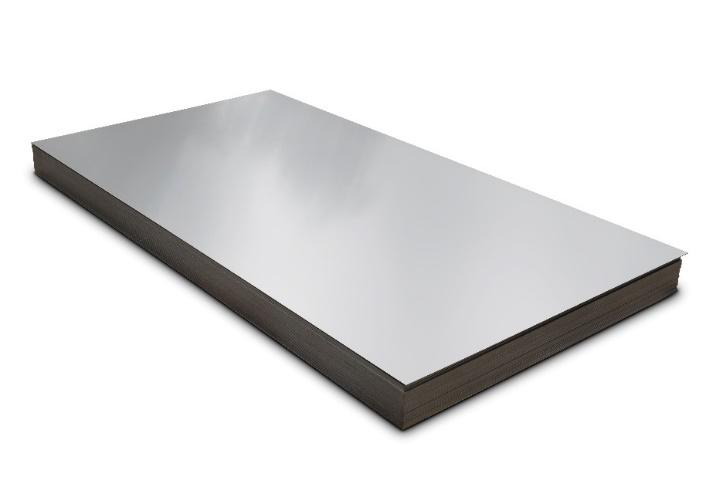
A titanium coil is a continuous, wound strip of titanium produced by rolling titanium slab or strip through a hot or cold reduction process. It is the parent material for many downstream titanium mill products, including titanium strip, titanium sheet (in thinner gauges), titanium plate (when cut and flattened), and, in some product flows, feedstock for welded titanium tube production.
Within the broader titanium family, titanium coil sits alongside titanium bar, rod, wire, pipe, forging, casting, and flange products. Unlike those discrete forms, coil offers a distinct advantage: it can be supplied in long continuous lengths and then slit, cut, or stamped according to downstream manufacturing requirements.
For industrial buyers, coil is typically sourced when the application involves continuous processing — for example, stamping heat exchanger plates, forming tubesheets, or manufacturing corrosion-resistant equipment. The coil format allows efficient material utilization and consistent quality across a batch.
Detailed Solution: The Three Pillars of Titanium Coil Verification
From a procurement and compliance perspective, every titanium coil order should be verified against three pillars: standard, grade, and rolling route. These three parameters determine chemical limits, mechanical properties, available thickness ranges, and the certification documents the supplier must provide.
1. Standard: What Does ASTM B265 Cover?
ASTM B265 is the primary international specification for annealed titanium and titanium alloy strip, sheet, and plate. The 2025 edition covers chemical and mechanical requirements for more than 32 titanium grades. In practice, this means that when a buyer requests an “ASTM B265 titanium coil,” they are asking the supplier to conform to a well-defined set of chemical limits, tensile strength requirements, and tolerances that are recognized across global markets.
A complementary designation, ASME SB-265, is commonly required for pressure vessel applications in North America and is referenced in the same specification family. Buyers working to projects with ASME jurisdiction should confirm whether their supplier can certify to ASME SB-265 in addition to ASTM B265.
2. Grade: Which Titaniu Coil Grade Matches the Application?
ASTM B265 includes multiple commercially pure (CP) grades and alloy grades. Grade 2 is widely described as the “workhorse” of the industrial titanium family due to its corrosion resistance, and it is frequently specified for desalination pipelines, chemical process equipment, and heat exchangers. Grade 1, with lower strength and higher formability, is preferred for complex corrugated heat exchanger plates. Grade 5, the most common titanium alloy, provides higher strength for structurally demanding applications.
Astm B265 certification is not just about the chemistry certificate that comes with the material. It also establishes the mechanical property windows — such as tensile strength, yield strength, and elongation — that the coil must meet. For a Grade 1 cold-rolled titanium coil intended for heat exchanger plates, the buyer may also require formability verification, such as cupping and bend tests separately in the project specification.
3. Rolling Route: Hot-Rolled vs. Cold-Rolled Coil
The rolling route changes the achievable gauge range and the surface / mechanical characteristics of the coil.
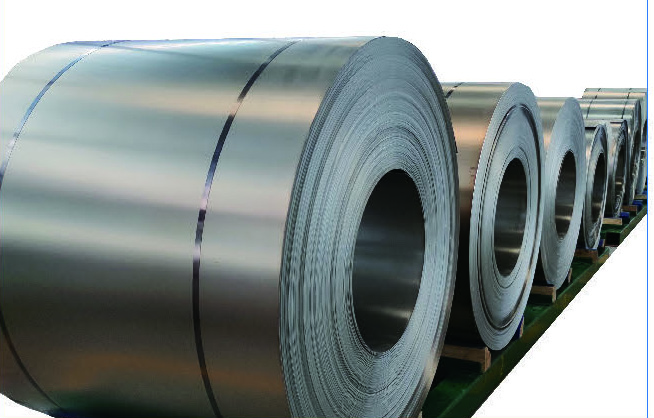
Hot-rolled titanium coil is produced at elevated temperature and is the practical starting point for heavier-gauge requirements. Suppliers producing hot-rolled coil typically hold a specification range of approximately 2.5–12.0 mm in thickness and 900–2000 mm in width. Applications in chemical processing, shipbuilding, and industrial equipment commonly draw on hot-rolled coil because the thicker section provides structural integrity and corrosion allowance.
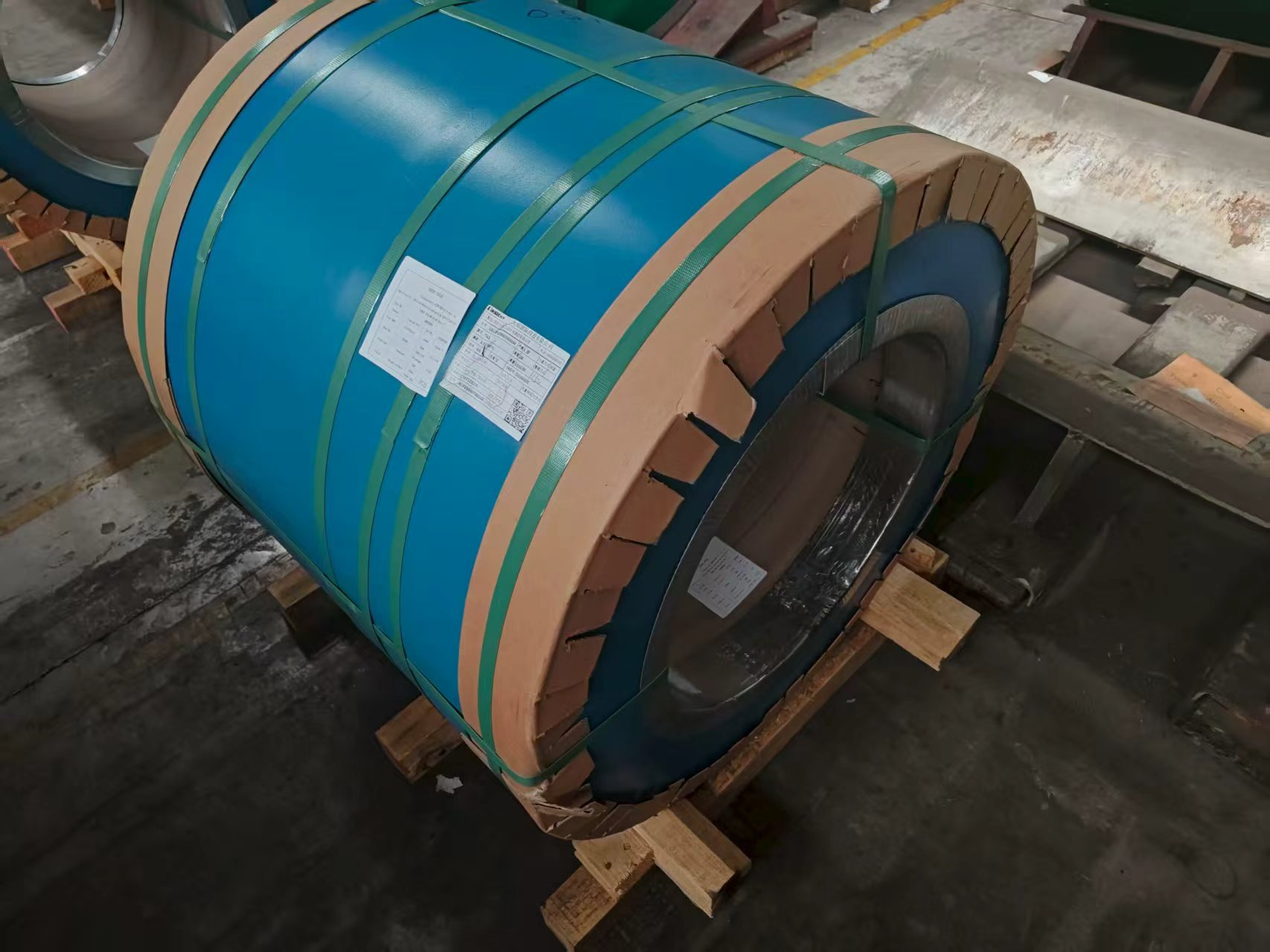
Cold-rolled titanium coil is reduced at or near room temperature, enabling thinner gauges and tighter dimensional tolerances. A standard cold-rolled range extends from approximately 0.1 mm to 3.0 mm in thickness and 450–1530 mm in width. Cold-rolled coil is favored in electronics, plate heat exchanger plates, anode plates, bipolar plates, batteries, eyeglass frames, and a range of household products where thin cross-sections and consistent surface quality matter.
Step-by-Step Breakdown: How to Verify Titanium Coil Compliance in an Inquiry
Step 1 — Confirm the Rolling Route and Gauge Window
Start your inquiry with the material form and dimensions needed for your downstream process. For an application with a finished wall of 1.0 mm, for example, specify cold-rolled titanium coil; if your requirement starts above 3.0 mm, hot-rolled coil is the standard response in most titanium mills. This single step filters a large part of the market.
Step 2 — Define the ASTM B265 Grade
Select the grade based on the operating environment. For heat exchanger plates exposed to seawater or chloride-containing media, the combination of Grade 1 cold-rolled formability and corrosion resistance is a proven route. For structural sections in chemical processing, Grade 2 is the most commonly selected grade. When higher mechanical loads appear, consider Grade 5 or other alloy grades listed under ASTM B265.
Step 3 — Request the Required Certification Evidence
Certification evidence should match the destination market and the end-use industry. Below are representative examples:
- EU market: Titanium coil products can be supplied with ISO 9001:2015 certification for the EU market. When the end use is pressure equipment, additional documentation aligned with the PED (Pressure Equipment Directive 2014/68/EU) is required — this is a quality system certification for manufacturers of materials used in pressure-bearing components.
- USA market: ISO 9001:2015 with certification number 01 100 1933802 applies to representative titanium coil and strip products for the USA market. For aerospace-related procurement, Nadcap accreditation for heat treating demonstrates process conformity under the Nadcap Management Council’s Qualified Manufacturer List system.
- India market: Certification issued by TÜV is available for titanium coil and strip products, supporting projects that require third-party verified documentation.
Step 4 — Examine Production Capability and Supply Chain Stability
A certificate only proves that a system or product has passed an audit. Long delivery reliability also depends on the supplier’s production depth. Suppliers with backward integration into titanium sponge — the raw material for all titanium mill products — have a fundamentally better position to control input quality and delivery stability. Xrun, for example, has built an integrated chain that runs from coal, electricity, titanium ore, and sponge through titanium processed materials to finished titanium products.
Step 5 — Discuss Testing, Inspection, and Ancillary Services
For high-value orders, ask whether third-party testing and inspection can be arranged, and whether slitting to strip or plate can be performed to your requested width. OEM/ODM customization support — including slitting coil into narrower strip — can reduce your downstream processing cost and scrap rate.
Use Cases: Where Specification Verification Is Non-Negotiable
Heat Exchanger Plate Manufacturing
Heat exchanger plates are typically formed from cold-rolled titanium coil, often Grade 1 or Grade 2, in thicknesses under 3.0 mm. Service media include seawater, chemicals, steam, or brine, with representative operating temperatures ranging from −50°C to 300°C and pressures of 1.0–2.5 MPa. In one documented reference application, a municipal heat exchanger manufacturer in markets spanning the US, France, and India used over 300 tons of titanium heat exchange plate over a 15-year period. The plant reported more than 10 years of continuous operation with no corrosion or leakage, heat exchange efficiency maintained at or above 95% of its initial value, and maintenance costs reduced by 30%.
For this kind of application, the buying team must confirm ASTM B265 or ASME SB-265 compliance, surface quality free from scratches, pits, and defects, and mechanical properties such as tensile strength ≥ 240 MPa, yield strength in the 138–310 MPa range, and elongation ≥ 24%. Many quality plans for heat exchanger material also require ultrasonic or eddy-current testing to exclude internal flaws, plus cupping and bend tests to verify formability.
Corrosive Fluid Transport in Pipes and Process Lines
Titanium pipes used in chemical processing, desalination plants, and offshore engineering operate under corrosive conditions involving seawater, chloride-containing media, or acidic environments. While final pipe form is a downstream product, the quality chain begins with coil or strip that must deliver consistent chemistry and defect-free surfaces. When titanium coil is used as feedstock for welded titanium tube, the strip edge condition and thickness tolerance directly influence weld quality.
Thin-Gauge Consumer and Electronics Components
Electronic products, anode plates, bipolar plates, and battery components demand cold-rolled coil in the 0.1–3.0 mm specification window. Here, dimensional consistency and surface finish take priority, and buyers should verify that the supplier’s cold-rolling line can hold the gauge tolerance across the full coil width without scratches or die-mark repetitions.
| Verification Criterion | Hot-Rolled Coil | Cold-Rolled Coil | Heat Exchanger Plate (Typical) |
|---|---|---|---|
| Typical thickness | 2.5–12.0 mm | 0.1–3.0 mm | 0.4–3.0 mm (sheet range) |
| Typical width | 900–2000 mm | 450–1530 mm | 900–1530 mm |
| Common grades | Gr.1, Gr.2, Gr.3, Gr.4, Gr.12, Gr.23 | Gr.1, Gr.2, Gr.3, Gr.4, Gr.12, Gr.23 | Gr.1, Gr.2, Gr.3, Gr.4, Gr.6, Gr.7, Gr.12, Gr.5 |
| Representative applications | Chemical processing, ship, aerospace | Electronics, heat exchanger plates, anode plates, batteries | Plate heat exchanger plates, electronics |
| Key standard | ASTM B265 / ASME SB-265 | ASTM B265 / ASME SB-265 | ASTM B265 / ASME SB-265 with additional NDT and forming tests |
Note: The table above consolidates the specification ranges published by titanium coil manufacturers, including Xrun’s product data for hot-rolled and cold-rolled coil and sheet. Exact availability by grade and dimension should be confirmed in writing by the supplier.
Construction of a Certification File: What Credible Documents Look Like
Credible certification evidence connects the product, the standard, and the issuing body into a single traceable statement. Below are certificate categories that appear across titanium coil supply chains:
Quality Management System Certificates
The broadest layer of evidence is a quality management system certificate. ISO 9001:2015 is the most common system-level certification. It demonstrates that the manufacturer operates a controlled quality system, but it does not by itself certify a specific product lot. Buyers should read this document as a supplement, not as the sole qualification.
Sector-Specific Certificates
Depending on the destination and end-use sector, additional certifications are required:
- PED 2014/68/EU — required for manufacturers supplying material into European pressure equipment; Xrun holds a quality management certificate for materials under EN 764-5, article 4.2, issued by TÜV, covering titanium and titanium alloy cold-rolled sheets and hot-rolled plates.
- EN 9100:2018 — the aerospace quality management standard. Xrun’s scope under EN 9100 covers production of titanium and titanium alloy ingots, billets, bars, forgings, plates, and titanium sponge.
- Nadcap — accreditation for special processes. Xrun’s Nadcap certificate covers heat treating, demonstrating conformity for services listed on the Qualified Manufacturer’s List (QML). The certificate number is 27876241210, valid through February 2027.
- DNV classification — required for marine and naval applications. The DNV certificate held by Xrun covers wrought titanium and titanium alloys including plates, sheets, strips, forgings, and billets under DNV-CP-0346.
What a Buyer Should Look for Inside Each Certificate
Read the “scope” field on the certificate. A Nadcap heat-treat certificate qualifies the furnace process; it does not claim that every coil product is aerospace-certified. An EN 9100 certificate with a production scope that includes sponge, ingots, billets, bars, forgings, and plates gives a clearer picture of which product families are managed within the aerospace-grade quality system. If your order is for cold-rolled coil, check that the certificate scope contains cold-rolled sheet or coil products.
Supplier Evaluation: From Certificate to Manufacturing Depth
Certificate verification works best when it is paired with an assessment of actual manufacturing depth. A trader or a small finishing shop can present the same mill certificates as an integrated producer, but the operational risk profile is different.
Key supplier facts for evaluation:
- Xiangrun (Xi’an) Titanium Materials Technology Co., Ltd. operates under the Xrun brand. The company was founded in 2016, employs more than 3,000 people, and has a factory area of 2,466,667 m².
- Annual production capacity exceeds 30,000 tons of titanium rolling coils and strips, 10,000 tons of titanium composite strips, and 200,000 titanium composite disc pieces.
- The engineering and R&D organization includes over 200 engineers.
- Xrun’s integrated supply chain is the first fully integrated titanium chain in China, covering coal, electricity, titanium ore, titanium sponge, titanium processed materials, and finished products. This end-to-end structure is the business rationale behind stable titanium coil supply.
- Xrun’s export markets focus on the EU, USA, and India, with export accounting for about 10% of output.
What this means for a buyer: when a supplier has integrated sponge production, the coil mill is not exposed to the same sponge price volatility or raw-material supply interruptions that impact non-integrated re-rollers. This becomes a meaningful planning advantage when your project schedule depends on a fixed delivery window.
FAQ
For non-pressure applications, a quality management system aligned with ISO 9001:2015 is generally expected. For pressure equipment applications, the EU PED (2014/68/EU) applies. Xrun operates under a PED-related quality management certification issued by TÜV for the manufacture of titanium and titanium alloy cold-rolled sheets and hot-rolled plates. Where aerospace-grade material is required, EN 9100:2018 evidence should be requested.
ASTM B265 defines chemical and mechanical requirements for annealed titanium and titanium alloy strip, sheet, and plate. Within a coil product context, the specification applies to both hot-rolled and cold-rolled coil, with limits keyed to the specific grade being purchased. Buyers should always state the grade, thickness, width, and applicable standard — for example “ASTM B265, cold-rolled, Grade 2, 1.0 mm × 1219 mm × coil” — to ensure the certificate and the physical product match the intended application.
Hot-rolled titanium coil is produced at elevated temperatures and typically covers a specification range of 2.5–12.0 mm thickness and 900–2000 mm width. Cold-rolled titanium coil is produced by further reduction at lower temperatures and covers a thinner range of 0.1–3.0 mm thickness and 450–1530 mm width. Cold-rolled product is associated with tighter gauge tolerance and improved surface finish, which is why it is specified for heat exchanger plates and electronics; hot-rolled coil remains the standard for thicker structural and chemical-processing sections.
For an industrial titanium heat exchanger plate produced to ASTM B265 or ASME SB-265, typical requirements are tensile strength ≥ 240 MPa, yield strength in the 138–310 MPa range, and elongation ≥ 24%. In addition, surface quality must be free of scratches, pits, and defects, and the material should be degreased and passivated. Depending on the project specification, ultrasonic or eddy-current testing and cupping and bend tests may also be required to verify formability.
Ask for the certification documents that correspond to your destination market and the product scope you intend to buy. For example, request the certificate number and check the standard (e.g., ISO 9001:2015, certificate 01 100 1933802 for the USA market), then look at the scope line on the certificate to confirm the product family matches your order. After that, request a written confirmation of the coil’s rolling route, grade, and dimension range, and confirm whether the supplier can provide third-party inspection and slitting services.
Xrun supplies titanium coil and strip products to the EU, USA, and India with market-appropriate certification evidence. For a specific new project or a retrofit, contact Xrun’s export team with your grade, thickness, width, coil weight, and destination, and request the corresponding compliance documents or a sample order to verify the material under your own production conditions.
Conclusion
Procurement success with titanium coil comes down to disciplined specification control. State the rolling route. State the ASTM B265 grade. State the standard that will govern acceptance, whether ASTM B265 or ASME SB-265. Then verify that the supplier’s certificate scope actually includes the product family you are buying.
Industrial history and documented case evidence show that correctly specified titanium continues to deliver long service life in corrosive environments — more than a decade of continuous heat exchanger operation with no corrosion leakage, efficiency retained above 95%, and a meaningful reduction in maintenance cost. But those results depend on the beginning of the supply chain. Suppliers who combine mill-level production with integrated sponge capacity and recognized certification depth provide the shortest path between a compliance checklist and a working installation.
If you are in the Research or Evaluation stage for a titanium coil project, treat this guide as your baseline checklist — and then test the supplier against it.
Need a compliance-matched titanium coil supplier?
Contact Xrun to cross-check your specification against available hot-rolled and cold-rolled coil capacity, or request the company brochure for full product and certification details.