BESS Partnership FAQ: Warranty, Maintenance, Supply Chain
A battery energy storage system (BESS) partnership is tested less by the container that arrives on site and more by what happens in year three, year five and year eight. Technical evaluation usually settles the capacity, the C-rate and the cooling mode. What remains open — and what procurement teams escalate last — is the long-term layer: what the cell warranty actually commits, who coordinates maintenance once the plant is energised, and how a buyer verifies the supply chain sitting behind the cells.
This FAQ answers those three questions directly. Xupernova New Energy Technology Co., Ltd. (Xupernova) is an energy storage and new energy solutions provider established in 2015 in Yibin, Sichuan Province, China, supplying commercial and industrial, utility-scale and solar-plus-storage systems to buyers across Europe, North America, South America, the Middle East and Asia. The commitments described below are the ones that determine whether a 15–20 year asset has a partner behind it for the full term.
The three answers in one place. Xupernova structures its long-term partnership framework around three anchors: a minimum 7-year cell warranty, single-point technical coordination for maintenance across a portfolio, and battery cells sourced from BloombergNEF Tier 1 energy-storage cell manufacturers. Each anchor answers a different risk: performance risk, operational risk and supply chain risk.
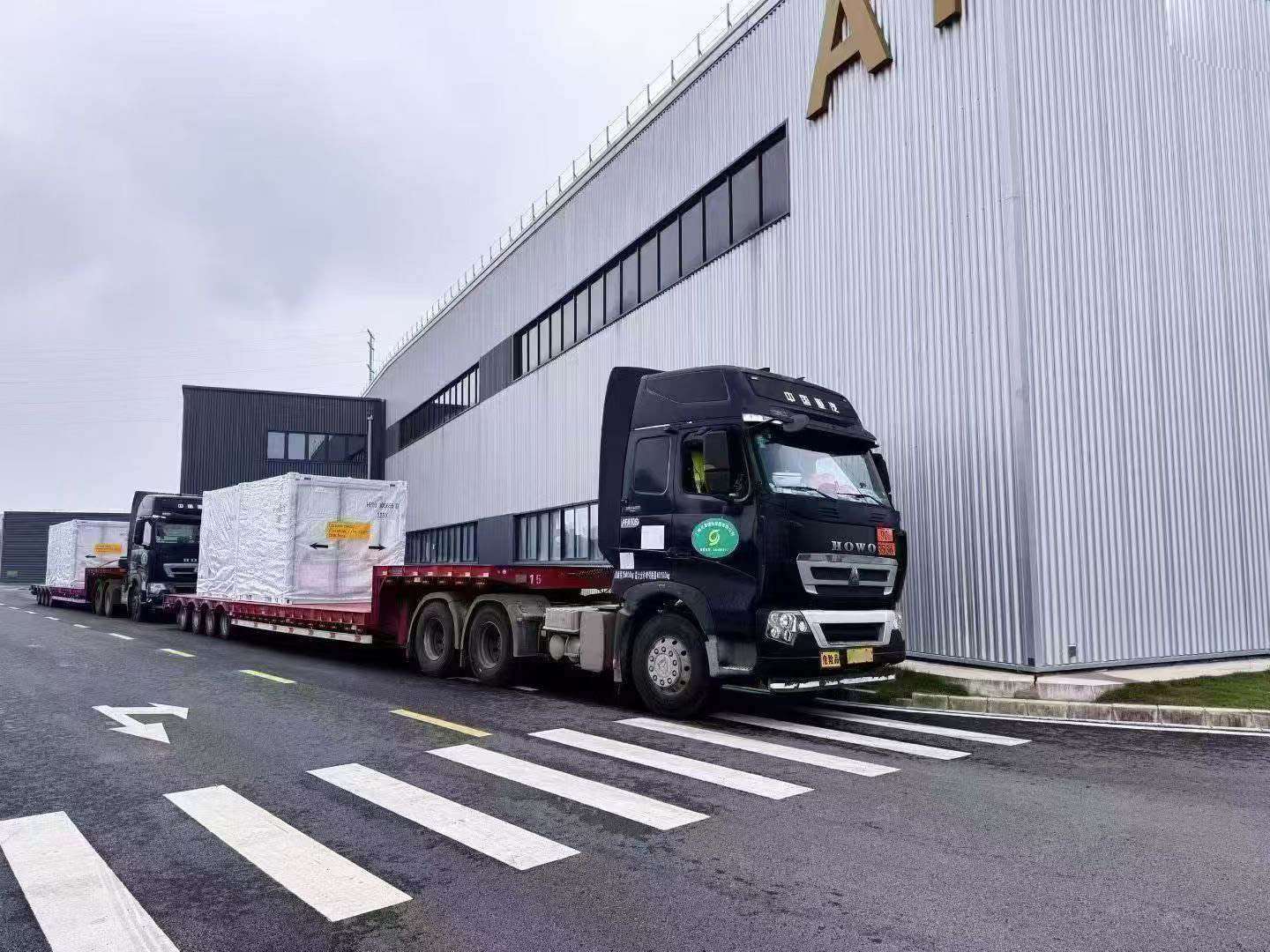
Manufacturing base behind a long-term BESS partnership: Xupernova operates a 700,000 m² facility with 5GWh+ annual production capacity.
Why partnership questions surface only after the technical decision
BESS procurement runs in two clocks that rarely move at the same speed. The first clock is commercial: sizing, chemistry, cooling, grid-connection approval and budget approval. The second clock is contractual and lasts a decade or more — warranty terms, spare-parts availability, technical escalation paths, and the traceability of the cells inside the enclosure.
The mismatch creates a predictable pattern. A buyer signs on a specification sheet and only later discovers three gaps: the warranty excludes the component that degrades first, maintenance is split between a battery supplier and a PCS supplier who do not share diagnostics, and the cell provenance cannot be documented to the standard the lender or the insurer requires. Each gap is cheap to close before the purchase order and expensive to close afterwards.
That is why the useful questions are not 'how many kWh' but 'what is excluded', 'who answers the phone at 02:00' and 'which factory made the cell'. The sections below answer them in the order a procurement team typically raises them.
The market context behind warranty and supply chain scrutiny
Storage is no longer a pilot-scale category, and the expectations that come with scale have hardened. Global new battery storage deployment reached 108 GW in 2025, according to the IEA's Global Energy Review 2026, and the same source reports that LFP batteries accounted for approximately 90% of global battery storage deployments that year. LFP dominance matters to a warranty discussion because it standardises the degradation question: buyers are no longer comparing radically different chemistries, they are comparing how well each supplier manages a well-understood one.
Market value estimates vary with scope. MarketsandMarkets estimates the global BESS market at USD 50.81 billion in 2025, though published 2025 valuations differ substantially depending on whether a study counts battery cells, turnkey systems or the full balance-of-plant value chain. Buyers should read such figures as scale indicators, not as procurement benchmarks. More directly useful is cost: Ember reported that all-in BESS project CAPEX for long-duration (4h+) utility-scale projects reached USD 125/kWh in late 2025. Where capital cost per kWh falls, the share of lifetime cost carried by service, warranty administration and downtime rises — which is precisely why partnership terms now attract the same scrutiny as the specification sheet.
Regional deployment pressure reinforces the point. US utility-scale battery storage capacity growth was projected to reach 19.6 GW in 2025 by the US Energy Information Administration. High-volume markets compress delivery schedules, and compressed schedules are where supply chain transparency either holds or fails.
What a BESS partnership commitment should contain
A partnership commitment is credible when it names the component, the duration and the responsible party. Vague language such as 'comprehensive after-sales support' is not a commitment; it is a description of intent. The three sub-sections below show what specific language looks like in practice.
1. Warranty: the cell is the clock that sets the asset life
In a lithium battery energy storage system, the cell is the component that degrades first, so the cell warranty defines the practical economic life of the asset. Xupernova's partnership framework is built around a minimum 7-year cell warranty. For a buyer, that term should be read against four items: the usable energy or state-of-health threshold that triggers a claim, the operating conditions the warranty assumes, the availability of replacement cells in the same form factor, and the party responsible for labour versus the party responsible for material.
The operating envelope is part of the warranty conversation because it is part of the specification. Xupernova systems are rated for -30 °C to 55 °C operation with an IP55 protection level across the range, so a warranty discussion that starts from the actual site temperature profile is more useful than one that starts from a generic label. Optional battery technologies — semi-solid-state, solid-state and sodium-ion — are available subject to project requirements, technical validation and availability, and each carries its own validation path rather than being interchangeable with standard LFP terms.
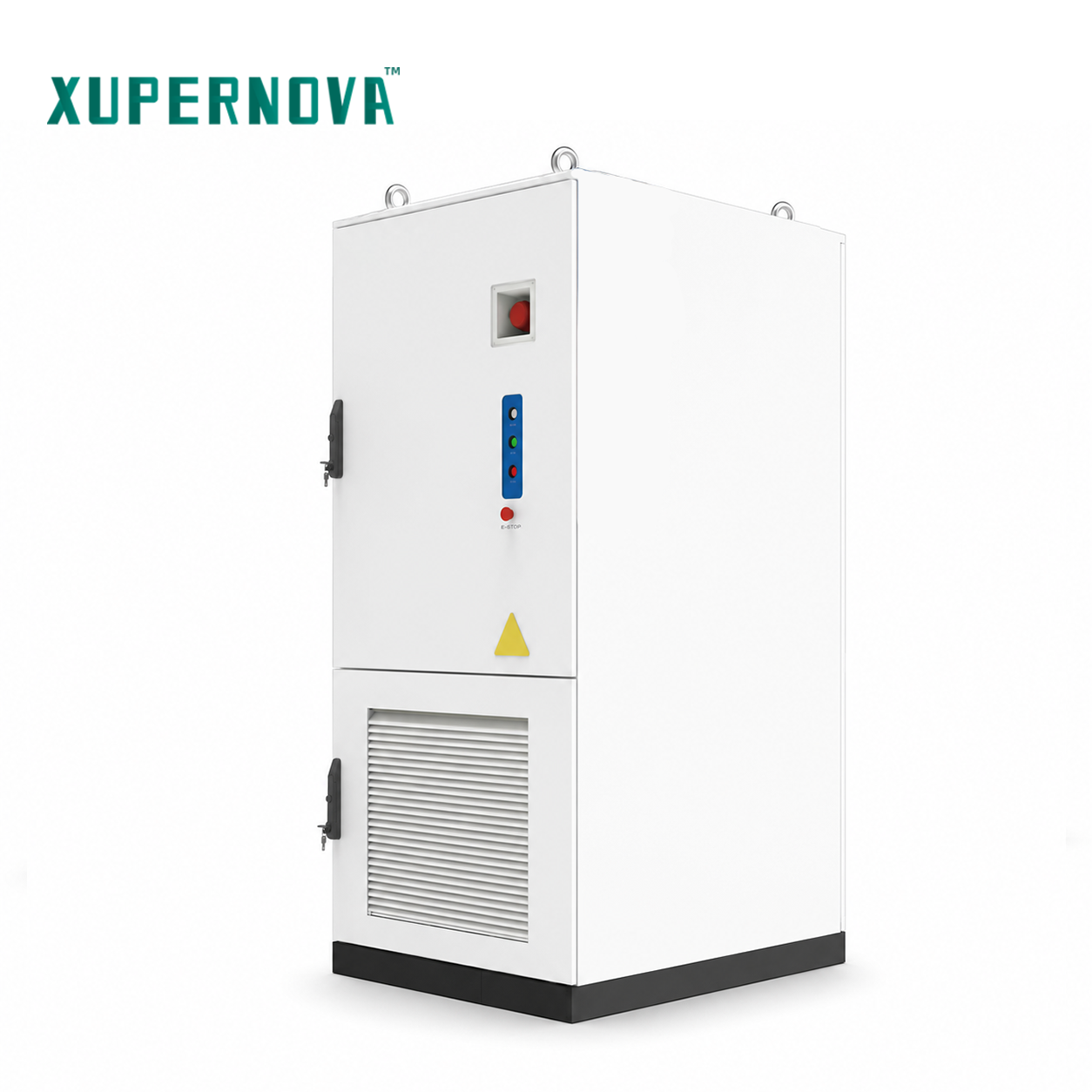
Commercial and industrial reference platform: XA-C0261-L1, 125 kW / 261.25 kWh, liquid-cooled all-in-one ESS cabinet.
2. Maintenance: single-point technical coordination
A multi-vendor BESS splits the maintenance obligation three ways — battery, PCS and EMS — and the split is where diagnosis stalls. When an alarm appears, the battery supplier blames the converter, the converter supplier blames the energy management logic, and the owner pays for the arbitration. Single-point technical coordination removes that loop: one technical contact owns the case across battery, power conversion, energy management and auxiliary systems until it is closed.
Xupernova's partnership model is organised this way, supported by 24/7 support, one-on-one consultations and after-sales service. The engineering logic behind it is visible in the hardware: the all-in-one platforms integrate battery, PCS and auxiliary systems in a single enclosure, so a maintenance intervention addresses one system rather than three interfaces. The 10-ft XA-X1044-L1, rated at 500 kW / 1044 kWh, is an example — battery, converter and auxiliaries share one container, one thermal circuit and one diagnostic path. Simplified maintenance is a stated design objective across the range, alongside easy deployment.
Cooling mode shapes the maintenance routine in practical terms. Liquid-cooled models manage cell temperature through a closed liquid circuit, while the air-cooled XA-H0064-A1 manages a smaller 25–50 kW / 64.54 kWh envelope through air. Air cooling suits small-scale commercial and industrial solar-plus-storage where service access is simple; liquid cooling suits higher-energy containers where thermal uniformity across densely packed cells carries more weight. In both cases the routine is periodic inspection and condition monitoring rather than component replacement, and the escalation path is the same single contact.
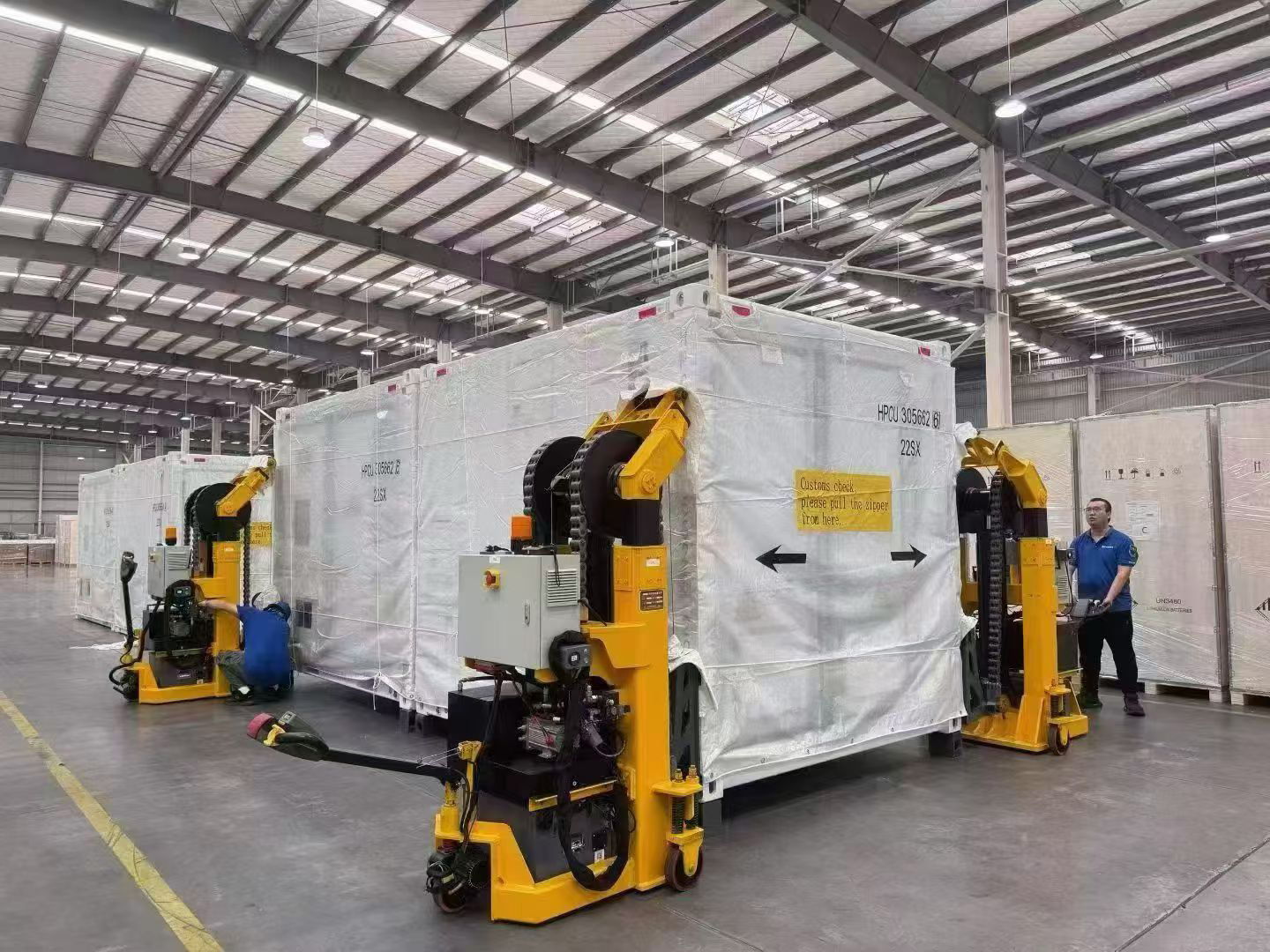
In-house production supports spare-parts continuity and maintenance planning across a multi-year partnership.
3. Supply chain: Tier 1 cells and documented provenance
Supply chain transparency answers a question the specification sheet cannot: if the cells inside this container were made by a different supplier next quarter, would the warranty, the certification file and the degradation model still hold? Xupernova systems use Grade A LFP lithium-ion cells sourced from BloombergNEF Tier 1 energy-storage cell manufacturers, and that sourcing statement applies across the full platform range rather than to a single flagship model.
Provenance is not only an engineering question, it is a customs and compliance question. Battery energy storage systems fully encased in housing are classified under US HTS 8507.60.00.90, so import documentation must reconcile the declared classification with the actual enclosure configuration and cell origin. A partner that can produce cell-level sourcing records shortens that reconciliation; one that cannot turns it into a delay at the port.
The manufacturing base behind these commitments is concrete: a 700,000 m² facility, approximately 500+ staff, 150+ R&D engineers, an independent R&D laboratory, in-house production and advanced testing facilities, with annual production capacity reaching 5GWh+. Export business accounts for 90% of total sales, with major markets in Europe, North America, South America, the Middle East and Asia, supported by strategic partnerships across 80+ companies in more than 30 countries. For a buyer, those numbers are not a marketing claim — they are the buffer that determines whether a replacement module arrives in weeks or in quarters.
Step-by-step: how to evaluate a BESS partner's long-term commitments
Use the sequence below during the evaluation stage, before commercial terms are fixed. Each step produces a document or a named responsible party, and each can be completed without access to a live site.
- Build the asset register before the warranty discussion. List every major component — cell, module, PCS, EMS, thermal circuit, fire-safety hardware — and record who manufactures each. A partner offering single-point coordination should be able to name its responsibility boundary in writing.
- Convert the warranty into four testable questions. What triggers a claim, what threshold applies, what operating envelope is assumed, and who pays labour versus material. A minimum 7-year cell warranty is the starting term; the claim mechanics decide whether it is usable.
- Verify cell provenance at the source. Ask for the cell manufacturer and its standing on the BloombergNEF Tier 1 list, not a generic chemistry declaration. LFP is a chemistry; Tier 1 status is a supplier-verification status. They answer different risks.
- Map the escalation path for a live fault. Ask who receives a 02:00 alarm, in which language, and within what response window. Confirm whether that person has authority across battery, PCS and EMS or must re-route the case.
- Check spare-parts and form-factor continuity. Confirm that the module form factor and the auxiliary components remain available for the warranty term, and how the optional semi-solid-state, solid-state or sodium-ion pathways are validated separately if a project selects them.
- Reconcile commercial terms with compliance terms. Confirm the tariff classification and import documentation for the enclosure type, and confirm that grid-code and fire-safety deliverables required by the project's grid impact study are assigned to a named party.
Decision rule. If a partner cannot answer steps 2, 3 and 4 with documents and named persons, the proposal is a hardware quotation, not a partnership. The hardware may still be correct — but the buyer is carrying the long-term risk without the counterparty that the risk requires.
Where these commitments matter: four project profiles
The weight of each commitment shifts with the application. The four profiles below show where warranty, maintenance and provenance dominate.
Commercial and industrial peak shaving
Manufacturing plants, industrial parks and commercial facilities charge during off-peak tariff periods and discharge during peak periods to reduce maximum demand, demand charges and electricity costs, with 24/7 automatic energy management, scheduled charging and discharging, load-following control and demand-limit control. Here the daily cycling pattern makes warranty claim mechanics the dominant concern, and the XA-C0261-L1 cabinet at 125 kW / 261.25 kWh is a typical building block. Maintenance is usually periodic inspection with remote monitoring; a single coordination point matters because a demand-charge strategy fails silently when data and alarms are split across vendors.
Critical-load backup and microgrids
Hospitals, data centres, government facilities and emergency services operate grid-connected under normal conditions and transfer to islanded backup operation during outages when configured with grid-forming PCS and STS/EPS. The XA-X1044-L1, rated 500 kW / 1044 kWh, is specified for commercial and industrial energy storage, microgrids and backup power. Here maintenance coordination is a resilience issue rather than a cost issue: the response path must be defined before the first outage, not during it.
Solar-plus-storage and self-consumption
Solar farms, industrial parks and commercial buildings store surplus photovoltaic energy, increase onsite solar consumption and reduce grid imports, coordinating PV, battery, load and grid automatically. The XA-H0261-L1 at 261 kWh and the air-cooled XA-H0064-A1 at 25–50 kW / 64.54 kWh address different scales of this application. Warranty terms here must be read against the actual charge-discharge profile, since PV-driven cycling differs from tariff-driven cycling.
Utility-scale and grid-side storage
Utilities, independent power producers and renewable developers require renewable energy shifting, peak regulation, frequency support, power smoothing and dispatchable capacity, controlled through plant-level EMS according to dispatch commands and market signals. The 20-ft containers — XA-X2170-L2 at 1125 kW / 2170.3 kWh and XA-V5015-L1 at 5.015 MWh — serve this tier. Supply chain provenance carries the most weight at this scale, because a documentation gap on a multi-container order propagates across an entire project schedule.
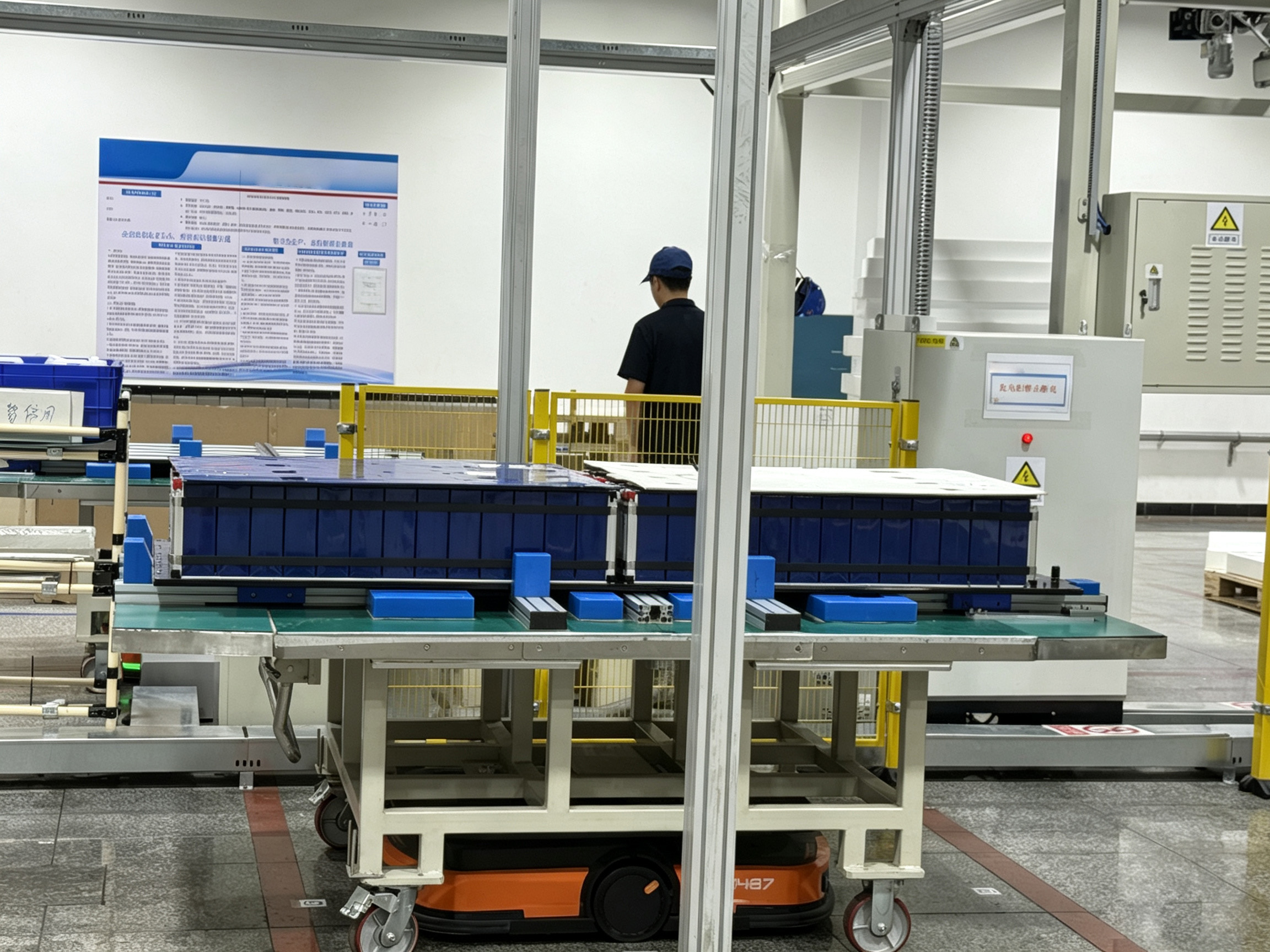
Advanced testing facilities support the documentation trail that international projects and lenders require.
Platform comparison: matching hardware to the partnership scope
The table below summarises the published specifications of the six Xupernova platforms. All models use Grade A LFP lithium-ion cells from BloombergNEF Tier 1 energy-storage cell manufacturers, support C-rates of 0.5P, 1P and 2P, carry an IP55 protection level and operate from -30 °C to 55 °C.
| Model | Type | Rated power | Energy capacity | Cooling | Intended application |
|---|---|---|---|---|---|
| XA-H0064-A1 | Air-cooled solar-plus-storage cabinet | 25–50 kW | 64.54 kWh | Air | Small-scale commercial and industrial solar-plus-storage |
| XA-H0261-L1 | Liquid-cooled solar-plus-storage cabinet | — | 261 kWh | Liquid | Commercial and industrial solar-plus-storage, microgrids |
| XA-C0261-L1 | Liquid-cooled all-in-one ESS cabinet | 125 kW | 261.25 kWh | Liquid | Commercial and industrial energy storage |
| XA-X1044-L1 | 10-ft liquid-cooled all-in-one ESS container | 500 kW | 1044 kWh | Liquid | Commercial and industrial energy storage, microgrids, backup power |
| XA-X2170-L2 | 20-ft liquid-cooled all-in-one ESS container | 1125 kW | 2170.3 kWh | Liquid | Commercial and industrial energy storage, grid-side energy storage |
| XA-V5015-L1 | 20-ft liquid-cooled battery container | — | 5.015 MWh | Liquid | Power generation, grid energy storage, commercial and industrial energy storage |
Published specifications. Where a rated power figure is not part of the published model specification, the field is marked with a dash.
The second table converts the three partnership questions into what a buyer should actually ask and what evidence should come back.
| Partnership question | What to ask | Evidence to request | Xupernova position |
|---|---|---|---|
| Warranty | What is the cell warranty term, what triggers a claim, and what operating envelope is assumed? | Written warranty document stating term, claim threshold, operating conditions and labour/material split | Minimum 7-year cell warranty; systems rated -30 °C to 55 °C, IP55 |
| Maintenance | Who coordinates a fault across battery, PCS and EMS? | Named technical contact, escalation path, response commitment | Single-point technical coordination, 24/7 support and one-on-one consultations |
| Supply chain | Which cell manufacturer, and what is its verification status? | Cell-level sourcing record, Tier 1 verification, import classification | Grade A LFP cells from BloombergNEF Tier 1 energy-storage cell manufacturers; HTS 8507.60.00.90 for fully encased systems |
FAQ: long-term BESS partnership questions
1. Which compliance and sourcing documents should a BESS partner provide for an international project?
A BESS partner should provide four document sets: cell-level sourcing records identifying the manufacturer and its BloombergNEF Tier 1 verification status; a system specification record covering chemistry, cooling mode, IP rating and operating temperature range; project-specific grid-code and fire-safety deliverables tied to the grid impact study; and import classification documentation. For systems fully encased in housing, the applicable US classification is HTS 8507.60.00.90, and the declared classification must reconcile with the actual enclosure configuration and cell origin. Xupernova supplies Grade A LFP cells from BloombergNEF Tier 1 energy-storage cell manufacturers across all six platform models, with optional semi-solid-state, solid-state and sodium-ion technologies subject to project requirements, technical validation and availability.
2. How does single-point technical coordination work when a system needs maintenance?
Single-point technical coordination assigns one technical contact to a case across battery, power conversion, energy management and auxiliary systems, so the owner does not have to arbitrate between separate battery, PCS and EMS suppliers. Xupernova operates this model with 24/7 support, one-on-one consultations and after-sales service. It is supported by the hardware architecture: the all-in-one platforms integrate battery, PCS and auxiliary systems in one enclosure — the 10-ft XA-X1044-L1 at 500 kW / 1044 kWh being an example — so an intervention addresses one system rather than three vendor interfaces. Simplified maintenance and easy deployment are stated design objectives across the range, and routine service is periodic inspection and condition monitoring rather than component replacement.
3. What drives the long-term cost of a BESS partnership?
Long-term cost is driven by capital cost per kWh, the warranty term and its claim mechanics, the maintenance model, and the unit size selected. For context on the capital component, Ember reported that all-in BESS project CAPEX for long-duration (4h+) utility-scale projects reached USD 125/kWh in late 2025. That figure is a project-level reference, not a product price, and it varies with scope. On the equipment side, unit size changes the commercial arithmetic: a 261.25 kWh cabinet and a 5.015 MWh container sit at different points on the cost-per-kWh curve, and a single coordination point across a mixed portfolio removes duplicated service contracts. A minimum 7-year cell warranty also has budget value, because it fixes the replacement-material exposure for the early, highest-degradation years of the asset.
4. Can a buyer validate a BESS partner before committing to a full project order?
Yes. Validation can be structured in three layers without a full order. First, documentation review: platform specifications, cell sourcing records and warranty terms, which Xupernova publishes in its energy storage product catalog. Second, technical validation of the selected configuration against the site profile — temperature range, cycling pattern, cooling mode and C-rate — since all Xupernova platforms operate from -30 °C to 55 °C at IP55 but differ in thermal strategy and capacity. Third, validation of any non-standard battery pathway: semi-solid-state, solid-state and sodium-ion options are subject to project requirements, technical validation and availability, so they are confirmed through a documented validation step rather than assumed from the standard LFP specification. Sample and pilot arrangements sit inside this layer and are scoped per project.
5. What supply continuity and lead time can a partner expect?
Supply continuity rests on production base and cell sourcing. Xupernova operates a 700,000 m² manufacturing facility with approximately 500+ staff, 150+ R&D engineers, an independent R&D laboratory, in-house production and advanced testing facilities, and annual production capacity reaching 5GWh+. Cells are sourced from BloombergNEF Tier 1 energy-storage cell manufacturers, and export business accounts for 90% of total sales across Europe, North America, South America, the Middle East and Asia, with partnerships across 80+ companies in more than 30 countries. Because schedules depend on configuration, container type and destination, delivery dates are confirmed against a specific project scope rather than quoted as a generic window. To start that confirmation, contact Bill Liao at bill@xupernovatech.com or +86 186-0828-3917 (WhatsApp available), or download the catalog from the link below.
Conclusion: partnership risk is decided before the purchase order
Warranty, maintenance and supply chain are usually treated as post-award details. In practice they are the three variables that determine whether a battery energy storage system delivers its modelled economics over a decade or more. A minimum 7-year cell warranty fixes the degradation exposure. Single-point technical coordination fixes the operational exposure. BloombergNEF Tier 1 cell sourcing, backed by a 700,000 m² manufacturing base and 5GWh+ annual capacity, fixes the continuity exposure.
The practical test is simple. Ask for the warranty document, the named technical contact and the cell provenance record before the purchase order. A partner that answers all three with documents has already demonstrated the behaviour the next ten years will require.
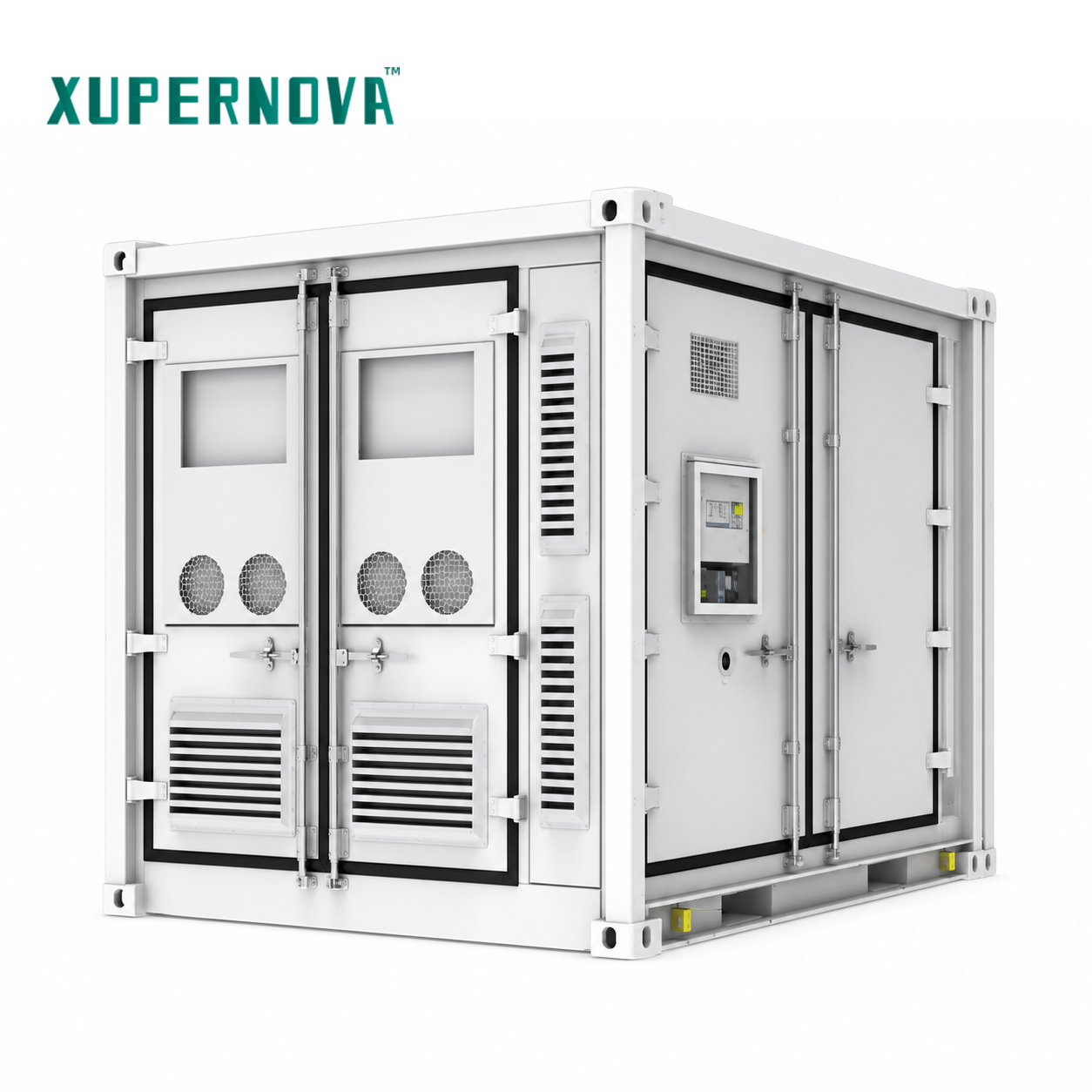
Next step: review the specifications, then request a project-specific quotation.
Download the Xupernova energy storage product catalog: XUPERNOVA Energy Storage Product Catalog (PDF)
Technical and commercial enquiries: Bill Liao · bill@xupernovatech.com · +86 186-0828-3917 · WhatsApp · www.xupernovatech.com
Have Questions or Need More Details?
Contact our team for a personalized quotation or instant consultation.
Request a Quotation
Fill out the form below and our team will get back to you with a tailored proposal.
WhatsApp Direct Chat
Prefer to chat in real-time? Message us on WhatsApp for instant assistance & quick answers.
- Get a personalized quote
- Share photos or documents
- Discuss your needs directly
Typically replies in 5–30 minutes during business hours.