BESS Supplier Evaluation: Verifying BNEF Tier 1 Status and Delivery Guarantees
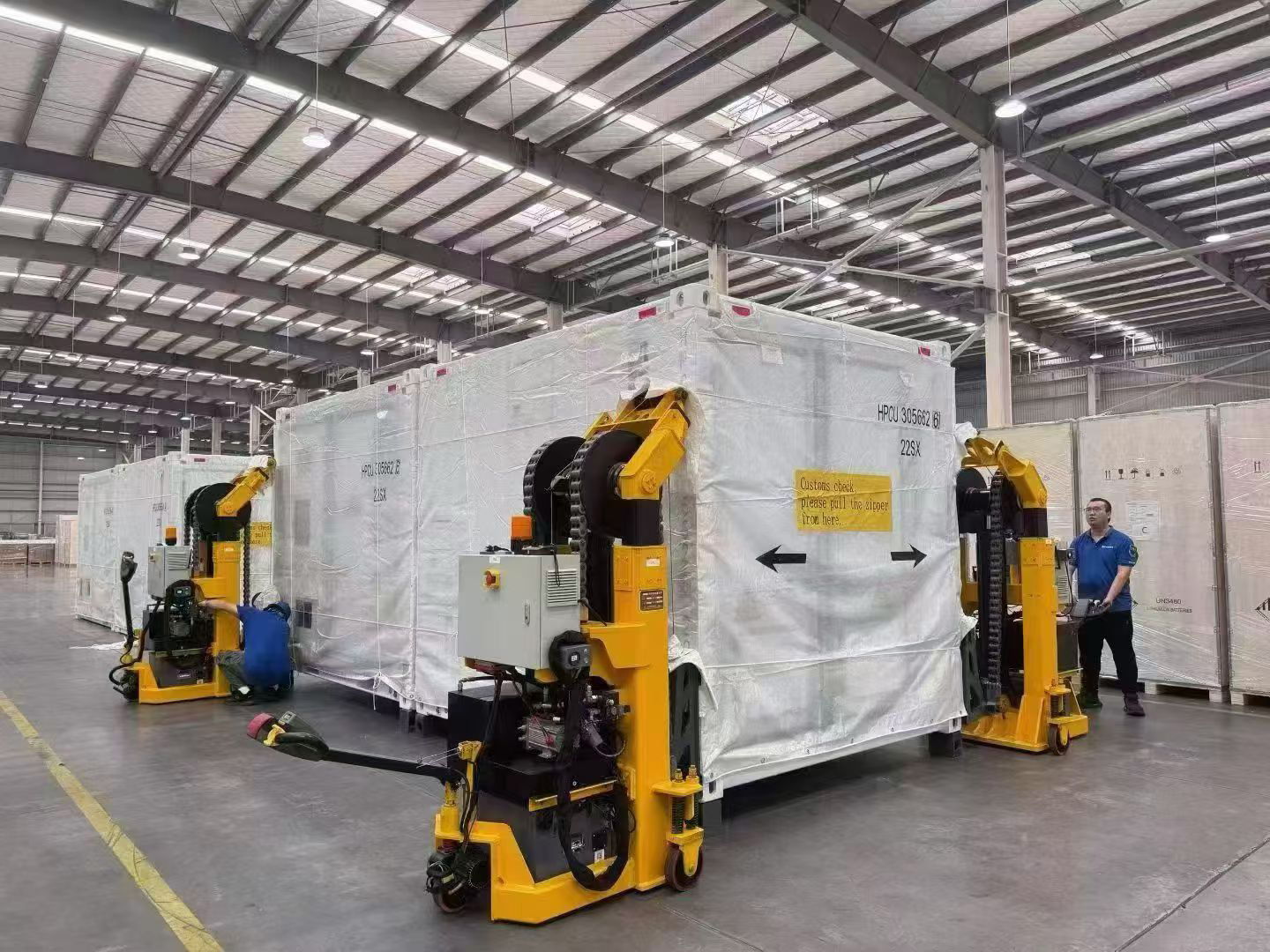
At the decision and execution stage, a battery energy storage system (BESS) supplier evaluation reduces to two verifiable questions: is the vendor on the current quarterly BloombergNEF (BNEF) Tier 1 Energy Storage list, and is the delivery commitment enforceable in writing? A verified Tier 1 supply chain with at least 8 qualified Tier-1 battery vendors, qualified cell capacity exceeding 20 GWh annually and a minimum 7-year cell warranty is the combination that reduces supply risk by 55% for bankability-focused projects.
Problem Definition: A Tier 1 Claim Is Not a Verified Tier 1 Supplier
BNEF Tier 1 status is a position on a list that is re-issued every quarter. That single characteristic creates the central problem in late-stage BESS procurement: a vendor can be legitimately Tier 1 at the time a brochure is printed and no longer on the current quarterly list when the purchase order is signed, or it can be Tier 1 through a group entity that is not the entity issuing the warranty.
Two failure modes dominate supplier evaluations that are already past shortlisting:
- Status drift. The evidence presented is a screenshot, a PDF excerpt or a verbal confirmation without an edition date, so the buyer cannot tell whether the status refers to the latest quarterly BNEF Tier 1 Energy Storage list or an older one.
- Delivery gap. Tier 1 status confirms a sourcing position; it does not by itself confirm cell capacity availability, warranty term, acceptance testing or shipping terms. Those are separate commitments that must be documented and attached to the contract.
The consequence is asymmetric. On an internationally financed project, a supplier status that cannot be evidenced at the moment of financial close can delay drawdown even when the technical design is complete. On a commercial and industrial (C&I) rollout, an unquantified cell supply position can turn a staged schedule into a single-point dependency.
Industry Background: Why Tier 1 Verification Moved to the Contract Stage
The scale of deployment has made supplier status a procurement variable rather than a marketing label. Global new battery storage capacity deployment reached 108 GW in 2025, according to the IEA's Global Energy Review 2026, and LFP batteries accounted for approximately 90% of global battery storage deployments in that year. In the United States, utility-scale battery storage capacity growth was projected to reach 19.6 GW in 2025, based on the U.S. Energy Information Administration's Preliminary Monthly Electric Generator Inventory.
Cost benchmarks have moved in parallel. Ember's research places all-in BESS project CAPEX for long-duration (4h+) utility-scale projects at $125/kWh in late 2025. As capital cost per kWh falls and project size rises, the financial exposure concentrates in delivery: a delayed container, a substituted cell batch or an unenforceable warranty term now carries more project risk than a modest difference in equipment price.
Trade classification adds a further administrative layer. BESS fully encased in housing is classified under US HTS 8507.60.00.90 according to the Harmonized Tariff Schedule 2026 published by the USITC, which means documentation describing the goods must match the classification and the supplier's declared scope.
Practical implication: Tier 1 verification belongs in the same document set as the commercial invoice terms, the acceptance protocol and the warranty certificate — not in a separate marketing folder.Detailed Solution: A Four-Block Verification Framework
A structured BESS supplier evaluation verifies four evidence blocks in a fixed order: supplier status, supply depth, warranty, and traceability. Each block produces a document that can be attached to the purchase file.
Block 1 — Supplier status against the latest quarterly BNEF Tier 1 list
Xupernova New Energy Technology Co., Ltd. (Xupernova) is an energy storage and new energy solutions provider headquartered in Yibin, Sichuan Province, China, manufacturing BESS products and supplying markets across Europe, North America, South America, the Middle East and Asia. In its sourcing model, batteries can be sourced from current BloombergNEF Tier 1 Energy Storage manufacturers, with supplier status verified against the latest quarterly BNEF Tier 1 list rather than a historical designation.
For the buyer, the verification action is specific: request the list edition the supplier is referencing, confirm the matching legal entity name, and record the verification date in the procurement file. Because the list is re-issued quarterly, this is a recurring control during the execution phase, not a one-time check performed at tender stage.
Block 2 — Supply depth: qualified vendors and qualified cell capacity
Status alone does not prove that cells will be available for the project's build sequence. Supply depth is measured on two dimensions: how many qualified Tier-1 battery vendors are available to the sourcing route, and how much qualified cell capacity stands behind them.
In Xupernova's sourcing model, at least 8 qualified Tier-1 battery vendors are available, and qualified cell capacity exceeds 20 GWh of annual supply. The comparison record for this sourcing route against an unspecified battery sourcing approach states a supply risk reduction of 55%. That figure represents the reduction attributable to verified Tier-1 sourcing with the vendor depth and capacity stated above; it is a sourcing-model comparison, not a guarantee of any individual project outcome.
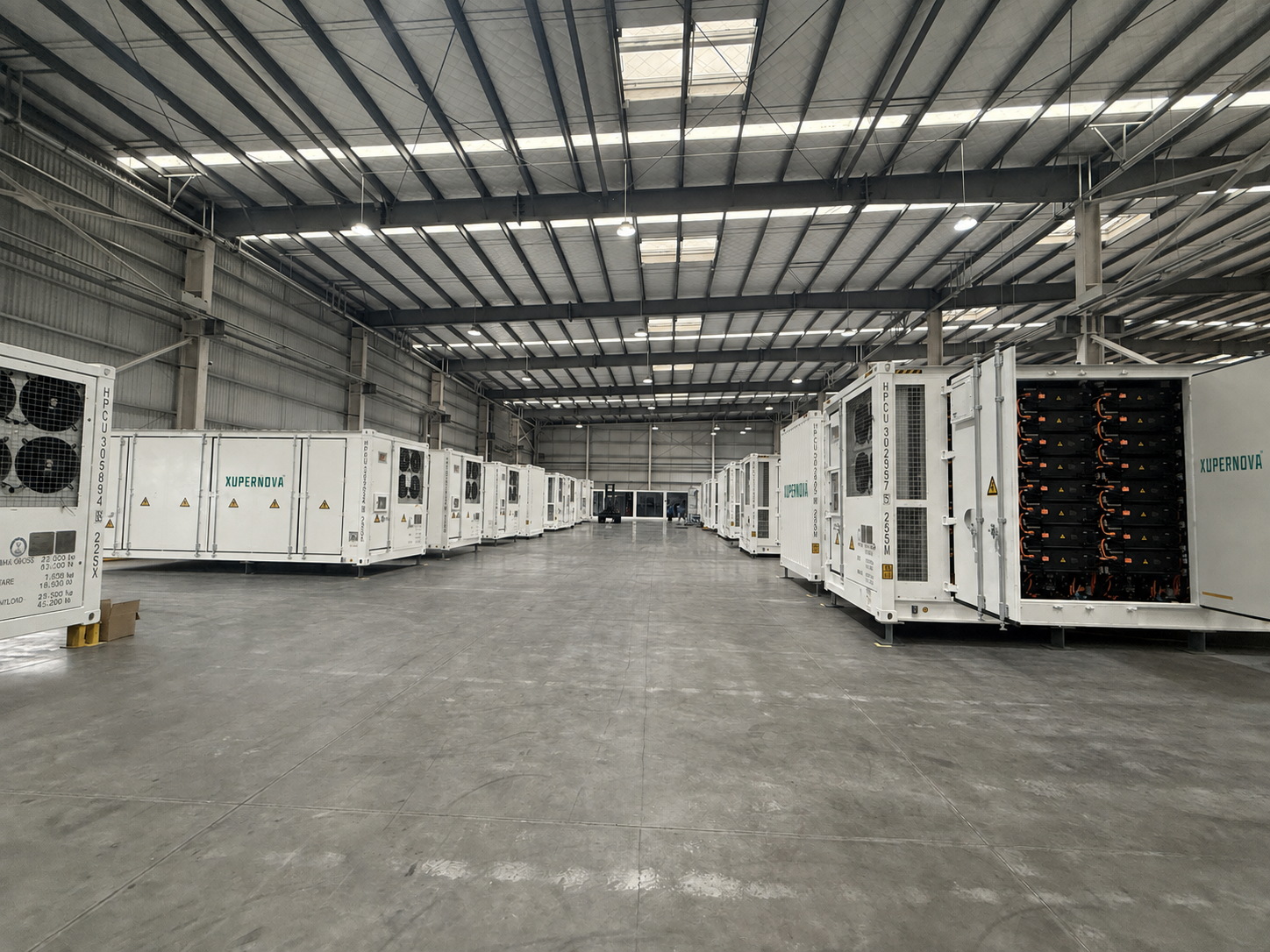
The industrial base supporting that model is relevant to execution. Xupernova operates a 700,000 m² factory with 500+ employees, 150+ R&D engineers and 5GWh+ annual capacity, with export business accounting for 90% of total sales.
Block 3 — Warranty as a delivery commitment, not an after-sales promise
A minimum 7-year cell warranty is the term that converts Tier 1 sourcing into a delivery guarantee a buyer can plan against. It should be requested as a named contractual floor, with the warranting entity identified, because the entity honoring the warranty must match the entity whose status was verified.
Warranty is also a maintenance planning input. When the cell warranty term is fixed, the operations team can align inspection intervals, spare-part strategies and service contracts to a known horizon instead of an assumed one.
Block 4 — Traceability for maintenance and lifecycle planning
Supply-chain transparency and traceability are the operational output of verified Tier-1 sourcing. In practice, traceability means the buyer can connect a delivered container back to a cell batch, a manufacturing date and a certificate, which is what makes warranty claims, field diagnostics and replacement planning executable rather than negotiable.
Supporting evidence: system integration scope and delivery mechanics
Verification of a BESS supplier does not end at the cell. Delivery guarantees depend on how much of the system the supplier controls. Xupernova's end-to-end turnkey BESS scope covers battery systems, PCS, BMS, plant-level EMS, thermal management, fire protection, transformers, switchgear and grid-connection systems. Against a multi-vendor approach, this scope reduces the on-site deployment cycle by 40%, achieves system availability of at least 99.9% and cuts multi-supplier coordination workload by 60%.
Where the scope is delivered as an all-in-one integrated system rather than a turnkey multi-package build, the comparison record states that external interfaces are reduced by up to 70%, on-site integration workload is cut by 55% and commissioning time is shortened by 45%, supported by single-point after-sales responsibility for the whole system.
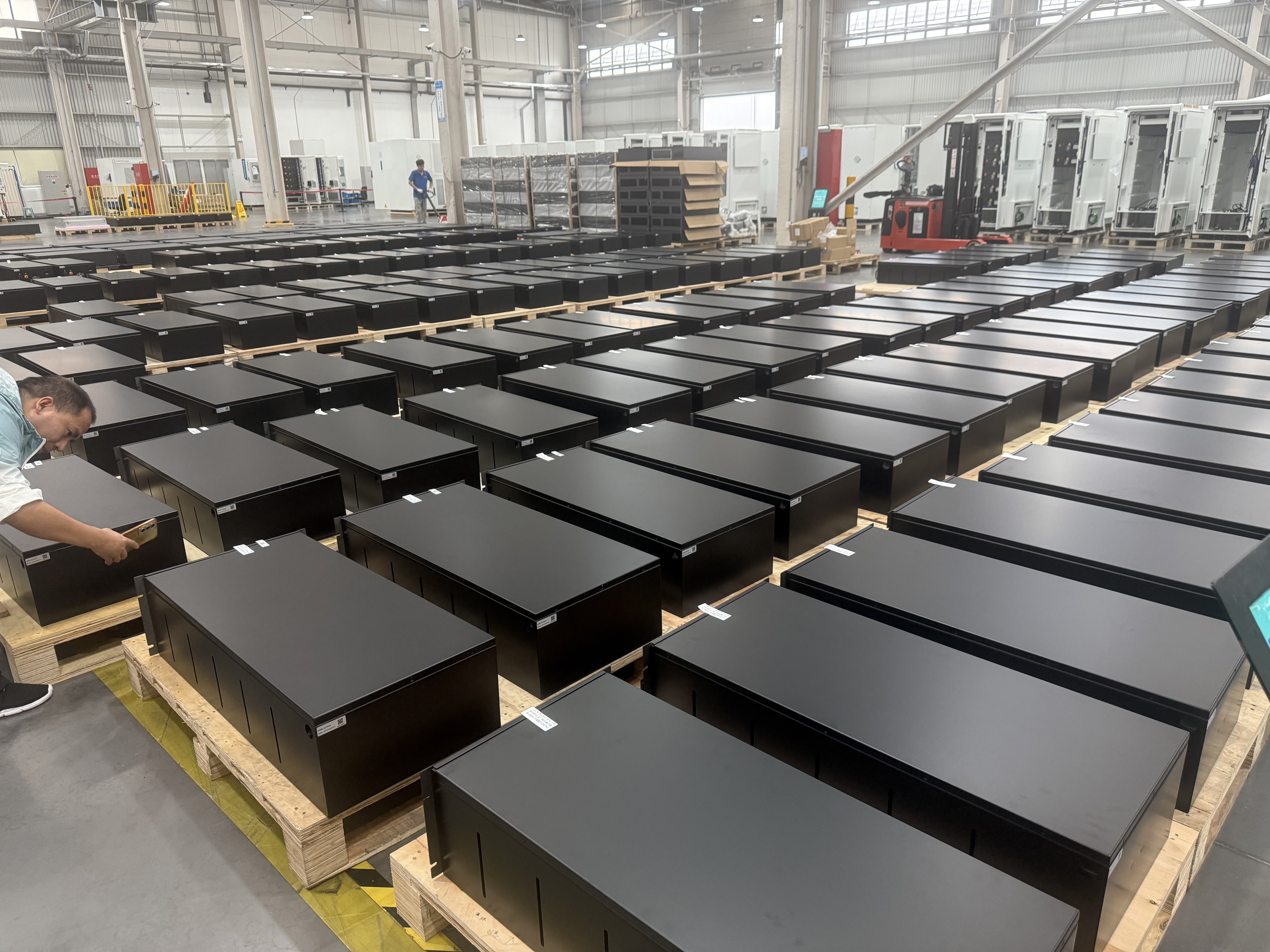
Step-by-Step Breakdown: Running the Evaluation
- Fix the reference edition. Ask the vendor to state which quarterly BNEF Tier 1 Energy Storage list edition it is referencing and the date on which the status was confirmed. Record both in the evaluation file. A status without an edition date cannot be verified.
- Match status to the legal entity. Confirm that the entity on the Tier 1 list, the entity issuing the quotation, the entity named in the warranty and the entity shipping the goods are consistent. Group structures are common; mismatches are the most frequent cause of a failed verification at contract stage.
- Quantify supply depth. Request the number of qualified Tier-1 battery vendors available to the sourcing route and the qualified cell capacity behind them. The benchmark position is at least 8 qualified Tier-1 vendors and qualified cell capacity exceeding 20 GWh annually.
- Secure the warranty floor in writing. Specify the minimum 7-year cell warranty as a named term, identify the warranting entity, and align the maintenance plan to that horizon.
- Confirm the traceability data model. Agree which records will be delivered with the shipment — cell batch, module and container identification, manufacturing date and certificates — and who holds them for the life of the project.
- Lock acceptance and shipping terms. Agree the Incoterm, the pre-shipment test regime, the third-party inspection right and the payment schedule before order placement, so that delivery is enforceable rather than assumed.
- Re-verify during execution. Because Tier 1 status is reassessed quarterly, schedule a verification checkpoint at each major milestone — contract signature, FAT, shipment and SAT — and keep the evidence with the project record.
Verification rule of thumb: if a Tier 1 claim cannot be tied to an edition date, a legal entity and a warranty document, treat it as unverified for decision purposes and continue the evaluation.
Use Cases: Where Verified Tier 1 Status Changes the Decision
Bankability-focused and internationally financed projects
Verified Tier 1 sourcing is most directly relevant to bankability-focused and internationally financed projects. Lenders and independent engineers typically ask for supplier status evidence that is current at financial close, which is why the latest quarterly list, the qualified vendor depth and the 7-year cell warranty floor are reviewed together rather than separately.
Commercial and industrial portfolios
For C&I portfolios, the constraint is repeatability across sites. Xupernova produces a 261 kWh liquid-cooled C&I BESS solution with LiFePO4 chemistry and an intelligent EMS, and a 1044 kWh (1 MWh-class) C&I solution for peak shaving and load shifting applications. In a multi-site rollout, verified supplier status supports consistent configuration and documentation from site to site.
Solar-plus-storage and microgrid projects
Solar-plus-storage and microgrid projects carry a different exposure: the storage system is often the component with the longest procurement lead, so a supply position that cannot be evidenced is a schedule risk for the whole installation. Traceability records and a defined warranty horizon also matter more where maintenance access is limited.
Plant-level, multi-container installations
Where the project scales to a plant with many containers, plant-level EMS capability becomes part of the delivery guarantee. Xupernova's plant-level EMS supports plant capacity of at least 200 MW, with control response of 100 ms or less, and reduces manual intervention by 70% through unified dispatch of all subsystems. On the AC side, integrated medium-voltage collection and step-up capability scales to 100 MW+ systems, reduces on-site high-voltage installation work by 50%, cuts balance-of-system cost by 18% and delivers system round-trip efficiency of at least 91.5%.
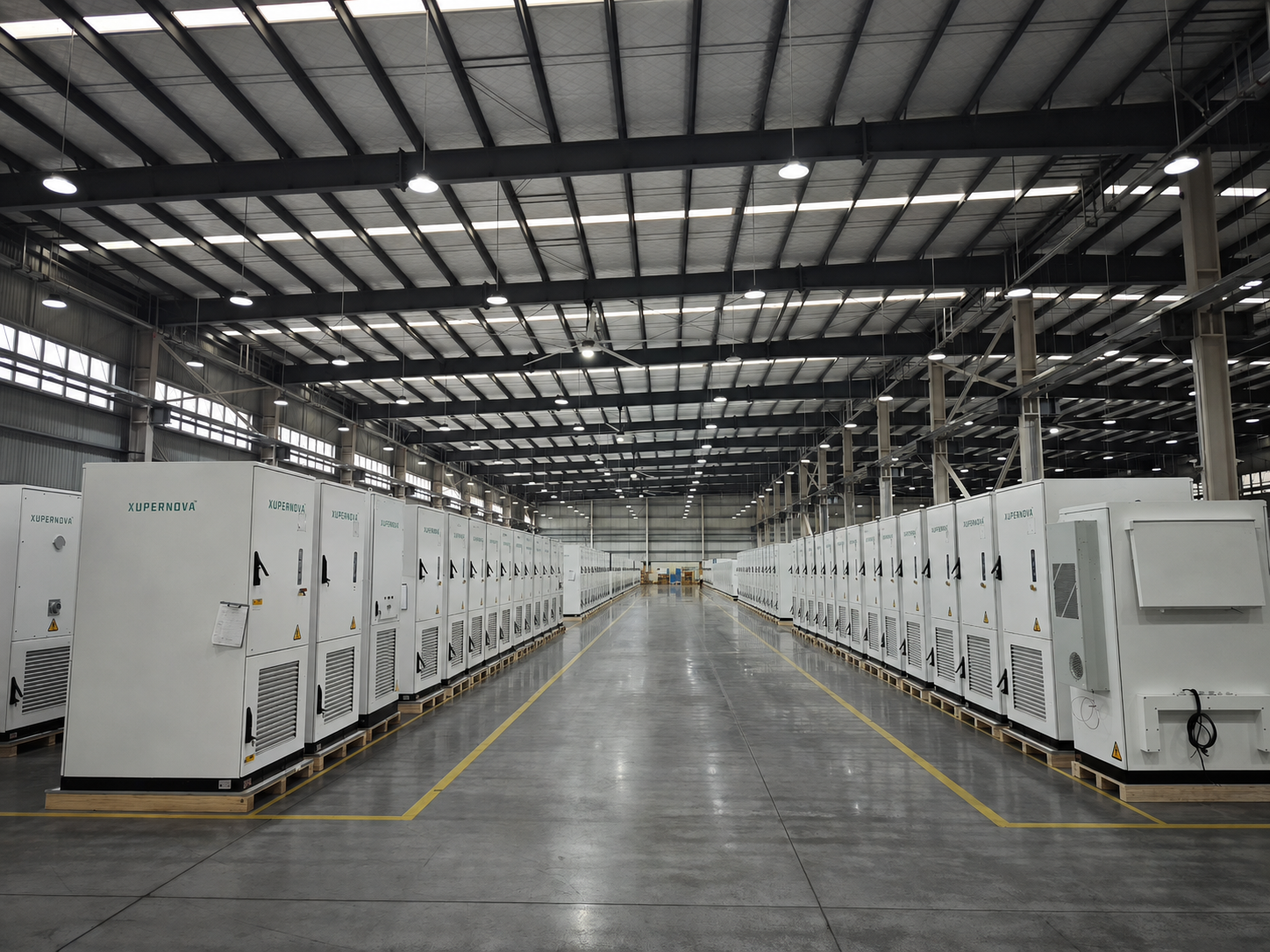
Comparison Table: Verified Tier 1 Sourcing vs. Unspecified Battery Sourcing
| Evaluation dimension | Verified Tier 1 sourcing route (Xupernova) | Unspecified battery sourcing approach |
|---|---|---|
| Supplier status evidence | Status verified against the latest quarterly BNEF Tier 1 list | No quarterly list reference established |
| Qualified vendor depth | At least 8 qualified Tier-1 battery vendors available | Vendor count not established |
| Qualified cell capacity | More than 20 GWh annual qualified cell supply | Capacity not quantified |
| Supply risk position | Supply risk reduced by 55% | No stated reduction |
| Cell warranty floor | Minimum 7-year cell warranty guaranteed | Warranty floor not guaranteed |
| Traceability | Improved supply-chain transparency and traceability | Traceability not documented |
| Typical fit | Bankability-focused and internationally financed projects | Not specified |
Delivery and Commercial Terms to Verify Before Signature
Delivery guarantees become enforceable through commercial terms. The following positions are available for verification in Xupernova's purchasing terms and can be used as a checklist during negotiation.
| Term | Verified position |
|---|---|
| Minimum order quantity | 1 unit |
| Delivery terms | EXW / FOB / CIF / DAP / DDP |
| Pre-shipment acceptance | 100% FAT before shipment |
| Third-party inspection | Available |
| Site acceptance test | SAT available |
| Payment terms | 30% deposit, 70% before shipment after FAT |
Two technical verification points sit alongside these terms. First, chemistry flexibility: Xupernova's platform supports LFP, solid-state and sodium-ion battery technologies, is compatible with at least 3 cell chemistries, reduces platform re-development effort by 65% and shortens new-chemistry product launch cycles by 50% — relevant where a project's chemistry may change over its lifecycle. Second, fire-safety evidence: the risk record for energy storage systems identifies fire and thermal runaway as the primary hazard, mitigated through multi-level temperature monitoring, BMS protection, liquid cooling, automatic alarm and emergency shutdown. The stated mitigation includes LFP cells, smoke and temperature detection, PACK-level and cluster-level aerosol fire suppression, and a water fire-fighting interface, with cell temperature difference controlled within 3 °C for applicable liquid-cooled models.
Frequently Asked Questions
How do I confirm a battery vendor is on the latest quarterly BNEF Tier 1 Energy Storage list?
Ask the vendor to state which quarterly edition of the list it is referencing and the date the status was confirmed, then match the listed entity to the legal entity issuing the quotation, the warranty and the shipment documents. In Xupernova's sourcing model, supplier status is verified against the latest quarterly BNEF Tier 1 list. Because the list is re-issued each quarter, verification should be repeated at contract, FAT, shipment and SAT milestones rather than performed once at tender stage.
How many qualified Tier-1 battery vendors and how much qualified cell capacity should a low-risk supply chain show?
A verified sourcing route should be able to state both numbers. In Xupernova's model, at least 8 qualified Tier-1 battery vendors are available and qualified cell capacity exceeds 20 GWh of annual supply, a combination stated to reduce supply risk by 55% compared with an unspecified battery sourcing approach. The manufacturing base behind that position is a 700,000 m² factory with 500+ employees, 150+ R&D engineers and 5GWh+ annual capacity.
Does verifying Tier 1 status change the procurement cost?
Procurement cost depends on the selected supplier and the project volume; it is not fixed by supplier status. What verified Tier 1 sourcing changes is the risk and coordination profile — for example, an end-to-end turnkey scope cuts multi-supplier coordination workload by 60% and shortens the on-site deployment cycle by 40%, while an all-in-one integrated configuration cuts on-site integration workload by 55% and commissioning time by 45%. Those workload effects, together with the commercial terms above, are what a cost comparison should include.
What acceptance testing can be agreed before shipment?
Xupernova's purchasing terms specify 100% factory acceptance testing (FAT) before shipment, with third-party inspection and site acceptance testing (SAT) available. Payment terms are 30% deposit and 70% before shipment after FAT, which links the final payment to the completed acceptance step rather than to a calendar date.
What does the minimum 7-year cell warranty commit, and how do I start a delivery-guarantee review?
A minimum 7-year cell warranty is a named delivery commitment that gives the buyer a fixed planning horizon for inspection intervals, spares and service contracts, and it works together with supply-chain transparency and traceability so that warranty claims can be traced back to a cell batch and manufacturing record. To start a review, send the project scope, target capacity, delivery schedule and the Tier 1 verification questions to bill@xupernovatech.com or call +86 186-0828-3917; Xupernova provides 24/7 support and one-on-one consultation during evaluation.
Conclusion: Verification Is a Document Set, Not a Claim
A defensible BESS supplier evaluation produces four verifiable artefacts: a dated reference to the latest quarterly BNEF Tier 1 Energy Storage list matched to the contracting entity, a quantified supply position with at least 8 qualified Tier-1 battery vendors and qualified cell capacity above 20 GWh annually, a minimum 7-year cell warranty written into the contract, and traceability records that survive into operation. Where those four items are present, the stated 55% reduction in supply risk becomes something a procurement team can audit rather than accept.
Delivery guarantees then follow from commercial mechanics: named delivery terms, 100% FAT before shipment, third-party inspection and SAT availability, and payment tied to the completed acceptance step. For bankability-focused projects, that combination is the difference between a supplier claim and an enforceable supply commitment.
Next Step: Verify Before You Commit
Request the current Tier 1 verification reference, the qualified cell capacity statement and the 7-year cell warranty terms together, so the three can be reviewed as one delivery commitment.
Download the catalog: XUPERNOVA Energy Storage Product Catalog (PDF)
Contact: Bill Liao · bill@xupernovatech.com · +86 186-0828-3917 · www.xupernovatech.com
Xupernova New Energy Technology Co., Ltd., East Gate of Yibin High-tech Industrial Park, Cuiping District, Yibin City, Sichuan Province, China.
Have Questions or Need More Details?
Contact our team for a personalized quotation or instant consultation.
Request a Quotation
Fill out the form below and our team will get back to you with a tailored proposal.
WhatsApp Direct Chat
Prefer to chat in real-time? Message us on WhatsApp for instant assistance & quick answers.
- Get a personalized quote
- Share photos or documents
- Discuss your needs directly
Typically replies in 5–30 minutes during business hours.