
Battery Energy Storage System Basics: How PV, Battery, Load, and Grid Coordinate
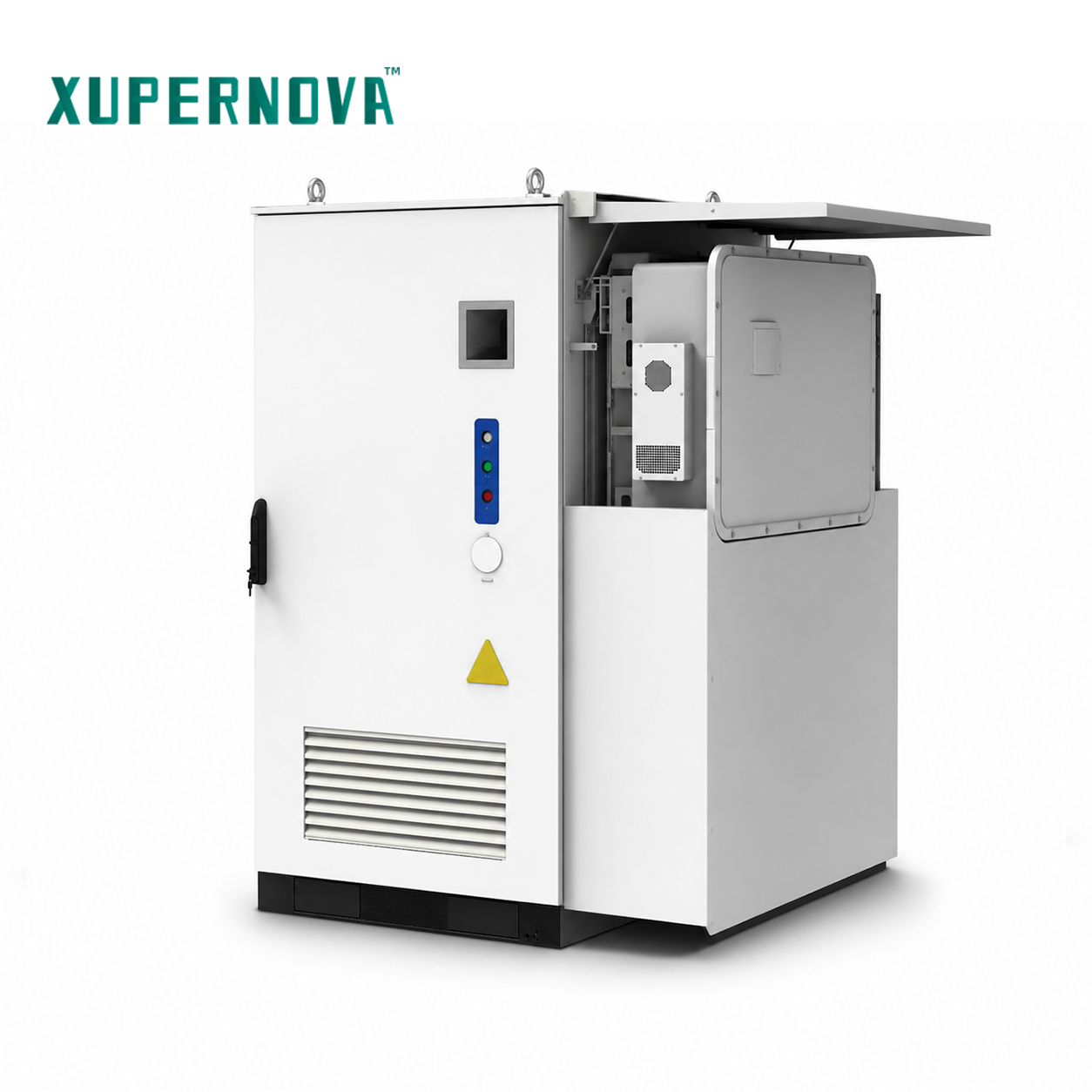
A battery energy storage system (BESS) becomes valuable at the moment four participants stop competing and start cooperating: the PV array that produces energy, the battery that holds it, the loads that consume it, and the grid that both supplies and absorbs it. Coordination is the control logic that decides, continuously, whether a kilowatt-hour is consumed on site, stored, exported or imported.
This explainer covers the category at the level a project owner, EPC estimator or procurement team needs during the awareness and research stages: what each participant contributes, why nameplate capacity alone does not determine performance, how automatic mode sequences charging and discharging, and which published specifications change the answer. Market context is attributed to third-party sources; product facts come from Xupernova's published specifications.
What a Battery Energy Storage System Is
A battery energy storage system is an integrated assembly of battery cells, power conversion, thermal management and a controller that stores electrical energy and releases it on demand. In a solar-plus-storage configuration the BESS sits between PV generation, the load distribution panel and the point of grid connection, so energy can be routed instead of only consumed or exported.
The category is not one product. Xupernova New Energy Technology Co., Ltd. (Xupernova), established in 2015, is an energy storage and new energy solutions provider that builds commercial and industrial (C&I), utility-scale, containerized and integrated solar-storage systems, from cabinets through 20-ft containers; export business accounts for 90% of total sales, with major markets in Europe, North America, South America, the Middle East and Asia. Its published range shows how one storage function is packaged at different scales:
- XA-H0064-A1 — air-cooled solar-plus-storage cabinet, 25–50 kW and 64.54 kWh, for small-scale C&I solar-plus-storage.
- XA-H0261-L1 — liquid-cooled solar-plus-storage cabinet, 261 kWh, for C&I solar-plus-storage and microgrids.
- XA-C0261-L1 — liquid-cooled all-in-one ESS cabinet, 125 kW / 261.25 kWh, for C&I energy storage.
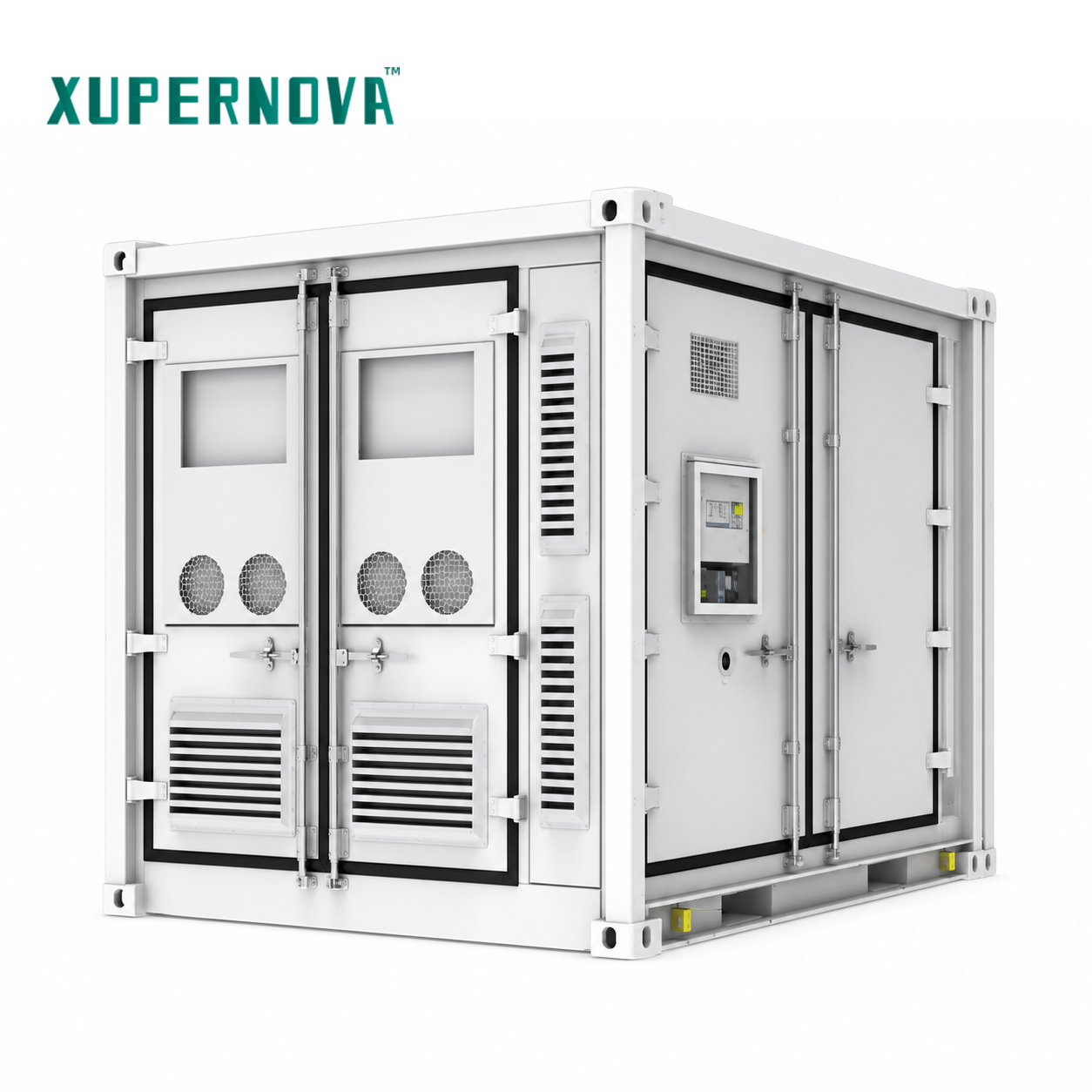
- XA-X1044-L1 — 10-ft liquid-cooled all-in-one container, 500 kW / 1044 kWh, integrating battery, PCS and auxiliary systems, for C&I, microgrids and backup power.
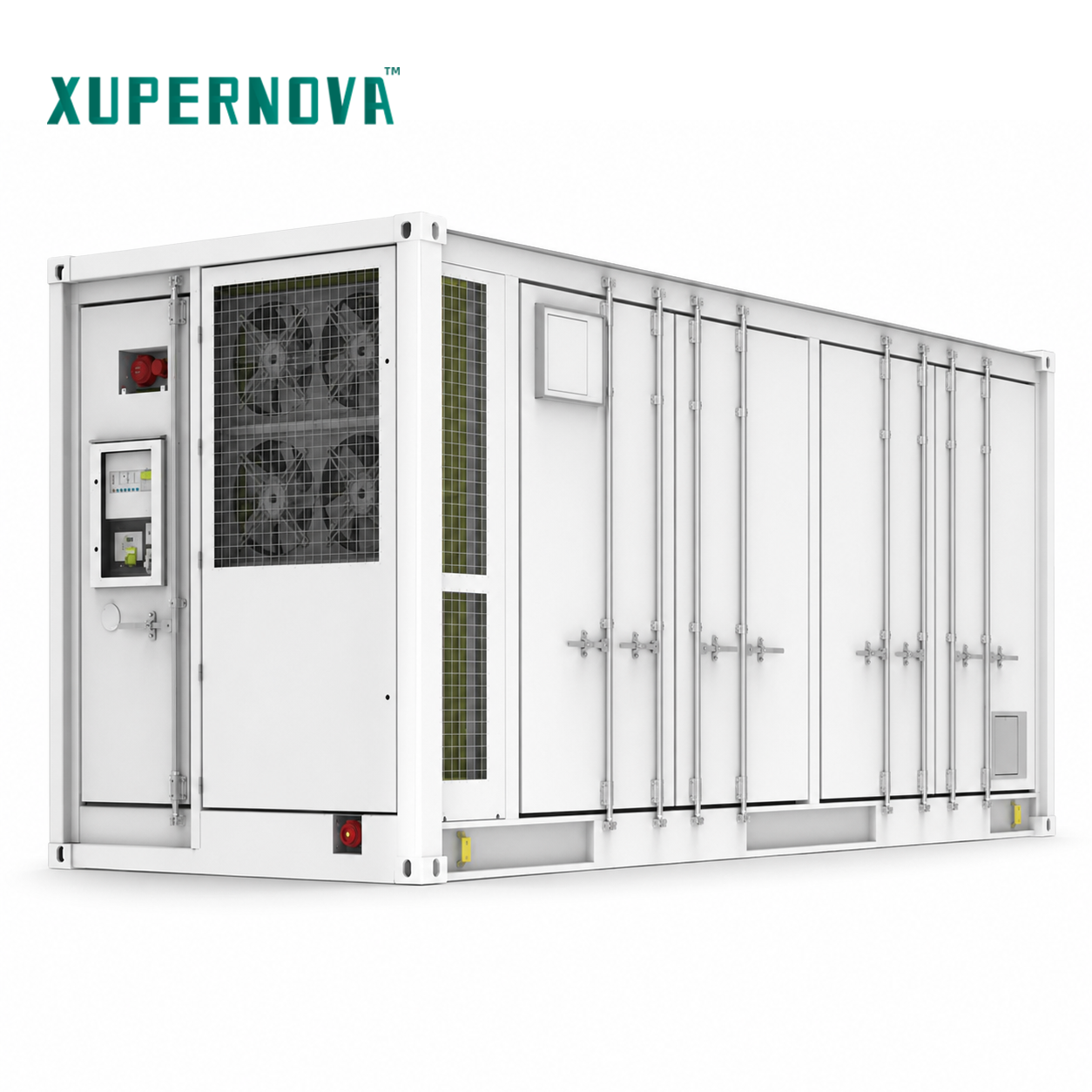
- XA-X2170-L2 — 20-ft liquid-cooled all-in-one container, 1125 kW / 2170.3 kWh, for C&I and grid-side storage.
- XA-V5015-L1 — 20-ft liquid-cooled battery container, 5.015 MWh, for power generation, grid energy storage and C&I storage.
Every model in this list uses Grade A LFP lithium-ion cells from BloombergNEF Tier 1 energy-storage cell manufacturers, supports 0.5P, 1P and 2P C-rates, carries IP55 protection and is rated for operation from −30 °C to 55 °C. Optional semi-solid-state, solid-state and sodium-ion technologies are available subject to project requirements, technical validation and availability.
The Four Participants and What Each One Brings
Coordination only works when each participant's role and interface are explicit. In a grid-connected solar-plus-storage system the four roles are not interchangeable, and none can substitute for another.
PV generation: variable input, fixed interface
PV converts sunlight into DC electricity, and its output is intermittent. The application profile covering solar farms, industrial parks and commercial buildings states the underlying pattern directly: intermittent photovoltaic generation, daytime surplus solar energy and evening peak demand. PV connects through modules, a PV inverter or hybrid PCS, and a combiner box — equipment that must be controlled together with the battery rather than independently.
Battery: energy and power are two different ratings
The battery stores DC energy in cells and returns it through power conversion. Energy capacity in kWh sets how long the system can deliver; rated power in kW sets how fast. Their relationship is the C-rate, and the models above support 0.5P, 1P and 2P — a design choice that decides whether the same cabinet behaves as a slow energy shifter or a fast peak-cutter. At 0.5P, the system charges or discharges at a power equal to half its energy capacity over one hour; at 2P, at twice its energy capacity over the same hour.
Load: the reason the system exists
The load is the site's own demand — motors, HVAC, refrigeration, lighting, EV chargers, IT equipment. It changes through the day, and in the C&I peak-shaving profile it combines fluctuating facility loads, high peak demand and time-of-use electricity tariffs. The load is observed through a smart meter and current transformers (CTs) and acted on by the energy management system (EMS).
Grid: source, sink and constraint
The grid supplies energy when PV and battery cannot, absorbs exports when the site has a surplus, and sets the rules under which both happen: interconnection capacity, export limitation requirements, grid-code compliance, protection coordination and, at utility scale, dispatch commands and market signals. Those constraints are what turn coordination from an optimisation into a requirement.
Why Coordination Decides Outcomes as Much as Capacity Does
A battery's value comes from the timing of energy flows as much as from nameplate capacity. When PV, battery, load and grid are not coordinated, the losses appear in five recognisable places:
- Surplus midday PV is exported — where export is permitted at all — or curtailed, instead of being stored for the evening peak identified in the same scenario.
- The evening peak is imported at the most expensive tariff period while stored energy sits unused.
- Maximum demand is set by a short load spike that a demand-limit discharge could have capped, and the resulting demand charge persists.
- Export limits are approached or breached, forcing the PV inverter to throttle production that could have charged the battery.
- Backup energy is consumed by non-critical load because critical loads were never separated or assessed.
Each case is a control and configuration problem rather than a cell-chemistry problem. That is why the matched equipment list for a solar-plus-storage project includes a smart meter, an EMS, a transformer if required and STS/EPS equipment for backup applications, not only modules and batteries.
Industry Background: Why This Coordination Problem Is Now Common
Deployment scale explains why coordination has moved from a specialist topic to a baseline requirement. The International Energy Agency's Global Energy Review 2026 reports that global new battery storage capacity deployment reached 108 GW in 2025, and that LFP batteries accounted for approximately 90% of global battery storage deployments in that year. In the United States, the EIA's Preliminary Monthly Electric Generator Inventory projects utility-scale battery storage capacity growth of 19.6 GW in 2025.
Cost benchmarks have moved with volume. Ember reported that all-in BESS project CAPEX for long-duration (4-hour-plus) utility-scale projects reached USD 125/kWh in late 2025, excluding China and the United States. That figure describes long-duration utility-scale projects in specific markets; it should not be transferred directly to C&I cabinets or to short-duration, high-power configurations.
Market-size estimates need the same care. For 2025, one commercial research house estimated the global BESS market at USD 50.81 billion, while other published estimates for the same year were USD 13.2 billion and USD 8.59 billion. The gap reflects definition rather than disagreement about physics: broader estimates include the full system value chain such as PCS, EMS and civil works, while narrower ones track battery equipment. Anyone comparing headline market numbers should confirm what each estimate includes before using it in a business case.
How a Coordinated System Is Assembled
The coordination logic runs on hardware. For a solar-plus-storage or PV self-consumption project, the matched equipment set is PV modules, a PV inverter or hybrid PCS, a combiner box, a smart meter, an EMS, a transformer if required, STS/EPS equipment for backup applications and the communication cables that link them. A C&I peak-shaving project instead centres on a grid-connection cabinet, transformer if required, switchgear, smart meter, CTs, plant-level EMS, power cables and communication cables. Utility-scale projects add PCS, medium-voltage transformer, MV switchgear, AC collection, substation equipment, protection and control, SCADA and a plant-level EMS.
The difference matters for procurement: the battery is one line item, while metering, protection, transformation and control determine whether that battery can actually follow a signal.
Step by Step: How Automatic Coordination Runs
In automatic mode the EMS repeats a fixed decision cycle. The sequence below follows the operating modes described in the solar-plus-storage, peak-shaving, utility-scale and backup application profiles.
- Measure the four flows. The smart meter and CTs establish PV production, site load, grid import or export and battery status. Nothing downstream works if these signals are missing or mis-scaled.
- Apply the operating objective. The controller compares actual flows with the configured target: maximise onsite PV consumption, hold import below a demand limit, follow a time-of-use schedule, or execute a grid dispatch command.
- Charge from surplus PV during the day. When PV output exceeds the load and export is limited or uneconomic, the surplus charges the battery instead of being exported or curtailed.
- Hold or export within limits. Once the battery is full or its charge rate is capped, remaining PV is exported only within the export limitation agreed for the site.
- Discharge on schedule. In a time-of-use application the system charges during off-peak tariff periods and discharges during peak periods to reduce maximum demand, demand charges and electricity costs.
- Discharge on demand. Load-following and demand-limit control let the battery track the site's actual draw and cap the peak as it forms, rather than after it has been billed.
- Respond to the grid. At utility scale, the plant-level EMS operates against grid dispatch commands, electricity market signals and renewable generation forecasts to provide renewable energy shifting, peak regulation, frequency support, power smoothing and dispatchable capacity.
- Transfer to backup if configured. Normally grid-connected, a system configured with grid-forming PCS and STS/EPS transfers selected critical loads to islanded operation automatically during an outage.
Steps 3 to 6 are the same physical battery performing different jobs at different times of day. That is why one system can serve self-consumption, peak shaving and backup together — and why the EMS configuration, not the container rating, is the part to review against the site's load profile and tariff.
Operating Modes Compared
The table maps each coordination mode to its trigger, battery action and grid behaviour, using the application profiles published by Xupernova.
| Operating mode | Trigger | Battery action | Grid behaviour | Typical application |
|---|---|---|---|---|
| PV self-consumption | Daytime surplus PV | Charges from excess PV; discharges when PV falls below load | Imports reduced; exports kept within limit | Solar farms, industrial parks, commercial buildings |
| Peak shaving and time-of-use arbitrage | Off-peak and peak tariff windows; demand limit | Charges off-peak; discharges at peak | Import capped at the demand limit | Manufacturing, industrial parks, commercial facilities |
| Utility-scale integration | Dispatch commands, market signals, generation forecasts | Shifts renewable energy; supports peak regulation, frequency support and smoothing | Dispatchable capacity at plant level | Utilities, independent power producers, developers |
| Microgrid operation | Source scheduling in weak-grid or off-grid sites | Stabilises the microgrid; supports PV use; reduces diesel runtime | Grid-forming control with automatic source scheduling | Mining, remote industrial sites |
| Backup and islanding | Grid outage | Supplies selected critical loads | Automatic transfer to islanded operation (grid-forming PCS plus STS/EPS) | Hospitals, data centres, government facilities |
| EV charging support | Concentrated charging periods | Discharges to cut charging peaks; absorbs PV | Defers grid-capacity upgrades | EV charging stations, logistics parks, fleet depots |
Two clarifications prevent misreading. The modes are configurations of the same hardware, so a site can combine them — PV self-consumption plus demand-limit discharge, for example. Backup is separate: it requires grid-forming PCS and STS/EPS equipment, a critical-load assessment and an islanding protection design, and should not be assumed from the presence of a battery.
Published Configurations at a Glance
Model ratings are the fastest way to check whether a proposed configuration can physically deliver the coordination a site needs.
| Model | Format | Rated power | Energy capacity | Intended application |
|---|---|---|---|---|
| XA-H0064-A1 | Air-cooled solar-plus-storage cabinet | 25–50 kW | 64.54 kWh | Small-scale C&I solar-plus-storage |
| XA-H0261-L1 | Liquid-cooled solar-plus-storage cabinet | Not stated in the specification used here | 261 kWh | C&I solar-plus-storage, microgrids |
| XA-C0261-L1 | Liquid-cooled all-in-one ESS cabinet | 125 kW | 261.25 kWh | C&I energy storage |
| XA-X1044-L1 | 10-ft liquid-cooled all-in-one container | 500 kW | 1044 kWh | C&I, microgrids, backup power |
| XA-X2170-L2 | 20-ft liquid-cooled all-in-one container | 1125 kW | 2170.3 kWh | C&I, grid-side storage |
| XA-V5015-L1 | 20-ft liquid-cooled battery container | Not stated in the specification used here | 5.015 MWh | Power generation, grid energy storage, C&I |
Where a rated power is not published in the specification used for this article, the cell is left blank rather than estimated. The 0.5P, 1P and 2P C-rate options, IP55 protection and −30 °C to 55 °C operating range apply across the range.
Where Coordination Matters: Four Application Patterns
Solar farms, industrial parks and commercial buildings
The system stores excess photovoltaic energy, increases onsite solar consumption, reduces grid imports and provides optional backup power through automatic PV, battery, load and grid coordination: daytime solar charging and scheduled or demand-based discharging. The design prerequisites are a PV generation assessment, export limitation requirements, grid-code compliance, a backup-load assessment where relevant and coordinated PV–battery control.
Manufacturing sites and industrial parks on time-of-use tariffs
Here the objective is financial and structural: charge during off-peak periods, discharge during peak periods and reduce maximum demand, demand charges and electricity costs. The operating mode is 24/7 automatic energy management with scheduled charging and discharging, load-following control and demand-limit control. Start from a load-profile assessment, the applicable tariff, grid-connection approval, protection coordination and fire-safety compliance.
Utility-scale renewable integration
At plant level the functions broaden to renewable energy shifting, peak regulation, frequency support, power smoothing and dispatchable capacity, executed by a centralised plant-level EMS responding to grid dispatch commands, electricity market signals and renewable generation forecasts. The compliance burden is correspondingly heavier: grid impact study, local grid-code compliance, protection coordination, dispatch-interface requirements, cybersecurity, fire safety and environmental assessment.
Microgrids, remote sites and critical loads
In mining and remote industrial sites the coordination covers solar PV, battery storage, diesel generators and loads together, using grid-forming control and automatic source scheduling to stabilise the microgrid, reduce diesel-generator runtime, support renewable utilisation and improve reliability. For hospitals, data centres, government facilities and emergency services, the same principle applies to resilience: grid-connected operation under normal conditions, then automatic transfer to islanded backup operation during an outage when configured with grid-forming PCS and STS/EPS.
Limits of What Coordination Can Deliver
- Energy is not power. A 261 kWh cabinet and a 5.015 MWh container describe duration, not speed; the C-rate selection decides how fast energy moves and must match the load's peak.
- Storage shifts and caps, it does not generate. Conversion and thermal-management losses mean the energy returned is less than the energy put in, so the benefit appears in timing, demand reduction and solar self-consumption rather than in reduced total consumption.
- The operating envelope is finite. The published products are rated −30 °C to 55 °C with IP55 protection; operation outside the stated range is not covered by that specification.
- Approval precedes operation. Grid-code compliance, grid-connection approval and protection coordination are conditions of operating, and export limitation caps how much surplus PV can leave the site.
- Backup is a configuration, not a default. Islanded supply to critical loads requires grid-forming PCS, STS/EPS and a critical-load assessment.
- Optional technologies are conditional. Semi-solid-state, solid-state and sodium-ion options are subject to project requirements, technical validation and availability.
Selection Criteria at the Research Stage
Selection can be narrowed before any quotation is requested, because the coordinating logic only needs a few inputs to be defined. Confirm the required energy capacity, the required power rating, the cooling mode suited to the site, and the application scenario; the supplier's range then maps to utility-scale, C&I and solar-plus-storage cases.
Three further checks prevent a mismatch. First, confirm which models integrate power conversion on board — such as the XA-X1044-L1, which integrates battery, PCS and auxiliary systems — and which are battery containers requiring separate PCS. Second, verify that the metering, protection and transformation equipment exists in the design, since the battery cannot follow a signal it never receives. Third, confirm the compliance path for the target market before locking the configuration.
Frequently Asked Questions
- What approvals and compliance checks come before a BESS can coordinate with PV and the grid?
- Grid-connection approval and grid-code compliance come first, because coordination can only act within the connection the site is permitted. Solar-plus-storage projects also need export limitation requirements, protection coordination, a PV generation assessment and, where backup is intended, a backup-load assessment. C&I peak-shaving projects need a load-profile assessment, the applicable time-of-use tariff and fire-safety compliance. Utility-scale projects add a grid impact study, dispatch-interface requirements, cybersecurity and an environmental assessment.
- How does the EMS decide when to charge and when to discharge?
- The EMS runs a repeating cycle: it reads PV production, site load, grid import or export and battery status, compares them with the configured objective, then issues charge, discharge or idle commands. In C&I applications that objective is expressed as scheduled charging and discharging plus load-following or demand-limit control, running automatically 24/7. At utility scale the plant-level EMS works to grid dispatch commands, electricity market signals and renewable generation forecasts.
- Which battery energy storage system types are available, and how do I match one to a project?
- Selection starts with three confirmations: required capacity, required power rating, and cooling mode together with the application scenario. Xupernova supplies 20-ft liquid-cooled battery containers, liquid-cooled all-in-one ESS cabinets, 10-ft liquid-cooled ESS containers, solar-plus-storage cabinets and air-cooled solar-plus-storage cabinets, covering utility-scale, C&I and solar-plus-storage applications.
- What drives the cost of a solar-plus-storage BESS?
- External benchmarks frame the range but not the quotation. Ember reported all-in CAPEX of USD 125/kWh for long-duration utility-scale projects in late 2025, excluding China and the United States — a scope that does not transfer to C&I cabinets. Within a project, the scope that must be priced follows the configuration: energy capacity and power rating, cooling method, metering and protection, transformation and switchgear, interconnection and compliance work, and whether backup requires grid-forming PCS with STS/EPS.
- How can a project team validate coordination before full deployment?
- Validation at this stage is study-based: a load-profile assessment, a PV generation assessment, a backup-load assessment where relevant, a grid impact study and protection coordination, plus confirmation of export limits and grid-code compliance. Where optional battery technologies such as semi-solid-state, solid-state or sodium-ion are under consideration, availability and technical validation must be confirmed for that specific project. Xupernova publishes its energy storage product catalog for specification review and answers project-specific questions through its website.
Next step: check the configuration against your load profile
Download the catalog to review cabinet and container ratings, C-rate options and intended applications, then compare them with the site's load profile, tariff structure and grid connection limits.
Conclusion
The practical version of the BESS question is a coordination question. A system's value comes from matching four variables — PV output, battery energy and power, load shape and grid rules — through a controller that acts automatically, all day, without an operator. Capacity sets the ceiling on that value; coordination decides how much of the ceiling is reached. Before comparing models, confirm four things: energy capacity and power rating as separate requirements, cooling and enclosure suitability for the site, the full equipment chain around the battery, and the compliance path for the target market.
Have Questions or Need More Details?
Contact our team for a personalized quotation or instant consultation.
Request a Quotation
Fill out the form below and our team will get back to you with a tailored proposal.
WhatsApp Direct Chat
Prefer to chat in real-time? Message us on WhatsApp for instant assistance & quick answers.
- Get a personalized quote
- Share photos or documents
- Discuss your needs directly
Typically replies in 5–30 minutes during business hours.