
End-to-End Integrated BESS vs Multi-Vendor Sourcing: A Head-to-Head Decision Guide
A battery energy storage system of the same megawatt-hour capacity can be delivered under one contract or under six. Both arrangements can meet the same grid code and both can perform peak shaving. What separates them is how many organisations must agree before the plant can be energised, and who is accountable when an interface between two of them does not behave as designed.
This guide compares end-to-end integrated BESS supply with conventional multi-vendor sourcing on the dimensions that decide project outcomes: external interface count, on-site integration labour, deployment cycle, availability accountability, commissioning authority and lifecycle service. It also states where modular sourcing remains the stronger choice, because a comparison that only argues one side is not a comparison.
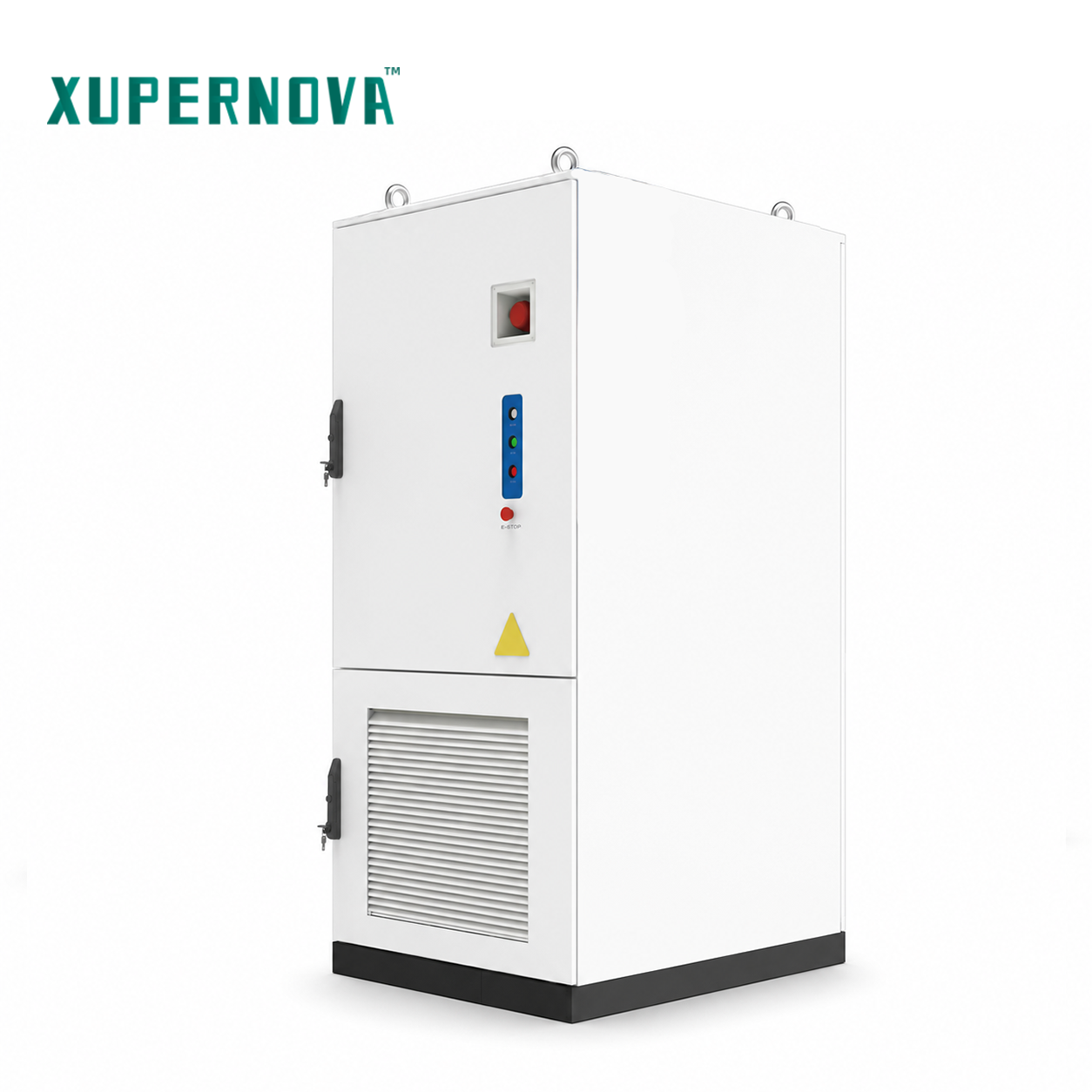
An all-in-one cabinet places battery, PCS and controls inside one supply scope — the starting point of the integrated model discussed in this guide.
What each sourcing model actually commits you to
An end-to-end integrated BESS puts the battery system, the power conversion system (PCS), the energy management system (EMS) and the associated electrical equipment into one supplier's scope, under one design authority and one commissioning team. That supplier owns the control chain from EMS setpoint to PCS output to battery response, and owns the protection and metering interfaces that connect that chain to the grid or to the facility distribution system.
A multi-vendor model splits the same plant into specialist contracts: battery containers, PCS skids, EMS or plant controller, medium-voltage switchgear and transformer, and the balance-of-plant works. Each supplier warrants its own equipment and its own performance envelope. The interfaces between them become project deliverables, owned either by the developer's engineering team or by an appointed integration contractor.
The distinction is not administrative. When a plant trips because the PCS followed a setpoint the plant controller should not have issued, an integrated supplier investigates one control chain. In a split scope, the battery supplier, the PCS supplier and the controls supplier each begin by demonstrating that their own equipment behaved correctly — and the owner funds the investigation until responsibility is established.
The interface ledger: counting the handoffs before counting the savings
Integration workload is best understood by listing the interfaces a grid-connected BESS actually contains. Across a typical containerised or cabinet-based installation, the recurring handoffs include the DC connection between battery and PCS; the AC connection from PCS to transformer and switchgear; the communication link between battery management system and EMS; the EMS link to SCADA and to the grid dispatch interface; thermal management and its coordination with site conditions; fire detection and suppression interlocks with facility systems; protection coordination and relay settings; revenue metering; auxiliary power and UPS; earthing and lightning protection; the communications network and cybersecurity boundary; and civil works, foundations and cable routing.
Each of those items has a design owner, a testing owner and a warranty owner. In a multi-vendor structure they are distributed across four to six parties. In an integrated structure they converge on one.
The comparison figures assigned to this guide describe the scale of that convergence: up to 70% fewer external interfaces, 55% less on-site integration work, 60% less multi-supplier coordination, and a 40% reduction in deployment cycle. These are integration-workload indicators. They describe coordination, engineering hours and site labour — not round-trip efficiency, degradation or energy throughput — and they should be re-validated against the actual scope split of a specific project before being carried into a business case.
An integrated architecture is also associated here with system availability of at least 99.9%. Availability of that order is an outcome of the whole service arrangement rather than of hardware alone: it depends on the agreed operations and maintenance scope, spare-parts strategy, communications availability and site conditions. It belongs in the contract with a defined measurement method and exclusions, not in a specification sheet as an assumption.
Deployment cycle and the real cost of a late energisation
Schedule risk in storage projects concentrates in commissioning, not in container delivery. A multi-vendor plant cannot begin integrated testing until every supplier's equipment is on site, every protocol has been matched and every protection setting has been agreed across contractual boundaries. Each of those steps is a meeting before it is a test.
The 40% deployment-cycle reduction associated with integrated supply comes mainly from removing those sequential dependencies: interface lists are frozen once, factory testing covers the control chain rather than individual boxes, and the same team that designed the coordination also commissions it. The figure does not cover permitting, interconnection approval, or civil and civil-electrical works that sit outside supplier scope, and a buyer should request a schedule broken down by engineering, production, delivery, installation and commissioning before accepting any cycle-time claim.
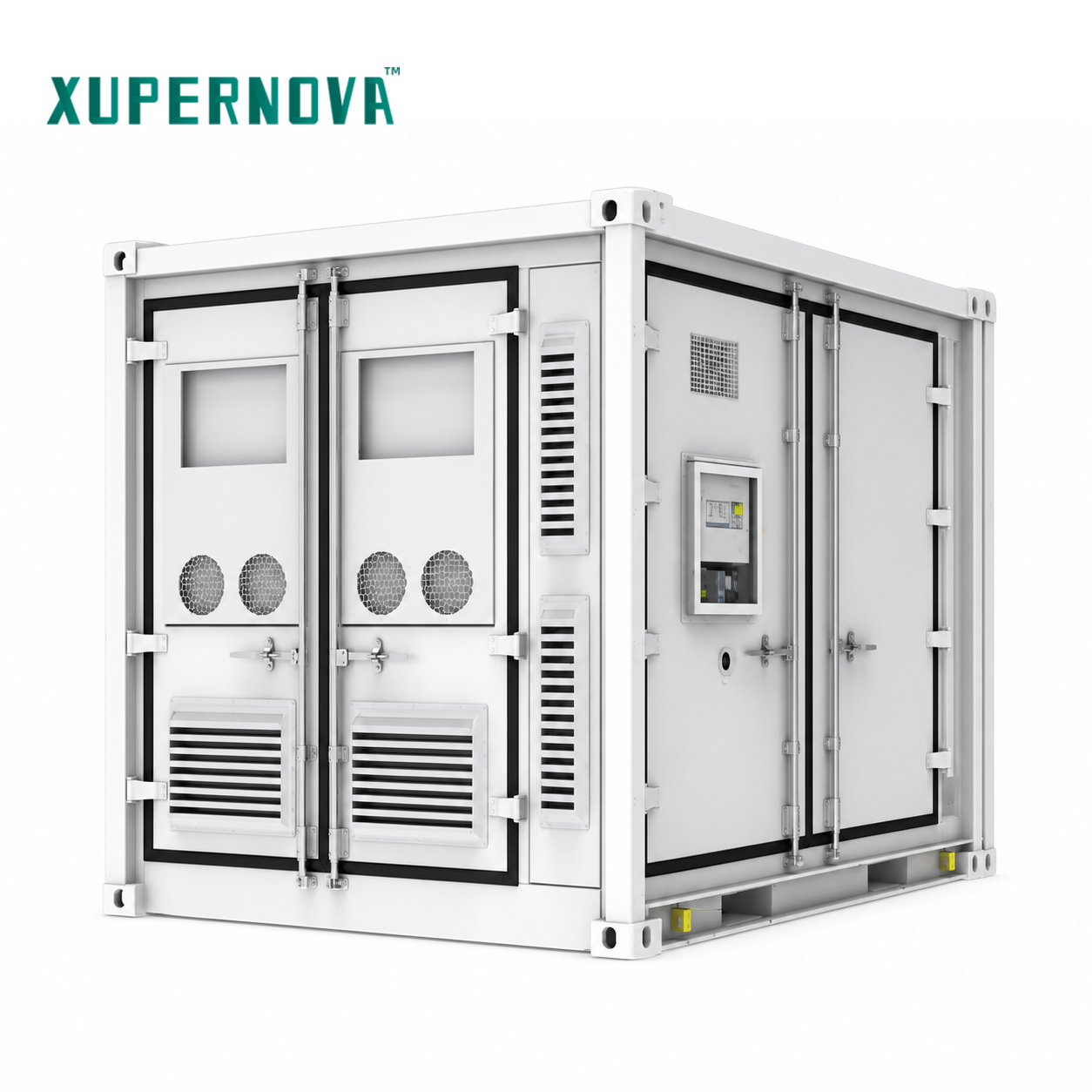
The XA-X1044-L1, a 10-ft liquid-cooled all-in-one container rated 500 kW / 1044 kWh, integrates battery, PCS and auxiliary systems — the physical basis of a single-interface scope.
Head-to-head: integrated versus multi-vendor on the criteria that decide projects
| Decision criterion | End-to-end integrated BESS | Multi-vendor sourcing |
|---|---|---|
| External interface ownership | One design authority across battery, PCS, EMS and electrical equipment; up to 70% fewer external interfaces in the comparison used here | Interfaces become project deliverables; owner or integrator must define, test and arbitrate them |
| On-site integration labour | 55% less on-site integration work, with commissioning by the party that designed the coordination | Higher site labour; multiple mobilisations and repeated interface checks |
| Deployment cycle | 40% reduction in deployment cycle, driven by frozen interface lists and single-team commissioning | Sequential dependencies between suppliers extend the commissioning window |
| Supplier coordination load | 60% less multi-supplier coordination; one technical point of contact | Coordination sits with the owner, with engineering hours funded internally |
| Availability accountability | One party accountable for the 99.9%+ availability target, subject to agreed O&M scope and measurement method | Availability is shared; shortfalls require attribution across contracts before remedy |
| Component choice | Constrained to the integrated supplier's qualified bill of materials | Best-of-breed selection per subsystem is possible |
| Price tension | Concentrated with one supplier after award | Competitive tension maintained across packages and phases |
| Lifecycle service | Single warranty boundary, single service team, one spares strategy | Warranty boundaries require coordination; spares held by multiple parties |
Where multi-vendor sourcing still wins
Modular sourcing is not a legacy practice waiting to be replaced. It is the correct structure under several real conditions, and an integrated supplier that denies this is not describing the market accurately.
- Prescribed equipment lists. Where a utility, lender or local regulation names approved equipment families, the scope may have to be split to match those lists.
- Existing framework agreements. A developer with an established PCS or transformer framework may gain more from price and lead-time certainty than from consolidation.
- Phased expansion with separate financing. If phase two will be tendered independently, a single-vendor architecture can create future price dependency.
- In-house engineering capacity. A developer with a strong electrical engineering team can absorb interface ownership and keep component-level flexibility.
- Local content and industrial policy. Domestic-content requirements can make multi-vendor sourcing the only compliant route.
The integrated model carries its own limitations, and they should be weighed explicitly. A single point of accountability is not the same as a single point of failure: consolidating scope concentrates commercial dependency, makes mid-project design changes subject to one supplier's change-order process, and can complicate integration with an existing plant controller or SCADA system that predates the BESS. Long-term service and spare parts also become tied to one supplier's lifecycle commitments. Where any of these risks is material, the correct answer may be a hybrid: integrated supply for the battery-PCS-EMS chain, with the medium-voltage interface and civil works retained by the owner's engineer.
A five-gate decision framework
Rather than choosing a philosophy, score the project against five gates. A project that fails two or more gates is usually better served by multi-vendor sourcing or by a hybrid split.
Gate 1 — Interface ownership capacity. Does your team have the engineering hours to own protocol matching, protection settings, cable schedules and factory testing across four to six contracts? If the honest answer is no, the coordination cost of modular sourcing is already priced into your project, even if it never appears in a quotation.
Gate 2 — Schedule exposure. Is the revenue start date fixed by a capacity obligation, a tariff change or a power purchase agreement? Interface-driven commissioning delay is most expensive where the commercial operation date carries penalties.
Gate 3 — Compliance complexity. Multi-market projects face grid impact studies, local grid-code compliance, protection coordination, dispatch-interface requirements, cybersecurity rules, fire safety and environmental assessment. A single documentation trail reduces the risk of one supplier's certificate being assumed to cover another's equipment; it does not remove the need to check market-specific evidence line by line.
Gate 4 — Lifecycle and spares. Ask who answers a performance shortfall in year eight. In an integrated contract the answer is one party with one warranty boundary. In a split scope, the owner arbitrates between suppliers while the asset underperforms.
Gate 5 — Commercial structure. Financing conditions, local content rules, prescribed vendor lists and separate phase tendering can all override the technical preference. Where these constraints dominate, build the interface-ownership plan around them rather than against them.
What coordinated operation looks like inside an integrated system
Integration is only meaningful if the control chain works as one system. In an integrated architecture, the EMS receives the site load profile, tariff schedule, state of charge and any grid dispatch command, then issues power setpoints to the PCS. The PCS converts according to those setpoints, while the battery management system enforces cell-level voltage, current and temperature limits and can cap the available power at any moment. The thermal system maintains cell operating conditions so those limits stay stable across the day, and the protection and metering equipment define what the plant is permitted to export or import.
Buyers should test this chain, not just the equipment list. The practical checks are whether the setpoint path is documented end to end, whether the PCS response to an EMS command is verified under a defined load condition, and whether the protection settings have one author. Where those three answers point to the same party, the integrated model is functioning as intended.
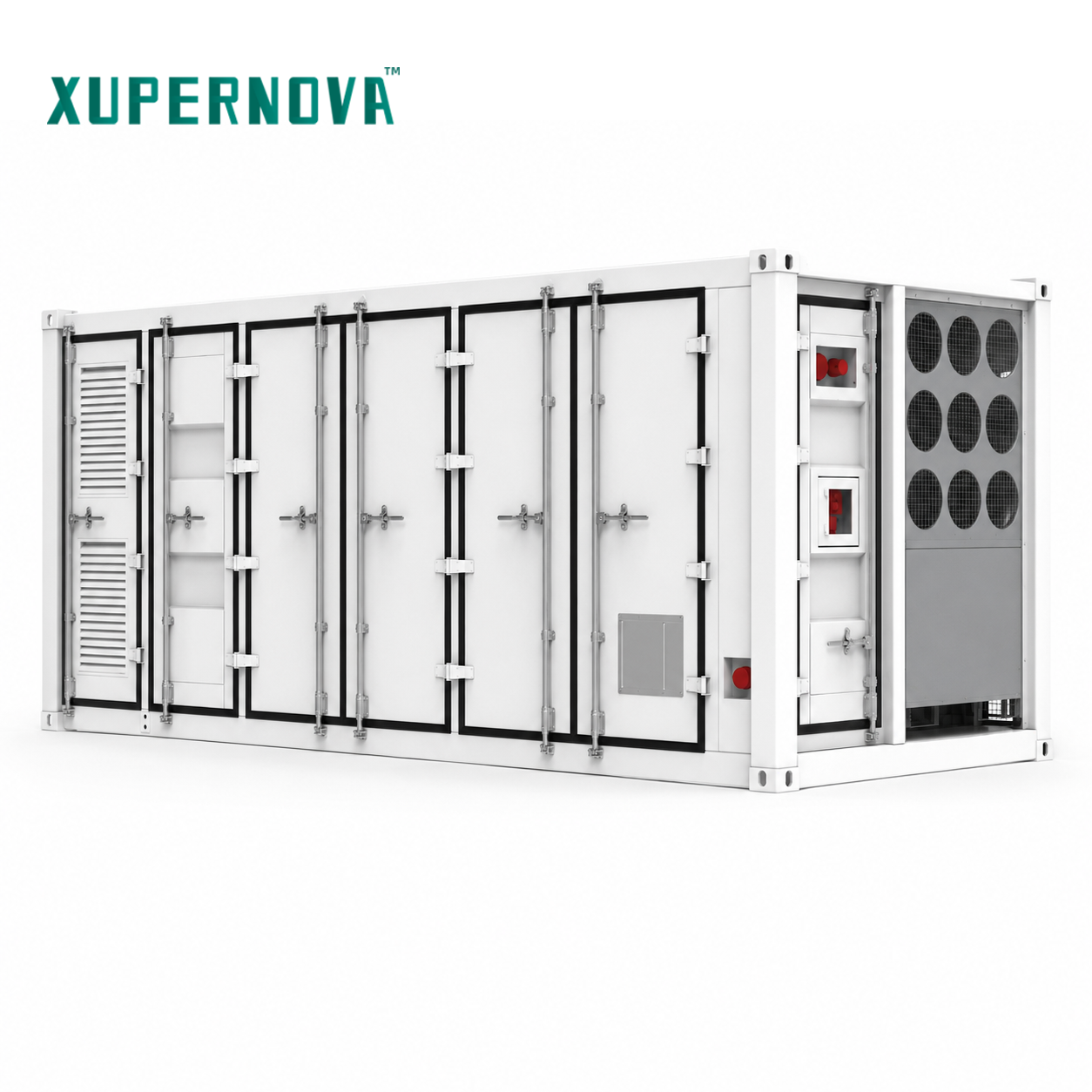
The XA-X2170-L2 20-ft liquid-cooled container, rated 1125 kW / 2170.3 kWh, is specified for commercial, industrial and grid-side energy storage.
Matching the sourcing decision to system scale
Scale changes the answer. A single 261 kWh cabinet serving one commercial building has few enough interfaces that integration is almost automatic; a multi-container grid-scale plant has enough interfaces that the sourcing model genuinely determines the project schedule.
Xupernova New Energy Technology Co., Ltd. (Xupernova) is an energy storage and new energy solutions provider established in 2015, operating a 700,000 m² manufacturing facility with 5GWh+ annual production capacity and a 150+ engineer R&D team. Its product range spans the scales at which the integrated-versus-multi-vendor decision is usually made.
| Model | Architecture | Rated power / energy | Typical fit |
|---|---|---|---|
| XA-H0064-A1 | Air-cooled solar-plus-storage cabinet | 25–50 kW / 64.54 kWh | Small-scale commercial and industrial solar-plus-storage |
| XA-C0261-L1 | Liquid-cooled all-in-one ESS cabinet | 125 kW / 261.25 kWh | Commercial and industrial energy storage |
| XA-H0261-L1 | Liquid-cooled solar-plus-storage cabinet | 261 kWh | C&I solar-plus-storage and microgrids |
| XA-X1044-L1 | 10-ft liquid-cooled all-in-one ESS container | 500 kW / 1044 kWh | C&I energy storage, microgrids, backup power |
| XA-X2170-L2 | 20-ft liquid-cooled all-in-one ESS container | 1125 kW / 2170.3 kWh | C&I and grid-side energy storage |
| XA-V5015-L1 | 20-ft liquid-cooled battery container | 5.015 MWh | Power generation, grid energy storage, C&I |
All six models support C-rates of 0.5P, 1P and 2P, use Grade A LFP lithium-ion cells from BloombergNEF Tier 1 energy-storage cell manufacturers, and are rated IP55 for outdoor deployment across an operating range of −30 °C to 55 °C. Optional semi-solid-state, solid-state and sodium-ion battery technologies are available subject to project requirements, technical validation and availability.
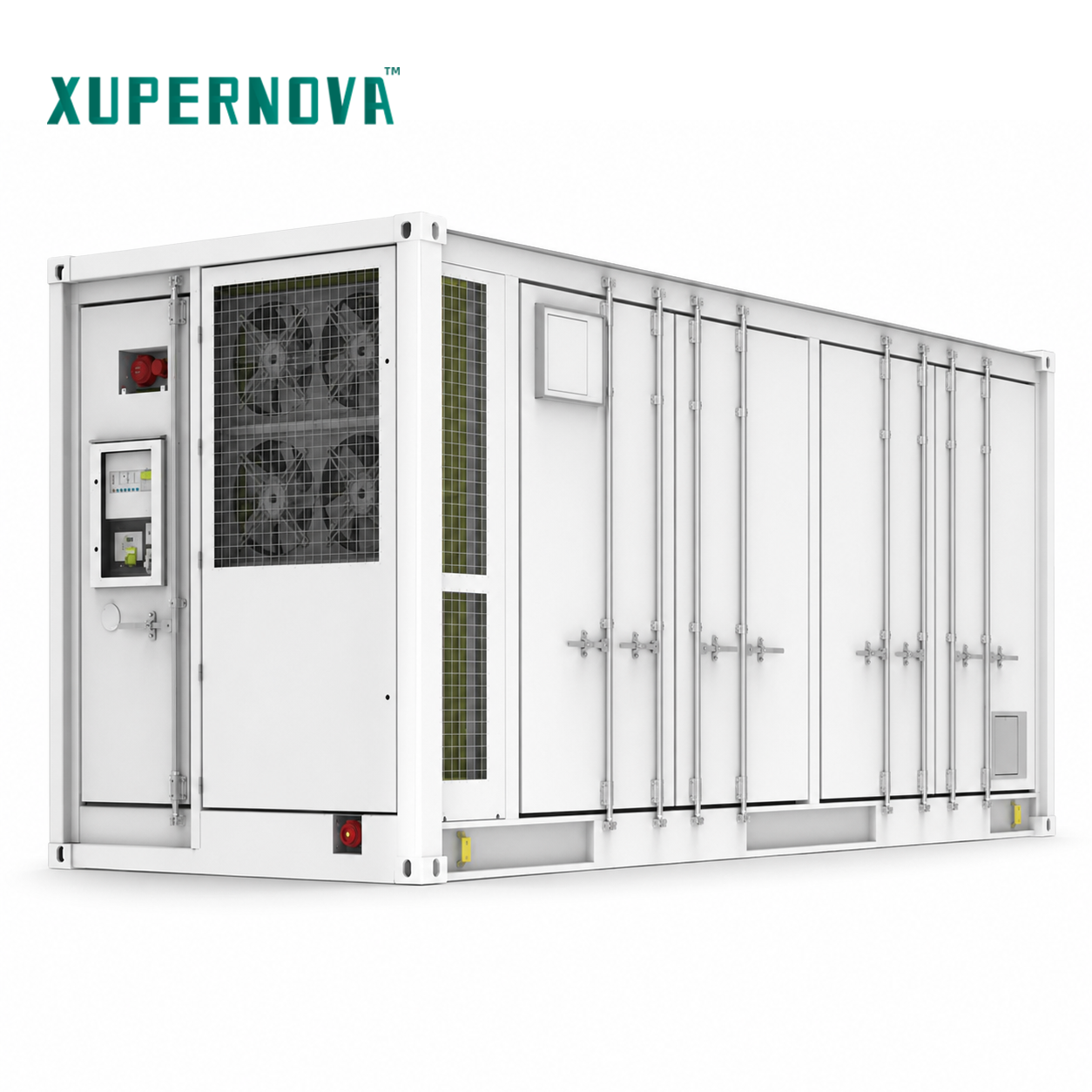
At grid scale, the 5.015 MWh liquid-cooled battery container moves the interface question from the cabinet to the plant controller and the medium-voltage system.
Application fit: where the sourcing model changes the answer
Commercial and industrial peak shaving with time-of-use arbitrage depends on a load-profile assessment, tariff structure, grid-connection approval, protection coordination and fire safety compliance. Because the value depends on daily automated charging and discharging, undetected control errors translate directly into lost savings — an argument for one party owning the setpoint path.
Solar-plus-storage projects add photovoltaic forecasting, export limitation, backup-load assessment and coordinated PV-battery control. The interface count rises with the PV inverter, the combiner boxes and the metering, so the integrated-versus-multi-vendor question usually becomes a question about who owns the PV-storage control logic.
Remote mining and off-grid microgrids raise the stakes further: solar PV, diesel generators, grid-forming PCS, load management and plant-level EMS must be scheduled as one system, with motor-starting analysis, spinning-reserve strategy and remote operations and maintenance defined before commissioning. In such projects an unclear interface is not a documentation issue; it is a stability issue.
Utility-scale renewable integration and grid-side storage add a grid impact study, local grid-code compliance, dispatch-interface requirements, cybersecurity, protection coordination and environmental assessment. Here the multi-vendor model is common because equipment categories are procured separately, and the coordination burden is correspondingly highest.
For hospitals, data centres and other critical-load sites, the requirement shifts from economics to resilience: critical-load assessment, required backup duration, islanding protection, black-start strategy, emergency response planning and fire safety compliance all need one accountable party when a grid outage occurs.
Commercial and lifecycle considerations
Contract price and project cost are different numbers. In a multi-vendor structure, engineering hours, interface meetings, repeated site mobilisations and delay exposure are funded by the owner but rarely appear as a line item, which makes the split scope look cheaper at quotation stage than it is at energisation. In an integrated structure, the coordination work is inside the price where it can be reviewed — but competitive tension after award is lower, which is why scope definition quality matters more.
For external cost reference, Ember reported all-in BESS project CAPEX for long-duration (4-hour and above) utility-scale projects at $125/kWh in late 2025, for markets excluding China and the United States. That figure is a market benchmark for complete projects, not a supplier quotation, and it should not be substituted for a scope-specific offer. Market scale provides context: the IEA reported global new battery storage deployment of 108 GW in 2025, with LFP chemistry accounting for approximately 90% of deployments, which is consistent with the LFP specification used across the product range above.
Lifecycle terms deserve the same scrutiny as the architecture. Clarify the warranty boundary, the spares strategy, the remote monitoring arrangement and who performs preventive maintenance. Xupernova states that it maintains partnerships across 80+ companies in more than 30 countries, and its export business accounts for 90% of total sales across Europe, North America, South America, the Middle East and Asia — relevant when assessing whether service response can realistically follow the equipment into its operating region.

In-house production and testing facilities allow interface verification to be agreed as part of the supply scope rather than discovered on site.
Frequently asked questions
Who owns grid-code compliance when the BESS is supplied as an integrated system?
The supplier owns the coordination of protection settings, grid-interface documentation and the dispatch interface inside its scope; the developer or owner remains responsible for the interconnection agreement, the grid impact study and site conditions. Utility-scale projects typically require a grid impact study, local grid-code compliance, protection coordination, dispatch-interface requirements, cybersecurity review, fire safety and environmental assessment. An integrated contract simplifies the documentation trail but does not transfer the interconnection obligation, so compliance evidence should be requested for each target market rather than assumed from a single certificate.
Can an integrated BESS still use third-party PCS or a plant-level EMS?
It can, but the scope then stops being end-to-end and the interface returns to the owner. Products such as the XA-X1044-L1 integrate battery, PCS and auxiliary systems in one container, which is what allows a single party to warrant the control chain. If an existing plant controller must be retained, define in writing who verifies the setpoint path, who owns the communication protocol mapping and who is accountable if the response deviates from the command.
Does integrated sourcing cost more upfront?
Not necessarily, and the comparison cannot be reduced to equipment price. Integrated supply internalises interface engineering, site integration labour and coordination, which in the model used here reduces external interfaces by up to 70% and multi-supplier coordination by 60%. Whether total project cost falls depends on scope definition, local labour rates and how much competitive tension the procurement retains. Compare fully loaded offers that state what is excluded — medium-voltage equipment, civil works, grid studies and spares are the usual gaps.
What can be validated before a full order is placed?
Validation is a matter of agreeing the right artefacts rather than a single sample. Before award, request the interface list, the communication protocol list, the protection-setting responsibility matrix, the factory test scope, the spare-parts list and the warranty boundary for the specific configuration. Where the supplier operates in-house production and testing facilities, factory verification can be built into the supply scope. For multi-container projects, confirm that the tested configuration matches the delivered configuration, including cooling type and C-rate.
How much faster is deployment, and what does the 40% figure include?
The 40% reduction in deployment cycle refers to the integrated supply comparison used in this guide, and it comes mainly from fewer external interfaces, less on-site integration work and single-team commissioning. It excludes permitting, interconnection approval, utility witness testing and civil works, which sit outside supplier scope and often dominate the real calendar. Ask for a schedule separated into engineering, production, delivery, installation and commissioning, and check which of those stages the supplier actually controls.
Conclusion: decide by interface ownership, not by preference
Integrated BESS supply wins where interface ownership is scarce, the commercial operation date is fixed, and lifecycle accountability matters more than component-level choice. Multi-vendor sourcing wins where prescribed equipment lists, framework agreements, phased financing or in-house engineering capacity make modular flexibility worth the coordination cost. The 70% fewer external interfaces, 55% less on-site integration, 60% less multi-supplier coordination, 40% shorter deployment cycle and 99.9%+ availability target describe what consolidation changes — not a universal recommendation.
The practical test is simple: name the person who will own the interface between the battery management system and the plant controller, and confirm they have the hours, the authority and the warranty backing to do it. If that person does not exist, an integrated scope is the lower-risk structure.
Xupernova publishes its full energy storage range, including the XA-C0261-L1, XA-X1044-L1, XA-X2170-L2, XA-V5015-L1 and the solar-plus-storage XA-H0261-L1 and XA-H0064-A1, in its product catalogue, which can be downloaded here: Xupernova Energy Storage Product Catalog. For scope-specific questions on interface ownership, commissioning responsibility or configuration, contact Bill Liao at bill@xupernovatech.com or +86 186-0828-3917, or visit www.xupernovatech.com.
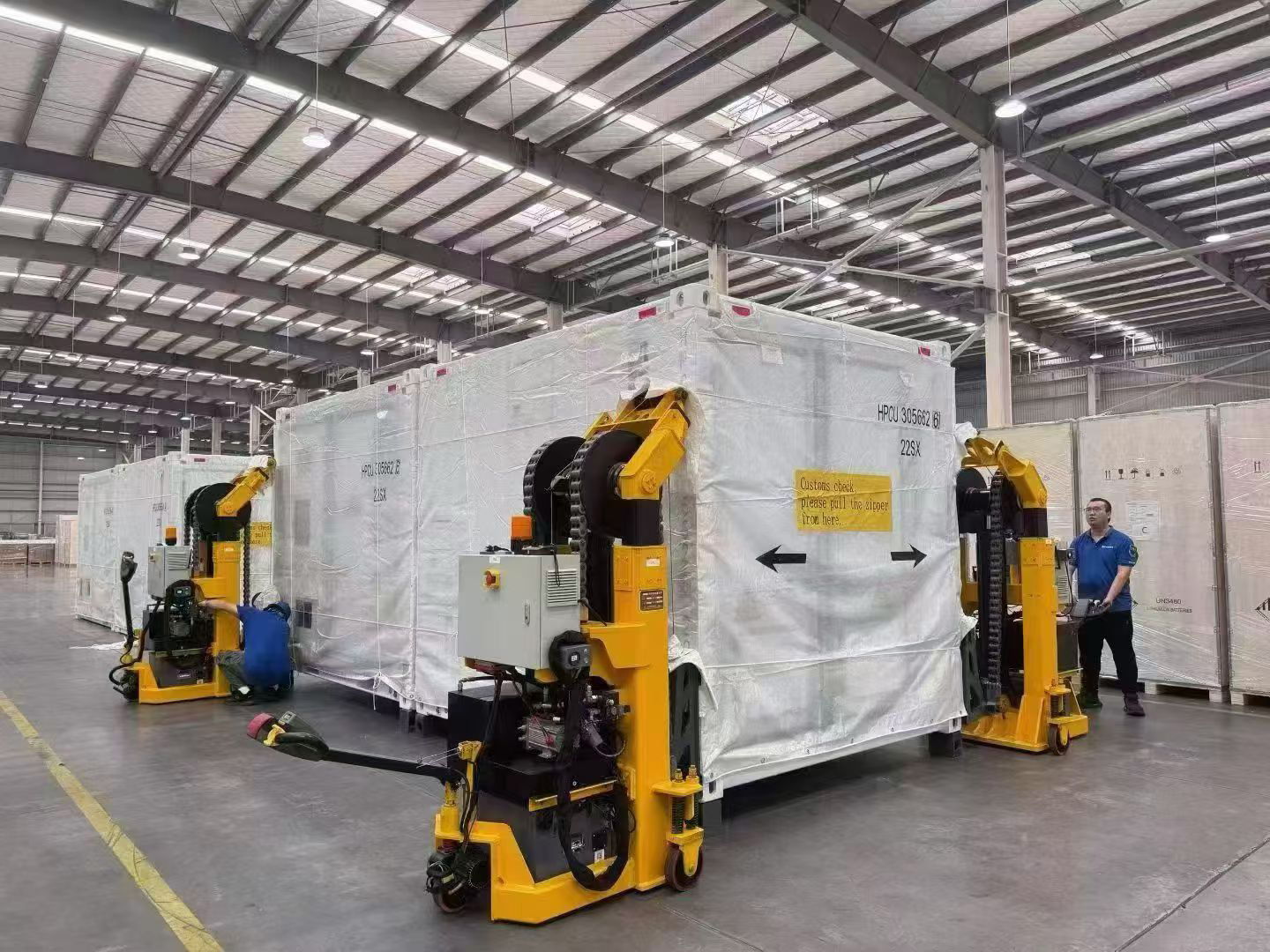
Single-point lifecycle support depends on manufacturing capacity and service reach behind the contract — the factory, not only the datasheet.
Have Questions or Need More Details?
Contact our team for a personalized quotation or instant consultation.
Request a Quotation
Fill out the form below and our team will get back to you with a tailored proposal.
WhatsApp Direct Chat
Prefer to chat in real-time? Message us on WhatsApp for instant assistance & quick answers.
- Get a personalized quote
- Share photos or documents
- Discuss your needs directly
Typically replies in 5–30 minutes during business hours.