
Top 5 BESS Deployments Ranked: C&I, Solar, EV, Microgrid, Backup
Top 5 BESS Deployments Ranked: C&I, Solar, EV, Microgrid, Backup
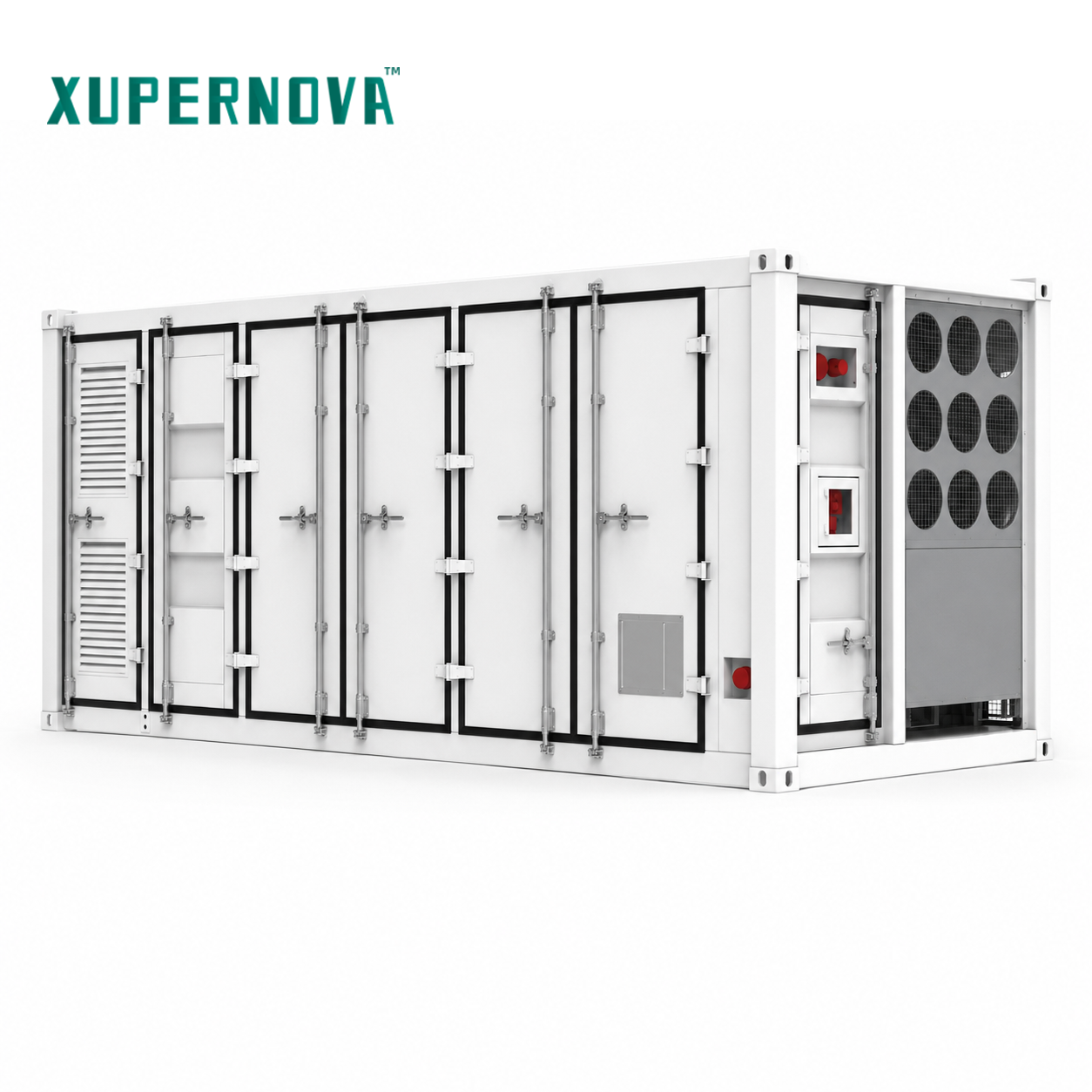
Five battery energy storage deployment types cover most commercial, industrial and remote projects: C&I peak shaving and time-of-use arbitrage (ranked first), solar-plus-storage self-consumption (second), EV charging hub capacity support (third), remote mining microgrids with diesel optimization (fourth), and critical-load backup (fifth). The order reflects two things: how directly each pattern turns a documented site constraint into a recurring operating benefit, and how much integration work the pattern demands across battery, PCS, BMS, EMS, grid code and fire safety.
The ranking is about deployment types, not vendors. Positions are an editorial assessment of the application requirements and reference projects documented in Xupernova's project material; they are not measured market shares, revenue rankings or field-test results. A single site often combines two patterns, and the reference projects below include solar-plus-storage microgrids that also provide emergency backup.
Why the deployment type, not the product, sets the requirement
Two projects can order the same 261 kWh cabinet and need completely different engineering. A retail site on a time-of-use tariff needs a load profile and a demand limit. A hospital needs a critical-load list, an islanding scheme, an emergency response plan and a UPS for loads that cannot tolerate any interruption. The battery is the constant; the deployment is the variable.
Each of the five deployment types is defined by a different primary assessment, and that assessment decides sizing:
- C&I peak shaving and arbitrage — load-profile assessment plus the site's time-of-use tariff.
- Solar-plus-storage — PV generation assessment plus export-limitation requirements.
- EV charging hubs — charging-load forecast plus transformer-capacity assessment.
- Remote microgrids — site load study with motor-starting analysis and a spinning-reserve strategy.
- Critical-load backup — critical-load assessment plus required backup duration.
A practical decision rule follows: if the assessment behind your deployment type cannot be completed with site data, the project is not ready to size. No capacity, C-rate or enclosure choice compensates for a missing load profile. Xupernova's documented range spans cabinet and container formats — 25–50 kW / 64.54 kWh, 125 kW / 261.25 kWh, 500 kW / 1.044 MWh, 1125 kW / 2170.3 kWh and 5.015 MWh — but the format is chosen after the assessment, not before it.
Two requirement sets appear in all five deployments and are never optional: grid-code compliance and fire-safety compliance. They are recorded as special requirements in every application pattern in Xupernova's documentation, from C&I cabinets to remote microgrids.
Industry background: standardised chemistry, differentiated integration
Three current figures frame the deployment decision. Global new battery storage deployment reached 108 GW in 2025, according to the IEA's Global Energy Review 2026 (published 29 May 2026), and LFP chemistry accounted for approximately 90% of global battery storage deployments in that year, per the same source. In the United States, the EIA's Preliminary Monthly Electric Generator Inventory projects utility-scale battery storage capacity growth of 19.6 GW in 2025.
Cost benchmarks need more care than the chemistry picture. Ember reported an all-in CAPEX of $125/kWh for long-duration (4h+) utility-scale projects in late 2025, excluding China and the United States. That is a utility-scale benchmark, not a quotation for a 261 kWh commercial cabinet, where cost per kWh is driven by enclosure, PCS, switchgear, protection and site works rather than by cell price alone.
Headline market-size figures diverge mainly because of scope. MarketsandMarkets estimates the 2025 global BESS market at $50.81 billion, while comparison notes in the same dataset record alternative valuations of approximately $13.2 billion and $8.59 billion; the gap is largely explained by whether the count includes the full system value chain — PCS, EMS, civil works — or battery equipment only. For a single project decision, that divergence is a reason to size from your own load and tariff data rather than from a market total.
The buying implication is consistent: chemistry has standardised on LFP, so differentiation has shifted to integration — how battery, PCS, BMS and EMS are coordinated, which grid codes are actually covered, how fire safety is engineered, and how quickly a configuration can be delivered, commissioned and supported. Those are the dimensions used in the ranking below.
The five deployment types, ranked
#1 C&I peak shaving and time-of-use arbitrage
The deployment charges during off-peak tariff periods and discharges during peak periods to reduce maximum demand, demand charges and electricity costs. Operation is 24/7 automatic energy management with scheduled charging and discharging, load-following control and demand-limit control. The matched equipment set is a grid-connection cabinet, a transformer if required, switchgear, a smart meter, CTs, a plant-level EMS, and power and communication cables.
The assessment that decides sizing is the load-profile assessment, read together with the site's time-of-use tariff. Grid-connection approval, protection coordination and fire-safety compliance complete the requirement set.
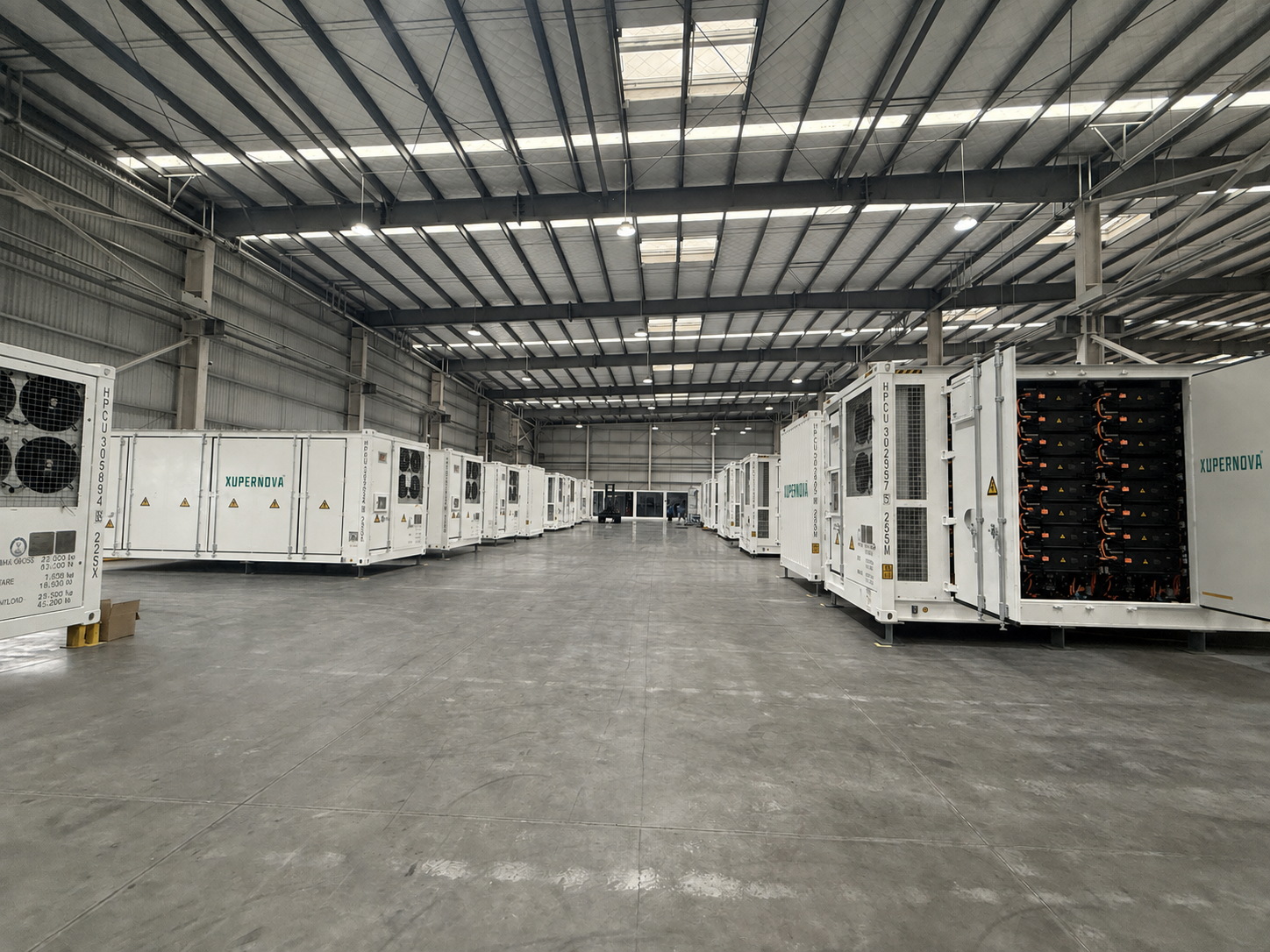
A suitable platform in this pattern is the XA-C0261-L1, a liquid-cooled all-in-one cabinet rated 125 kW / 261.25 kWh with 0.5P, 1P and 2P C-rates, IP55 protection, an operating range of −30°C to 55°C, and Grade A LFP lithium-ion cells from BloombergNEF Tier 1 cell manufacturers. Where one cabinet is insufficient, the XA-X1044-L1 extends the same logic at 500 kW / 1044 kWh in a 10-ft liquid-cooled all-in-one container, documented for commercial and industrial storage, microgrids and backup power.
Documented references include an industrial manufacturing enterprise running 1 MW / 2.09 MWh across 20 units for two years on peak shaving, arbitrage and demand management with plant-level EMS, IP55 protection and compatibility with German grid requirements; and a retail operator running 125 kW / 261.248 kWh across 50 units for one year on peak shaving, arbitrage and PV self-consumption, with a compact all-in-one liquid-cooled design, single-unit deployment, low onsite installation workload, remote monitoring and compatibility with Italian grid requirements.
The pattern ranks first because its value recurs daily and its assessment is the lightest of the five: one measured load profile and one documented tariff. Deployment is modular, with a single cabinet functioning as a complete unit. The limitation is equally clear: the value stack depends entirely on tariff structure and demand charges. Where a site has neither a meaningful peak-to-off-peak spread nor a demand charge, the same hardware produces materially less. No savings percentage should be assumed for a generic site; the documented evidence covers configurations and operating results, not a universal business case.
#2 Solar-plus-storage and photovoltaic self-consumption
This deployment stores excess photovoltaic energy, increases onsite solar consumption, reduces grid imports and can provide optional backup power. The system coordinates PV, battery, load and grid automatically, charging from solar during the day and discharging on schedule or on demand.
Sizing depends on a PV generation assessment, and the requirement set adds export-limitation requirements, grid-code compliance, a backup-load assessment where backup is included, and coordinated PV–battery control. The matched equipment set is PV modules, a PV inverter or hybrid PCS, a combiner box, a smart meter, an EMS, a transformer if required, STS/EPS for backup applications, and communication cables.
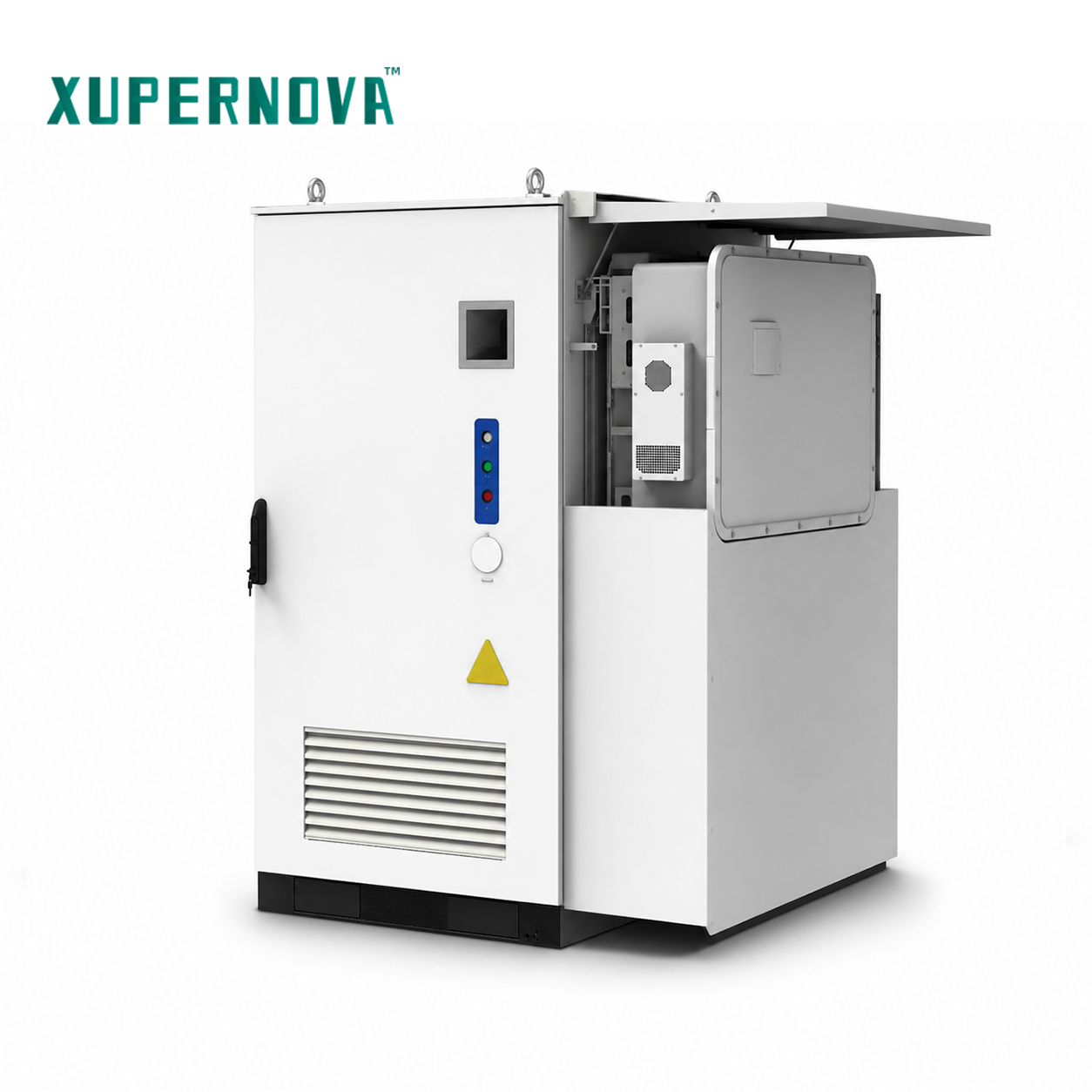
The XA-H0261-L1 is a liquid-cooled solar-plus-storage cabinet at 261 kWh with 0.5P, 1P and 2P C-rates, IP55 protection, a −30°C to 55°C operating range and Grade A LFP cells from Tier 1 manufacturers, documented for commercial and industrial solar-plus-storage and microgrids. For smaller sites, the XA-H0064-A1 air-cooled cabinet is rated 25–50 kW / 64.54 kWh and is documented for small-scale commercial and industrial solar-plus-storage.
A documented reference is a commercial facility and solar EPC contractor running 500 kW / 1.044 MWh with up to 1 MW PV input across 32 units for five years, covering PV self-consumption, peak shaving, arbitrage and emergency power support; reported outcomes are increased solar self-consumption, reduced daytime peak demand and optimized energy costs. The configuration used a liquid-cooled solar-plus-storage design, a wide PV input range, modular expansion, plant-level EMS and remote monitoring.
It ranks second because its value stack is the widest of the five — self-consumption, demand reduction and optional resilience — while requiring two assessments instead of one. Export limitation is a regulatory and contractual constraint rather than a design preference, and PV–battery coordination has to be engineered, which is why the pattern sits below C&I arbitrage on assessment simplicity even though it captures more value streams.
#3 EV charging hub capacity support
Here the storage system reduces charging demand peaks, increases available charging capacity, uses solar energy where available and defers grid-capacity upgrades. Grid power, PV, battery and EV charging loads are coordinated automatically through the EMS.
The assessment set is the most forecast-dependent of the five: a charging-load forecast, a transformer-capacity assessment, dynamic power allocation, grid-connection approval and fire-safety compliance. The matched equipment set spans EV chargers, a charging management system, PV if required, a smart meter, CTs, an EMS, a transformer, switchgear and power distribution equipment.
Container platforms fit this pattern where several chargers share one point of connection: the XA-X1044-L1 at 500 kW / 1044 kWh, and the XA-X2170-L2, a 20-ft liquid-cooled all-in-one container rated 1125 kW / 2170.3 kWh with 0.5P, 1P and 2P C-rates, IP55 protection, a −30°C to 55°C range and Grade A LFP cells from BloombergNEF Tier 1 manufacturers, documented for commercial and industrial and grid-side storage.
It ranks third because it delivers recurring value and directly defers a capital upgrade, but its sizing input is a forecast rather than a measurement. A charging-load forecast error propagates into transformer sizing, dynamic power allocation and the point at which the hub runs out of headroom. Buyers should treat the pattern as defined by a documented requirement set and by the same PCS/EMS architecture used in adjacent references, not by a published EV-hub case: the reference projects supplied here cover retail, industrial, solar-plus-storage and microgrid deployments.
#4 Remote mining microgrid and diesel optimization
The deployment stabilizes a weak-grid or off-grid microgrid, reduces diesel-generator runtime, supports renewable utilization and improves power reliability. Solar PV, battery storage, diesel generators and loads operate in coordination, with grid-forming control and automatic source scheduling.
Assessment is the heaviest of the five: a site load study, motor-starting analysis, a spinning-reserve strategy, high-temperature and dust protection, black-start capability and remote O&M planning. The matched equipment set is a PV system, diesel generators, grid-forming PCS, a microgrid controller, a transformer, switchgear, a load-management system, a plant-level EMS and a communication network.
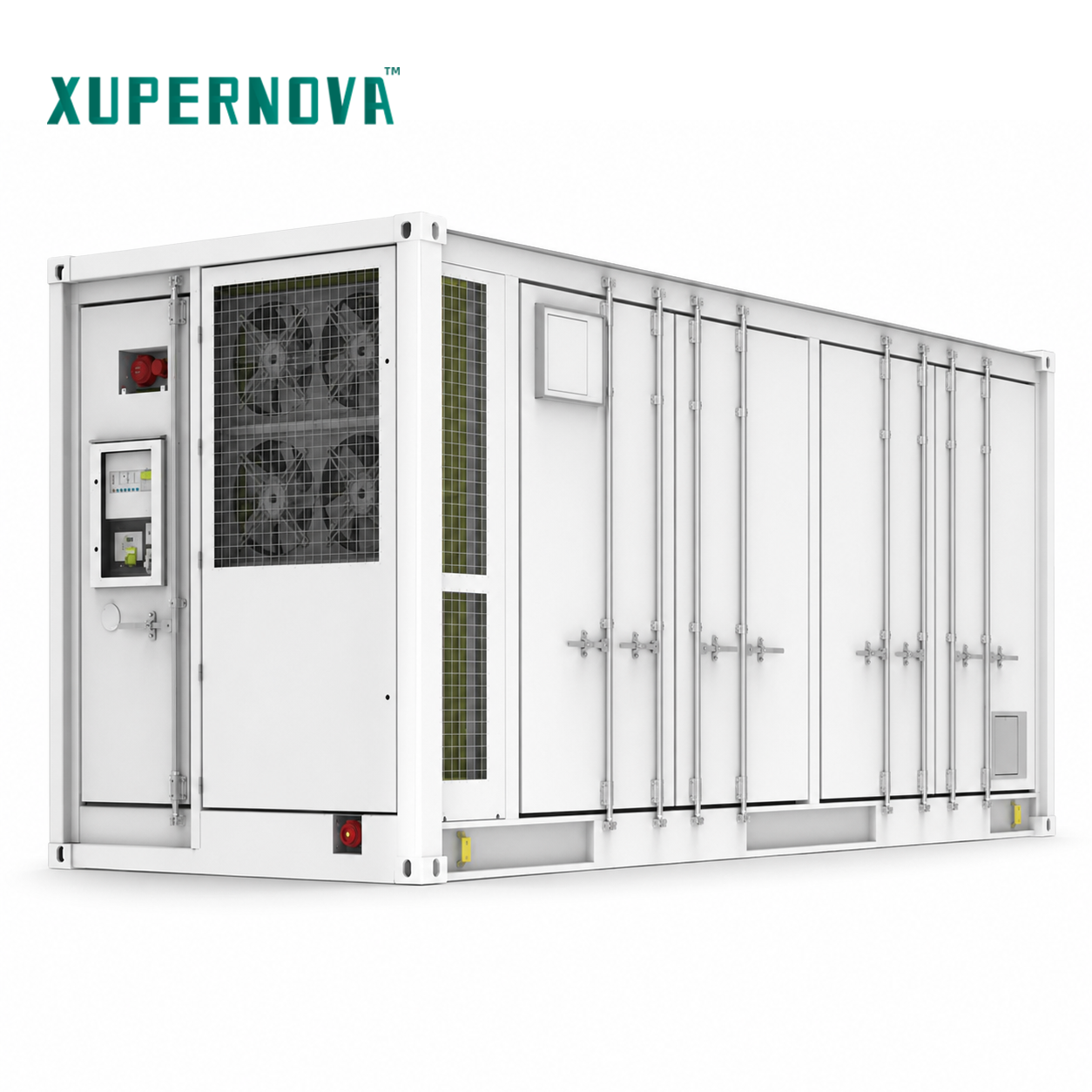
The XA-V5015-L1 is a 20-ft liquid-cooled battery container rated 5.015 MWh with 0.5P, 1P and 2P C-rates, IP55 protection, a −30°C to 55°C range and Grade A LFP cells from BloombergNEF Tier 1 manufacturers, documented for power generation, grid energy storage and commercial and industrial storage. The XA-X2170-L2 and XA-X1044-L1 serve smaller microgrid nodes.
A documented reference is a commercial and industrial park operator running 1 MW / 2.088 MWh across 12 units for seven years on a solar-plus-storage microgrid with emergency backup and diesel generator optimization; reported outcomes are improved critical-load power continuity, increased solar utilization and reduced diesel generator operating time. The configuration used an integrated STS, grid-connected and off-grid switching, PV and diesel generator interfaces and centralized energy management.
It ranks fourth despite its large fuel-saving potential because it carries the highest engineering burden and the lowest replicability. Every site needs its own load study and motor-starting analysis, and spinning reserve must be designed with the diesel fleet rather than around it. Diesel remains part of the architecture; the value is reduced runtime and improved reliability, not diesel elimination. Dust and high-temperature protection and remote O&M are design requirements, not optional extras.
#5 Critical-load backup and energy resilience
This pattern maintains power to selected critical loads during grid outages and emergencies. The system runs grid-connected under normal conditions and transfers automatically to islanded backup operation during outages when configured with grid-forming PCS and STS/EPS.
The assessment set is a critical-load assessment, required backup duration, islanding protection, a black-start strategy, an emergency response plan and fire-safety compliance. Matched equipment includes an STS or EPS cabinet, a critical-load distribution panel, a grid-forming PCS, a transformer if required, switchgear, a UPS for zero-interruption loads, an EMS and an optional diesel generator.
Cabinet and container platforms both appear here: the XA-C0261-L1 at 125 kW / 261.25 kWh for a defined critical-load block, and the XA-X1044-L1 at 500 kW / 1044 kWh, which is documented for backup power applications alongside commercial and industrial storage and microgrids.
It is ranked fifth on recurring energy value and assessment breadth, not on consequence. Its value is concentrated in outage events rather than in daily energy throughput, its scope is limited to selected loads, and per unit of energy it carries the heaviest documentation burden of the five. The matched-equipment set also lists a UPS for zero-interruption loads, which means the storage system is not specified as the sole answer for loads that cannot tolerate any interruption. Islanding protection and the emergency response plan must be approved before commissioning, and facilities such as hospitals and data centers cannot accept an unverified islanding scheme.
Comparison table: five deployments on the same dimensions
| Rank | Deployment | Primary value | Assessment that decides sizing | Integration focus | Documented platform |
|---|---|---|---|---|---|
| 1 | C&I peak shaving and time-of-use arbitrage | Lower maximum demand, demand charges and energy cost | Load-profile assessment plus time-of-use tariff | Grid-connection cabinet, smart meter, CTs, plant-level EMS, protection coordination | XA-C0261-L1 (125 kW / 261.25 kWh); XA-X1044-L1 (500 kW / 1044 kWh) |
| 2 | Solar-plus-storage self-consumption | Higher PV self-consumption, lower imports, optional backup | PV generation assessment plus export limits | PV inverter or hybrid PCS, combiner box, EMS, STS/EPS for backup | XA-H0261-L1 (261 kWh); XA-H0064-A1 (25–50 kW / 64.54 kWh) |
| 3 | EV charging hub capacity support | Fewer charging demand peaks, more usable capacity, deferred grid upgrade | Charging-load forecast plus transformer-capacity assessment | Charging management system, dynamic power allocation, transformer and switchgear | XA-X1044-L1 (500 kW / 1044 kWh); XA-X2170-L2 (1125 kW / 2170.3 kWh) |
| 4 | Remote mining microgrid | Lower diesel runtime, microgrid stability, higher renewable use | Site load study plus motor-starting analysis | Grid-forming PCS, microgrid controller, load management, black start | XA-V5015-L1 (5.015 MWh); XA-X2170-L2; XA-X1044-L1 |
| 5 | Critical-load backup | Supply continuity for selected loads during outages | Critical-load assessment plus required backup duration | STS/EPS, grid-forming PCS, islanding protection, UPS for zero-interruption loads | XA-C0261-L1 (125 kW / 261.25 kWh); XA-X1044-L1 (500 kW / 1044 kWh) |
Step-by-step: how to size and verify any of the five
The sequence below applies to all five deployment types; only step 1 differs. It follows the assessment order recorded in Xupernova's application documentation.
- Step 1 — Classify the deployment and collect its primary dataset. A load profile for C&I arbitrage, a PV generation estimate for solar-plus-storage, a charging-load forecast for an EV hub, a site load study with motor-starting data for a microgrid, a critical-load list and backup duration for resilience.
- Step 2 — Fix the value stack before sizing. Confirm the tariff structure and demand charges, the export limitation, the transformer headroom, or the loads that must stay energized. A value stream that is not documented in the tariff, contract or load list cannot be counted.
- Step 3 — Size power and energy separately. The supported C-rates of 0.5P, 1P and 2P make duration a configuration decision: the same cabinet family spans two-hour and shorter-duration duty within the documented ratings.
- Step 4 — Define the grid interface. Grid-connection approval, protection coordination, transformer and switchgear sizing, and the applicable grid code. For an EV hub, add dynamic power allocation across chargers.
- Step 5 — Engineer fire safety and site conditions. Fire-safety compliance is a special requirement in all five patterns. Enclosure protection is IP55 across the cabinet and container products, with a documented operating range of −30°C to 55°C; remote sites add dust and high-temperature protection.
- Step 6 — Specify the control architecture. Coordinated battery, PCS and EMS operation, plus STS/EPS and grid-forming PCS where islanded operation or backup is required, and communication protocols for plant-level control.
- Step 7 — Verify before shipment and plan commissioning. Xupernova's documented quality control covers 100% FAT, electrical safety testing, functional testing, aging testing and third-party inspection availability, followed by commissioning, training, diagnostics and spare-parts support.
Compliance evidence to check before grid-connection approval
Certification scope matters as much as certification presence. Xupernova's published certification set covers the ECO-E261LP-2A energy storage system (125 kW, 261.248 kWh, IP55), and each certificate names its model, market and standard:
- Italy grid code, active: CEI 0-21:2022/V2:2024, certificate D 125581 0027 Rev. 00, issued by TÜV SÜD Product Service GmbH on 22 September 2025.
- Italy grid code, active: CEI 0-16:2022/V3:2024, certificate D 125581 0028 Rev. 00, issued by TÜV SÜD Product Service GmbH on 22 September 2025.
- EU EMC: Attestation of Conformity E8A 125581 0023 Rev. 00 against EN IEC 61000-6-4:2019 and EN IEC 61000-6-2:2019, issued 22 July 2025.
- EU low voltage: Attestation of Conformity N8A 125581 0024 Rev. 00 against EN 62477-1:2012/A12:2021, issued 1 September 2025.
- Battery system safety, global: IEC 63056:2020 product certificate B 125581 0022 Rev. 01 covering the rechargeable lithium-ion battery system at DC 832 V, 314 Ah, issued 16 September 2025.
Two verification steps follow. First, compare the certificate scope line with the exact model and configuration in your project, because a certificate for one model does not extend automatically to a different enclosure, PCS rating or market. Second, confirm the import classification and landed-cost treatment for the destination market; for the United States, BESS fully encased in housing is classified under HTS 8507.60.00.90 according to the 2026 Harmonized Tariff Schedule published by the USITC. That is a tariff classification, not a safety standard, and the two should be checked separately.
Where Xupernova fits across the five deployments
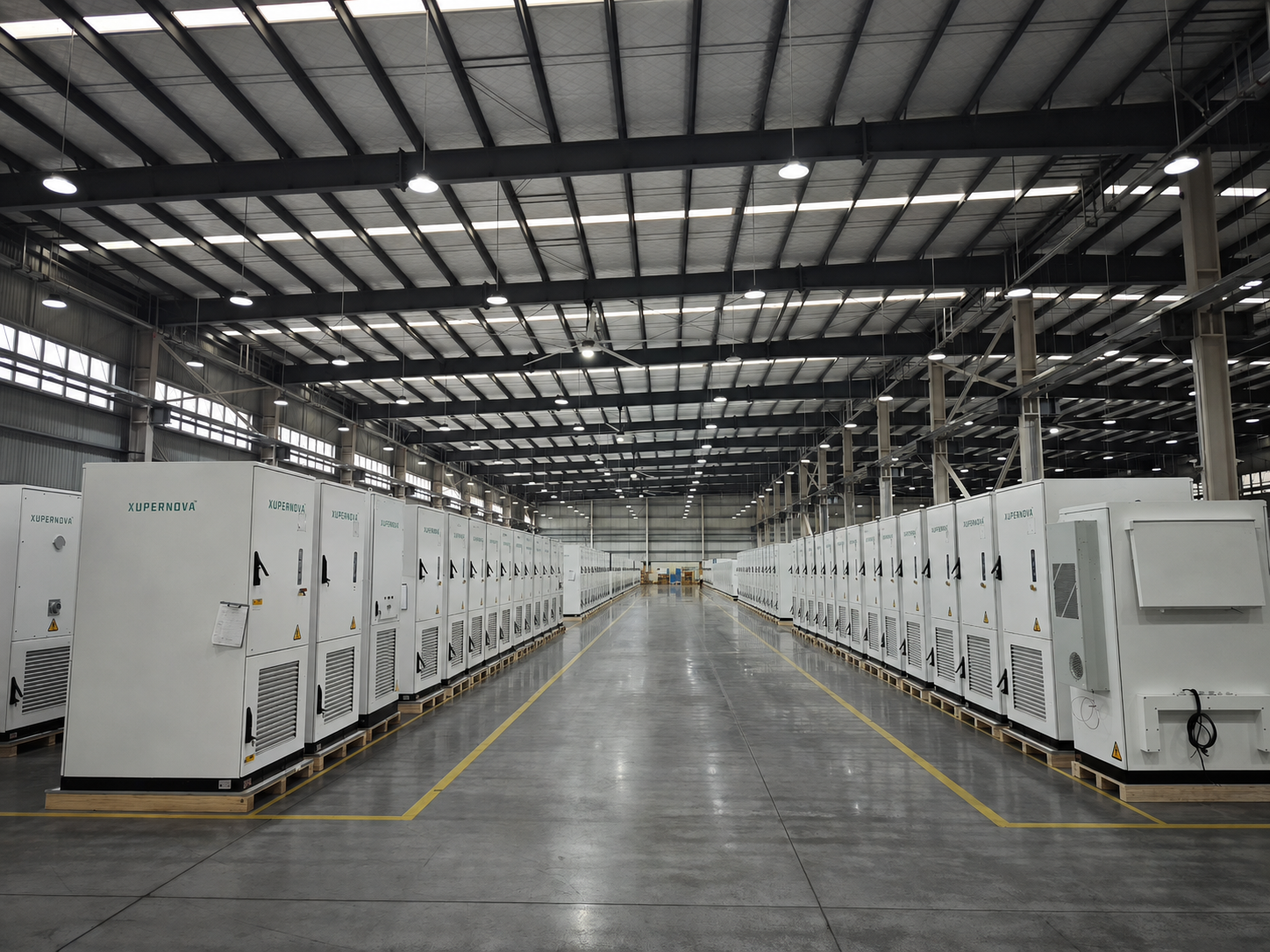
Xupernova New Energy Technology Co., Ltd. is an energy storage and new energy solutions provider founded in 2015, operating a 700,000 m² factory with 500+ employees, 150+ R&D engineers and 5GWh+ annual capacity, and exporting about 90% of output to Europe, North America, South America, the Middle East and Asia. Its storage range covers the five deployment types above in cabinet and container formats, all built on Grade A LFP lithium-ion cells from BloombergNEF Tier 1 energy-storage cell manufacturers, with optional semi-solid-state, solid-state and sodium-ion technologies subject to project requirements, technical validation and availability.
For buyers moving from research to evaluation, the useful next step is a documented requirement set rather than a brochure specification: the load profile, PV estimate, charging forecast, site load study or critical-load list that defines your deployment, plus the grid code and fire-safety authority that will review it. Xupernova supports that stage with OEM/ODM configuration, 100% FAT and third-party inspection, 24/7 remote support, commissioning, training, diagnostics, spare parts and optional onsite service. Details are published at Xupernova.
Frequently asked questions
Which certifications should a battery energy storage system hold before grid-connection approval?
At minimum, the certificate set should match the destination market and the exact model. Xupernova's ECO-E261LP-2A system (125 kW, 261.248 kWh, IP55) holds CEI 0-21:2022/V2:2024 under certificate D 125581 0027 Rev. 00 and CEI 0-16:2022/V3:2024 under certificate D 125581 0028 Rev. 00 for the Italian market, both issued by TÜV SÜD Product Service GmbH on 22 September 2025; an EU EMC Attestation of Conformity E8A 125581 0023 Rev. 00 against EN IEC 61000-6-4:2019 and EN IEC 61000-6-2:2019; an EU LVD Attestation of Conformity N8A 125581 0024 Rev. 00 against EN 62477-1:2012/A12:2021; and IEC 63056:2020 product certificate B 125581 0022 Rev. 01 for the DC battery system at 832 V, 314 Ah. Because each document names a model, market and standard, the scope line must be compared against the exact configuration being procured.
Can one platform serve both grid-connected and off-grid deployments?
Yes, where the control architecture is specified for it. The XA-X1044-L1 (500 kW / 1044 kWh) and XA-X2170-L2 (1125 kW / 2170.3 kWh) are liquid-cooled all-in-one containers with integrated PCS, BMS and EMS, documented for commercial and industrial storage, microgrids, backup power and grid-side applications. Islanded operation and backup require a grid-forming PCS plus STS or EPS, and microgrid projects add a microgrid controller and load-management system. A documented reference used an integrated STS with grid-connected and off-grid switching, PV and diesel generator interfaces and centralized energy management. OEM/ODM customization explicitly covers on-grid/off-grid operation, STS/EPS backup function, PCS, BMS and plant-level EMS, cooling, fire protection, IP rating, grid code and communication protocols.
What drives project cost across these five deployment types?
Cost drivers differ by deployment even when the battery platform is identical. They include power rating and energy capacity, the C-rate and therefore the duration, cooling type, fire-protection scope, grid-forming PCS and STS/EPS where islanded operation is required, transformer and switchgear, the breadth of grid-code compliance, site works, and the assessment work itself. For external context only, Ember reported an all-in CAPEX of $125/kWh for long-duration 4h+ utility-scale projects in late 2025, excluding China and the United States; that is a utility-scale benchmark and does not represent a commercial cabinet, an EV hub or a microgrid. No per-project price should be inferred from it.
Can a system be verified before full deployment?
Verification is possible at unit level. Xupernova's documented quality control covers 100% factory acceptance testing, electrical safety testing, functional testing, aging testing and third-party inspection availability, with a minimum order quantity of one unit, so a single cabinet or container can be evaluated before a multi-unit rollout. Several reference projects also used remote monitoring as part of their operating model, which gives the buyer an ongoing data path after commissioning. The verification scope should be agreed in writing together with the configuration list.
What lead time applies to a project of this type?
Documented lead time is 25–35 days for standard BESS and 35–60 days for customized projects, against monthly capacity of up to 500 MWh. After-sales scope covers 24/7 remote support, commissioning, training, diagnostics, spare parts and optional onsite service. Because customization options — PCS and EMS configuration, STS/EPS, cooling, fire protection, enclosure and grid code — affect both engineering time and delivery, the configuration should be frozen before the schedule is committed. The product catalog with the full configuration list is available for download: Xupernova Energy Storage Product Catalog.
Conclusion
The five deployment types are not interchangeable, and the ranking is a statement about assessment and integration rather than about hardware quality. C&I peak shaving ranks first because one load profile and one tariff unlock value that recurs daily. Solar-plus-storage ranks second because it stacks self-consumption, demand reduction and optional backup behind two assessments. EV charging hubs rank third because their sizing input is a forecast. Remote mining microgrids rank fourth because every site needs its own load and motor-starting study. Critical-load backup ranks fifth on recurring value while carrying the highest consequence and the heaviest documentation burden.
Whichever pattern matches your site, three checks decide whether the project is ready to size: the primary assessment dataset exists, the grid code and fire-safety authority for the destination market are identified, and the certificate scope matches the exact model. Those checks sit above any capacity or enclosure choice — and above any ranking, including this one.
Have Questions or Need More Details?
Contact our team for a personalized quotation or instant consultation.
Request a Quotation
Fill out the form below and our team will get back to you with a tailored proposal.
WhatsApp Direct Chat
Prefer to chat in real-time? Message us on WhatsApp for instant assistance & quick answers.
- Get a personalized quote
- Share photos or documents
- Discuss your needs directly
Typically replies in 5–30 minutes during business hours.