
What Is an End-to-End BESS? Explaining Integrated Battery Energy Storage System Benefits
An end-to-end battery energy storage system (BESS) is a storage plant in which the battery system, battery management system (BMS), power conversion system (PCS), thermal management, fire protection, plant-level energy management system (EMS) and the grid-connection system — transformer, switchgear, protection and control — are engineered, factory-tested and commissioned as one integrated package by a single supplier.
The term answers a practical procurement question rather than a technical one. Most buyers can specify a battery capacity and a power rating. Far fewer can predict what happens when five different vendors — a cell and rack supplier, a PCS manufacturer, an EMS software developer, a transformer and switchgear supplier, and a civil and electrical contractor — all have to agree on a single DC bus window, a protection scheme and a commissioning sequence before the plant can be energised. An end-to-end BESS removes those interfaces from the buyer and places them inside one engineering scope.
This article defines what an integrated system actually contains, explains why integration became a procurement priority as the storage market scaled, breaks down the specification-to-commissioning process step by step, and shows where end-to-end configurations are deployed today.
Definition in one line: End-to-end BESS = one supplier, one engineering interface, one factory acceptance test, one commissioning plan, one warranty covering the battery, conversion, controls, thermal management and grid-connection equipment.
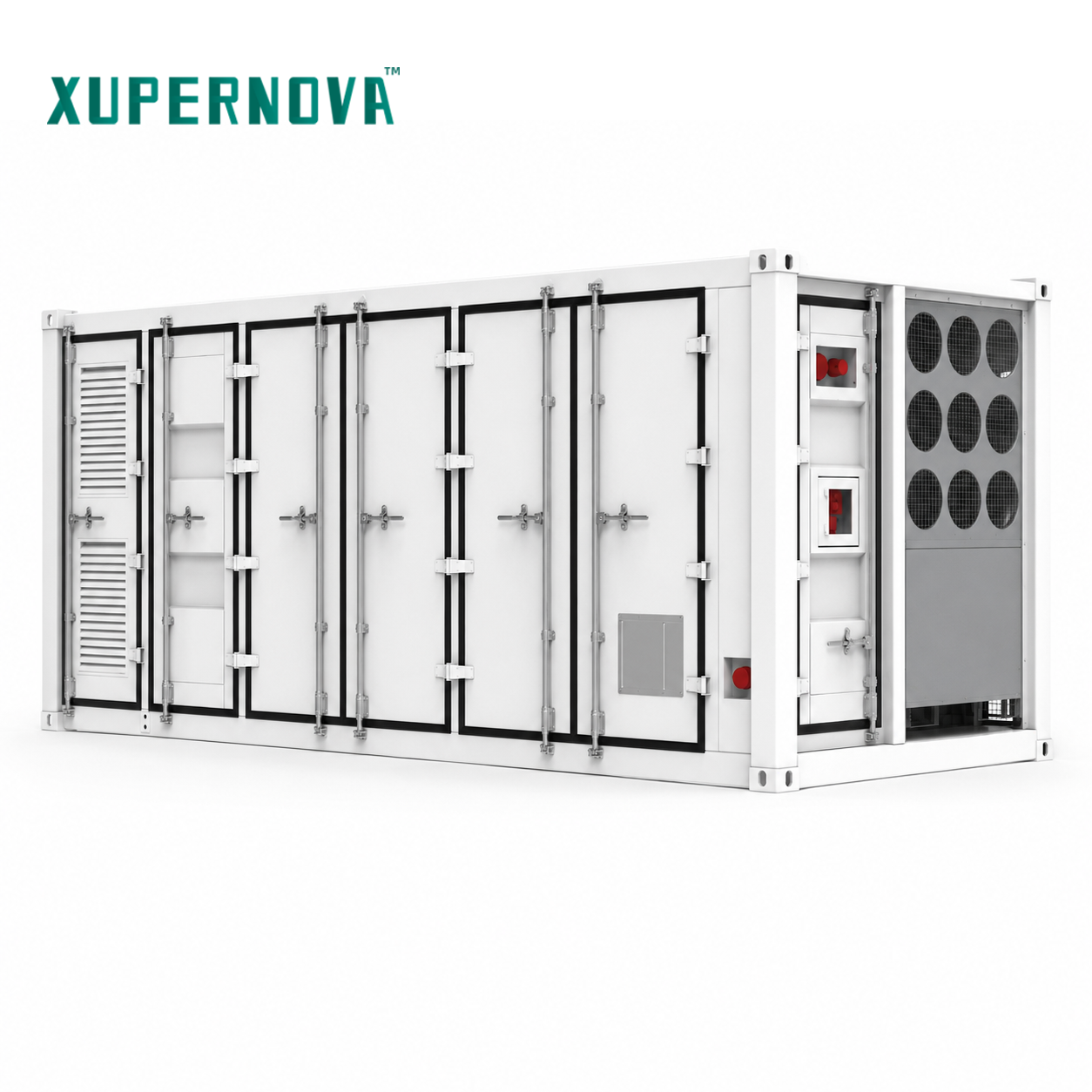
The Problem: Where Multi-Vendor BESS Projects Lose Time
The failure mode of a fragmented storage project is rarely a single defective component. It is the interface between components, and the fact that no single party owns it.
Consider what has to be coordinated when storage is assembled from separate vendors:
- DC interface. The battery rack voltage window must sit inside the PCS operating window across the full state-of-charge range, at every ambient temperature the site experiences.
- Control interface. The BMS must exchange limits and status with the PCS, and both must expose data to the plant-level EMS using the same communication protocol.
- Protection coordination. Overcurrent, earth-fault and anti-islanding settings must be graded across battery, PCS, AC collection and grid-connection equipment.
- Thermal duty. Cooling design must account for the combined heat load of cells and power electronics under the site profile, not each component's datasheet case.
- Compliance evidence. Grid-code documentation is often issued per component, leaving the buyer to assemble the proof package for the utility or the authority having jurisdiction.
- Responsibility boundaries. When a plant trips, the battery supplier points at the PCS, the PCS vendor points at the EMS, and the buyer owns the diagnosis.
Each of these is manageable in isolation. Together they create a chain of handovers: separate factory acceptance tests, separate firmware revisions, separate site mobilisations, and a commissioning sequence that cannot start until the last interface is closed. The commercial consequence is not a single dramatic failure but a steady accumulation of schedule and engineering effort that the buyer never budgeted for.
Industry Background: Why Integration Moved Up the Procurement Agenda
Storage has moved from pilot scale to infrastructure scale, and that shift changes what buyers optimise for.
Global new battery storage capacity deployment reached 108 GW in 2025, according to the IEA's Global Energy Review 2026. Lithium iron phosphate (LFP) chemistry accounted for approximately 90% of those deployments, reflecting a market consensus around cycle life, thermal stability and cost. The global BESS market was estimated at $50.81 billion in 2025 by MarketsandMarkets; other research houses publish materially different figures because they draw the boundary of the market differently — some count battery cells, others count only turnkey systems, and the split between utility-scale and commercial segments varies. Buyers should treat any single market-size figure as definition-dependent.
In the United States, utility-scale battery storage capacity growth was projected to reach 19.6 GW in 2025, based on the U.S. Energy Information Administration's Preliminary Monthly Electric Generator Inventory. On cost, Ember reported that all-in BESS project CAPEX for long-duration (4-hour-plus) utility-scale projects reached $125/kWh in late 2025 — a figure that includes far more than the battery itself.
Two implications follow from this data. First, the cost curve has fallen far enough that storage now competes with conventional peaking and backup assets on economics, which means projects are being approved at a scale where schedule risk matters financially. Second, because the visible cost line is dominated by the battery, buyers tend to negotiate hard on cells and pay less attention to the integration scope — which is precisely where schedule overruns originate.
Regulatory framing is also maturing. A BESS fully encased in housing is classified under US Harmonized Tariff Schedule code 8507.60.00.90, per the USITC's Harmonized Tariff Schedule 2026 — a reminder that the enclosure, not just the cells, defines how the product is treated commercially.
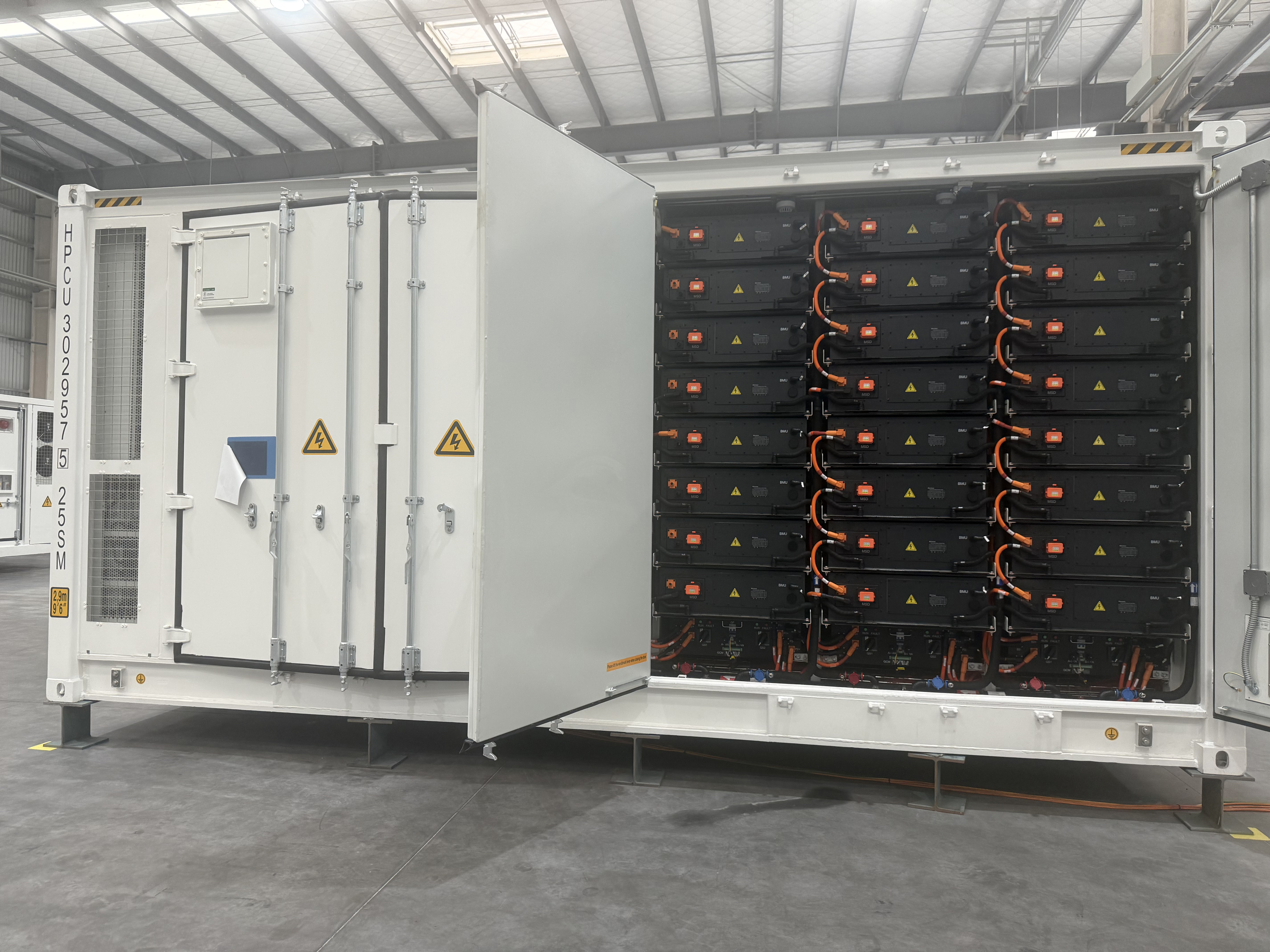
What a Fully Integrated End-to-End BESS Actually Contains
An end-to-end scope is best understood as a stack of layers, each of which a fragmented project would otherwise procure separately.
Layer 1 — Cell and module
Xupernova energy storage products use Grade A LFP lithium-ion cells sourced from leading BloombergNEF Tier 1 energy-storage cell manufacturers. Semi-solid-state, solid-state and sodium-ion battery technologies are available as options, subject to project requirements, technical validation and availability. Chemistry selection is therefore a configuration decision inside the same scope, not a separate sourcing exercise.
Layer 2 — Battery management and pack protection
The BMS monitors cell voltage and temperature, balances the pack and enforces charge and discharge limits. In an integrated design, those limits are the same values the PCS and EMS are configured against, which removes the most common source of derating disputes.
Layer 3 — Power conversion (PCS)
The PCS converts DC battery energy to AC for the load or the grid, and back again during charging. Xupernova systems are configured with integrated PCS/BMS/EMS, so conversion, protection and control parameters are engineered as one set.
Layer 4 — Thermal management
Liquid cooling is used across the containerized and all-in-one cabinet ranges, with air cooling available on the smaller solar-plus-storage cabinet. All listed models are specified for an operating scope of −30 °C to 55 °C, with 0.5P, 1P or 2P power-to-energy ratio options depending on whether the application is energy-shifting or power-heavy.
Layer 5 — Plant-level EMS and monitoring
The plant-level EMS schedules charging and discharging against tariffs, demand limits, photovoltaic generation and grid signals, and provides remote monitoring. It is the layer that converts hardware into an operating asset, and in an end-to-end scope it is delivered by the same party that supplied the hardware it controls.
Layer 6 — Safety, enclosure and environmental protection
Fire protection systems, enclosure sizing, colour and branding, IP rating and corrosion protection are all part of the configured scope. The commercial and industrial cabinet configuration on the ECO-E261LP-2A platform carries an IP55 rating.
Layer 7 — Grid-connection system
Transformer and switchgear configuration, MV interface, protection and control, and where required a static transfer switch (STS) or emergency power supply (EPS) function for backup duty. This is the layer most often left outside a battery-only purchase, and the layer most often responsible for late-stage delays.
Layer 8 — On-grid and off-grid operating modes
Integrated systems are configured for on-grid operation, off-grid operation, or both with automatic switching — the configuration used in solar-plus-storage microgrids and diesel-optimisation projects.
Specification Reference: Xupernova Integrated BESS Portfolio
Xupernova New Energy Technology Co., Ltd. (Xupernova) is a global energy storage and new energy solutions provider headquartered in Yibin, Sichuan Province, China, serving Europe, North America, South America, the Middle East and Asia. The table below summarises the integrated product range, all delivered with 0.5P/1P/2P options and a −30 °C to 55 °C operating scope.
| Model | Format | Rated power / capacity | Cooling | Typical application |
|---|---|---|---|---|
| XA-C0261-L1 | Liquid-cooled all-in-one ESS cabinet | 125 kW / 261.25 kWh | Liquid | Commercial & industrial energy storage |
| XA-H0261-L1 | Liquid-cooled solar-plus-storage cabinet | 261 kWh | Liquid | C&I solar-plus-storage, microgrids |
| XA-H0064-A1 | Air-cooled solar-plus-storage cabinet | 25–50 kW / 64.54 kWh | Air | Small-scale C&I solar-plus-storage |
| XA-X1044-L1 | 10-ft liquid-cooled all-in-one ESS container | 500 kW / 1,044 kWh | Liquid | C&I, microgrids, backup power |
| XA-X2170-L2 | 20-ft liquid-cooled all-in-one ESS container | 1,125 kW / 2,170.3 kWh | Liquid | C&I, grid-side energy storage |
| XA-V5015-L1 | 20-ft liquid-cooled battery container | 5.015 MWh | Liquid | Power generation, grid storage, C&I |
All models use Grade A LFP cells from leading BloombergNEF Tier 1 energy-storage cell manufacturers. Optional semi-solid-state, solid-state and sodium-ion technologies are subject to project requirements, technical validation and availability.
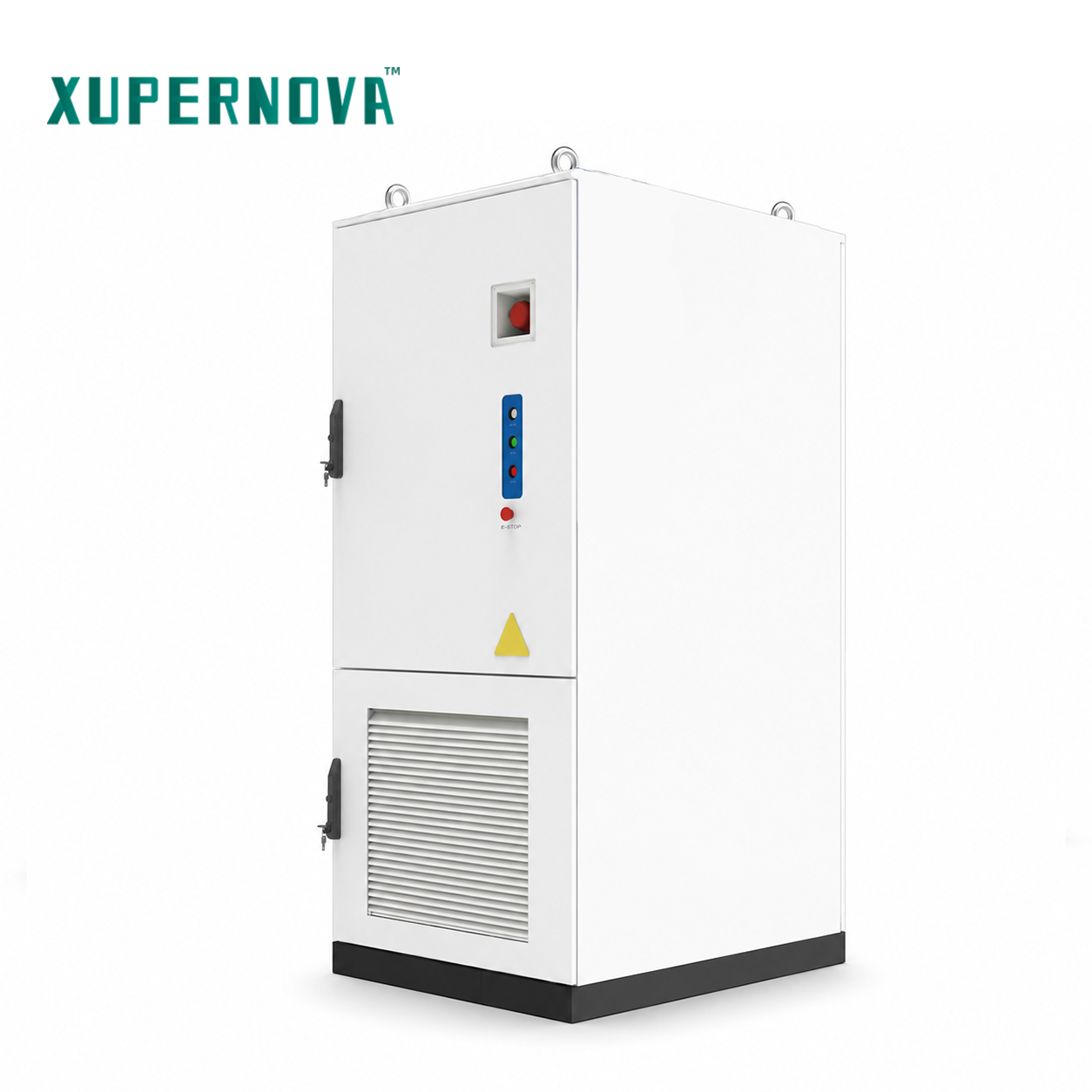
Why Single-Point Coordination and Unified Commissioning Matter
The benefit of an integrated scope is not that the components are unusual. It is that the coordination work has already been done, tested and documented before the equipment reaches site.
One engineering interface
Rather than five technical contacts, the buyer works with one. Questions about the DC window, the EMS schedule or the protection settings route to the same engineering team that designed all three.
One factory acceptance test
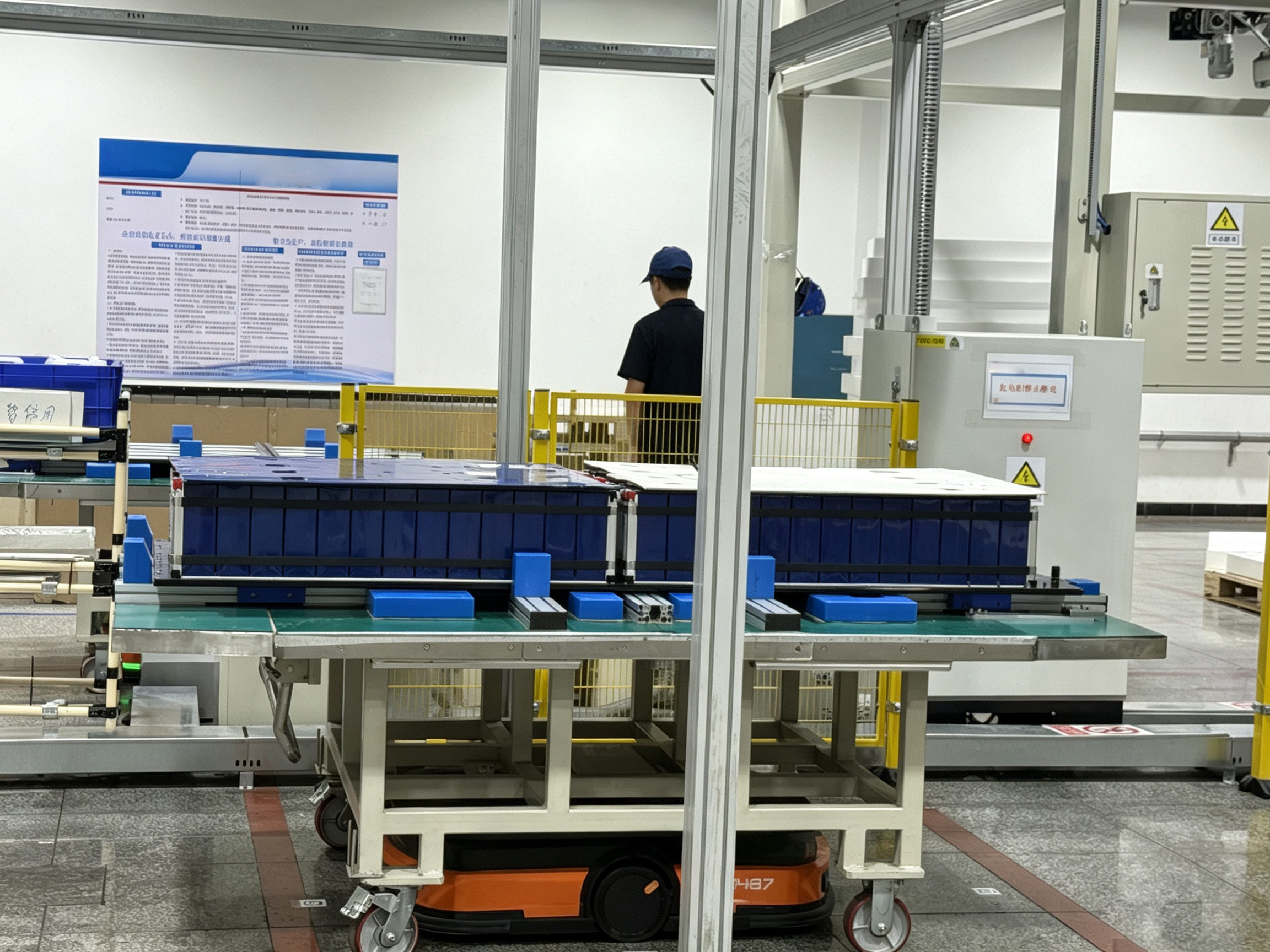
Quality control at Xupernova includes 100% factory acceptance testing (FAT), electrical safety testing, functional testing and aging testing, with third-party inspection available. Because the whole system is tested together, integration issues surface in the factory rather than during site commissioning.
Compliance evidence in a single package
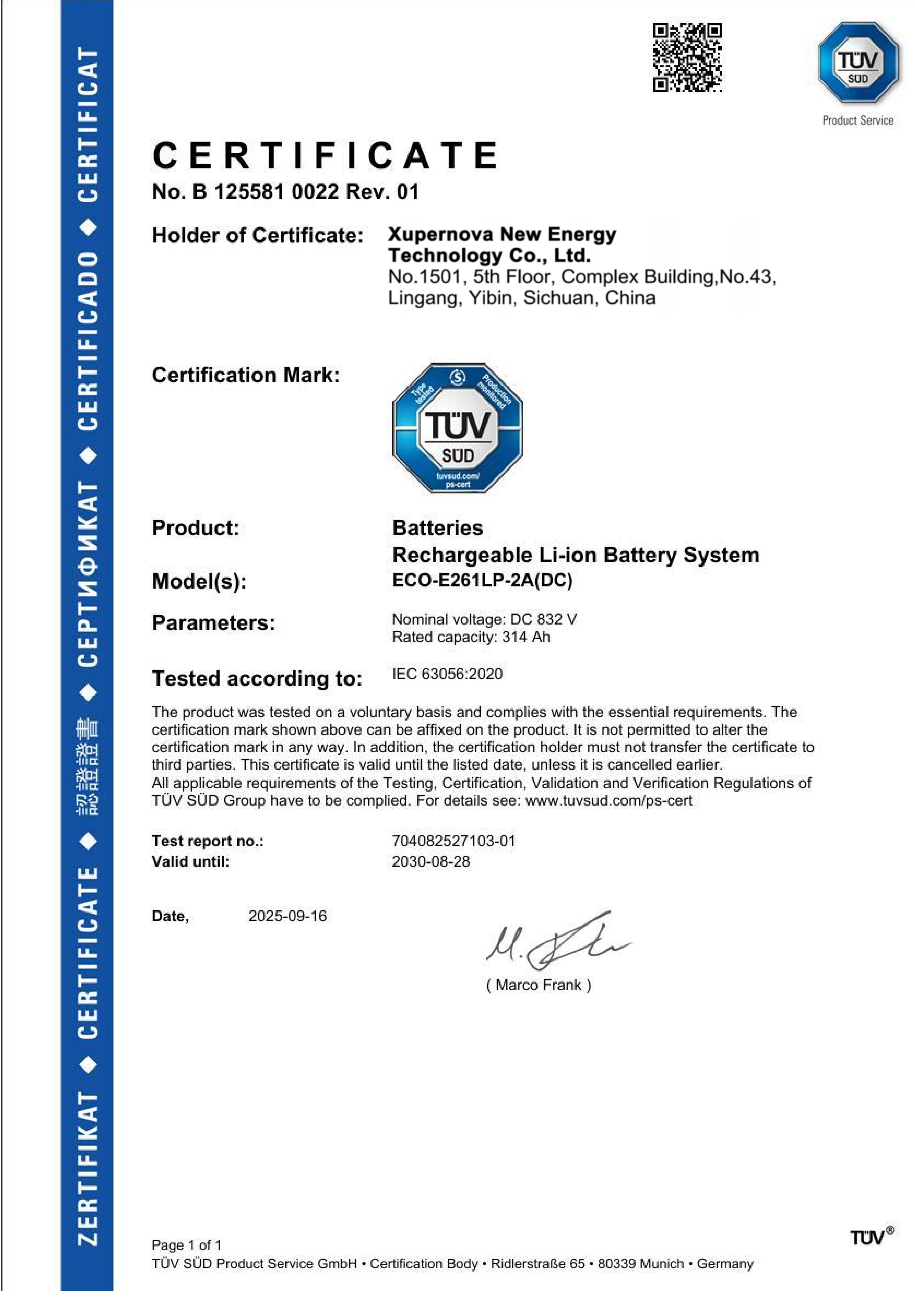
Grid-connection approvals are a documentation exercise as much as an engineering one. Xupernova's ECO-E261LP-2A energy storage system holds a CEI 0-21:2022/V2:2024 compliance document (certificate D 125581 0027 Rev. 00) and a CEI 0-16:2022/V3:2024 compliance document (D 125581 0028 Rev. 00) for the Italian market, both issued by TÜV SÜD Product Service GmbH on 22 September 2025. The same model holds an EMC Attestation of Conformity (E8A 125581 0023 Rev. 00) to EN IEC 61000-6-4:2019 and EN IEC 61000-6-2:2019, an LVD Attestation of Conformity (N8A 125581 0024 Rev. 00) to EN 62477-1:2012/A12:2021, and an IEC 63056:2020 product certificate (B 125581 0022 Rev. 01) covering the DC 832 V, 314 Ah rechargeable lithium-ion battery system. In a multi-vendor project, these documents would typically originate from different suppliers, in different formats, at different points in the project.
One commissioning plan, one warranty
Commissioning, grid-connection authorisation and performance verification follow a single sequence owned by one party. When the plant behaves unexpectedly, there is no inter-vendor diagnosis phase.
A shorter path from purchase order to energisation
End-to-end scope compresses the deployment cycle by removing the handovers between separate factory tests, separate shipment schedules and separate site mobilisations. The saving comes from eliminated coordination steps rather than from any single component being faster. For projects financed against a commercial operation date, that difference translates directly into schedule certainty.
Simpler expansion after commissioning
Modular architectures let capacity be added in defined increments. Because the added units follow the same engineering baseline, expansion does not require re-qualifying a second supplier's compatibility.
Step-by-Step: How an End-to-End BESS Is Specified, Built and Commissioned
Step 1 — Load and site assessment
The starting point is the load profile, the tariff structure, the photovoltaic generation profile where relevant, the available grid capacity and the site's environmental conditions. Applications such as peak shaving and time-of-use arbitrage depend on a load profile assessment, the applicable time-of-use tariff, grid-connection approval requirements, protection coordination and fire-safety compliance.
Step 2 — Scope definition
This is where the buyer decides whether the transformer, switchgear, protection and control, and backup functions are inside or outside the storage package. Placing them inside the scope is what makes the project end-to-end in practice rather than in name.
Step 3 — Configuration and customisation
Xupernova offers OEM/ODM customisation covering system power and energy capacity; charge/discharge duration; AC/DC voltage; battery chemistry and cell supplier; PCS, BMS and plant-level EMS; photovoltaic input and solar-plus-storage configuration; on-grid/off-grid operation; STS/EPS backup function; cooling system; fire protection system; enclosure size, colour and branding; IP rating and corrosion protection; grid code; communication protocols; and transformer and switchgear configuration.
Step 4 — Factory acceptance testing
Every unit passes 100% FAT, electrical safety testing, functional testing and aging testing, with third-party inspection available on request. Standard lead time is 25–35 days for standard BESS and 35–60 days for customised projects, with a minimum order quantity of one unit.
Step 5 — Logistics, delivery and site installation
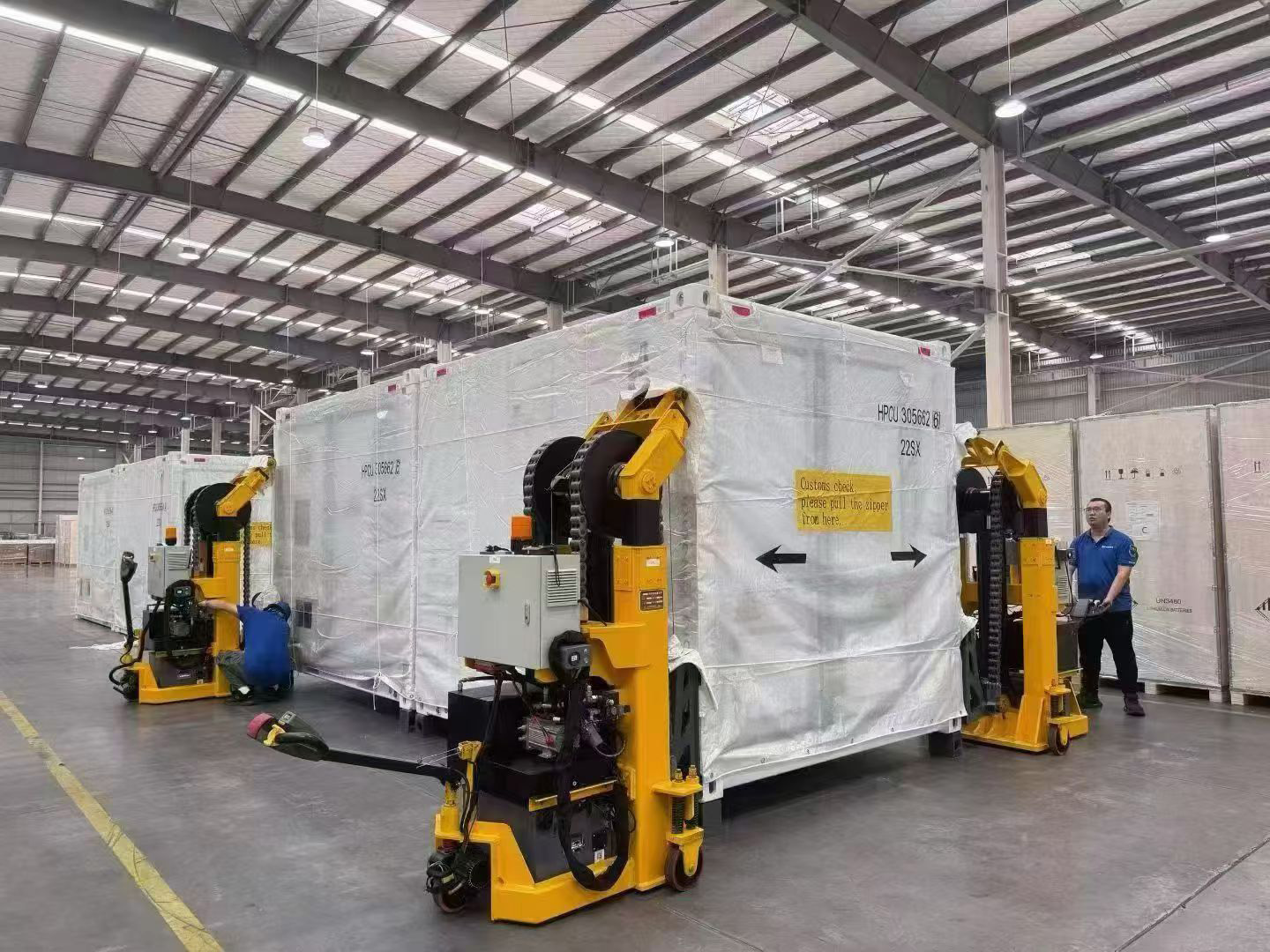
Containerized and cabinet formats are pre-assembled and pre-tested, which reduces on-site installation workload. In the supermarket deployment described below, a compact all-in-one liquid-cooled design enabled single-unit deployment with a low on-site installation workload.
Step 6 — Unified commissioning and grid connection
Commissioning covers system energisation, protection verification, EMS configuration, operating-mode testing and, where applicable, grid-connection authorisation against the applicable grid code. After-sales support includes 24/7 remote support, commissioning, training, diagnostics and spare parts, with optional on-site service.
Step 7 — Operation, monitoring and lifecycle support
Once running, plant-level EMS and remote monitoring provide the operating data used for tariff optimisation, demand-limit control and maintenance planning. Lifecycle support — diagnostics, spare parts and optional on-site service — sits with the same supplier that supplied the integrated system.
Where End-to-End BESS Configurations Are Deployed
Commercial and industrial peak shaving and time-of-use arbitrage
An industrial manufacturing enterprise deployed 20 units totalling 1 MW / 2.09 MWh for peak shaving, time-of-use energy arbitrage and demand management. The project achieved stable automatic operation, reduced peak grid demand and optimised electricity costs. Key design points included an all-in-one liquid-cooled architecture, plant-level EMS, modular deployment, IP55 protection and compatibility with German grid requirements.
Retail and commercial photovoltaic self-consumption
A supermarket and retail facility operator deployed 50 units of 125 kW / 261.248 kWh for peak shaving, time-of-use energy arbitrage and photovoltaic self-consumption. The project achieved stable daily operation, reduced peak electricity demand and improved on-site solar energy utilisation. The configuration relied on a compact all-in-one liquid-cooled design, single-unit deployment, low on-site installation workload, remote monitoring and compatibility with Italian grid requirements.
Solar-plus-storage microgrids with backup duty
A commercial and industrial park operator deployed 12 units totalling 1 MW / 2.088 MWh for a solar-plus-storage microgrid, emergency backup power and diesel generator optimisation. The project improved critical-load power continuity, increased solar energy utilisation and reduced diesel generator operating time. Integrated STS allowed grid-connected and off-grid switching, with photovoltaic and diesel generator interfaces coordinated through centralised energy management.
Utility-scale renewable integration
A renewable energy project developer deployed 7 units totalling 2 MW / 4.176 MWh for renewable energy shifting, grid balancing, peak shaving and backup power. The project improved renewable energy utilisation and energy dispatch flexibility while supporting grid stability. Its configuration included a compact 10-ft container design, integrated PCS/BMS/EMS, liquid cooling, multi-source access and G99 grid-code compatibility.
Critical-load resilience
Hospitals, data centres, government facilities and emergency services use end-to-end storage for critical-load backup, where the storage system maintains supply to selected loads during grid outages. These projects typically require a critical-load assessment, a defined backup duration, islanding protection, a black-start strategy and fire-safety compliance, with grid-forming PCS and STS/EPS where automatic transfer to islanded operation is needed.
EV charging and fleet depots
Charging hubs and logistics depots face short-duration, concentrated charging demand against limited grid capacity. An integrated storage package coordinates grid power, solar generation, battery storage and charger loads through the EMS, reducing demand peaks and using available capacity without an immediate grid upgrade.
Multi-Vendor vs. End-to-End BESS: A Decision Table
| Decision dimension | Multi-vendor purchase | End-to-end single-supplier scope |
|---|---|---|
| Engineering interface | Buyer or EPC coordinates battery, PCS, EMS, transformer and switchgear suppliers | One technical contact owns the combined design |
| Factory acceptance testing | Separate FATs per component; combined behaviour first verified on site | Single FAT covering the integrated system, plus electrical safety, functional and aging tests |
| Compliance documentation | Certificates issued per component and assembled by the buyer | Documentation issued against the storage system model as one package |
| Communication and control | Protocol and register mapping agreed between vendors after purchase | PCS, BMS and EMS configured together at the factory |
| Installation workload | Multiple mobilisations and site-level interface work | Pre-assembled, pre-tested units with reduced on-site workload |
| Commissioning | Sequenced across vendors; readiness depends on the slowest party | One commissioning plan and one energisation sequence |
| Fault diagnosis | Inter-vendor diagnosis before corrective action | Single responsible party for the integrated system |
| Warranty and support | Multiple warranty terms and support channels | One warranty scope; 24/7 remote support, commissioning, training, diagnostics, spare parts and optional on-site service |
| Expansion | Compatibility must be re-qualified with each added supplier | Modular increments follow the same engineering baseline |
Neither model is universally correct. A buyer with strong in-house engineering and existing frame agreements may deliberately split scope to capture component-level pricing. The end-to-end model becomes more attractive as project size, grid-code complexity and schedule exposure increase — which is the direction the market has moved, with 108 GW of new battery storage commissioned globally in 2025 alone.
Frequently Asked Questions
What certifications should an end-to-end BESS include for grid connection?
Grid-connection compliance evidence should be delivered as one package rather than split across suppliers. Xupernova's ECO-E261LP-2A energy storage system holds a CEI 0-21:2022/V2:2024 compliance document (certificate D 125581 0027 Rev. 00) and a CEI 0-16:2022/V3:2024 compliance document (D 125581 0028 Rev. 00) for the Italian market, both issued by TÜV SÜD Product Service GmbH on 22 September 2025. The same model holds an EMC Attestation of Conformity (E8A 125581 0023 Rev. 00) to EN IEC 61000-6-4:2019 and EN IEC 61000-6-2:2019, an LVD Attestation of Conformity (N8A 125581 0024 Rev. 00) to EN 62477-1:2012/A12:2021, and an IEC 63056:2020 product certificate (B 125581 0022 Rev. 01) for the DC 832 V, 314 Ah rechargeable lithium-ion battery system.
How do you verify that a supplier can genuinely deliver an end-to-end BESS?
Look for in-house design, manufacturing, testing and commissioning scope rather than a catalogue of third-party components. Xupernova was founded in 2015 and operates a 700,000 m² production base with 500+ employees, 150+ R&D engineers and 5 GWh+ annual capacity, with monthly output of up to 500 MWh. Its OEM/ODM customisation covers system power and energy capacity, charge/discharge duration, AC/DC voltage, battery chemistry and cell supplier, PCS, BMS and plant-level EMS, photovoltaic input, on-grid/off-grid operation, STS/EPS backup, cooling, fire protection, enclosure size, colour and branding, IP rating, grid code, communication protocols, and transformer and switchgear configuration.
What drives the cost of an end-to-end BESS project?
For long-duration (4-hour-plus) utility-scale projects, all-in project CAPEX reached $125/kWh in late 2025 according to Ember — a figure that covers the whole installed system, not the battery alone. In practice the cost depends on the scope boundary: whether transformer and switchgear configuration, STS/EPS backup, photovoltaic input, cooling type, IP rating and corrosion protection sit inside the integrated package or are procured separately, and how much customisation the site requires. Xupernova's minimum order quantity is one unit, with lead time of 25–35 days for standard BESS and 35–60 days for customised projects.
How can a buyer validate an end-to-end BESS before full deployment?
Validation starts in the factory. Xupernova quality control includes 100% factory acceptance testing, electrical safety testing, functional testing and aging testing, with third-party inspection available. Because a single unit can be ordered as a minimum order quantity, buyers can evaluate an integrated configuration through a smaller first deployment and scale from there — the pattern used by a supermarket and retail facility operator that deployed 50 units of 125 kW / 261.248 kWh for peak shaving, time-of-use arbitrage and photovoltaic self-consumption, achieving stable daily operation, reduced peak electricity demand and improved on-site solar utilisation with Italian grid-code compatibility.
How do recommended BESS manufacturers differ on lead time and support?
The practical differences usually appear after purchase order rather than in the headline specification. Xupernova quotes 25–35 days for standard BESS and 35–60 days for customised projects, and provides after-sales services covering 24/7 remote support, commissioning, training, diagnostics, spare parts and optional on-site service. Buyers evaluating recommended manufacturers should check whether those services come from the same party that supplied the battery, conversion, controls and grid-connection equipment — that single-point structure is what an end-to-end BESS is designed to deliver. Project-specific requirements can be discussed directly with the Xupernova team.
Conclusion: One Engineering Interface, One Commissioning Plan
An end-to-end BESS is defined less by its components than by who owns the space between them. Battery, BMS, PCS, thermal management, fire protection, plant-level EMS and grid-connection equipment are engineered, tested and commissioned as one system, under one engineering interface, one factory acceptance test and one warranty.
That structure matters more now than it did at pilot scale. With 108 GW of new battery storage commissioned globally in 2025, LFP accounting for roughly 90% of deployments, and all-in CAPEX for long-duration utility-scale projects reaching $125/kWh, storage projects are being approved at a scale where schedule certainty has a direct financial value. Integration is one of the few levers that improves schedule certainty without changing the underlying technology.
The evaluation question for buyers is therefore straightforward: when the plant trips at 2 a.m., how many vendors are on the call? In an end-to-end scope, the answer is one.
About the manufacturer
Xupernova New Energy Technology Co., Ltd. is a global energy storage and new energy solutions provider founded in 2015, with a 700,000 m² production base, 500+ employees, 150+ R&D engineers and 5 GWh+ annual capacity. The company exports to Europe, North America, South America, the Middle East and Asia, with an export ratio of approximately 90%, and operates a blog at blog.xupernovatech.com.
Next step: review the integrated portfolio
Download the Xupernova Energy Storage Product Catalog for full model specifications, or contact the team to discuss a configuration for your project.
Email: bill@xupernovatech.com | Tel / WhatsApp: +86 186-0828-3917 | Website: www.xupernovatech.com
Download the XUPERNOVA Energy Storage Product Catalog (PDF)
Address: East Gate of Yibin High-tech Industrial Park, Cuiping District, Yibin City, Sichuan Province, China
Have Questions or Need More Details?
Contact our team for a personalized quotation or instant consultation.
Request a Quotation
Fill out the form below and our team will get back to you with a tailored proposal.
WhatsApp Direct Chat
Prefer to chat in real-time? Message us on WhatsApp for instant assistance & quick answers.
- Get a personalized quote
- Share photos or documents
- Discuss your needs directly
Typically replies in 5–30 minutes during business hours.