
Xupernova vs. Conventional BESS: A Head-to-Head Technical Decision
Buying a battery energy storage system from one manufacturer and buying the same megawatt-hour from a multi-vendor consortium produce two different engineering projects. The cells may be similar. The system boundary is not.
Xupernova New Energy Technology Co., Ltd. (Xupernova) is a global energy storage and new energy solutions provider founded in 2015, with a 700,000 m² manufacturing base, 500+ employees, 150+ R&D engineers, 5GWh+ annual capacity and a 90% export ratio across Europe, North America, South America, the Middle East and Asia. This article puts Xupernova's integrated product family head-to-head with conventional multi-vendor BESS practice on the three variables that decide whether a project is delivered on schedule and stays economical: integration complexity, maintenance structure and system efficiency.
Head-to-head result in one paragraph: an integrated platform such as the Xupernova XA-V5015-L1 5.015 MWh liquid-cooled container arrives on site as one factory-tested unit with battery, PCS, BMS, EMS, liquid cooling and fire protection already engineered together. Xupernova's comparison of the two delivery models places the reduction in on-site integration workload at 55% versus conventional multi-vendor builds, where the same functions arrive as separate packages that the EPC must assemble, wire, commission and then keep aligned for the life of the asset.
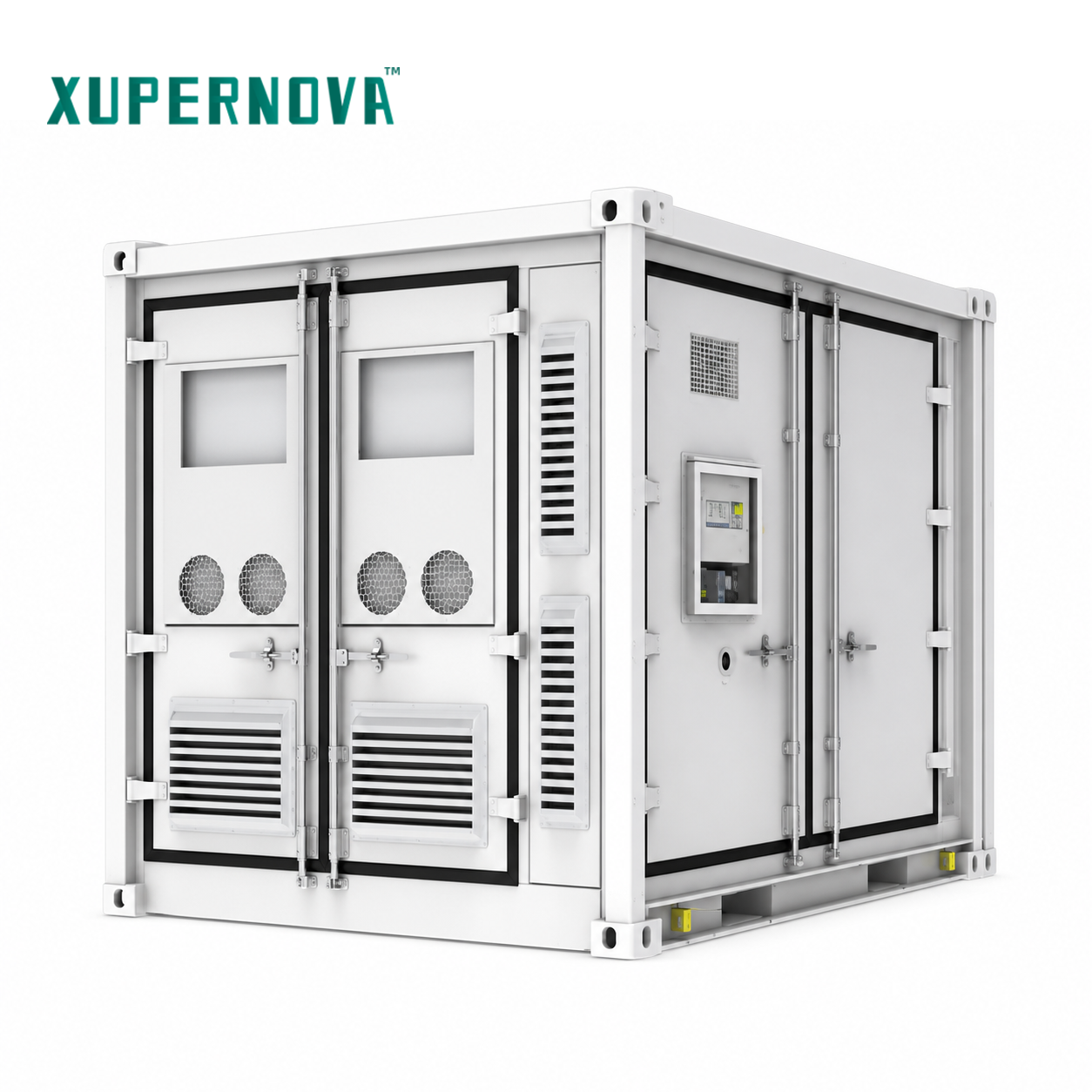
Xupernova XA-X1044-L1 10-ft liquid-cooled all-in-one ESS container: 500 kW / 1044 kWh, IP55, -30°C to 55°C.
Problem Definition: Where Conventional Multi-Vendor BESS Projects Lose Time and Margin
A conventional multi-vendor battery energy storage system is not a product. It is a procurement programme. Battery modules come from one supplier, the power conversion system from a second, the energy management system from a third, cooling and fire suppression from a fourth, and the enclosure from a fifth. Each vendor is accountable for its own box. No single party is accountable for how the whole system behaves when the grid operator issues a dispatch command at 18:00 on a peak day.
For a buyer at the Research → Evaluation stage, that structure produces three predictable failure modes.
- Interface risk. Every additional vendor adds a physical and logical interface that must be specified, tested and documented: communication mapping between PCS and EMS, BMS-to-PCS protection coordination, thermal interlocks, auxiliary power distribution and fire-detection logic. Interfaces are where commissioning schedules slip.
- Accountability gaps. When a system underperforms, the battery supplier points to the PCS, the PCS supplier points to the EMS logic, and the EMS supplier points to the cell data. Root-cause analysis becomes a commercial negotiation rather than an engineering procedure.
- Workload concentration on site. Multi-vendor delivery pushes integration labour, cabling, software configuration and site acceptance testing onto the EPC and the owner. That workload is difficult to forecast, difficult to insure and difficult to compress once the container is already on the pad.
The problem is not that multi-vendor sourcing is unreasonable. It is that the cost of the interfaces is rarely priced at the tender stage, and it reappears during commissioning and O&M.
Industry Background: Why Integration Became the Deciding Variable
Storage has moved from pilot scale to industrial scale, and the buying criteria moved with it. Global new battery storage capacity deployment reached 108 GW in 2025, according to the IEA's Global Energy Review 2026. LFP chemistry accounted for approximately 90% of global battery storage deployments in 2025, also per the IEA. The global BESS market was estimated at $50.81 billion in 2025 by MarketsandMarkets, while US utility-scale battery storage capacity growth alone was projected to reach 19.6 GW in 2025 by the U.S. Energy Information Administration. All-in CAPEX for long-duration (4-hour-plus) utility-scale projects reached $125/kWh in late 2025, based on Ember's research.
At that scale, cell price is no longer the decisive variable — it is simply the most transparent one. Engineering hours, commissioning days, spare-part inventories and O&M headcount are the costs that decide whether a project stays inside its operating budget over a fifteen-year horizon. Integration is therefore not a convenience feature. It is a cost structure.
Two regulatory and trade realities reinforce the same conclusion. First, market-specific grid codes — Italy's CEI 0-21 and CEI 0-16, or the UK's G99 — are certified per product and per configuration, not per component, so a compliant system boundary matters more than a compliant bill of materials. Second, for importers modelling landed cost, a BESS fully encased in housing is classified under US HTS 8507.60.00.90 in the Harmonized Tariff Schedule 2026 published by the USITC, which places the classification question at the level of the assembled system rather than the individual cell.
The Xupernova Integrated Architecture in Detail
Xupernova's design answer to fragmentation is simple to state: ship a tested system boundary. Power conversion, battery management, plant-level energy management, liquid cooling, fire protection and the enclosure are engineered as one unit and delivered as one factory-accepted item.
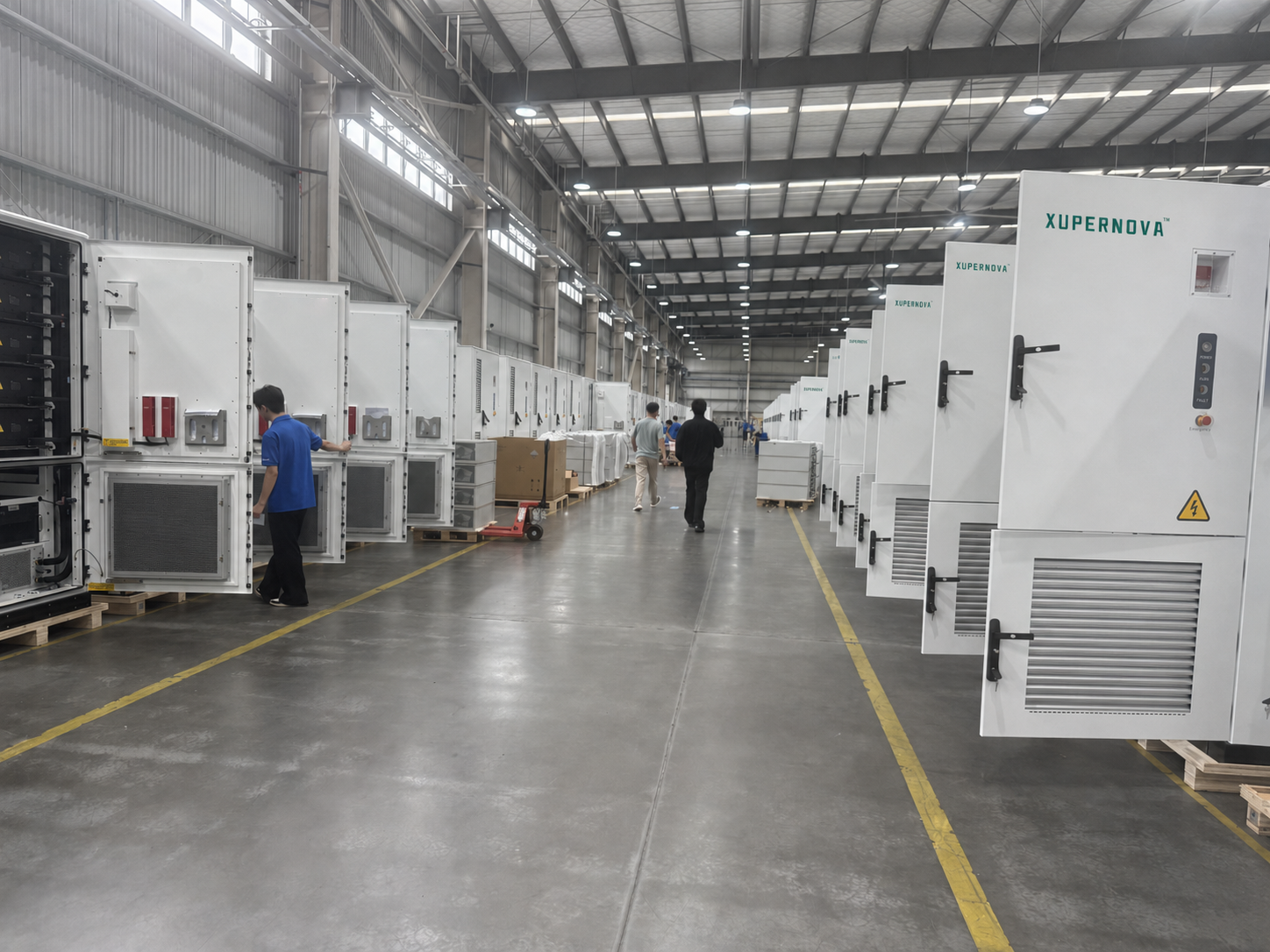
Enclosure, power conversion, battery management and energy management are engineered inside one manufacturing scope.
Reduced on-site integration workload
Xupernova's comparison with conventional multi-vendor BESS places the reduction in on-site integration workload at 55%. The mechanism is structural rather than incremental: when PCS, BMS and plant-level EMS leave the factory already mounted, wired, addressed and functionally tested inside the same enclosure, the site no longer hosts a multi-party assembly and software-integration phase.
One control layer instead of several
Each Xupernova unit exposes a single control layer: one BMS per unit, one plant-level EMS, one communication path to the site meter and SCADA, and one firmware stream to maintain. In a multi-vendor build, the equivalent scope is split across at least three vendors and two or three protocol conversions. Fewer control layers mean fewer points where a firmware update on one device invalidates the configuration of another.
Cell sourcing discipline
All Xupernova BESS products use Grade A LFP lithium-ion cells sourced from BloombergNEF Tier 1 energy-storage cell manufacturers. Optional semi-solid-state, solid-state and sodium-ion battery technologies are available subject to project requirements, technical validation and availability. Cell sourcing is therefore a documented specification rather than a variable negotiated separately between component suppliers.
Thermal and environmental envelope as a system property
Xupernova platform products are rated IP55 for outdoor installation and operate from -30°C to 55°C. The 261 kWh C&I cabinet, the 10-ft and 20-ft containers and the 5.015 MWh battery container share that envelope. In a multi-vendor build, the same envelope must be validated across the battery, the PCS and the cooling package separately, and a weak point in any one of them becomes the limit of the whole system.
Maintenance without vendor triage
Maintenance on an integrated system follows one spare-parts catalogue, one remote diagnostic channel and one escalation path. Xupernova provides 24/7 remote support, commissioning, training, diagnostics, spare parts and optional onsite service. On a multi-vendor site, the same fault may require two or three service tickets before a technician is even dispatched.
Manufacturing base behind the integration claim
Integration is credible only if the manufacturing scope supports it. Xupernova operates a 700,000 m² facility with 150+ R&D engineers, 5GWh+ annual capacity and monthly output of up to 500 MWh. Quality control covers 100% factory acceptance testing, electrical safety testing, functional testing and aging testing, with third-party inspection available on request.
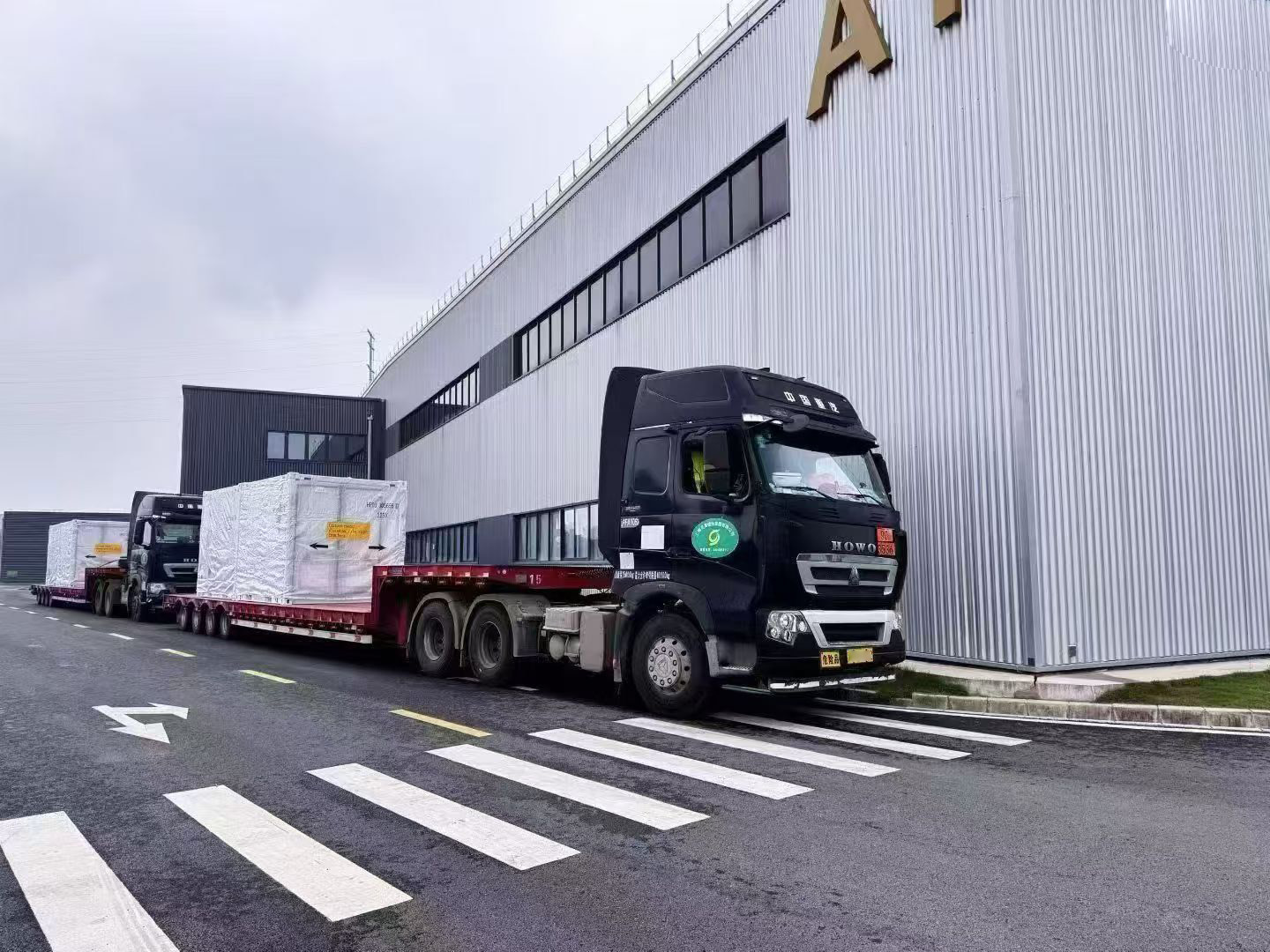
Every Xupernova unit passes 100% factory acceptance testing, electrical safety testing, functional testing and aging testing before shipment.
Step-by-Step: How to Run a Fair Head-to-Head Evaluation
The comparison only produces a decision if both options are measured on the same basis. Six steps handle that.
- Write the system boundary down. Define exactly what is inside the contract: cells, modules, rack, BMS, PCS, EMS, cooling, fire protection, enclosure, auxiliary transformer, switchgear and commissioning. A multi-vendor tender that lists components and an integrated quotation that lists a system are not comparable until both are drawn at the same boundary.
- Count the interfaces, not the components. Map every physical and logical interface between packages and assign an owner to each. Interface count is one of the most reliable predictors of commissioning duration on storage projects.
- Quantify on-site integration workload. Ask each bidder for the field tasks remaining after delivery: mechanical assembly, DC and AC cabling, communication wiring, software configuration, point-to-point testing and site acceptance testing. This is the line item where integrated delivery separates from multi-vendor delivery.
- Compare the maintenance structure, not the maintenance price. Ask how many vendors must be contacted for a single fault, whether spares are single-sourced, and whether remote diagnostics cover the entire system or only one package.
- Verify compliance evidence market by market. Request the certificate number, issuing body, standard revision and product model for every target market. Compliance attaches to a configured product, so a certificate covering a component does not automatically transfer to a system assembled from mixed suppliers.
- Compare commercial terms on the same scope. Align lead time, minimum order quantity, warranty boundary, spare-parts commitment and after-sales coverage before comparing headline figures.
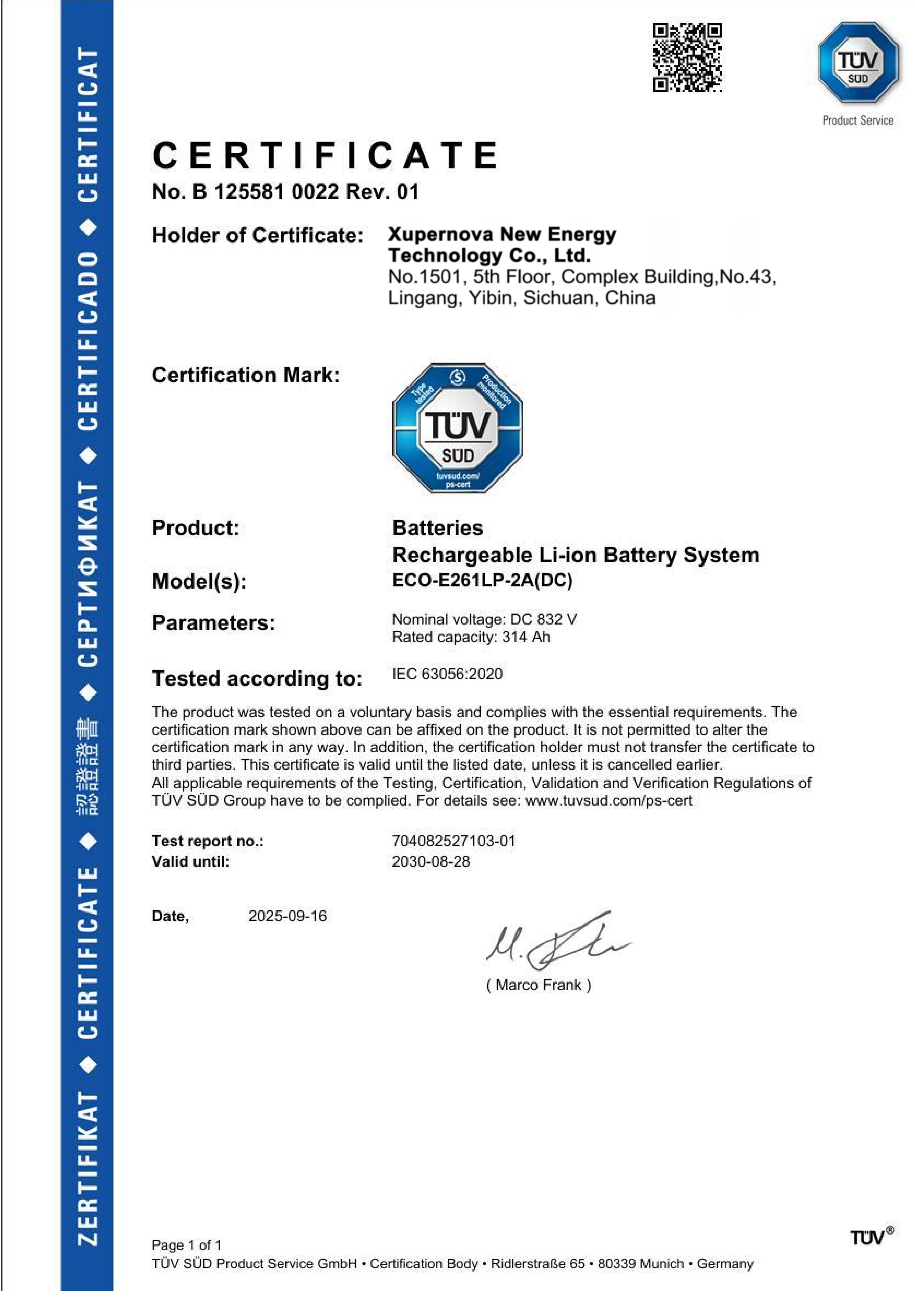
Market-specific compliance evidence, such as the IEC 63056:2020 certificate for the ECO-E261LP-2A, is issued against a configured product rather than a single component.
Use Cases: Where the Integrated Model Changes the Outcome
Integrated delivery is not a theoretical advantage. Xupernova's deployed references show where the difference appears.
- Retail and supermarket multi-site rollout. A retail facility operator deployed 50 units of 125 kW / 261.248 kWh for peak shaving, time-of-use energy arbitrage and photovoltaic self-consumption. After one year of operation the system runs stable daily cycles with reduced peak electricity demand and improved onsite solar utilisation. The recorded highlights are the compact all-in-one liquid-cooled design, single-unit deployment, low onsite installation workload, remote monitoring and compatibility with Italian grid requirements.
- Industrial manufacturing peak shaving. An industrial manufacturing enterprise installed 1 MW / 2.09 MWh across 20 units for peak shaving, time-of-use arbitrage and demand management. After two years the site reports stable automatic operation, reduced peak grid demand and optimised electricity costs, supported by all-in-one liquid-cooled design, plant-level EMS, modular deployment, IP55 protection and compatibility with German grid requirements.
- Solar-plus-storage microgrid with diesel optimisation. A commercial and industrial park operator deployed 1 MW / 2.088 MWh across 12 units for a solar-plus-storage microgrid, emergency backup power and diesel generator optimisation. Over seven years of operation the outcome is improved critical-load continuity, higher solar energy utilisation and reduced diesel generator operating time, enabled by integrated STS, grid-connected and off-grid switching and centralised energy management.
- Solar-plus-storage for EPC contractors. A commercial facility and solar EPC contractor installed 500 kW / 1.044 MWh with up to 1 MW PV input across 32 units. Over five years the system increased solar self-consumption, reduced daytime peak demand and optimised energy costs using a liquid-cooled solar-plus-storage design, wide PV input range, modular expansion and plant-level EMS.
- Utility-scale renewable integration. A renewable energy project developer deployed 2 MW / 4.176 MWh across 7 units for renewable energy shifting, grid balancing, peak shaving and backup power. Over four years the reported result is improved renewable energy utilisation, flexible energy dispatch and enhanced grid stability, supported by a compact 10-ft container design, integrated PCS/BMS/EMS, liquid cooling, multi-source access and G99 grid-code compatibility.
Comparison Table: Xupernova Integrated BESS vs Conventional Multi-Vendor BESS
The table below compares the two delivery models on dimensions a buyer can verify during technical evaluation.
| Evaluation dimension | Xupernova integrated BESS | Conventional multi-vendor BESS |
|---|---|---|
| System boundary | Single supplied unit: cells, BMS, PCS, EMS, liquid cooling, fire protection and enclosure engineered together | Component packages sourced from separate suppliers and combined by the EPC |
| On-site integration workload | Reduced by 55% versus conventional multi-vendor builds (Xupernova comparison) | Full field assembly, wiring, software configuration and multi-party commissioning |
| Control layer | One BMS per unit and one plant-level EMS; single communication path | Multiple vendor control layers with protocol conversion between them |
| Thermal management | Liquid cooling across containers and cabinets, IP55, -30°C to 55°C operating range | Thermal design split between battery, PCS and cooling suppliers; envelope limited by the weakest package |
| Cell sourcing | Grade A LFP from BloombergNEF Tier 1 cell manufacturers; optional semi-solid-state, solid-state and sodium-ion subject to validation and availability | Dependent on the sourcing policy of each individual supplier |
| Compliance evidence | Certificates issued per configured product, including IEC 63056:2020, CEI 0-21, CEI 0-16, EMC and LVD attestations by TÜV SÜD Product Service GmbH | Certificates typically cover single components and must be re-assessed at system level |
| Maintenance structure | One spares catalogue, one remote diagnostics channel, 24/7 remote support, commissioning, training and optional onsite service | Multiple service contracts and a shared escalation path |
| Lead time | 25–35 days for standard BESS; 35–60 days for customised projects | Governed by the slowest component package in the consortium |
| Minimum order quantity | 1 unit | Dependent on each supplier's MOQ |
| Capacity coverage | 64.54 kWh to 5.015 MWh across cabinet and container platforms | Assembled to project specification per site |
Product Parameters Behind the Comparison
Integration claims are only meaningful against published specifications. The table below lists the core parameters of the Xupernova platforms referenced in this article.
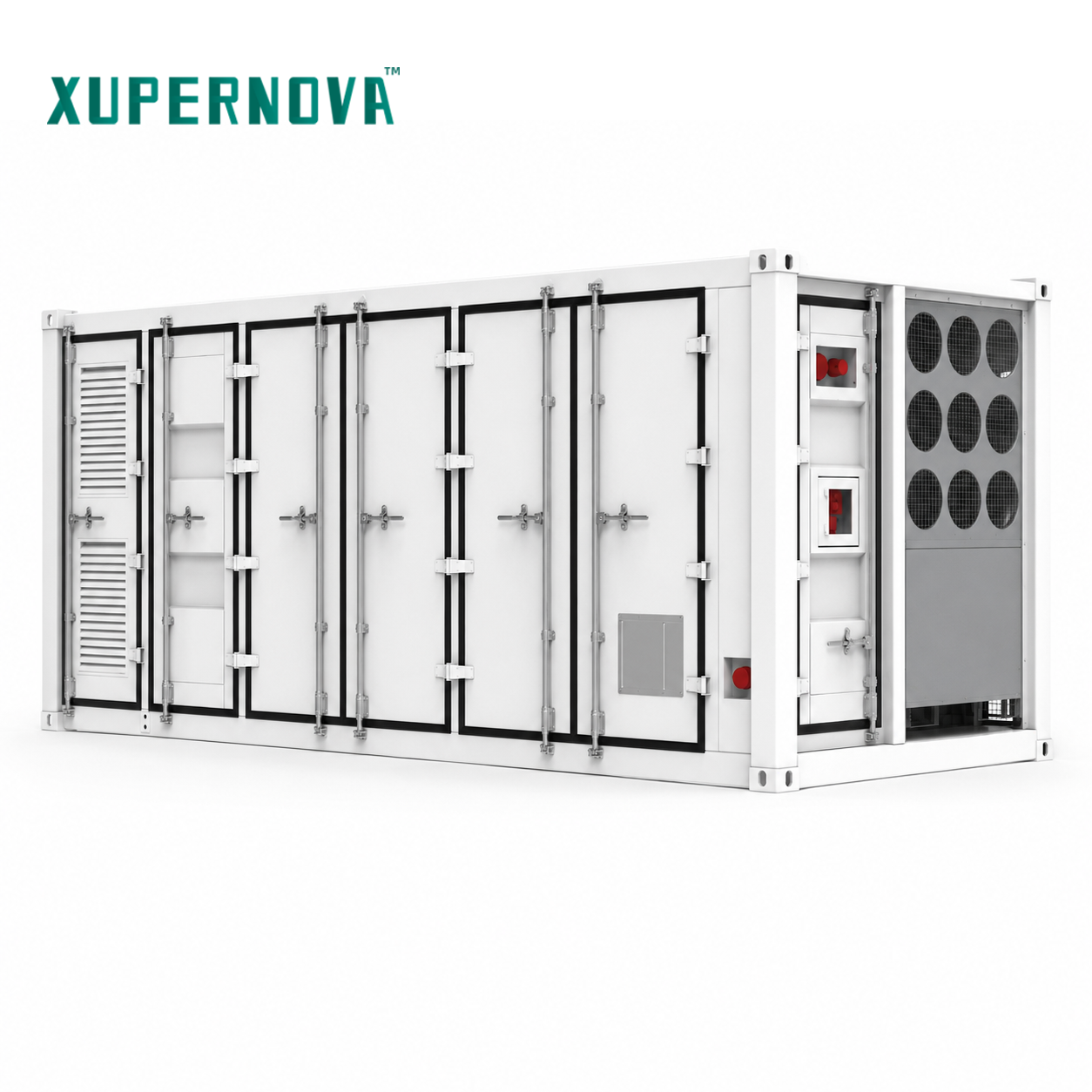
Xupernova XA-X2170-L2: 20-ft liquid-cooled all-in-one ESS container rated 1125 kW / 2170.3 kWh.
| Model | Product type | Rated power / capacity | Cooling & envelope | Typical application |
|---|---|---|---|---|
| XA-H0064-A1 | Air-cooled solar-plus-storage cabinet | 25–50 kW / 64.54 kWh, 0.5P/1P/2P | Air-cooled, IP55, -30°C to 55°C | Small-scale commercial and industrial solar-plus-storage |
| XA-C0261-L1 | Liquid-cooled all-in-one ESS cabinet | 125 kW / 261.25 kWh, 0.5P/1P/2P | Liquid-cooled, IP55, -30°C to 55°C | Commercial and industrial energy storage |
| XA-H0261-L1 | Liquid-cooled solar-plus-storage cabinet | 261 kWh, 0.5P/1P/2P | Liquid-cooled, IP55, -30°C to 55°C | Commercial and industrial solar-plus-storage, microgrids |
| XA-X1044-L1 | 10-ft liquid-cooled all-in-one ESS container | 500 kW / 1044 kWh, 0.5P/1P/2P | Liquid-cooled, IP55, -30°C to 55°C | C&I energy storage, microgrids, backup power |
| XA-X2170-L2 | 20-ft liquid-cooled all-in-one ESS container | 1125 kW / 2170.3 kWh, 0.5P/1P/2P | Liquid-cooled, IP55, -30°C to 55°C | C&I energy storage, grid-side energy storage |
| XA-V5015-L1 | 20-ft liquid-cooled battery container | 5.015 MWh, 0.5P/1P/2P | Liquid-cooled, IP55, -30°C to 55°C | Power generation, grid energy storage, C&I energy storage |
Frequently Asked Questions
Which certifications apply to the Xupernova 261 kWh C&I platform?
The ECO-E261LP-2A Energy Storage System (125 kW, 261.248 kWh, IP55) holds an IEC 63056:2020 product certificate issued by TÜV SÜD Product Service GmbH under certificate number B 125581 0022 Rev. 01 for the global market. For Italy it is certified to CEI 0-21:2022/V2:2024 under certificate number D 125581 0027 Rev. 00 and to CEI 0-16:2022/V3:2024 under certificate number D 125581 0028 Rev. 00. For the EU market it is covered by an EMC Attestation of Conformity (E8A 125581 0023 Rev. 00) against EN IEC 61000-6-4:2019 and EN IEC 61000-6-2:2019, and by an LVD Attestation of Conformity (N8A 125581 0024 Rev. 00) against EN 62477-1:2012/A12:2021.
Can Xupernova customise the PCS, BMS and EMS for a specific grid code or project?
Yes. Xupernova operates an OEM/ODM model covering system power and energy capacity, charge/discharge duration, AC/DC voltage, battery chemistry and cell supplier, PCS, BMS and plant-level EMS, photovoltaic input and solar-plus-storage configuration, on-grid/off-grid operation, STS/EPS backup function, cooling system, fire protection system, enclosure size, colour and branding, IP rating and corrosion protection, grid code, communication protocols, and transformer and switchgear configuration.
How should an integrated BESS be budgeted against a multi-vendor build?
Budget the system boundary, not the bill of materials. For reference, all-in CAPEX for long-duration (4-hour-plus) utility-scale projects reached $125/kWh in late 2025 according to Ember. The cost lines that move between the two models are field integration labour, commissioning duration, multi-vendor spares inventory and O&M staff time — not the cell price. Xupernova does not publish list prices; project-specific quotations are prepared against a defined scope, and the minimum order quantity is one unit, which allows a single-platform pilot to be costed before a multi-site rollout.
Can a single unit be ordered as a validation sample?
Yes. The minimum order quantity is one unit. Every unit is subject to 100% factory acceptance testing, electrical safety testing, functional testing and aging testing, and third-party inspection is available. A single-unit pilot is therefore a practical way to validate the integrated boundary against a multi-vendor package before committing to a larger rollout.
What lead times should be planned for?
Standard BESS configurations ship in 25–35 days, and customised projects in 35–60 days, with monthly output of up to 500 MWh. Because the entire system is manufactured and tested inside one scope, lead time is quoted as a single number rather than as the slowest of several vendor packages. To confirm a delivery window for a specific project, share the capacity, grid code and site conditions with the Xupernova team.
Conclusion: The Decision Rule
The head-to-head comparison reduces to a single question: who owns the interfaces? In a conventional multi-vendor BESS, the owner and the EPC own them, and the cost appears later as commissioning delay and split accountability. In an integrated platform such as the Xupernova XA-V5015-L1, the interfaces are owned by the manufacturer before the container leaves the factory, which is what produces the 55% reduction in on-site integration workload and the single maintenance path described above.
For buyers in the Research → Evaluation stage, the practical test is straightforward. Ask each candidate supplier to draw the system boundary, list the interfaces it owns, and produce market-specific certificates by product model. The bid that can answer all three without referring to a third party is the integrated one.
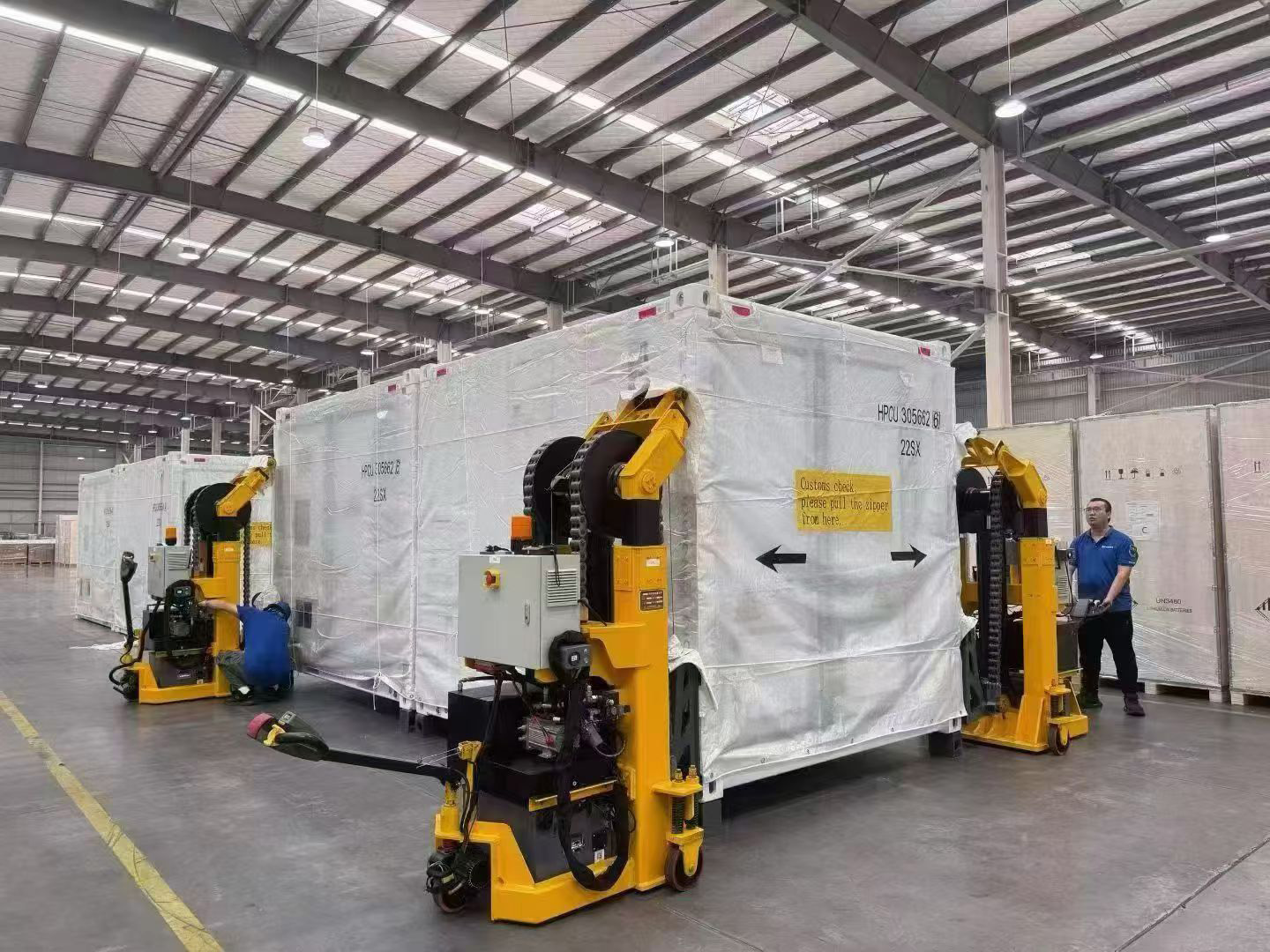
Single-unit sample validation, commissioning support and remote diagnostics are handled inside the same supplier scope.
Next Step: Validate the Integrated Boundary on Your Own Project
Xupernova supplies energy storage solutions across commercial and industrial, utility-scale, microgrid, solar-plus-storage and backup power applications, with 24/7 remote support and one-on-one consultation. To compare an integrated Xupernova platform against a multi-vendor package for a specific site:
- Request a unit sample or pilot quotation — minimum order quantity is 1 unit.
- Share your capacity, target grid code and site conditions for a scope-based quotation.
- Download the full Xupernova Energy Storage Product Catalog.
- Contact: Bill Liao — bill@xupernovatech.com | Tel / WhatsApp: +86 186-0828-3917 | Website: www.xupernovatech.com
Have Questions or Need More Details?
Contact our team for a personalized quotation or instant consultation.
Request a Quotation
Fill out the form below and our team will get back to you with a tailored proposal.
WhatsApp Direct Chat
Prefer to chat in real-time? Message us on WhatsApp for instant assistance & quick answers.
- Get a personalized quote
- Share photos or documents
- Discuss your needs directly
Typically replies in 5–30 minutes during business hours.