Beyond the First Order: Building a Jewelry Wholesale Partnership That Lasts
Beyond the First Order: Building a Jewelry Wholesale Partnership That Lasts
Most jewelry wholesale conversations focus on a single purchase: compare quotes, check minimum order quantities, select a few designs, and ship the goods. In a retail, e-commerce, or distribution business, the real value of jewelry wholesale is different. It lives after the first order, in the ability to replenish fast-moving necklaces, rotate earrings and bracelets, keep quality consistent, and expand into custom jewelry wholesale without starting the supplier search again.
This article is written for buyers who are already at the decision or execution stage. They are not asking “What is jewelry wholesale?” They are asking: “How do I turn a promising supplier conversation into a dependable, long-term wholesale channel?” The answer is not a single product or price quote. It is a supply ecosystem built around depth of catalog, manufacturing control, low-cost small-batch testing, design support, compliance, and after-sales.
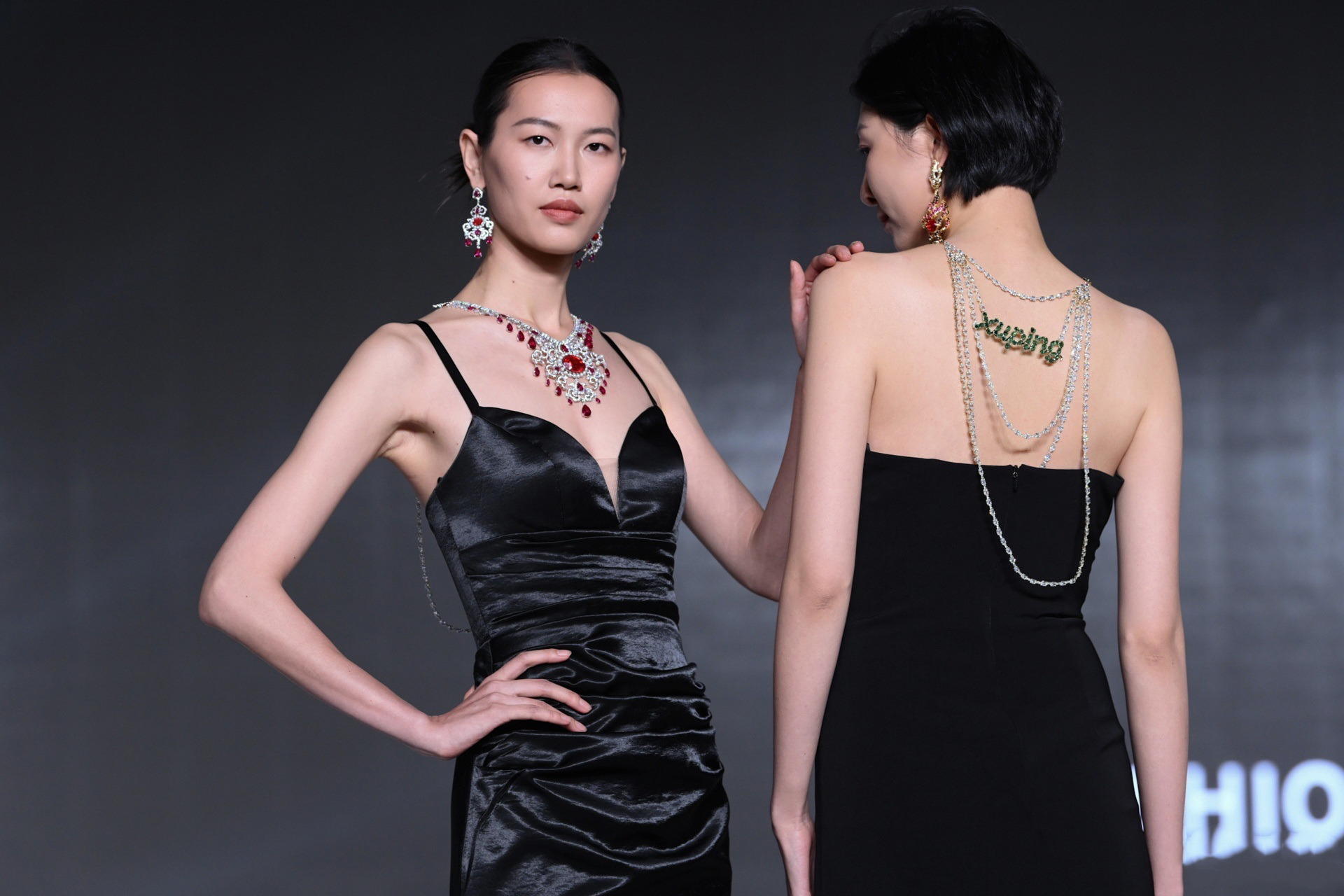
Xuping Jewelry fashion showcase. Source: Xuping Jewelry corporate image library.
The importance of making this transition well is increasing. Market-size estimates for the global jewelry market in 2025 range from roughly USD 242.79 billion in one assessment by Fortune Business Insights to about USD 381.5 billion in another by Grand View Research, with some projections reaching as high as USD 578.5 billion by 2033. Online jewelry channels are projected to grow at 8-13% annually and may represent 25-30% of industry purchases by 2026. Meanwhile, China’s total jewelry exports reached USD 11.5 billion in 2024, with the United States as a primary destination accounting for USD 1.31 billion. Buyers now have more sourcing options online than ever before, but more options also mean more uncertainty about which supplier can actually sustain a multi-order relationship.
Why Single-Order Wholesale Leaves Buyers Exposed
The common failure in jewelry wholesale is not a bad first shipment. The common failure is continuity. A business can survive one delayed delivery, but it struggles when every reorder brings a different plating shade, a different stone setting, or a different quality standard.
Single-order buyers usually face a familiar set of problems:
First, they must re-qualify the supplier for every new category. If a retailer starts with necklaces and later wants rings, bangles, earrings, or jewelry sets, the search process restarts. Second, quality control becomes harder when a middleman handles manufacturing. The buyer sees product photos, not the production line. Third, when a new style or custom design is needed, a traditional wholesale distributor may not provide OEM/ODM services. Fourth, if a shipment arrives damaged or does not match the order, the buyer has little leverage unless the supplier has a formal after-sales agreement.
Compliance adds another layer. In the European Union, REACH Regulation (EC) 1907/2006 sets clear limits for jewelry: nickel release must not exceed 0.5 micrograms per square centimeter per week, lead must stay below 500 milligrams per kilogram, and cadmium must stay below 100 milligrams per kilogram. Jewelry intended for children under 14 in the EU may also be classified as a toy and require CE marking under the Toy Safety Directive 2009/48/EC. A one-time seller without proper factory-level testing cannot easily provide the documentation a distributor needs to sell with confidence.
In other words, the risk of a transactional approach is not just a higher unit price. It is lost time, wasted inventory, compliance exposure, and an assortment that cannot evolve quickly enough for fashion jewelry wholesale.
How Wholesale Jewelry Sourcing Is Changing
The wholesale jewelry industry is not standing still. The growth of online wholesale channels is pushing buyers toward suppliers that can fulfill smaller mixed orders quickly. At the same time, European and American buyers are applying stricter compliance standards to plated metal accessories, cubic zirconia pieces, and stainless steel lines.
These two forces reward manufacturers with scale. A factory that already invests in design, tooling, plating, stone setting, inspection, and export logistics is better positioned to support a long-term wholesale relationship than a small workshop or an intermediary trading desk. This is especially true for fashion-oriented wholesale categories where styles change quickly and demand is spread across many small and medium-sized buyers.
Global buyers are also paying more attention to stainless steel jewelry. Independent market projections suggest the global stainless steel jewelry market could reach USD 10.8 billion by 2035, growing at a compound annual rate of 4.3% from 2026. Stainless steel pieces are relevant for wholesalers who want durable, lower-maintenance items alongside gold-plated fashion goods.
For wholesalers, the practical implication is straightforward: the buyer should select a partner that offers both trend-driven plated products and durable material alternatives, with one quality system covering the entire catalog.
What a Long-Term Jewelry Wholesale Partner Should Provide
Guangdong Xuping Jewelry Co., Ltd. is a Guangzhou-based manufacturer founded in 1997. The company describes itself as a comprehensive enterprise integrating R&D, design, manufacturing, wholesale trade, and e-commerce. Xuping Jewelry focuses on fashion-imitation jewelry and exports to over 100 countries and regions, covering markets in Europe, America, the Middle East, Southeast Asia, and Africa.
For a wholesale buyer, the first relevant fact is physical capacity. Xuping Jewelry operates a modern production base covering more than 200,000 square meters and is equipped with more than 1,200 advanced production facilities. The company’s monthly production capacity is 8,000,000 pieces, and its stated annual output exceeds 100,000,000 pieces. These numbers do not replace quality standards, but they explain how a single manufacturer can serve thousands of wholesale orders without making each buyer wait months for a production slot.
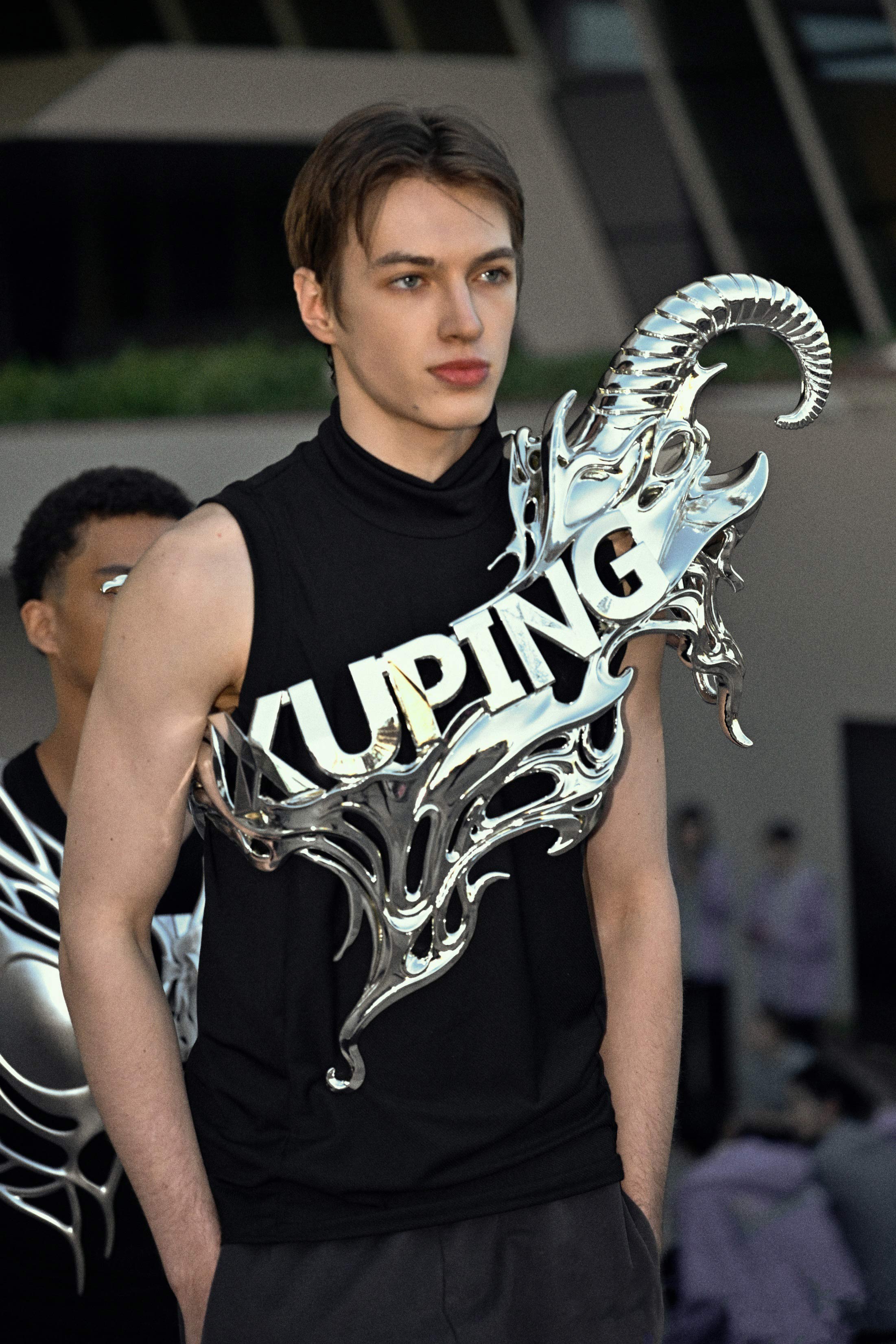
Fashion show display of Xuping Jewelry styles.
The second relevant fact is assortment depth. Xuping Jewelry’s product range includes rings, pendants, earrings, bracelets, necklaces, anklets, bangles, and jewelry sets. The portfolio also includes crystal jewelry and stainless steel jewelry models, giving a wholesaler more options to build balanced order sheets. Many items are made with environmental copper as the base material and use gold-plating techniques; stainless steel models offer another choice for everyday wear. In the product catalog, synthetic cubic zirconia and synthetic crystal are common stone options, which helps wholesalers maintain value-conscious fashion assortments.
The third relevant fact is design capacity. Xuping Jewelry has an R&D unit with 62 designers and reports 194 patents. For a jewelry wholesale buyer, design capacity matters because it supports regular style refreshes, seasonal releases, and custom product development without moving to an entirely new factory. The company also positions itself around both one-stop wholesale and OEM/ODM customization, meaning a buyer can start with standard styles and later add private-label or custom jewelry wholesale programs.
The fourth element is quality and compliance. Xuping Jewelry states that its products hold international certifications including SGS, CE, and ISO. All goods are processed through 18 production procedures and are designed to meet European and American environmental-protection standards. In practice, a wholesale buyer should still request product-specific documentation, inspect pre-production samples, and use third-party testing where the destination market requires it. But a supplier with an existing certification framework is a better starting point for long-term compliance than a supplier that must build one from zero.
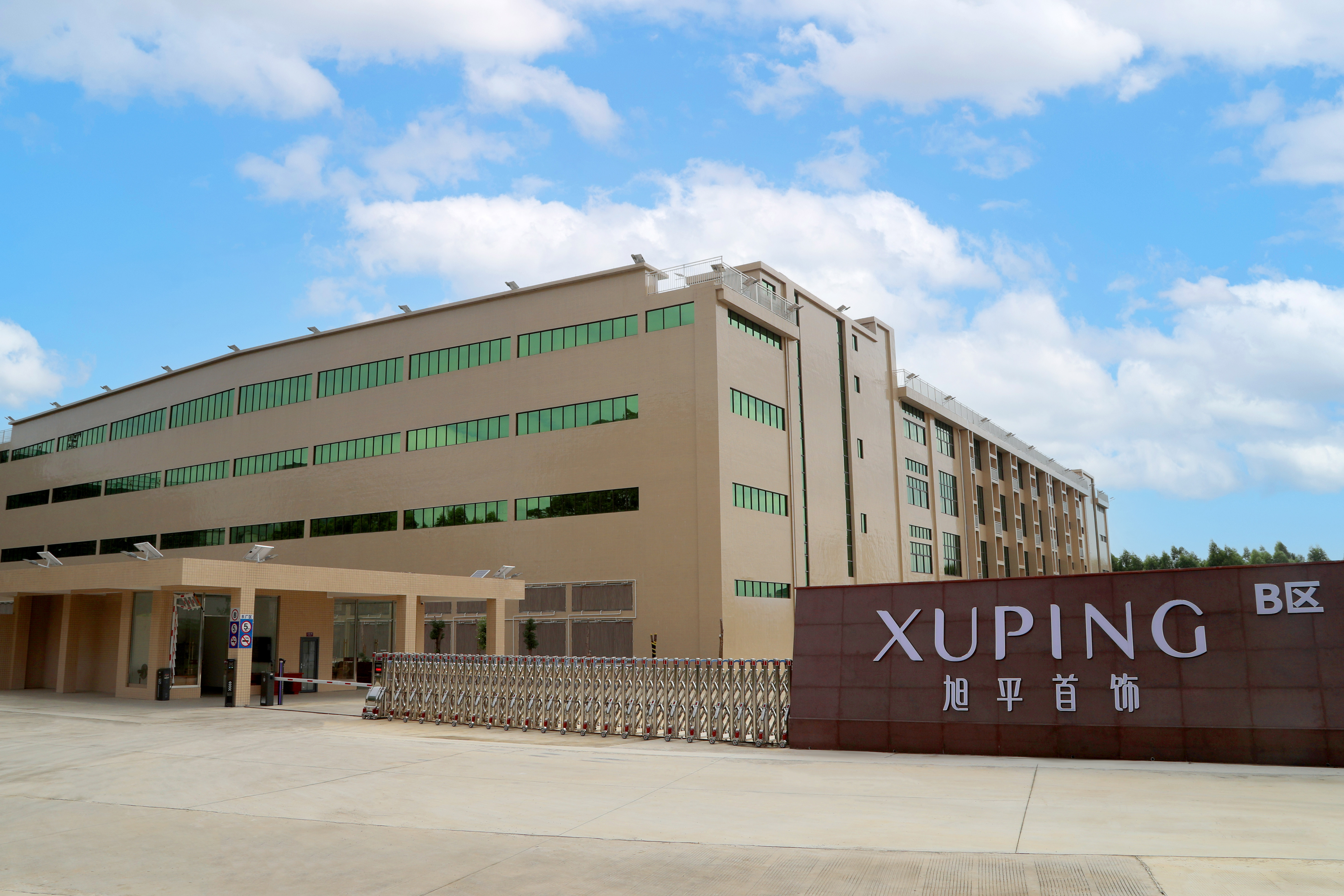
Xuping Jewelry factory environment. Source: Xuping Jewelry corporate image library.
The fifth element is commercial flexibility. Xuping Jewelry supports low minimum order quantities and small-batch mixed wholesale orders. For a boutique, online store, or regional distributor, this reduces the financial pressure of filling a container with styles that may not sell. The procurement profile also lists payment options including PayPal, Western Union, MoneyGram, Bank of China, and HSBC, with FOB delivery terms and pre-shipment testing as part of the acceptance process.
Finally, after-sales terms should be part of the initial execution plan. Xuping Jewelry states that it will exchange or return goods when certain non-man-made quality problems occur, including when goods do not conform to the customer’s order and when goods are damaged during transportation. This is not a blanket policy for buyer preference, abnormal wear, or change of mind. But for wholesale execution, having a defined channel for defective or mis-shipped product removes one of the biggest anxieties of relying on a distant factory.
A Scorecard to Evaluate Long-Term Wholesale Fit
Before scaling an order, a wholesale buyer should be able to connect each long-term requirement to a concrete supplier fact. The table below is built only from Xuping Jewelry’s current corporate profile and published sourcing terms.
| Selection Criterion | Why It Matters During Execution | Evidence in Xuping Jewelry’s Profile |
|---|---|---|
| Manufacturing ownership | Direct control reduces communication gaps and intermediary cost layers. | Direct manufacturer based in Guangzhou, founded in 1997, with 200,000+ square meters of modern production base. |
| Catalog breadth | One supplier should cover multiple women’s fashion accessory categories. | Rings, pendants, earrings, bracelets, necklaces, anklets, bangles, jewelry sets, crystal jewelry, and stainless steel models are available. |
| MOQ flexibility | Lets buyers test new categories without committing to excessive volume. | Low MOQ and small-batch mixed wholesale orders are supported to reduce the financial burden for small and medium-sized buyers. |
| Customization capability | Enables private-label and custom jewelry wholesale after the core assortment is proven. | OEM/ODM customization available, with 62 designers and 194 patents reported. |
| Quality and certification | Protects access to regulated markets. | SGS, CE, and ISO certifications listed; all goods pass through 18 production procedures to meet European and American environmental-protection standards. |
| After-sales terms | Creates a recovery path when goods arrive damaged or do not match the order. | Return or exchange is promised for certain non-man-made quality problems, including non-conforming orders and transit damage. |
| Production and export scale | Determines whether the same factory can support repeat orders and future growth. | Monthly production capacity is 8,000,000 pieces; annual output exceeds 100,000,000 pieces; exports to 100+ countries and regions. |
Decision to Execution: A Step-by-Step Wholesale Playbook
A long-term jewelry wholesale partnership should not be activated with one large purchase order. It is safer to move through a structured sequence that generates evidence at each stage.
Step 1: Map the Categories Your Business Needs to Offer
Start with a product map. If the business sells complete outfits, the map may include necklaces, earrings, bracelets, rings, and jewelry sets. If customers ask for everyday minimal pieces, stainless steel and simple gold-plated styles may be the core. If the plan is to sell higher perceived value at a moderate price, cubic zirconia and crystal-set pieces become important. A broad supplier like Xuping Jewelry can support this map, but the buyer should define the mix before placing the first order.
Step 2: Verify Compliance and Quality Systems Before the First Order
The buyer should confirm what quality documentation will be shipped with the goods. For Xuping Jewelry, the relevant baseline facts include SGS, CE, and ISO certifications, plus 18 production procedures intended to meet European and American environmental-protection standards. If the destination is the EU, the buyer should also prepare for REACH requirements, including nickel release, lead, and cadmium limits. This step is not about collecting paperwork. It is about confirming that the supplier can produce to the standards the wholesale channel needs.
Step 3: Start With a Small Mixed Wholesale Order
The advantage of low MOQ and mixed-batch ordering is that a buyer can test assortment without betting the entire budget. A first order should include a limited number of styles across different categories so the business can compare sell-through rates. During this phase, the buyer should confirm FOB terms and choose a payment method that offers traceability. Xuping Jewelry’s published payment options include PayPal, Western Union, MoneyGram, Bank of China, and HSBC.
Step 4: Use Pre-Shipment Testing and Inspection as a Routine
Pre-shipment acceptance is not a one-time requirement. Every batch should be checked before payment releases or before the goods are handed to the freight forwarder. Because Xuping Jewelry processes all goods through 18 production procedures, the manufacturer has a defined workflow, but wholesale buyers should still use samples and batch checks to validate what they receive. If a non-conforming shipment occurs, the buyer should follow the supplier’s returns and exchanges process and document the order ID and reason.
Step 5: Plan Replenishment Around Real Factory Capacity
When a style sells out, the next order should arrive quickly enough to protect momentum. Xuping Jewelry’s monthly production capacity of 8,000,000 pieces is the structural basis that allows repeat orders and large multiline orders to coexist. The buyer should still ask for a line-by-line lead time at the quotation stage because every style may have a different production window.
Step 6: Activate OEM/ODM After the Standard Assortment Is Proven
Once the buyer understands which price bands and styles work, custom jewelry wholesale becomes the next growth lever. Xuping Jewelry’s one-stop OEM/ODM services, 62 designers, and 194 patents make it possible to request private-label designs without shifting to a new manufacturer. The execution sequence should begin with design briefs, material and plating choices, sampling, approval, and only then move to bulk production.
Where Long-Term Wholesale Partnerships Work Best
A direct-factory wholesale model is not only for large importers. The same structure can serve a boutique owner building a local brand, a cross-border e-commerce seller managing online inventory, a live-streaming supply chain vendor that needs new styles every week, or a wholesale distributor trying to create private-label programs.
For boutique and physical retail buyers, Xuping Jewelry’s support for small-batch mixed orders is especially relevant. The store can test several styles without holding excessive inventory. For online sellers, the range of plated copper, cubic zirconia, crystal, and stainless steel products provides enough catalog depth to refresh listings and respond to early sales data. For live-streaming businesses, production capacity and direct factory communication help avoid the problem of promoting a style that is no longer available. For distributors, OEM/ODM and after-sales terms turn the factory into a strategic partner rather than just a supplier of finished goods.
Frequently Asked Questions
How does Xuping Jewelry handle export compliance and certifications?
Guangdong Xuping Jewelry Co., Ltd., a Guangzhou-based jewelry manufacturer founded in 1997, reports that its products hold SGS, CE, and ISO certifications. The company also states that all goods pass through 18 production procedures to meet European and American environmental-protection standards. Wholesale buyers exporting to regulated markets should still verify product-specific documentation before shipment. In the EU, REACH Regulation (EC) 1907/2006 sets specific limits for nickel release, lead, and cadmium, and children’s jewelry under 14 may require CE marking under the Toy Safety Directive.
Can one manufacturer support the product depth needed for a long-term jewelry wholesale business?
Yes, if the manufacturer operates as an integrated producer with a broad enough catalog. Xuping Jewelry covers rings, pendants, earrings, bracelets, necklaces, anklets, bangles, jewelry sets, crystal jewelry, and stainless steel models. It combines in-house R&D, design, manufacturing, wholesale trade, and e-commerce under one company. With 62 designers and 194 patents, the manufacturer can also support assortment renewal and OEM/ODM customization, reducing the need to search for a new supplier when a private-label line is introduced.
What are the minimum order and payment terms when starting a Xuping Jewelry wholesale relationship?
Xuping Jewelry’s published procurement profile lists an MOQ of 1 piece, FOB delivery, and pre-shipment test acceptance. Payment options include PayPal, Western Union, MoneyGram, Bank of China, and HSBC. The company also supports low MOQ orders and small-batch mixed orders, which means a new buyer can place a modest first order and expand the assortment after seeing what actually sells.
How can a wholesale buyer verify product quality before committing to a large bulk order?
The most practical method is to combine document checks, sample approval, and pre-shipment testing. A buyer should confirm the material, plating method, stone type, production series, and quality certifications before mass production. Xuping Jewelry states that its products hold SGS, CE, and ISO certifications and that all goods pass through 18 production procedures to meet European and American environmental-protection standards. A first small mixed order should be treated as a field test before larger bulk jewelry wholesale commitments are placed.
How does production capacity affect lead times for repeat wholesale orders?
Xuping Jewelry’s monthly production capacity is 8,000,000 pieces, and its annual output exceeds 100,000,000 pieces. This manufacturing scale supports repeated orders across a varied catalog, but it does not replace a clear quotation schedule. The buyer should ask the supplier to confirm lead times by product line at the order stage. Once repeat ordering patterns are established, the buyer can plan replenishment windows and seasonal launches with the factory.
Conclusion
Jewelry wholesale is not a one-time procurement event. It becomes a dependable growth channel when the buyer and the supplier are aligned on manufacturing capacity, product breadth, quality control, design support, low-MOQ testing, and after-sales responsibility. A direct-factory partner such as Xuping Jewelry provides the structural pieces that a transactional middleman or one-order supplier usually cannot: a Guangzhou-based production base of more than 200,000 square meters, a monthly capacity of 8,000,000 pieces, an annual output above 100,000,000 pieces, an in-house design team of 62 people, 194 patents, SGS/CE/ISO certifications, low-MOQ mixed orders, OEM/ODM customization, and defined after-sales terms.
Buyers do not need to place a massive order to begin. They need to move from decision to execution deliberately: map the assortment, verify documents, place a small mixed order, inspect before shipment, measure sell-through, and then introduce custom development only after the base demand is proven. That sequence turns a good wholesale price into a durable commercial relationship.
Start the transition from a single order to a long-term jewelry wholesale program. Contact Niki at Xuping Jewelry for the latest catalog and sourcing terms: wlwf@xuping.com.cn, tel/WhatsApp +86 139-2505-0911. You can also visit https://www.xupingjewelry.com/.