Ranked: 10 Fashion Jewelry Categories for High-Conversion Retail Assortments
Short answer: Ordered by versatility, perceived value and buyer demand, the ten fashion jewelry categories that carry a retail assortment are: 1) necklaces, 2) earrings, 3) rings, 4) jewelry sets, 5) bracelets, 6) pendants, 7) bangles, 8) stainless steel jewelry, 9) crystal jewelry and 10) anklets, with brooches positioned as a specialist add-on line. All of these categories sit inside the range produced by Xuping Jewelry (Guangdong Xuping Jewelry Co., Ltd.), a fashion-imitation jewelry manufacturer founded in 1997 in Guangzhou, China, which produces more than 100,000,000 pieces annually and supports this ranking with 194 patents, 18 production procedures, SGS test reports, ISO quality certification and environmental-protection compliance for European and American markets.
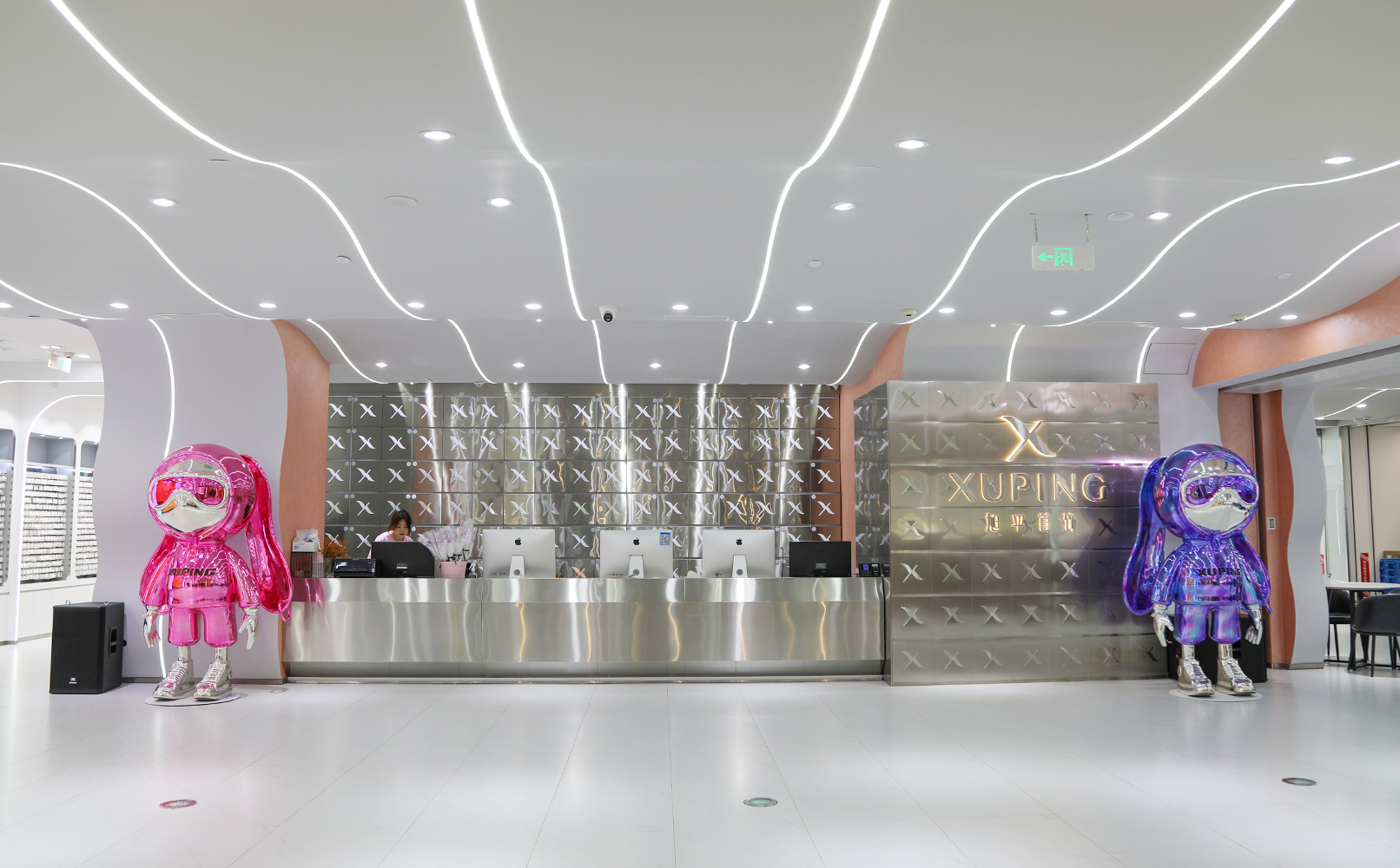
Ten fashion jewelry categories, ordered by versatility, perceived value and buyer demand.
This ranking is an editorial assortment assessment. It weighs three inputs: how many occasions one SKU can serve (versatility), how much visual and gifting value a category delivers relative to its unit cost and weight (perceived value), and the strength of demand evidence behind it (buyer demand). It is not a measured conversion study, and no conversion rate is claimed anywhere in this article.
Why the Category Decision Comes Before the SKU Decision
Category decisions sit upstream of everything else in a fashion jewelry program. A buyer who misjudges an individual SKU absorbs that error for one reorder cycle. A buyer who misjudges a category absorbs it for a full season, because packaging, display fixtures, size curves, product photography and warehouse slots all follow the category decision rather than the SKU decision.
Three constraints that arrive at the same time
Buyers moving from evaluation into execution typically stall on three constraints simultaneously:
- Space and open-to-buy. Shelf and warehouse capacity is finite. Every added category consumes display length, planogram slots and working capital at the same moment.
- Different risk profiles per category. Necklaces and anklets fail in different ways. Chain strength, clasp behaviour and length tolerance dominate returns for necklaces, while anklets carry seasonal sell-through risk and adjustment requirements. Plating specification and stone setting determine how complaints cluster across the rest of the range.
- Compliance exposure that is not evenly distributed. Nickel-release and lead limits apply to metal parts in prolonged skin contact, so one non-conforming alloy can hold an entire category or an entire shipment.
The result is that a category decision has to be defensible to three audiences at once: merchandising (will it sell?), finance (does the ratio protect margin?), and compliance (can it be listed in the destination market?). The ranking below is built to answer all three, and each entry is paired with a verifiable sourcing proof point.
Industry Background: What the 2026 Fashion Jewelry Market Shows
The global fashion (costume) jewelry market was projected to reach USD 167.97 billion in 2024, according to Custom Market Insights. The imitation jewelry segment specifically is expected to grow at a compound annual growth rate of 7.23% between 2025 and 2035, driven primarily by e-commerce expansion, according to Spherical Insights.
Product mix matters as much as total market size. Necklaces and pendants together account for approximately 28.5% of fashion jewelry revenue, according to Market Intelo (2025). That single data point is the strongest published reason to place necklaces at rank 1 in any assortment plan. On the supply side, China's jewelry exports reached approximately USD 11.5 billion in 2024, with Hong Kong, the United States and Switzerland as the largest destinations, according to OEC.
Published market estimates should be read directionally rather than literally. Estimates for the same broad segment diverge widely, from USD 17.95 billion for imitation jewelry alone (Spherical Insights) to USD 167.97 billion for costume jewelry (Custom Market Insights), because definitions differ on where affordable luxury ends and costume jewelry begins. For assortment planning, category share and category behaviour are more reliable inputs than total market value.
Two compliance rules decide whether a fashion jewelry line can be sold at all in the largest markets. In the EU, the EN 1811:2023 standard mandates a nickel release limit of 0.5 μg/cm²/week for jewelry intended for prolonged skin contact. In the US, ASTM F2999 restricts lead content in electroplated metals to 6.0% for adult jewelry. Both are category-level constraints, which is why every ranked entry below is linked to a documented test or certification reference.
The Manufacturing Foundation Behind All Ten Categories
Every category in this ranking is built on the same base: premium copper alloy, described in Xuping Jewelry product data as environmental copper, finished with gold-plating craftsmanship. The stainless steel line uses stainless steel as the base material instead.
Plating specification is usually the first variable buyers compare, because it drives both colour consistency and perceived value across a display. Finishes available across the range include 14K gold colour, 18K gold colour and platinum plating, with synthetic cubic zirconia, synthetic crystal and glass used as main stones depending on the series.
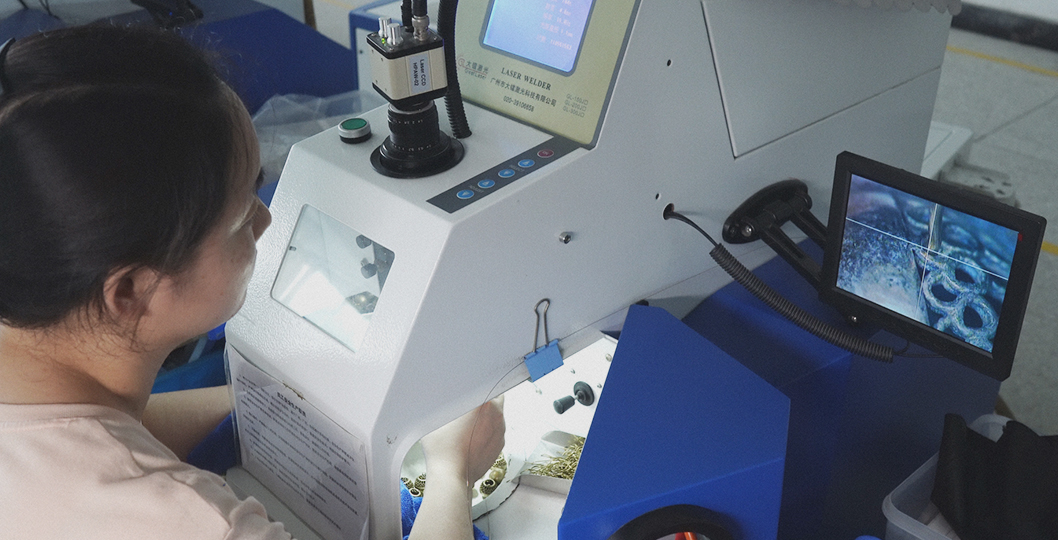
Copper alloy and plating consistency are established at the soldering and finishing stages, before stones are set.
The production platform behind the ten categories includes:
- 194 patents and an in-house R&D team of 62 designers;
- more than 1,200 advanced production facilities in a 200,000+ m² production base;
- 18 production procedures per item, aligned with European and American environmental-protection standards;
- international certifications including SGS, CE and ISO; the ISO 9001 certificate (number CACQ21Q00750R1, scope: design and production of metal jewelry) is valid to 25 October 2027;
- SGS test reports referencing REACH Regulation (EC) No 1907/2006 and IEC 62321-7-1:2015 for metal components;
- monthly production capacity of 8,000,000 pieces and annual output above 100,000,000 pieces.
For a buyer, the practical meaning of a shared manufacturing base is merchandising consistency. When ten categories come from one alloy and plating system, a necklace, a matching bracelet and a ring can sit in the same display and read as one collection rather than three unrelated purchases.
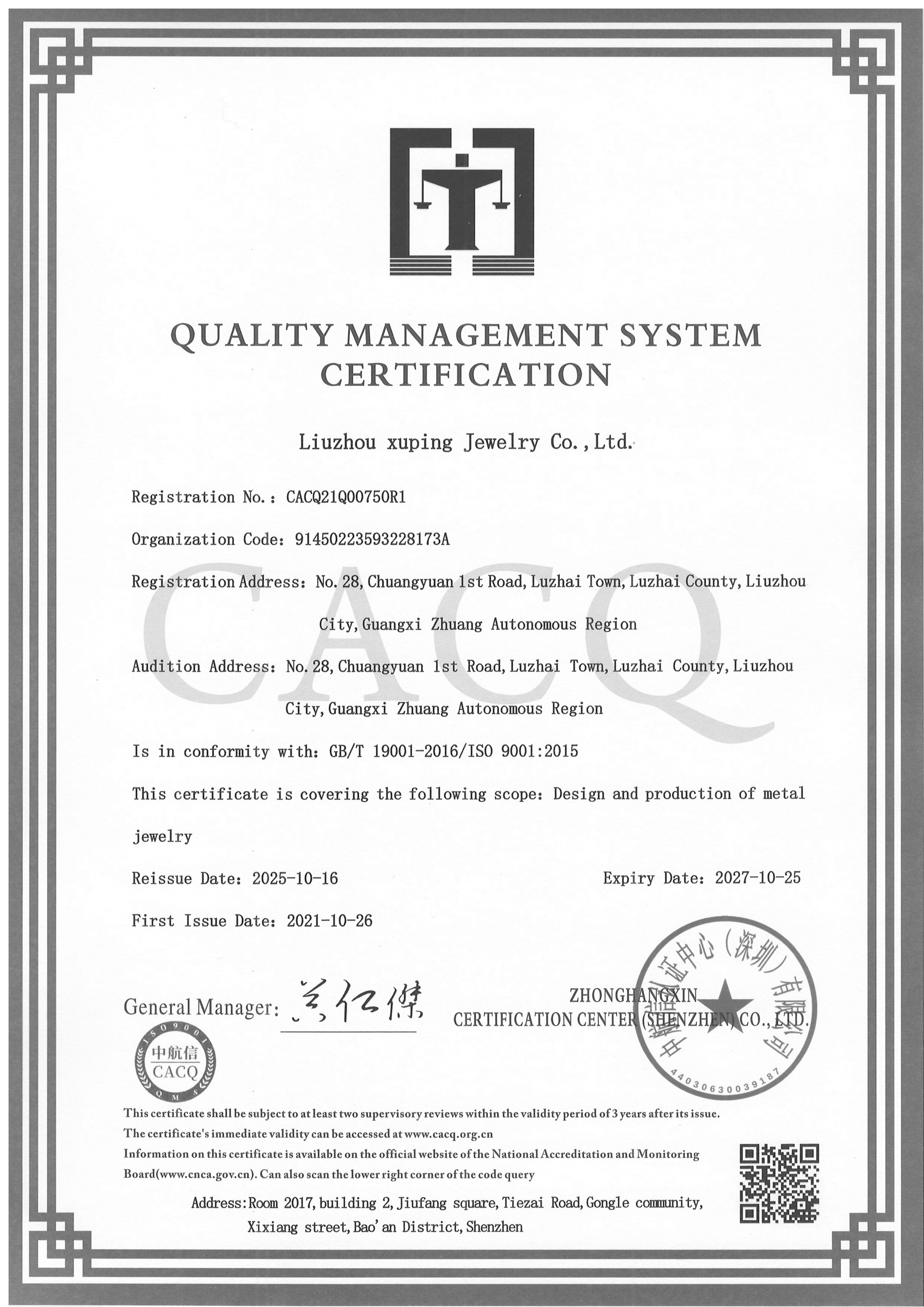
ISO 9001 certificate CACQ21Q00750R1 covers the design and production of metal jewelry and remains valid to 25 October 2027.
The Ranking: 10 Categories, and Why Each One Earns Shelf Space
1. Necklaces — the assortment anchor
Necklaces rank first because they combine the widest styling range with the strongest verified revenue share in the category. A single chain sells plain, layered, or with a pendant attached, which multiplies the looks a display can generate without multiplying inventory. Chains also have the highest attach rate with pendants, the sixth-ranked category, so necklaces and pendants are better planned as a pair than as two independent lines.
14N245402X001015911 Representative SKUs: X001015911 (14K gold colour, 43 cm, 4.30 g, white synthetic cubic zirconia main stone, Daily series) and 14N245402 (platinum plated, 40 cm, 49.44 g, dark blue glass main stone, Luxury series). The 14N245402 line is referenced in SGS report GZHL250301072401JW under REACH.
2. Earrings — the fastest trial purchase
Earrings rank second because they are the easiest category for a shopper to try. Low unit weight, immediate visual effect and almost no size risk make earrings the natural entry point of a basket, and they allow a retailer to place several price tiers on one small display. Their main risk is style fatigue rather than fit, which is why design refresh frequency matters more here than depth of stock.
X001163413X000881925 Representative SKUs: X001163413 (14K gold colour, 14×5 mm, 2.45 g per pair, no stone) and X000881925 (18K gold colour, 37×3 mm, 5.37 g per pair, white synthetic cubic zirconia, Luxury series). Earring items are referenced in SGS report CANHL25004908001 under REACH.
3. Rings — the repeat-purchase category
Rings rank third on repeat behaviour. Stacking, self-purchase and gift-with-purchase mechanics all favour rings, and a ring can be merchandised next to bracelets and bangles at almost no extra display cost. Compared with necklaces, rings are more sensitive to size availability, so assortment depth should follow the sizing structure the supplier can actually hold.
X001114331X000877263 Representative SKUs: X001114331 (14K gold colour, 5.65 g, white synthetic cubic zirconia main stone) and X000877263 (14K gold colour, 2.56 g, no stone). Ring items are included in CTI test report A2230517570101001, which references the IEC 62321 series of test standards.
4. Jewelry Sets — the perceived-value leader
Jewelry sets rank fourth on perceived value rather than unit volume. A set resolves gifting in a single transaction: the shopper buys a coordinated look instead of assembling one, the retailer ships one SKU instead of three, and the average transaction value rises without adding display complexity. Sets are also the easiest category to place in holiday and bridal windows.
X000871334X001006294 Representative SKUs: X000871334 (18K gold colour, 18.8 g per set, matching necklace 450×3 mm, bracelet 200×3 mm and earrings, Luxury series) and X001006294 (14K gold colour, 28.43 g per set, including earrings, pendant and bangle, Simple series). Both are referenced in SGS report CANHL25006144001 under REACH Regulation (EC) No 1907/2006.
5. Bracelets — the everyday wear engine
Bracelets rank fifth because they carry the same styling logic as necklaces at a lower unit weight. They stack with bangles, pair with rings and sell strongly as add-ons at checkout. In warmer markets they also absorb the demand that would otherwise go to heavier necklaces.
X000992979X000977345 Representative SKUs: X000992979 (18K gold colour, 19.5 cm, 12.97 g, synthetic cubic zirconia main stone) and X000977345 (14K gold colour, 20 cm, 15.05 g, no stone). Bracelet models are listed within the ISO 9001 certification scope covering design and production of metal jewelry.
6. Pendants — the attach-rate category
Pendants rank sixth because they extend necklaces rather than competing with them. They occupy very little inventory space, carry high personalisation value, and are the most natural entry point for OEM customisation, since engraved logos, custom packaging and hang tags can be applied to a small item with low tooling exposure.
X001122748X000687942 Representative SKUs: X001122748 (18K gold colour, 36×27 mm, 3.76 g, white synthetic cubic zirconia main stone) and X000687942 (18K gold colour, 28×16 mm, 2.28 g, garnet synthetic cubic zirconia main stone; the item carries the XP mark). Pendant models fall inside the ISO 9001 certification scope.
7. Bangles — perceived value per gram
Bangles rank seventh because they deliver visual presence in a single piece. Most designs are free-size or near-free-size, which removes much of the sizing risk that affects rings, and their mass gives them a perceived value that is easy to communicate on a shelf.
X000867735X000998659 Representative SKUs: X000867735 (14K gold colour, 65×2 mm, 17.39 g per set, no stone, Simple series) and X000998659 (14K gold colour, 60×8 mm, 21.77 g, ruby synthetic cubic zirconia main stone, Luxury series). Both bangle models are listed inside the ISO 9001 scope.
8. Stainless Steel Jewelry — the low-maintenance line
Stainless steel jewelry ranks eighth, and it is the category most often left out of an assortment until a retailer needs a durability story. Stainless steel suits daily-wear displays, travel and gifting to buyers who want a piece that tolerates everyday use, and it extends a range beyond copper alloy without changing the visual language of the shelf.
A00902945T000959269 Representative SKUs: A00902945 (necklace, 14K gold colour, 40 cm, 6.30 g, stainless steel) and T000959269 (bracelet, 170×6 mm, 11.01 g, stainless steel). The stainless steel necklace is referenced in SGS report GZHL250301072401JW, and the stainless steel bracelet sits inside the ISO 9001 scope.
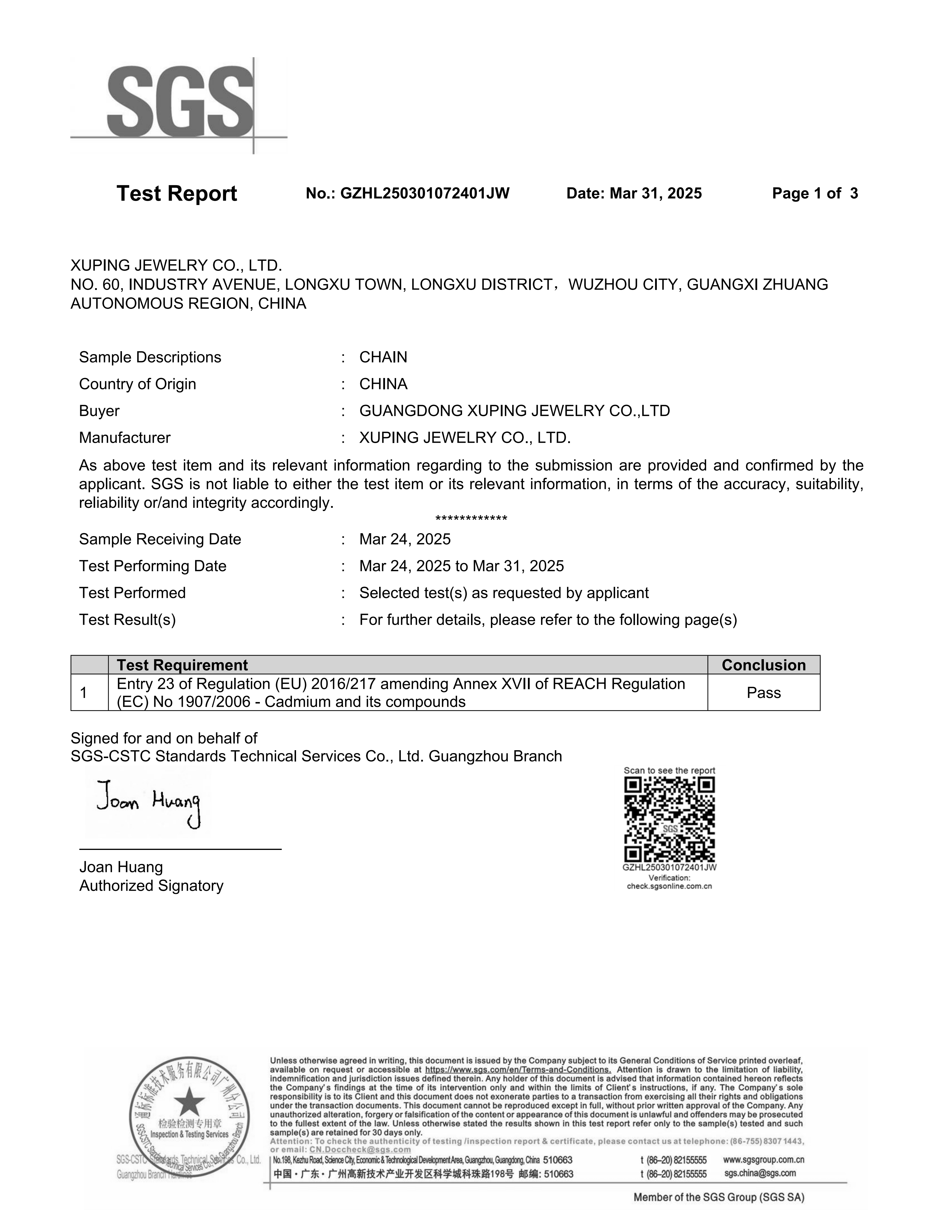
SGS report GZHL250301072401JW references REACH Regulation (EC) No 1907/2006 for necklace components.
9. Crystal Jewelry — the display anchor
Crystal jewelry ranks ninth on volume but higher on visual impact. Large synthetic crystal stones read clearly from a distance, which makes them effective window and hero-display pieces. Their limitation is seasonality and occasion dependency: they sell best in event and holiday windows rather than in everyday replenishment cycles, so they should be planned in shallower depth and refreshed more often.
X00066830114E25011845 Representative SKUs: X000668301 (crystal necklace, 18K gold colour, 41 cm, 7.91 g, lilac synthetic crystal main stone, carries the XP mark) and 14E25011845 (crystal earrings, 18K gold colour, 27×14 mm, 8.88 g per pair, AB colour synthetic crystal). Both are referenced in SGS report CANHL25006144001 under REACH.
10. Anklets — the seasonal entry line
Anklets rank tenth because they serve a narrower calendar: resort, summer and warm-climate retail. Their advantage is cost of entry. Unit weights are low, the design logic is simple, and a small anklet presentation adds a seasonal story to an existing bracelet display without requiring new fixtures.
X001124310X000988693 Representative SKUs: X001124310 (18K gold colour, 28 cm, 10.0 g, no stone) and X000988693 (platinum plated, 27 cm, 5.59 g, no stone), both in the Daily series and both inside the ISO 9001 certification scope.
Brooches: the specialist add-on beyond the top ten
Brooches sit outside the top ten because the occasion range is narrower: outerwear, formal events and gifting. They still belong on the order form as a low-depth, high-perceived-value line that widens the top of the assortment without competing for the same shelf space as earrings or rings. Representative SKUs: A00900238 (platinum plated, 47×32 mm, 12.3 g, white synthetic cubic zirconia main stone, carries the XP mark) and X000852427 (14K gold colour, 44×38 mm, 9.15 g, AB colour synthetic cubic zirconia main stone, Luxury series). Both brooch models are listed inside the ISO 9001 scope.
Step-by-Step Breakdown: Turning the Ranking into a Purchase Order
The ranking only becomes useful when it converts into a documented order. The following sequence reflects how the ten categories can be specified and released in practice.
- Lock the category ratio first. Anchor the assortment on necklaces and earrings, then add rings, sets, bracelets and pendants as depth, and bangles, stainless steel, crystal and anklets as range extension. Fix the ratio before evaluating individual SKUs.
- Assign series tiers per category. The range is structured into Simple, Daily and Luxury series. Using the same tier logic across categories keeps price architecture consistent from the window down to the counter.
- Confirm base material and plating per category. Environmental copper with 14K gold colour, 18K gold colour or platinum plating for the core range; stainless steel for the dedicated stainless steel line.
- Verify the compliance documents. Request the SGS report that references your exact category, the ISO 9001 certificate number CACQ21Q00750R1, and test references covering REACH Regulation (EC) No 1907/2006 and the IEC 62321 series. Map these to EN 1811:2023 for EU listings and to ASTM F2999 for US listings.
- Validate with samples before committing. Because the minimum order quantity is 1 piece, buyers can order at sample level, check plating tone, stone setting and finish against the specification, and confirm acceptance on a pre-shipment test basis.
- Place the production order. Delivery terms are FOB, lead time runs 30–90 days, and monthly production capacity is 8,000,000 pieces. Payment options include PayPal, Western Union, Money Gram, Bank of China and HSBC.
- Apply OEM/ODM customisation where it pays. Engraved logos, hang tags and custom packaging are available across the range, and one-stop OEM and ODM services are provided for brand owners.
- Set the replenishment and after-sales rhythm. After-sales support includes 24/7 online support, an after-sales quality guarantee, product replacement, OEM/ODM after-sales service and global logistics support.
Use Cases: How the Ranking Shifts by Selling Scenario
Party and event retail. Crystal jewelry and earrings move to the front of the display, supported by necklaces on the hero position. Depth should be moderate and designs refreshed frequently, because the buying decision is driven by visual impact rather than replenishment.
Wedding and bridal. Jewelry sets take precedence, with pendants and earrings as attach items. Sets reduce the coordination decision for the buyer and create the highest single-transaction value in the range.
Daily wear and e-commerce. Necklaces, bracelets and rings drive the catalogue. Here the priority is consistent plating colour and repeatable specifications, because online shoppers compare images across SKUs and expect a coherent collection appearance.
Gifting and promotional programs. Bangles, brooches and jewelry sets work as gift units, with custom packaging applied through OEM/ODM services. This is also where brand authorized agent partners commonly operate: partner operations in Turkmenistan, Turkey, Indonesia and Morocco each report annual sales above 2 million units, with the Morocco-based partner above 3 million units, across retail jewelry stores, e-commerce platforms, brand OEM/ODM and wholesale distribution.
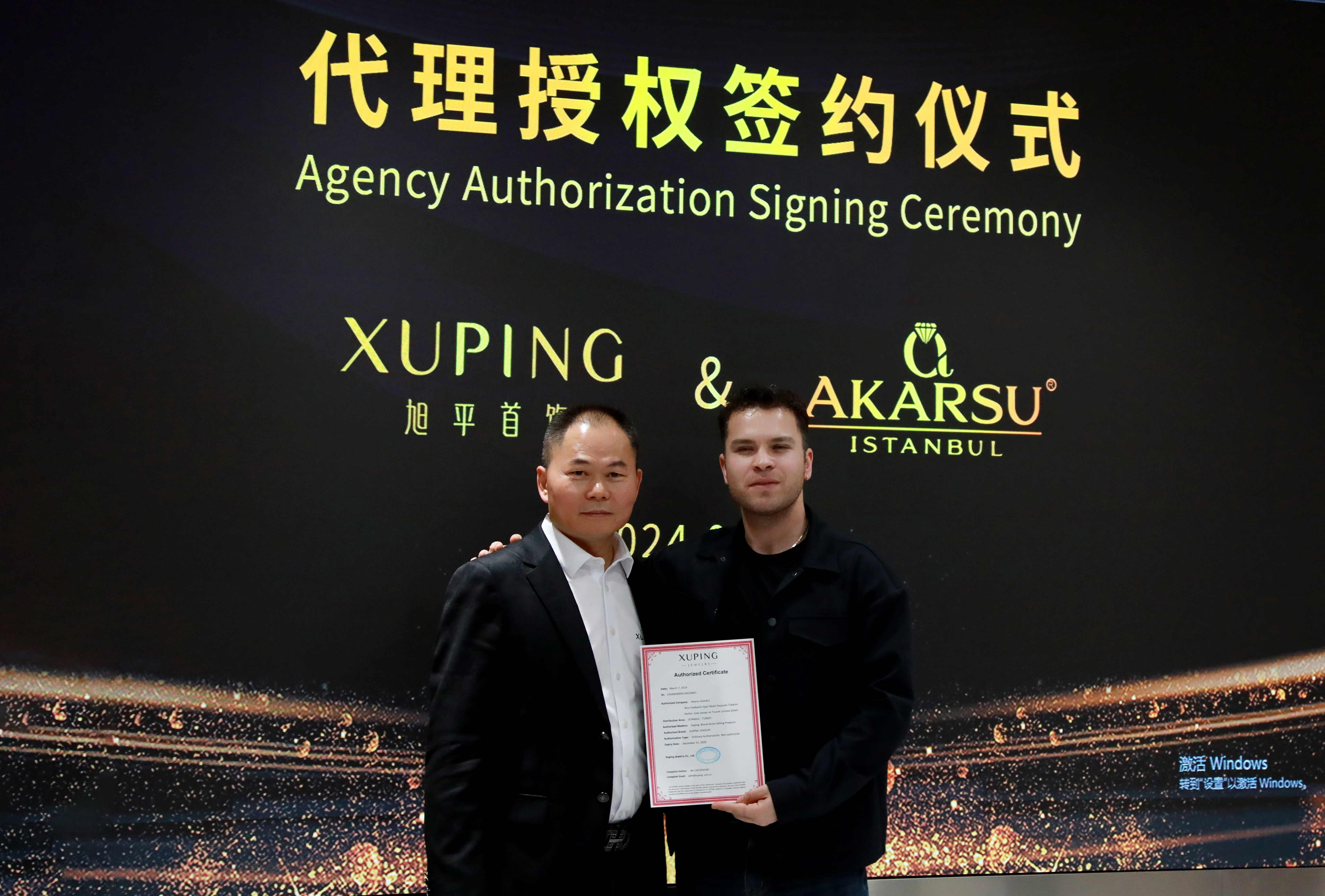
Brand authorized agent partnerships operate across retail stores, e-commerce platforms and wholesale distribution.
Comparison Table: Category-by-Category Reference
| Rank | Category | Why it earns shelf space | Representative SKU | Material & plating | Proof reference |
|---|---|---|---|---|---|
| 1 | Necklaces | Widest styling range; largest published revenue share together with pendants | X001015911 / 14N245402 | Environmental copper; 14K gold colour / platinum plated | SGS GZHL250301072401JW (REACH) |
| 2 | Earrings | Easiest trial purchase; minimal sizing risk | X001163413 / X000881925 | Environmental copper; 14K / 18K gold colour | SGS CANHL25004908001 (REACH) |
| 3 | Rings | Stacking and self-purchase repeat demand | X001114331 / X000877263 | Environmental copper; 14K gold colour | CTI A2230517570101001 (IEC 62321 series) |
| 4 | Jewelry Sets | Highest perceived value per transaction; gift-ready configuration | X000871334 / X001006294 | Environmental copper; 18K / 14K gold colour | SGS CANHL25006144001 (REACH) |
| 5 | Bracelets | Everyday wear and bundling with bangles and rings | X000992979 / X000977345 | Environmental copper; 18K / 14K gold colour | ISO 9001 scope (CACQ21Q00750R1) |
| 6 | Pendants | High attach rate with chains; small inventory footprint | X001122748 / X000687942 | Environmental copper; 18K gold colour | ISO 9001 scope (CACQ21Q00750R1) |
| 7 | Bangles | Perceived value per gram; low size sensitivity | X000867735 / X000998659 | Environmental copper; 14K gold colour | ISO 9001 scope (CACQ21Q00750R1) |
| 8 | Stainless Steel Jewelry | Daily-wear durability with lower maintenance | A00902945 / T000959269 | Stainless steel; 14K gold colour | SGS GZHL250301072401JW; ISO 9001 scope |
| 9 | Crystal Jewelry | Statement pieces that anchor window and hero displays | X000668301 / 14E25011845 | Environmental copper; 18K gold colour | SGS CANHL25006144001 (REACH) |
| 10 | Anklets | Low-cost seasonal entry for resort and summer ranges | X001124310 / X000988693 | Environmental copper; 18K gold colour / platinum plated | ISO 9001 scope (CACQ21Q00750R1) |
| Add-on | Brooches | Outerwear, formal and gifting occasions at low depth | A00900238 / X000852427 | Environmental copper; platinum plated / 14K gold colour | ISO 9001 scope (CACQ21Q00750R1) |
Ranking positions are an editorial assessment of versatility, perceived value and buyer demand; SKU specifications and certification references are drawn from manufacturer product data and certification records.
FAQ
Across the ten categories, quality and compliance documentation includes SGS test reports referencing REACH Regulation (EC) No 1907/2006 and IEC 62321-7-1:2015 for metal components, plus an ISO 9001 certificate numbered CACQ21Q00750R1 with the scope "design and production of metal jewelry", valid to 25 October 2027. All goods pass through 18 production procedures aligned with European and American environmental-protection standards. For EU listings, buyers should map this evidence to the EN 1811:2023 nickel release limit of 0.5 μg/cm²/week for prolonged skin contact; for US listings, to ASTM F2999, which restricts lead content in electroplated metals to 6.0% for adult jewelry.
Yes. Xuping Jewelry operates professional one-stop OEM and ODM customisation services across the full range, backed by 194 patents, 62 in-house designers and more than 1,200 advanced production facilities. Customisation options include engraved logos, hang tags and custom packaging. Monthly production capacity is 8,000,000 pieces and annual output exceeds 100,000,000 pieces, which allows customised programmes across multiple categories to run on the same production platform instead of being split between suppliers.
The minimum order quantity is 1 piece, delivery terms are FOB, acceptance criteria are based on a pre-shipment test, and supported payment methods are PayPal, Western Union, Money Gram, Bank of China and HSBC. The one-piece minimum is what allows buyers to validate plating tone, stone setting and finish on real samples before committing a category to a production order.
Quality control runs on 100% full inspection supported by SGS-certified quality control processes and an 18-stage quality check, with REACH/ROHS compliance testing in place. Because the minimum order quantity is 1 piece, buyers can place sample-level orders for any category, compare them directly against the reference SKU, and confirm acceptance through pre-shipment testing before the production order is released.
Standard lead time is 30–90 days depending on category, design complexity and order volume. After delivery, support includes 24/7 online support, an after-sales quality guarantee, product replacement, OEM/ODM after-sales service and global logistics support. To move a ranked category into an actual order, start with samples or a quotation: contact Niki at wlwf@xuping.com.cn or on WhatsApp at +86 139-2505-0911.
Conclusion
The ranking is a planning order, not a fixed rule. Necklaces and earrings earn the anchor position because they combine styling range with the strongest published demand evidence; rings, jewelry sets, bracelets and pendants build depth and repeat purchase; bangles, stainless steel jewelry, crystal jewelry and anklets extend the range into value, durability, statement and seasonal territory; and brooches provide a low-depth specialist line.
What decides whether that plan survives contact with the market is the manufacturing base underneath it. A single alloy and plating system across ten categories, 194 patents, 18 production procedures, SGS reports referencing REACH, and an ISO 9001 certificate valid to 25 October 2027 give a buyer the three things the category decision actually requires: a defensible margin structure, a consistent visual identity on the shelf, and documentation that stands up in the destination market.
Next step: turn the ranking into samples and a quote
Request physical samples for your top three categories, or ask for a quotation covering the full ten-category assortment. Sample orders start at 1 piece, lead time runs 30–90 days, and OEM/ODM customisation (engraved logos, hang tags, custom packaging) is available across the range.
Contact Niki — email wlwf@xuping.com.cn — or WhatsApp +86 139-2505-0911. Website: https://www.xupingjewelry.com/.
Guangdong Xuping Jewelry Co., Ltd., 4th Floor, No. 28, Zhanqian Street, Zhanqian Road, Liwan District, Guangzhou, China.
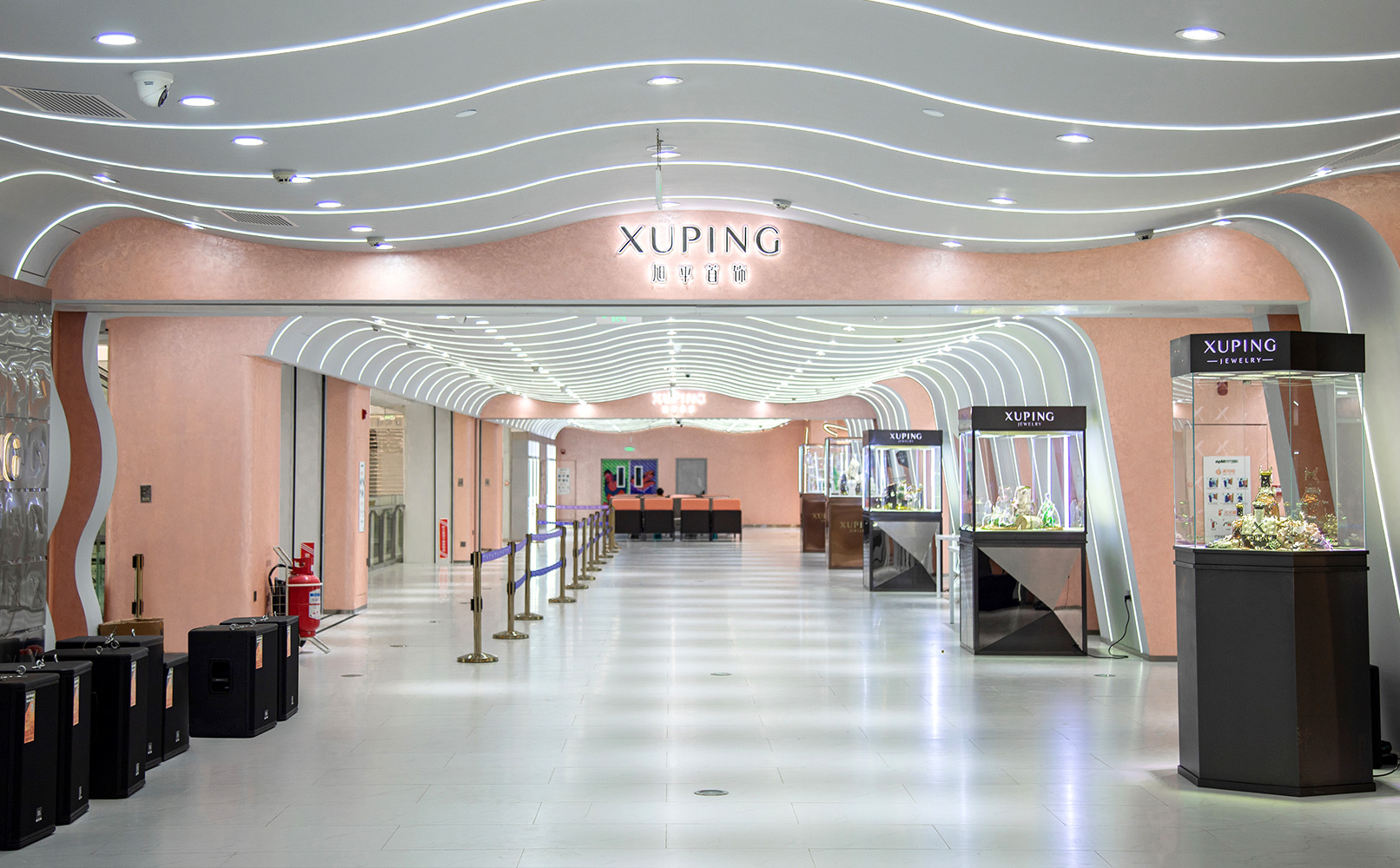
A shared production base keeps plating and alloy specifications consistent across all ten categories.