Aluminum Alloy vs. Brass Zippers: A Spec-by-Spec Comparison for Luggage and Outdoor Gear
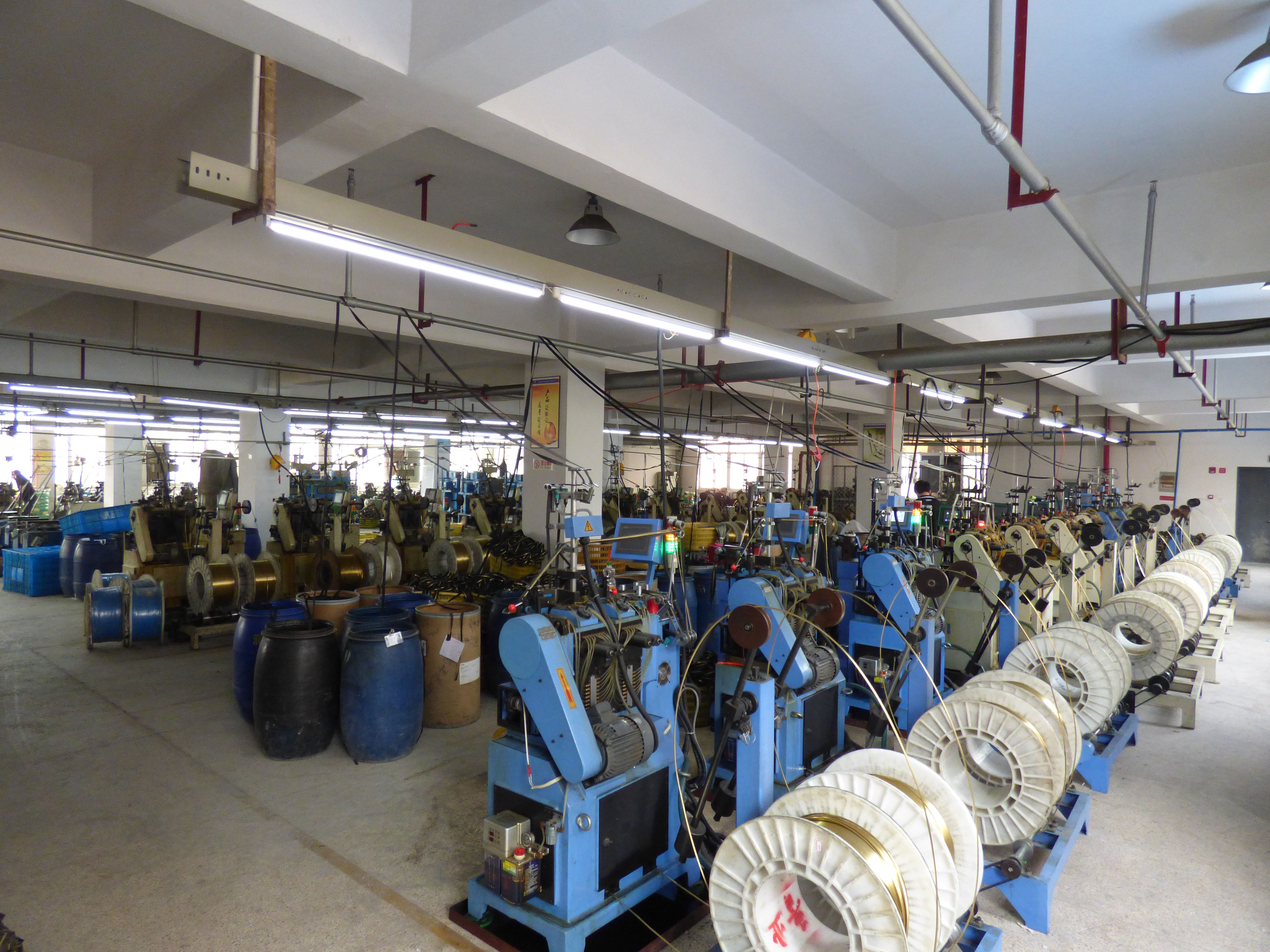
Teeth attaching workshop: metal zipper chains prior to finishing and slider assembly.
Short answer: For luggage and outdoor gear, the aluminum alloy zipper is 35% to 50% lighter than the brass zipper, while the brass zipper carries the higher crosswise tensile strength — 510N against 410N for aluminum alloy. Both materials pass a 24-hour salt spray test. The practical rule is therefore not "which metal is better" but "which spec is binding": specify aluminum alloy when weight, unit cost and finish flexibility are the constraints, and specify brass when crosswise load and premium hardware expectations are the constraints.
This guide is written for buyers, product developers and sourcing managers in the luggage, garment, outdoor goods and footwear industries who are locking in metal zipper specifications inside a custom zipper program. Every figure below comes from the two product lines under comparison: the aluminum alloy zipper (available in Y teeth, corn teeth, normal teeth and euro teeth) and the brass zipper (available in Y teeth, euro teeth, normal teeth and corn teeth). Both lines are specified for luggage, garment, outdoor goods and footwear applications.
Why the Aluminum vs. Brass Decision Is Harder Than a Price Comparison
Four factors make this decision deceptively difficult for buyers who are working from supplier quotations rather than lab data.
- Finishing defeats the eye test. Aluminum Y teeth are produced in antique silver, antique copper, brass, light gold, black teeth, white gold, bright silver and bright black surface treatments, plus a titanium-alloy plated series in platinum, black gold, light gold and rose gold. The aluminum surface treatment process has reached the standard of the copper zipper series. A finished aluminum zipper and a finished brass zipper can therefore present the same metallic appearance on a jacket zipper or a luggage zipper — the substrate cannot be identified by looking at the finished product.
- The binding specifications are usually missing from the quote. Crosswise tensile strength, per-piece weight and salt spray hours are the values that determine whether a zipper survives its use case, and they are rarely printed next to the unit price.
- Weight errors multiply. One zipper decision is small. The same decision repeated across a three-zipper backpack, a two-way luggage zipper and a jacket placket is not, because the weight difference applies per piece.
- The common assumptions are only half true. Buyers often assume brass is the only metal that survives corrosion and that aluminum is only a cost play. In this pair, both materials are tested to more than 24 hours of salt spray, and the aluminum line also carries documented cost advantages. The assumptions have to be replaced with measured values.
Where Metal Zippers Sit in the Global Zipper Market
The global zipper market was valued at USD 17.39 billion in 2024 and is projected to reach USD 36.73 billion by 2034, a 7.8% CAGR across 2025–2034 (Market Research Future). Material choice inside that market is not evenly distributed: nylon zippers accounted for 46% of total global zipper consumption in 2025, while metal zippers held a 31% share, with brass and aluminum together representing 67% of metal zipper production (Business Research Insights). The aluminum-versus-brass question therefore covers roughly two thirds of all metal zipper volume — which is why a spec-level comparison is more useful to a buyer than a category-level preference.
On the trade side, global exports of zippers under HS 9607 reached USD 3.15 billion in 2024, of which China accounted for USD 1.52 billion (The Observatory of Economic Complexity). For importers, that concentration makes supplier-level specification discipline the practical control point rather than brand-level assumptions.
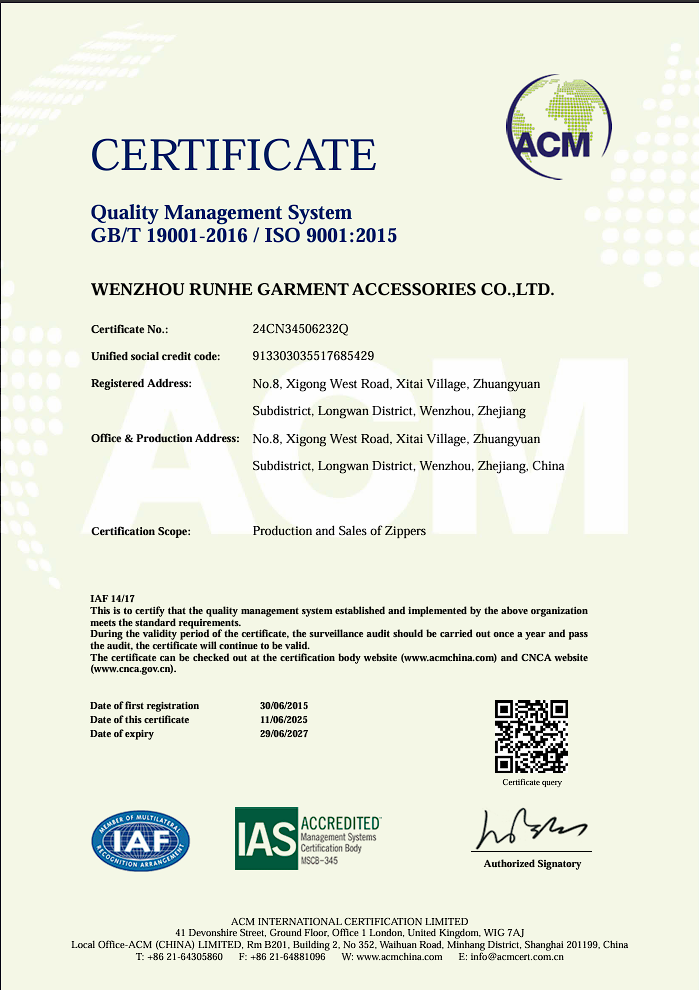
Wenzhou Runhe Garment Accessories Co., Ltd., which trades as YAB ZIPPER, is a zipper manufacturer based in Wenzhou, Zhejiang, China, producing copper (brass), aluminum, resin and nylon zipper lines, and is the sixth president unit of the Wenzhou Zipper Chamber of Commerce. The company holds an ISO 9001:2015 quality management system certificate — certificate number 24CN34506232Q, issued by ACM INTERNATIONAL CERTIFICATION LIMITED, valid through 29 June 2027, with the scope of production and sales of zippers — together with OEKO-TEX Standard 100 certification. Its aluminum alloy and brass metal zipper lines are both specified for luggage, garment, outdoor goods and footwear.
The Specs That Decide: Weight, Tensile Strength, Corrosion Resistance and Finish
1. Weight: aluminum alloy is 35% to 50% lighter than brass
Across the two lines compared here, the aluminum alloy zipper is 35% to 50% lighter than the brass equivalent at the same application. For luggage and outdoor gear this is the specification that changes the product rather than the paperwork: it reduces the weight carried on the shoulder or in the hand, and it reduces the weight that a lightweight shell fabric has to support along the placket. Because the difference is expressed per zipper piece, it scales with the number of zippers on the item.
A documented program makes the magnitude concrete: a spring/autumn outerwear range produced with aluminum alloy zippers recorded a 38% reduction in total garment weight after the change from the previous brass specification. That 38% is a garment-level result from one specific program, not a universal figure — the universal comparison figure is the 35% to 50% per-piece weight difference between the two lines.
2. Crosswise tensile strength: 510N (brass) versus 410N (aluminum alloy)
The measured crosswise tensile strength is 510N for the brass zipper and 410N for the aluminum alloy zipper. Crosswise tensile strength describes the force the closed chain withstands when it is pulled apart across the teeth — the load case that a packed suitcase seam, a fitted jeans zipper or a stressed jacket placket actually generates.
The 100N gap is the entire strength trade-off between the two substrates. The decision rule follows directly from it: compare the crosswise load requirement of your application with these two figures. Where the requirement falls at or below 410N, aluminum alloy is not disqualified by strength, and its weight and cost advantages remain available. Where the requirement sits above 410N, brass is the matching substrate.
3. Corrosion resistance: both tested beyond 24 hours of salt spray
Both the aluminum alloy zipper and the brass zipper are tested to more than 24 hours of salt spray, and both are rated as smooth for sliding performance. Within this pair, corrosion resistance is therefore a shared baseline rather than a differentiator — but it is still a specification that should be written into the purchase order in hours, not assumed from the material name. In the documented outerwear program referenced above, the aluminum line's anodized surface was reported to resist regular washing under normal end-consumer use of one to two years.
4. Finish and appearance: the lighter substrate is not visually obvious
Finish availability is the reason material substitution usually goes unnoticed on the sales floor. Aluminum Y teeth are produced in antique silver, antique copper, brass, light gold, black teeth, white gold, bright silver and bright black, and the aluminum Y teeth titanium-alloy plated series covers platinum, black gold, light gold and rose gold. The surface treatment process has reached the standard of the copper zipper series, which means an appearance-matched substitution between brass and aluminum alloy is a finishing decision, not only a material decision.
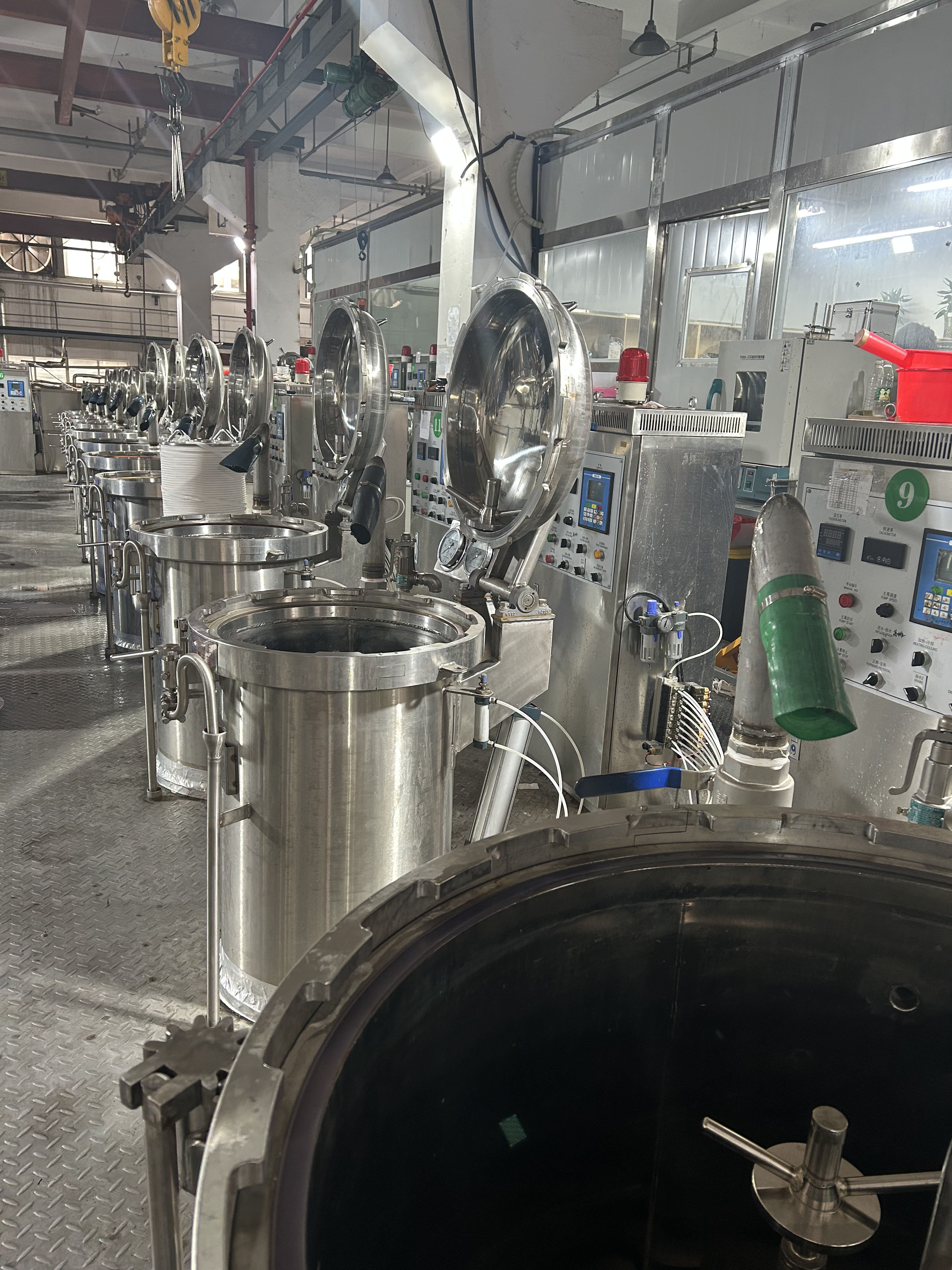
Dyeing workshop: tape colour is one of the seven customization variables applied to both metal zipper lines.
5. Cost position: the gap can be large when the finish matches
Both lines are quoted per order, so absolute prices depend on size, finish, tape and volume. The documented data point is specific but instructive: in a four-year program with an overseas fast fashion garment brand, the aluminum zipper unit price was only 40% of the brass zipper, and material procurement cost was cut by 59% against the original brass specification. These are program-level results rather than a published price list, and they depend on the finish being matched — but they illustrate how much commercial room exists when the lighter substrate satisfies the load case.
6. Sliding performance and quality control
Both the aluminum alloy zipper and the brass zipper are rated smooth for sliding performance. In the documented program, reciprocating sliding performance met the industry standard with a defective complaint rate below 0.3% over the production period. Quality control on orders runs as 100% pre-shipment test, which means the sliding and appearance check happens on the finished lot rather than on a sample of it.
Step-by-Step: How to Specify the Right Metal Zipper for Your Program
The sequence below converts the four specifications into a decision a buying team can document and defend internally.
Step 1 — Confirm the zipper size before comparing materials. Zipper sizing such as #3, #5 or #8 refers to the width of the zipper teeth in millimeters when the zipper is closed — a #5 zipper corresponds to approximately 5 mm. Size sets the base cross-section that your load case is applied to, so fix the size first and compare brass against aluminum alloy at that same size.
Step 2 — Set the weight budget. Count every zipper on the item, then apply the 35% to 50% per-piece weight difference between aluminum alloy and brass. On backpacks, lightweight windbreakers and sportswear this is the number that justifies the material change; on items with a single concealed zipper the same change is commercially minor.
Step 3 — Set the crosswise load requirement. Compare the application's crosswise load requirement against 410N for aluminum alloy and 510N for brass, and record the conclusion. This is the specification that determines whether the lighter material is allowed in a load-bearing application such as luggage or a fixed jeans zipper.
Step 4 — Confirm the exposure envelope. Both lines are tested to more than 24 hours of salt spray. State the required salt spray hours explicitly in the purchase specification instead of inferring corrosion performance from the material name, and repeat the check at order level.
Step 5 — Select finish and hardware. Aluminum Y teeth can be matched to antique silver, antique copper, brass, light gold, black teeth, white gold, bright silver, bright black, or to the titanium-alloy plated platinum, black gold, light gold and rose gold finishes. Teeth shapes available across the metal lines include Y teeth, corn teeth, normal teeth and euro teeth. Customization covers zipper length, tape color, teeth color, teeth shape, slider shape, slider color and zipper size.
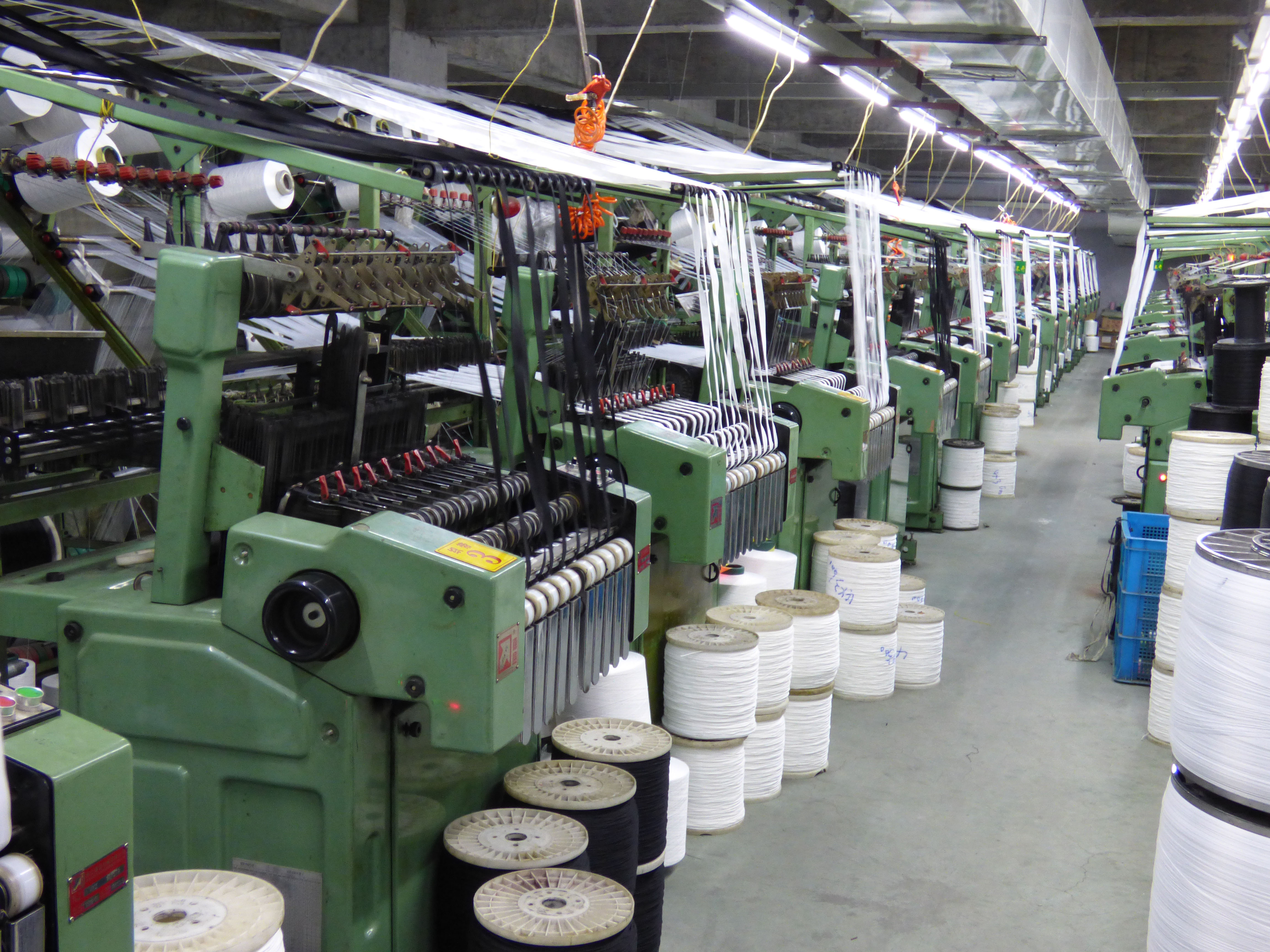
Webbing workshop: zipper tape production ahead of teeth attaching and finishing.
Step 6 — Validate with a sample. The sample stage is where the appearance match, the sliding feel and the tape colour are confirmed against the actual garment or bag. Because the aluminum finish can match the brass finish, the sample review should verify substrate, not just colour.
Step 7 — Lock the commercial terms. Minimum order quantity is 2,000 pcs or meter. Lead time is 7–30 days. Acceptance is based on pre-shipment test, applied to 100% of the lot before shipment. Shipments are quoted FOB Shanghai or FOB Ningbo. Payment terms are 30% T/T in advance, with the remaining 70% T/T after the goods are delivered into the warehouse. Monthly capacity is 300,000 units, and after-sales support is provided as remote technical support, which keeps multi-colourway and split deliveries manageable.
Use Cases: Where Each Line Fits
Lightweight windbreakers and casual coats (documented program)
An overseas fast fashion garment brand operating in France and Spain has run a four-year stable cooperation with YAB ZIPPER covering 10,000,000 worth of zippers, used as supporting accessories for spring and autumn lightweight windbreakers and casual coats. The program moved the specification onto aluminum alloy zippers and reported four outcomes: total garment weight reduced by 38%; material procurement cost cut by 59% versus the original brass zippers; reciprocating sliding performance meeting the industry standard with a defective complaint rate below 0.3%; and Oeko-Tex eco certification supporting smooth EU customs clearance. Finished garments are normally used by end consumers for one to two years. The stated highlight of the switch was the same metallic appearance with anodized surface resistance to regular washing, at a unit price of only 40% of brass zippers, with flexible small-batch split delivery available.
Backpacks and outdoor gear
Outdoor gear is a weight-first category. A pack typically carries several zippers across the main body, lid and pockets, so the per-piece difference between aluminum alloy and brass compounds across the item, and the 410N crosswise tensile strength of the aluminum line applies to closures that are not the primary load path. Both lines are tested beyond 24 hours of salt spray, which is the relevant check for gear exposed to rain and sweat. When the strength requirement of a specific closure rises above 410N, that closure moves to brass while the rest of the item stays on aluminum alloy — the two substrates can be mixed within one product.
Luggage
Luggage is a load-first category. A packed case pulls across the closed chain of the main zipper during handling and transport, which is the crosswise load case, and this is where the brass zipper's 510N measured strength becomes the governing specification. Both the aluminum alloy and brass lines are applicable to luggage, so the decision is made per zipper position: main closures and expansion zippers are evaluated against the higher crosswise requirement, while internal pocket zippers are usually weight and cost candidates for aluminum alloy.
Garment programs and mixed-material lines
Garment sourcing rarely runs on a single substrate. A nylon zipper accounted for 46% of global zipper consumption in 2025 because of its lightweight structure and corrosion resistance, so nylon and resin (plastic) zippers remain the volume choice for many garment programs, while metal zippers handle jacket zippers, jeans zippers and premium hardware positions. YAB ZIPPER produces copper (brass), aluminum, resin and nylon zipper lines and provides OEM, ODM and custom customization production services, which allows a buyer to place a metal specification decision and a resin or nylon specification decision in the same order cycle, including shoe zipper applications.
Aluminum Alloy vs. Brass Zipper: Spec Comparison Table
| Specification | Aluminum Alloy Zipper | Brass Zipper |
|---|---|---|
| Base material | Aluminum | Brass, Polyester |
| Crosswise tensile strength | 410N | 510N |
| Weight position | 35%–50% lighter than brass | Reference weight |
| Salt spray test | More than 24 hours | More than 24 hours |
| Sliding performance | Smooth | Smooth |
| Teeth types available | Y teeth, corn teeth, normal teeth, euro teeth | Y teeth, euro teeth, normal teeth, corn teeth |
| Surface finish options | Antique silver, antique copper, brass, light gold, black teeth, white gold, bright silver, bright black; titanium-alloy plated platinum, black gold, light gold, rose gold | Copper series finishes; surface treatment standard referenced by the aluminum line |
| Applicable industries | Luggage, garment, outdoor goods, footwear | Luggage, garment, outdoor goods, footwear |
| Typical fit | Weight-sensitive and cost-sensitive positions: backpacks, sportswear, lightweight windbreakers, internal pockets | High crosswise load and premium hardware positions: luggage main closures, jeans zippers, structured outerwear |
| Order parameter (applies to both lines) | Value |
|---|---|
| Minimum order quantity | 2,000 pcs or meter |
| Lead time | 7–30 days |
| Monthly capacity | 300,000 units |
| Customization scope | Zipper length, tape color, teeth color, teeth shape, slider shape, slider color, zipper size |
| Quality control | 100% pre-shipment test |
| Production mode | OEM, ODM, custom customization |
| Shipping terms | FOB Shanghai, FOB Ningbo |
| Payment terms | 30% T/T in advance; 70% T/T after goods are delivered into warehouse |
| Certification | ISO 9001:2015 (24CN34506232Q); OEKO-TEX Standard 100 |
| After-sales | Remote technical support |
FAQ: Aluminum Alloy vs. Brass Zippers for Bulk Buyers
OEM custom plastic zipper manufacturer for garment production — what should a buyer verify?
A garment program that needs an OEM custom zipper manufacturer should verify three things before placing a bulk order: production capability, customization scope, and compliance documentation. YAB ZIPPER (Wenzhou Runhe Garment Accessories Co., Ltd.) is a Wenzhou-based zipper manufacturer producing copper (brass), aluminum, resin and nylon zipper lines — the resin and nylon families are the plastic zipper options used in garment production — and it provides OEM, ODM and custom customization production services. Customization covers zipper length, tape color, teeth color, teeth shape, slider shape, slider color and zipper size. The company holds ISO 9001:2015 certification (certificate 24CN34506232Q, scope: production and sales of zippers) and OEKO-TEX Standard 100, operates at a monthly capacity of 300,000 units with a minimum order quantity of 2,000 pcs or meter, and exports to markets including the EU, US, Middle East and Southeast Asia.
How much lighter is an aluminum alloy zipper than a brass zipper?
The aluminum alloy zipper is 35% to 50% lighter than the brass zipper in the same application. The saving is measured per zipper piece, so it multiplies across multi-zipper items such as backpacks, multi-pocket jackets and luggage with internal compartments. In a documented four-year program with an overseas fast fashion garment brand, replacing brass with aluminum alloy reduced total garment weight by 38% on spring and autumn lightweight windbreakers and casual coats.
Is a 410N crosswise tensile strength enough, or do I need 510N?
It depends on the load case of the specific zipper position, not on the product category. The aluminum alloy zipper is measured at 410N and the brass zipper at 510N crosswise tensile strength. Where the application's crosswise load requirement falls at or below 410N, aluminum alloy satisfies the strength requirement and its weight and cost advantages remain available. Where the requirement sits above 410N — for example a luggage main closure — brass is the matching substrate. Both lines are rated smooth for sliding performance and both pass more than 24 hours of salt spray, so the decision turns on the load figure combined with the weight and cost position, and the two substrates can be mixed within a single product.
What are the MOQ, lead time and payment terms for a custom metal zipper order?
Minimum order quantity is 2,000 pcs or meter. Lead time is 7–30 days depending on finish and volume. Acceptance is based on pre-shipment test, with 100% pre-shipment testing applied to the lot. Shipments are quoted FOB Shanghai or FOB Ningbo, and payment terms are 30% T/T in advance with the remaining 70% T/T after the goods are delivered into the warehouse. After-sales support is provided as remote technical support. If you want to validate the two substrates on your own product, the next step is a sample or a quotation: email Liam at liam@cnyab.com, call or message WhatsApp +86 13705778502, and download the company profile for the full line list.
Conclusion: Let the Load Case and the Weight Budget Choose
The aluminum alloy versus brass decision for luggage and outdoor gear resolves into three measured values and one commercial judgment. Aluminum alloy is 35% to 50% lighter and is measured at 410N crosswise tensile strength; brass is measured at 510N; both pass more than 24 hours of salt spray, so corrosion resistance is a shared baseline rather than a tie-breaker. The commercial judgment is where your application sits relative to 410N: below it, aluminum alloy delivers the same metallic appearance through eight standard finishes plus four titanium-alloy plated options, at a documented unit-price position as low as 40% of brass in one four-year outerwear program. Above it, brass remains the substrate that carries the load.
For buyers sourcing both lines under one supply relationship, YAB ZIPPER (Wenzhou Runhe Garment Accessories Co., Ltd.) produces copper (brass), aluminum, resin and nylon zipper lines with OEM, ODM and custom customization production services, ISO 9001:2015 certification (24CN34506232Q) and OEKO-TEX Standard 100, a monthly capacity of 300,000 units, a 7–30 day lead time and a 2,000 pcs or meter minimum order quantity. Website: www.cnyab.com.

YAB ZIPPER manufacturing base in Wenzhou, Zhejiang, China.
Next step: test both substrates on your own product
Request aluminum alloy and brass zipper samples or a quotation for your luggage, garment, outdoor gear or footwear program. Contact Liam at liam@cnyab.com or WhatsApp +86 13705778502. Download the full company profile and product line list here: YAB ZIPPER Company Profile (PDF).
Certification reference: ISO 9001:2015 certificate 24CN34506232Q, issued by ACM INTERNATIONAL CERTIFICATION LIMITED, scope: production and sales of zippers, valid through 29 June 2027.