
Custom Zipper Application Guide: How to Spec Luggage, Backpacks, Sportswear, and Leather Goods
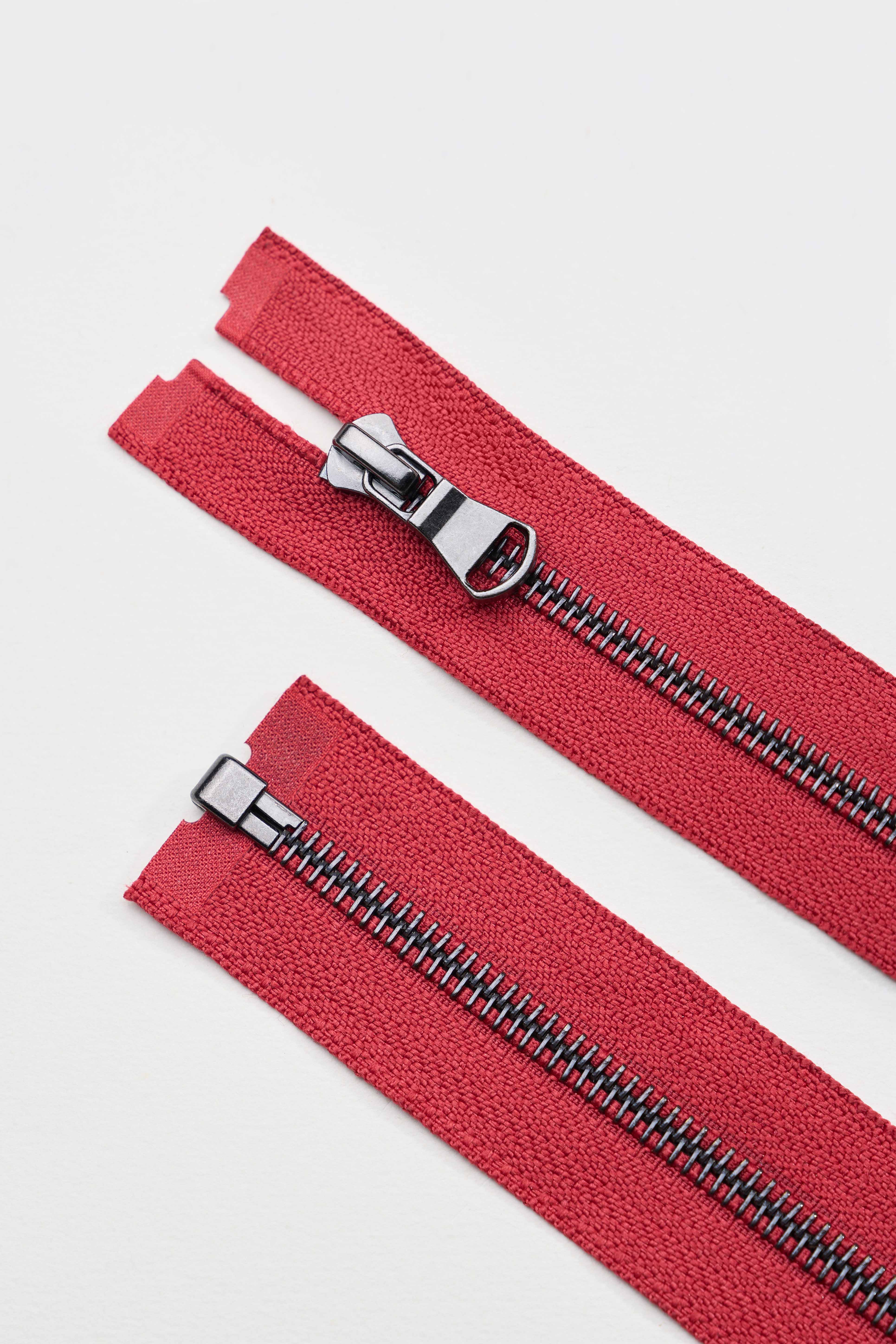
Short answer: A custom zipper is specified through five decisions — material, size, teeth configuration, surface finish, and branding hardware. Aluminum alloy zippers are the practical choice for weight-sensitive, moisture-exposed products such as hard luggage, backpacks, and sportswear: 35% to 50% lighter than brass, more than 24 hours of salt spray resistance, 410N crosswise tensile strength, and a choice of bright silver, matte silver, black, or champagne anodizing. Brass zippers suit leather goods, jeans, and premium apparel: 510N crosswise tensile strength, gold, antique brass, gunmetal, or nickel silver plating, and a nickel-free option that complies with the EU REACH standard. Both are available in sizes #3, #5, and #8 with Y, Corn, Euro, or Normal teeth, and both accept custom logo sliders and pullers for OEM and ODM orders.
This application guide is written for product developers, sourcing managers, and brand owners who have to lock a zipper specification before tooling, sampling, or bulk production begins. It works through the end-product groups that drive most custom zipper projects — hard luggage, backpacks, sportswear and lightweight outerwear, leather bags, jeans, outdoor luggage, footwear, and premium apparel — and shows which combination of material, size, tooth profile, and finish holds up in each case.
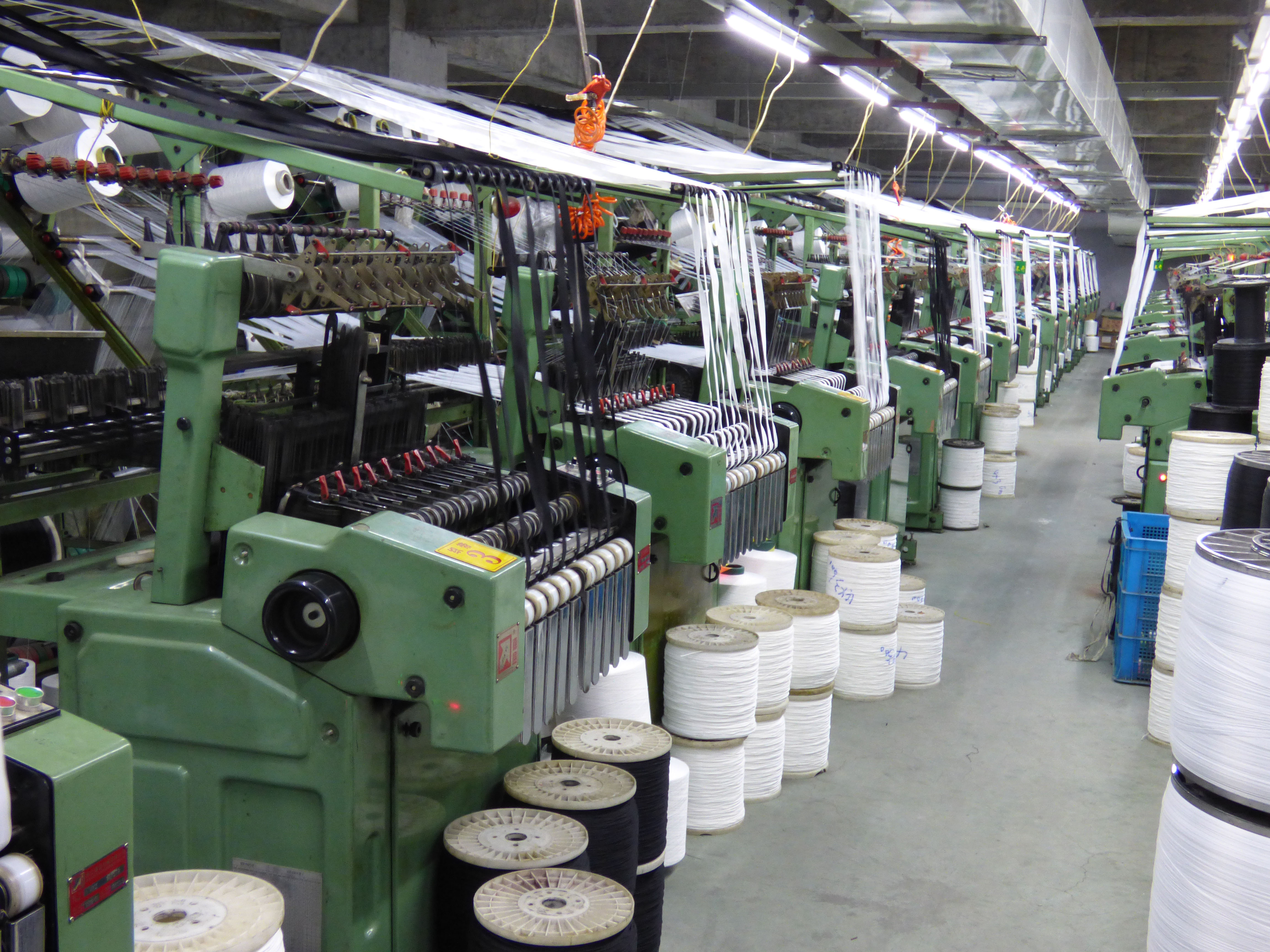
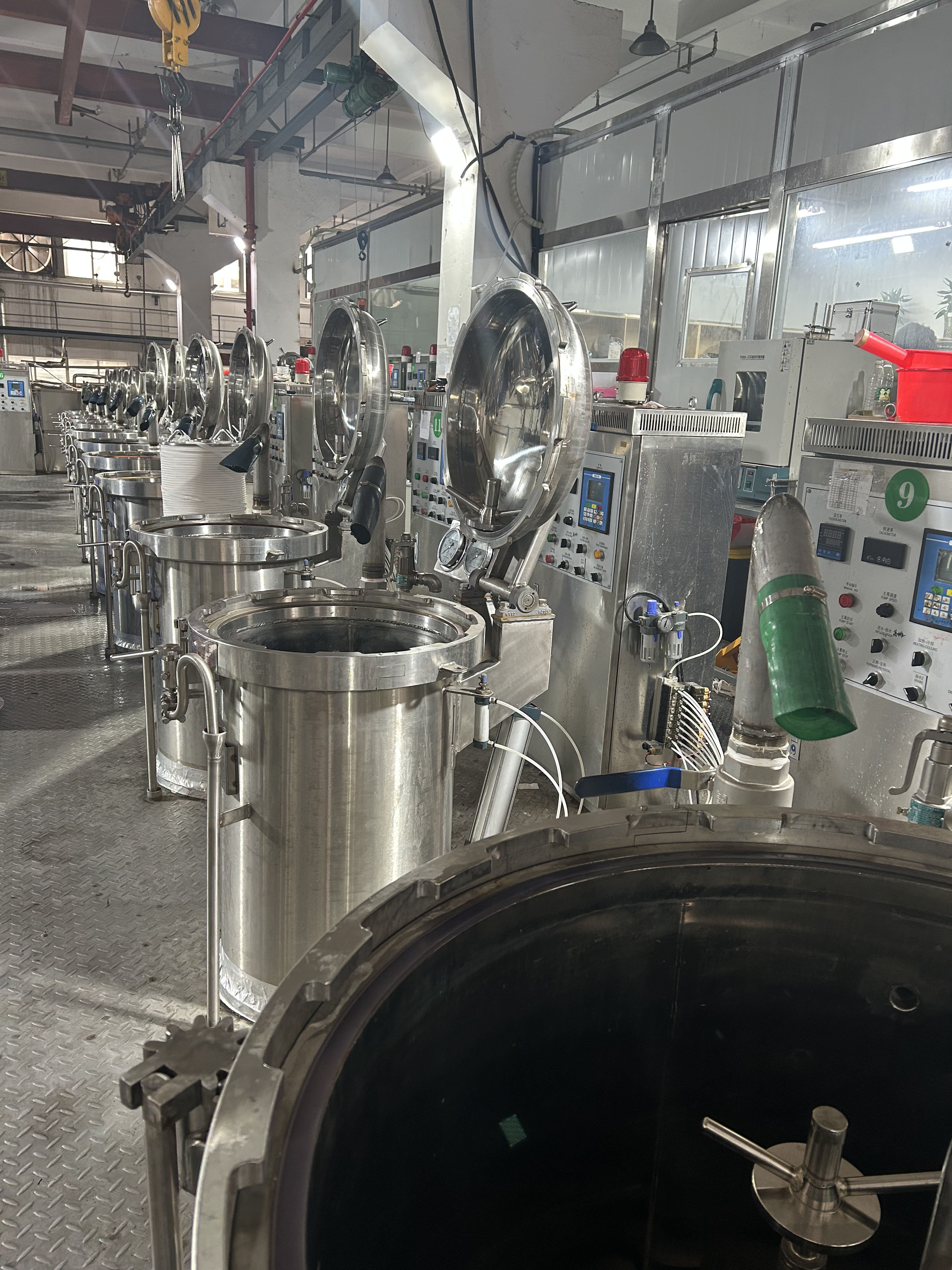
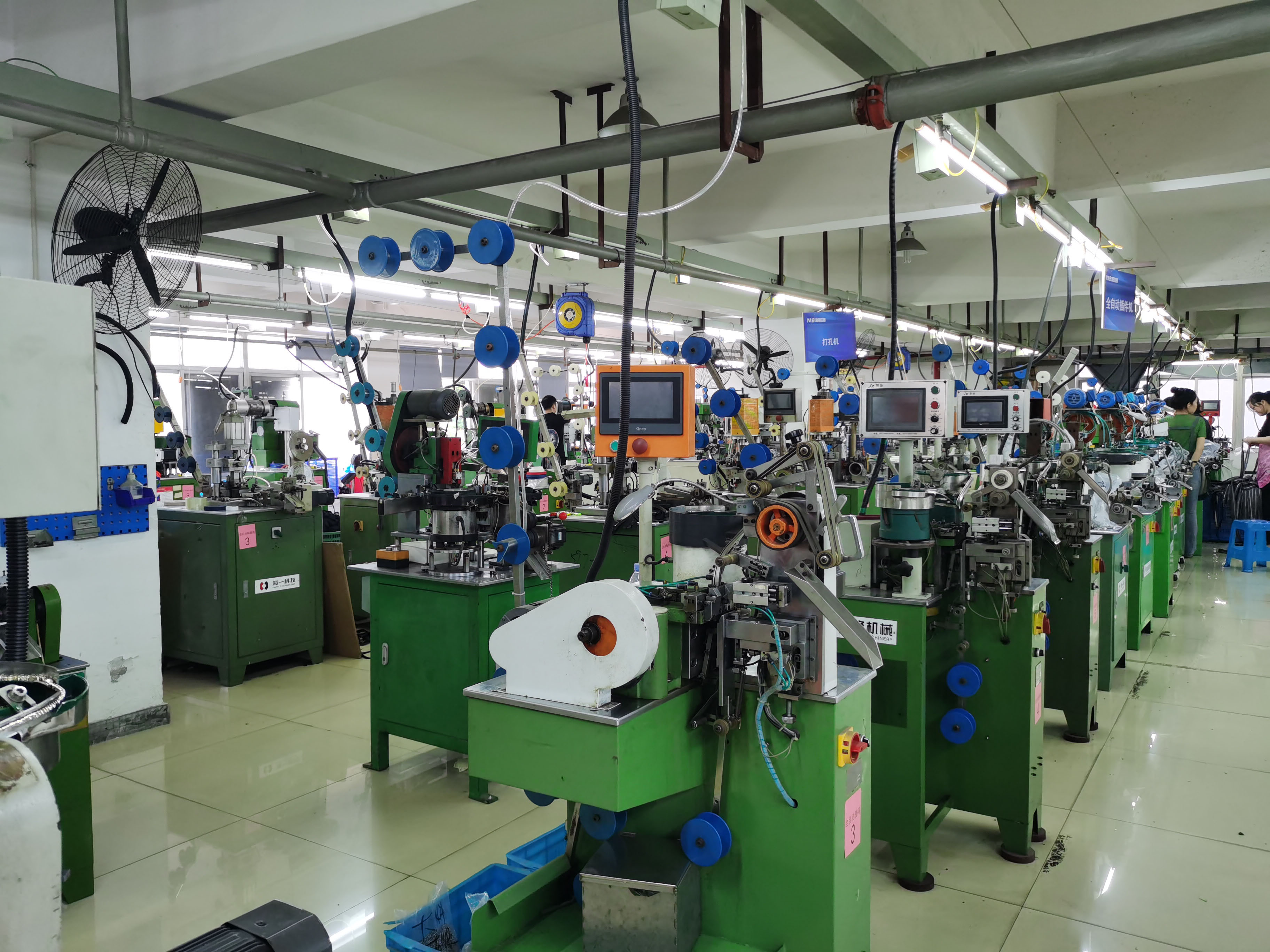
The specifications referenced throughout come from the published product data of Wenzhou Runhe Garment Accessories Co., Ltd., which manufactures under the brand YAB ZIPPER and supplies brass, aluminum alloy, resin, and nylon zippers to luggage, garment, outdoor goods, and footwear programs. YAB ZIPPER operates a 10,000 m² factory in Wenzhou, Zhejiang, with 150 employees, a 10-engineer R&D team, and annual output of 70,000,000 pieces.
Problem Definition: Why Zipper Specifications Fail After Sampling
Most zipper problems reported by brands are not manufacturing defects. They are specification errors that only become visible once the finished product is loaded, rained on, washed, shipped, or inspected at customs.
The same five failure patterns repeat across categories:
- Weight creep in luggage and outdoor gear. A metal zipper specified on aesthetic grounds alone adds grams at every opening. On a hard-shell case or a technical backpack with multiple compartments, those grams accumulate into a product that is heavier than the competitive set.
- Corrosion and finish wear. Luggage and outdoor gear live in rain, snow, and humidity. If the surface treatment is not chosen for that exposure, the finish dulls before the product reaches the consumer.
- Tensile mismatch. A zipper selected for its slim appearance is then used on a main compartment that carries the full load of the case or pack. Crosswise tensile strength, not tape width alone, determines whether that decision survives a year of use.
- Compliance gaps. Nickel release restrictions and eco-textile requirements in the EU are documentation issues as much as material issues. A specification that cannot be certified is a specification that cannot ship.
- Branding delays. A logo slider or puller is a tooling item. If it is confirmed after the zipper is ordered, the branding arrives late and the puller design is compromised.
All five are decided at specification stage. The rest of this guide converts them into concrete selection rules.
Industry Background: Material Mix Decides the Specification Conversation
Zippers are a large, quantified category, not a supporting trim. The global zipper market was valued at USD 17.39 billion in 2024 and is projected to reach USD 36.73 billion by 2034, equal to a 7.8% CAGR between 2025 and 2034 (Market Research Future, 2026).
Within that market, material mix sets the terms of the specification discussion. Nylon zippers accounted for 46% of total global zipper consumption in 2025, while metal zippers held a 31% share — and brass and aluminum together represent 67% of metal zipper production (Business Research Insights, 2026). In practical terms, roughly two-thirds of every metal zipper produced is either brass or aluminum. That is why material choice is the first decision in this guide, and why the nylon, plastic, and resin families are treated here only as classification context rather than as specification alternatives.
Trade data shows how concentrated the supply side is. Global trade in slide fasteners (HS 9607) reached USD 3.15 billion in 2024, with China accounting for USD 1.52 billion of exports (Observatory of Economic Complexity, 2026). Wenzhou, in Zhejiang Province, is one of the clusters behind that figure, and YAB ZIPPER is part of it: the company is the sixth president unit of the Wenzhou Zipper Chamber of Commerce, and its product lines run copper, aluminum, resin, and nylon zippers through Y teeth, normal teeth, corn teeth, and Euro teeth production, with anodized aluminum Y-teeth finishes developed to match copper zipper surface standards.
Detailed Solution: Matching Zipper Specifications to End Products
1. Material: When Aluminum Alloy Fits, and When Brass Fits
Aluminum alloy is the lighter option. Custom aluminum alloy zippers are made of aluminum and are 35% to 50% lighter than brass zippers, which reduces the total weight of luggage and outdoor gear. They deliver 410N crosswise tensile strength, smooth sliding performance, and more than 24 hours in salt spray testing. Surface finishes include bright silver, matte silver, black, and champagne anodizing. Cost is competitive compared with brass, which matters on high-volume luggage, backpack, and sportswear programs.
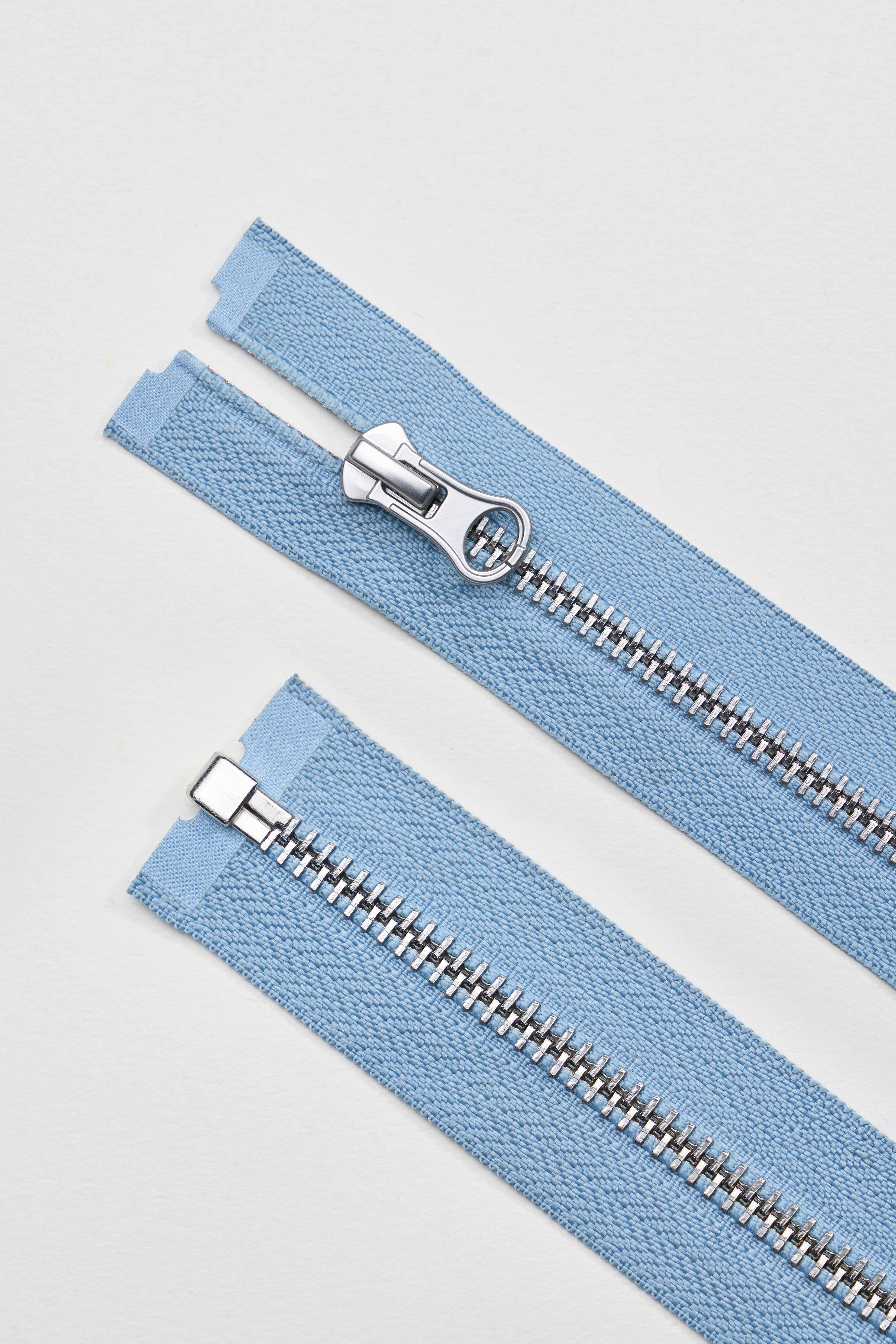
Brass is the stronger and more decorative option. Custom brass zippers are made of brass and polyester and deliver 510N crosswise tensile strength, with smooth sliding performance, teeth that resist deformation, and more than 24 hours of salt spray resistance. Plating colors include gold, antique brass, gunmetal, and nickel silver, and a nickel-free option compliant with the EU REACH standard is available. Brass is the natural fit for leather bags, jeans, outdoor luggage, and premium apparel, where the metallic texture and the higher tensile figure are part of the product promise.
The decision rule is straightforward. If the product's selling point is low weight or the environment is wet and abrasive — hard luggage, backpacks, sportswear, lightweight outerwear — start with aluminum alloy. If the product's selling point is durability, metallic hand-feel, or premium finish — leather goods, jeans, premium apparel — start with brass.
2. Size: #3, #5, and #8 Planning
Zipper numbering is a measurement, not a ranking. A #3, #5, or #8 designation refers to the width of the zipper teeth in millimeters when the zipper is closed (Maggie Frame, 2025). A #5 zipper, for example, measures approximately 5 mm across the closed teeth.
Both the aluminum alloy and the brass line are stocked in sizes #3, #5, and #8. The planning logic across product groups is consistent: #3 supports lightweight garment openings such as jacket fronts and pocket entries on sportswear and thin outerwear; #5 handles general garment and mid-size bag applications, including backpack front pockets and everyday luggage; #8 is the specification for high-load main compartments on hard luggage and larger outdoor bags, where the opening carries the full contents of the case.
Sizing must also account for the components around the chain. A complete custom zipper order typically involves the zipper chain, polyester yarn tape, sliders, top stops, bottom stops, pins and boxes, and — for waterproof constructions — TPU film. Tape has to be compatible with the host material: nylon, cotton, waterproof fabric, or leather. Specifying only the metal teeth and leaving tape, slider, and stop hardware open is one of the most common causes of assembly mismatch.
3. Teeth Configuration: Y, Corn, Euro, and Normal
Tooth profile changes how the zipper reads on the finished product, and both material lines support the four main configurations:
- Y teeth — the classic interlocking profile with a clean, even line; widely used on luggage, bags, and outerwear.
- Corn teeth — a rounder, more visible tooth shape that reads as a design element on bags and heavier garments.
- Euro teeth — a European-style profile often specified for apparel and mid-weight bag applications.
- Normal teeth — the standard general-purpose profile for garment and utility applications.
Brass and aluminum are both offered in Y teeth, corn teeth, Euro teeth, and normal teeth, so the profile choice does not force the material choice. That separation matters: a designer can keep the same visual tooth profile across a lightweight windbreaker and a heavier leather-trimmed jacket while switching the metal underneath.
4. Finish and Compliance Route
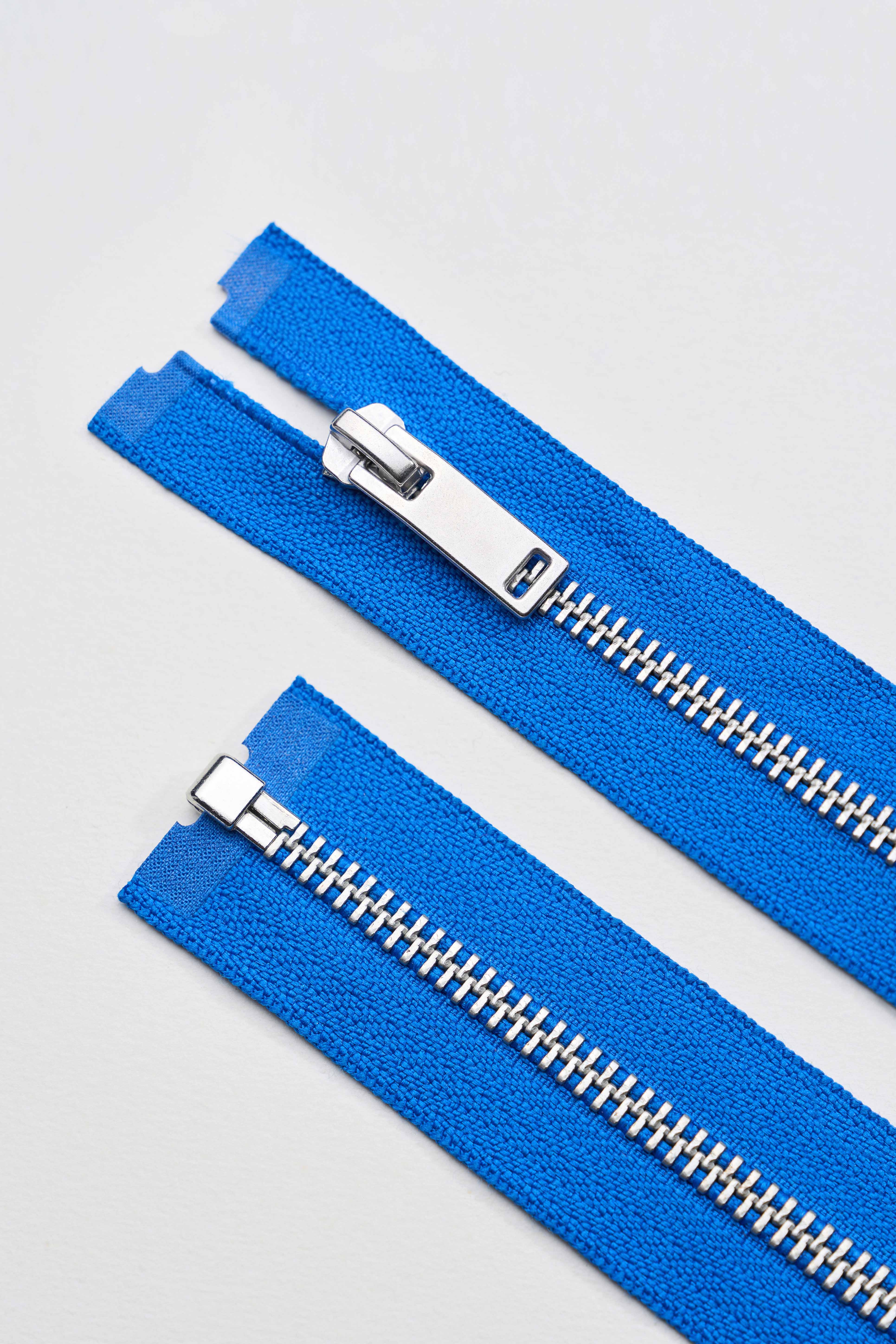
Aluminum alloy finishes are applied by anodizing: bright silver, matte silver, black, and champagne. Anodized surfaces hold up to regular washing, which makes them suitable for apparel that enters a home laundry cycle.
Brass finishes are applied by plating: gold, antique brass, gunmetal, and nickel silver. Where a program sells into the European Union, the nickel-free brass option that complies with the EU REACH standard is the specification to request at the outset rather than retrofit later.
Certification supports both lines. The aluminum alloy zipper and the brass zipper products are covered by ISO 9001:2015 certification issued by ACM INTERNATIONAL CERTIFICATION LIMITED under certificate number 24CN34506232Q, valid for the global market, with a scope covering the production and sales of zippers; the certificate was issued on 11 June 2025 and expires on 29 June 2027. The company also holds OEKO-TEX Standard 100 certification. For customs documentation, plastic scoop zippers are classified under HS code 9607.19 (FreightAmigo, 2025).
5. OEM Branding: Logo Sliders and Pullers
Branding hardware is a specification item, not an afterthought. The aluminum alloy zipper allows custom logo sliders and pullers for OEM orders. The brass zipper accepts custom logo sliders and pullers for both OEM and ODM orders. Customization across both lines covers zipper length, tape color, teeth color, teeth shape, slider shape, slider color, and zipper size — which means the same order can carry a brand-marked puller, a color-matched tape, and a specified tooth profile without splitting the program across suppliers.
Aluminum Alloy vs Brass: Specification Comparison
The table below compares only specifications published for the two YAB ZIPPER product lines. It is intended as a selection reference, not as a universal ranking of materials.
| Specification | Aluminum Alloy Zipper | Brass Zipper |
|---|---|---|
| Base material | Aluminum | Brass, polyester |
| Crosswise tensile strength | 410N | 510N |
| Weight position | 35%–50% lighter than brass | Reference weight |
| Salt spray test | >24h | >24h |
| Sliding performance | Smooth | Smooth |
| Surface finish options | Bright silver, matte silver, black, champagne anodizing | Gold, antique brass, gunmetal, nickel silver plating |
| Teeth configurations | Y teeth, corn teeth, Euro teeth, normal teeth | Y teeth, Euro teeth, corn teeth, normal teeth |
| Stock sizes | #3, #5, #8 | #3, #5, #8 |
| Custom logo slider & puller | Yes — OEM | Yes — OEM and ODM |
| Compliance option | ISO 9001:2015 certified product | Nickel-free option complying with EU REACH |
| Cost position | Competitive cost compared with brass | Premium metallic option |
| Typical application fit | Hard luggage, backpack, sportswear, outdoor gear, footwear | Leather bags, jeans, outdoor luggage, premium apparel |
Step-by-Step: Specifying a Custom Zipper Order
- Define the end product and its worst-case environment. These zippers are engineered for daily indoor use at normal temperature, outdoor use at normal or low temperature with rain and snow, light humidity with slight friction and abrasion, and conventional washing environments. They are not intended for long-term high-salt seaside exposure or for heavy washing with strong acid and alkali. If a project sits outside those boundaries, special requirements such as IP66 waterproofing, IK08 impact resistance, and anti-theft slider design should be raised at this stage.
- Set the load requirement. Use 410N crosswise tensile for aluminum alloy and 510N for brass as the engineering anchors, then match the opening to the load it carries. A main compartment on a hard case or technical pack is a different load case from a jacket front.
- Choose the size. Select from #3, #5, and #8 against the closed-teeth width the opening can accommodate, and confirm the tape type against the host fabric — nylon, cotton, waterproof fabric, or leather.
- Select the tooth profile. Choose Y, corn, Euro, or normal teeth based on how visible the chain should be and how the product is styled, then confirm the same profile is available in the chosen metal.
- Lock the finish and the compliance route. Anodizing for aluminum alloy; plating for brass. If the product sells into the EU, specify the nickel-free brass option and confirm certificate documentation — ISO 9001:2015 certificate number 24CN34506232Q covers the production and sales of zippers for the global market.
- Confirm branding and order parameters. Submit the logo slider and puller design together with the required customization list: zipper length, tape color, teeth color, teeth shape, slider shape, slider color, and zipper size. Minimum order quantity is 2,000 pcs, lead time is 7–30 days, monthly capacity is 300,000 units, and every order is subject to 100% pre-shipment testing.
Use Cases: How the Specification Changes by Product
Hard Luggage and Outdoor Luggage
Start with aluminum alloy. The 35%–50% weight reduction against brass directly lowers the total weight of the case, and more than 24 hours of salt spray resistance covers rain, snow, and humid transit. Specify #8 for the main compartment opening and #5 for internal or secondary openings, with Y teeth or normal teeth depending on the styling of the case. Where the project needs more than standard protection, IP66 waterproofing and anti-theft slider design can be specified, with TPU film used in waterproof constructions.
Backpacks
Aluminum alloy again, driven by both weight and cost. Multi-opening backpack designs multiply the weight penalty of a heavier metal, and the competitive cost position of aluminum keeps the specification commercially sustainable at volume. #5 is the working size for most front and mid openings, with #8 reserved for the main compartment on larger packs. Custom logo pullers are common here because the puller is the most touched component on the product.
Sportswear and Lightweight Outerwear
This is the clearest documented aluminum alloy case. An overseas fast fashion garment brand in France and Spain has worked with YAB ZIPPER for four years on spring and autumn lightweight windbreakers and casual coats. Switching the primary zipper to aluminum alloy reduced total garment weight by 38%, cut material procurement cost by 59% compared with the original brass zippers, held the defective complaint rate below 0.3%, and passed Oeko-Tex eco certification for EU customs clearance. The unit price was reported at roughly 40% of the brass zipper it replaced, with the same metallic appearance, an anodized surface that resists regular washing, and flexible small-batch split delivery. For a jacket zipper specification, #3 or #5 with an anodized finish is the standard starting point.
Leather Bags and Jeans
Brass is the specification to defend here. The 510N crosswise tensile strength suits heavier leather panels and denim plackets, and plating options in gold, antique brass, gunmetal, and nickel silver match the hardware language of leather goods. A brass Y-teeth zipper with a custom logo puller is a common jeans zipper and leather bag specification, and the nickel-free brass option covers EU-bound programs.
Footwear
Shoe zipper applications are small-opening, high-flex specifications. Both material lines list footwear among their applicable industries, so the choice is driven by the design intent: aluminum alloy where weight and cost matter across a large footwear range, brass where the metal finish is part of the product's visual identity. Confirm the tooth profile against the boot or shoe opening before finalizing, since a visible corn or Y tooth reads differently at footwear scale.
Premium Apparel
Brass carries the premium positioning: metallic texture, gold or gunmetal plating, and 510N tensile strength on a garment zipper that is expected to be felt as well as used. Where the garment is lightweight or the brand is managing weight claims, aluminum alloy with a matching anodized finish delivers a similar look at a lower weight and cost, as the four-year outerwear program demonstrates.
FAQ: Custom Zipper Specifications, Compliance, and Ordering
Are YAB ZIPPER custom zippers compliant with EU REACH requirements, and what certification applies?
Two layers apply. At product level, the aluminum alloy zipper and the brass zipper are covered by ISO 9001:2015 certification issued by ACM INTERNATIONAL CERTIFICATION LIMITED under certificate number 24CN34506232Q, valid for the global market, with a scope covering the production and sales of zippers; the certificate was issued on 11 June 2025 and expires on 29 June 2027. At material level, the brass zipper is available with a nickel-free option that complies with the EU REACH standard — the relevant specification for leather goods and apparel sold into the EU. The company also holds OEKO-TEX Standard 100 certification, and the four-year European outerwear program referenced above passed Oeko-Tex eco certification for EU customs clearance.
Can zippers be customized with a logo slider, custom teeth colors, and matching tape?
Yes. Customization covers zipper length, tape color, teeth color, teeth shape, slider shape, slider color, and zipper size. Both lines accept custom logo sliders and pullers — the aluminum alloy zipper for OEM orders, and the brass zipper for OEM and ODM orders. Teeth configurations available in both materials are Y teeth, corn teeth, Euro teeth, and normal teeth, with sizes #3, #5, and #8. Production is supported by a 10-engineer R&D team and a monthly capacity of 300,000 units.
How does aluminum alloy pricing compare with brass on volume orders?
Aluminum alloy zippers are positioned at a competitive cost compared with brass zippers, and the weight advantage of 35% to 50% further reduces the total weight of the finished product. The clearest reference point in the published data is the four-year fast fashion outerwear program in France and Spain, where switching to aluminum alloy cut material procurement cost by 59% versus the original brass zippers and priced the unit at roughly 40% of the brass zipper. Brass remains the better economic choice where 510N tensile strength, richer plating, or the nickel-free EU REACH-compliant option is the decisive requirement. Because cost depends on size, finish, and volume, the practical step is to send the full specification for a quotation.
How can a buyer validate a custom zipper before committing to mass production?
Validate the four specification layers first: material, size (#3/#5/#8), teeth profile (Y, corn, Euro, or normal), and finish (anodizing for aluminum alloy, plating for brass). Then confirm tape type against the host fabric and lock the slider and puller design. Because the minimum order quantity is 2,000 pcs per specification, validation happens on a production-scale run rather than on a hand-made prototype, and every order passes 100% pre-shipment testing. After-sales support is provided as remote technical support. For reference, the four-year outerwear program maintained a defective complaint rate below 0.3% across repeated production cycles.
What is the lead time and minimum order quantity for a custom zipper order?
The minimum order quantity is 2,000 pcs, and lead time runs 7–30 days depending on specification, finish, and order volume. Monthly capacity is 300,000 units, and export markets include the EU, US, Middle East, and Southeast Asia. To move an order forward, send the end product, required size, teeth profile, surface finish, tape color, and branding requirement — a specification confirmation and quotation follow from that input.
Conclusion
Specifying a custom zipper for luggage, backpacks, sportswear, and leather goods comes down to matching five variables to the product's real working conditions. Aluminum alloy covers the weight-sensitive and moisture-exposed end of the range with 410N crosswise tensile strength, more than 24 hours of salt spray resistance, 35%–50% weight savings against brass, and anodized finishes in bright silver, matte silver, black, or champagne. Brass covers the durability and premium-finish end with 510N tensile strength, gold, antique brass, gunmetal, or nickel silver plating, and a nickel-free option complying with the EU REACH standard. Sizes #3, #5, and #8, four tooth configurations, and OEM logo slider and puller customization are available across both lines, with ISO 9001:2015 certification underlying the production and sales scope.
Next Step: Send Your Zipper Specification
Share the end product, size, teeth profile, surface finish, tape color, and logo requirement, and YAB ZIPPER will confirm a specification and quotation. Minimum order quantity is 2,000 pcs, lead time is 7–30 days, and every order is subject to 100% pre-shipment testing.
Company Profile (PDF): Download the Wenzhou Runhe Garment Accessories company profile
Website: www.cnyab.com
Email: liam@cnyab.com | Tel / WhatsApp: +86 13705778502
Market and trade figures cited in this guide are attributed to Market Research Future, Business Research Insights, the Observatory of Economic Complexity, Maggie Frame, and FreightAmigo as published in 2025–2026. Product specifications, certifications, and case data are published data of Wenzhou Runhe Garment Accessories Co., Ltd. (YAB ZIPPER).