Top Zipper Choices for Outdoor Gear: Why Aluminum Alloy Makes the List
The short answer: when buyers shortlist zippers for outdoor gear, four material families come up again and again — nylon coil, molded plastic, brass metal and aluminum alloy metal. Aluminum alloy belongs on that list because it removes weight without giving up the metal look or the metal behaviour: it is 35%–50% lighter than brass, rated at 410N crosswise tensile strength with smooth sliding, tested to more than 24 hours of salt spray, and offered in bright silver, matte silver, black and champagne anodized finishes. Against brass, it is also the lower-cost option. The trade-off is equally clear: aluminum carries less load than brass and is not the right pick for long-term high-salt seaside exposure or heavy washing with strong acid and alkali.
This guide is written for the people who actually sign off on a custom zipper: brand owners, importers, distributors and product developers specifying zippers for hard luggage, backpacks, sportswear, garments and footwear. It covers the constraints that drive the decision, the market data behind the material split, and a step-by-step way to specify an aluminum alloy line without discovering the limits after mass production.
Why Zippers Become a Constraint Problem in Outdoor Gear
Outdoor gear is a set of constraints that pull against each other. Weight has to come down, strength has to stay up, the product has to survive rain, snow and humidity, the hardware has to match the shell fabric, the order has to clear customs with the right paperwork, and the whole bill has to land inside a target cost band.
A zipper sits in the middle of every one of those constraints. In practice, buyers bring seven of them to a custom zipper order:
- Weight budget. On a backpack or a lightweight windbreaker, the zipper is one of the few metal components on the product. Every gram saved per unit is multiplied across every zipper on the item and across the whole production run.
- Load and cycle count. A main compartment zipper and a small pocket zipper do not carry the same load, and they are not pulled the same number of times.
- Weather and corrosion. Rain, snow, humidity and salt exposure all attack the teeth and the slider finish.
- Appearance. Metal texture, finish consistency and colour matching with the shell fabric are part of the product's perceived quality.
- Compliance and documentation. Certificates, restricted substances and customs classification have to be in place before shipment, not after.
- Cost band. The zipper is a small share of the bill of materials, but a visible one when margins are thin.
- Supply parameters. MOQ, lead time and monthly capacity decide whether the specification can actually be produced on schedule.
It also helps to be explicit about the operating envelope. Standard zipper products in this category are built for daily indoor use at normal temperature; outdoor environments at normal or low temperature with rain and snow; light humidity and slight friction and abrasion; and conventional washing. They are not intended for long-term high-salt seaside exposure or heavy washing with strong acid and alkali. Where a project needs more — for example IP66 waterproofing, IK08 impact resistance or an anti-theft slider design — that has to be raised as a special requirement at the specification stage rather than assumed.
The Zipper Market in Numbers: What the Material Split Says
The market context matters because it explains why aluminum is a mainstream option rather than an exotic one.
- The global zipper market was valued at USD 17.39 billion in 2024 and is projected to reach USD 36.73 billion by 2034, a 7.8% CAGR from 2025 to 2034 (Market Research Future, Zipper Market Size is Anticipated to reach USD 36.73 Billion by 2034).
- Nylon zippers accounted for 46% of total global zipper consumption in 2025, driven by lightweight structure and corrosion resistance (Business Research Insights, Zippers Market Outlook, Size, Share, Industry Analysis, 2035).
- Metal zippers held a 31% share in 2025, and within metal zipper production brass and aluminum together represent 67% (same source).
- Global trade of zippers under HS 9607 reached USD 3.15 billion in 2024, with China accounting for USD 1.52 billion of that in exports (OEC, Zippers (HS: 9607) Product Trade, Exporters and Importers). Molded plastic scoop zippers are classified under HS 9607.19.
- Sizing is standardised: a #3, #5 or #8 designation refers to the width of the zipper teeth in millimetres when the zipper is closed — so #5 is approximately 5 mm.
Read together, those numbers say something practical. Nylon dominates volume, plastic covers price-sensitive and utility applications, and metal keeps a durable specialist share. Inside the metal category, the choice has effectively narrowed to two materials: brass and aluminum. Aluminum is not the newcomer here; it is half of the metal category, positioned for products where weight and cost matter more than maximum pull strength.
Why Aluminum Alloy Zippers Belong on the Outdoor Shortlist
Aluminum alloy zippers are made of aluminum, and that single material choice drives five outcomes that matter to outdoor gear programs.
1. Weight reduction of 35%–50% against brass
The published weight difference between the aluminum alloy line and the brass line is 35% to 50% lighter than brass. This is the headline reason aluminum appears on backpack and lightweight outerwear specifications: the zipper stops being the heaviest small component on the product.
2. A documented strength figure, not a marketing claim
The aluminum alloy zipper has a crosswise tensile strength of 410N, with smooth sliding performance. For comparison, the brass line is rated at 510N with the same smooth sliding characteristic. That gap is the honest basis for the trade-off: aluminum trades roughly 100N of crosswise tensile strength for a large weight saving and a lower unit cost.
3. Weather resistance tested beyond a single day
Both the aluminum alloy and brass zipper lines are tested to more than 24 hours of salt spray. For outdoor gear that is a useful floor: it covers rain, snow, humidity and normal abrasion exposure, while still leaving the long-term high-salt coastal case out of scope.
4. Finishes that match outdoor colourways
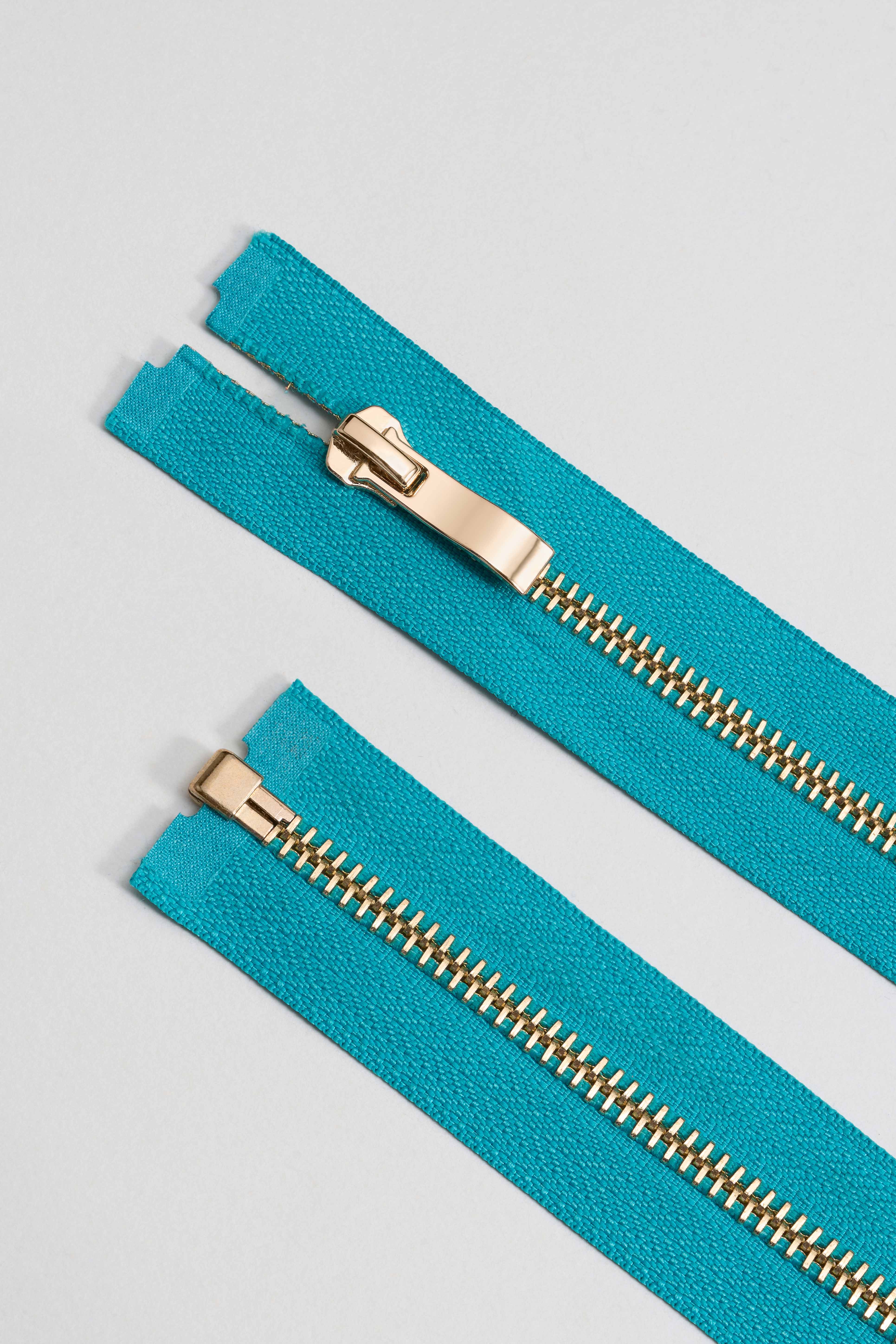
The aluminum alloy zipper is available in surface finishes including bright silver, matte silver, black and champagne anodizing. Matte silver and black in particular suit technical outerwear, where a bright polished metal look would read as too dressy.
5. Cost position below brass
Aluminum alloy is priced competitively compared with brass zippers — the second reason it makes the shortlist, and often the reason it wins the volume line while brass stays on the premium line.
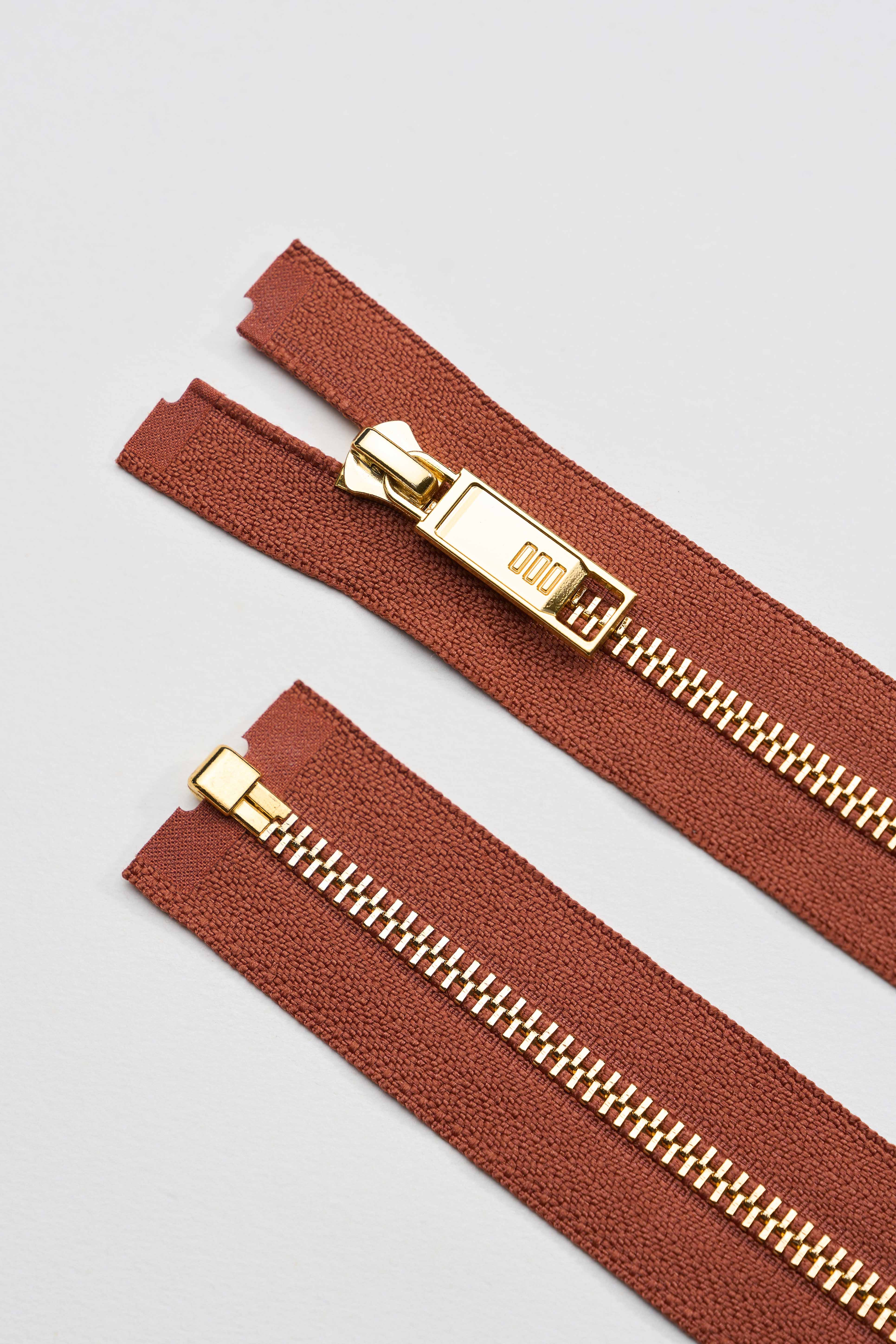
Published specification: Aluminum Alloy Zipper (YAB ZIPPER)
| Specification | Detail |
|---|---|
| Material | Aluminum |
| Teeth types | Y teeth, corn teeth, euro teeth, normal teeth |
| Available sizes | #3, #5, #8 (stock) |
| Crosswise tensile strength | 410N |
| Sliding performance | Smooth |
| Salt spray test | >24h |
| Surface finishes | Bright silver, matte silver, black, champagne anodizing |
| Weight vs. brass | 35%–50% lighter |
| Cost position | Competitive compared with brass zippers |
| Customization | Custom logo slider and puller for OEM; length, tape colour, teeth colour, teeth shape, slider shape, slider colour, size |
| Typical applications | Hard luggage, backpacks, sportswear, garments, footwear |
| Certification | ISO 9001:2015 (certificate number 24CN34506232Q) |
Step-by-Step: How to Specify an Aluminum Alloy Zipper
Specifying aluminum is a six-step sequence. Skipping a step usually shows up later as a colour mismatch, an under-strength zipper on a load-bearing panel, or a customs query.
Step 1 — Decide whether the zipper is a weight-critical component
Aluminum pays off where the product's selling story includes weight: backpacks, lightweight windbreakers, sportswear, travel luggage. If the panel is a high-stress main closure on a heavy bag, start from brass and consider aluminum only where the weight argument is strong enough to justify the lower tensile figure.
Step 2 — Match the size to the load
Sizes #3, #5 and #8 are available in both aluminum alloy and brass. Because the number refers to teeth width in millimetres when closed, it is the first physical check against the panel opening and the load the zipper will carry. Confirm the size against the rated crosswise tensile strength (410N for aluminum, 510N for brass) rather than against appearance.
Step 3 — Set the weather specification
State the salt spray requirement explicitly; the published figure for the aluminum line is more than 24 hours. Then confirm the operating envelope: daily indoor use, outdoor rain and snow, light humidity and slight abrasion are in scope; long-term high-salt seaside exposure and heavy washing with strong acid and alkali are out of scope. If the project requires IP66 waterproofing, IK08 impact resistance or anti-theft slider behaviour, list it as a special requirement from the start.
Step 4 — Lock the finish and colour
Choose from bright silver, matte silver, black and champagne anodizing, and approve the finish against the actual shell fabric under production lighting. Matte finishes reduce glare on technical outerwear; black and champagne anodizing read as hardware rather than jewellery. Confirm tape colour and teeth colour separately, because both are customisable and both affect the final appearance.
Step 5 — Confirm compliance and documentation
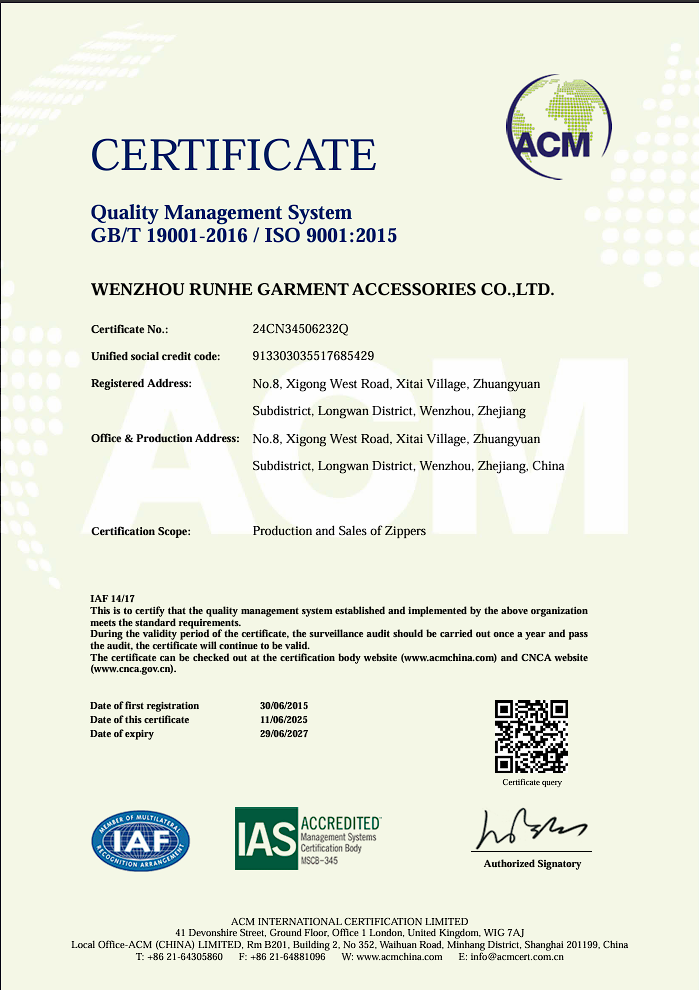
Aluminum alloy zipper (item 6274) is certified to ISO 9001:2015, issued by ACM INTERNATIONAL CERTIFICATION LIMITED and applicable to the global market. The same certification covers the brass zipper (item 6887) under certificate number 24CN34506232Q, with a scope of production and sales of zippers and an expiry date of 29 June 2027. For EU-bound orders, a nickel-free brass option is available that complies with the EU REACH standard. If your compliance team needs a restricted-substances document, request it together with the order confirmation rather than at shipment.
Step 6 — Fix the production parameters before the PO
Confirm the commercial frame early, because it decides whether the specification is buildable on schedule:
- MOQ: 2000 pcs
- Lead time: 7–30 days
- Monthly capacity: 300,000 units
- Quality control: 100% pre-shipment test
- Customization: zipper length, tape colour, teeth colour, teeth shape, slider shape, slider colour, zipper size
- Export markets served: EU, US, Middle East, Southeast Asia
- After-sales: remote technical support
Use Cases: Where Aluminum Alloy Zippers Fit
Luggage zippers on hard luggage
Hard luggage is one of the three applications YAB ZIPPER lists for the aluminum alloy line, alongside backpacks and sportswear. On a hard-shell case, the zipper runs the full perimeter, so a 35%–50% weight saving repeats along every centimetre of that run — and the anodized black or matte silver finish matches typical shell hardware.
Backpacks
Backpacks are where the weight argument is strongest. Aluminum alloy zippers keep the metallic hardware look that buyers associate with durable outdoor gear, while reducing the metal weight carried on the pack. Sizes #3 and #5 are the practical range for pocket and compartment lines, with #8 for heavier closures where the panel can carry it.
Sportswear and jacket zippers
For jackets and lightweight outerwear, aluminum alloy combines smooth sliding with a metal appearance. YAB ZIPPER has also published a dedicated sourcing angle on jacket production, which covers how material fit is matched to jacket construction style. For a lightweight spring/autumn jacket line, the smooth sliding behaviour matters as much as the weight, because a stiff main zipper is the first thing a wearer notices.
Where brass still wins
Brass remains the right answer where load and premium positioning dominate. The brass line is rated at 510N, is available with a nickel-free option compliant with EU REACH, and comes in gold, antique brass, gunmetal and nickel silver plating. Its documented fit includes leather bags, jeans zippers, outdoor luggage and premium apparel — which is why a jeans zipper or a heavy leather bag closure is usually still a brass decision, not an aluminum one.
A four-year program: what switching to aluminum actually delivered
One overseas fast-fashion brand sourcing from France and Spain has run a four-year zipper program with Wenzhou Runhe Garment Accessories, supporting spring and autumn lightweight windbreakers and casual coats. Under the reported results of that program, the aluminum alloy zipper delivered the following:
- The finished garment's total weight was reduced by 38%, improving the wearer's experience.
- Material procurement cost fell by 59% against the original brass zippers, with a unit price at roughly 40% of brass.
- Reciprocating sliding performance met the industry standard, with a defective complaint rate below 0.3%.
- The program passed OEKO-TEX eco certification, supporting EU customs clearance.
The same case note records the limits that come with the decision: the anodized surface resists regular washing, the solution suits lightweight spring/autumn apparel, and finished garments are normally used by end consumers for 1–2 years. Flexible small-batch split delivery was available for that program.
Limitations to write into the specification
- Aluminum is not the highest-load option in the range: 410N versus 510N for brass.
- Neither line is intended for long-term high-salt seaside exposure or heavy washing with strong acid and alkali.
- IP66 waterproofing, IK08 impact resistance and anti-theft slider designs are project-level special requirements, not default features.
- Aluminum suits applications with a 1–2 year consumer service life expectation, as shown by the reference program.
Brass vs. Aluminum Alloy: Comparison Table for Outdoor Gear
The comparison below uses only the published parameters of the two metal lines. It is the shortest version of the decision buyers actually make.
| Comparison dimension | Aluminum Alloy Zipper | Brass Zipper |
|---|---|---|
| Material | Aluminum | Brass, polyester tape |
| Weight | 35%–50% lighter than brass | Baseline |
| Crosswise tensile strength | 410N | 510N |
| Sliding performance | Smooth | Smooth |
| Salt spray test | >24h | >24h |
| Teeth types | Y teeth, corn teeth, euro teeth, normal teeth | Y teeth, euro teeth, normal teeth, corn teeth |
| Available sizes | #3, #5, #8 | #3, #5, #8 |
| Surface finishes / plating | Bright silver, matte silver, black, champagne anodizing | Gold, antique brass, gunmetal, nickel silver |
| Compliance options | ISO 9001:2015 (global) | Nickel-free option compliant with EU REACH; covered by certificate number 24CN34506232Q |
| Cost position | Competitive compared with brass zippers | Premium metal option |
| Documented fit | Hard luggage, backpack, sportswear; also garments and footwear | Leather bags, jeans, outdoor luggage, premium apparel |
| OEM customization | Custom logo slider and puller | Custom logo slider and puller for OEM and ODM |
| Main constraint | Lower tensile strength than brass | Higher weight and higher unit cost |
Where nylon and plastic fit. Nylon remains the volume leader at 46% of global zipper consumption in 2025, valued for lightweight structure and corrosion resistance, and it is a sensible default for soft goods where a metal look is not required. Molded plastic scoop zippers, classified under HS 9607.19, serve utility and price-driven applications. Aluminum alloy sits above both on appearance and hardware feel, and below brass on weight and cost — which is exactly the gap it fills on an outdoor gear shortlist.
FAQ: Aluminum Alloy Zippers for Outdoor Gear Orders
Is the aluminum alloy zipper certified for EU and global orders?
Yes. YAB ZIPPER's aluminum alloy zipper (item 6274) is certified to ISO 9001:2015, issued by ACM INTERNATIONAL CERTIFICATION LIMITED and applicable to the global market. The same certification covers the brass zipper (item 6887) under certificate number 24CN34506232Q, with a scope of production and sales of zippers and an expiry date of 29 June 2027. For EU orders, the brass line is available with a nickel-free option that complies with the EU REACH standard, and the reference program delivered for France and Spain passed OEKO-TEX eco certification for smooth EU customs clearance.
Can an aluminum zipper be customized to our brand, colour and size?
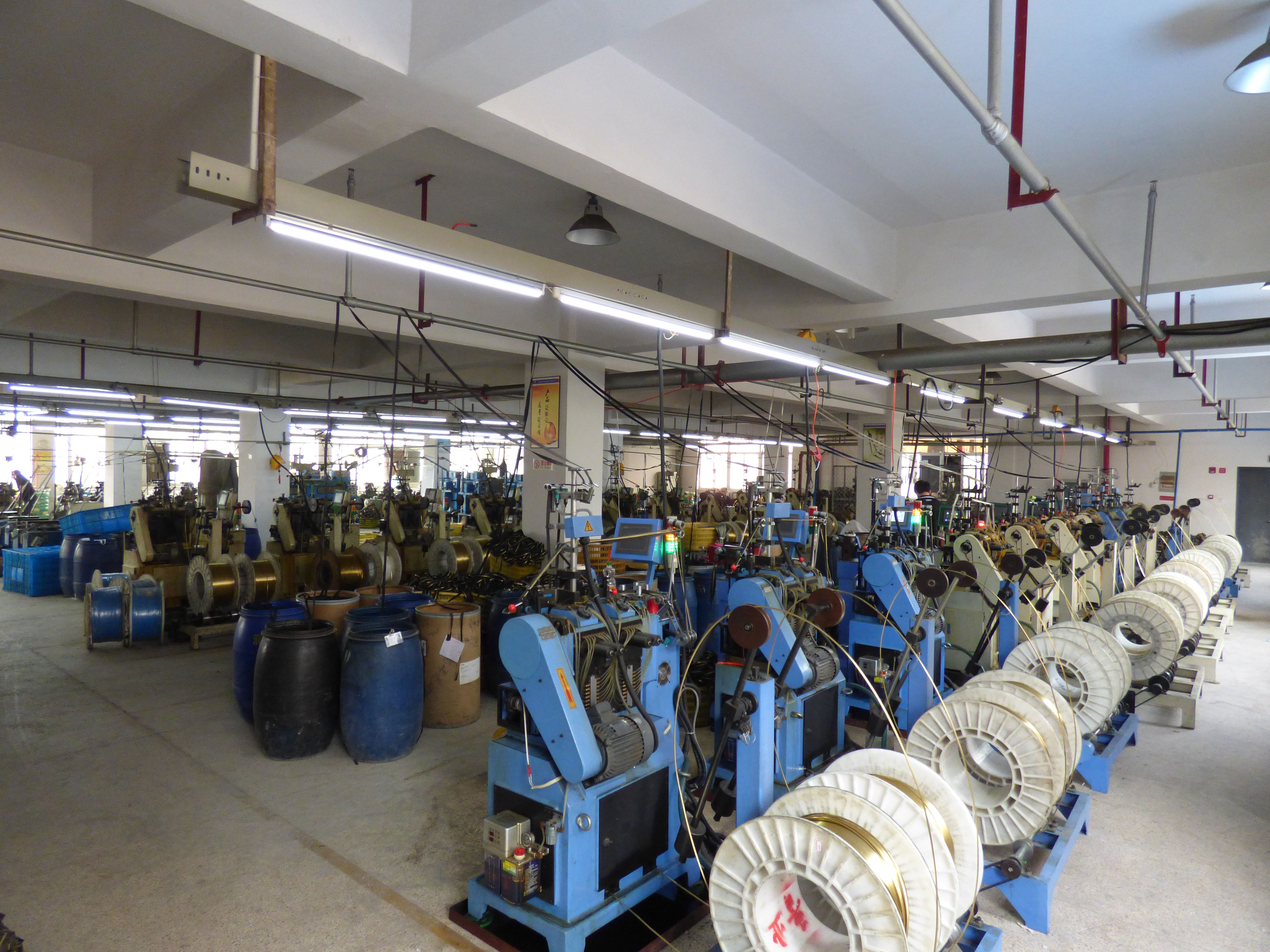
Yes. The aluminum alloy zipper can be supplied with a custom logo slider and puller for OEM orders, and customization covers zipper length, tape colour, teeth colour, teeth shape, slider shape, slider colour and zipper size. It is produced in Y teeth, corn teeth, euro teeth and normal teeth, in sizes #3, #5 and #8, with finishes including bright silver, matte silver, black and champagne anodizing. The manufacturer, Wenzhou Runhe Garment Accessories Co., Ltd. (YAB ZIPPER), operates a 10,000 m² factory with more than 500 zipper production machines and a 10-engineer R&D team.
How does the cost of an aluminum alloy zipper compare with brass?
Aluminum alloy is positioned at a competitive cost compared with brass zippers, and it is the lighter of the two. In the four-year reference program for a fast-fashion brand in France and Spain, switching to aluminum alloy reduced material procurement cost by 59% versus the original brass zippers, at a unit price of roughly 40% of brass, while the finished garment's total weight fell by 38%. Those two effects together are why aluminum is normally the volume line and brass the premium line.
How should we validate an aluminum alloy zipper before mass production?
Validate against published parameters rather than appearance alone. The aluminum alloy line is rated at 410N crosswise tensile strength with smooth sliding performance and more than 24 hours of salt spray resistance; the brass line is rated at 510N with the same sliding performance and salt spray figure. Confirm the size (#3, #5 or #8) against the panel opening, approve the finish against the shell fabric, and confirm the compliance documents at the same time. Finished production runs are supported by 100% pre-shipment testing, and the reference program recorded a defective complaint rate below 0.3%.
What are the MOQ, lead time and after-sales terms?
The MOQ is 2000 pcs, lead time runs 7–30 days, and monthly capacity is 300,000 units, with export experience in the EU, US, Middle East and Southeast Asia. Quality control is a 100% pre-shipment test, and after-sales support is provided as remote technical support. The fastest way to move forward is to send your target size, finish, tape colour and annual volume for a quotation — the company profile with the full product range is available at runhe zipper Company Profile.
Conclusion: Aluminum Alloy Is the Value Pick, Brass Is the Load Pick
For outdoor gear, the zipper decision comes down to a two-line strategy rather than a single answer. Aluminum alloy takes the weight-sensitive, cost-sensitive volume: 35%–50% lighter than brass, 410N crosswise tensile strength, smooth sliding, more than 24 hours of salt spray, and a finish range covering bright silver, matte silver, black and champagne anodizing, all at a competitive cost against brass. Brass takes the load-bearing and premium positions: 510N, plating in gold, antique brass, gunmetal and nickel silver, and a nickel-free EU REACH-compliant option.
Both lines are backed by ISO 9001:2015 certification, certificate number 24CN34506232Q, and both are customisable with logo sliders and pullers. The practical next step is to write the size, tensile requirement, salt spray expectation, finish and annual volume into one specification sheet — and then confirm the parameters against a real quotation.
Request the Aluminum Alloy Zipper Specification and Quotation
Wenzhou Runhe Garment Accessories Co., Ltd. (YAB ZIPPER) produces aluminum, brass, resin and nylon zippers for luggage, garment, outdoor goods and footwear programs, with OEM/ODM customization, a 2000 pcs MOQ and lead times of 7–30 days.
Send your target size, finish and volume to liam@cnyab.com or WhatsApp/Tel +86 13705778502. Download the full range and capability overview here: YAB ZIPPER Company Profile (PDF). Website: www.cnyab.com. Address: No.8 Xigong West Rd., Longwan, Wenzhou, Zhejiang.