
What Is a Euro Teeth Zipper? Aluminum Alloy and Brass Variants Explained
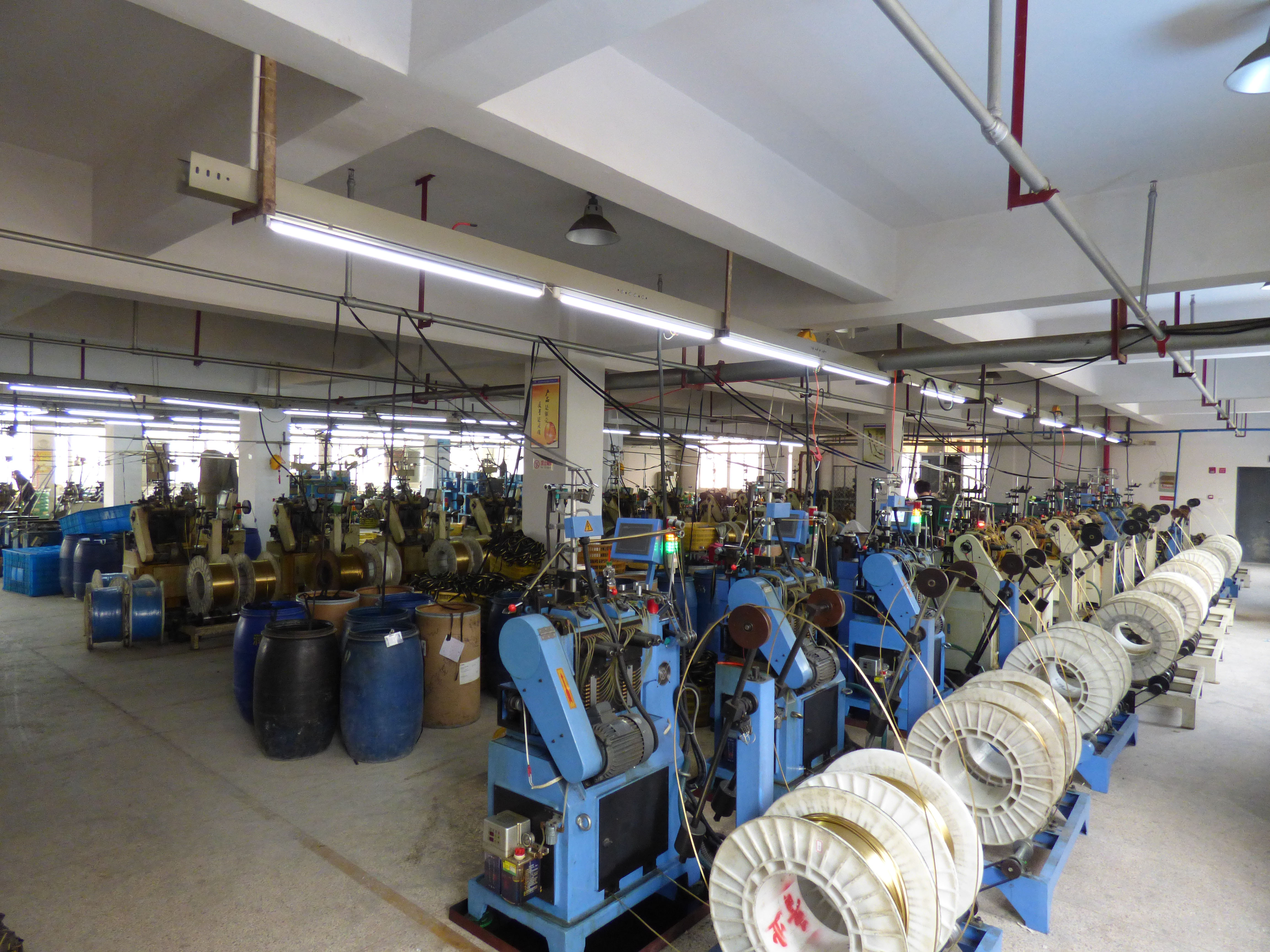
Teeth attaching line: metal teeth are fixed to zipper tape before finishing, inspection and packing.
Short answer: a Euro teeth zipper is a metal zipper built on the standard European-style tooth profile, and it is produced in two mainstream material lines — aluminum alloy and brass. Both lines share the same size conventions (#3, #5 and #8) and the same end markets: luggage, garments, outdoor equipment and footwear. The material decision comes down to two measurable trade-offs: aluminum alloy teeth are 35%–50% lighter than brass, while brass delivers about 100N higher crosswise tensile strength at the same size.
This article explains where the Euro teeth category sits among other tooth profiles, why one zipper name covers two very different metals, and how weight, strength, corrosion behaviour, cost and compliance differ in real orders.
Quick Reference: What the Term “Euro Teeth Zipper” Covers
A Euro teeth zipper is defined by three things at the same time: the tooth profile family, the metal used for the teeth, and the size number. In supplier catalogs this category normally sits inside the broader normal-teeth or other-metal groupings, rather than inside named special profiles such as copper Y teeth, corn teeth, Swiss teeth or particle teeth, which are separate production lines.
- Tooth family: European-style metal tooth profile, listed as Euro teeth, normal teeth or other metal depending on the catalog.
- Materials: two mainstream lines — aluminum alloy and brass (copper-based).
- Sizes: #3, #5 and #8, where the number refers to the width of the closed teeth in millimeters.
- Typical end products: luggage, garments, outdoor gear and footwear.
- Decision axis: weight versus load capacity, not profile versus profile.
Why This Question Appears at the Discovery Stage
Buyers usually meet the phrase in one of three places: a brand's finished-goods spec sheet, a supplier catalog line item, or a quotation that lists tooth profiles and materials in one price table. That is why the same term triggers three different questions — is Euro teeth a material, a size, or a shape?
It describes the tooth shape. It does not describe the metal and it does not describe the size. A buyer can order brass Euro teeth and aluminum alloy Euro teeth in #5 from the same manufacturer and receive two products with the same profile and the same tape width, but with clearly different weight, strength and service behaviour. Because material is not part of the category name, the material decision has to be taken separately — and that decision drives weight, crosswise tensile strength, corrosion resistance, unit cost and after-sales exposure.
Industry Background: Where Metal Zippers Sit in the Market
Zippers are a mature but expanding category. Market Research Future reports the global zipper market at USD 17.39 billion in 2024, projected to reach USD 36.73 billion by 2034 at a 7.8% CAGR over 2025–2034. Material mix inside that market is equally relevant: Business Research Insights puts nylon zippers at 46% of global zipper consumption in 2025, metal zippers at 31% of the market, and brass plus aluminum at 67% of metal zipper production. In other words, most metal zipper programmes are already brass or aluminum programmes.
Trade data shows how concentrated the supply base is. The Observatory of Economic Complexity reports global zipper trade (HS 9607) at USD 3.15 billion in 2024, with China exporting USD 1.52 billion of that total. For buyers, that concentration explains why most brass and aluminum alloy tooth programmes are sourced from Chinese clusters — Wenzhou in Zhejiang being one of the established ones.

The YAB ZIPPER production site in Longwan, Wenzhou, Zhejiang, where copper, aluminum, resin and nylon zipper lines operate.
One concrete example of that cluster is Wenzhou Runhe Garment Accessories Co., Ltd., the manufacturer behind the YAB ZIPPER brand. The company is located at No.8 Xigong West Rd., Longwan, Wenzhou, Zhejiang, produces copper, aluminum, resin and nylon zippers, holds ISO 9001 and OEKO-TEX Standard 100 certification, and serves as the sixth president unit of the Wenzhou Zipper Chamber of Commerce. Its facility runs 10,000 m² of production space with 150 employees, more than 500 zipper production machines, a 10-engineer R&D team and an annual output of 70,000,000 pieces, with about 30% of output exported and Southeast Asia as the main overseas market.
One Tooth Category, Two Material Lines
Aluminum alloy and brass Euro teeth share the same tooth geometry, which is why the two are frequently quoted side by side in the same size and the same tape width. They are not interchangeable in performance, and treating them as one material is the most common sourcing misunderstanding in this category.
Aluminum Alloy Euro Teeth
Aluminum alloy teeth are the lightweight line. Weight per equivalent specification is 35%–50% lower than brass, which is the main reason aluminum shows up in lightweight spring and autumn coats, kids' clothing, fast-fashion casual garments, backpacks, cosmetic bags and home textiles. Cost is the second driver: aluminum alloy raw material is considerably cheaper than brass, and because aluminum forms easily with less loss during stamping and deburring, labour and energy consumption are lower. For the same specification, total purchasing cost can be around 40% of a brass zipper.
Two limits matter in practice. Crosswise tensile strength is about 100N lower than a brass zipper of the same size — acceptable for ordinary garments, insufficient for heavy high-load products. Aluminum is also prone to oxidation discolouration when exposed to sweat or seawater over long periods, so an anti-oxidation anodized finish is generally necessary for humid or coastal markets.
Brass Euro Teeth
Brass (copper-based) teeth are the durability line. At equal opening and closing frequency, a brass zipper lasts over 35% longer than an aluminum zipper; the compression threshold of brass teeth is about 40% higher; and in normal environments the probability of oxidation white spots is about 60% lower. Brass also accepts a wider range of plating colours and holds a premium metallic texture over long use.
The trade-offs are weight and price. Brass is 35%–50% heavier than an equivalent aluminum specification, and unit purchasing price is typically 12%–25% higher — a gap that can be narrowed through volume production arrangements. Typical brass applications are leather goods, denim garments, workwear, and high-end bags and cases, plus any product that is operated frequently over a long service life. Brass is not the first choice for ultra-lightweight hard luggage.
Finish options widen the gap between the two lines. Aluminum Y-teeth treatment programmes include antique silver, antique copper, brass, light gold, black teeth, white gold, bright silver and bright black, as well as titanium-plated series such as platinum, black gold, light gold and rose gold — surface results that reach copper-zipper standards of appearance. Brass plating offers its own colour depth. For both lines, nickel-free anodizing and eco-friendly dyeing are the pre-environmental control routes used to keep finished goods inside EU and US test limits.
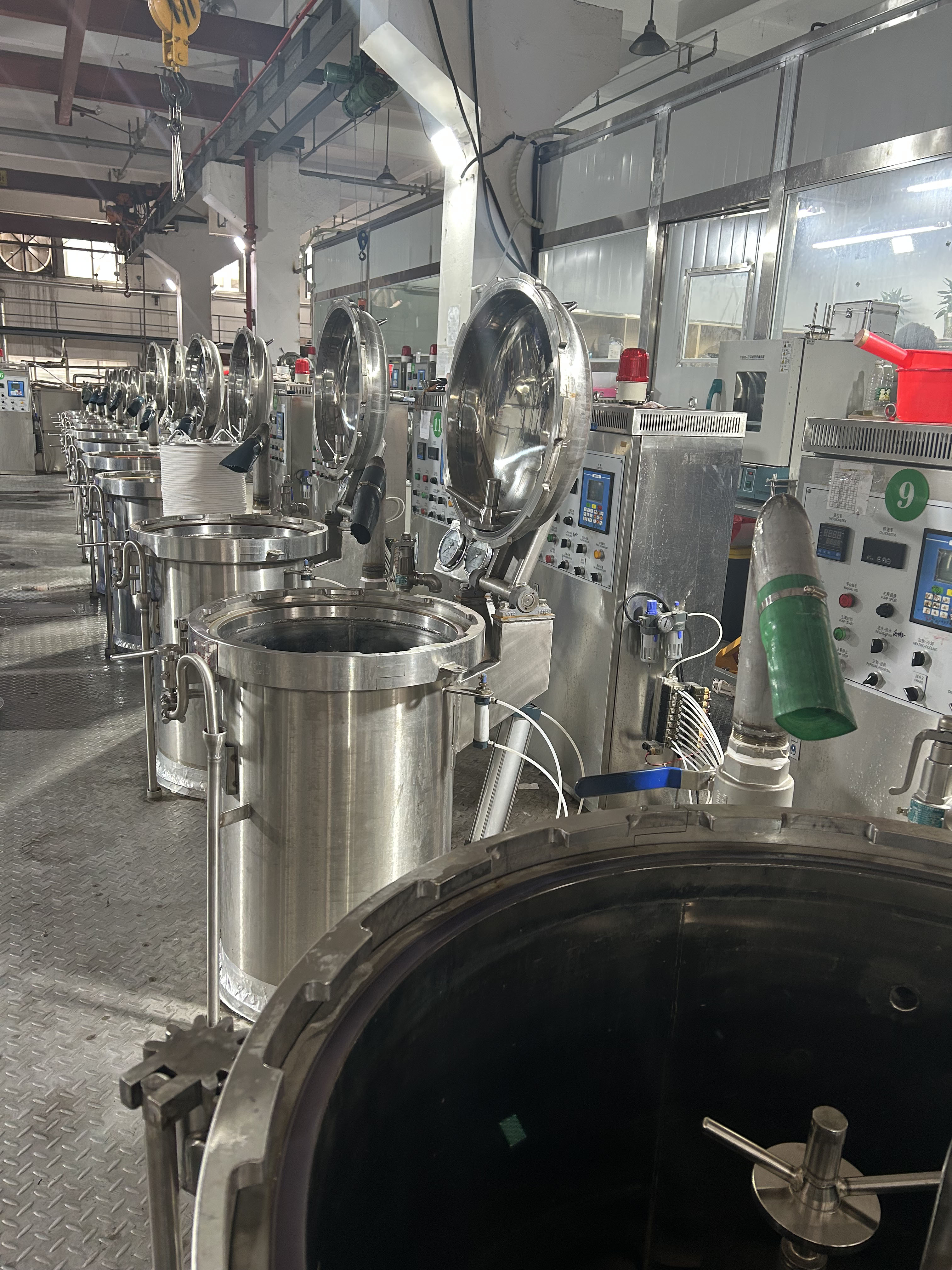
Tape dyeing workshop: tape colour and colour fastness are controlled before teeth are attached, which matters when brass and aluminum variants must ship in the same tape colour.
Euro Teeth Sizes #3, #5 and #8: What the Numbers Mean
The size number is a measurement, not a quality grade. In the sizing convention used across the industry, #3, #5 and #8 refer to the width of the zipper teeth in millimeters when the zipper is closed — a #5 zipper has teeth approximately 5 mm wide. Both brass and aluminum alloy Euro teeth are produced in these three sizes, and the tape, slider and pull are matched to the size rather than to the metal.
This is why sizing and material selection are two separate decisions. A #5 aluminum zipper and a #5 brass zipper sit in the same tape width and slider channel and can be swapped on a spec sheet, yet they behave differently under load and in humid conditions. Buyers who treat #5 as “the same zipper” regardless of metal usually discover the difference at the durability test stage rather than at the sampling stage.
Weight, Strength and Service Life: The Core Material Difference
Three measurable differences separate the two lines once size is fixed. Weight: brass is 35%–50% heavier per equivalent specification, so the material choice directly changes the hand-feel of a jacket or the total weight of a luggage programme. Crosswise tensile strength: aluminum runs about 100N lower than brass at the same size, which is the practical boundary between ordinary garments and heavy high-load products. Service behaviour: under equal open-and-close frequency brass lasts over 35% longer, resists compression roughly 40% better, and produces about 60% fewer oxidation white spots in normal environments.
Sliding behaviour differs in a subtler way. Brass maintains stable sliding resistance, and that smoothness decays slowly over time. Aluminum teeth can loosen and cause jamming after long-term friction, which shows up as a gradual deterioration of the operating feel rather than a sudden failure.
Step-by-Step: From Category to a Specified Order
- Confirm the tooth category in writing. Check whether the quotation line is a Euro teeth / normal teeth profile or a different profile such as a Y-tooth, corn-tooth, Swiss-tooth or particle-tooth line. The category determines tooling, and tooling determines lead time.
- Fix the metal against the load case. If the finished product is light and weight is the priority, aluminum alloy; if the product carries load, is opened frequently, or must survive years of use, brass. Record the reason on the spec sheet so the decision survives staff changes.
- Select the size (#3, #5 or #8) and lock the tape, slider and pull combination. Size decides the closed teeth width in millimeters; tape colour must be confirmed at the same time, especially when brass and aluminum variants ship in one tape colour.
- Define the finish and the compliance route. Aluminum requires anodizing or titanium-plating treatment for humid, coastal or high-sweat end uses; brass offers the broader plating colour range. For both, confirm nickel-free anodizing, eco-friendly dyeing and the test reports required for the destination market.
- Validate with samples and lab testing before volume production. Common acceptance practice is a pre-shipment test, supported by reciprocating durability testing, a salt spray test chamber, and washing and rubbing equipment. Sampling inspection follows the international AQL 1.0 standard, and batch samples with test reports are retained for at least 2 years for traceability.
- Agree commercial terms and continuity. The typical structure for this category is MOQ 2000 pcs or meter, delivery terms FOB Shanghai or FOB Ningbo, and payment of 30% T/T in advance with 70% T/T after goods are delivered into the warehouse. Production continuity is protected by multiple independent production lines and standby equipment, and complaint handling is normally committed within 48 hours, with free re-delivery or rework for defective products.
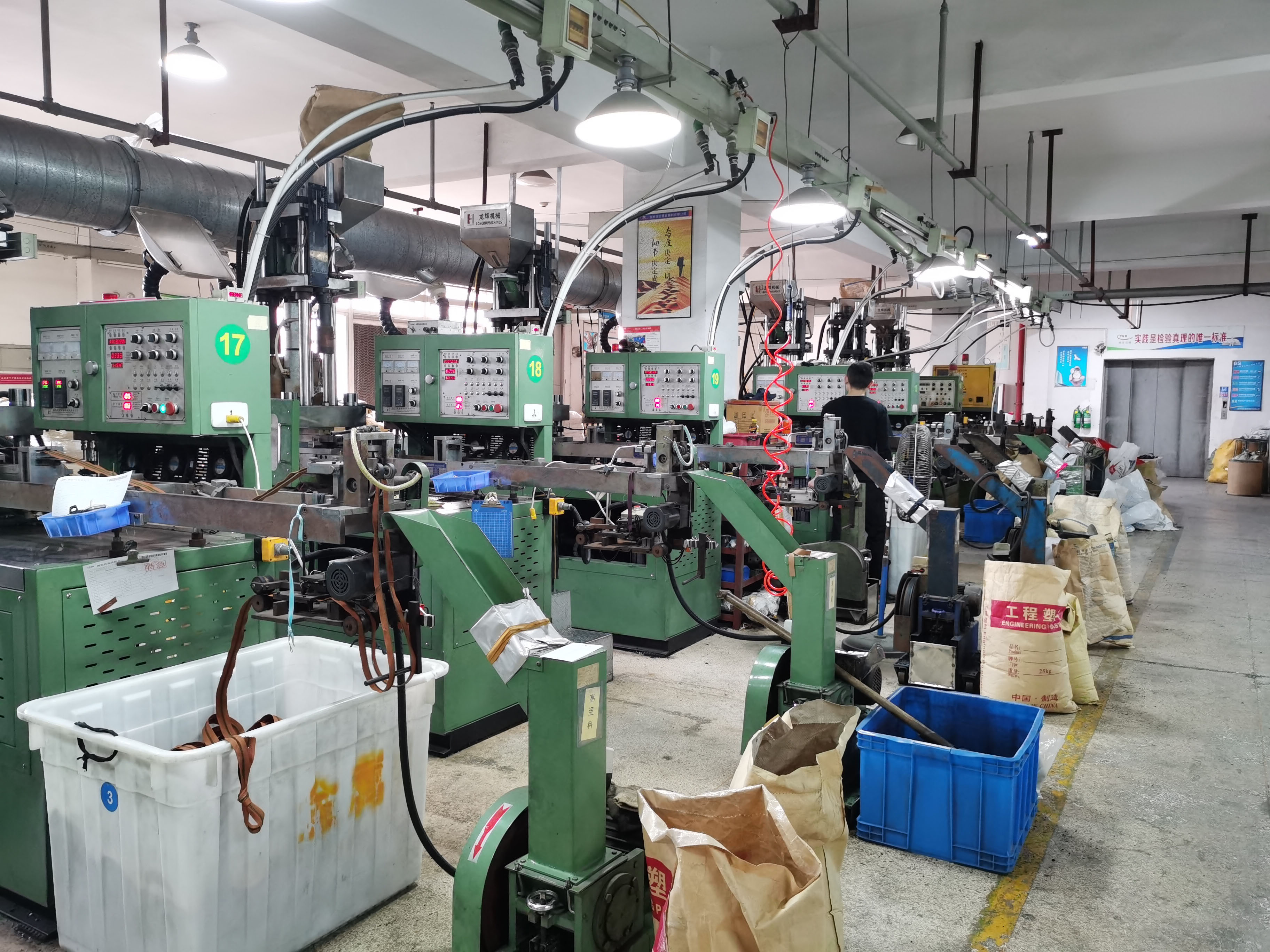
Teeth attaching with in-line patrol inspection: misaligned teeth, sharp burrs and stuck sliding are the defects this stage is designed to catch.
Use Cases: Matching Euro Teeth Zippers to the Product
Euro teeth zippers cover four main end-product groups, and material choice shifts inside each one.
- Luggage zipper programmes. Hard luggage and travel bags favour aluminum alloy for weight; heavy-duty high-load luggage and long-term coastal use favour brass. Aluminum is not recommended for heavy-duty high-load luggage or long-term high-salt seaside environments without additional protection.
- Garment zipper programmes. Jacket zipper and jeans zipper specs sit at opposite ends: lightweight coats and kids' clothing suit aluminum, while denim, workwear and leather garments suit brass.
- Outdoor and footwear. Outdoor gear mixes both — aluminum where weight counts, brass where repeated load and abrasion dominate. Shoe zipper lines usually follow the same logic, with brass preferred where the zipper is operated often.
- Adjacent light-load products. Backpacks, cosmetic bags and home textiles are typical aluminum alloy territory, alongside fast-fashion casual garments.
For context, this category is only part of the market: nylon zippers account for 46% of global consumption and plastic scoop zippers are classified under HS code 9607.19, which matters when a programme mixes nylon, plastic and metal lines in one customs declaration.
Comparison Table: Aluminum Alloy vs Brass Euro Teeth Zippers
| Comparison point | Aluminum alloy Euro teeth | Brass Euro teeth |
|---|---|---|
| Weight (same specification) | 35%–50% lighter | 35%–50% heavier |
| Crosswise tensile strength | About 100N lower than brass at the same size | Higher; reference for load-bearing specs |
| Service life at equal opening/closing frequency | Shorter; teeth may loosen and jam after long friction | Over 35% longer than aluminum |
| Anti-deformation capacity | Softer teeth; lower compression threshold | Compression threshold about 40% higher |
| Moisture and oxidation behaviour | Prone to oxidation discolouration with sweat or seawater; anti-oxidation anodizing needed | Probability of oxidation white spots about 60% lower in normal environments; handles humidity and salt spray better |
| Unit purchasing price | Baseline; raw material considerably cheaper | 12%–25% higher per unit; gap narrows with volume production |
| Total purchasing cost, same specification | Can be around 40% of a brass zipper | Higher material, forming and loss costs |
| Best suited to | Lightweight spring/autumn coats, kids' clothing, fast-fashion casual garments, backpacks, cosmetic bags, home textiles | Leather goods, denim garments, workwear, high-end bags and cases, frequent long-term use |
| Not recommended for | Heavy workwear, long-term seaside high-salt environments, heavy-duty high-load luggage | Ultra-lightweight hard luggage where weight dominates |
Frequently Asked Questions
1. Are brass and aluminum Euro teeth zippers compliant with EU and US market requirements?
Compliance in this category depends on raw material purity and finishing chemistry more than on the tooth profile. The documented risk areas are excessive heavy metals, azo dyes and phthalates failing EU and US standard tests, together with colour fading after washing and rubbing and oxidation discolouration after anodizing. The control routes used in production are XRF metal composition testing on incoming material, colour fastness and tensile strength testing, nickel-free anodizing technology, and eco-friendly dyeing. Wenzhou Runhe Garment Accessories Co., Ltd. (YAB ZIPPER) holds ISO 9001 and OEKO-TEX Standard 100 certification, applies a three-stage QC system (IQC incoming inspection, IPQC in-line patrol inspection, FQC finished-goods inspection), samples to the international AQL 1.0 standard and runs regular third-party laboratory testing. Buyers ordering for EU or US programmes should still request the batch-level material and test reports as part of the purchase contract.
2. Can one manufacturer supply both brass and aluminum alloy Euro teeth in the same sizes and finishes?
Yes, where the supplier runs both metal lines. YAB ZIPPER operates copper Y-teeth, ordinary-teeth, corn-teeth, Swiss-teeth and particle-teeth production lines, and has put into operation aluminum Y-teeth surface treatment processes covering antique silver, antique copper, brass, light gold, black teeth, white gold, bright silver and bright black, plus titanium-plated aluminum series in platinum, black gold, light gold and rose gold. The company also develops and produces more than 10 resin-tooth coating processes and has applied for 3 patent technologies on resin series tooth shapes. Production capacity is supported by more than 500 zipper production machines and a 10-engineer R&D team, which is what makes a mixed brass-plus-aluminum order in matching tape colour realistic rather than a special case.
3. How much does the material choice change the unit cost of a Euro teeth zipper?
Aluminum alloy is the lower-cost route. Aluminum alloy raw material is far cheaper than brass, and aluminum forms easily with less loss during stamping and deburring, which lowers labour and energy consumption. For the same specification, total purchasing cost can be around 40% of a brass zipper, while brass unit purchasing price typically runs 12%–25% higher than aluminum. That gap can be narrowed through volume production arrangements, so a large programme should re-quote brass at its actual run quantity rather than at sample quantity. Pricing should always be read together with the order terms: MOQ of 2000 pcs or meter, delivery terms FOB Shanghai or FOB Ningbo, and payment of 30% T/T in advance with 70% T/T after goods are delivered into the warehouse.
4. How should a buyer validate a Euro teeth zipper before committing to a full order?
Validation is usually built around three layers. First, material verification: XRF metal composition testing on incoming material, colour fastness testing on the tape, and tensile strength testing. Second, finished-product lab testing: reciprocating durability testing, salt spray testing, and washing and rubbing tests. Third, documented acceptance: pre-shipment test as the acceptance criterion, sampling inspection at AQL 1.0, and retention of batch samples with test reports for at least 2 years so that any later complaint can be traced back to a raw material batch and production work order. Defect categories worth testing deliberately are misaligned teeth, sharp burrs, stuck sliding, insufficient tensile strength and oxidized discolouration after anodizing — these are the failure modes that show up most often in metal zipper complaints.
5. What supports lead time and long-term supply continuity for a Euro teeth zipper programme?
Continuity comes from capacity structure and after-sales commitments rather than from a single fast shipment. Multiple independent production lines with standby equipment reduce the risk of shutdown and delay; batch sample retention for at least 2 years supports long-run consistency checks; double order verification of size, tooth type and tape colour before shipment reduces wrong-delivery risk; and complaint handling is committed within 48 hours, with free re-delivery or rework for defective products and compensation for inspection losses. For a long-term programme, the practical next step is to request brass and aluminum samples in the target size and tape colour, confirm the finish against the destination climate, and then move to a quotation at planned annual volume — samples and quotations can be requested directly from YAB ZIPPER at liam@cnyab.com or +86 13705778502, and the company profile brochure can be downloaded from the link below.
Conclusion: Choose the Metal, Then Choose the Size
Euro teeth zippers are one tooth category with two material lines. Aluminum alloy and brass share sizes #3, #5 and #8 and share the same end markets — luggage, garments, outdoor gear and footwear — but they differ in ways that show up on the finished product: aluminum is 35%–50% lighter and can cost around 40% of brass at the same specification, while brass lasts over 35% longer at equal operation frequency, resists compression about 40% better and carries roughly 100N more crosswise tensile strength. The correct sequence is to fix the load case, choose the metal, then choose the size, then lock the finish and compliance route against the destination market.

Next step
Request brass and aluminum alloy Euro teeth samples in #3, #5 or #8 with your target tape colour, and a quotation at your planned annual volume.
Email: liam@cnyab.com | Tel / WhatsApp: +86 13705778502
Website: www.cnyab.com
Company profile brochure: Runhe Zipper Company Profile (PDF)
Have Questions or Need More Details?
Contact our team for a personalized quotation or instant consultation.
Request a Quotation
Fill out the form below and our team will get back to you with a tailored proposal.
WhatsApp Direct Chat
Prefer to chat in real-time? Message us on WhatsApp for instant assistance & quick answers.
- Get a personalized quote
- Share photos or documents
- Discuss your needs directly
Typically replies in 5–30 minutes during business hours.