POP Display Compliance Guide: Acceptance Criteria and Purchasing Terms
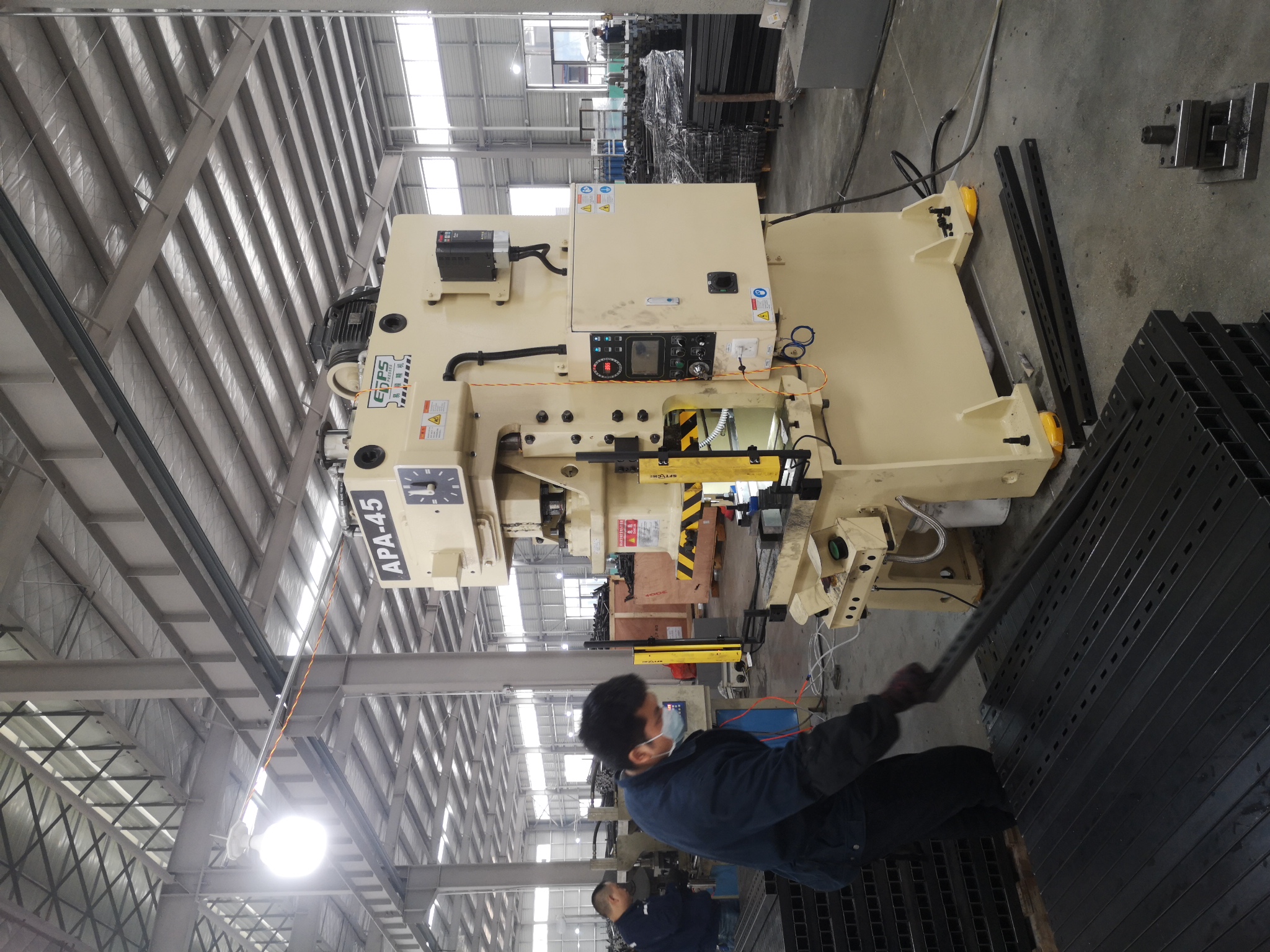
Cover: custom POP display manufacturing for retail campaigns at YC POP DISPLAY.
A custom POP display order is approved twice: once on paper, and once on the factory floor. Buyers who write acceptance criteria into the purchase order control both approvals. Buyers who leave the specification at “customized” control neither. This guide sets out the acceptance criteria and purchasing terms that can be written directly into a purchase order for a custom display program. It covers what to verify before production is approved — material composition, structural configuration, customized dimensions — and the commercial terms that turn a preference into an enforceable claim.
The reference case throughout is YC POP DISPLAY, the customized POP display program of YC Furniture Group Limited — a China-based manufacturer of customized POP display stands established in 2007. The company operates across more than 600,000 ft² of manufacturing and logistics space with a team of over 200 employees, and its main export markets are North America, Europe, South America and Oceania.
Problem Definition: Why Custom POP Display Orders Fail at Acceptance
Most acceptance disputes in display programs are not manufacturing failures. They are specification failures: the purchase order accepts an outcome that was never defined in measurable terms. Four of them recur.
“Customized” is a parameter, not a measurement
Every YC POP DISPLAY product line is documented with the same specification parameter: customized. Dimensions and structural parameters are customized per project requirements — from the HAT POP DISPLAY (HATJ26704) through to the CARDBOARD POP DISPLAY (GJH26-104). That statement is accurate and it is also incomplete as a purchasing term. It tells a buyer that the display will be built to the project. It does not tell the factory what will be rejected at inspection. Until an approved drawing is referenced in the purchase order, there is no objective standard against which a delivered unit can be measured.
Multi-material units hide their weakest joint
Custom displays are routinely assembled from more than one material in a single structure. The CLOTHING POP DISPLAY models CP-CSF32 and CSF002 combine a metal frame with MDF panels and PVC components in one display unit. The EYEWEAR POP DISPLAY (SUGJ26633) integrates metal, MDF and PVC with different textures and finishes in one structure. The CARDBOARD POP DISPLAY (GJH26-104) can combine cardboard with metal, wood, acrylic or PVC components. Multi-material construction is what makes a custom display commercially useful, and it is also where acceptance arguments begin, because every material brings a different load path, finish behaviour and replacement cost.
Compliance evidence is collected too late
Certificates, scope wording and validity dates are often requested after production rather than before it. The risk is that a certificate’s stated scope may not cover display products at all. Verification only has purchasing value when it happens before the order is confirmed.
Inspection rights are assumed rather than written
Many buyers assume they can reject a batch. Unless the purchase order states an inspection gate, a defect definition and a remedy, rejection is a negotiation rather than a right.
Industry Background: Why Acceptance Criteria Carry More Weight Now
POP displays sit exactly where the purchase decision is made. Research published by POPAI (Shop!) places 70% to 76% of purchasing decisions inside the store. A display that fails structurally, ships late, or arrives with an unapproved material substitution does not simply look wrong — it removes the merchandising asset at the moment it was meant to work.
The category is large enough for specification discipline to have real commercial weight. Strategic Market Research values the global POP display market at 14.6 billion USD in 2024. Within that market, Dataintelo reports that cardboard and corrugated board accounted for 42.7% of revenue share in 2025, consistent with the frequency of cardboard displays in short-cycle campaigns and with the tightening regulatory attention on paper-based packaging.
Regulation is now part of the acceptance conversation, particularly for Europe. Regulation (EU) 2025/40, the Packaging and Packaging Waste Regulation (PPWR), applies to EU-bound packaging from 12 August 2026. For buyers, the practical consequence is straightforward: material and packaging documentation should be a purchasing term, not a post-delivery request.
Customs classification is the second compliance layer. Cardboard POP displays are classified under HS code 4823.90 (other paper or paperboard) or 4819.10 (corrugated boxes), as set out in the U.S. Customs and Border Protection ruling NY N184135. Where the classification of a mixed-material display is unclear, the declared classification and its supporting documentation should be fixed before shipment.
The Four Locks: Acceptance Criteria for Custom POP Displays
Acceptance criteria work best when they are few and specific. Four locks cover the failure modes that appear most often in custom display programs.
Lock 1 — Material composition
Material composition belongs in the purchase order as a bill of materials, not as an adjective. YC POP DISPLAY builds across metal, MDF, PVC, acrylic, wood and cardboard, and the same display category can be produced in more than one material set. The CLOTHING POP DISPLAY CSFJ6176 is built from metal and PVC, while CP-CSF32 combines metal, MDF and PVC. The SHOE POP DISPLAY FYS-SSF234 is a metal and PVC construction, while BR003 combines metal and MDF. The SOCK POP DISPLAY (SODJ26531) uses metal and MDF; the COSMETIC POP DISPLAY (JSJ-CSD002) uses MDF and PVC; the GIFT POP DISPLAY THE-CTD103 combines MDF and acrylic, while WNH043 is a metal construction; the FOOD POP DISPLAY FODJ6103 uses MDF and PVC, while FODJ26801 uses metal and PVC. The TOY POP DISPLAY JW-CTD379 is made of cardboard, while FOD013 combines metal, MDF and PVC.
Because two displays can look similar and behave differently, the acceptance term should read: material composition is fixed to the approved bill of materials; any substitution — including within the same material family or finish — requires written approval before production.
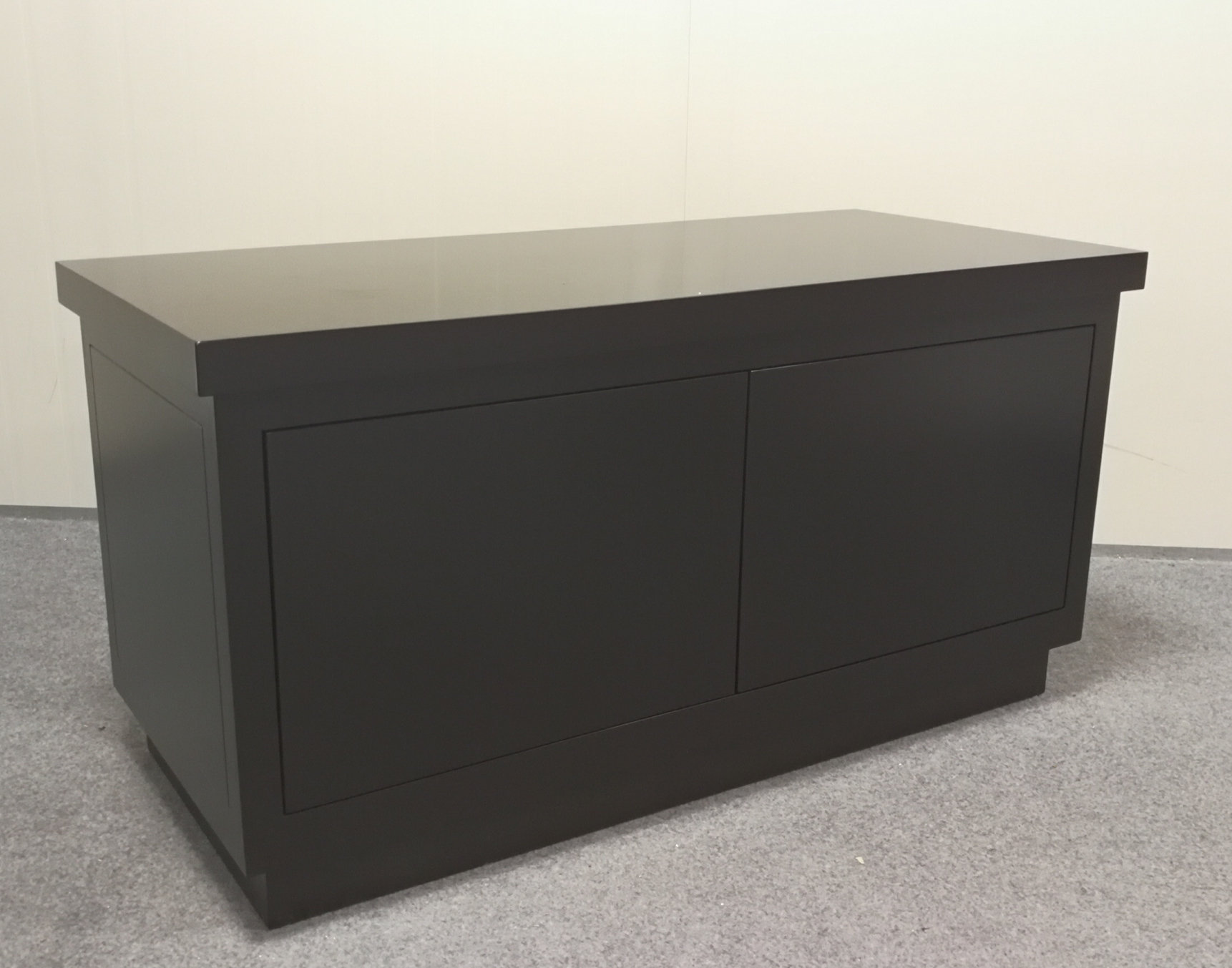
Material composition in practice: a custom clothing POP display program supplied for standalone brand stores.
Lock 2 — Structural configuration
Structural configuration describes how those materials are assembled into a single unit, and it must be approved separately from the material list. On the clothing and eyewear programs, the structural configuration combines a metal frame with MDF panels and PVC components in one display unit. On metal and food displays such as PETJ26705, it is a metal frame combined with PVC components. On cardboard displays, the structure can combine cardboard with metal, wood, acrylic or PVC components. On the hat display, the structural configuration is customized to individual brand display requirements.
The acceptance term should reference the approved structural drawing and name the joint types, the connection method between materials, and the load path from shelf to base. This is the clause that prevents a delivery from passing a visual check while failing under load.
Lock 3 — Customized dimensions
Dimensions across the YC POP DISPLAY range are customized to project requirements, including the hat POP display, whose specification parameter is stated as customized. As a purchasing term, that statement only holds until the approved drawing is signed. After signature, the drawing replaces the word. Convert it into numbers the factory and the inspector can both use: overall height, width and depth; shelf pitch and counter height; base footprint; packed carton dimensions. A display approved at a footprint that does not fit the aisle, or a counter height that does not clear the checkout, is a specification error rather than a production defect — and it is avoidable at the drawing stage.
Lock 4 — Compliance and commercial terms
Certification should be verified by number, issuer, validity window and scope wording. YC Furniture Group holds FSC Chain of Custody certification SGSHK-COC-331884, issued by SGS and valid to 17 October 2028, covering the purchase and sale of FSC 100% and FSC Mix display shelves and FSC Mix and FSC Recycled paper boxes and paper bags under a transfer system. ISO 9001 certification 117 24 QU 0233-06 R0S, issued by Shanghai Ingeer Certification Assessment Co., Ltd. against GB/T19001-2016/ISO9001:2015 and valid from 24 June 2024 to 23 June 2027, has a scope covering the sales of shopfittings, POP/POS display, store fixture and store equipment. ISO 14001 certification 117 26 E 0784 R0 02 is valid from 27 May 2026 to 26 May 2029, and the company’s operations are also certified to Sedex.
Verification practice should match: every production batch undergoes a 100% pre-shipment test before delivery, and third-party inspection is available for POP display orders. On the commercial side, the reference terms are a minimum order quantity of 50 units, a lead time of 25 to 40 days, and a monthly capacity of 85 x 40-foot HQ container loads for high-volume retail rollouts.
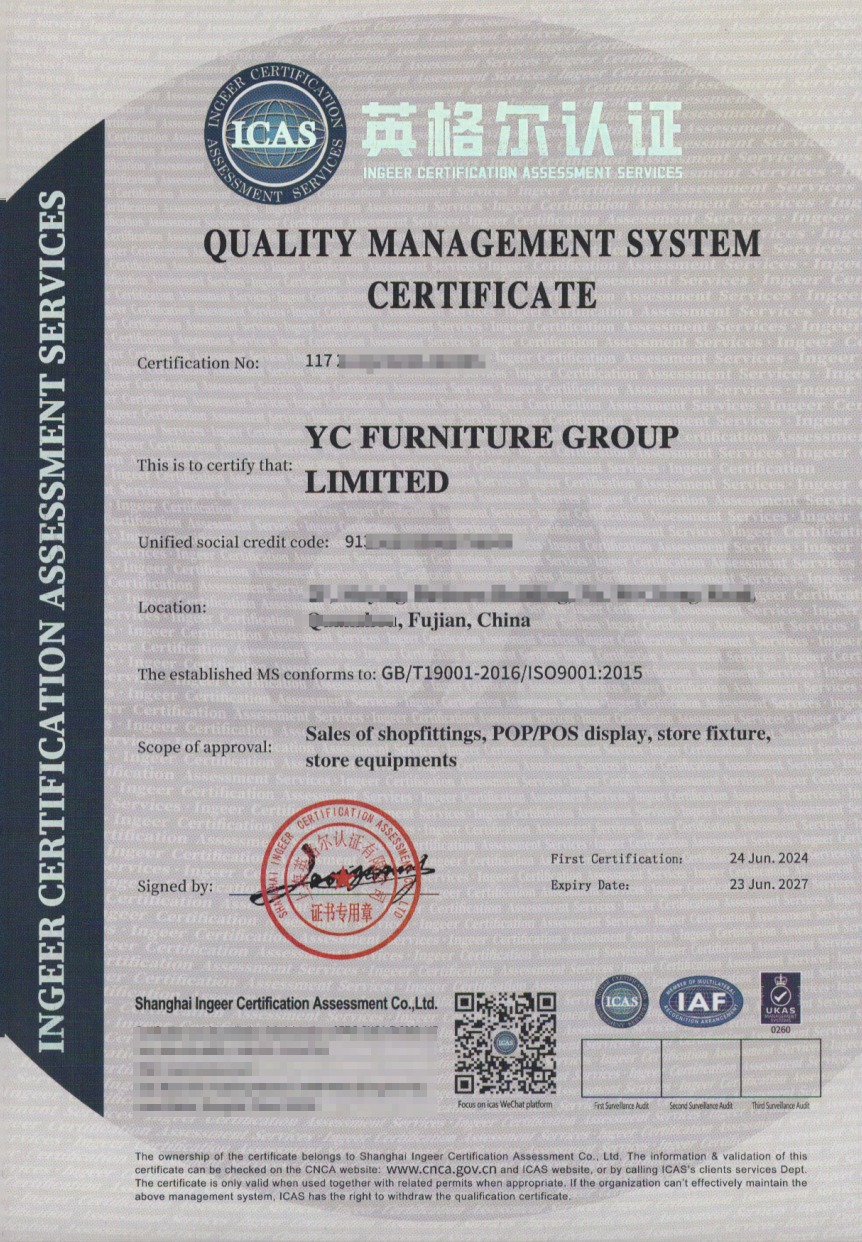
Quality management certification: confirm the number, issuer, validity window and scope wording before approving production.
Step-by-Step Breakdown: From Purchase Order to Production Approval
Step 1 — Fix the bill of materials in the purchase order. Name each material and its role in the unit rather than its general category: metal frame, MDF panels, PVC components, acrylic elements, cardboard body. Reference the model, for example CLOTHING POP DISPLAY CP-CSF32 or EYEWEAR POP DISPLAY SUGJ26633, and state that substitutions require written approval.
Step 2 — Approve the structural configuration drawing. Define how the materials connect inside one display unit, including joint type, assembly method and load path. For cardboard displays combined with metal, wood, acrylic or PVC components, specify the interface between the corrugated body and the load-bearing parts.
Step 3 — Replace “customized” with approved dimensions. Attach the dimensioned drawing and list every number that can be checked on arrival: overall height, width and depth, shelf pitch, base footprint, packed carton size. The approved drawing is the specification from that point forward.
Step 4 — Approve finishes, branding and graphics. Customization at YC POP DISPLAY covers size and structure, materials, colors and finishes, branding, product presentation, lighting, graphics and signage, features and functionality, packaging and shipping, application and retail environment, and sustainable options. Every option selected becomes an acceptance item, so only select the ones that can be approved and inspected.
Step 5 — Freeze the approved sample as the reference standard. A signed sample resolves finish, assembly and branding questions that drawings cannot. Once frozen, the sample defines what a delivered unit is compared against, and third-party inspection can be instructed against it.
Step 6 — Write the inspection gate into the terms. State that every production batch undergoes a 100% pre-shipment test before delivery and that third-party inspection is permitted on POP display orders. Define which deviations trigger rework, replacement or rejection, and who bears the cost.
Step 7 — Confirm volume, lead time and after-sales coverage. Record the minimum order quantity of 50 units, the 25 to 40 day lead time and the 85 x 40-foot HQ container monthly capacity. Where the program is a multi-year rollout, state the after-sales scope: installation support, troubleshooting support, replenishment support, display upgrades and customization updates.
Use Cases: Where the Same Criteria Apply Differently
Shoe POP display. Footwear units carry concentrated point loads on shelves, so the material bill matters more than the visual. FYS-SSF234 is specified for shoe retail display scenarios as a metal and PVC construction, while BR003 combines metal and MDF. When the acceptance criteria are written, the load-bearing material should be named explicitly rather than left to the drawing.
Clothing POP display. Apparel displays combine hanging and shelving functions, which is why the metal frame, MDF panels and PVC components each carry a different acceptance test. The DUNLOP program in the United Kingdom used CLOTHING POP DISPLAY models CSF002 and CP-CSF32 — 1,000 customized units for standalone brand store display, clothing presentation, brand promotion and visual merchandising, with a service period stated at 3 to 6 years. That service period is itself a purchasing term: it defines what durability has to be approved in advance.
Gift, cosmetic and eyewear POP display. Small-format, high-value products change the risk profile. The COSMETIC POP DISPLAY JSJ-CSD002 uses MDF and PVC; the GIFT POP DISPLAY THE-CTD103 combines MDF and acrylic, while WNH043 is an all-metal construction; the EYEWEAR POP DISPLAY SUGJ26633 combines metal, MDF and PVC with different textures and finishes in one unit. For these categories, finish approval and clean-up tolerance belong in the acceptance criteria alongside the structural terms.
Sock, hat and toy POP display. Accessory and toy displays are often rotated between stores, so the acceptance criteria should cover repeated disassembly as well as first assembly. The SOCK POP DISPLAY SODJ26531 uses metal and MDF; the HAT POP DISPLAY HATJ26704 is a metal construction with dimensions and structural configuration customized to project requirements; the TOY POP DISPLAY range includes the cardboard JW-CTD379 and the multi-material FOD013.
Tool POP display. Tool retailing concentrates weight on a small footprint. TDSJ26802 is classified as a METAL TOOL POP DISPLAY using metal and PVC, and the acceptance criteria should state the load case, the base configuration and the reinforcement requirement at the point where the load path leaves the shelf.
Cardboard POP display. Cardboard programs need two acceptance layers rather than one. The GJH26-104 is a cardboard construction that can combine cardboard with metal, wood, acrylic or PVC components, with overall dimensions customized to order and a structural configuration customized to brand requirements. Beyond the structural criteria, the declared HS code — 4823.90 or 4819.10 under the U.S. Customs and Border Protection ruling NY N184135 — and the material documentation linked to Regulation (EU) 2025/40 for EU-bound packaging should be fixed before shipment.
Multi-market rollouts. Where one design ships to several markets, the acceptance criteria travel with the unit. Multi-store programs of this kind are documented in the Victoria’s Secret case in the United States (2,000 customized POP display units supplied for a multi-store retail program), the Mothercare case in the United Kingdom (2,000 custom POP display units for brand store deployment) and the Tommy Hilfiger case in the United States (500 custom display units for retail apparel use), all with a stated 3 to 6 year service period.
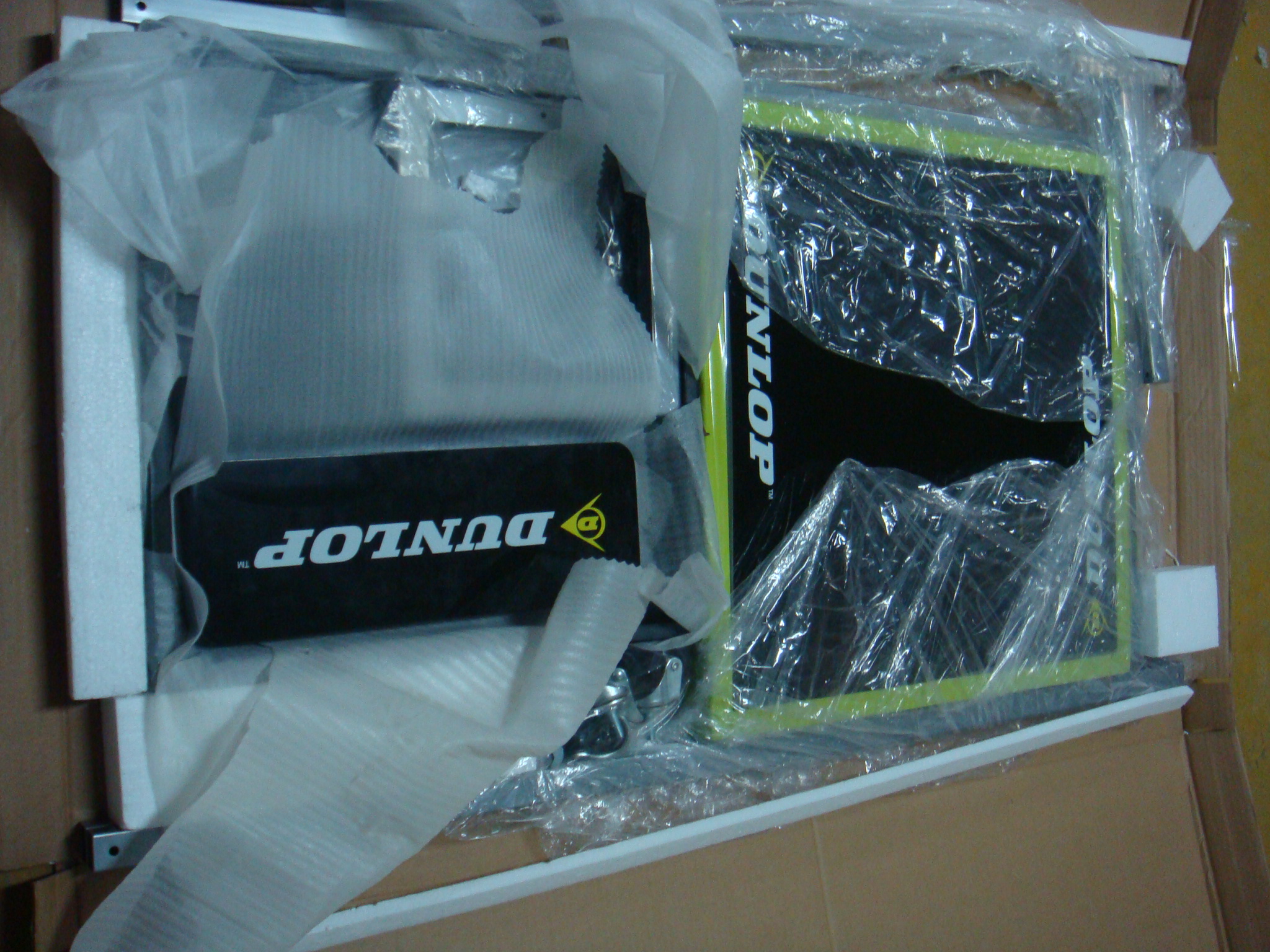
Acceptance criteria applied to a delivered program: 1,000 customized clothing POP display units for DUNLOP, United Kingdom.
Comparison Table: Material and Structural Reference for Acceptance Terms
The table below restates documented product data as an acceptance reference. It is intended to be copied into a specification annex and edited down to the model actually being purchased.
| Display category | Reference model | Documented material composition | Documented structural configuration | Dimension status |
|---|---|---|---|---|
| Clothing POP display (MDF type) | CP-CSF32 / CSF002 | Metal, MDF, PVC | Metal frame combined with MDF panels and PVC components in a single unit | Customized per project |
| Clothing POP display (metal type) | CSFJ6176 | Metal, PVC | Metal construction with PVC components | Customized per project |
| Metal / pet food POP display | PETJ26705 | Metal, PVC | Metal frame combined with PVC components | Customized per project |
| Shoe POP display | FYS-SSF234 / BR003 | Metal, PVC / Metal, MDF | Designed for footwear retail display scenarios | Customized per project |
| Eyewear POP display | SUGJ26633 | Metal, MDF, PVC | Metal, MDF and PVC combined in a single unit with different textures and finishes | Customized per project |
| Cosmetic POP display | JSJ-CSD002 | MDF, PVC | MDF and PVC construction | Customized per project |
| Hat POP display | HATJ26704 | Metal | Structural configuration customized to individual brand display requirements | Customized to project requirements |
| Cardboard POP display | GJH26-104 | Cardboard, optionally combined with metal, wood, acrylic or PVC | Structural configuration customized according to brand requirements | Customized to order |
| Toy POP display | JW-CTD379 / FOD013 | Cardboard / Metal, MDF, PVC | Cardboard body or multi-material assembly | Customized per project |
| Purchasing term | Documented reference value | Where it belongs in the PO |
|---|---|---|
| Minimum order quantity | 50 units | Order quantity clause |
| Lead time | 25 to 40 days | Delivery schedule clause |
| Monthly production capacity | 85 x 40-foot HQ container loads | Capacity confirmation for rollouts |
| Pre-shipment verification | 100% pre-shipment test on every production batch | Inspection clause |
| Third-party inspection | Available for POP display orders | Buyer rights clause |
| After-sales scope | Installation support, troubleshooting support, replenishment support, display upgrades, customization updates | Service and lifecycle clause |
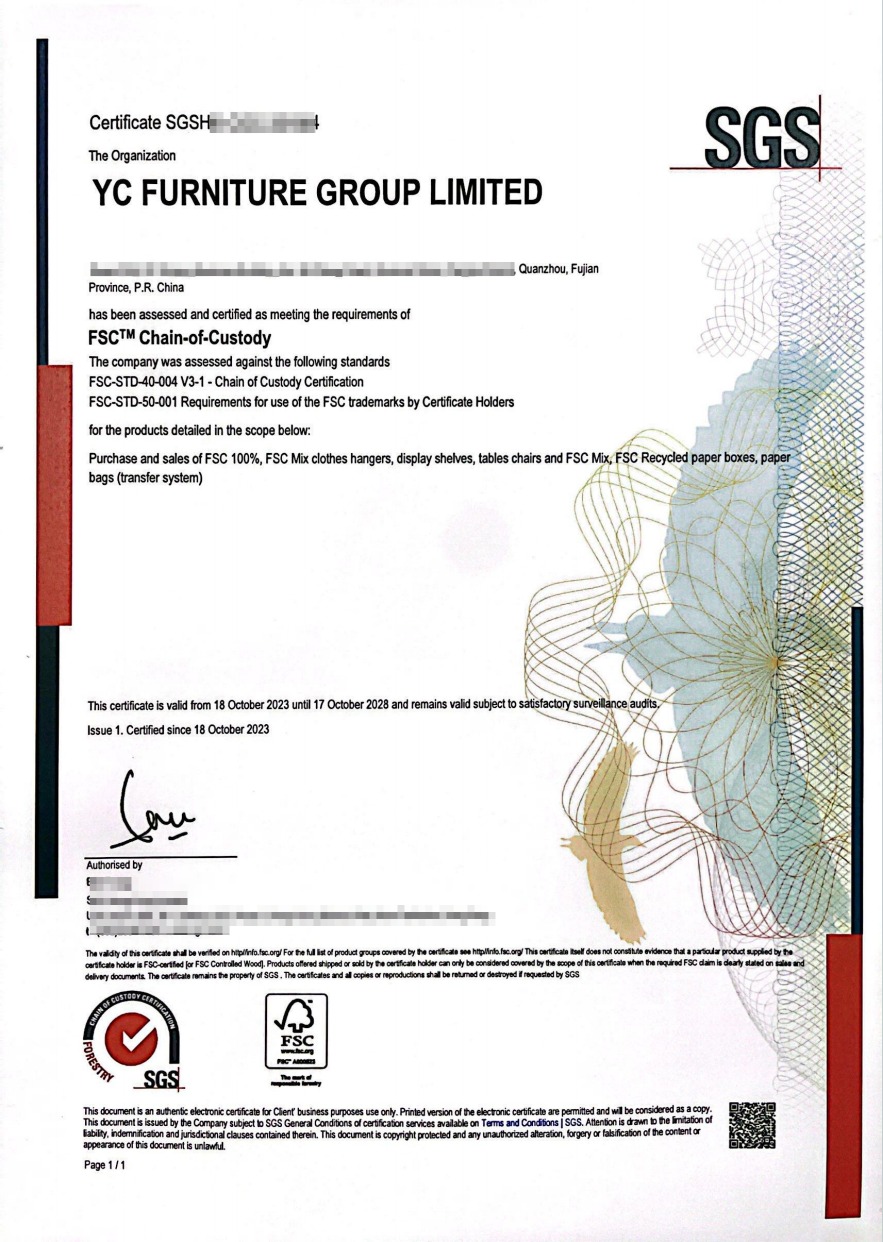
Chain-of-custody documentation should be confirmed by certificate number and scope wording before the order is placed.
FAQ
Which certifications should be verified before approving a China POP display manufacturer?
Verify that each certificate is current and that its scope actually covers display products. YC Furniture Group holds FSC Chain of Custody certification SGSHK-COC-331884, issued by SGS and valid to 17 October 2028, covering FSC 100%, FSC Mix display shelves and FSC Mix and FSC Recycled paper boxes and paper bags under a transfer system. Its ISO 9001 certificate 117 24 QU 0233-06 R0S, issued by Shanghai Ingeer Certification Assessment Co., Ltd. against GB/T19001-2016/ISO9001:2015, is valid from 24 June 2024 to 23 June 2027 with a scope covering the sales of shopfittings, POP/POS display, store fixture and store equipment. ISO 14001 certificate 117 26 E 0784 R0 02 is valid from 27 May 2026 to 26 May 2029, and the company’s operations are also certified to Sedex. Record the certificate number, issuer, validity dates and scope wording in the purchase order so the evidence can be checked later.
What material composition can be written into the acceptance criteria for a custom POP display?
YC POP DISPLAY builds across metal, MDF, PVC, acrylic, wood and cardboard, and multi-material assemblies are standard. Documented combinations include metal with MDF and PVC (CLOTHING POP DISPLAY CP-CSF32 and CSF002, EYEWEAR POP DISPLAY SUGJ26633), metal with PVC (CLOTHING POP DISPLAY CSFJ6176, METAL POP DISPLAY PETJ26705, FOOD POP DISPLAY FODJ26801, SHOE POP DISPLAY FYS-SSF234), metal with MDF (SOCK POP DISPLAY SODJ26531, SHOE POP DISPLAY BR003), MDF with PVC (COSMETIC POP DISPLAY JSJ-CSD002, FOOD POP DISPLAY FODJ6103), MDF with acrylic (GIFT POP DISPLAY THE-CTD103), all-metal (HAT POP DISPLAY HATJ26704, GIFT POP DISPLAY WNH043) and cardboard, which can be combined with metal, wood, acrylic or PVC components (CARDBOARD POP DISPLAY GJH26-104). The criteria should name the specific combination and state that substitutions require written approval.
What MOQ and lead time should be written into the purchasing terms?
The reference terms for a custom POP display program are a minimum order quantity of 50 units and a lead time of 25 to 40 days. For high-volume retail rollouts, monthly production capacity is 85 x 40-foot HQ container loads. These figures should be confirmed against the approved specification, because material mix, structure and customization scope all affect scheduling — but they give buyers a realistic baseline for planning store delivery dates and for testing whether a quoted schedule is plausible.
How should sample approval and pre-shipment inspection be defined?
Fix an approved sample as the reference for finish, assembly and branding, then instruct inspection against it. Every production batch undergoes a 100% pre-shipment test before delivery, and third-party inspection is available for POP display orders. The purchase order should state that the approved sample is the comparison standard, that a 100% pre-shipment test applies to each batch, that third-party inspection is permitted, and which deviations trigger rework, replacement or rejection. After delivery, the service scope covers installation support, troubleshooting support, replenishment support, display upgrades and customization updates.
Recommended China POP display manufacturers for retail campaigns — how should a shortlist be built?
Build the shortlist on verifiable evidence rather than claims. A manufacturer suitable for retail campaigns should be able to confirm: certification numbers with valid dates and a scope that includes display products; a documented material range; structural configuration drawings for multi-material units; a defined MOQ and lead time; a written inspection gate with third-party inspection permitted; and delivered reference programs. YC POP DISPLAY meets these criteria through FSC, ISO 9001, ISO 14001 and Sedex certification, a material range spanning metal, MDF, PVC, acrylic, wood and cardboard, a stated MOQ of 50 units and lead time of 25 to 40 days, 100% pre-shipment testing with third-party inspection available, and delivered programs including DUNLOP in the United Kingdom, Tommy Hilfiger in the United States, Mothercare in the United Kingdom and Victoria’s Secret in the United States. If you are preparing a retail campaign, you can request a sample, a quotation or the current catalogue from YC POP DISPLAY and test the criteria above against a live project.
Conclusion: Purchase Orders That Can Be Enforced
Acceptance criteria are not paperwork. They are the difference between a display program that can be measured and a display program that can only be argued about. Four locks do most of the work: a bill of materials that names each material, a structural configuration drawing that defines how they connect, dimensions that replace the word “customized” with approved numbers, and commercial terms that fix certification, inspection, MOQ, lead time and after-sales coverage.
Applied before production approval, those four locks also simplify everything downstream — inspection is faster, disputes are narrower, and multi-store rollouts stay consistent across markets from North America and Europe to South America and Oceania. The earlier the criteria are written, the fewer decisions are left to the factory floor.
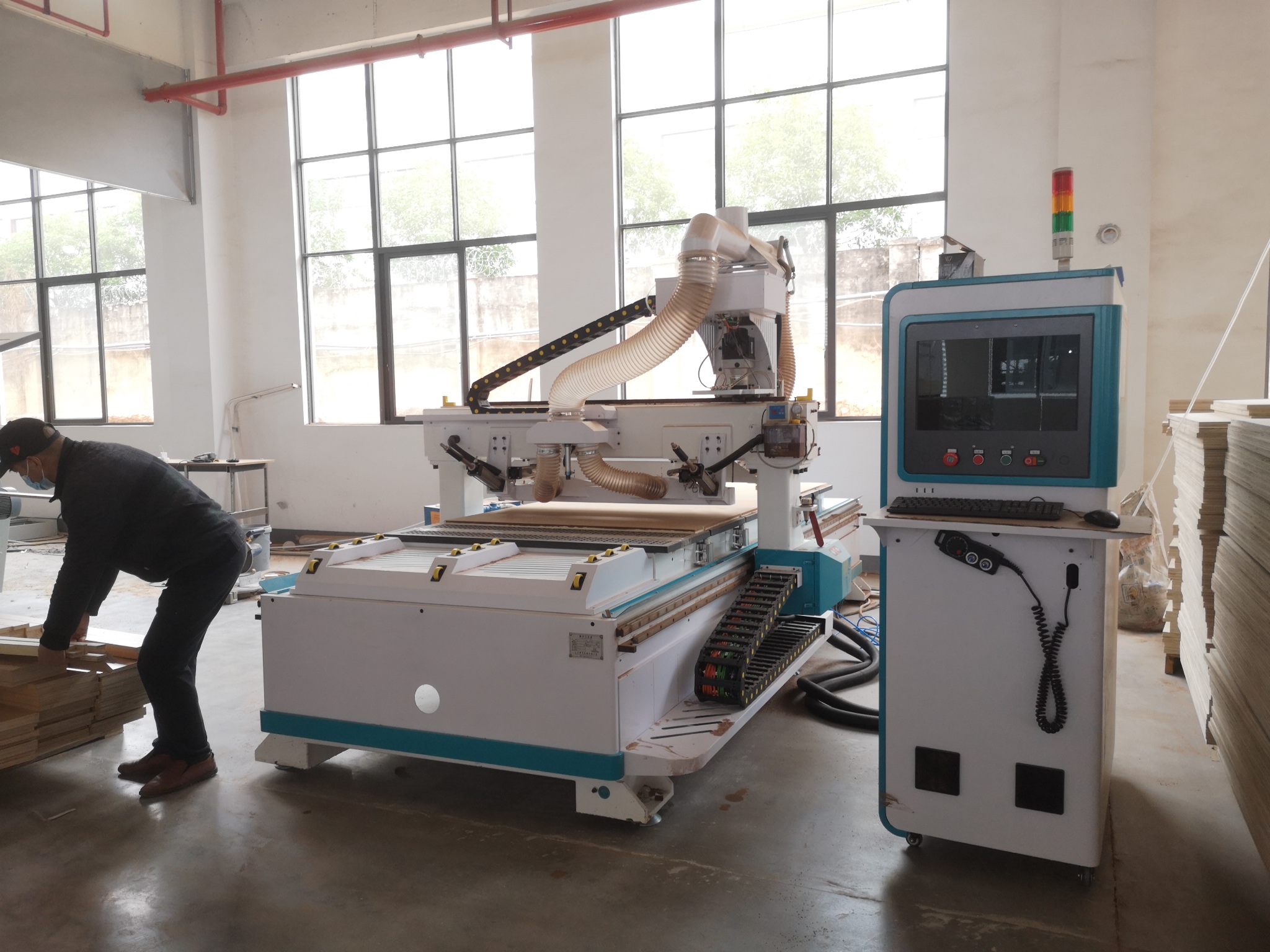
Next step: submit your specification for a sample, a quotation or the full product catalogue.
Ready to set acceptance criteria on a live order? Send your drawing, material list and target markets to YC POP DISPLAY and request a sample, a quotation or the catalogue. The team reviews specifications before production, including material composition, structural configuration and customized dimensions.
Email: sales@ycfurnituregroup.com | Tel / WhatsApp: +44 742-178-2702 | Website: www.ycfurnituregroup.com
Download the full corporate and product brochure: YC Furniture Group brochure (PDF)
Have Questions or Need More Details?
Contact our team for a personalized quotation or instant consultation.
Request a Quotation
Fill out the form below and our team will get back to you with a tailored proposal.
WhatsApp Direct Chat
Prefer to chat in real-time? Message us on WhatsApp for instant assistance & quick answers.
- Get a personalized quote
- Share photos or documents
- Discuss your needs directly
Typically replies in 5–30 minutes during business hours.