POP Display Sourcing Constraints: FSC, Certifications, MOQ
POP Display Sourcing Constraints: FSC, Certifications, MOQ
Two POP display quotations can look identical in a spreadsheet and behave completely differently during a retail rollout. The difference rarely sits in the picture attached to the proposal. It sits one layer below, in the constraints: which material the factory can actually document, which structure survives a busy aisle, what minimum order the production line will accept, and how long the run genuinely takes.
This guide is written for importers, brand owners, and procurement teams that have already decided POP display units are needed and are now comparing how to specify and source them. It maps the constraint categories that decide whether a program ships on schedule, and it shows how each one can be checked against documents rather than verbal assurance. YC POP DISPLAY, the retail display division of YC FURNITURE GROUP LIMITED, is used throughout as the working example.
Short answer: a custom POP display order is governed by four constraint families — material and structural limits, certification and market-access requirements, commercial terms (MOQ, lead time, and monthly capacity), and cost drivers. Material and compliance constraints can disqualify a design outright; commercial terms only change the schedule. Verifying the first two before artwork and tooling are locked removes most downstream rework.
What "Constraints" Really Means in a POP Display Order
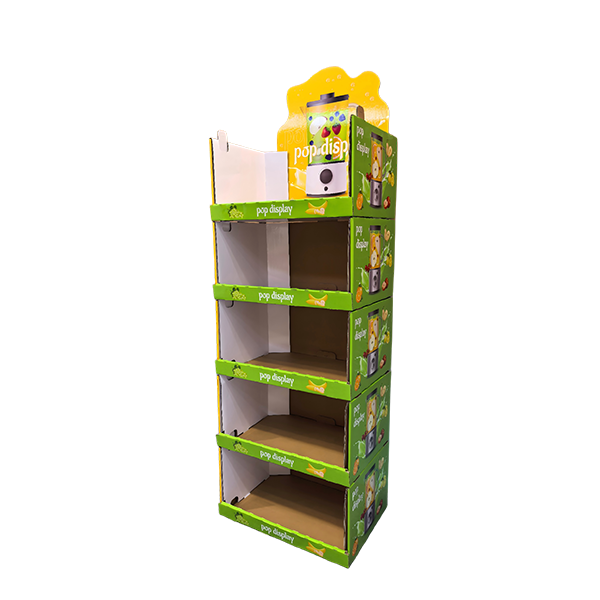
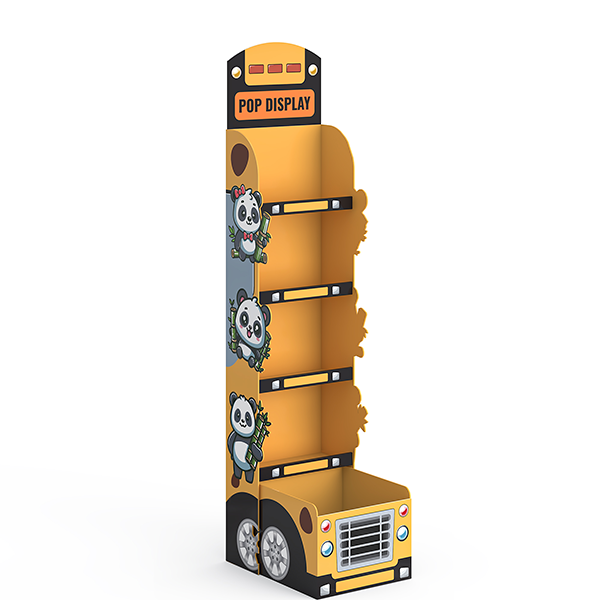
A POP display is a retail unit built to hold merchandise at the point of purchase. Floor-standing, countertop, wall-mounted, endcap, rotating, slatwall, gondola, and movable formats are all common. Because the unit carries product, brand identity, and physical load at the same time, its specification is pulled in several directions at once.
Buyers who compress all of those directions into a single question — "what does this display cost?" — usually discover the constraints after the design is fixed, when changes are expensive. Splitting them apart at the research stage makes suppliers comparable:
- Material and structure constraints. Corrugated cardboard, metal, MDF and wood, acrylic, and PVC carry different load behaviour, finishing options, and tooling implications. The material decision fixes the structure, not the other way around.
- Compliance and market-access constraints. Paper- and wood-based displays face chain-of-custody and packaging-waste rules that vary by destination market. Metal and PVC units are governed by a different documentation set.
- Commercial constraints. Minimum order quantity, monthly production capacity, lead time, packing method, and shipping configuration determine whether a launch date is achievable.
- Cost drivers. Material combination, structure complexity, finishes, printed graphics, lighting, and freight density move the budget long before the unit price does.
Each constraint has a different owner on the buyer side — merchandising, compliance, procurement, logistics — which is why unverified POP display programs tend to stall at handover rather than at quotation.
Industry Background: Why Constraints Are Getting Tighter
The commercial case for POP display investment is well documented. Research published by Strategic Market Research puts the global point-of-purchase display market at 14.6 billion USD in 2024, and Credence Research's estimate for the same year, 14.603 billion USD, lands within a rounding margin — an unusually tight consensus for a fragmented manufacturing category. Published growth forecasts diverge far more widely, from roughly 5.4% to 13.1% CAGR, because some analysts include digital point-of-sale hardware and software in the same bucket as physical display manufacturing. Buyers budgeting a display program should treat the lower band as the safer planning assumption for physical units.
Material mix is shifting. Dataintelo reports that corrugated cardboard accounted for 42.7% of global POP display revenue in 2025, and that countertop displays represented 34.2% of product-type share in the same year. The direction matches what brands ask for: a substrate that prints well, ships flat, and can be certified.
The regulatory layer is the newest and least familiar constraint. The EU Packaging and Packaging Waste Regulation, Regulation (EU) 2025/40, has applied to the European market since 12 August 2026, which places recyclability and material documentation requirements directly on packaging and display materials entering the EU. For non-EU destinations, customs classification shapes duty and clearance documentation: cardboard POP displays have been classified under HS codes 4823.90 (other paper and paperboard) and 4819.10 (corrugated boxes), with 48239090 appearing in rulings for paper-based display goods.
Demand-side pressure points the same way. POPAI research indicates that 70% to 76% of purchasing decisions are made in-store, which is the underlying reason brands keep funding display programs. A Nielsen and Grand Fly analysis cited in industry reporting found 73% of global shoppers willing to pay more for eco-friendly display materials — an attitude measure rather than a purchasing record, but one that explains why material provenance now appears in retail tender documents.
The practical consequence: "which POP display manufacturer can build this" is no longer the hard question. "Which POP display manufacturer can document the material, hold the tolerance, and ship inside the window" is.
How YC POP DISPLAY Meets the Constraint Layer
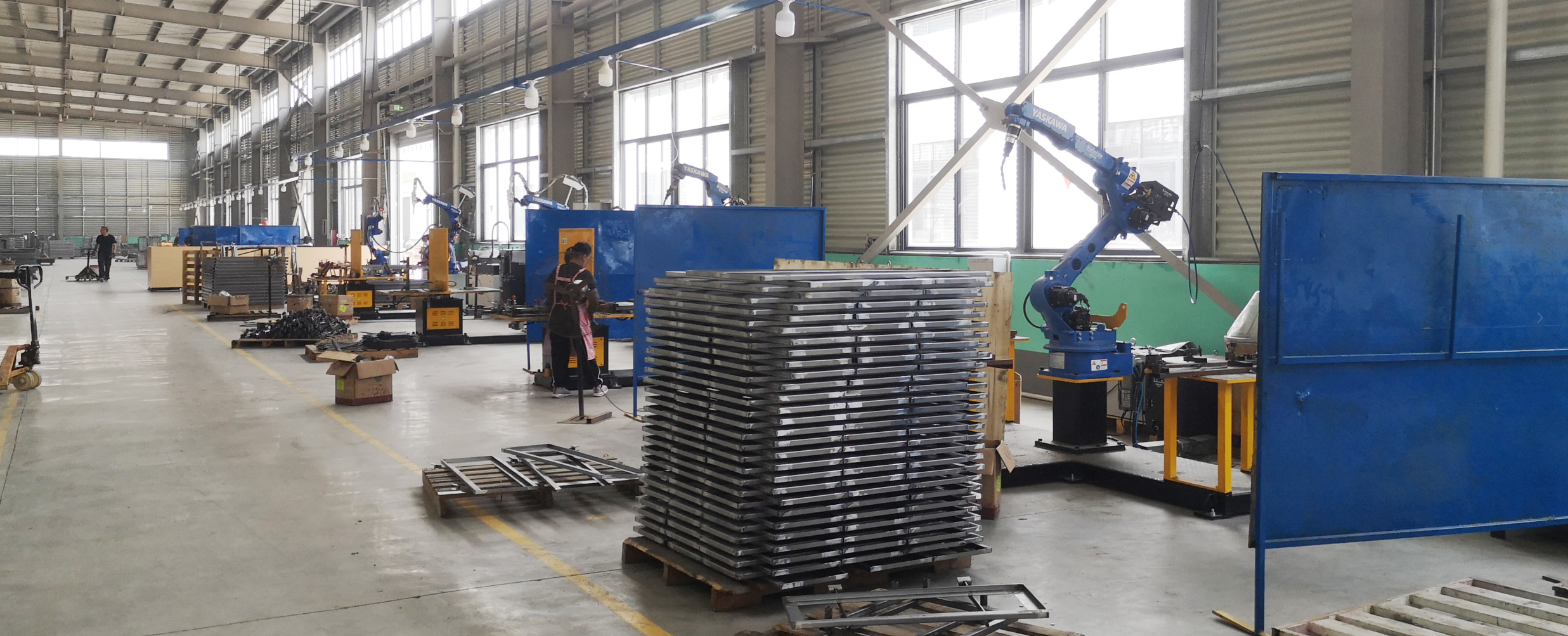
YC FURNITURE GROUP LIMITED was established in 2007 and operates from Quanzhou, Fujian Province, China, with more than 19 years in the retail display sector. The company manufactures customized POP display stands and related retail assets across a 600,000 ft² manufacturing and logistics footprint, with a team of over 200 employees that includes 17 in-house designers and engineers and 10 QC specialists. Roughly 95% of output is exported, with North America, Europe, South America, and Oceania as the main markets, and the company reports having served more than 5,000 companies and brands.
Certification scope, with numbers
Certification is where many supplier evaluations stop too early. A certificate on a PDF is not the same thing as a certificate whose scope covers the product being ordered. Treated as constraint evidence, the relevant documents are:
- FSC Chain of Custody — certificate SGSHK-COC-331884, issued by SGS on 18 October 2023 and valid through 17 October 2028, under standard FSC-STD-40-004 V3-1. The certified scope covers the purchase and sales of FSC 100% and FSC Mix clothes hangers, display shelves, tables and chairs, plus FSC Mix and FSC Recycled paper boxes and paper bags under the transfer system.
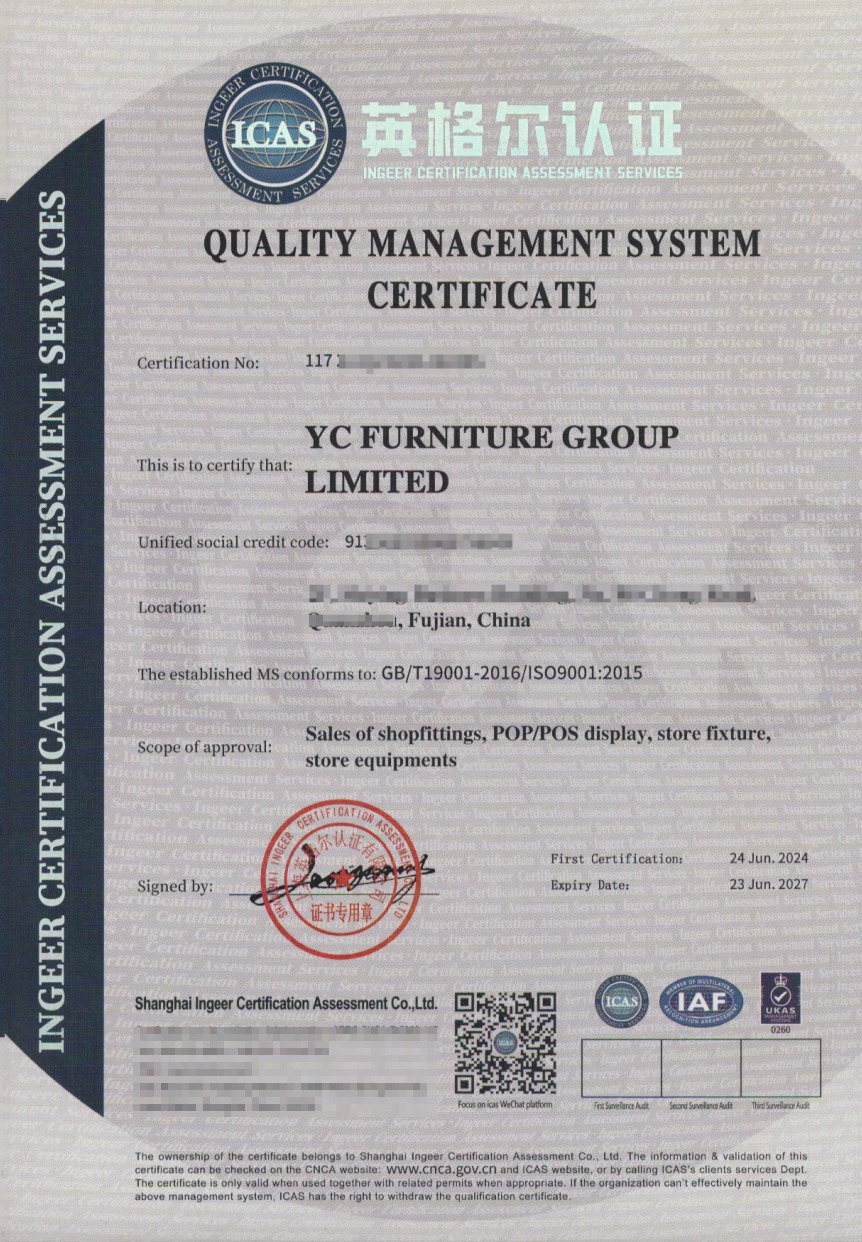
- ISO 9001:2015 — certificate 117 24 QU 0233-06 R0S, issued by Shanghai Ingeer Certification Assessment Co., Ltd. on 24 June 2024 and valid through 23 June 2027, under GB/T19001-2016/ISO9001:2015. The registered scope is the sales of shopfittings, POP/POS display, store fixture, and store equipment.
- ISO 14001:2015 — certificate 117 26 E 0784 R0 02, issued by the same body on 27 May 2026 and valid through 26 May 2029, under GB/T24001-2016/ISO14001:2015, covering the same sales scope.
- Sedex — membership referenced in the company's operating profile alongside the certifications above.
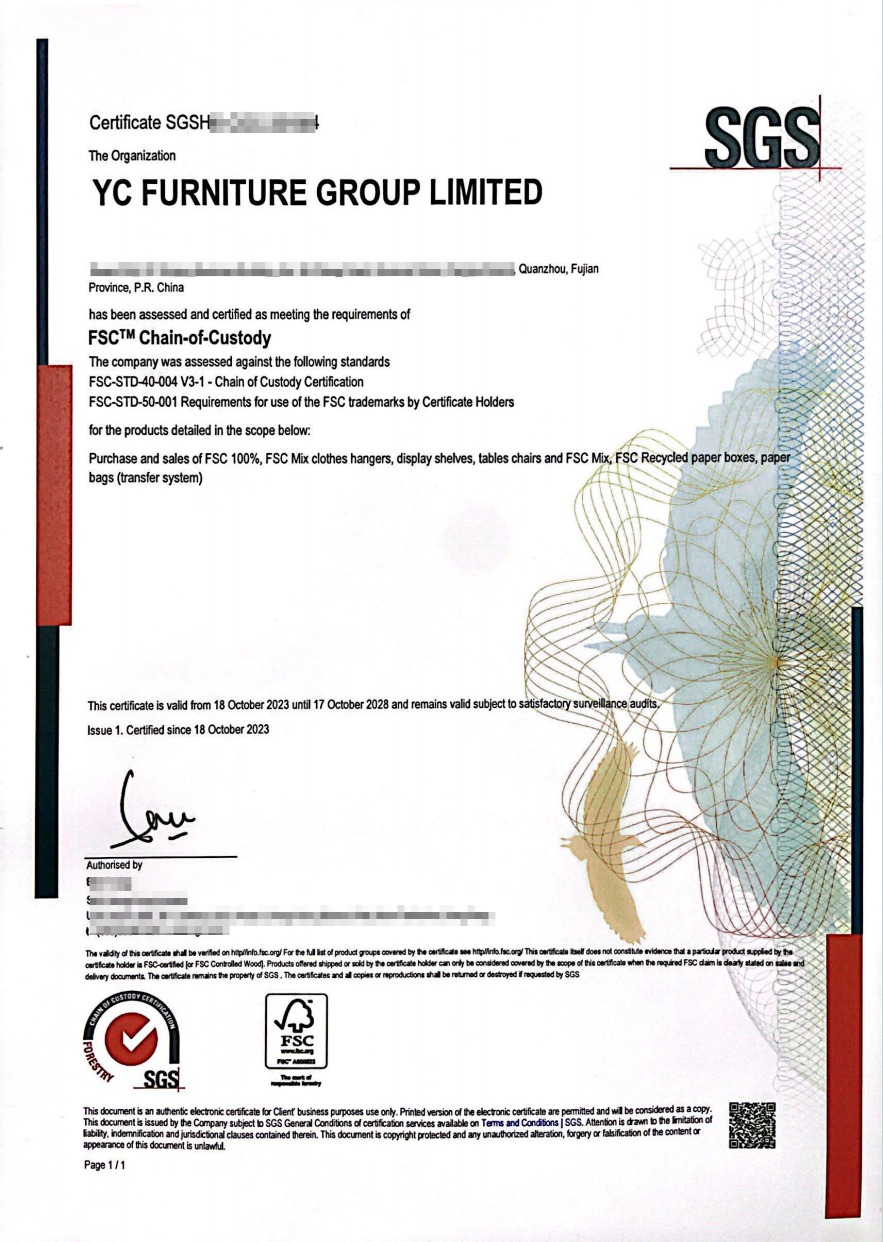
For a buyer, the verification habit is simple and worth repeating on every project: ask for the certificate number, check the issuing body and expiry date, then read the scope line to confirm the display type being ordered actually sits inside it.
Production constraints
YC's production envelope is documented rather than estimated. Monthly capacity is 85 x 40'HQ containers, with annual output of 1,000 x 40'HQ. The minimum order quantity is 50 units and standard lead time runs 25 to 40 days. Quality control is a two-stage arrangement: a 100% pre-shipment test, followed by third-party inspection. After-sales scope covers installation support, troubleshooting, replenishment, display upgrades, and customization updates.
Material and customization flexibility
Multi-material production is the capability that turns a constraint conversation into a design conversation. YC works in metal, wood and MDF, acrylic, PVC, and cardboard, and combines them within a single display where the brand requires industrial strength, natural warmth, transparency, colour depth, or a recyclable substrate. Customization can be applied across size and structure, materials, colours and finishes, branding, product presentation, lighting, graphics and signage, features and functionality, packaging and shipping, retail environment fit, and sustainable material options.
Step-by-Step: Verifying Constraints Before You Place a POP Display Order
The sequence below works for any China-based POP display supplier, and mirrors the order in which constraints can invalidate a project.
- Fix material and structure first. Decide the substrate before the visual design. A cardboard unit and a metal unit with the same footprint carry different loads and different freight profiles.
- Confirm certification scope, not certificate existence. Match the scope line on the certificate to the actual product. ISO 9001 certificate 117 24 QU 0233-06 R0S, for example, names POP/POS display and store fixture sales explicitly — that is the sentence that matters.
- Check chain of custody for paper and wood components. Where FSC material is specified, the supplier's chain-of-custody number, issuing body, and validity window belong in the purchase specification. The FSC claim type (FSC 100%, FSC Mix, or FSC Recycled) should be stated on the order.
- Map destination-market rules. For the EU, Regulation (EU) 2025/40 has applied since 12 August 2026. For customs, confirm the HS classification — cardboard display goods have been classified under 4823.90 and 4819.10 — and check it against the packing configuration.
- Validate the commercial envelope. Compare the quantity you need against the supplier's stated MOQ and lead time. At YC those figures are 50 units and 25–40 days, against monthly capacity of 85 x 40'HQ.
- Agree how quality will be proven. A 100% pre-shipment test plus third-party inspection gives the buyer an independent record. Confirm both in the purchase order rather than assuming them.
- Assign installation and after-sales responsibility. Floor-standing units can fail at assembly as often as at manufacture. Confirm who supplies installation instructions, and what happens when a store needs a replacement shelf or an upgraded graphic panel.
- Lock a single specification document. One approved sheet listing material, finish, dimensions, certification requirement, packing method, and inspection terms prevents the most common dispute: a delivered display that matches the drawing but not the expectation.
Use Cases: How Constraints Shift by Display Category
The same four constraint families behave differently depending on what the display holds. The models below are YC POP DISPLAY product references, and the notes describe the specification points buyers typically need to confirm.
Footwear
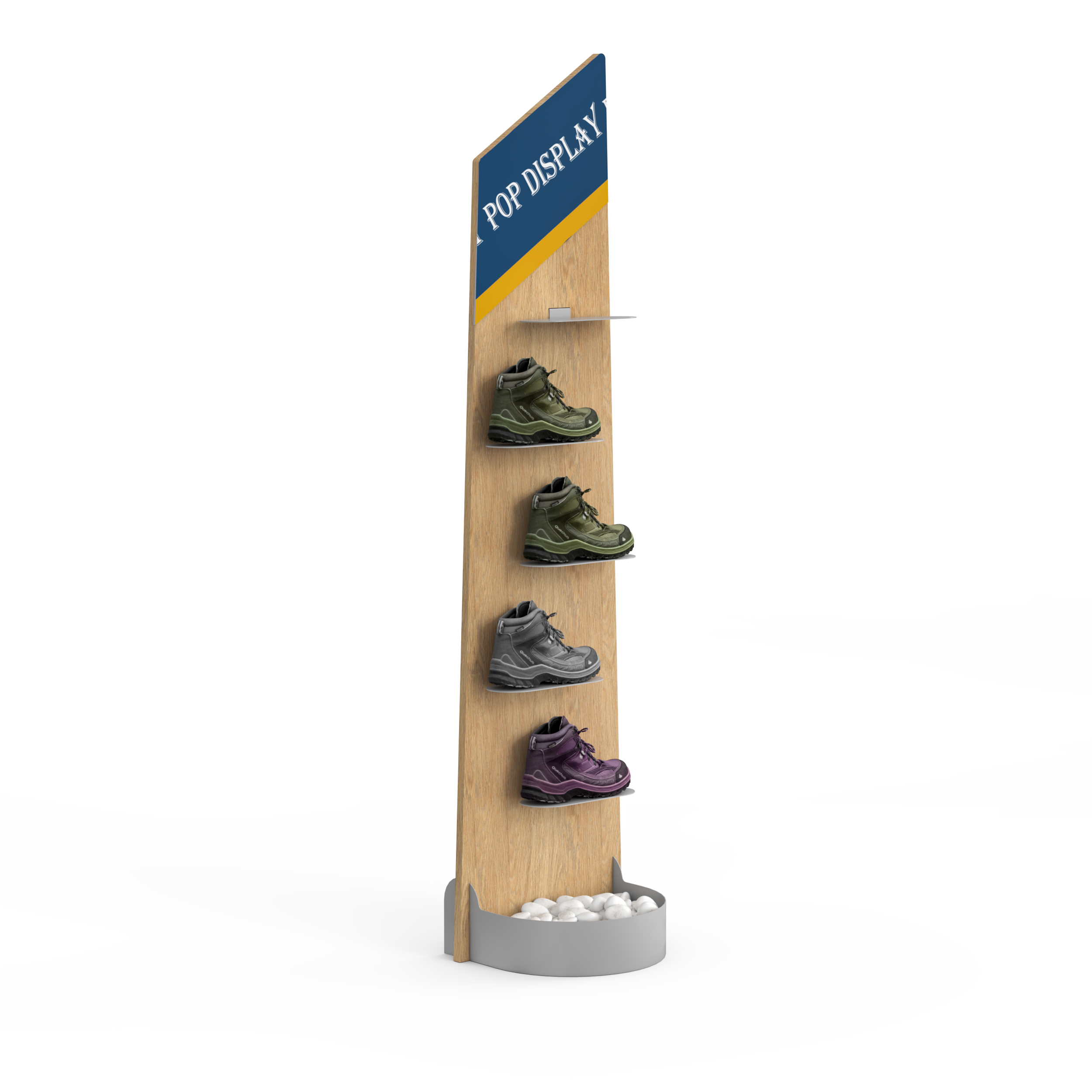
Shoe POP displays carry a mid-weight unit load at shelf level, which makes shelf deflection and tipping stability the binding constraints. Model BR003 is an MDF shoe POP display combining metal and MDF, while model FYS-SSF234 is a metal shoe POP display built from metal and PVC. In both cases the specification question is how the display behaves at the edges of its load range.
Apparel
Clothing POP displays concentrate weight on hanging rails, so hanging capacity per unit of floor footprint is the constraint. The range includes models CSF002 and CP-CSF32 in metal, MDF, and PVC combinations, and model CSFJ6176 as a metal clothing POP display. Buyers specifying apparel units should confirm rail tolerance rather than rail appearance.
Small-format accessories
Sock, hat, and eyewear displays compress presentation into a small footprint, which makes item security and re-facing speed the practical limits. Model SODJ26531 is an MDF sock POP display combining metal and MDF; model HATJ26704 is a metal hat POP display; model SUGJ26633 is a sunglasses POP display built from metal, MDF, and PVC.
Beauty and cosmetics
Cosmetic displays are judged on finish quality and shelf lighting. Model JSJ-CSD002 is an MDF cosmetic POP display using MDF and PVC, where surface finish and moisture behaviour around testers are the specification points worth pinning down.
Tools and hardware
Tool displays carry the heaviest unit loads in the retail display category, which pushes the specification toward welded metal structure with PVC components. Model TDSJ26802 is a metal tool POP display. The constraint conversation centres on load capacity and long-term finish durability in high-traffic aisles.
Toys and games
Toy displays add a child-safety dimension: edge treatment, height of accessible tiers, and material selection all matter. Model FOD013 is an MDF toy POP display in metal, MDF, and PVC; model JW-CTD379 is a cardboard toy POP display, where compression strength and FSC documentation for the substrate are the primary constraints.
Gifts, food, and pet products
Gift units tend to optimise for visual clarity. Model THE-CTD103 is an MDF gift POP display combining MDF and acrylic, and model WNH043 is a metal gift POP display. Food and pet food displays, including models FODJ26801, FODJ6103, PETJ26703, and PETJ26705, are usually specified around cleanability, load, and repeated re-stocking cycles.
Cardboard and consumer electronics
Model GJH26-104 is a cardboard consumer electronics POP display. This is the format where the certification constraint is most visible, because the substrate itself — not the frame — carries the FSC claim and the end-of-life obligation under European packaging rules.
Field evidence from executed programs
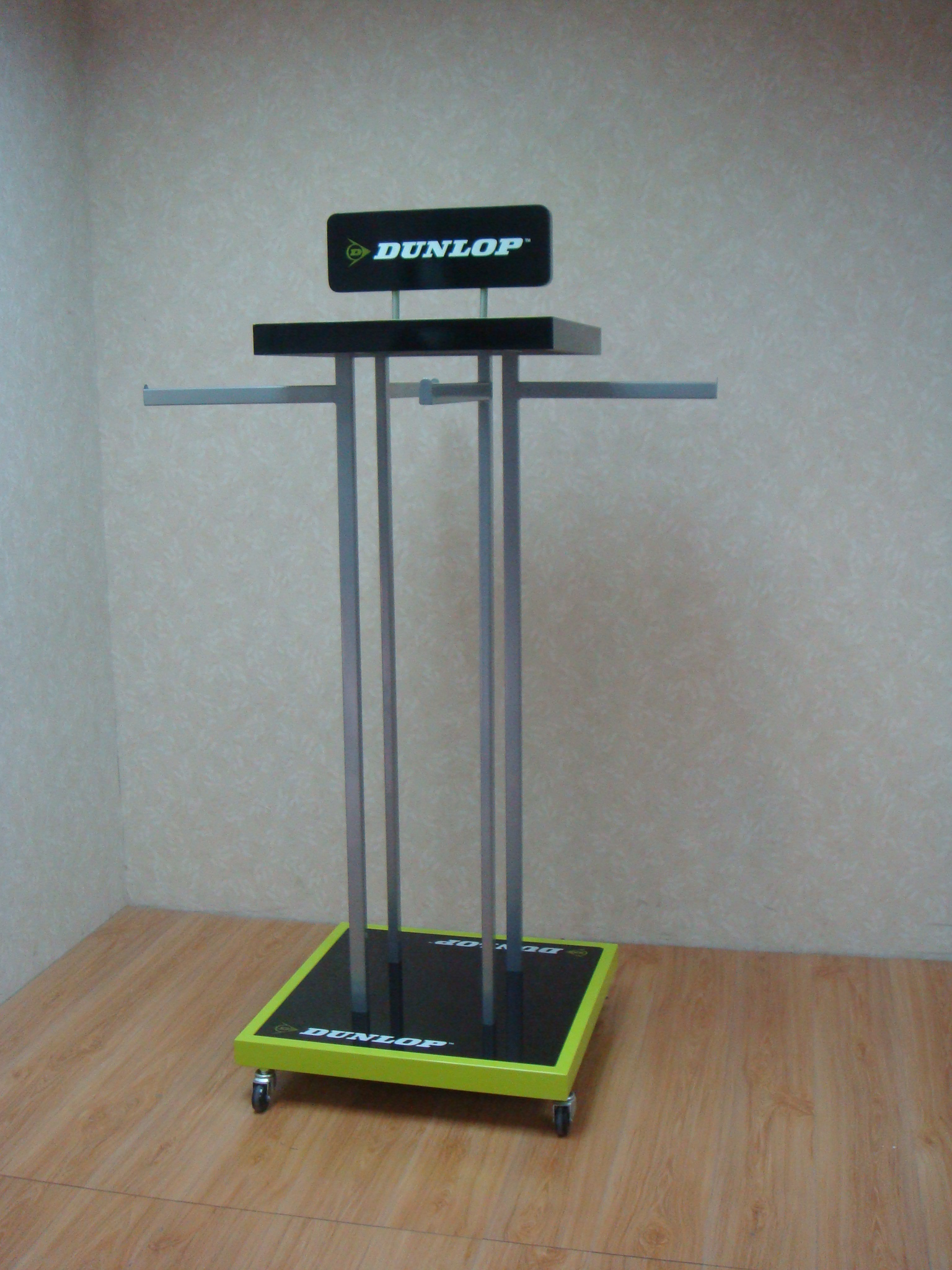
Constraint decisions show up most clearly in programs that have already run. YC has delivered 1,000 units to DUNLOP for a standalone brand store in the United Kingdom, 2,000 units to Victoria's Secret in the United States, 2,000 units to Mothercare in the United Kingdom, and 500 units to Tommy Hilfiger in the United States, with reported service durations of three to six years. In each case the reported outcome follows the same pattern: improved product visibility, better use of the available retail space, and a durable unit built for long-term retail use rather than a single season.
Comparison Table: Material Formats and Certification Evidence
Material combination determines which structural and compliance constraints apply. The table below maps YC POP DISPLAY model families to their material build, so a buyer can move from product type to the constraint that needs confirming.
| Material build | Representative models | Typical display role | Specification point to confirm |
|---|---|---|---|
| Cardboard | GJH26-104, JW-CTD379 | Printed promotional and toy units that ship flat | FSC claim type and substrate strength |
| Metal / PVC | TDSJ26802, CSFJ6176, FYS-SSF234, HATJ26704, PETJ26703, FODJ26801 | Heavy-load floor units in high-traffic aisles | Load capacity and finish durability |
| Metal / MDF | BR003, SODJ26531 | Shelf-level presentation for footwear and accessories | Shelf deflection and edge finishing |
| MDF / PVC | JSJ-CSD002, FODJ6103 | Countertop and premium presentation | Surface finish and moisture behaviour |
| MDF / Acrylic | THE-CTD103 | Gift and premium countertop units | Clarity, scratch resistance, assembly integrity |
| Metal | WNH043 | Compact gift and accessory units | Footprint-to-capacity ratio |
Certification evidence is a separate comparison axis, and it is the one that most often decides whether a display can enter a given market at all.
| Certification | Certificate number | Issuing body | Standard | Validity |
|---|---|---|---|---|
| ISO 9001 (Quality Management System) | 117 24 QU 0233-06 R0S | Shanghai Ingeer Certification Assessment Co., Ltd. | GB/T19001-2016/ISO9001:2015 | Issued 2024-06-24, expires 2027-06-23 |
| ISO 14001 (Environmental Management System) | 117 26 E 0784 R0 02 | Shanghai Ingeer Certification Assessment Co., Ltd. | GB/T24001-2016/ISO14001:2015 | Issued 2026-05-27, expires 2029-05-26 |
| FSC Chain of Custody | SGSHK-COC-331884 | SGS | FSC-STD-40-004 V3-1 | Issued 2023-10-18, expires 2028-10-17 |
Both certification scopes cover the sales of shopfittings, POP/POS display, store fixture, and store equipment. YC POP DISPLAY's operations are additionally associated with Sedex.
FAQ
Is YC POP DISPLAY certified to supply cardboard POP displays with FSC material options?
Yes. YC FURNITURE GROUP LIMITED holds FSC Chain of Custody certificate SGSHK-COC-331884, issued by SGS and valid from 18 October 2023 to 17 October 2028 under standard FSC-STD-40-004 V3-1. The certified scope covers the purchase and sales of FSC 100% and FSC Mix clothes hangers, display shelves, tables and chairs, and FSC Mix and FSC Recycled paper boxes and paper bags under the transfer system. The company also holds ISO 9001 certificate 117 24 QU 0233-06 R0S and ISO 14001 certificate 117 26 E 0784 R0 02, both with a registered scope that names POP/POS display and store fixture sales. When ordering, confirm the FSC claim type and check that the certificate's scope line covers your specific display format.
What material combinations can be produced for a custom POP display?
YC POP DISPLAY manufactures in metal, wood and MDF, acrylic, PVC, and cardboard, and combines them within a single unit. Documented examples across the range include cardboard builds such as GJH26-104 and JW-CTD379, metal and PVC builds such as TDSJ26802 and CSFJ6176, metal and MDF builds such as BR003 and SODJ26531, MDF and PVC builds such as JSJ-CSD002, and MDF and acrylic builds such as THE-CTD103. Customization is available across size and structure, materials, colours and finishes, branding, product presentation, lighting, graphics and signage, features and functionality, packaging, retail environment fit, and sustainable material options.
What drives the cost of a custom POP display?
Unit price follows the material build, the number of structural parts, the finishing specification, printed graphics, any integrated lighting, and the packing and freight density of the shipped unit. Two displays with the same footprint can differ in total landed cost if one ships flat and the other ships assembled. Order quantity also matters because the minimum order quantity at YC is 50 units, which means small trials carry a different cost structure than full rollouts. Buyers comparing quotations should compare total landed cost against the same specification sheet rather than unit price alone.
How is a POP display validated before it ships?
YC POP DISPLAY applies a 100% pre-shipment test on production output, supported by third-party inspection. Projects are handled as a one-stop process covering design, manufacturing, logistics, and installation, which means inspection points can be tied to defined milestones rather than arranged separately. For a first order, it is good practice to name the approval stages in the purchase order — structure drawing approval, finish approval, and pre-shipment inspection — so that each stage has a written outcome.
What are the MOQ, lead time, and production capacity at YC POP DISPLAY?
The minimum order quantity is 50 units and the standard lead time is 25 to 40 days. Monthly production capacity is 85 x 40'HQ containers, with annual output of 1,000 x 40'HQ, supported by more than 200 employees and 600,000 ft² of manufacturing and logistics space. Because capacity and lead time interact with seasonal retail calendars, it is worth confirming the production slot at the quotation stage. If you are evaluating a program now, the company's full capability and certification summary is available in the YC FURNITURE GROUP brochure, and the sales team can be reached directly at sales@ycfurnituregroup.com or on WhatsApp at +44 742-178-2702.
Conclusion: Constraint Verification Is the Real Supplier Test
The POP display market entered 2026 with a stable commercial base — a global market in the region of 14.6 billion USD in 2024, cardboard holding a 42.7% revenue share, and countertop units taking 34.2% of product-type share — and a tightening compliance layer, with the EU's Packaging and Packaging Waste Regulation now in force. In that environment, the suppliers that stay on a brand's approved list are the ones that can produce a certificate number, a scope line, an MOQ, a lead time, and an inspection record on request.
For buyers in the research and evaluation stage, that suggests a simple sequence: fix the material, verify the certification scope, validate the commercial envelope, agree how quality will be proven, and lock the specification before artwork is signed off. YC POP DISPLAY, operating as part of YC FURNITURE GROUP LIMITED since 2007, publishes those figures as part of its normal quotation practice — a 50-unit MOQ, a 25–40 day lead time, 85 x 40'HQ monthly capacity, and FSC, ISO 9001, and ISO 14001 certification with current certificate numbers.
Request the Specification Pack
Send the display type, destination market, target quantity, and the certification requirement — for example FSC Mix cardboard, or metal and PVC with ISO 9001 scope confirmation — and the YC POP DISPLAY team will return the matching model references, material build, lead time, and certification evidence.
Download the YC FURNITURE GROUP brochure (PDF) · www.ycfurnituregroup.com · sales@ycfurnituregroup.com · WhatsApp +44 742-178-2702