POP Displays for Aisles, Showrooms & Exhibitions: A Build Guide
POP Displays for Aisles, Showrooms & Exhibitions: A Build Guide
A POP display is specified by the place it has to survive in, not by the product alone. A free-standing unit built for a supermarket aisle is engineered around a fixed footprint, a planogram position and continuous daily handling. A fixture built for a brand showroom is engineered around sightlines, finish quality and a service life measured in years. An exhibition build is engineered around repeated assembly, freight weight and packability. YC Furniture Group, a POP display manufacturer established in 2007 in Quanzhou, China, produces all three from one multi-material base — metal, wood and MDF, acrylic, PVC and cardboard — which is why a brand can move the same product range from an aisle to a showroom to a trade fair without changing supplier.
This guide works setting by setting: what the environment demands, how the structure and dimensions change, and which material carries the load. Product references stay generic on purpose — the build logic is what a buyer has to be able to apply to their own range.
Problem Definition: Why One Display Specification Rarely Works in Three Places
Aisle, showroom and exhibition displays are frequently specified from the same drawing. That single decision is the origin of most retail display problems.
The three environments pull in different directions:
- Retail aisle or supermarket floor: fixed footprint, tight bay width, high traffic, repeated product loading, and on mobile units a rolling load path that has to be engineered rather than assumed.
- Brand showroom or standalone store: close reading distance, layered product presentation, integrated branding, and a service life measured over several years.
- Exhibition stand or trade show: a life of days, repeated assembly and disassembly cycles, freight weight and volume limits, and an installation window measured in hours.
The failures that follow are structural rather than cosmetic. Display deformation occurs when the actual load, environmental conditions, usage frequency or installation conditions exceed what the materials and structural design were originally engineered to withstand. The countermeasure at specification stage is material verification, structural assessment, load testing and sample validation, so that the display is designed for the real retail environment and the expected service life instead of an assumed one.
On mobile aisle units, the caster set is the second common point of loss. Casters have to be selected with a load capacity that matches the total weight of the display and the products on it; the unit should be pushed rather than dragged, kept away from uneven floors, thresholds and obstacles where possible, and inspected regularly so worn or damaged casters are replaced before they affect stability. None of this is visible in a render — it is decided by the specification inputs the buyer supplies.
Those inputs are the same regardless of setting: product packaging dimensions, product weight, display quantity, the constraints of the usage environment and transportation, and, where available, target budget and physical product samples. Missing inputs are the usual reason a build performs well in one setting and under-performs in another.
Industry Background: Where POP Displays Sit in Retail Today
POP displays remain one of the few in-store assets that act directly at the decision point. POPAI research places the share of purchasing decisions made in store at between 70% and 76%, which is why display specification belongs next to the commercial plan rather than at the end of a campaign.
The market is large but materially uneven. Strategic Market Research values the global POP display market at 14.6 billion USD in 2024. Dataintelo reports corrugated paperboard at 42.7% of global POP display revenue in 2025, and countertop units at 34.2% of product-type share in the same year. In practice, cardboard dominates promotional and counter formats, while permanent floor-standing programmes are built in metal, wood and MDF, acrylic and PVC.
Regulation has also entered material selection in Europe. Regulation (EU) 2025/40, the Packaging and Packaging Waste Regulation, entered into force on 11 February 2025 and applies from 12 August 2026, which puts paper-based and multi-material display components under closer scrutiny for recyclability and material documentation.
For a buying team, that combination — high in-store decision weight, a cardboard-dominated promotional market, and tightening material rules in Europe — explains why a display build should be matched to the setting rather than ordered from a static catalogue. YC Furniture Group operates as a vertically integrated manufacturer for exactly this reason: more than 600,000 ft² of manufacturing and logistics space, over 200 employees, 17 in-house designers and engineers, 10 QC specialists, annual output of 1,000×40'HQ containers, and an export ratio of 95% across North America, Europe, South America and Oceania. Operations are certified to FSC (SGS, SGSHK-COC-331884), ISO 9001, ISO 14001 and Sedex.
Detailed Solution: Matching Structure and Material to the Setting
1. Retail Aisle and Supermarket Floor
What the setting demands: a fixed footprint, a shelf-adjacent position, a load applied and removed every day, and a sightline that competes with neighbouring fixtures.
How the structure changes: a floor-standing free-standing unit carries its load in a frame rather than in the shelf boards alone. Shelving, dividers and graphic panels are produced to order-specific dimensions so the unit fits the planogram bay instead of forcing the bay to fit the unit. Where the unit has to move for restocking or floor resets, casters are specified against the total loaded weight. For shorter promotional windows, a free-standing cardboard POP display fills the same position at a lower unit cost.
Materials that fit: metal carries the primary structure; PVC appears as a component material within the same frame; MDF and wood panels take printed, laminated or painted graphics; cardboard handles short-cycle promotion. A tool POP display, for example, is built in metal and PVC with metal and PVC as the primary materials, and can be produced with a combination of metal, wood, acrylic, PVC and cardboard components in a metal-framed structure.
2. Brand Showroom and Standalone Store
What the setting demands: brand expression, layered product presentation, clean sightlines, and a service life measured in years rather than weeks.
How the structure changes: the format grows taller and wider and presents ranges in layers instead of single facings. Integrated top-to-bottom branding, coordinated graphics and lighting become part of the structure rather than accessories added afterwards. Dimensional tolerance matters more because panels are read at close range, and finishes are selected and combined according to brand requirements.
Materials that fit: metal combined with MDF, acrylic or PVC, and MDF used as the visible panel surface. An MDF clothing POP display, an MDF shoe POP display, an MDF sock POP display and a sunglasses POP display all sit in this family — the product itself determines shelf angle, depth and lighting, while the structure stays in metal and panel materials.
3. Exhibition Stand and Trade Show
What the setting demands: a life of days, repeated assembly and disassembly, freight weight and volume limits, and a build window measured in hours.
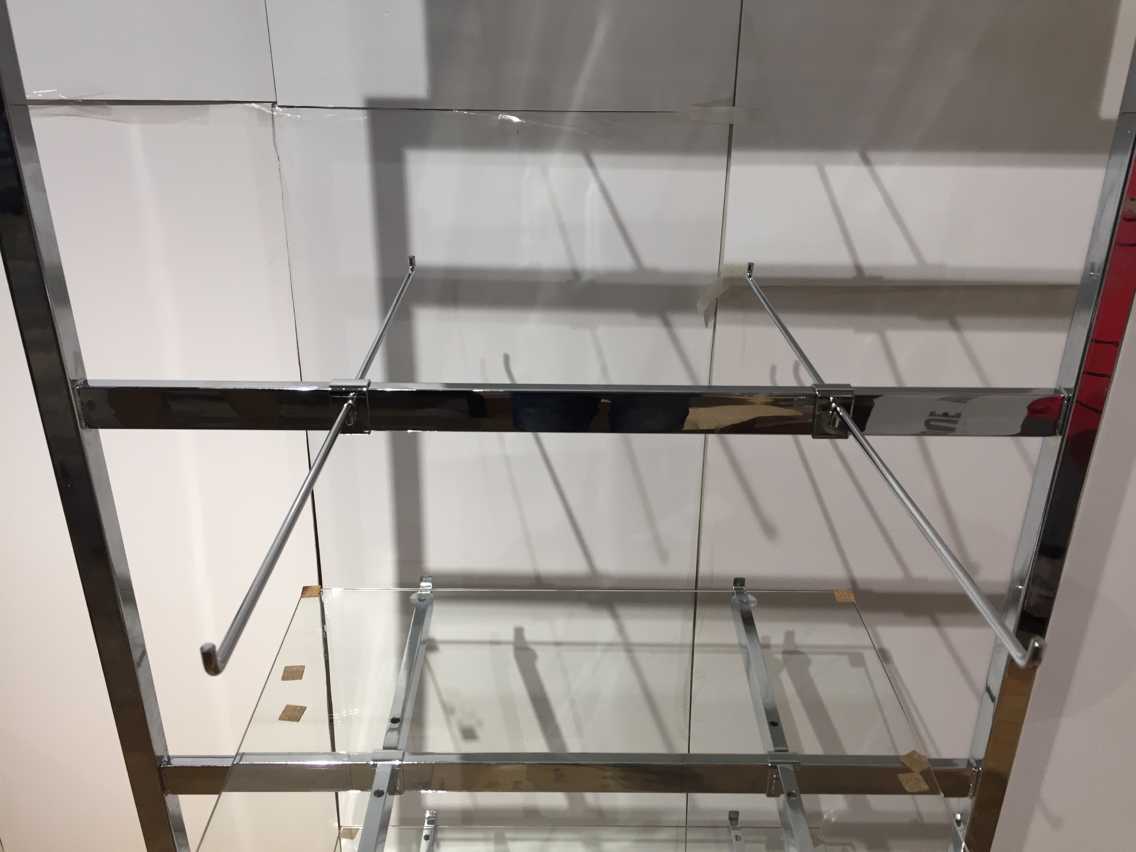
How the structure changes: knock-down construction with joints designed for repeated cycles, components sized to fit standard transport cases and to be handled by one or two people, and graphic panels that can be replaced between shows without rebuilding the frame. A cardboard POP display works well here because it combines cardboard with metal, wood, acrylic or PVC components, and its light weight reduces freight cost.
Materials that fit: cardboard and PVC for the volume of the structure, acrylic for illuminated niche displays and product visibility, and metal where the stand has to carry heavier demonstration products through an entire show cycle.
Setting-to-Format Map
| Setting | Structural priority | Typical format | Material default | Common categories |
|---|---|---|---|---|
| Supermarket or retail aisle | Fixed footprint, load path, handling cycles | Free-standing floor unit with modular shelves | Metal frame with PVC components; MDF panels; cardboard for promotions | Food & beverage, pet products, tools & hardware, household |
| Brand showroom or standalone store | Sightline, finish, multi-year service life | Tall layered fixture with integrated branding and lighting | Metal with MDF, acrylic or PVC; MDF panel surfaces | Fashion & apparel, footwear, socks, hats, eyewear, beauty & cosmetics, gifts, baby products |
| Exhibition stand or trade show | Assembly cycles, freight, packability | Knock-down modular stand | Cardboard, PVC, acrylic detail, metal cores | Consumer electronics, tools & hardware, toys, eyewear, cosmetics |
| Countertop or till point | Small footprint, short reading distance | Countertop display unit | MDF and PVC, acrylic, cardboard | Beauty & cosmetics, eyewear, small electronics, confectionery |
Step-by-Step Breakdown: Producing a Build to Order-Specific Requirements
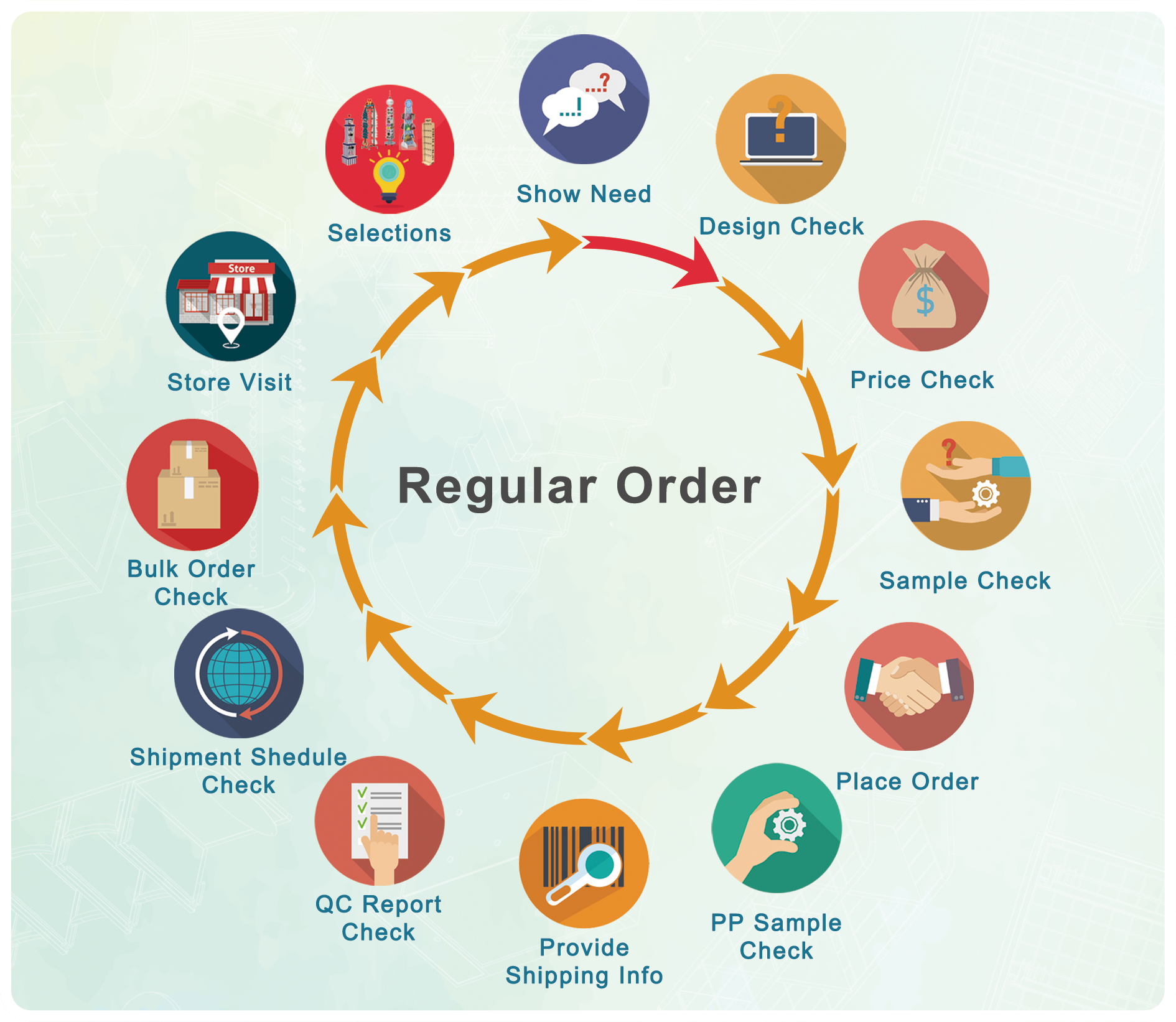
A custom display is not selected from a range — it is produced against the buyer's inputs. The stages below are the sequence YC Furniture Group runs from first contact to store visit.
Use Cases: Mapping Categories to Settings
Food, Beverage and Pet Retail
Supermarket aisles and pet retail floors favour free-standing floor units with a small footprint and a short load path. A metal pet food POP display built in metal and PVC holds heavier bagged product without deflection, while a wood food POP display in MDF and PVC suits deli, bakery and premium grocery positions where the fixture has to read as part of the store rather than as a promotional add-on. Cardboard remains the practical choice for short promotional cycles in the same aisle.
Tools and Hardware
Tools are dense, heavy and frequently handled. A tool POP display in metal and PVC, configured around a metal-framed structure, supports weight per shelf while keeping product visible at the point of purchase. The same frame family can be produced with a combination of metal, wood, acrylic, PVC and cardboard components when a brand wants wood-toned shelving in a showroom version and a lighter exhibition version of the same programme.
Beauty, Cosmetics and Eyewear
Cosmetics and eyewear live at countertop height and close reading distance. An MDF cosmetic POP display in MDF and PVC, or a sunglasses POP display combining metal, MDF and PVC, puts product at eye level with clear sightlines and controlled finishes. Acrylic appears here as a functional material — visibility and light transmission rather than decoration — and lighting becomes part of the specification rather than an accessory.
Consumer Electronics and Toys
Electronics and toys are the categories where cardboard and MDF formats divide most clearly. A cardboard POP display in a free-standing configuration handles high-turnover promotional volume and combines with metal, wood, acrylic or PVC components when a structural core is needed. An MDF toy POP display delivers the longer service life required by permanent toy departments, and the same structure logic carries into exhibition stands where demonstration units are rebuilt show after show.
Fashion, Footwear and Accessories
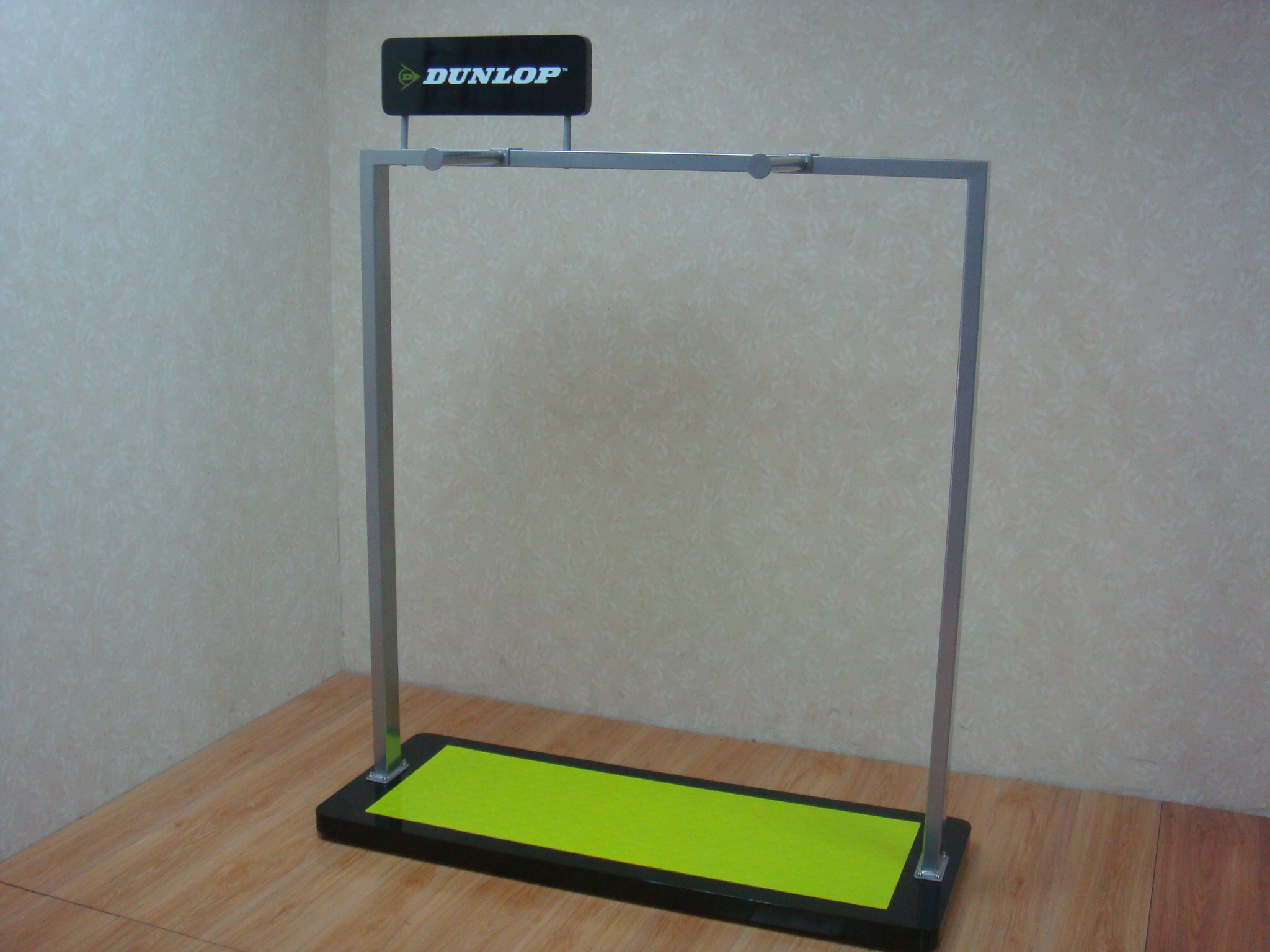
Brand stores and showrooms are where structure becomes brand expression. Verified field examples show what this looks like in practice: for DUNLOP (sports apparel, GB), 1,000 units were produced for a standalone brand store — a metal fixture combining high-contrast brand colours with integrated top-to-bottom branding, in service across a 3–6 year window; the organised layout improved product visibility and made better use of the available retail space. For Mothercare (maternity and baby products, GB), 2,000 units were produced for a brand store, built around clear category zoning, flexible merchandising and product accessibility. Clothing, footwear, socks, hats and eyewear formats — MDF clothing POP display, MDF shoe POP display, MDF sock POP display and metal hat POP display — are specified with the same logic: the product defines shelf angle and depth, the structure defines service life.
Exhibitions and Trade Shows
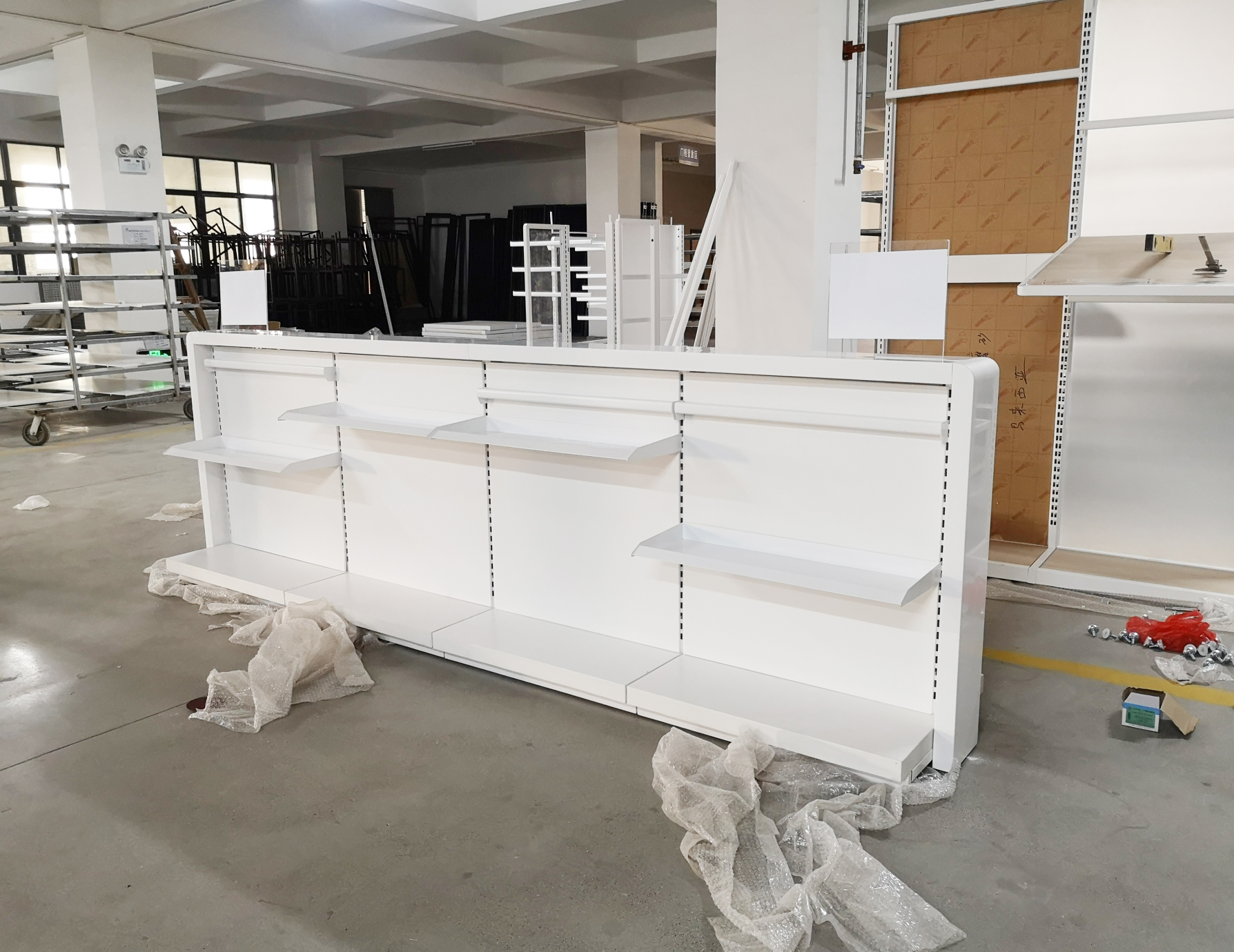
Exhibition builds are specified backwards from the freight case. Components are sized for standard cases, joints are designed for repeated assembly, and graphic panels are replaceable so that next season's show reuses the frame rather than the whole stand. Cardboard, PVC and acrylic carry most of the volume, with metal used where the stand has to support heavier demonstration product.
Comparison Table: Materials by Setting, Load Role and Reuse Horizon
Material choice follows the load path, the number of handling cycles and the expected service life. The table below summarises how the five materials usually divide the work.
| Material | Structural role in a display | Behaviour under load | Reuse horizon | Best-fit setting |
|---|---|---|---|---|
| Metal | Primary structural material; frames, uprights, shelf supports, casters | Carries the highest and most repeated loads; stable in long-span shelving | Multi-year; suitable for permanent programmes | Supermarket and retail aisle, brand showroom, exhibition cores |
| Wood / MDF | Panel material for shelves, sides, back panels and branded surfaces | Good for distributed load when the span is supported; takes painted, laminated and printed finishes | Multi-year indoors; less suited to high-moisture or outdoor positions | Brand showroom, standalone store, premium grocery, toy departments |
| Acrylic | Visibility components, niche displays, illuminated shelves, small-item presentation | Chosen for sightline and light transmission rather than for primary load | Multi-year when protected from impact | Countertop, eyewear, cosmetics, electronics accessories, exhibition detail |
| PVC | Component material within a metal or panel frame; graphic and divider elements | Supports secondary load and print surfaces inside a load-bearing frame | Multi-year as part of a framed build | Retail aisle, showroom, exhibition, countertop |
| Cardboard | Primary material for free-standing promotional units and counter units | Suited to light-to-medium promotional loads over a defined cycle | Promotion-cycle length; recyclable at end of use | Short-cycle aisle promotion, countertop offers, exhibition volume |
Two conclusions follow. First, the load-bearing decision is made by metal or by a supported panel structure — not by the material that is most visible. Second, mixing is normal rather than exceptional: a single unit can combine metal, wood, acrylic, PVC and cardboard depending on which part of the display has to carry load, which has to show product, and which has to be replaced first.
Frequently Asked Questions
Do POP displays sold into Europe need specific material documentation?
FSC, Sedex, ISO 9001 and ISO 14001 are generally not mandatory certifications for importing retail displays into the US or Europe. However, where a display programme serves large global retailers and brands that require compliance with ethical labour standards, environmental sustainability and strict supplier requirements, these certifications and qualifications become commercially important. In Europe, Regulation (EU) 2025/40 (PPWR) entered into force on 11 February 2025 and applies from 12 August 2026, which increases documentation and recyclability expectations for paper-based and multi-material display components. YC Furniture Group holds FSC chain-of-custody certification issued by SGS (SGSHK-COC-331884), ISO 9001 certification issued by Shanghai Ingeer Certification Assessment Co., Ltd. (117 24 QU 0233-06 R0S), ISO 14001 and Sedex membership.
What should an OEM cardboard POP display manufacturer in China be able to provide?
At minimum: free-standing cardboard structures and combined builds, since a cardboard POP display can combine cardboard with metal, wood, acrylic or PVC components; dimensions customized to order and structure customized to individual brand display requirements; in-house design, manufacturing, logistics and installation as a one-stop solution; and a documented inspection regime. YC Furniture Group produces cardboard display programmes alongside metal, wood and MDF, acrylic and PVC in the same factory, with 17 in-house designers and engineers, 10 QC specialists, more than 600,000 ft² of manufacturing and logistics space and over 200 employees, and acceptance inspection that includes a 100% pre-shipment test and third-party inspection.
What MOQ and delivery terms apply to a custom display programme?
Minimum order quantity depends on material and structure. Reference thresholds are 50 units for free-standing metal and wood fixtures and 100 units for countertop styles, while cardboard programmes start at 200 units for free-standing and 500 units for countertop. Delivery terms available include FOB, CIF, LC, DAP and DDP, with payment at 30% T/T in advance and 70% T/T against copy of B/L. YC Furniture Group operates a monthly capacity of 85×40'HQ containers and a standard production lead time of 25–40 days.
What information is needed before a display sample can be built?
Four inputs drive the design: product packaging dimensions, product weight, display quantity, and any requirements or limitations related to the usage environment and transportation. A target budget and physical product samples allow the design to be matched more precisely to the specific retail setting. Sample approval and pre-production sample approval are separate stages in the YC workflow, so structure, finish and branding are confirmed before bulk material is committed.
How is quality verified before shipment?
Acceptance inspection at YC Furniture Group includes a 100% pre-shipment test and third-party inspection, with production running at a monthly capacity of 85×40'HQ containers and a standard lead time of 25–40 days. The manufacturer provides a one-stop solution covering design, manufacturing, logistics and installation, with after-sales support covering installation support, troubleshooting support, replenishment support, display upgrades and customization updates. To price a build for a specific setting, send the product dimensions, display quantity and target retail environment to sales@ycfurnituregroup.com or review the full capability file in the YC Furniture Group brochure.
Conclusion: Specify the Setting First, Then the Display
The same product range can occupy an aisle, a showroom and an exhibition stand within a single season, and each of those three positions imposes a different structural and material answer. Aisle builds are decided by footprint, load path and handling cycles. Showroom builds are decided by sightline, finish and service life. Exhibition builds are decided by assembly cycles, freight and packability. Material selection follows from that decision: metal carries primary structure, wood and MDF carry panels and brand surfaces, acrylic delivers visibility, PVC supports and prints inside a frame, and cardboard handles promotional cycles that are defined rather than open-ended.
Because YC Furniture Group produces all five materials in one vertically integrated facility, a brand can run an aisle version, a showroom version and a trade show version of the same display programme through a single design, sampling and QC process. That is the practical advantage of specifying the setting first: the build changes, the supply chain does not.
Next Step
Send your product packaging dimensions, product weight, display quantity and target retail environment, and YC Furniture Group will return a structure and material recommendation for the setting you are buying for.
Email: sales@ycfurnituregroup.com | WhatsApp: +44 742-178-2702 | Website: www.ycfurnituregroup.com
Company brochure: YC Furniture Group capability file (PDF)
YC Furniture Group, established 2007. Headquarters: Shiying Business Building, No.98 Citong Road, Fengze District, Quanzhou, Fujian Province, China, 362018.
Have Questions or Need More Details?
Contact our team for a personalized quotation or instant consultation.
Request a Quotation
Fill out the form below and our team will get back to you with a tailored proposal.
WhatsApp Direct Chat
Prefer to chat in real-time? Message us on WhatsApp for instant assistance & quick answers.
- Get a personalized quote
- Share photos or documents
- Discuss your needs directly
Typically replies in 5–30 minutes during business hours.