What Is a Sock POP Display? MDF, Metal & Retail Placement
What Is a Sock POP Display? MDF, Metal, and Retail Placement Explained
A sock POP display is a point-of-purchase fixture built to hold, sort and present socks at the moment of sale — on a brand-store wall, at the end of a hosiery aisle, or on a countertop next to footwear. The category is defined less by its size than by its job: it has to make a dense size-and-colour range readable at arm's length, stay presentable through repeated replenishment, and carry brand identity in a very small footprint.
YC POP DISPLAY works on this category through the SOCK POP DISPLAY model SODJ26531, an MDF and metal point-of-purchase display produced to a customized specification. This article explains what the category is, how MDF, metal, acrylic, PVC and cardboard change what a sock fixture can do, where it belongs in a store or exhibition, and how a buyer moves from requirement to sample to bulk order.
YC FURNITURE GROUP LIMITED, which trades as YC POP DISPLAY, is a retail display manufacturer established in 2007 in Quanzhou, Fujian, China. It produces custom POP displays, fixtures and in-store assets in metal, wood, acrylic, PVC and cardboard, operates more than 600,000 ft² of manufacturing and logistics space with over 200 employees, and reports an export ratio of 95% across North America, Europe, South America and Oceania.
The Problem a Sock POP Display Solves
A POP display is a fixture used at the point of sale to promote or display products. Applied to socks, that general definition hides the difficult part: socks are a low-ticket, high-SKU-count category where the shopper compares size, colour, material and pack size in seconds, and where the fixture must still look orderly after staff have pulled and restocked it many times.
The commercial stakes are not marginal. POPAI (Shop!) reports that 70% to 76% of purchasing decisions happen in-store, which puts the fixture, the facing and the product presentation directly on the decision path rather than at the end of it.
For a buyer in the evaluation stage, the real question is rarely "do we need a display". It is "which structure and material keeps the sock range readable and on-brand for the life of the programme, at a minimum order quantity and lead time that fit the launch". That question is answered by material choice, structural configuration and placement, in that order.
Industry Background: Where Sock Displays Sit in the POP Market
The POP display market was valued at 14.6 billion USD in 2024 by Strategic Market Research, which places sock fixtures inside a mature, well-supplied category rather than a niche. Two structural facts matter when specifying a sock unit.
First, cardboard dominates volume. Dataintelo reports that corrugated board held a 42.7% revenue share of POP displays in 2025. That share reflects promotional and short-cycle programmes; permanent sock fixtures in brand stores are still commonly built in metal and MDF, which is why YC's sock model is a combined metal and MDF unit rather than a single-material one.
Second, countertop formats are a large part of the category. Dataintelo reports countertop displays at 34.2% of total product type share in 2025, and countertop placement is a natural fit for socks sold near footwear, at a till point, or as multi-pair gift packs.
Compliance pressure is now part of the specification brief. Regulation (EU) 2025/40, the Packaging and Packaging Waste Regulation (PPWR), sets packaging and packaging waste requirements for the European market; FSC chain of custody is available for wood-based components; and for cardboard constructions, U.S. Customs and Border Protection ruling NY N184135 classifies cardboard POP displays under HS 4823.90 (other paper and paperboard) and 4819.10 (corrugated boxes). Buyers comparing quotes across materials should expect landed cost and documentation to differ by material, not only by unit price.
The SODJ26531 Reference Build: MDF and Metal in One Sock Fixture
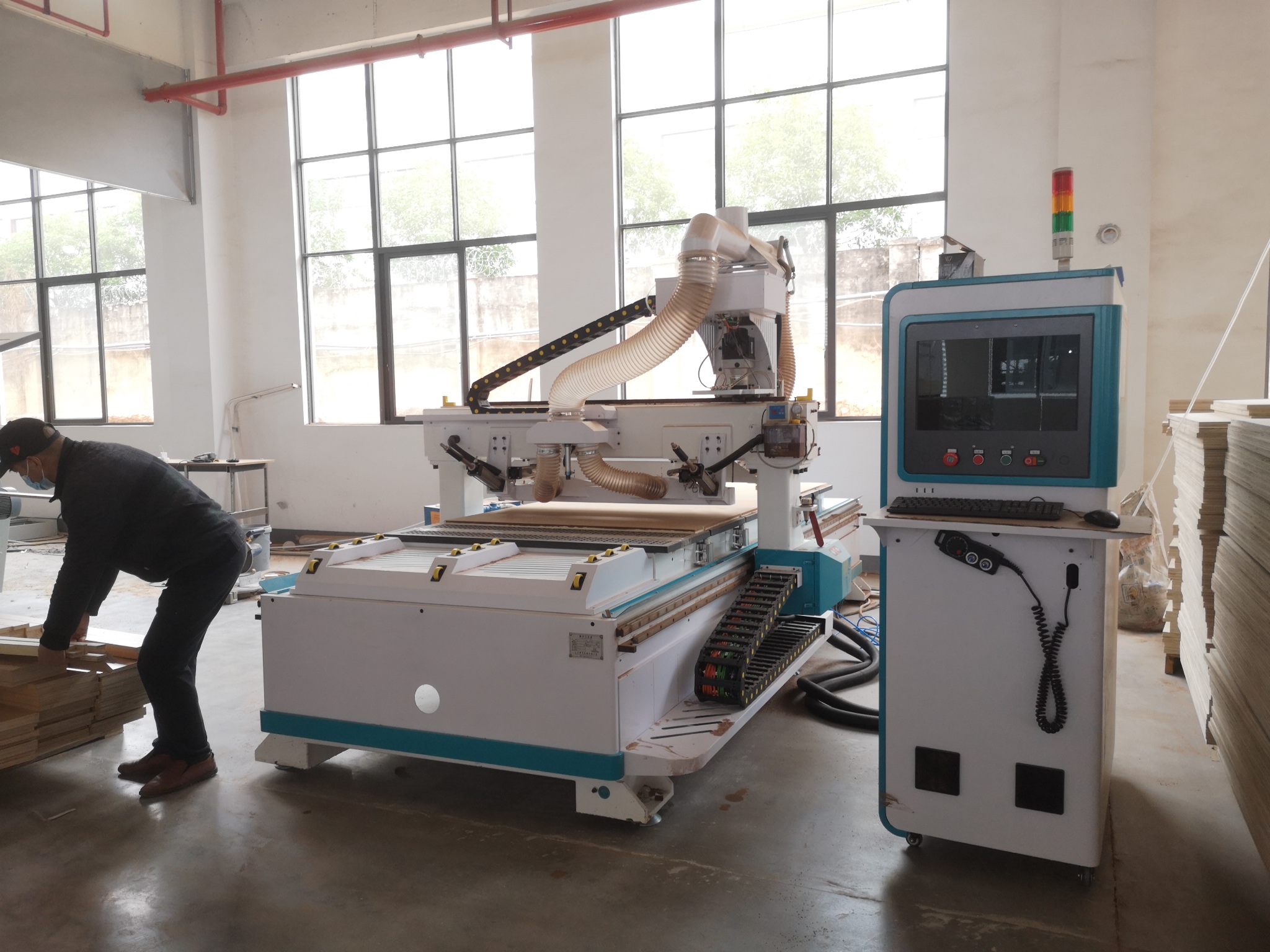
SODJ26531 is catalogued as an MDF SOCK POP DISPLAY whose material set is metal and MDF. In practical terms, the unit combines a wood-based panel body with metal structural components, which is the configuration most buyers arrive at when a sock fixture has to look finished on the shop floor and hold its form across several seasons.
The product belongs to the MDF sock POP display category and is classified as a point-of-purchase display. Its specification parameter is listed as customized, which means dimensions, finishes and structure are produced to order-specific requirements rather than selected from a fixed size list.
SODJ26531 at a Glance
| Attribute | Verified detail |
|---|---|
| Product name | SOCK POP DISPLAY |
| Model | SODJ26531 |
| Product type / category | MDF SOCK POP DISPLAY; point-of-purchase display |
| Material | Metal / MDF |
| Specification | Customized |
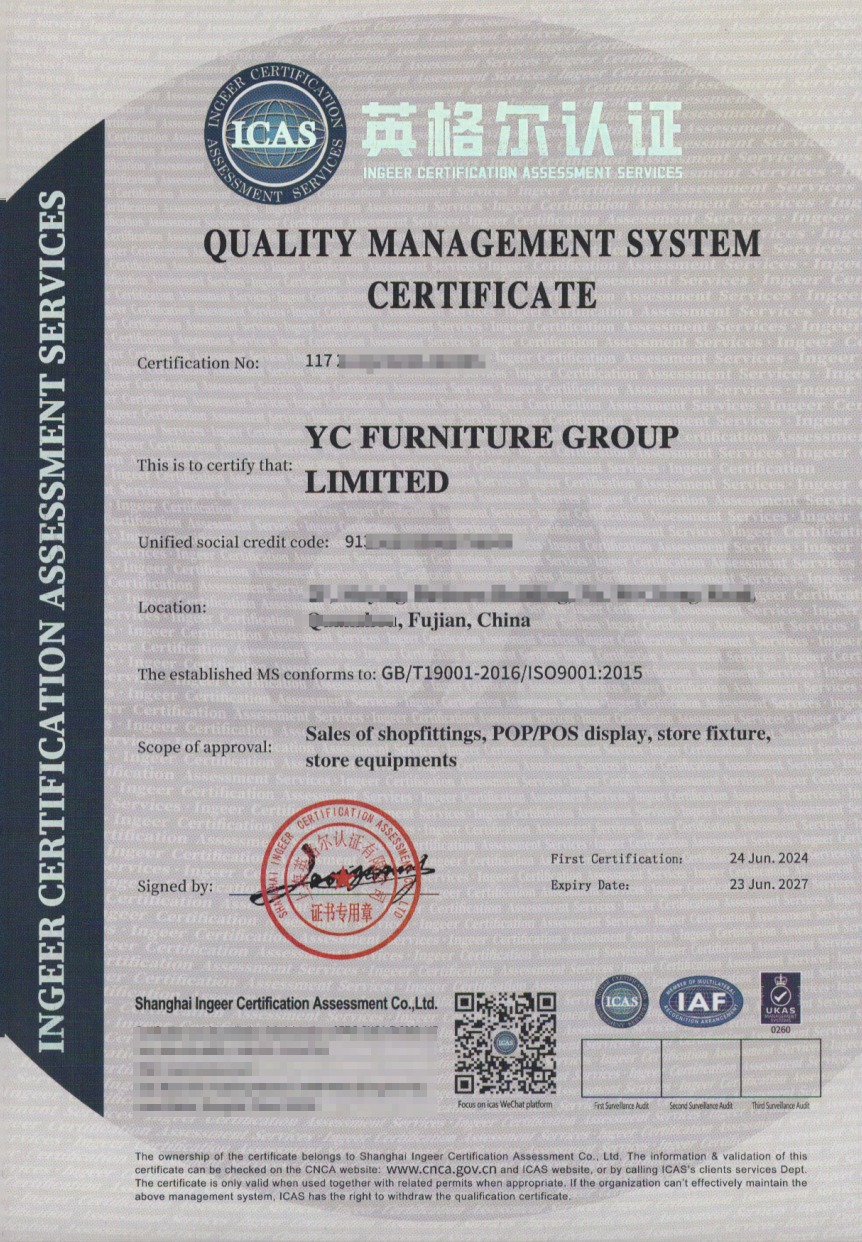
| Quality management coverage | ISO 9001 certificate 117 24 QU 0233-06 R0S, issued by Shanghai Ingeer Certification Assessment Co., Ltd., standard GB/T19001-2016/ISO9001:2015, valid 24 June 2024 to 23 June 2027; scope covers sales of shopfittings, POP/POS display, store fixture and store equipment, and covers this sock display |
| Minimum order quantity | 50 units for free-standing metal and MDF builds; 100 units for countertop styles |
| Lead time | 25–40 days |
| Acceptance | 100% pre-shipment test and third-party inspection |
Customizable Structure and Finish
SODJ26531 is not a fixed catalogue shape with a logo added. Customization at YC covers size and structure, materials, colours and finishes, branding, product presentation, lighting, graphics and signage, features and functionality, packaging and shipping, application and retail environment, and sustainable options.
That scope is what makes a sock display a design project rather than a purchase. A sock fixture is defined by how many facings it must show, how packs are grouped, how deep the shopper can reach, and how the brand block appears from the aisle — and each of those decisions changes the structure, not just the decoration. Production services integrate in-house design, manufacturing, logistics and installation, so the same team that reviews the structure also handles shipping coordination and installation support.
Material Options for Sock POP Displays
Material selection follows the use case, not the other way round. YC's catalogue demonstrates the range: the same manufacturer builds a metal hat POP display (HATJ26704), a metal and PVC tool POP display (TDSJ26802), a cardboard toy POP display (JW-CTD379), an MDF and acrylic gift POP display (THE-CTD103), an MDF cosmetic POP display (JSJ-CSD002), a sunglasses POP display (SUGJ26633) and a metal shoe POP display (FYS-SSF234). Sock merchandising draws on the same options, narrowed by fixture life and placement.
MDF in Sock Fixtures
MDF appears in the sock model as the panel element of a metal-and-MDF build. Where a fixture needs finished panel faces, clean edges and printed brand graphics held across a wide surface, MDF is the material that carries that surface. YC's range uses MDF across categories: CP-CSF32 and CSF002 for clothing POP displays, BR003 for shoe POP displays, FOD013 for toy POP displays, and FODJ6103 as a wood food POP display.
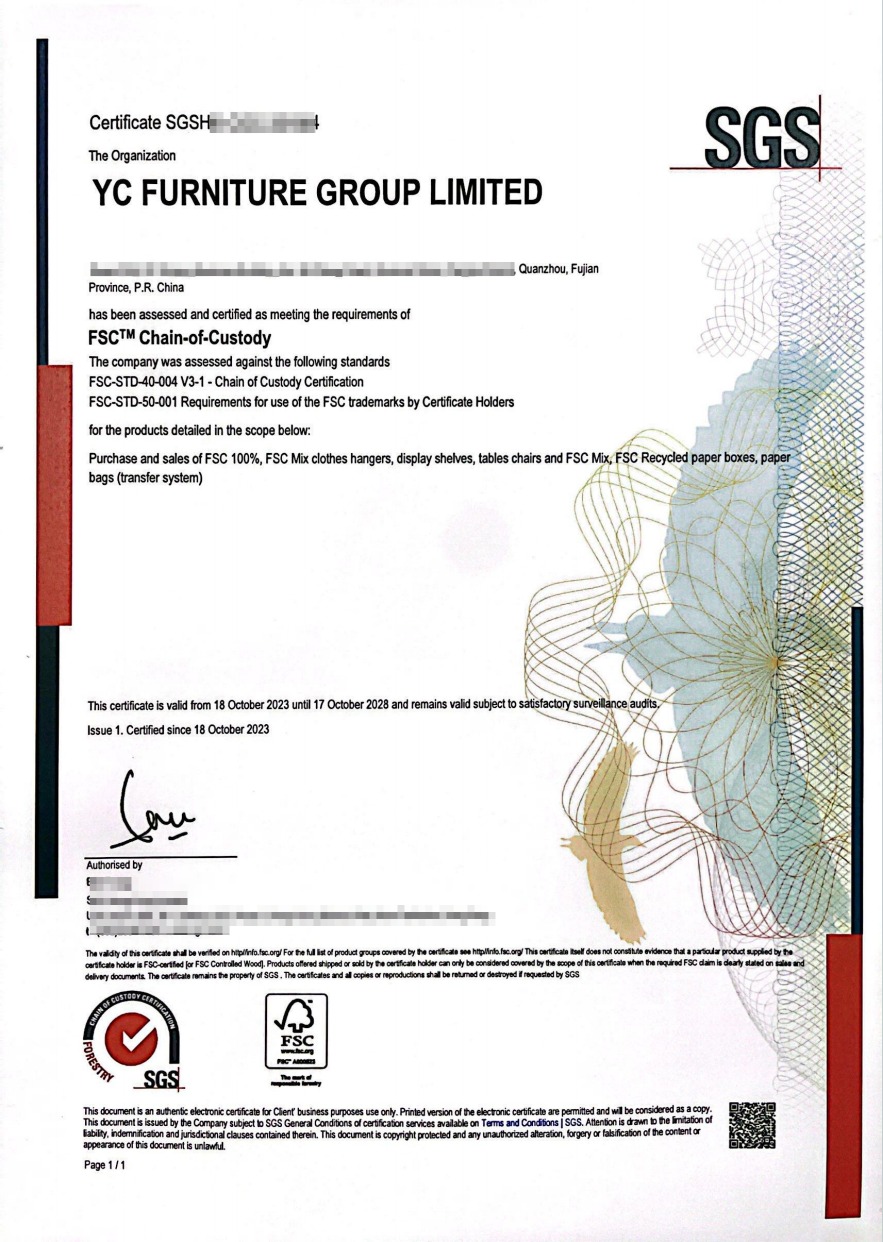
For retail programmes that ask for certified wood, YC holds FSC chain of custody certificate SGSHK-COC-331884, issued by SGS and valid from 18 October 2023 to 17 October 2028. The scope covers purchase and sales of FSC 100%, FSC Mix and FSC Recycled materials, and explicitly includes display shelves alongside clothes hangers, tables, chairs, paper boxes and paper bags under the transfer system.
Metal in Sock Fixtures
Metal is the structural side of the sock build. In YC's metal-based displays, metal is used as the primary structural material — for example in the CSFJ6176 clothing POP display, where metal is the primary structure and PVC is a component material, and in the HATJ26704 hat display, where metal is the primary material.
Structure is where sock fixtures most often fail in service. YC addresses deformation risk through material verification, structural assessment, load testing and sample validation, so the unit is designed against the actual retail environment and expected service life rather than against a warehouse assumption.
Acrylic and PVC as Component Materials
Acrylic and PVC are rarely the whole fixture in sock merchandising; they are components that solve a specific presentation problem. YC uses acrylic with MDF in the THE-CTD103 gift POP display, and PVC as a component material alongside metal in the TDSJ26802 tool POP display, the PETJ26703 pet food POP display and the CSFJ6176 clothing POP display.
In a sock programme, the practical role of these components is to add a viewing or holding element without turning the fixture into an all-metal or all-panel structure. Buyers should confirm at sample stage how each component is fixed to the main body, because mixed-material joints are where tolerance issues appear first.
Cardboard as the Short-Cycle Option
Cardboard remains the volume material of the category, at a 42.7% revenue share in 2025 according to Dataintelo, and YC builds it as a primary structure: GJH26-104 is a cardboard POP display and JW-CTD379 is a free-standing cardboard toy POP display. Cardboard units can still combine with metal, wood, acrylic or PVC components.
Two constraints separate cardboard from a permanent sock fixture. Minimum order quantity is higher — 200 units for free-standing cardboard styles and 500 units for countertop cardboard styles, against 50 units for free-standing metal and MDF builds. And documentation differs: cardboard displays are classified under HS 4823.90 and 4819.10 in the U.S. Customs ruling NY N184135, and paper-based packaging placed on the EU market falls within the scope of Regulation (EU) 2025/40 (PPWR).
Comparison Table: Sock POP Display Materials at a Glance
The table below compares the five materials YC works in, using only builds and facts that appear in the company's catalogue and certification record.
| Material | Example in the YC range | What it contributes to a sock fixture | Buyer checkpoint |
|---|---|---|---|
| MDF | SODJ26531 sock POP display (MDF + metal); CP-CSF32 MDF clothing; BR003 MDF shoe; FOD013 MDF toy | Panel body and finished presentation surfaces; carries printed brand graphics across the unit | FSC chain of custody SGSHK-COC-331884 (SGS, valid to 17 October 2028) when certified wood is requested; confirm finish and edge detail at sample approval |
| Metal | HATJ26704 metal hat; FYS-SSF234 metal shoe; CSFJ6176 metal and PVC clothing | Primary structural material; holds the frame and the form of the fixture | Load requirement and placement are reviewed through material verification, structural assessment, load testing and sample validation |
| Acrylic | THE-CTD103 MDF and acrylic gift POP display | Component material added to a panel body for a specific viewing element | Confirm fixing method and tolerance at the mixed-material joint during sample approval |
| PVC | PETJ26703 pet food, TDSJ26802 tool, CSFJ6176 clothing (metal and PVC) | Component material used alongside a metal frame | Check component compatibility and assembly sequence in the PP sample |
| Cardboard | GJH26-104 cardboard POP display; JW-CTD379 free-standing cardboard toy display | Short-cycle and high-volume programmes; can combine with metal, wood, acrylic or PVC | MOQ 200 free-standing / 500 countertop; HS 4823.90 and 4819.10 per U.S. CBP ruling NY N184135; PPWR scope for EU packaging |
Retail Placement and Exhibition Scenarios
Placement decides the configuration more than brand preference does. A sock fixture that works on a brand-store wall is not the same unit that works on a supermarket endcap, and an exhibition unit has a different transport and assembly profile from a permanent in-store one.
Brand Stores and Apparel Retail
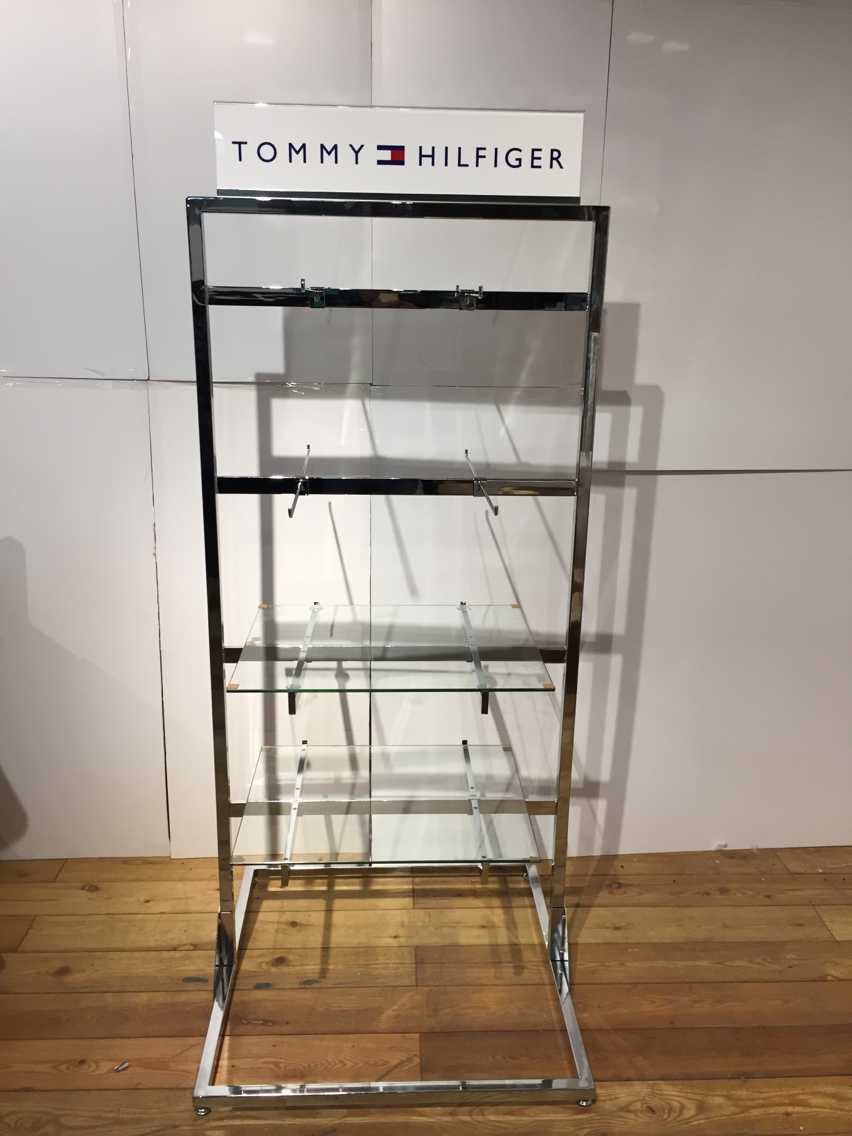
In a standalone brand store, socks are usually merchandised as an accessory to footwear or as a branded category block. This is where the MDF and metal combination earns its cost: the panel face carries the brand block and the metal frame keeps the unit stable in a high-touch area. YC's case record for Tommy Hilfiger covers 500 units for a standalone brand store, with a 3–6 year duration, and lists the SODJ26531 sock POP display among the related display products for that programme.
The same logic supports adjacent categories in the same store: a clothing pop display for the apparel wall, a shoe pop display for the footwear zone, a hat pop display and an eyewear pop display for accessories, and a gift pop display for seasonal gifting.
Supermarkets and Mass Retail Aisles
In grocery and mass retail, socks compete inside a hosiery or apparel accessory aisle where the shopper is scanning rather than browsing. Countertop and compact floor-standing formats dominate this setting, consistent with countertop displays holding a 34.2% share of total product type share in 2025 (Dataintelo). Cardboard is often the correct answer here, because the fixture follows a promotional calendar rather than a multi-year store fit-out.
Multi-Brand Sports and Fashion Retail
Multi-brand environments impose a harder test: the fixture must look consistent with several brands at once and still survive heavier handling. YC's DUNLOP case record covers 1,000 units for a standalone brand store, with a 3–6 year duration, and describes a metal fixture combining high-contrast brand colours, functional materials and integrated top-to-bottom branding. Sock fixtures in that environment inherit the same structural requirements as the rest of the store.
Exhibitions and Trade Shows
Trade show use changes the brief from durability to portability. Customization at YC explicitly includes packaging and shipping alongside structure and lighting, which is the relevant lever for exhibition units: the same fixture is designed for repeated packing, transport and re-assembly. For a sock range being introduced at a show, the sequence is usually a compact countertop or free-standing unit with brand graphics, followed by a permanent in-store version once the range is confirmed.
Gift, Seasonal and Multi-Pack Programmes
Socks sold as multi-pair gift packs behave like gift products rather than hosiery, which is why sock programmes frequently borrow configuration ideas from the gift POP display category (for example THE-CTD103 in MDF and acrylic) and from small-format cosmetic POP displays (JSJ-CSD002 in MDF and PVC). The constant across these categories is a small footprint with a high brand signal.
Step-by-Step: Specifying a Sock POP Display
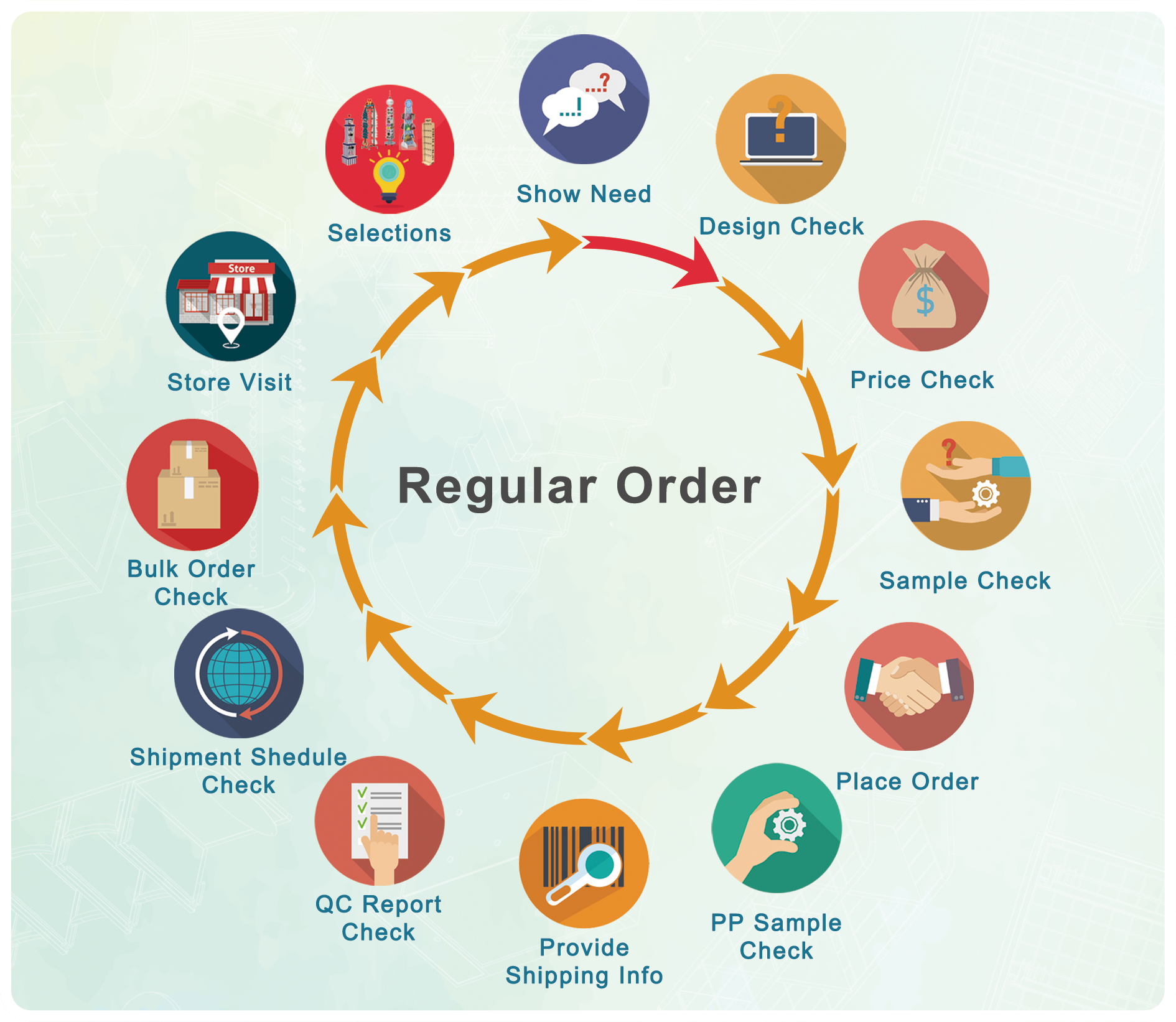
The working sequence at YC runs from needs assessment through design review, pricing, sample approval, order placement, PP sample approval, shipping coordination, QC inspection, shipment scheduling, bulk order confirmation, store visit and final selection. Each stage has a defined output, which is what keeps a customized fixture from drifting between concept and delivery.
- Needs assessment. Provide product packaging dimensions, product weight and display quantity, plus any requirements or limitations on the usage environment and transportation. Product samples and a target budget let the design match the brief instead of the closest existing model.
- Design review. Structure, material mix, facings, branding and lighting are fixed against the actual sock range. For a metal and MDF unit, this is where load and placement are assessed.
- Pricing. Quotation is issued against the agreed configuration and material set. Delivery terms available are FOB, CIF, LC, DAP and DDP.
- Sample approval. A physical sample is approved before production. Sample validation is also the point where material and structural assumptions are tested rather than assumed.
- Order placement. Payment terms are 30% T/T in advance and 70% T/T against copy of B/L.
- PP sample approval. The pre-production sample confirms that the approved design, materials and finishes transfer to the production line.
- Shipping coordination and QC inspection. Acceptance inspection includes a pre-shipment test and third-party inspection, and quality control runs as a 100% pre-shipment test before release.
- Shipment scheduling and bulk confirmation. Production lead time is 25–40 days, with an annual output of 1,000 x 40'HQ behind the schedule.
- Store visit and final selection. Post-delivery review confirms the fixture's behaviour in the live environment and feeds the next range refresh.
Commercial Terms That Shape the Decision
Commercial terms usually decide between two technically acceptable options, so they belong in the evaluation rather than at the end of it.
- Minimum order quantity. 50 units for free-standing metal and MDF displays and 100 units for countertop styles; cardboard runs start at 200 units free-standing and 500 units countertop.
- Delivery terms. FOB, CIF, LC, DAP and DDP.
- Payment terms. 30% T/T in advance, 70% T/T against copy of B/L.
- Lead time. 25–40 days from confirmed order.
- Acceptance criteria. Pre-shipment test and third-party inspection.
- After-sales. Installation support, troubleshooting support, replenishment support, display upgrades and customization updates.
Certification status at the time of writing: ISO 9001 certificate 117 24 QU 0233-06 R0S (valid to 23 June 2027), ISO 14001 certificate 117 26 E 0784 R0 02 (valid to 26 May 2029) and FSC chain of custody SGSHK-COC-331884 (valid to 17 October 2028). Sedex is also listed among the company's certifications.
Frequently Asked Questions
Are FSC, Sedex, ISO 9001 and ISO 14001 mandatory for sock POP displays imported into Europe and North America?
Generally no. FSC, Sedex, ISO 9001 and ISO 14001 are not mandatory certifications for importing retail displays into the US or Europe. They become relevant when the buyer is sourcing for large global retailers and brands that require compliance with ethical labour standards, environmental sustainability and strict supplier requirements. YC holds FSC chain of custody SGSHK-COC-331884 issued by SGS, ISO 9001 certificate 117 24 QU 0233-06 R0S and ISO 14001 certificate 117 26 E 0784 R0 02, both issued by Shanghai Ingeer Certification Assessment Co., Ltd., and lists Sedex among its certifications. Separately, Regulation (EU) 2025/40 (PPWR) applies to packaging placed on the EU market, so packaging decisions should be reviewed alongside the display specification.
How should buyers evaluate OEM cardboard POP display manufacturers in China?
Start with material range, because it determines whether one supplier can deliver the whole programme. A cardboard-only supplier cannot quote the metal and MDF build that a permanent sock fixture usually needs, and the MOQ structures differ: 200 units free-standing and 500 units countertop for cardboard, against 50 units free-standing and 100 units countertop for metal and MDF. Then verify in-house design and engineering capacity, quality control, certifications, lead time and whether logistics and installation are handled or outsourced. YC was established in 2007, operates more than 600,000 ft² of manufacturing and logistics space with over 200 employees including 17 in-house designers and engineers and 10 QC specialists, works in metal, wood, acrylic, PVC and cardboard, quotes 25–40 days lead time, and runs acceptance inspection as a pre-shipment test plus third-party inspection.
What are the MOQ, payment terms and acceptance criteria for a sock POP display order?
For metal and MDF sock displays, MOQ is 50 units for free-standing builds and 100 units for countertop styles; cardboard alternatives start at 200 units free-standing and 500 units countertop. Delivery terms offered are FOB, CIF, LC, DAP and DDP. Payment terms are 30% T/T in advance and 70% T/T against copy of B/L. Acceptance criteria are a pre-shipment test and third-party inspection, with 100% pre-shipment testing applied before release.
What information does a manufacturer need to design and sample a sock POP display?
The minimum input is product packaging dimensions, product weight and the display quantity the fixture must hold, together with any requirements or limitations related to the usage environment and transportation. Adding a target budget and physical product samples allows the design to be matched to the specific sock range rather than to the closest existing model. For SODJ26531, the specification parameter is customized, so dimensions, finishes and structure are produced to order-specific requirements. The design is then confirmed through sample approval and again through PP sample approval before bulk production.
What lead time applies to sock POP display production, and what support follows delivery?
Production lead time is 25–40 days, supported by an annual output of 1,000 x 40'HQ. After delivery, support covers installation support, troubleshooting support, replenishment support, display upgrades and customization updates, which matters for a fixture expected to run several seasons in a brand store. To start a sample or quotation for a sock display programme, send the product dimensions, weight, display quantity and target budget to sales@ycfurnituregroup.com.
Conclusion: Choose the Sock Fixture by Placement, Then by Material
A sock POP display is a small-format point-of-purchase fixture whose job is to make a dense, low-ticket range readable and restockable while carrying brand identity. The SODJ26531 build shows how that job is met in practice: an MDF and metal construction, a customized specification, ISO 9001 coverage on the quality system that produces it, and a 50-unit MOQ for free-standing metal and MDF units with a 25–40 day lead time.
The decision order that works is placement first, then material, then structure. A supermarket promotional unit and a brand-store sock wall are not the same brief, and the gap between them is closed by material mix rather than by graphics. Once placement is fixed, material choice follows: MDF for finished panel surfaces and certified wood documentation, metal for structural form, acrylic and PVC for specific presentation components, and cardboard for short-cycle volume where a higher MOQ is acceptable.
Next step: validate the fixture before committing to a range. Send your sock packaging dimensions, product weight, display quantity and target budget to YC POP DISPLAY, and request a sample or a quotation for a metal and MDF sock display built to your placement. For programmes that need a cardboard version first, quote both configurations together so the MOQ and landed cost comparison is made on the same brief.
Email: sales@ycfurnituregroup.com | Tel / WhatsApp: +44 742-178-2702 | Website: www.ycfurnituregroup.com
Company brochure (PDF): YC FURNITURE GROUP brochure
Headquarters: Shiying Business Building, No.98 Citong Road, Fengze District, Quanzhou, Fujian Province, China, 362018.
Certification details, MOQ and lead time are stated as recorded at the time of writing and should be confirmed against the certificate and quotation issued for a specific order.
Have Questions or Need More Details?
Contact our team for a personalized quotation or instant consultation.
Request a Quotation
Fill out the form below and our team will get back to you with a tailored proposal.
WhatsApp Direct Chat
Prefer to chat in real-time? Message us on WhatsApp for instant assistance & quick answers.
- Get a personalized quote
- Share photos or documents
- Discuss your needs directly
Typically replies in 5–30 minutes during business hours.