YC POP DISPLAY: Inside a China POP Display Manufacturer
YC POP DISPLAY: Inside a China POP Display Manufacturer
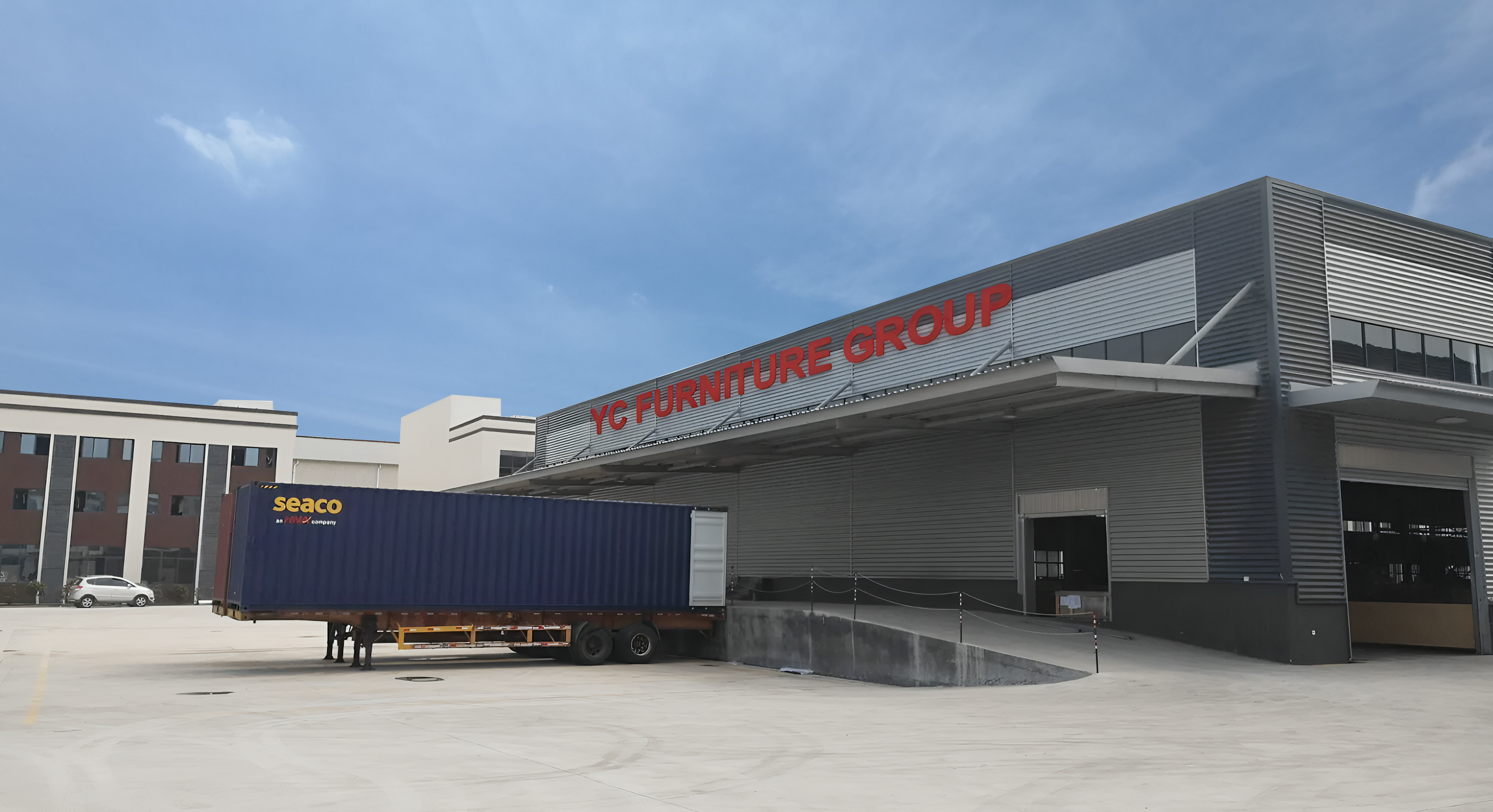
YC FURNITURE GROUP LIMITED — the company behind the YC POP DISPLAY brand — is a POP display manufacturer headquartered in Quanzhou, Fujian Province, China, at Shiying Business Building, No.98 Citong Road, Fengze District, Quanzhou, Fujian Province, 362018. Established in 2007, YC specialises in customised POP display stands and retail fixtures. Its retail display solutions include POP displays, fixtures, packaging and other in-store assets. This analysis sets out exactly what the company documents publicly — product lines, materials, certifications, factory scale and service model — and where public third-party data still runs out.
Why buyers research POP display manufacturers before they shortlist
Buyers who arrive at this stage are usually not looking for a definition of a POP display. They already know they need one. The real research task is separating suppliers who can be verified from suppliers who can only be described.
Four gaps show up repeatedly in early-stage sourcing work. The first is material capability: a brand that needs a metal-frame floor display and a corrugated countertop unit for the same launch does not want two vendors, two tooling processes and two quality standards. The second is compliance documentation: European and North American retail groups increasingly ask for paper trails on material sourcing, labour standards and environmental management before a purchase order is issued. The third is structural reliability: a display that deforms or loses its casters within a season becomes a replacement cost rather than a marketing asset. The fourth is verifiability: claims about factory size, certifications and export experience are easy to publish and hard for a buyer to check from the other side of the world.
The practical implication is that early-stage supplier research should be driven by checkable attributes — named certifications with numbers, named models with materials, named markets, and a documented project process. This article evaluates YC POP DISPLAY against exactly those attributes.
Industry background: the numbers behind in-store display spend
POP displays are a mature but active category within Packaging & Printing. The Global Point of Purchase (POP) Display Market was valued at 14.6 Billion USD in 2024, according to Strategic Market Research. The same figure is corroborated closely by Credence Research, which estimates 14.603 Billion USD for the same year — an unusually high level of consensus between two commercial research houses.
Material mix matters for sourcing decisions. Cardboard and corrugated board accounted for 42.7% of global POP display revenue in 2025, according to Dataintelo’s Point of Sale Display Market Research Report 2034. Countertop units represented 34.2% of total product type share in 2025, per the same source.
Demand for these fixtures is driven by the point at which purchase decisions are actually made. POPAI (Shop!) reports that 70% to 76% of purchasing decisions happen in-store. Separately, a Nielsen-derived figure cited by Grand Fly puts 73% of global shoppers willing to pay more for eco-friendly display materials — a derived rather than directly surveyed figure, and therefore worth treating as directional rather than precise.
Regulation is now part of the material conversation. Regulation (EU) 2025/40, the EU Packaging and Packaging Waste Regulation (PPWR), sets an application date of 12 August 2026 for European packaging. For importers of cardboard and composite displays, this makes documentation of material sourcing and recyclability a live procurement question rather than a future one.
Customs classification is a related detail that trips up first-time importers of paperboard displays. U.S. Customs and Border Protection ruling NY N184135 classifies cardboard POP displays under HS 4823.90 (other paper/paperboard) and HS 4819.10 (corrugated boxes). Buyers comparing landed cost across suppliers should confirm that the classification used in quotations matches the actual construction.
On growth forecasts: published CAGR forecasts for this category range from 5.4% to 13.1%. The wide spread is a methodology difference — higher figures tend to include digital POS software and hardware systems, while the 5.4%–5.8% band specifically targets physical display manufacturing. Buyers should check which definition a forecast is using before citing it internally.
Company overview: YC FURNITURE GROUP LIMITED
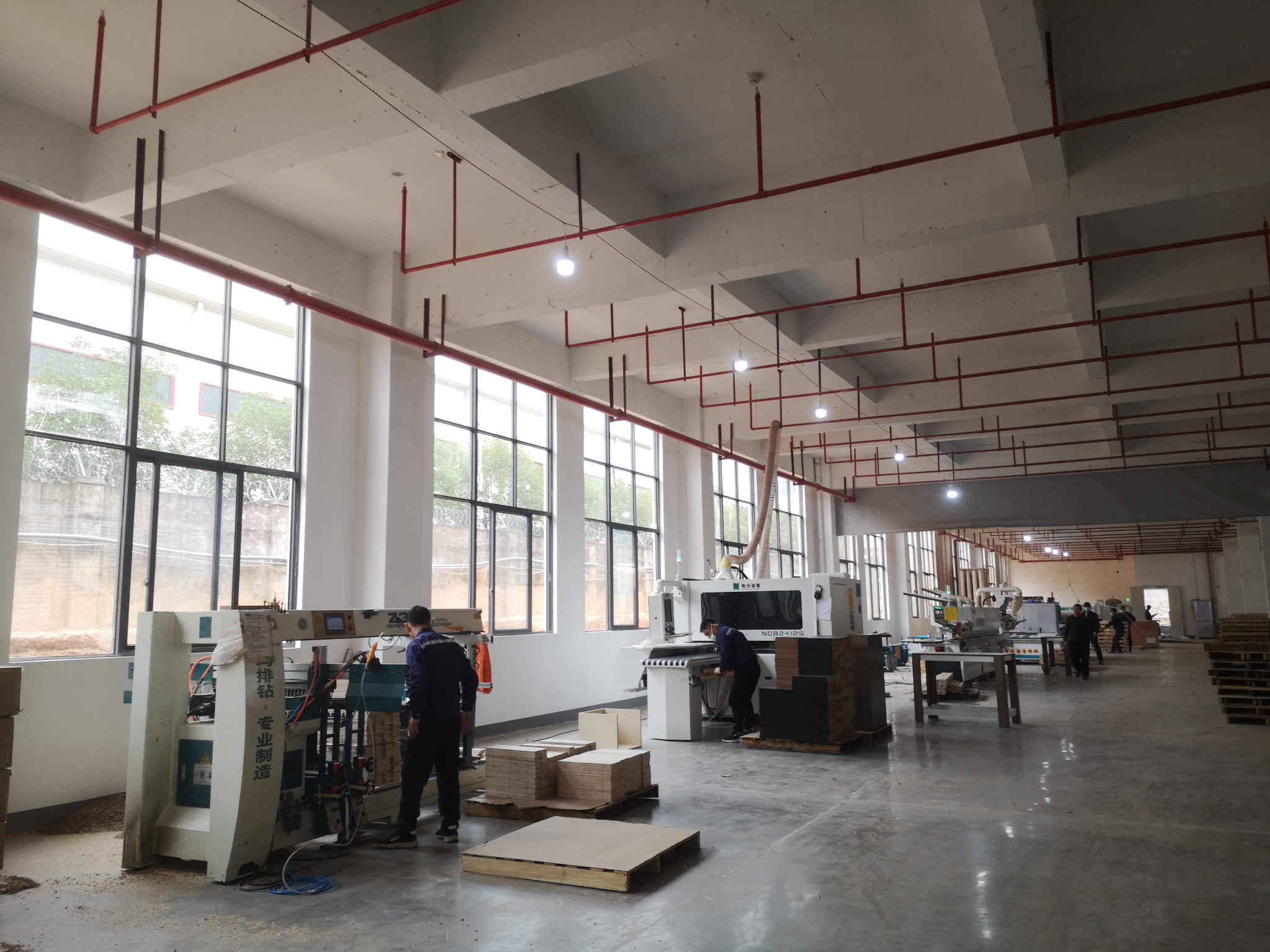
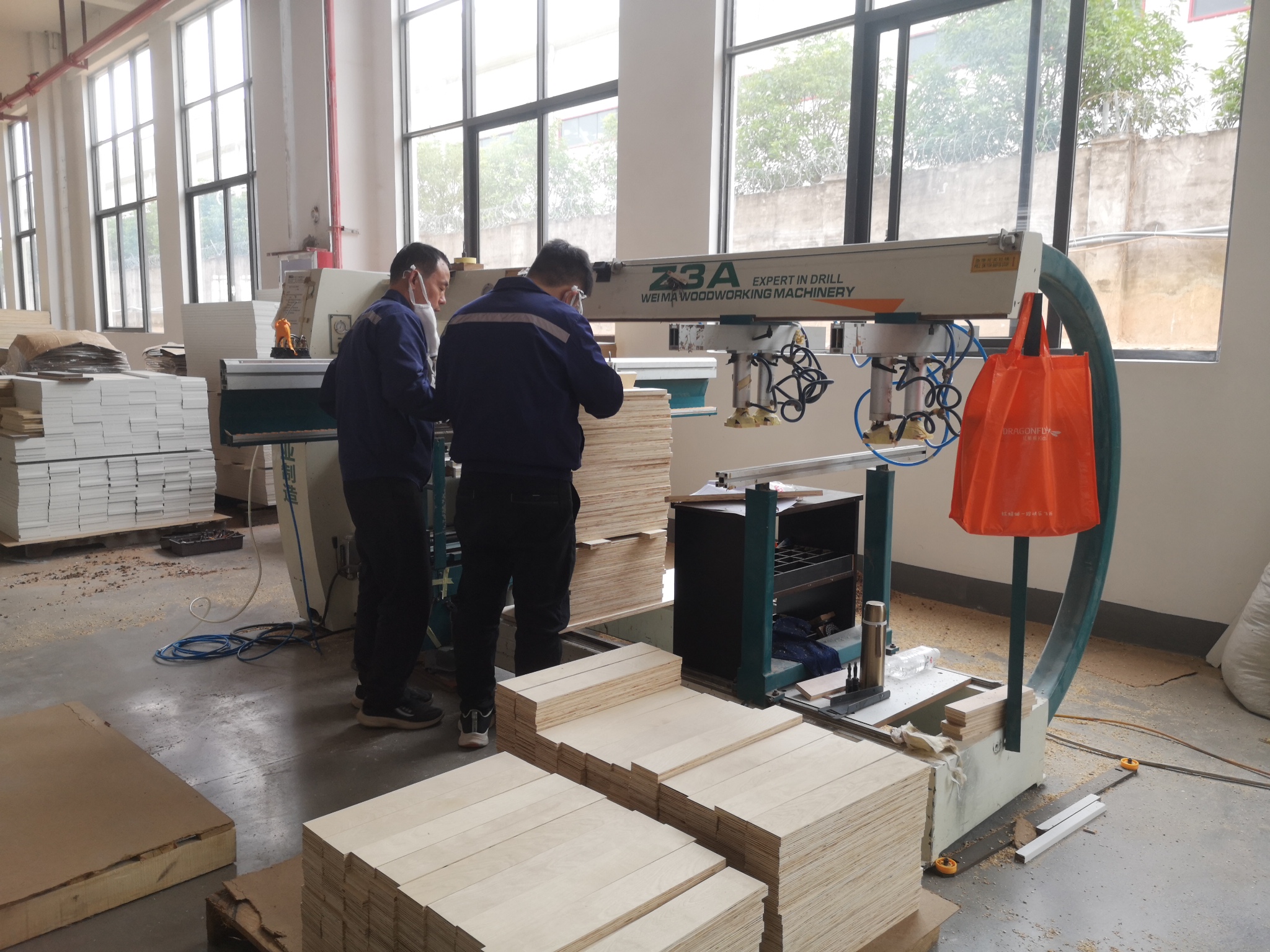
YC FURNITURE GROUP LIMITED is a POP display manufacturer headquartered in Quanzhou, Fujian Province, China. The company was established in 2007, and its own profile states more than 19 years of experience in the retail display sector. Its manufacturing and logistics facility covers 600,000 ft² and combines production space with logistics capacity.
The company employs more than 200 staff, including 17 in-house designers and engineers and 10 QC specialists. Annual production capacity reaches 1,000 x 40’HQ container loads — a figure the company associates with supporting recurring retail replenishment programmes rather than one-off promotional runs.
Export business accounts for approximately 95% of total sales. Major markets include North America, Europe, South America and Oceania, and the company states that it has served over 5,000 companies and brands worldwide.
Core products and solutions
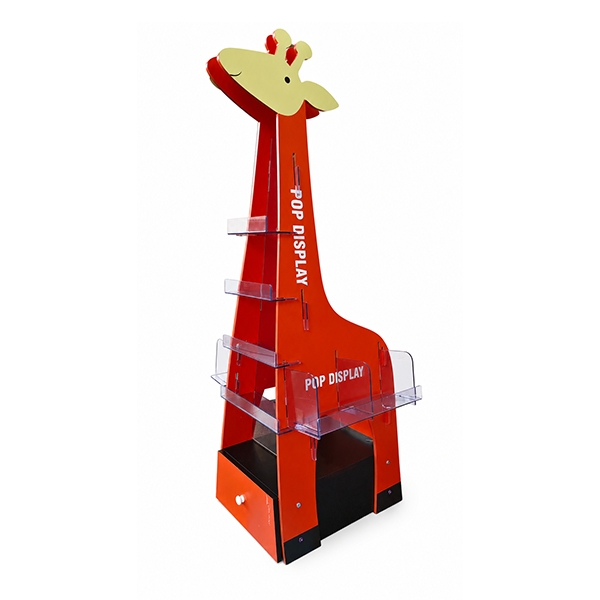
YC’s product range is organised by retail category rather than by a single universal fixture. Each line is engineered around the merchandise it carries — footwear and apparel need hanging capacity and depth, cosmetics and eyewear need shelf presentation and lighting integration, tools and pet food need load capacity, and cardboard lines need flat-ship and rapid-assembly logic. Product specification parameters across the range are listed as Customized: dimensions, structural configuration and surface finishes are defined per brand rather than taken off a fixed catalogue.
Product lines, models and materials
| Product name | Model | Product type | Primary material(s) |
|---|---|---|---|
| GIFT POP DISPLAY | THE-CTD103 | MDF gift POP display | MDF / acrylic |
| GIFT POP DISPLAY | WNH043 | Metal gift POP display | Metal |
| FOOD POP DISPLAY | FODJ6103 | Wood food POP display | MDF / PVC |
| FOOD POP DISPLAY | FODJ26801 | Metal food POP display | Metal / PVC |
| SOCK POP DISPLAY | SODJ26531 | MDF sock POP display | Metal / MDF |
| CLOTHING POP DISPLAY | CSF002 | MDF clothing POP display | Metal / MDF / PVC |
| CLOTHING POP DISPLAY | CP-CSF32 | MDF clothing POP display | Metal / MDF / PVC |
| CLOTHING POP DISPLAY | CSFJ6176 | Metal clothing POP display | Metal / PVC |
| SHOE POP DISPLAY | BR003 | MDF shoe POP display | Metal / MDF |
| SHOE POP DISPLAY | FYS-SSF234 | Metal shoe POP display | Metal / PVC |
| COSMETIC POP DISPLAY | JSJ-CSD002 | MDF cosmetic POP display | MDF / PVC |
| EYEWEAR POP DISPLAY | SUGJ26633 | Sunglass POP display | Metal / MDF / PVC |
| TOY POP DISPLAY | FOD013 | MDF toy POP display | Metal / MDF / PVC |
| TOY POP DISPLAY | JW-CTD379 | Cardboard toy POP display | Cardboard |
| TOOL POP DISPLAY | TDSJ26802 | Metal tool POP display | Metal / PVC |
| PET FOOD POP DISPLAY | PETJ26703 | Metal pet food POP display | Metal / PVC |
| METAL POP DISPLAY | PETJ26705 | Metal pet food POP display | Metal / PVC |
| HAT POP DISPLAY | HATJ26704 | Metal hat POP display | Metal |
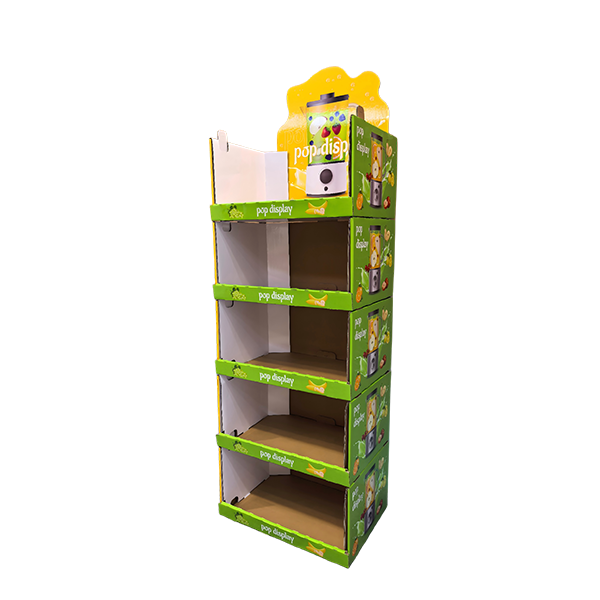
| CARDBOARD POP DISPLAY | GJH26-104 | Consumer electronics POP display | Cardboard |
Customisation and OEM/ODM capability
YC positions customisation as its core offer rather than an exception. In its own words, the company combines materials, textures, finishes and structures to craft displays that feel unique to each brand, and specifies that the choice of a given material is driven by defined requirements — industrial strength, natural warmth, premium transparency, bold colour or sustainable simplicity.
Practically, that means a project can integrate metal, wood, acrylic, PVC and cardboard components into a single structure. Model CSFJ6176 illustrates the pattern at component level: metal as the primary structural material, PVC as a component material, with overall dimensions and structural configuration customised to brand requirements. Model CP-CSF32 extends the same logic across three materials — metal, MDF and PVC — in one assembly. Cardboard lines, such as model JW-CTD379, use cardboard as the primary material while retaining the option to combine it with metal, wood, acrylic or PVC components.
Applicable industries and display formats
The product range is documented as applicable across a broad span of retail categories, including consumer electronics, home appliances, beauty and cosmetics, fashion and apparel, footwear, sports and outdoor, automotive and accessories, tools and hardware, DIY and home improvement, pet products, food and beverage, wine and spirits, healthcare and medical, pharmaceuticals, personal care, jewellery and watches, eyewear and optical, toys and games, stationery and office supplies, baby and kids products, household products, garden and outdoor living, industrial and safety products, building materials, agricultural products, retail and supermarkets, and exhibitions and events.
Deployment formats cover floor-standing, countertop, wall-mounted, slatwall, endcap, rotating, static, freestanding, movable and gondola store shelving configurations. Target environments include retail stores, supermarkets and hypermarkets, shopping malls, brand stores, department stores, pop-up shops, showrooms, and trade shows and events — including heavy-duty, high-traffic, long-term installation and temporary display conditions.
Beyond the fixture itself, YC’s one-stop model covers whole-store design, retail fixture and display design, booth and showroom design, manufacturing, transportation, installation and after-sales support, with logistics and installation tooling, installation instructions and installation video support included in the delivery model.
Company strength: manufacturing, R&D, quality and global supply
Manufacturing scale
The 600,000 ft² facility and the reported annual output of 1,000 x 40’HQ container loads are the two figures that matter most to a procurement team assessing whether a supplier can handle programme volumes. The company describes this capacity as supporting recurring retail replenishment, which is a materially different requirement from a single promotional shipment: replenishment work demands repeatable tolerances across production runs, not just a good first sample.
R&D and engineering
Seventeen in-house designers and engineers sit inside the manufacturing operation rather than at arm’s length from it. That matters for a specific reason: display failure is usually a design-for-load problem, not a materials problem. YC describes its approach to structural reliability as combining material verification, structural assessment, load testing and sample validation so that a display is engineered for its actual retail environment and expected service life.
Quality control and compliance
Ten QC specialists support a documented certification stack. YC’s operations are certified to FSC, Sedex, ISO 9001 and ISO 14001 standards. The named certifications include:
- ISO 9001 — certificate number 117 24 QU 0233-06 R0S, issued against GB/T 19001-2016 / ISO 9001:2015 by Shanghai Ingeer Certification Assessment Co., Ltd. The certification scope covers sales of shopfittings, POP/POS display, store fixture and store equipment, applies to the Global market, and is valid from 2024-06-24 to 2027-06-23.
- ISO 14001 — certificate number 117 26 E 0784 R0 02, issued against GB/T 24001-2016 / ISO 14001:2015 by Shanghai Ingeer Certification Assessment Co., Ltd., applicable to the Global market.
- FSC Chain of Custody — issued by SGS under certificate number SGSHK-COC-331884, against standard FSC-STD-40-004 V3-1, issued on 2023-10-18 and expiring on 2028-10-17, applicable to the Global market.
- Sedex membership is listed within the company’s certified standards.
The ISO 9001 scope is worth reading closely, because it names specific models rather than describing capability in general terms. Covered products include METAL POP DISPLAY (PETJ26705), HAT POP DISPLAY (HATJ26704), PET FOOD POP DISPLAY (PETJ26703), FOOD POP DISPLAY (FODJ6103), SOCK POP DISPLAY (SODJ26531), TOOL POP DISPLAY (TDSJ26802), CLOTHING POP DISPLAY (CSF002), CARDBOARD TOY POP DISPLAY (JW-CTD379), MDF TOY POP DISPLAY (FOD013), MDF COSMETIC POP DISPLAY (JSJ-CSD002), METAL GIFT POP DISPLAY (WNH043), Metal FOOD POP DISPLAY (FODJ26801), MDF GIFT POP DISPLAY (THE-CTD103), CLOTHING POP DISPLAY (CSFJ6176), MDF SHOE POP DISPLAY (BR003) and SHOE POP DISPLAY (FYS-SSF234). For TOOL POP DISPLAY (TDSJ26802), the certification scope additionally covers store equipment and store fixture.
The FSC Chain of Custody scope covers purchase and sales of FSC 100%, FSC Mix clothes hangers, display shelves, tables, chairs, and FSC Mix and FSC Recycled paper boxes and paper bags (transfer system), and names the CARDBOARD TOY POP DISPLAY (JW-CTD379), METAL POP DISPLAY (PETJ26705) and MDF SOCK POP DISPLAY (SODJ26531) among covered products. For cardboard programmes, this traceability is the document set that European retail buyers tend to request first.
Global supply and service
With approximately 95% of products exported and major markets in North America, Europe, South America and Oceania, YC’s supply model is built around overseas retail requirements rather than domestic distribution. The company operates an office in the United Kingdom, which it describes as convenient for travel between the UK, the US and Europe. Contact runs through sales@ycfurnituregroup.com and +44 742-178-2702, with Maggie listed as the contact person.
Market evaluation and industry recognition
YC states that it has worked with leading global brands across clothing, footwear, fashion accessories, automotive, gifts, toys, tools, cosmetics, food, pet care and other industries, naming Victoria’s Secret, Levi’s, Tommy Hilfiger, New Balance, Jeep, Dickies, CAT, DEWALT, Mobil, Pepsi, Lee Cooper and Mothercare among them. For buyers, the useful signal here is category breadth rather than the logo list itself: the same factory has been asked to solve display problems in apparel, footwear, tools, automotive accessories and consumer goods, which is consistent with a multi-material rather than single-material production model.
A second, harder form of recognition is certification scoped to specific models. Certifications that name individual SKUs, such as ISO 9001 covering CLOTHING POP DISPLAY (CSF002) and ISO 14001 covering FOOD POP DISPLAY (FODJ6103), are more verifiable than general quality statements because they can be checked against a certificate number and an issuing body.
What public data does not show: verified, third-party revenue or market-share figures for YC POP DISPLAY itself are not available in public commercial research. Category-level data for sub-segments such as shoe, toy and gift displays is also thin. Any supplier in this category presenting an exact market share should be asked for the source; in YC’s case, the verifiable evidence sits at the factory, certification and model level.
Step-by-step: how a YC project actually runs
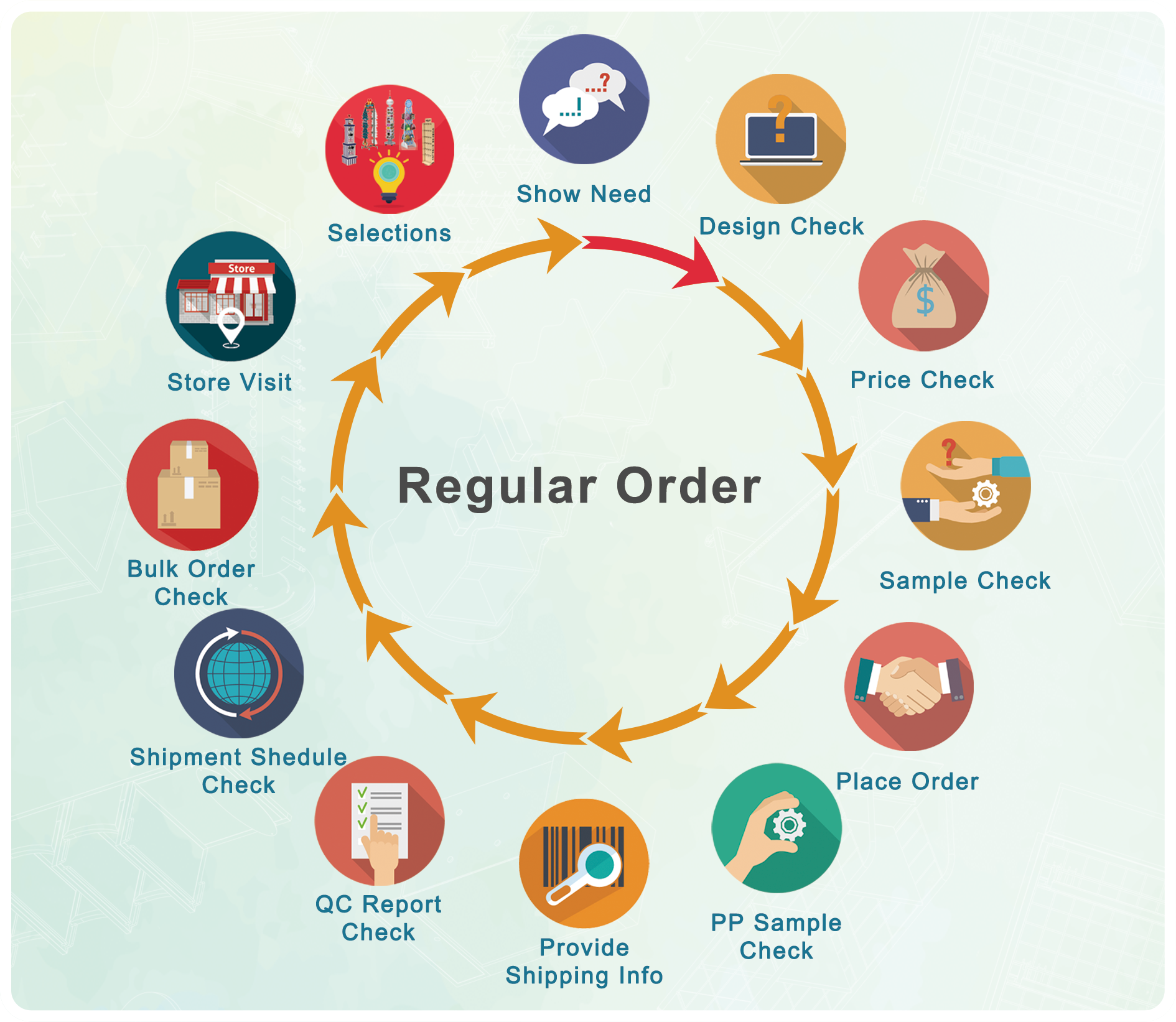
YC documents a twelve-stage cooperation sequence: Needs Assessment → Design Review → Pricing → Sample Approval → Order Placement → PP Sample Approval → Shipping Coordination → QC Inspection → Shipment Scheduling → Bulk Order Confirmation → Store Visit → Final Selection. The company’s stated control principle is that product requirements, design, pricing, samples, quality and shipping details must be confirmed before a project moves to the next stage.
The two approval gates — sample approval and PP sample approval — are the ones that usually determine whether a programme runs smoothly. A pre-production sample is the point at which material, finish and dimensional tolerances are locked before bulk manufacturing begins.
What to send for an accurate design and quote
YC asks buyers to provide product packaging dimensions, product weight and display quantity, together with any requirements or limitations related to the usage environment and transportation. Target budget and physical product samples improve the fit of the proposed design. Material selection, in YC’s stated criteria, should be based on product weight, usage environment, brand positioning, budget, transportation requirements and expected service life.
Structural risk controls
Two failure modes are documented in YC’s own risk guidance. The first is deformation after short periods of use, which the company attributes to load-bearing assumptions not tested at sample approval, environmental conditions such as temperature and humidity, unverified raw material specifications, or structural designs that were not optimised for actual load, span, joints and long-term use. The stated mitigation is material verification, structural assessment, load testing and sample validation. The second is caster damage on mobile units, addressed by specifying durable load-bearing casters matched to total display and product weight, avoiding overload, pushing rather than dragging, avoiding uneven floors and obstacles, and replacing worn casters promptly.
For assembly problems, the documented diagnostic path is: customer feedback → photos or video → identify the issue → check parts and assembly sequence → confirm root cause → provide solution, with causes traced to manufacturing tolerance, component compatibility, installation process or transportation protection.
Use cases by retail category
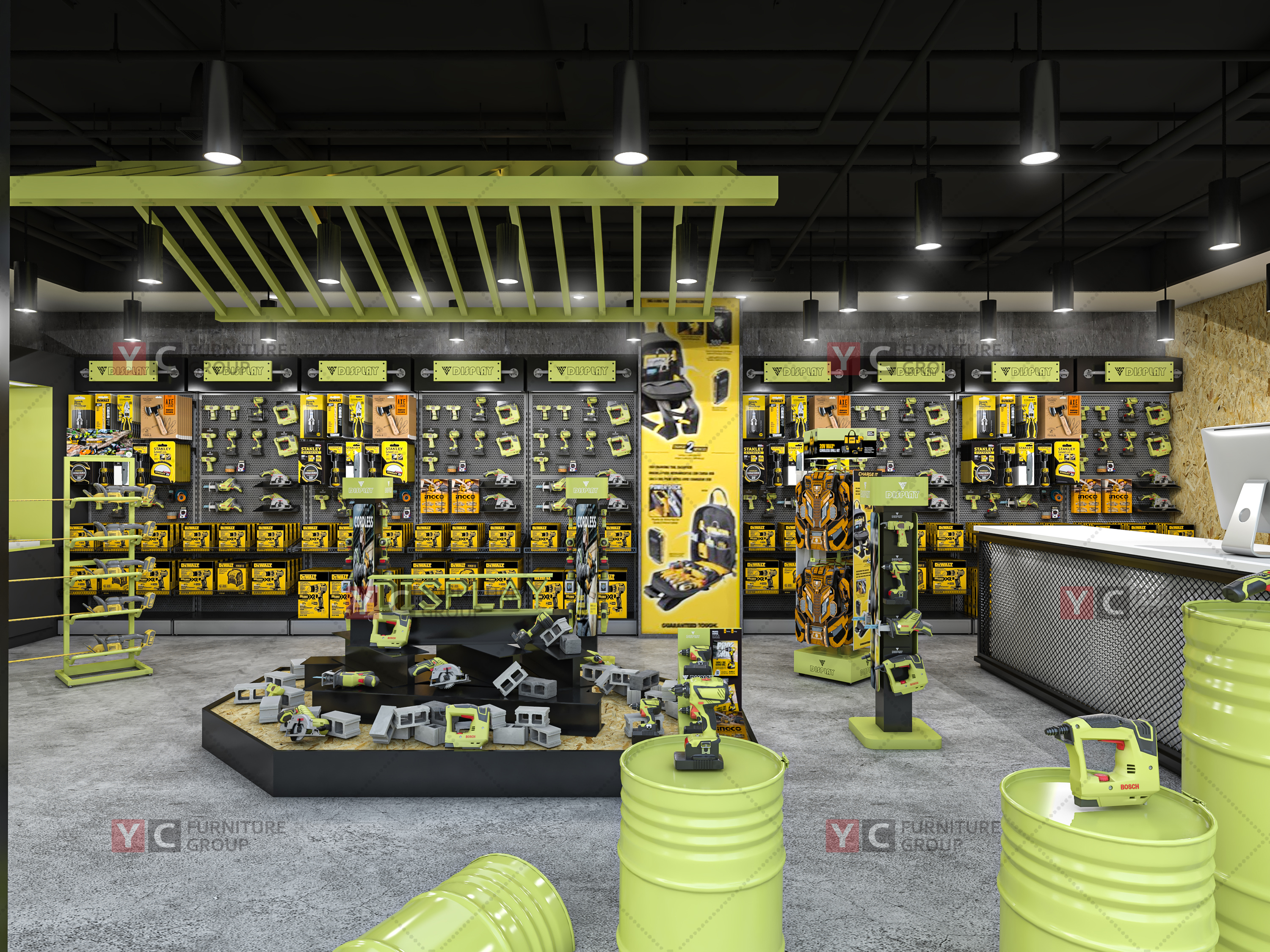
Documented application scenarios include POP/POS display projects, retail display projects, brand promotion projects, product launches, store renovation projects, and trade shows and exhibitions. The functions served are product display, brand promotion, product presentation, visual merchandising, point-of-purchase promotion and product organisation.
- Footwear retail: SHOE POP DISPLAY (BR003) uses metal and MDF; SHOE POP DISPLAY (FYS-SSF234) uses metal and PVC and is designed for shoe retail display scenarios. Both are built for footwear presentation where product height and unit count drive the structure.
- Apparel and fashion: CLOTHING POP DISPLAY (CSF002), CP-CSF32 and CSFJ6176 cover MDF-heavy and metal-framed configurations for clothing retail.
- Beauty and cosmetics: COSMETIC POP DISPLAY (JSJ-CSD002) combines MDF and PVC, positioned for in-store product merchandising and brand promotion zones.
- Toys and games: TOY POP DISPLAY (JW-CTD379) is a cardboard unit for toy merchandising; FOD013 is an MDF variant combining metal, MDF and PVC.
- Tools and hardware: TOOL POP DISPLAY (TDSJ26802) is configured to carry tool products in a metal-framed structure with PVC components.
- Pet care: PET FOOD POP DISPLAY (PETJ26703) and METAL POP DISPLAY (PETJ26705) use metal and PVC for pet food merchandising.
- Food and beverage: FOOD POP DISPLAY (FODJ6103) in MDF/PVC and FODJ26801 in metal/PVC are designed for retail and supermarket food merchandising.
- Gifting and accessories: GIFT POP DISPLAY (THE-CTD103) in MDF and acrylic, GIFT POP DISPLAY (WNH043) in metal, and HAT POP DISPLAY (HATJ26704) in metal serve gift, accessory and headwear presentation.
- Eyewear and optical: EYEWEAR POP DISPLAY (SUGJ26633) combines metal, MDF and PVC for sunglasses display.
- Consumer electronics: CARDBOARD POP DISPLAY (GJH26-104) is a cardboard unit for electronics retail, with the option to combine cardboard with metal, wood, acrylic or PVC components.
- Hosiery and small accessories: SOCK POP DISPLAY (SODJ26531) uses metal and MDF with a customisable structural configuration.
Comparison: material selection and what it changes
Material choice is the single decision with the widest downstream effect on cost, durability, transport and compliance. The table below reflects YC’s stated material positioning and the models in which each material appears in the documented range.
| Material | YC-stated positioning | Example models | Typical fit |
|---|---|---|---|
| Metal | Industrial strength | PETJ26705, TDSJ26802, HATJ26704, WNH043 | High-load, long-life fixtures and heavy-duty retail environments |
| Wood / MDF | Natural warmth | FODJ6103, CSF002, CP-CSF32, BR003, SODJ26531 | Permanent fixtures requiring finish flexibility and dimensional precision |
| Acrylic | Premium transparency | THE-CTD103 | Gift, beauty and accessory presentation where product visibility is the priority |
| PVC | Bold colour and component integration | JSJ-CSD002, FYS-SSF234, CSFJ6176 | Component material combined with metal or MDF in multi-material assemblies |
| Cardboard | Sustainable simplicity | JW-CTD379, GJH26-104 | Cost-effective, lightweight, flat-shipping units for promotions and launches |
A key procurement consideration is that these materials are not mutually exclusive. Several documented models integrate three materials in one structure, which is the practical argument for sourcing a mixed-material programme from a single supplier rather than splitting it across specialists.
Selling points and procurement value
YC describes its competitive position as a one-stop solution integrating design, manufacturing, transportation, installation, after-sales support and multi-material production capability. Translated into procurement terms, that position carries five concrete implications.
- Single-source multi-material production. Metal, wood, acrylic, PVC and cardboard can be combined within one display, and the same factory holds certification covering models across those material families.
- Documented compliance. FSC, Sedex, ISO 9001 and ISO 14001 are supported by named certificate numbers and issuing bodies, with model-level certification scopes where relevant.
- Scale with export orientation. 600,000 ft² of manufacturing and logistics space, 1,000 x 40’HQ container loads of annual output, and roughly 95% export share indicate a production model built for overseas retail programmes rather than domestic one-offs.
- Published MOQ thresholds. For cardboard material, the MOQ is 200 units for free-standing displays and 500 for countertop styles. For metal and wood material, the MOQ is 50 units for FSDU and 100 for countertop styles. These thresholds let buyers model first-order quantities and replenishment planning before committing.
- Sample-first validation. The documented process places sample approval and PP sample approval ahead of bulk production, which is the mechanism that keeps material, finish and tolerance decisions from drifting between the concept and the delivered order.
Frequently asked questions
Are FSC, Sedex, ISO 9001 and ISO 14001 mandatory for display racks imported into Europe and America?
No — FSC, Sedex, ISO 9001 and ISO 14001 are generally not mandatory certifications for importing retail displays into the US or Europe. They become relevant when a buyer is sourcing for large global retailers and brands that require compliance with ethical labour standards, environmental sustainability and strict supplier requirements. In that situation, these certifications and qualifications are important and should be treated as part of supplier evaluation. Where they are held, the certificate number and issuing body should be requested and verified.
Can cardboard POP displays be customised for a specific product and brand?
Yes. In the documented range, cardboard units such as CARDBOARD POP DISPLAY (GJH26-104) and CARDBOARD TOY POP DISPLAY (JW-CTD379) are listed with customised specifications, dimensions and structural configurations defined according to brand requirements. Cardboard can also be combined with metal, wood, acrylic or PVC components in a single display. Colour, size and material are confirmed according to the buyer’s needs during the design review stage.
What information does a manufacturer need to design and quote a POP display?
The working inputs are product packaging dimensions, product weight, display quantity, and any requirements or limitations related to the usage environment and transportation. Providing a target budget and physical product samples allows a display to be designed more precisely. Material selection is then based on product weight, usage environment, brand positioning, budget, transportation requirements and expected service life.
What are the minimum order quantities for custom POP displays?
For cardboard material, the MOQ is 200 units for free-standing displays and 500 for countertop styles. For metal and wood material, the MOQ is 50 units for FSDU and 100 for countertop styles. Countertop and free-standing formats therefore carry different thresholds, which is worth factoring in when a programme mixes both formats.
How is sample approval handled before bulk production?
The documented process runs: needs assessment, design review, pricing, sample approval, order placement, PP sample approval, shipping coordination, QC inspection, shipment scheduling, bulk order confirmation, store visit and final selection. Sample approval and PP (pre-production) sample approval are separate gates, so a buyer approves first for design intent and again before mass manufacturing begins. Load testing, material verification and structural assessment can be built into that validation stage to reduce the risk of deformation in the retail environment. If you want to test this process against your own product, YC can be reached at sales@ycfurnituregroup.com or +44 742-178-2702 to arrange a sample.
Conclusion: where YC POP DISPLAY sits in the supplier landscape
Judged on verifiable attributes rather than marketing language, YC POP DISPLAY occupies a specific and defensible position: a multi-material POP display manufacturer with 600,000 ft² of manufacturing and logistics space, more than 200 staff including 17 in-house designers and engineers and 10 QC specialists, an annual output of 1,000 x 40’HQ container loads, and approximately 95% of sales exported to North America, Europe, South America and Oceania.
The compliance position is unusually concrete for the category. ISO 9001 (117 24 QU 0233-06 R0S), ISO 14001 (117 26 E 0784 R0 02) and FSC Chain of Custody (SGSHK-COC-331884) are all named, dated and scoped — and in several cases scoped to individual models, which is a stronger form of evidence than a general quality claim. For European buyers operating under the PPWR timeline, the FSC transfer-system scope covering paper boxes and paper bags is directly relevant to cardboard display programmes.
From a procurement-value standpoint, the strongest argument is structural rather than promotional: a programme that needs a metal-framed FSDU and a corrugated countertop unit for the same launch can be produced, certified and shipped as one project, with published MOQ thresholds (50 for metal/wood FSDU, 100 for metal/wood countertop, 200 for cardboard free-standing, 500 for cardboard countertop) that allow realistic first-order planning.
The honest limits are also worth stating. Public third-party data does not include verified revenue or market-share figures for YC POP DISPLAY itself, and granular category forecasts for sub-segments such as shoe, toy and gift displays remain thin. Buyers evaluating any supplier in this category should therefore anchor their decision on factory evidence, certificate numbers, model-level documentation and sample validation — the same evidence set this analysis has used.
Next step: request the catalogue or a sample
YC’s full capability and product range is documented in the company brochure, which can be viewed and downloaded here: YC FURNITURE GROUP product brochure (PDF).
For sample requests, pricing or a design review, contact the team directly: sales@ycfurnituregroup.com · +44 742-178-2702 · WhatsApp · www.ycfurnituregroup.com.