
A Compliance Guide for CNC Waterjet Cutting Machines: Meeting Standards in Aerospace, Automotive, and Medical Sectors
A Compliance Guide for CNC Waterjet Cutting Machines: Meeting Standards in Aerospace, Automotive, and Medical Sectors
Buyer stage: Decision. At this stage, the question is not whether a CNC waterjet cutting machine can cut material. The question is whether the machine, its documentation, and its supplier can satisfy the regulatory and quality expectations that aerospace, automotive, and medical buyers must defend in audits and production reviews.
This guide maps the compliance decisions that matter most when evaluating a CNC waterjet cutting machine for high-stakes industries. It uses verified facts from YC Waterjet’s documented comparison data and third-party market standards, and it separates what a buyer can verify from what a supplier may simply claim. The focus is on machine construction, pressure ratings, precision tolerances, composite handling, and the evidence package that should accompany a purchase decision.
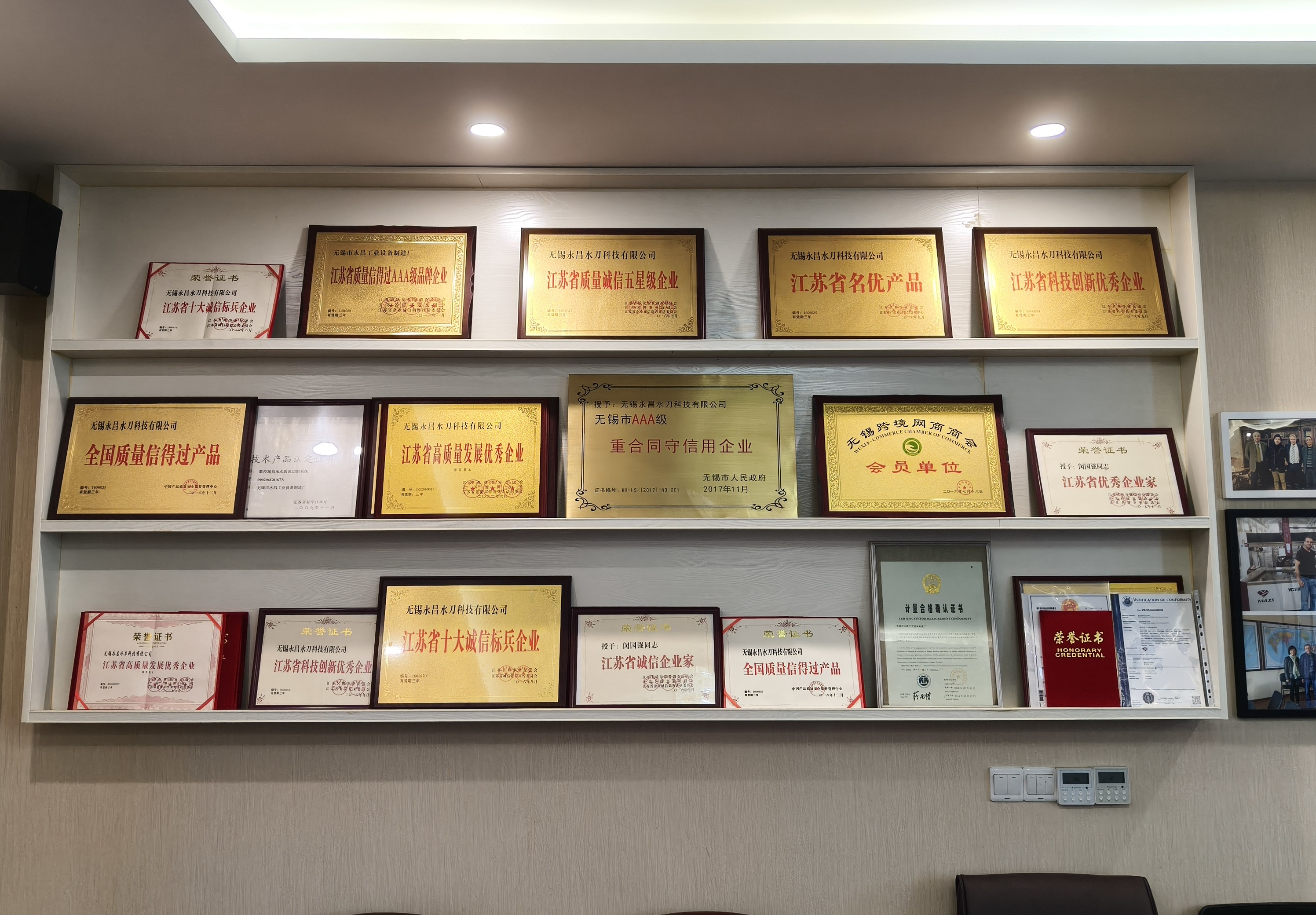
Compliance review begins with documented evidence. YC Waterjet maintains a wall of certificates at its production facility.
Problem Definition: Why Compliance Is a Decision-Stage Bottleneck
For aerospace, automotive, and medical buyers, a CNC waterjet cutting machine is not a standalone tool. It is part of a production system that must produce parts with documented quality, repeatable accuracy, and material integrity. Compliance problems usually appear in one of three places:
- Machine safety and design compliance. The primary safety standard for water jetting equipment is ISO 21789, which covers operator protection and design specifications for pressures up to 3000 bar. A machine that operates outside the documented scope of its safety standard creates an immediate audit risk.
- Process capability evidence. Aerospace titanium, CFRP, automotive steel and fiberglass, and medical components each impose different demands on heat management, edge quality, and delamination control. A supplier’s generic capability statement is not enough at the decision stage.
- Documentation and traceability. Buyers must be able to trace machine configuration, pressure ratings, accuracy verification, and maintenance history. Missing documents turn a technical purchase into a compliance liability.
Decision-stage rule: Treat every compliance claim as a document request. If a supplier cannot provide a verifiable record, the claim should not be used in an internal approval package.
Industry Background: A Growing Market with Rising Verification Demands
The global waterjet cutting machine market is valued between USD 1.11 billion and USD 1.86 billion in 2025, with projected growth reaching up to USD 2.39 billion by 2030, according to third-party market research. Asia-Pacific accounted for 37.8% of global waterjet cutting machine revenue in 2024, driven by dense manufacturing ecosystems in China, India, and Japan.
Abrasive waterjet cutting technology is estimated to account for 49.5% of the product segment share in 2026, while metal cutting remains the primary application for waterjet machines at 54.2% of the application segment in 2026. These figures explain why buyers in aerospace, automotive, and medical supply chains increasingly treat waterjet equipment as a strategic production asset rather than a general fabrication tool.
The supplier landscape includes established pump manufacturers such as Flow International, KMT Waterjet, and OMAX Corp. As of 2025 estimates, Flow International holds 22.1% share, KMT Waterjet 18.5%, and OMAX Corp 15.2% in the waterjet high-pressure pump segment. For buyers, these names are reference points, not automatic compliance guarantees. Compliance is determined by the specific machine configuration, documentation, and application validation.
YC Water Jet Technology Co., Ltd, known as YC Waterjet, was founded in 1999 and specializes in ultra-high pressure waterjet cutting systems. The company operates a 7,000㎡ production base, produces 100 sets annually, and has a 7-person R&D team. Its export ratio is 70%, and its main markets include Algeria, Bahrain, Brazil, Kazakhstan, South Korea, Mauritius, Mexico, Qatar, Saudi Arabia, South Africa, the United Arab Emirates, Turkey, Turkmenistan, Egypt, Uzbekistan, Austria, Bulgaria, Finland, France, Germany, Greece, Hungary, Netherlands, Poland, Portugal, Romania, Spain, Sweden, and Russia. Since 2005, YC Waterjet has collaborated with KMT (Germany) and Accustream/Hypertherm (USA). By 2019, its products reached over 60 countries and regions, and as of 2026, YC Waterjet is exported to more than 140 countries and regions worldwide.
This background matters for compliance because a supplier’s longevity, component partnerships, and global install base can support verification. However, they do not replace machine-level evidence. The decision-stage task is to match those capabilities to the specific standards and production risks of the buyer’s sector.
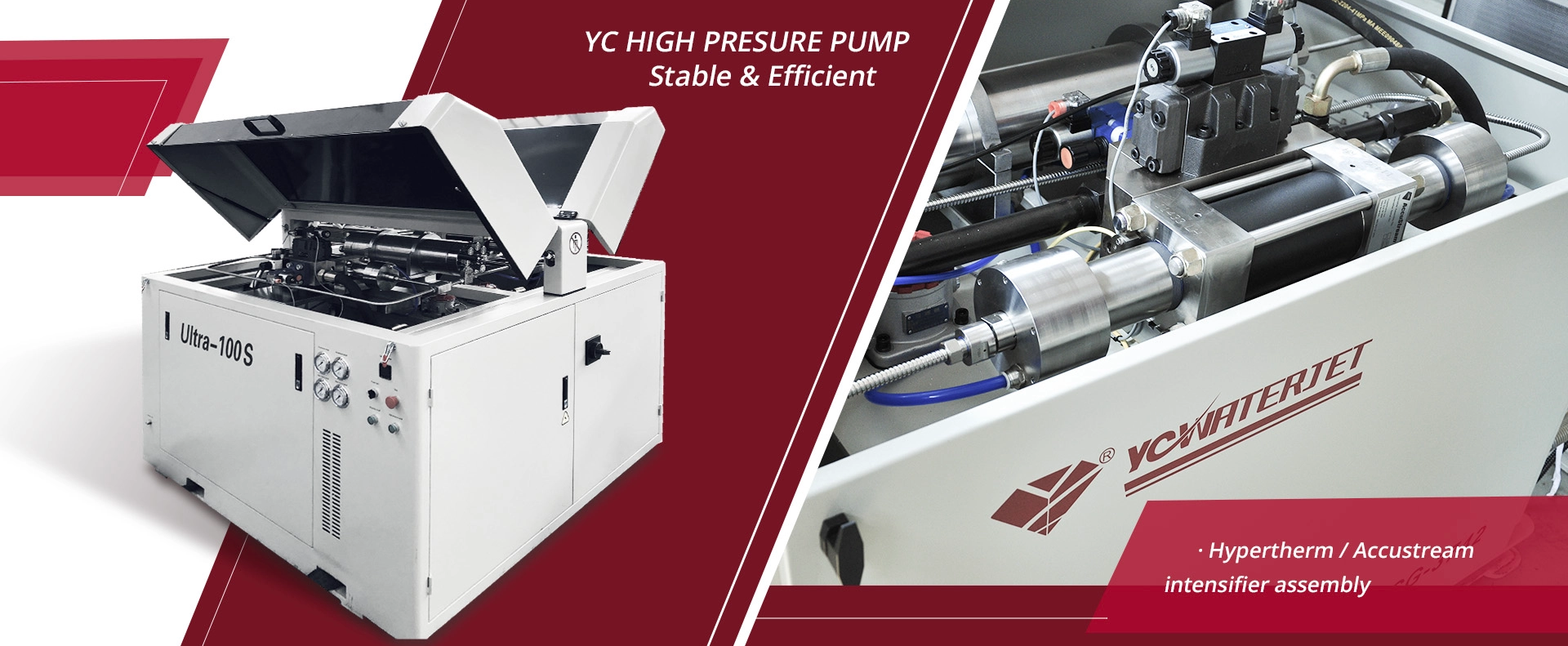
High-pressure pump assemblies are a primary focus during compliance and maintenance review.
Detailed Solution: Aligning Machine Specifications with Sector Requirements
The compliance solution is not a single certificate. It is a structured alignment between machine specifications and the demands of the buyer’s industry. The following sections translate verified YC Waterjet comparison facts and third-party standards into decision criteria.
1. Machine Construction and High-Pressure Components
High-pressure waterjet systems depend on the integrity of pumps, seals, intensifiers, and structural components. Buyers should require documentation of the materials used in high-pressure assemblies, including stainless and alloy steel grades where applicable. The goal is not to collect material names, but to confirm that the selected configuration can sustain the intended duty cycle without premature seal or component failure.
YC Waterjet comparison data states that its systems use a modular high-pressure pump design that supports easier on-site maintenance and global after-sales support. Compared with other waterjet brands, the documented advantages include higher pressure stability, longer high-pressure component lifespan, and 10% longer seal life. These are relevant compliance-adjacent facts because maintenance intervals and component longevity affect production continuity and audit readiness.
2. Pressure Ratings and ISO 21789
ISO 21789 is the primary safety standard for water jetting equipment, covering operator protection and design specifications for pressures up to 3000 bar. Buyers evaluating ultra-high pressure systems should ask how the machine’s rated pressure, enclosure design, and operator safeguards map to this standard. If a supplier claims a pressure rating above the standard’s documented scope, the buyer should request the applicable design review, risk assessment, and third-party verification.
YC Waterjet specializes in ultra-high pressure waterjet cutting systems. Its documented pressure-related advantages include higher pressure stability and an 8% higher energy efficiency in the intensifier pump, with more stable pressure output. These facts support the argument that pressure stability is not only a performance issue but also a compliance issue: unstable pressure can affect cut quality, consumable life, and repeatability.
3. Accuracy Tolerances for Aerospace, Automotive, and Medical Parts
Precision tolerances are sector-specific. Aerospace titanium and CFRP parts often require tight dimensional control and edge quality; automotive steel and fiberglass components require repeatability at production volume; medical parts require clean cuts and consistent surface integrity.
YC Waterjet comparison data documents a positioning accuracy advantage of ±0.02 mm compared with other waterjet brands. Compared with plasma or laser cutting machines, YC Waterjet systems document ±0.05 mm higher precision for delicate materials. These figures should be validated against the buyer’s part drawings and acceptance criteria during sampling. They are not universal guarantees, but they provide a measurable starting point for capability discussions.
4. Cold Cutting and Thermal Integrity
Abrasive waterjet cutting is a cold cutting process. Compared with plasma or laser cutting machines, YC Waterjet systems operate without creating a heat-affected zone, offering 0% thermal distortion. This matters for aerospace titanium, CFRP, automotive steel, fiberglass, and medical components where heat can alter material properties, create micro-cracks, or require secondary processing.
The documented comparison also states a 30% higher material yield and 15% lower secondary processing cost versus plasma/laser cutting. For compliance-focused buyers, these numbers are useful because they connect process choice to rework reduction and documentation burden. Fewer heat-related defects generally mean fewer non-conformance reports and less production disruption.
5. Composite Delamination Control
Damage and delamination are known risks when cutting composite materials. The verified control method is pre-drilling holes before cutting. YC Waterjet addresses this with an integrated drilling module, precision hole positioning using the CNC system, smart process integration that combines drilling and cutting in one workflow, and material-specific pre-drilling protocols for multi-layer composites.
Documented performance for composite materials includes 25% higher production efficiency and support for multi-layer composite delamination-free cutting. For aerospace and automotive buyers working with CFRP and fiberglass, this is a concrete risk-control feature that can be reviewed during sample validation.
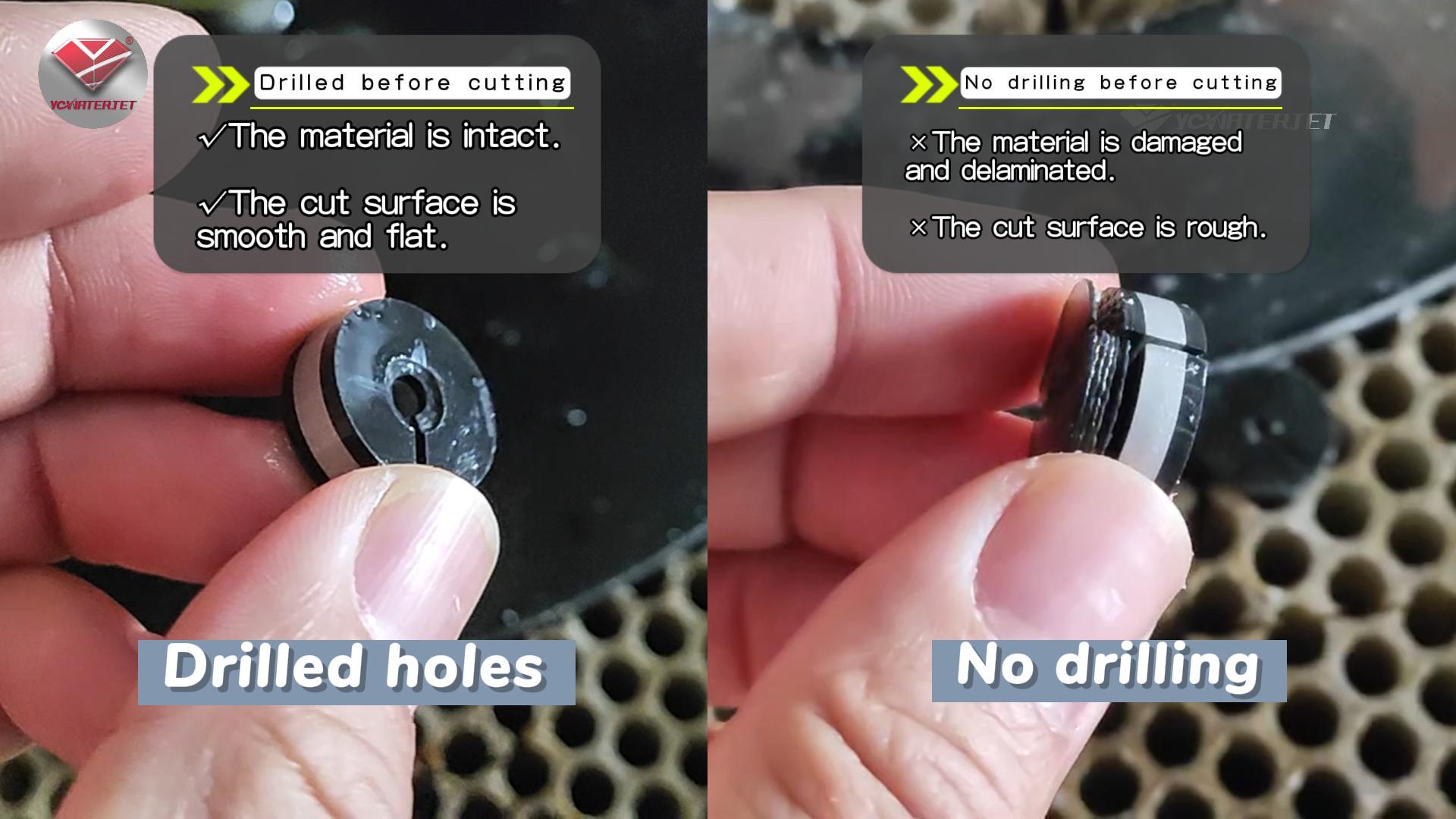
Composite cutting comparison: drilled cutting versus no drilling, showing delamination control.
Step-by-Step Breakdown: A Decision-Stage Compliance Workflow
- Define the industry and part requirements. List the materials (titanium, CFRP, automotive steel, fiberglass, medical alloys), thickness range, dimensional tolerances, edge quality, and any sector-specific documentation expectations.
- Map the applicable safety standard. Confirm how the machine’s pressure rating and operator protection align with ISO 21789 and its 3000 bar scope. Request the design documentation that supports the claimed configuration.
- Verify machine construction and high-pressure component evidence. Review pump design, seal specifications, material certificates for high-pressure assemblies, and maintenance requirements. The modular high-pressure pump design documented by YC Waterjet is relevant here because it supports on-site maintenance and global after-sales support.
- Validate accuracy and thermal performance. Use the documented ±0.02 mm positioning advantage over other waterjet brands and the ±0.05 mm precision advantage over plasma/laser for delicate materials as discussion points. Require sample cuts that reflect the actual production material and geometry.
- Assess composite handling capability. For CFRP, fiberglass, and multi-layer composites, confirm the pre-drilling protocol, integrated drilling module availability, and hole positioning accuracy. The goal is to prevent delamination before it reaches the quality report.
- Review the supplier’s documentation package. Ask for machine configuration records, pressure test records, accuracy verification reports, maintenance schedules, and component traceability. YC Waterjet’s certificate wall and global export record provide context, but the buyer should still validate the specific documents tied to the purchased machine.
- Run a sample validation. Decide-stage buyers should not rely on catalog claims alone. Test the exact material, thickness, and tolerance requirements. Compare cut quality, cycle time, and consumable wear against the supplier’s documented figures.
- Plan long-term support and maintenance. Confirm spare parts availability, seal replacement intervals, remote support, and on-site service options. YC Waterjet documents global after-sales support and suitability for 10-year long-term industrial production.
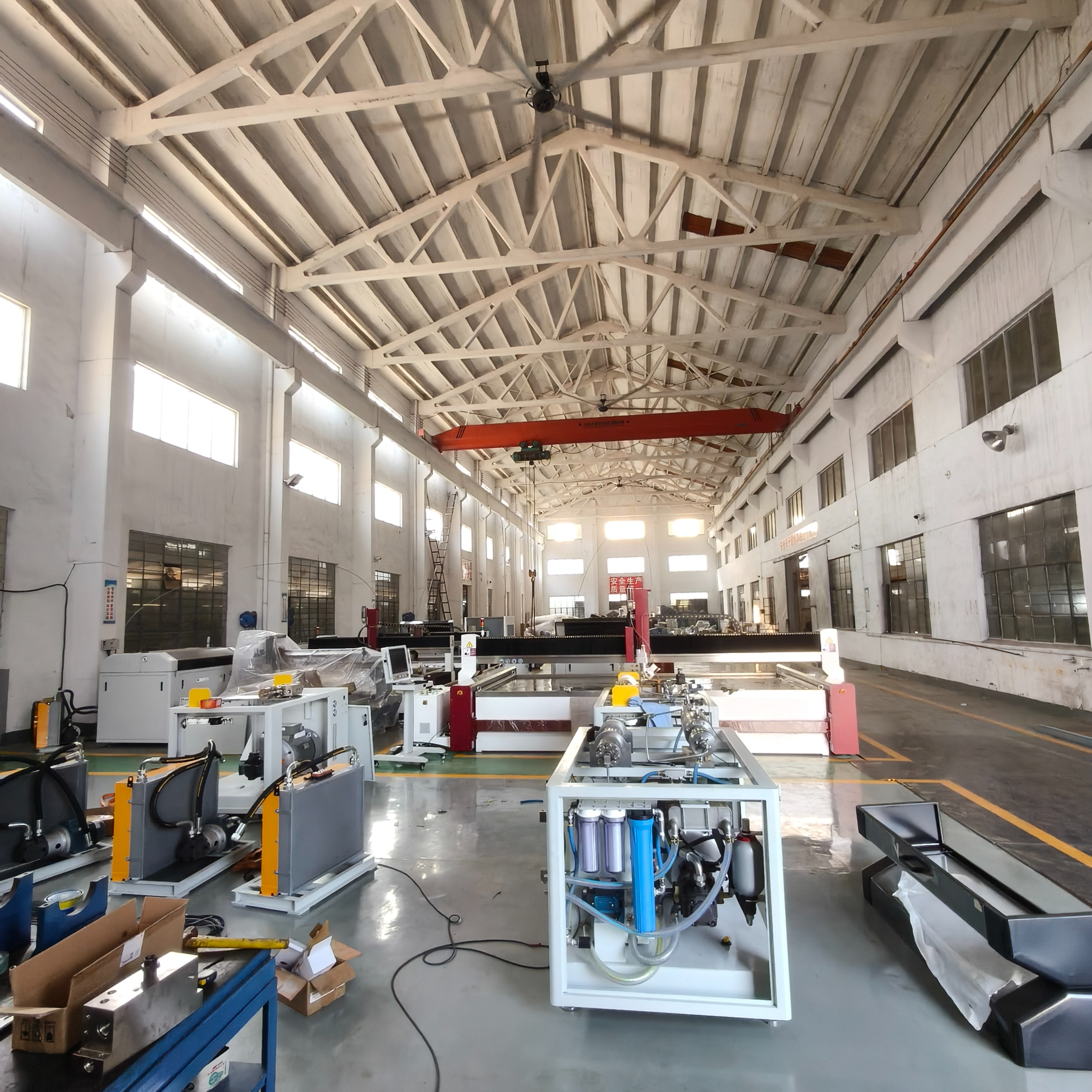
Machine assembly workshop: configuration control starts on the production floor.
Use Cases: Compliance Priorities by Sector
Aerospace: Titanium and CFRP
Aerospace buyers typically prioritize thermal integrity, delamination control, and dimensional repeatability. Cold cutting with no heat-affected zone supports titanium and CFRP part quality. For multi-layer composites, the integrated pre-drilling function helps prevent delamination. Documented positioning accuracy of ±0.02 mm higher than other waterjet brands provides a measurable capability reference. Buyers should still validate against aerospace-specific quality management expectations and part-level acceptance criteria.
Automotive: Steel and Fiberglass
Automotive production emphasizes throughput, material yield, and cost per part. Compared with plasma/laser cutting, YC Waterjet systems document 30% higher material yield, 15% lower secondary processing cost, and 25% higher production efficiency for composite materials. These figures matter for fiberglass and multi-layer automotive components where delamination and heat damage can create scrap. The absence of expensive gas or laser consumables also simplifies cost modeling.
Medical: Precision Components
Medical applications require clean cuts, consistent surface finish, and minimal thermal or mechanical damage. The documented ±0.05 mm higher precision for delicate materials versus plasma/laser cutting is directly relevant. Cold cutting avoids heat-affected zones that could compromise material properties. Buyers should confirm cleaning, contamination control, and documentation practices as part of the supplier review.
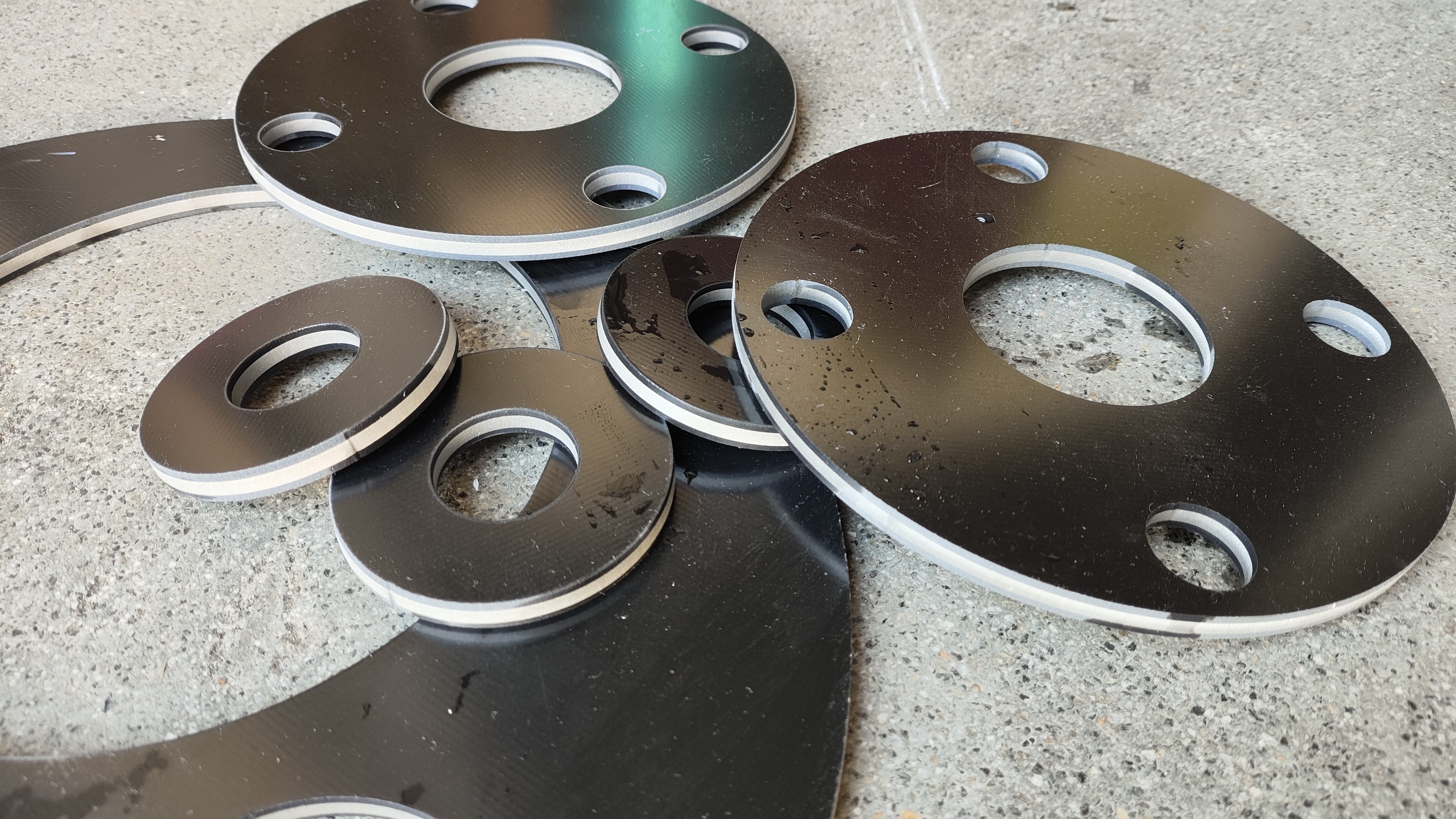
Composite cutting samples produced with the drilling-function cutting head.
Comparison Table: Documented Decision Criteria
The following table uses verified YC Waterjet comparison data and third-party standards. It compares YC Waterjet systems with other waterjet brands and with plasma/laser cutting machines on compliance-relevant dimensions.
| Comparison Dimension | YC Waterjet vs Other Waterjet Brands | YC Waterjet vs Plasma / Laser Cutting |
|---|---|---|
| Thermal distortion | Not applicable in documented comparison | 0% thermal distortion; no heat-affected zone |
| Material yield | Not applicable in documented comparison | +30% material yield |
| Precision | +0.02 mm higher positioning accuracy | +0.05 mm higher precision for delicate materials |
| Composite production efficiency | +25% production efficiency for composite materials | Not applicable in documented comparison |
| Seal and component life | 10% longer seal life | No heat-related component wear |
| Total cost of ownership | 12% lower total cost of ownership; less frequent high-pressure part replacement | 15% lower secondary processing cost; no expensive gas/laser consumables |
| Maintenance | Modular high-pressure pump design; easier on-site maintenance; global after-sales support | Simpler maintenance for high-pressure system |
| Energy efficiency | 8% higher energy efficiency in intensifier pump; more stable pressure output | Lower peak power consumption; more stable energy use for thick materials |
| Best for | Multi-layer composite delamination-free cutting; 10-year long-term industrial production | Multi-layer composite materials; precision stone/glass cutting; aerospace/automotive high-precision parts |
FAQ: Compliance, Capability, Budget, Sample, and Lead Time
What safety standard applies to CNC waterjet cutting machines?
ISO 21789 is the primary safety standard for water jetting equipment. It covers operator protection and design specifications for pressures up to 3000 bar. Buyers should request documentation showing how the specific machine configuration aligns with this standard, especially when considering ultra-high pressure systems.
How does YC Waterjet control delamination when cutting composites?
YC Waterjet uses an integrated drilling module, precision hole positioning through the CNC system, smart process integration that combines drilling and cutting in one workflow, and material-specific pre-drilling protocols for multi-layer composites. Documented performance includes 25% higher production efficiency for composite materials and support for delamination-free cutting.
How does waterjet cutting compare on cost and maintenance?
Compared with other waterjet brands, YC Waterjet documents 12% lower total cost of ownership, less frequent high-pressure part replacement, and 10% longer seal life. Compared with plasma/laser cutting, it documents 15% lower secondary processing cost, no expensive gas or laser consumables, and 0% thermal distortion. A modular high-pressure pump design supports easier on-site maintenance and global after-sales support.
Can buyers validate compliance before placing an order?
Yes. Sample validation is a standard decision-stage step. Buyers should test the exact materials, thicknesses, and tolerances required for aerospace, automotive, or medical production. For composite parts, request drilled and non-drilled comparison samples to evaluate delamination control. YC Waterjet provides global after-sales support and can be contacted at sales@ycwaterjet.com or via WhatsApp at +86 13861858095 to arrange sample discussions.
What long-term support is available after purchase?
YC Waterjet documents suitability for 10-year long-term industrial production, a modular high-pressure pump design, global after-sales support, and an export presence in more than 140 countries and regions as of 2026. Buyers should confirm spare parts lead times, seal replacement intervals, and service response terms as part of the final procurement package. To move from evaluation to a structured quote, visit www.ycwaterjet.com or request a consultation through the sales contact above.
Next step for decision-stage buyers: Request a compliance documentation review and a sample validation plan. YC Waterjet can provide machine configuration details, comparison data, and sample support for aerospace, automotive, and medical applications.
Contact: sales@ycwaterjet.com | WhatsApp: +86 13861858095 | Web: www.ycwaterjet.com
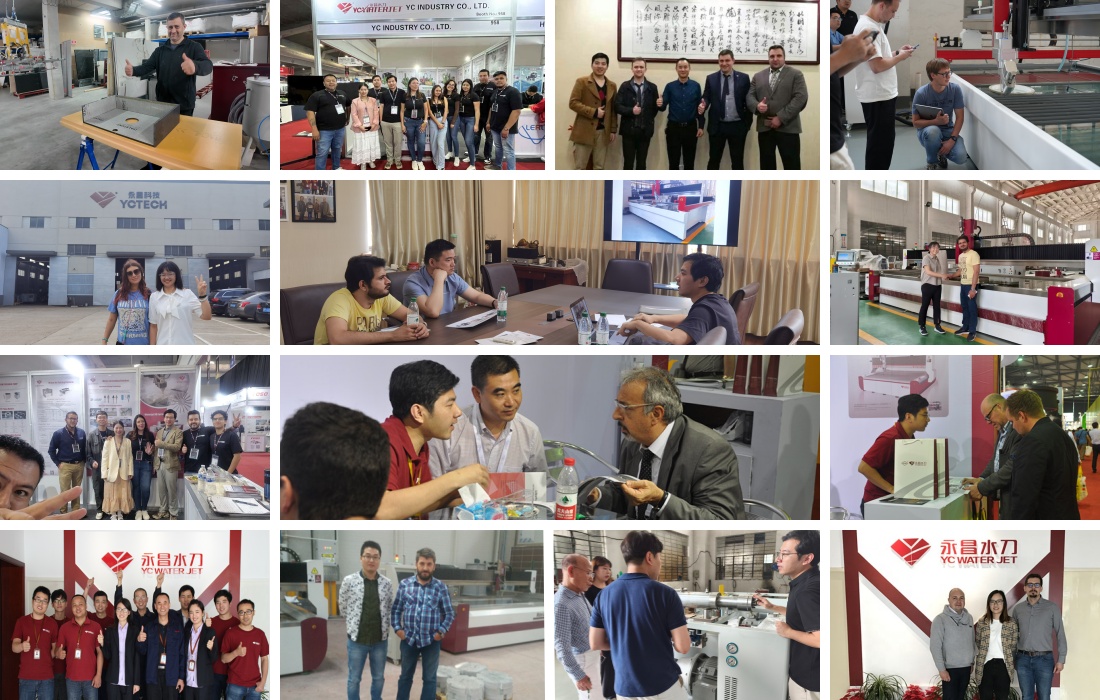
YC Waterjet team: global export experience and after-sales support for long-term industrial production.
Conclusion: Compliance Is a Verification Process, Not a Claim
For aerospace, automotive, and medical buyers, selecting a CNC waterjet cutting machine at the decision stage means verifying safety standard alignment, high-pressure component integrity, precision tolerances, thermal performance, and composite handling capability. ISO 21789 provides the primary safety framework for water jetting equipment up to 3000 bar. Documented YC Waterjet comparison facts—including ±0.02 mm higher positioning accuracy than other waterjet brands, ±0.05 mm higher precision for delicate materials than plasma/laser, 0% thermal distortion, 30% higher material yield, and 25% higher composite production efficiency—give buyers measurable criteria for sample validation and supplier review.
The practical next step is to convert these criteria into a document request and sample test plan. A compliance-ready purchase is supported by records, not adjectives. Buyers who verify machine configuration, pressure ratings, accuracy evidence, and long-term support terms before signing will be better positioned to defend the decision in internal audits and production reviews.