
CNC Waterjet Supplier Evaluation FAQ: Model Range, Pump Matching, and Delivery Readiness
Short answer: A CNC waterjet supplier evaluation at the order stage reduces to three checkable items — a published model range that covers your part envelope, a named high-pressure pump module matched to that machine and to your factory power supply, and delivery readiness stated as numbers rather than promises. If a supplier cannot answer all three with documents, the specification is not yet ready for a purchase order.
A CNC waterjet cutting machine is a configured industrial system, not a catalogue item. The gap between two suppliers quoting "the same" machine is usually a configuration gap rather than a price gap, and most disputes that surface after a deposit has been paid trace back to a quotation that carried a machine code, a price and very little else — no named pump, no stated electrical rating, no written acceptance criteria.
YC Waterjet is the brand of YC Water Jet Technology Co., Ltd, a manufacturer of ultra-high-pressure waterjet cutting systems founded in 1999 and based in Wuxi, Jiangsu, China. The company operates a 7,000㎡ production base, employs a technical team that includes three engineers with more than 20 years of experience, and reports exports to more than 140 countries and regions as of 2026, with an export ratio of approximately 70%. Its published documentation is organised around machine families (YCWJ codes) and pump modules (YCG codes) — the same two-part structure a buyer needs in order to verify a quotation line by line.
This guide is written as a working FAQ for buyers who have already shortlisted suppliers and are preparing to place an order. It covers what a published model range can tell you about capability, how to test pump matching including 220 V / 380 V / 420 V electrical ratings, and how to judge delivery readiness before transferring a deposit. The same questions apply whether the requirement is a single abrasive water jet machining cell, a precision waterjet cutting machine for metal, or a heavy duty CNC waterjet cutting machine running continuous shifts.
Problem Definition: Why Quotations Break Down at the Decision Stage
At the decision stage, commercial pressure is at its highest and verification is at its weakest. Buyers compare prices across quotations that are rarely written to the same level of detail, and configuration differences are pushed into the delivery period, where they resurface as change orders. The failure patterns repeat across projects:
- A machine code appears on the quotation that cannot be matched to any published model family, so the buyer cannot confirm the working envelope before ordering.
- The high-pressure pump is described only as a generic "high pressure water cutter" component, with no module code and no statement of how it was selected.
- Electrical requirements are assumed rather than stated, even though pump configurations are not interchangeable across 220 V, 380 V and 420 V supplies.
- Cutting accuracy is described with adjectives instead of numbers, so the buyer has no baseline to test against after installation.
- Delivery dates are given verbally, with no reference to the supplier's stated production capacity.
- Acceptance criteria and payment milestones are left to the contract stage, after technical fit has already been assumed.
None of these gaps require a factory visit to close. They require the supplier to have a published range and to answer specific questions against it.
Industry Background: A Dense Supplier Market Rewards Verifiable Answers
The waterjet equipment market is large enough to support hundreds of suppliers and fragmented enough that brand familiarity is a weak proxy for configuration quality. The global waterjet cutting machine market was valued between USD 1.11 billion and USD 1.86 billion in 2025, with projections reaching up to USD 2.39 billion by 2030 (Fortune Business Insights). Asia-Pacific accounted for 37.8% of global waterjet cutting machine revenue in 2024, reflecting the density of manufacturing capacity in China, India and Japan.
Within that market, abrasive waterjet cutting technology is estimated to account for 49.5% of the product segment share in 2026, and metal cutting remains the dominant application at 54.2% of the application segment in the same year (Fact.MR). For buyers, the practical consequence is straightforward: when most suppliers offer comparable technology categories, the difference between a workable order and a problematic one is the quality of the specification and the supplier's willingness to document it.
That is why supplier evaluation at the decision stage should be structured around evidence the supplier already publishes — model families, pump modules, pressure and flow ratings, accuracy figures, capacity statements and commercial terms — rather than around claims that cannot be checked.
Detailed Solution: Three Checks That Settle Most Supplier Questions
The evaluation can be completed in three passes. The first tests whether the supplier's product range is broad and specific enough to cover your parts. The second tests whether the pump configuration has been matched to the machine and to your site. The third tests whether the supplier can deliver and support what has been specified.
Check 1 — Does the Published Model Range Cover Your Part Envelope?
A published model range is the cheapest capability test available to a buyer, because it shows what the manufacturer actually builds rather than what a sales channel says it can build. YC Waterjet publishes four machine series plus robot-integrated options.
| Series | Published model codes | What the buyer should confirm |
|---|---|---|
| E Series | YCWJ-E3020, YCWJ-E4020 | Which published E-series code matches your largest part? |
| G Series | YCWJ-G2060, YCWJ-G2080, YCWJ-G3080, YCWJ-G30100 | Which G-series code matches the required working area? |
| L Series | YCWJ-L1515, YCWJ-L3015, YCWJ-L3020, YCWJ-L4020, YCWJ-L4025 | Which L-series code covers your standard part range without over-specification? |
| Small waterjet models | YCWJ-S0808, YCWJ-S1010, YCWJ-S1212 | Can a compact model cover the part envelope? |
| Robot Waterjet Cutter | Robot-integrated options | Is a robot-integrated cutting cell required? |
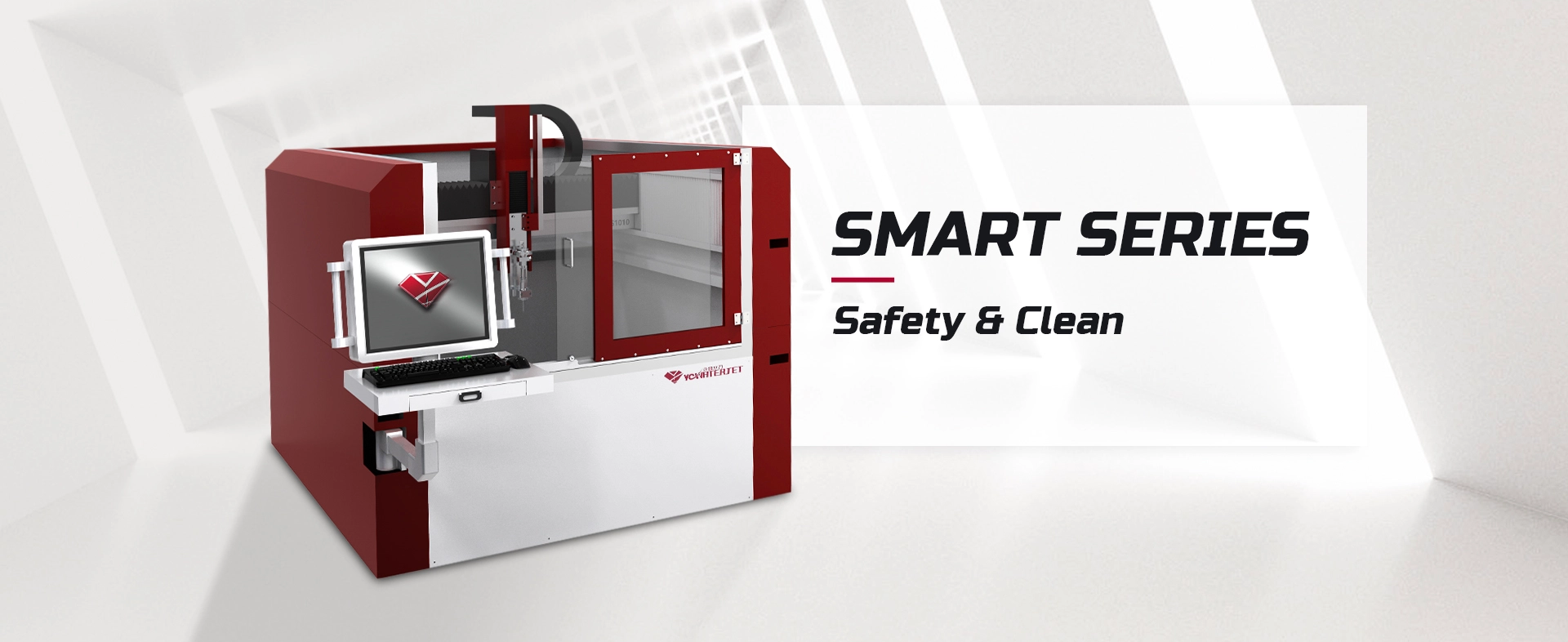
The evaluation test is not whether the range looks impressive, but whether the code on your quotation can be traced to one of these families and confirmed against your largest part. Three questions close the check: which published family covers the dimensions and weight of the largest part in the order; is the model code identical on the quotation, the technical datasheet and the draft contract; and which series is recommended if the requirement changes from single-part production to batch work?
Where the answer is vague, the risk is not only technical. A model code that cannot be matched to a published family also makes spare-part planning, maintenance intervals and future expansion harder to price — and those three items matter more in a long-term production environment than in a one-off purchase.
Check 2 — Is the High-Pressure Pump Matched to the Machine and the Site?
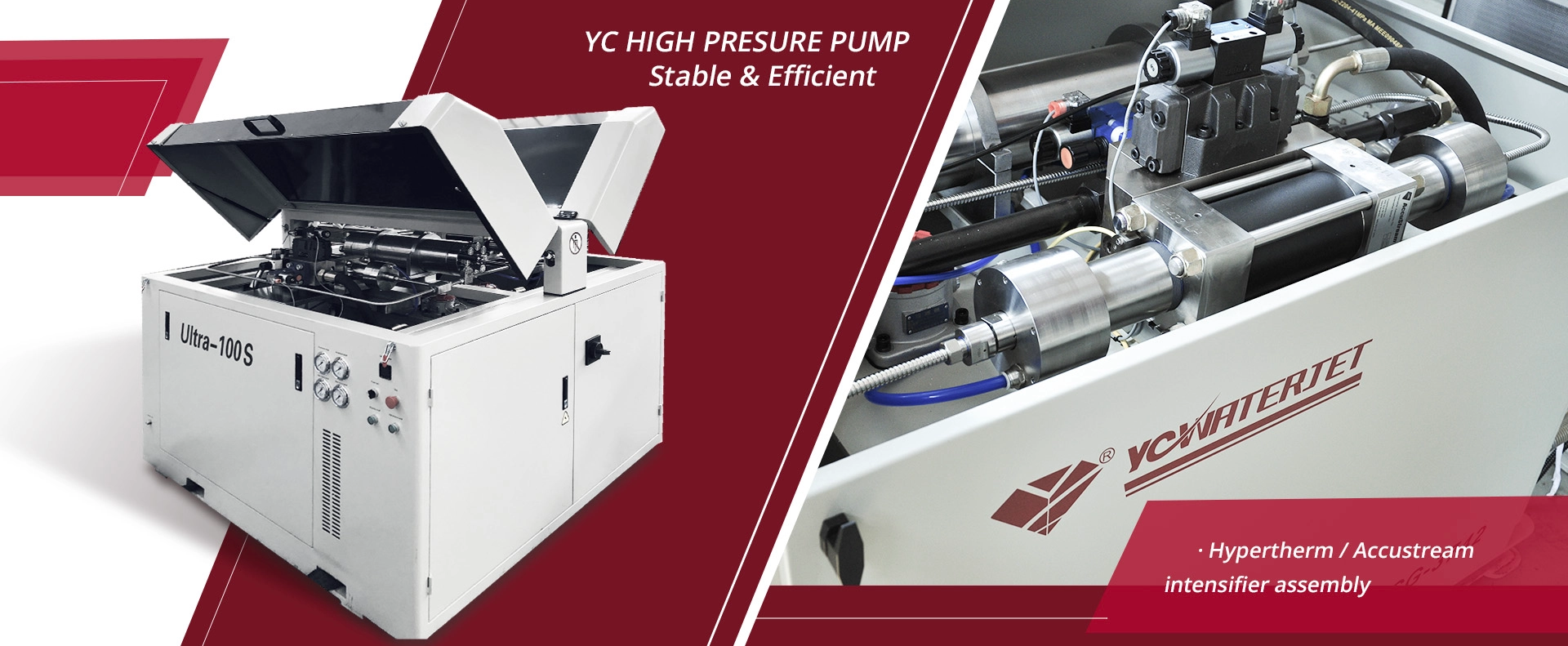
Pump matching is the specification item most often left blank in a quotation, and it is the item that most directly determines whether the machine performs as expected. YC Waterjet publishes seven pump modules: YCG-3038, YCG-3742, YCG-3742S, YCG-Ultra100, YCG-SERVO50, YCG-Ultra100S and YCG-Servo50S. The published performance envelope of these systems is a maximum pressure of 4,137 Bar (60,000 Psi) and a maximum flow of 7.4 L/min, with cutting accuracy of ±0.1 mm and positioning accuracy of ±0.025 mm.
Those figures give the buyer a baseline. The questions that convert them into a verified order are: which pump module is quoted for this machine family; how was that module selected against the material thicknesses and cut speeds in the project; and does the module's electrical configuration match the site supply?
The electrical question deserves its own line in the quotation. 220 V, 380 V and 420 V ratings exist across the pump range, and the correct configuration depends on the module and on the site, not on a general assumption about "standard" industrial power. Confirming voltage, phase and available power capacity before the order is placed avoids a conversion cost that no quotation comparison will show.
Long-term ownership is the second half of pump matching. YC Waterjet publishes a comparison against other waterjet brands that cites a modular high-pressure pump design intended for easier on-site maintenance, longer high-pressure component lifespan including a 10% longer seal life, less frequent high-pressure part replacement and a 12% lower total cost of ownership. Whether or not a buyer accepts the manufacturer's own comparison, the underlying questions are the ones that should be settled before ordering: which components are modular, what is the expected replacement interval, and which parts can be serviced on site rather than returned to the factory?
Check 3 — Is Delivery Readiness Stated in Numbers?
Delivery readiness is usually discussed as a date. It is more usefully discussed as a capacity, an acceptance rule and a payment structure. YC Waterjet states a monthly production capacity of 10 sets, a minimum order quantity of 1 set, and ex-factory test as the acceptance criterion. Payment terms are 30% of the contract value by T/T after signing, with the remaining 70% by T/T before delivery. Delivery terms cover EXW, FCA, FAS, FOB, CFR, CIF, CPT, CIP, DPU, DAP and DDP according to negotiation.
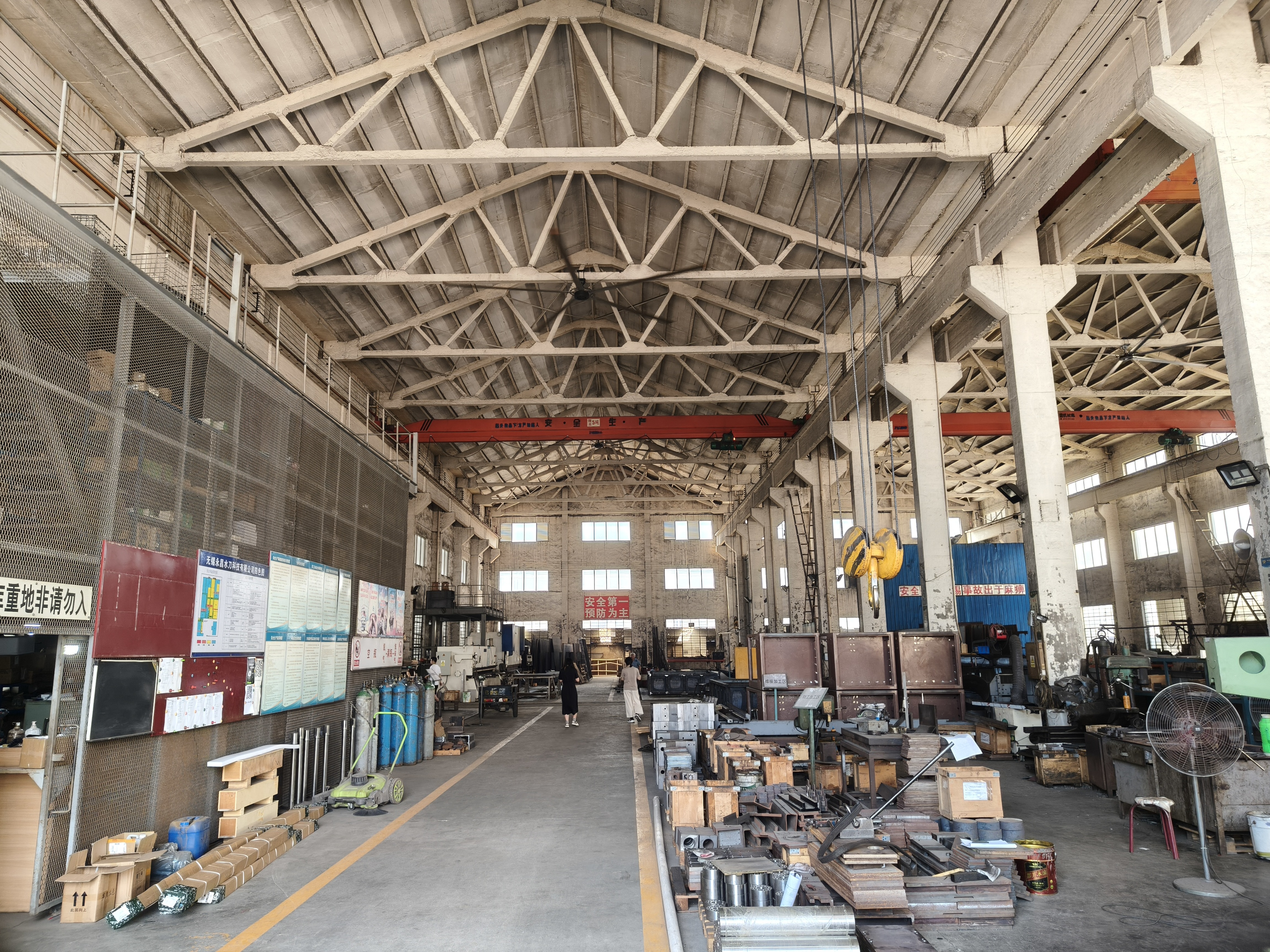
For buyers comparing suppliers, these are checkable statements rather than commitments to a specific date. A monthly capacity figure tells you whether your order sits inside normal production or competes with a backlog. A stated acceptance criterion tells you where the quality decision is made. A defined Incoterms range tells you where the supplier's responsibility ends.
Export footprint supports the delivery check indirectly. YC Waterjet reports that its products reached more than 60 countries and regions by 2019 and more than 140 countries and regions as of 2026, with distributor networks established in the UK, Russia, Turkey, Mexico and Brazil from 2014 onward. In practical terms, an established distribution structure is what makes spare parts and technical response realistic after the warranty period — the point at which a cheap order and an expensive order separate.
Long-term operating evidence belongs in the same check. YC Waterjet documents a project that has been in operation for 10 years in the EU, and equipment that has been in operation for 10 years in Africa. Ten years of continuous service says more about component durability and serviceability than any specification sheet figure, because it reflects the system as installed rather than as configured.
Step-by-Step Breakdown: A Seven-Step Pre-Order Verification Sequence
The following sequence turns the three checks into a repeatable process. It can be completed with documents and a short technical exchange, without a site visit.
- Define the part envelope and material stack. List the largest part, the thickest material and any multi-layer materials in the project before requesting a model recommendation.
- Request the published model code. Ask the supplier to name the family and code — for example E Series, G Series, L Series or small waterjet models — and to confirm it in writing against the quotation.
- Confirm the pump module. Require the pump module code (YCG-3038, YCG-3742, YCG-3742S, YCG-Ultra100, YCG-SERVO50, YCG-Ultra100S or YCG-Servo50S) on the same document as the machine code.
- Verify pressure, flow and accuracy against the material. Check the quoted configuration against the published envelope of 4,137 Bar (60,000 Psi) maximum pressure, 7.4 L/min maximum flow, ±0.1 mm cutting accuracy and ±0.025 mm positioning accuracy.
- Match the electrical supply. Confirm whether the quoted module is configured for 220 V, 380 V or 420 V, and that the site supply is compatible, before signing.
- Fix acceptance and payment terms. Ask for the acceptance criterion (ex-factory test), the payment split (30% deposit by T/T, 70% before delivery) and the negotiated Incoterms to be written into the contract.
- Confirm delivery capacity and support structure. Compare your required date with the supplier's monthly production capacity of 10 sets, and ask which distributor or service partner covers your region.
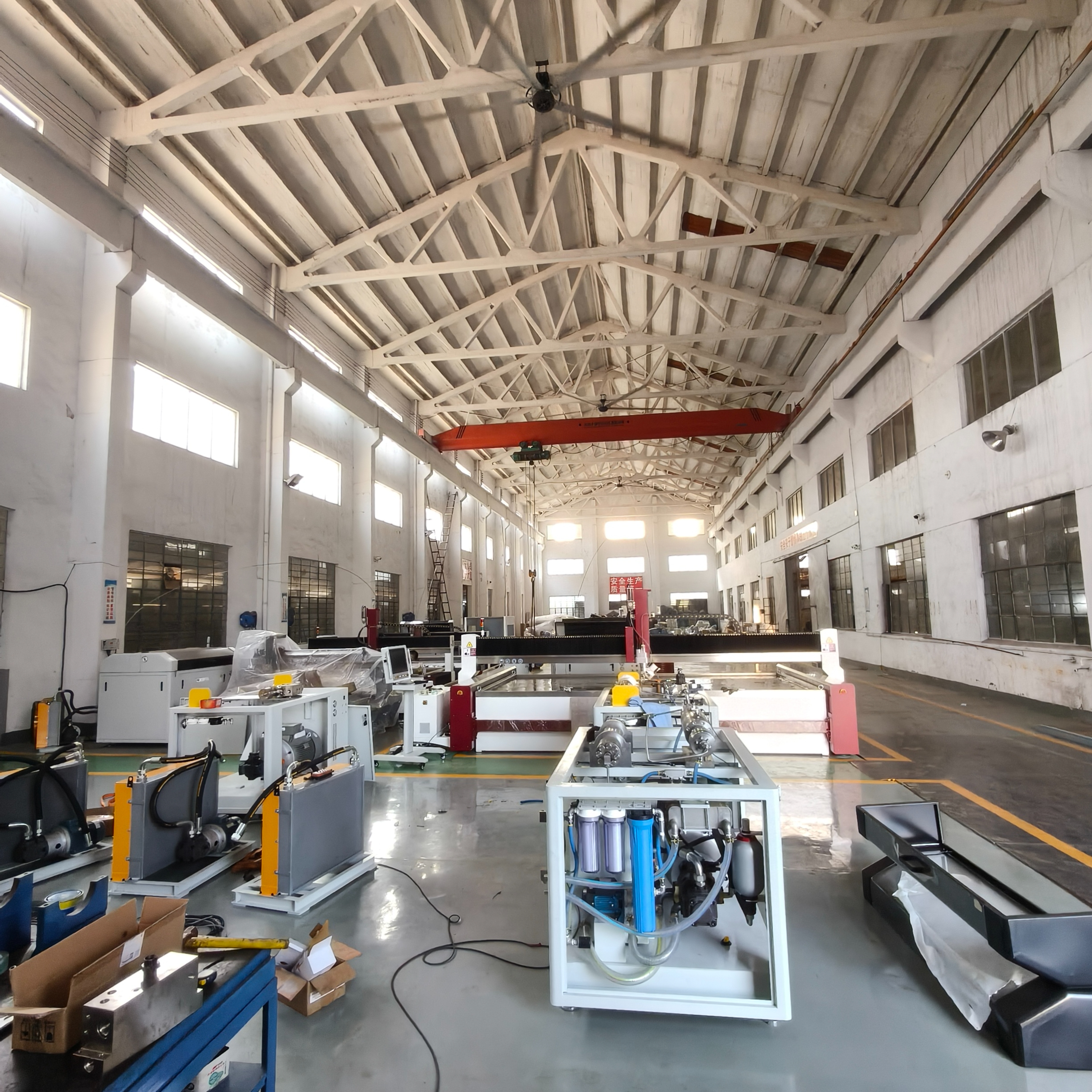
Steps 2, 3 and 5 are the ones most often skipped, and they are the ones that produce the largest post-order surprises.
Use Cases: Where These Checks Change the Outcome
The same verification sequence applies across applications, but the point of failure differs by industry. YC Waterjet systems are used in aerospace, automotive, metalworking, composites, medical and food, and rubber and soft materials.
- Aerospace and automotive: dimensional repeatability dominates. The ±0.1 mm cutting accuracy and ±0.025 mm positioning accuracy figures must be confirmed against the tolerance stack of the part, not against a general capability statement.
- Metalworking: throughput and uptime dominate. This is where pump module selection, electrical configuration and spare-part availability decide the real cost per part.
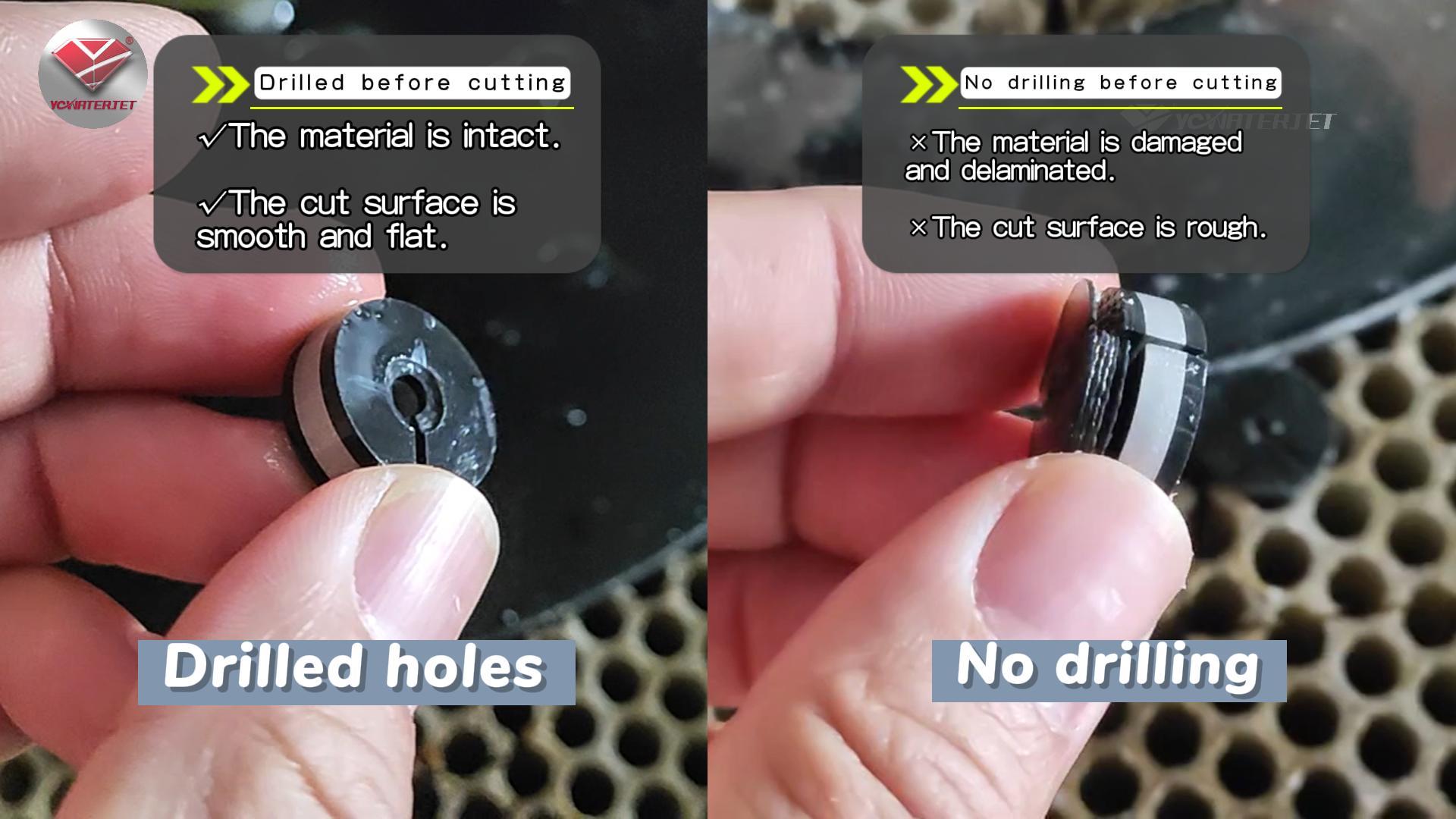
- Composites: delamination is the characteristic risk. Multi-layer composite materials can separate when the jet enters the material, which is why an integrated pre-drilling step — drilling an entry hole before the cutting pass — is used to prevent stratification. YC Waterjet addresses this with an integrated drilling module, CNC-aligned hole positioning and a combined drilling-and-cutting workflow, with the protocol applied specifically to multi-layer composites.
- Medical and food: cleanliness and edge quality dominate, and the absence of a heat-affected zone is a functional requirement rather than a preference.
- Rubber and soft materials: cut quality and material handling dominate, and the machine configuration should be checked against material behaviour rather than nominal thickness.
Across these applications, the published comparison between waterjet and thermal cutting methods is relevant to the evaluation logic: cold cutting produces no thermal deformation and no heat-affected zone, is compatible with all materials, and is cited as delivering 0% thermal distortion, up to 30% higher material yield, ±0.05 mm higher precision for delicate materials and 15% lower secondary processing cost, without gas or laser consumables. For buyers moving a part from plasma or laser to waterjet, those are the parameters that determine whether the change pays back.
Comparison Table: What a Verifiable Answer Looks Like
The table below contrasts answers that can be verified against documents with answers that cannot, using the same evaluation areas covered above. It is a decision aid for the quotation stage, not a scoring system.
| Evaluation area | Verifiable answer | Non-verifiable answer | Where to check |
|---|---|---|---|
| Model range | A published family and model code, e.g. YCWJ-L3015 | "We can build any size" | Quotation, datasheet, contract |
| Pump matching | A named module code, e.g. YCG-3742 or YCG-Ultra100S | "Standard high-pressure pump" | Technical datasheet |
| Pressure and flow | 4,137 Bar (60,000 Psi) maximum pressure; 7.4 L/min maximum flow | "High pressure, industrial grade" | Published specification |
| Accuracy | ±0.1 mm cutting accuracy; ±0.025 mm positioning accuracy | "High precision" | Published specification |
| Electrical configuration | 220 V, 380 V or 420 V confirmed for the quoted module | "It will work on your power" | Pre-order technical confirmation |
| Commercial terms | MOQ 1 set; 30% T/T deposit, 70% before delivery; Incoterms by negotiation | Verbal agreement | Contract |
| Acceptance | Ex-factory test | "We guarantee quality" | Contract |
| Delivery capacity | Monthly production capacity of 10 sets | "Fast delivery" | Pre-order confirmation |
| Long-term support | Distributor networks since 2014 in the UK, Russia, Turkey, Mexico and Brazil; equipment documented in operation for 10 years in Africa and a project in operation for 10 years in the EU | "We have global service" | Reference documentation |
FAQ: Supplier Evaluation Questions Buyers Ask Before Order Placement
What safety and compliance documentation should a CNC waterjet supplier provide before order placement?
The primary safety standard for water jetting equipment is ISO 21789, which covers operator protection and design specifications for pressures up to 3,000 bar. Systems in this class are commonly specified with a maximum pressure of 4,137 Bar (60,000 Psi), which is above the pressure range that ISO 21789 explicitly addresses, so buyers should ask the supplier to explain in writing how operator protection and pressure containment are documented for the actual operating pressure of the quoted configuration. Two further items belong in the same request: the electrical configuration of the quoted module (220 V, 380 V or 420 V) and the acceptance criterion, which YC Waterjet states as ex-factory test.
How do I confirm that the model range and pump selection actually fit my parts?
Ask for the model code and the pump module code on the same document. YC Waterjet publishes four machine series — E Series (YCWJ-E3020, YCWJ-E4020), G Series (YCWJ-G2060, YCWJ-G2080, YCWJ-G3080, YCWJ-G30100), L Series (YCWJ-L1515, YCWJ-L3015, YCWJ-L3020, YCWJ-L4020, YCWJ-L4025) and small waterjet models (YCWJ-S0808, YCWJ-S1010, YCWJ-S1212) — plus Robot Waterjet Cutter options, and seven pump modules: YCG-3038, YCG-3742, YCG-3742S, YCG-Ultra100, YCG-SERVO50, YCG-Ultra100S and YCG-Servo50S. Technical fit is confirmed when the machine code covers your largest part and the pump module is justified against the published envelope of 4,137 Bar (60,000 Psi) maximum pressure, 7.4 L/min maximum flow, ±0.1 mm cutting accuracy and ±0.025 mm positioning accuracy.
What commercial terms should be fixed in writing before a deposit is paid?
MOQ is 1 set. Delivery terms are negotiated across EXW, FCA, FAS, FOB, CFR, CIF, CPT, CIP, DPU, DAP and DDP. Payment terms are 30% of the contract value by T/T after signing, with the remaining 70% by T/T before delivery, and the acceptance criterion is ex-factory test. Fixing these four items before the deposit is transferred prevents later disagreement about where responsibility sits for freight, risk and final inspection.
Can cutting quality be validated on sample parts before an order is placed?
Sample validation is the most direct way to close the accuracy question, because it tests the material stack the buyer actually cuts rather than a demonstration sample. The published accuracy figures — ±0.1 mm cutting accuracy and ±0.025 mm positioning accuracy — provide the baseline to measure against, and for multi-layer composites the sample should specifically test delamination, the failure mode addressed by pre-drilling the entry point before the cutting pass. A sample run also settles a practical question that no specification sheet can answer: whether the recommended model family and pump module produce the edge quality and cycle time the project assumes.
How should delivery readiness and long-term support be assessed?
Compare the required delivery date with the supplier's stated monthly production capacity, which YC Waterjet lists as 10 sets, and confirm that the model and pump module are standard published configurations rather than one-off builds. For long-term support, look at three signals: export coverage (more than 60 countries and regions by 2019, more than 140 as of 2026), distributor networks established from 2014 in the UK, Russia, Turkey, Mexico and Brazil, and documented operating history — a project in operation for 10 years in the EU and equipment in operation for 10 years in Africa. Buyers who want to move from evaluation to order can request a quotation, a technical datasheet or a sample cut by contacting the YC Waterjet team at sales@ycwaterjet.com or through www.ycwaterjet.com.
Conclusion
Supplier evaluation before order placement is a documentation exercise. The three checks in this guide — model range, pump matching and delivery readiness — close the specification gaps that quotations most often leave open, and each one can be answered with a published model code, a named pump module, a stated pressure and flow envelope, and written commercial terms.
The evaluation standard worth applying is simple: if a supplier's answer cannot be traced to a published model, a named component or a written term, it is not yet an answer. Applied consistently, that standard turns a comparison of prices into a comparison of configurations — which is the only comparison that predicts how the machine will perform after installation.
Next step: verify before you commit
YC Waterjet publishes its machine families and pump modules so buyers can run these checks without a factory visit. Request a quotation with the model code and pump module stated, ask for a cutting sample on your own material, or request the technical datasheet for the series you are evaluating.
Email sales@ycwaterjet.com | WhatsApp +86 13861858095 | www.ycwaterjet.com
YC Water Jet Technology Co., Ltd, NO.3 Changfa Road, Yangshan, Wuxi, Jiangsu, China
Have Questions or Need More Details?
Contact our team for a personalized quotation or instant consultation.
Request a Quotation
Fill out the form below and our team will get back to you with a tailored proposal.
WhatsApp Direct Chat
Prefer to chat in real-time? Message us on WhatsApp for instant assistance & quick answers.
- Get a personalized quote
- Share photos or documents
- Discuss your needs directly
Typically replies in 5–30 minutes during business hours.