
Robot Waterjet Cutter: Service, Training & Support FAQ
Robot Waterjet Cutter: Service, Training & Support FAQ
Short answer: a robot waterjet cutter should be evaluated as year one of a multi-year service relationship, not as a single equipment purchase. The datasheet sets the ceiling. Installation and commissioning, operator training, spare-parts planning for the Ultra High Pressure Waterjet Pump and a maintenance calendar decide how much of that ceiling is still there in year five. The same questions apply across the YC Waterjet E, G and L Series, the small waterjet cutter line and robot waterjet systems.
YC Water Jet Technology Co., Ltd (YC Waterjet) is a manufacturer of CNC waterjet cutting machines. The company reports a 7,000 square meter production facility, exports to more than 140 countries as of 2026, and a monthly production capacity of 10 sets. In a support conversation those figures matter for one reason: parts lists, training schedules and production slots come from the same organisation, so continuity of supply can be discussed with the party that builds the machine.
This FAQ is written for buyers at the decision and execution stage — the point where cutting requirements are settled and the open questions are about installation, people, parts and years of operation.
Why a waterjet purchase is really a service decision
A published accuracy figure describes a machine in a defined condition: pump at rated pressure, nozzle and orifice within wear limits, abrasive feed stable, structure aligned and calibrated. Production begins moving those conditions immediately. Seals and check valves wear, nozzles erode, abrasive flow drifts, and operators change parameters between shifts. None of this is a defect; it is the normal physics of abrasive water jet machining, and it is why the service model belongs in the technical specification rather than in a separate commercial annex.
The YC Waterjet L Series gantry listing for YCWJ-L3015 and L3020 shows exactly what has to be protected. The listing publishes ±0.1 mm cutting accuracy, ±0.025 mm repeat positioning accuracy, a 0-15 m/min running speed and effective cutting areas of 3000 × 1500 × 200 mm and 3000 × 2000 × 200 mm. Read as a purchase specification, those values describe capability. Read as a service specification, they define four conditions that must be maintained: pressure stability at the pump, geometric alignment of the structure, condition of the cutting head, and consistency of the operating parameters.
Three failure modes a support plan is designed to catch early
- Pressure decay at the pump. As high-pressure components wear, pressure holding becomes less stable. Cut quality then varies within the same program, and operators compensate by reducing feed rate — a cost that never appears as a line item.
- Geometry drift. Alignment, nozzle condition and abrasive feed all shift cutting behaviour. A machine that is still producing parts can be outside the accuracy window that justified the investment.
- Operator-dependent variation. Pierce strategy, feed rate, abrasive flow and nesting choices differ between shifts. Without a recorded baseline and a trained protocol, two shifts can produce two different results from the same file.
Each of these is cheaper to prevent than to correct, which is the commercial argument for negotiating service terms at the same time as the machine.
Industry background: why support infrastructure carries more weight now
Abrasive waterjet technology accounted for approximately 82.0% of the waterjet cutting machine market by type in 2025, based on Mordor Intelligence's waterjet cutting machine market report. For a buyer, that share has a practical reading: most installed machines are abrasive systems, so the service load concentrates on abrasive delivery components, nozzles, orifices and high-pressure pump wear parts rather than on the structure of the machine.
The process itself explains the maintenance logic. Waterjet cutting is a cold cutting process with no heat-affected zone, and YC Waterjet describes its machines in those terms. Because material is removed mechanically rather than thermally, cut quality follows mechanical condition almost directly — pressure, standoff distance, abrasive consistency and nozzle condition. A maintenance record therefore doubles as a quality record, and a supplier able to support calibration and parts over several years is contributing to part quality, not only to uptime.
What long-term support covers at YC Waterjet
YC Waterjet's support model is built around a modular high-pressure pump design intended to make on-site maintenance easier, combined with global after-sales support. For a buyer, that translates into six support elements that should be written into the contract rather than assumed:
- Installation and commissioning support — site readiness review, leveling and alignment, first-article cutting, and a parameter baseline recorded at handover.
- Operator training — machine safety, pump operation and pressure setting, abrasive delivery, nesting, 5-axis work where the controller is configured for it (YC Waterjet states its controller and software support 3-5 axes, including 5-axis cutting and abrasive delivery system functions), and material-specific protocols such as pre-drilling for multi-layer composites.
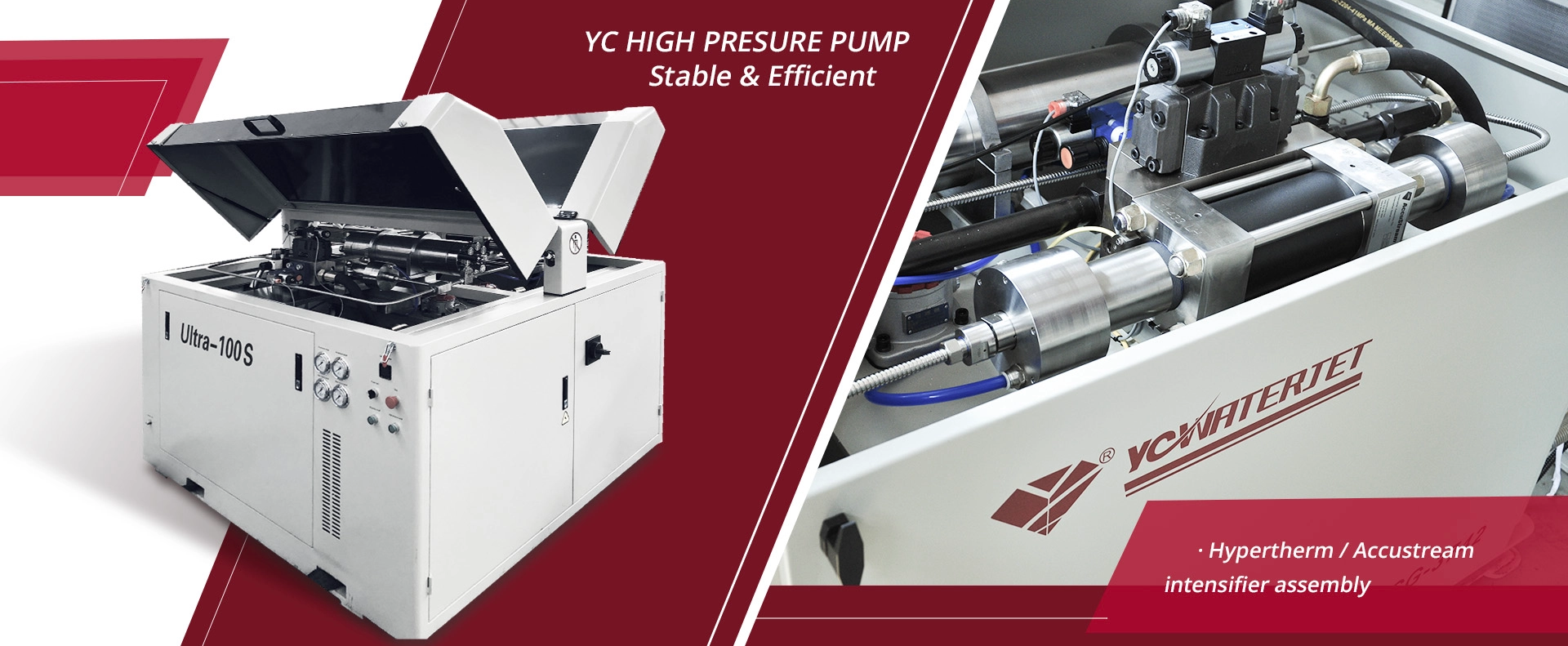
- Spare-parts planning by pump model — from YCG-3038 through YCG-Servo50S, with the Ultra High Pressure Waterjet Pump range specified to a maximum pressure of 4137 Bar.
- Maintenance scheduling — a calendar built around duty cycle, with accuracy verification points rather than replacement dates alone.
- Application support — YC Waterjet states its product portfolio is applied to steel, nonferrous metal, glass, stone and cemented carbide. Each material group needs its own parameter set and carries its own wear expectations.
- Compliance documentation — CE certification (ICR/VC/HM2308122) and ISO 9001:2015 (17324Q21401R0S), which the company states are valid through 2028.
Step by step: how installation, training and maintenance are sequenced
The sequence below is the order in which support obligations are actually used. It also works as a checklist for the acceptance discussion, because each step produces the record the next step depends on.
Step 1 — Confirm site and utility readiness before shipment
Floor loading, water supply and quality, power, drainage, abrasive storage and the free space around table and pump are all decided before the machine arrives. Site information that appears after delivery is one of the most common causes of commissioning delay, and it is the part of the schedule a supplier cannot control from the factory.
Step 2 — Install, level and align
Leveling and alignment set the geometric reference for every later accuracy check. On a gantry machine — the YCWJ-L3015 and L3020 are gantry listings — the structure carries the positioning system, so alignment quality shows up directly in the ±0.025 mm repeat positioning figure.
Step 3 — Commission and record the baseline cut
Commissioning should close with a recorded first-article cut and a parameter sheet: material, thickness, pressure, abrasive type and flow, nozzle and orifice size, feed rate, and the measured result. The published values — ±0.1 mm cutting accuracy and ±0.025 mm repeat positioning accuracy on the L Series listing — are the reference, but the baseline record is what makes them usable later, because it captures the conditions under which the machine actually met them.
Step 4 — Train the operators who will actually run the shifts
Training that reaches one engineer does not survive a shift pattern. Multi-shift operations need a trained operator per shift, a documented parameter sheet in the machine's own language of files and programs, and a rule for who is allowed to change pressure, abrasive flow or feed rate. Retraining should be triggered by events, not only by calendar: a new material group, a new nozzle configuration, a new drilling protocol, or a new operator joining the team.
Step 5 — Set the spare-parts baseline by pump model
Parts planning starts from the pump model and the working pressure the machine actually runs at, not from a generic consumable list. Recommended spares, consumption rates and lead times should be agreed in writing before the first production month, because a wear event on a high pressure water cutter is measured in lost production days, not in the price of a seal.
Step 6 — Put the maintenance calendar and the annual review in writing
The calendar fixes who checks what, and the annual review fixes what happens next: a full accuracy verification against the commissioning baseline, an alignment check, and a parts-life review that sets the following year's spares order.
Inside the pump range: YCG-3038 through YCG-Servo50S
The Ultra High Pressure Waterjet Pump range runs from YCG-3038 through YCG-Servo50S and is specified to a maximum pressure of 4137 Bar. Two practical consequences follow for a buyer planning a decade of operation.
First, parts planning must be model-specific. A single consumable kit across a pump range this wide is an assumption, not a plan; the parts list, wear-part inventory and service instructions should be requested per pump model.
Second, the pressure a machine runs at in daily production is usually below the maximum rating, and the parts that wear are determined by working pressure and duty cycle rather than by the headline figure. An RFQ that states both the pump model and the typical working pressure gives the supplier what is needed to recommend a realistic spares holding.
The modular design itself is a design choice aimed at on-site maintenance, which shortens the distance between a wear event and a running machine when the right parts are already on the shelf. That only works if the parts decision was made at purchase, which is why spare-parts planning belongs in the same conversation as the machine specification.
Operator training: the cheapest accuracy control available
Training is where a service partnership becomes visible on the shop floor. Multi-layer composites show why. When composite material is cut without preparation, damage and delamination can occur at the entry point; the documented control method is pre-drilling. YC Waterjet's approach integrates an automated drilling assembly, uses the CNC system to position holes as cutting inlets, and applies a material-specific pre-drilling protocol to multi-layer composites inside a combined drilling-and-cutting workflow.
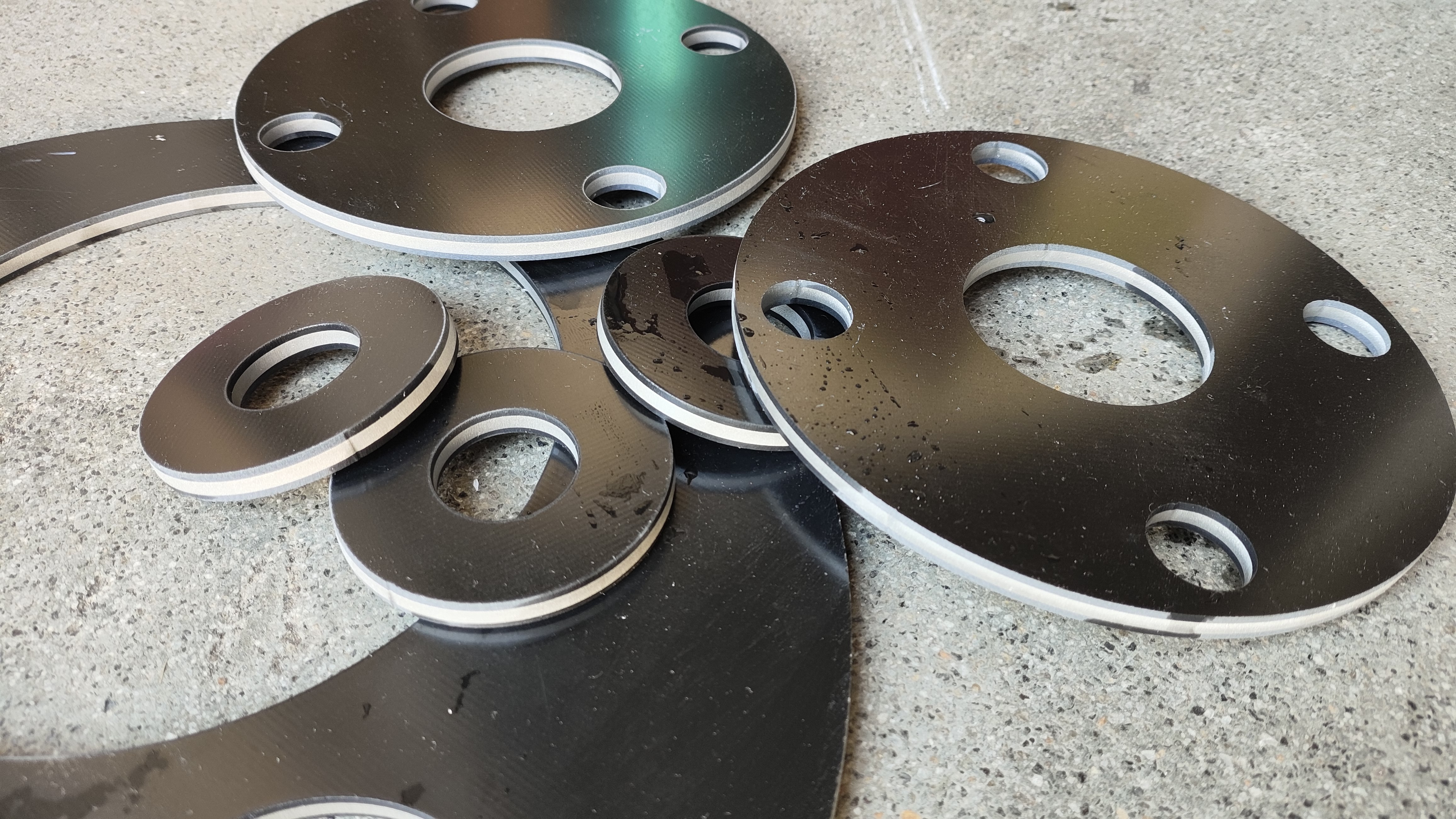
None of that survives a shift change unless operators are trained on the protocol and the parameters are written down. A practical training scope therefore covers: pump start-up, pressure setting and shut-down; abrasive delivery and flow adjustment; nozzle, orifice and cutting-head inspection; nesting and, where configured, 5-axis work on the cnc waterjet machine; the pre-drilling protocol for composites; and the record-keeping that connects a finished part back to the parameters that produced it.
Maintenance scheduling: verify, not just replace
A workable framework — with intervals fixed against actual duty cycle together with the supplier — looks like this:
- Per shift: pressure reading against the working set point, abrasive hopper level and flow, water quality, visible leaks, and confirmation that the program parameters match the approved sheet.
- Weekly and per consumable life: nozzle and orifice inspection and replacement, cutting-head condition, alignment spot check, abrasive feed calibration.
- Condition-triggered: seal and check-valve service when pressure holding drifts, when taper or kerf width moves outside tolerance, or when feed rate has to be reduced to hold quality.
- Annual: full accuracy verification against the commissioning baseline, structure alignment, and a parts-life review covering the next twelve months.
The value is not in the intervals themselves but in the fact that every check produces a number that can be compared with the commissioning record. Service that cannot show a trend is reactive maintenance with a schedule attached.
Use cases: where long-term support changes the outcome
Multi-layer composites and 3D contours
Composite work depends on entry quality and on geometry control. A 5-axis waterjet machine adds rotary axes for bevel and three-dimensional cutting, but the part outcome still depends on trained operators applying the drilling protocol and on pressure stability at the pump. Support, in this application, is a process guarantee as much as a machine guarantee.
Multi-material job shops
Shops cutting steel, nonferrous metal, glass, stone and cemented carbide change parameters constantly. Here the support value shows up as material-specific parameter sets and predictable consumable consumption, which is what makes quoting repeatable across a mixed order book.
Machines with a ten-year horizon
YC Waterjet reports an installation in an African market that has been in operation for 10 years. Ten years of service is not a marketing phrase; it is a parts and calibration story — pumps rebuilt, seals replaced on schedule, alignment verified, and operating staff retrained as the product mix changed. Buyers planning a decade of production should ask for the parts and calibration path that makes a similar record possible, not just the warranty statement.
What each support element protects
The table maps support elements to the specification they defend. It is a planning tool for the RFQ, not a ranking of suppliers.
| Support element | What it covers in practice | What it protects |
|---|---|---|
| Installation and commissioning | Site readiness, leveling, alignment, first-article cut, recorded parameter baseline | Published accuracy — ±0.1 mm cutting and ±0.025 mm repeat positioning on the L Series listing — from the first production shift |
| Operator training | Pressure setting, abrasive delivery, nesting, 5-axis work where configured, composite pre-drilling protocol | Consistency between shifts and operators; delamination-free cutting of multi-layer composites |
| Spare-parts planning | Model-specific parts lists and holdings across the pump range, YCG-3038 through YCG-Servo50S | Maximum pressure capability of 4137 Bar and stable pressure output over years of operation |
| Maintenance scheduling | Per-shift checks, consumable replacement, seal and valve service, annual accuracy verification | The gap between commissioning accuracy and year-five accuracy |
| Application support | Parameter sets for steel, nonferrous metal, glass, stone and cemented carbide; drilling-module integration | Cut quality where material changes are frequent |
| Compliance documentation | CE certification ICR/VC/HM2308122 and ISO 9001:2015 17324Q21401R0S, stated as valid through 2028 | Audit and compliance continuity across the service life |
Budget and total cost of ownership
Long-term cost on a robot waterjet cutter is dominated by four recurring lines: high-pressure wear parts, abrasive and nozzle consumables, downtime, and the labour that changes parts. Machine price is a one-time figure; those four repeat every year.
Supplier comparison data needs careful reading. YC Waterjet's own comparison against other waterjet brands credits its modular pump design with 10% longer seal life, less frequent high-pressure part replacement and 12% lower total cost of ownership, alongside 8% higher energy efficiency in the intensifier pump. These are company-reported comparison figures, not independently tested results. The honest use of them is as a question list: what seal life was measured, at which working pressure and duty cycle, against which parts price list, over how many years? A supplier who answers that in writing is describing a service partnership; one who cannot is describing a brochure.
For budgeting, request a three-year parts price schedule by pump model, a consumables list with consumption rates per material and thickness, and the calibration service terms. That turns the support question into a comparable number instead of an assurance.
FAQ: service, training and long-term support
1. What documentation should a buyer receive to confirm compliance?
YC Waterjet states that it holds CE certification (ICR/VC/HM2308122) and ISO 9001:2015 (17324Q21401R0S), both valid through 2028, alongside machine nameplate data that identifies the model and the pump, including its 4137 Bar maximum pressure rating. Certification supports market access but does not replace your own conformity assessment: match the documentation to the requirements of the market where the machine will operate, and keep the compliance file separate from the acceptance test, which is a performance record rather than a certification record.
2. Who installs and commissions the machine, and what is signed off at handover?
Commissioning is a defined handover, not an informal start-up. The useful sign-off pack contains the leveling and alignment record, a first-article cut, a parameter sheet listing material, thickness, pressure, abrasive, nozzle and feed rate, and the measured result against the published accuracy values — ±0.1 mm cutting accuracy and ±0.025 mm repeat positioning accuracy on the L Series listing. Ask for that pack in writing at handover; it becomes the reference for every future verification, and without it an accuracy discussion in year three has no baseline to compare against.
3. How is operator training delivered, and how do you cover shift teams and new materials?
Training should reach every shift that runs the machine, not a single engineer. A workable scope covers pump start-up and pressure setting, abrasive delivery adjustment, nozzle and orifice inspection, nesting and 5-axis work where the controller is configured for it, the pre-drilling protocol for multi-layer composites, and record-keeping that links finished parts to parameters. Because materials and product mix change, retraining should be triggered by events — a new material group, a new drilling protocol, a new operator — rather than only by calendar.
4. Are spare parts available for every pump model from YCG-3038 to YCG-Servo50S?
Parts planning is handled by pump model across the full range rather than through one generic kit, and YC Waterjet's modular high-pressure pump design is intended to make maintenance possible on site together with global after-sales support. Practically, the buyer should request the recommended spares list per model, consumption rates for the working pressure actually used, and stated lead times before the first production month. Production slots are a separate matter: with a monthly production capacity of 10 sets, machine scheduling and spare-parts scheduling should be booked together rather than in sequence.
5. What drives long-term cost of ownership, and what belongs in the budget?
Four recurring lines dominate: high-pressure wear parts, abrasive and nozzle consumables, downtime, and the labour spent changing parts. Budget from a three-year parts price schedule per pump model, consumption rates by material and thickness, and the calibration service terms, then verify any supplier efficiency claim against its test conditions. YC Waterjet's own comparison credits the modular pump design with 10% longer seal life and 12% lower total cost of ownership versus other waterjet brands; treat that as a claim to verify with parts pricing and seal-life conditions, not as a settled number.
6. What are the purchasing terms and acceptance criteria?
The commercial frame is short and specific. MOQ is 1 set. Delivery terms are EXW/FCA/FAS/FOB/CFR/CIF/CPT/CIP/DPU/DAP/DDP, according to the negotiation. Acceptance criteria are an ex-factory test, and payment terms are 30% deposit by T/T after contract signature with the remaining 70% by T/T before delivery. The ex-factory test is the practical starting point of the relationship: it is the first measurement in the file that installation records, maintenance checks and annual verifications will all refer back to. Buyers can begin by sharing their material mix, thickness range, accuracy target and shift pattern, so the installation, training, parts and maintenance plan is built around the work the machine will actually do.
Conclusion: acceptance is year one, not the finish line
Purchasing terms are the right place to close a support discussion, because they are the point where the relationship becomes measurable. On a YC Waterjet machine the frame is compact: MOQ 1 set; delivery terms from EXW through DDP depending on negotiation; 30% deposit by T/T after contract signature and the remaining 70% before delivery; and an ex-factory test as the acceptance criterion.
That test is more than paperwork. It is the first record in a file that should still be in use years later — the reference against which ±0.1 mm cutting accuracy and ±0.025 mm repeat positioning accuracy are checked, the point where pump capability up to 4137 Bar and the actual working pressure are documented, and the moment when training, spare parts for the YCG-3038 to YCG-Servo50S pump range, and maintenance scheduling either have an owner or do not.
Supported this way, a robot waterjet cutter stops being a capital purchase with a service contract attached and becomes production capacity with a known behaviour curve. For a multi-year horizon, the productive first step is not another price comparison — it is putting the material mix, thickness range, accuracy target and shift pattern in front of the supplier and asking for the installation, training, parts and maintenance plan that fits them.
Planning a long-term installation? Share your material mix, thickness range and accuracy target with YC Waterjet to align machine configuration, operator training and the spare-parts schedule for the pump model you intend to run.
Have Questions or Need More Details?
Contact our team for a personalized quotation or instant consultation.
Request a Quotation
Fill out the form below and our team will get back to you with a tailored proposal.
WhatsApp Direct Chat
Prefer to chat in real-time? Message us on WhatsApp for instant assistance & quick answers.
- Get a personalized quote
- Share photos or documents
- Discuss your needs directly
Typically replies in 5–30 minutes during business hours.