
Small Waterjet Machines for Medical & Food Cutting: A Practical Guide
Small-format waterjet cutting gives medical and food producers a cold, contact-free cutting method without the footprint of a full gantry system. YC Waterjet builds three compact models — YCWJ-S0808, YCWJ-1010 and YCWJ-1212 — listed with a cutting accuracy of ±0.1 mm, a positioning accuracy of ±0.025 mm and a maximum pressure of 4137 Bar (60,000 Psi). The same platform is specified for medical and food work covering titanium alloys, silicone and frozen meat.
This guide explains how that platform is adapted to two very different environments: a laboratory or medical-device workshop where dimensional control and a small footprint decide the purchase, and a food processing facility where repeatable portion geometry and a contained cutting area matter more than raw cutting speed. It covers the build, the specifications that actually constrain the cut, a step-by-step selection sequence, three scenario profiles and the questions buyers ask first.
Problem Definition: Why Medical and Food Cuts Resist Standard Tooling
The constraint in medical and food cutting is rarely the cost of the cutting tool. It is what the cutting method does to the part and to the room around it.
- Heat input. Thermal processes leave a heat-affected zone behind the cut. YC Waterjet describes its process as cold-state cutting with no thermal deformation — relevant when a titanium alloy blank or a silicone component must keep its mechanical behaviour after cutting.
- Tool contact. Blade, die and saw cutting rely on edge contact, which wears and can deform soft materials such as silicone.
- Geometry. The listed project types for this platform include precision part blanking, irregular part processing and composite molding — shapes that are slow and expensive to produce with fixed tooling.
- Environment. Waterjet cutting is described as dust-free environmental cutting, and the working-condition list includes dust-free workshop compatibility as an optional requirement. In a food area or a clean assembly room, airborne dust from mechanical cutting is a process problem, not a cosmetic one.
- Floor space. A facility testing a new cutting method usually cannot hand over a large bay to it. The S series is offered specifically as a small waterjet cutting machine format, with the option of a fully closed small CNC configuration.
Short answer: a small waterjet machine removes material by high-pressure erosion rather than by heat or blade contact, which is why one platform appears in both the medical and the food rows of the manufacturer's application list — titanium alloys, silicone and frozen meat.
Industry Background: A Large Market With a Compact-Format Gap
The global waterjet cutting machine market was estimated at USD 1.31 billion in 2025 and is projected to reach USD 1.86 billion by 2030, according to Vertex AI Search / Reports & Data. Published estimates differ — Fortune Business Insights and Fact.MR put the 2025 baseline lower — so the number is best read as a range rather than a precise value.
Asia-Pacific accounted for approximately 37.8% of global waterjet cutting machine revenue in 2024 (Coherent Market Insights). Metal cutting dominates the application mix, accounting for approximately 54.2% of the waterjet application segment in 2026 (Fact.MR). The practical consequence for a medical or food buyer is straightforward: the equipment market is organised around metal and stone work, so a titanium alloy, silicone or frozen meat application is usually served by a task-specific machine rather than by the largest standard gantry.
Safety documentation deserves early attention. ISO 21789 is cited as the water jetting safety standard covering operation at pressures up to 3000 bar (43,500 PSI) (Derc Salotech / ISO). The S series is listed with a maximum pressure of 4137 Bar (60,000 Psi), above that cited range, so buyers should request the applicable safety documentation, pressure-relief provisions and regional compliance evidence for the exact configuration being quoted, rather than assuming a generic standard covers it.
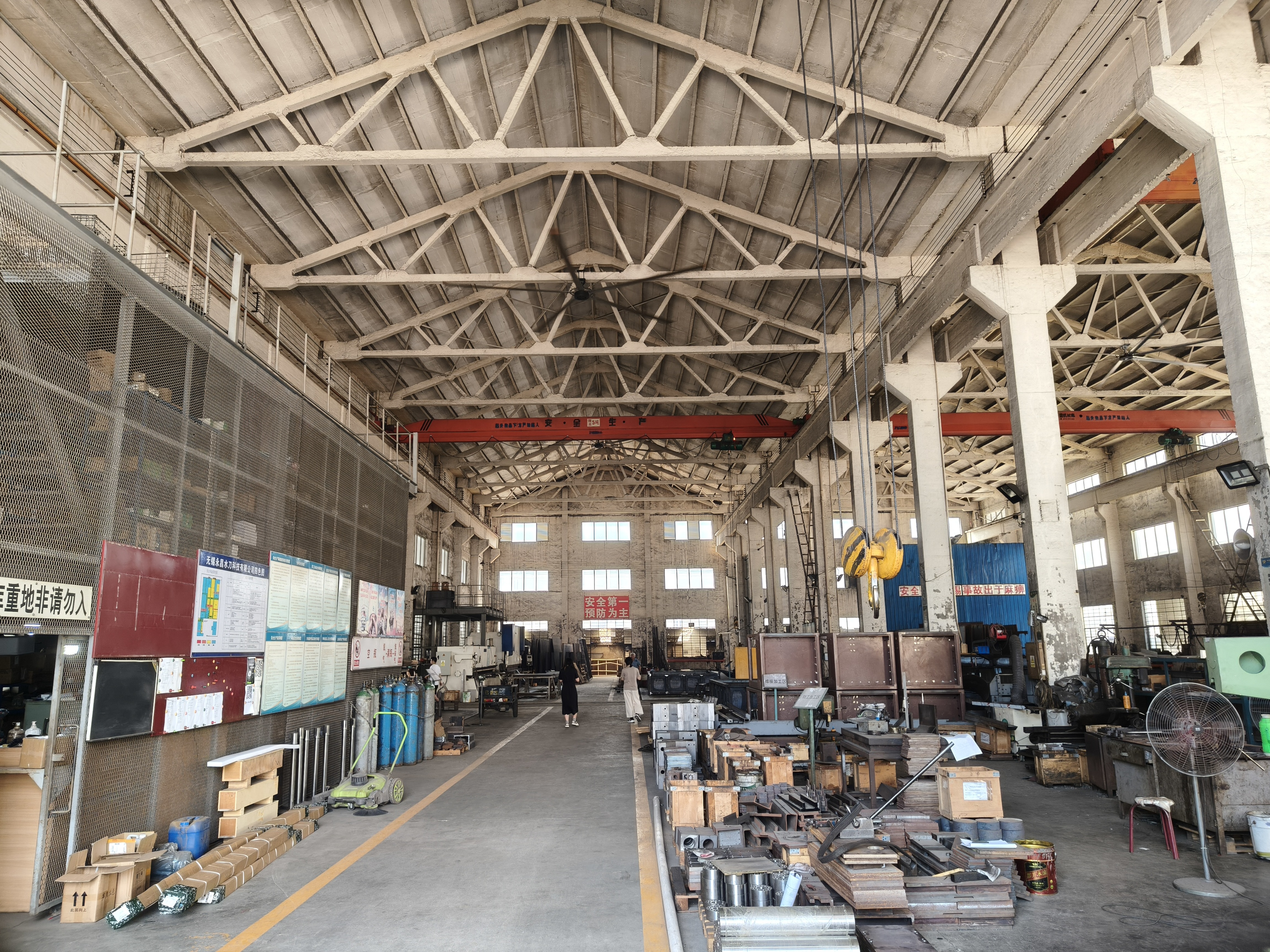
YC Water Jet Technology Co., Ltd is a manufacturer of ultra-high pressure waterjet cutting systems founded in 1999 and based in Wuxi, Jiangsu, China. The company operates a 7,000㎡ production facility with approximately 25 employees, an R&D team of 7 engineers and an annual output of about 100 sets. Export accounts for roughly 70% of sales, and as of 2026 the YC Waterjet brand is exported to more than 140 countries and regions. Since 2005 the company has worked with KMT (Germany) and Accustream/Hypertherm (USA) on pump and system technology — relevant here because the high-pressure pump, not the table, is the part of a small machine most likely to limit duty cycle.
Detailed Solution: How the YCWJ-S Platform Is Adapted to Medical and Food Work
Machine configuration and build
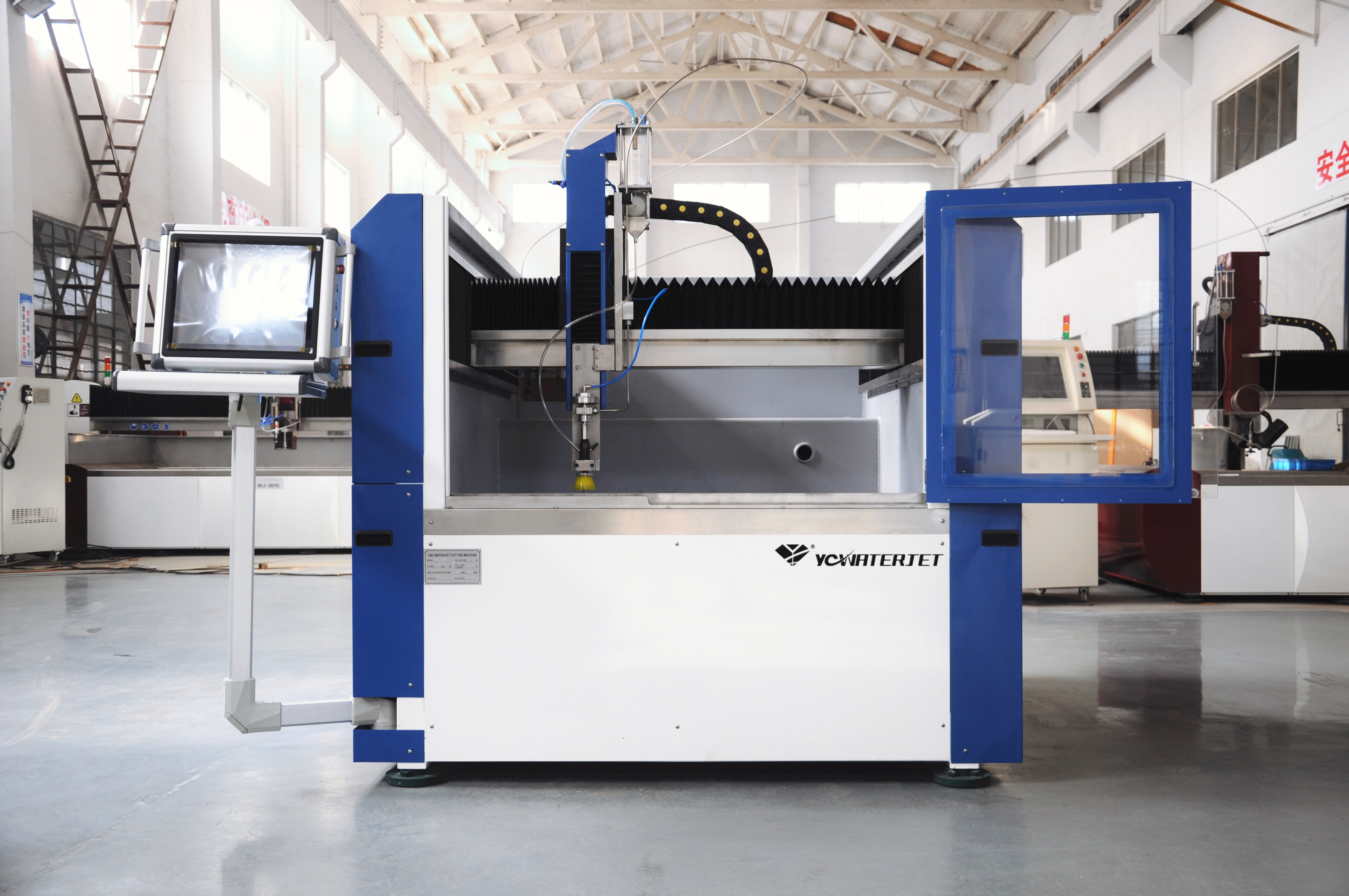
The small waterjet cutting machine is designated by the models YCWJ-S0808, YCWJ-1010 and YCWJ-1212. The platform is listed in several configurations: a 3-axis waterjet cutting machine, a 3D MAX 5-axis machine, a dynamic 5-axis machine, a full closed small CNC water jet cutting machine, and a waterjet food cutting machine. Structure material is listed as stainless steel or carbon steel — a choice worth settling early, since a stainless structure is the usual preference where washdown and residue control shape daily cleaning routines, while carbon steel is the conventional choice for a general workshop environment.
The specifications that actually constrain the cut
Six published figures determine whether a small machine can hold a medical or food tolerance. Each one governs a different part of the process:
- Cutting accuracy ±0.1 mm — the tolerance the finished edge is expected to hold.
- Positioning accuracy ±0.025 mm — how precisely the cutting head is placed before the cut begins.
- X, Y dry-run speed 0–15 m/min — travel speed between cuts, which sets throughput on nested or multi-part layouts.
- Max pressure 4137 Bar (60,000 Psi) — the energy available for penetration; the working pressure actually used is lower and depends on the material.
- Max water flow 7.4 L/min with a max orifice/nozzle of 0.016”/0.05” — the jet size and flow that shape kerf width and edge finish.
- Max power 100 Hp (75 Kw) — the pump capacity behind the pressure figure.
Cutting speed itself is not a fixed number: YC lists it as dependent on the material and the thickness. Any supplier who quotes a single cutting speed without naming the material and thickness is giving an incomplete answer.
Material fit: titanium alloys, silicone and frozen meat
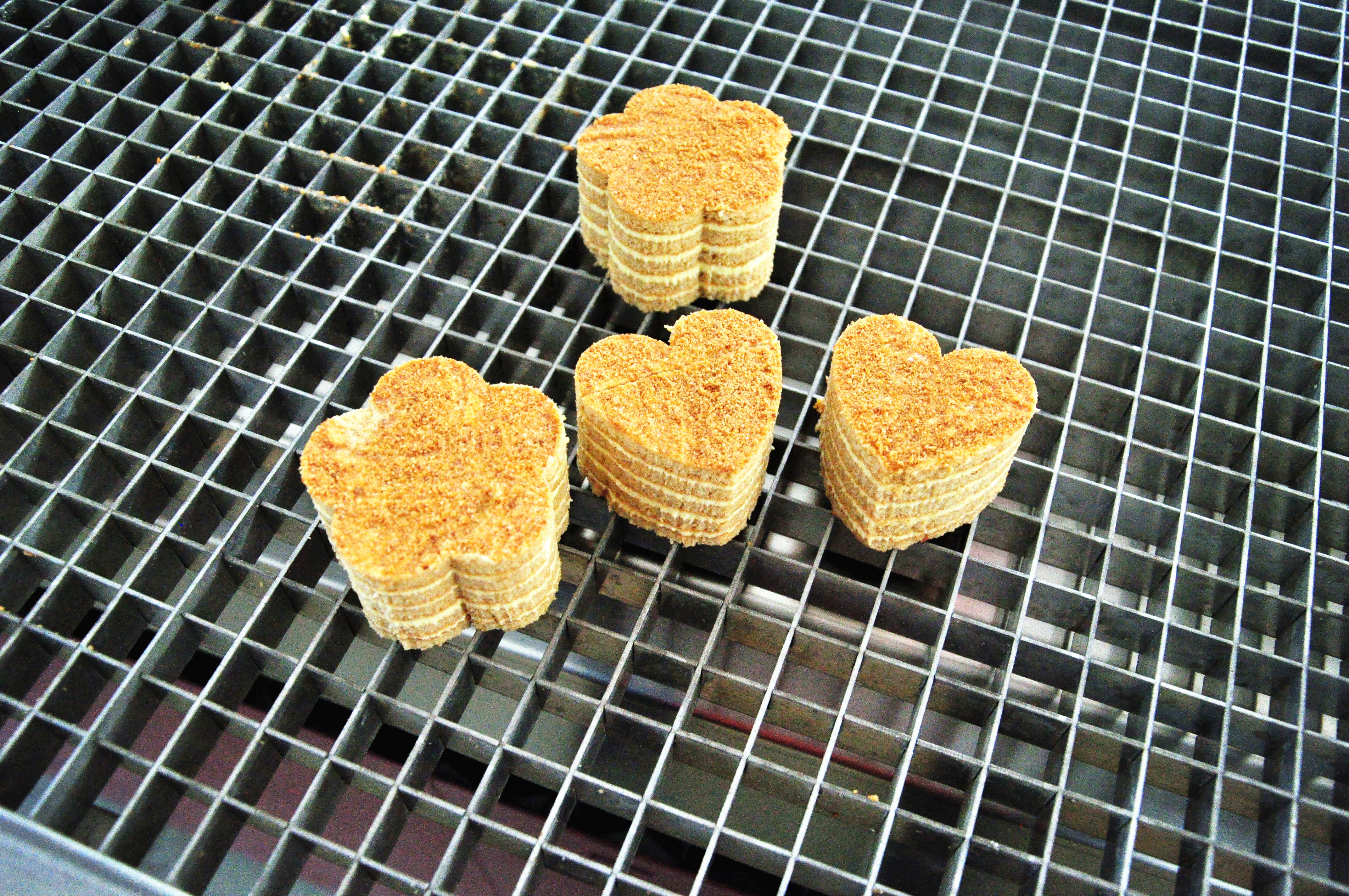
All three materials sit in the same published row — Medical & Food: Titanium Alloys, Silicone, Frozen Meat — but they demand different setups. Titanium alloys are the hardest of the three and are normally cut with abrasive assistance; YC lists an automatic abrasive delivery system and an abrasive recovery system among its configurations, and abrasive-assisted cutting is the standard route for metals, so the specific alloy grade and thickness should be confirmed with the supplier before the pump and nozzle combination is fixed. Silicone is a soft, deformable material where a pure-water jet is commonly preferred because there is no mechanical edge to drag or distort the part. Frozen meat is served by the dedicated waterjet food cutting machine designation, where the value of the process is a clean, repeatable portion geometry rather than metallurgical precision.
Supporting equipment and options
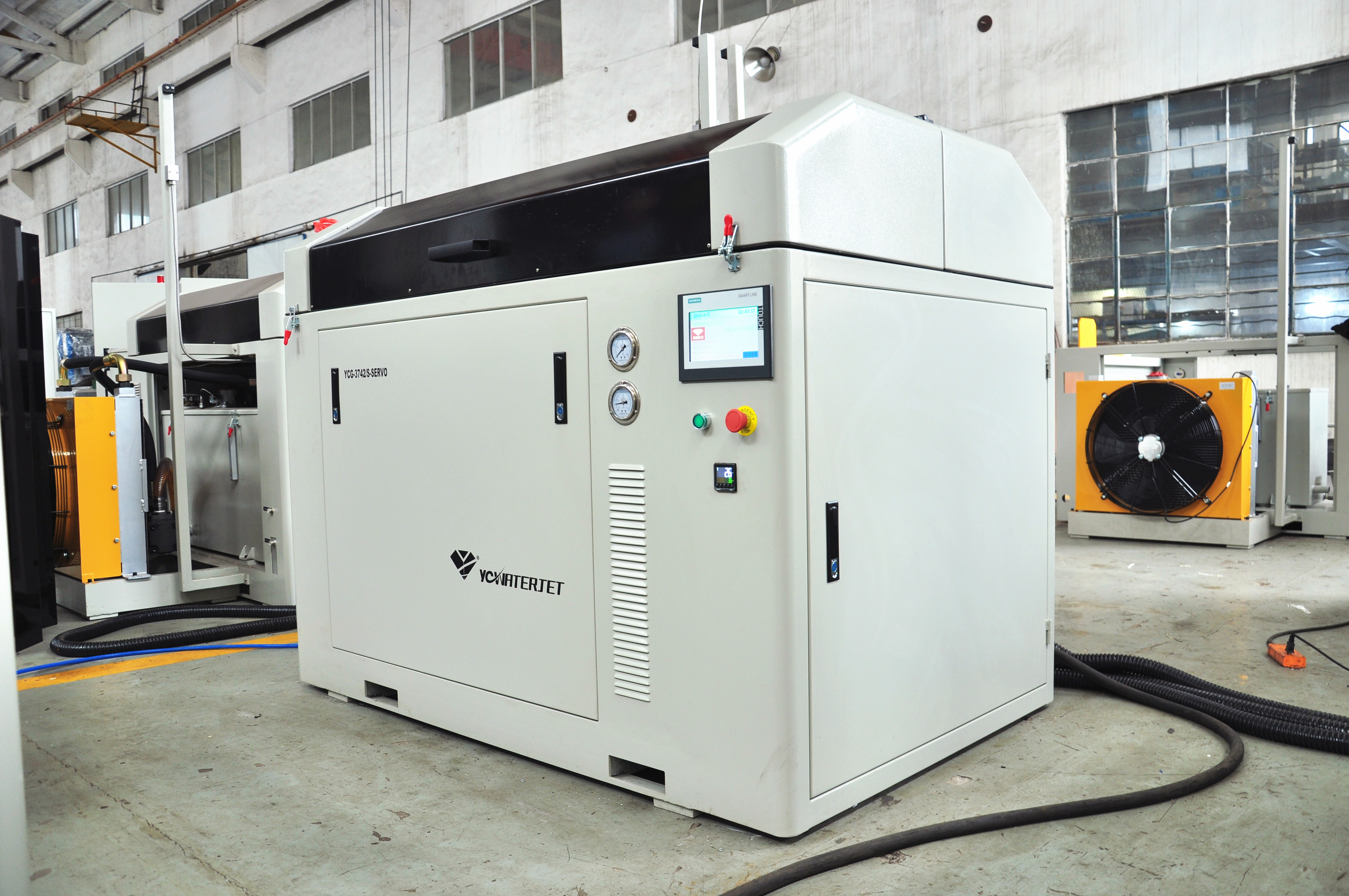
A small machine is a system, not a table. Listed matched equipment includes an automatic feeding platform, a robot grabbing system, an abrasive recovery system, the ultra-high pressure water pump, a dust removal system and CAD/CAM programming software. Available configuration options on YC systems include an automatic abrasive delivery system, an auto-cycle water cooling system, an auto sewage removal system, a cutting head with drilling function, multiple cutting heads, an air cooled chiller, an auto water softening system, laser scanning height measurement and a hydraulic loading system. Operation modes range from single or double shift production through automated production line linkage to continuous 24/7 production as an option.
Step-by-Step Breakdown: Specifying a Small Waterjet for a Medical or Food Task
The sequence below is ordered so that each decision narrows the next one. Changing the order usually produces a machine that is either oversized for the part or short on pressure for the material.
- Write down the cut requirement. Fix the material group (titanium alloy, silicone or frozen meat), the thickness range, the dimensional tolerance you will accept and the edge condition you need. Everything downstream is measured against this line.
- Choose the working envelope. The three small-format models — YCWJ-S0808, YCWJ-1010 and YCWJ-1212 — differ by table format. Size for the largest part you must cut plus clamping and nesting allowance, not for the average part.
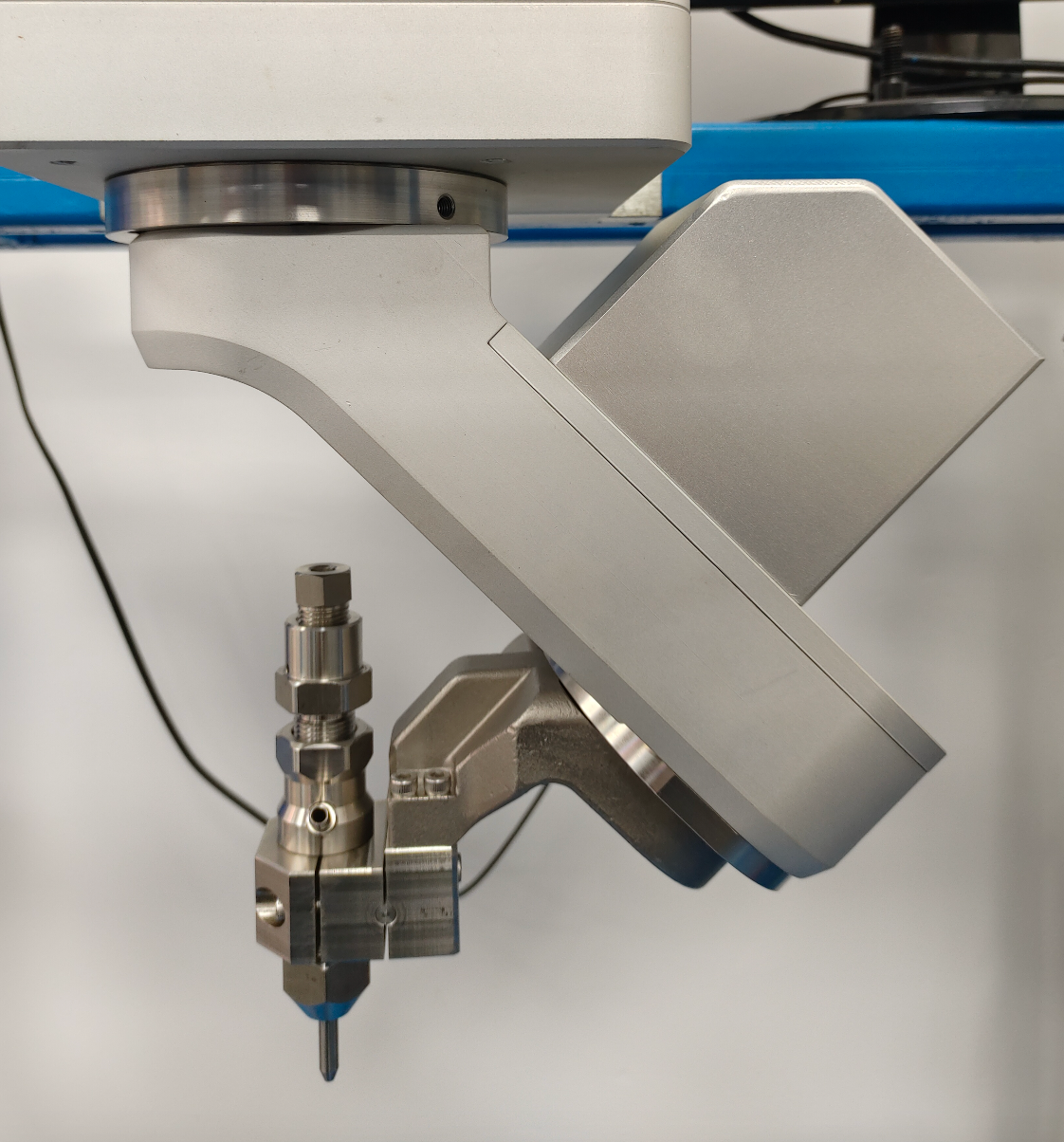
- Select the axis configuration. A 3-axis head produces vertical walls on flat stock. Angled features and contoured surfaces need the 5-axis options, and YC offers both a 3D MAX 5-axis and a dynamic 5-axis head. For medical work with angled holes or relief geometry, the axis decision usually precedes the pump decision.
- Match the pump. The S series figures are 4137 Bar maximum pressure, 7.4 L/min maximum water flow and 100 Hp (75 Kw) maximum power. YC pump models include YCG-3038, YCG-3742, YCG-3742S, YCG-Ultra100, YCG-SERVO50, YCG-Ultra100S and YCG-Servo50S; confirm which pump is inside the quoted package, because the pump governs duty cycle more than any other element.
- Decide the cutting mode and consumables. Settle whether the application runs pure water or abrasive-assisted, and size the orifice and nozzle within the 0.016”/0.05” maximum. If abrasive is used, include abrasive delivery and recovery in the specification from the start.
- Plan the support environment. Decide on full enclosure versus open table, water softening, chiller cooling, sludge removal and — where relevant — dust-free workshop compatibility. These are optional items, which means they are easy to forget and expensive to retrofit.
- Validate on a sample. Cut the real material at the real thickness and measure against your tolerance. The ±0.1 mm cutting accuracy figure is a specification, not a guarantee for every material; the sample is where the specification becomes evidence.
- Set the operating pattern. Confirm whether the facility will run single shift, double shift or continuous production, and match pump cooling, water treatment and maintenance intervals to that rhythm.
Use Cases: Three Scenario Profiles
1. Medical device and laboratory workshop
The task here is usually a titanium alloy blank or a silicone component cut to a profile that must hold ±0.1 mm without a heat-affected zone. The compact table keeps the machine inside an existing workshop instead of forcing a building change, and the full closed small CNC configuration suits a space where the cutting area needs to be contained. Because medical work moves between designs, CAD/CAM programming and a machine that accepts a new nest quickly matter more than maximum cutting speed.
2. Food processing facility
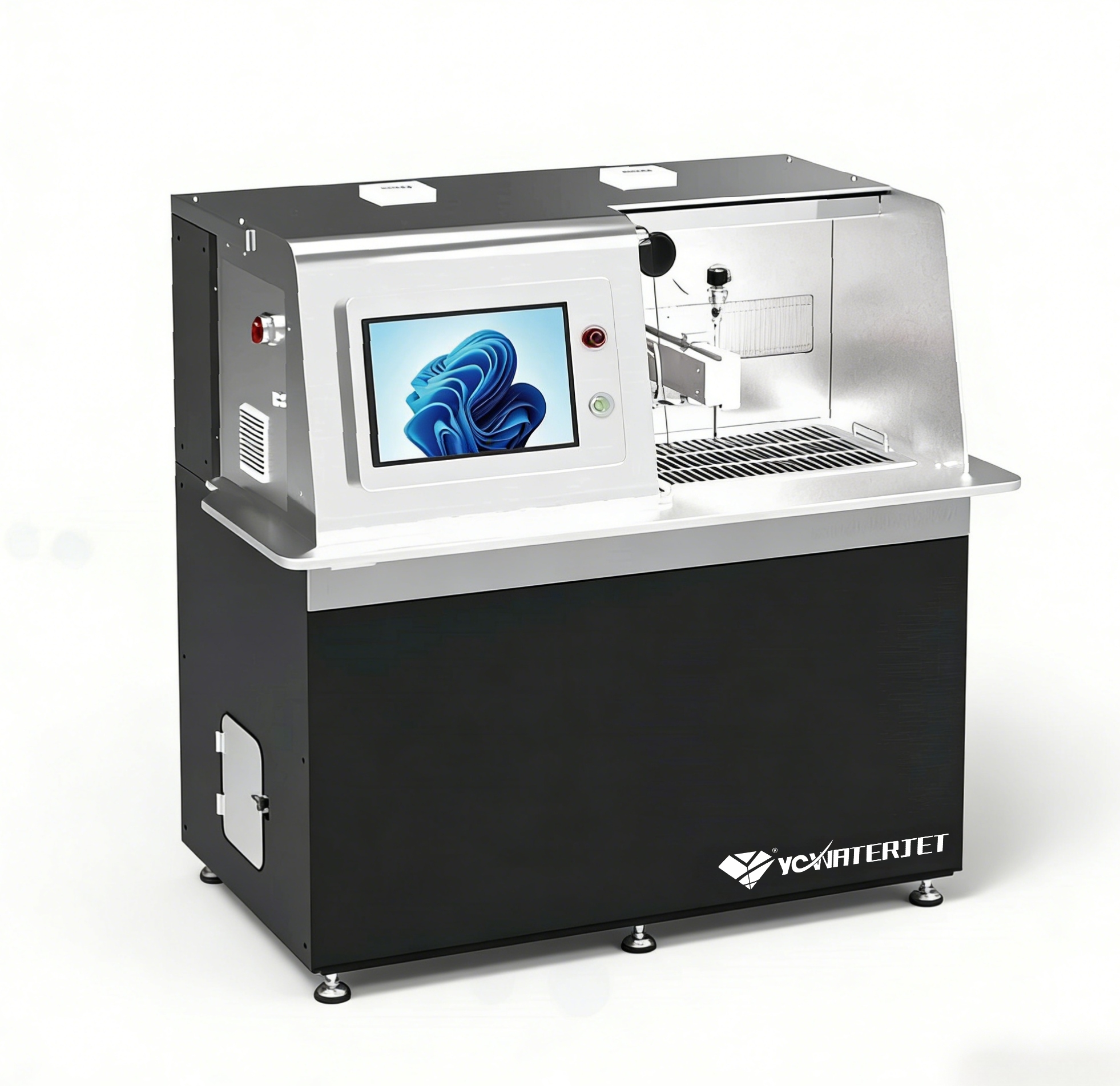
Frozen meat is the published food material in scope, and the food variant is a listed machine type rather than an afterthought. In this setting the arguments for waterjet are the absence of blade contact, the absence of a heat-affected zone and a repeatable cut geometry across a run. Multiple cutting heads are a listed option where throughput per pass matters. Buyers with material-contact or hygiene obligations in their own market should confirm the applicable requirements, cleaning regime and documentation with the supplier before ordering, since those obligations vary by jurisdiction and are not defined by the machine specification alone.
3. Mixed-material job shop or R&D facility
A facility that cannot commit to one material is well served by the multi-material compatibility the platform is listed for. Beyond medical and food, the same small machine is listed for metalworking, stone processing, glass processing, aerospace, automotive manufacturing, composites, architectural decoration and electronic precision processing. This is the case where a high pressure water jet cutting table earns its space: one machine, several material families, and a cut quality defined by settings rather than by tooling changes.
Comparison Table: S, L, G and E Series Side by Side
The small-format S series shares most of its core specification with the larger L, G and E series. The table below uses only the manufacturer's published figures, which makes the differences easy to see: the small platform is not a reduced-capability machine, it is a reduced-envelope machine.
| Series | Models | Cutting accuracy | Positioning accuracy | X, Y dry-run speed | Max pressure | Max water flow | Max power |
|---|---|---|---|---|---|---|---|
| S (small format) | YCWJ-S0808, YCWJ-1010, YCWJ-1212 | ±0.1 mm | ±0.025 mm | 0–15 m/min | 4137 Bar / 60,000 Psi | 7.4 L/min | 100 Hp / 75 Kw |
| L | YCWJ-L1515, L3015, L3020, L4020, L4025 | ±0.1 mm | ±0.025 mm | 0–15 m/min | 4137 Bar / 60,000 Psi | 7.4 L/min | 100 Hp / 75 Kw |
| G | YCWJ-G2060, G2080, G3080, G30100 | ±0.1 mm | ±0.025 mm | 0–15 m/min | 4137 Bar / 60,000 Psi | 7.4 L/min | 100 Hp / 75 Kw |
| E | YCWJ-E3020 (3000*2000 mm), YCWJ-E4020 (4000*2000 mm) | ±0.1 mm | ±0.025 mm | 0–8 m/min | 4137 Bar / 60,000 Psi | 3.7 L/min | Not listed in the E series data |
Two differences are worth flagging. First, the E series lists an effective cutting area and a lower dry-run speed and water flow than the S, L and G series, so it is a different motion and hydraulic package rather than a larger version of the same thing. Second, the type designations “full closed small CNC water jet cutting machine” and “waterjet food cutting machine” appear in the S series specification, which is why the small platform — not the larger gantries — is the usual starting point for a laboratory or a food line.
FAQ
What safety and compliance evidence should a small waterjet machine for medical or food work carry?
ISO 21789 is cited as the water jetting safety standard covering operation at pressures up to 3000 bar (43,500 PSI) (Derc Salotech / ISO). Because the YCWJ-S series is listed with a maximum pressure of 4137 Bar (60,000 Psi), buyers should ask the supplier for the safety documentation, pressure-relief design and regional compliance evidence that applies to the exact configuration quoted, and should separately confirm any material-contact or hygiene requirements that apply in their own market. The machine specification alone does not answer those questions.
Can a small waterjet machine cut titanium alloys, silicone and frozen meat?
Yes — all three are listed under the Medical & Food application row for the platform, alongside the general material list of stainless steel and carbon steel structures. The machine is listed with a cutting accuracy of ±0.1 mm and a positioning accuracy of ±0.025 mm, and the process is described as cold-state cutting with no thermal deformation. Setup differs by material: abrasive-assisted cutting is the usual route for metals such as titanium alloys, while soft materials like silicone are commonly cut with a pure-water jet. The specific grade, thickness and edge requirement should be confirmed against a sample cut.
What drives the cost of a small waterjet cutting machine?
Cost is driven by configuration rather than by table size alone. The variables that move a quotation are the model (YCWJ-S0808, YCWJ-1010 or YCWJ-1212), the axis package (3-axis, 3D MAX 5-axis or dynamic 5-axis), the pump model (for example YCG-3038, YCG-3742, YCG-3742S, YCG-Ultra100, YCG-SERVO50, YCG-Ultra100S or YCG-Servo50S), and the optional systems selected: automatic abrasive delivery, auto-cycle water cooling, auto sewage removal, cutting head with drilling function, multiple cutting heads, air cooled chiller, auto water softening, laser scanning height measurement or hydraulic loading. Deciding which options are genuinely required is the most effective cost control at the specification stage.
Can we test our own material before committing to an order?
A sample cut is the right way to convert a specification into evidence, because the listed ±0.1 mm cutting accuracy is a machine figure and cutting speed is stated as dependent on material and thickness. Prepare the actual material at the actual thickness, state the tolerance and edge condition you need, and ask for the cut parameters and the axis and abrasive configuration used. YC Waterjet can be reached at sales@ycwaterjet.com or +86 13861858095 to discuss sample evaluation and a configuration-specific quotation.
How is delivery time affected by the configuration?
Delivery depends on the configuration rather than on the model alone — the pump selection, axis package and optional systems all change what has to be built and tested before shipment. Request the lead time in writing against the exact bill of configuration, and ask which items are standard stock versus built-to-order. YC Waterjet operates a 7,000㎡ facility with an annual output of about 100 sets and a team of 7 R&D engineers, so the confirmed schedule should always reference the specific quotation. A written enquiry through https://www.ycwaterjet.com is the fastest way to obtain it.
Conclusion: Match the Envelope to the Task, Not the Task to the Envelope
The case for a small waterjet machine in medical and food cutting rests on three things that a compact format does not compromise: a ±0.1 mm cutting accuracy, a ±0.025 mm positioning accuracy and a maximum pressure of 4137 Bar (60,000 Psi). What changes with the small platform is the working envelope and the configuration menu — not the cutting principle. That is why the same S series models appear against titanium alloys, silicone and frozen meat, and why the axis package, pump model and optional systems deserve more attention during selection than the table dimensions alone.
A practical closing rule for buyers at the research stage: specify the material and tolerance first, choose the axis package second, and settle the pump and options last. If the sample cut holds the tolerance on the real material, the machine is correctly specified. If it does not, no amount of additional option selection will fix it.
Next step: evaluate a small waterjet on your own material
Send your material, thickness and tolerance requirement to YC Waterjet for a configuration-specific quotation covering the YCWJ-S0808, YCWJ-1010 or YCWJ-1212 platform.
Email: sales@ycwaterjet.com | Tel / WhatsApp: +86 13861858095 | Contact: Johnny Bian
Website: www.ycwaterjet.com | Address: NO.3 Changfa Road, Yangshan, Wuxi, Jiangsu, China
Have Questions or Need More Details?
Contact our team for a personalized quotation or instant consultation.
Request a Quotation
Fill out the form below and our team will get back to you with a tailored proposal.
WhatsApp Direct Chat
Prefer to chat in real-time? Message us on WhatsApp for instant assistance & quick answers.
- Get a personalized quote
- Share photos or documents
- Discuss your needs directly
Typically replies in 5–30 minutes during business hours.