
Waterjet Cutting Machine vs Plasma vs Laser: TCO Comparison
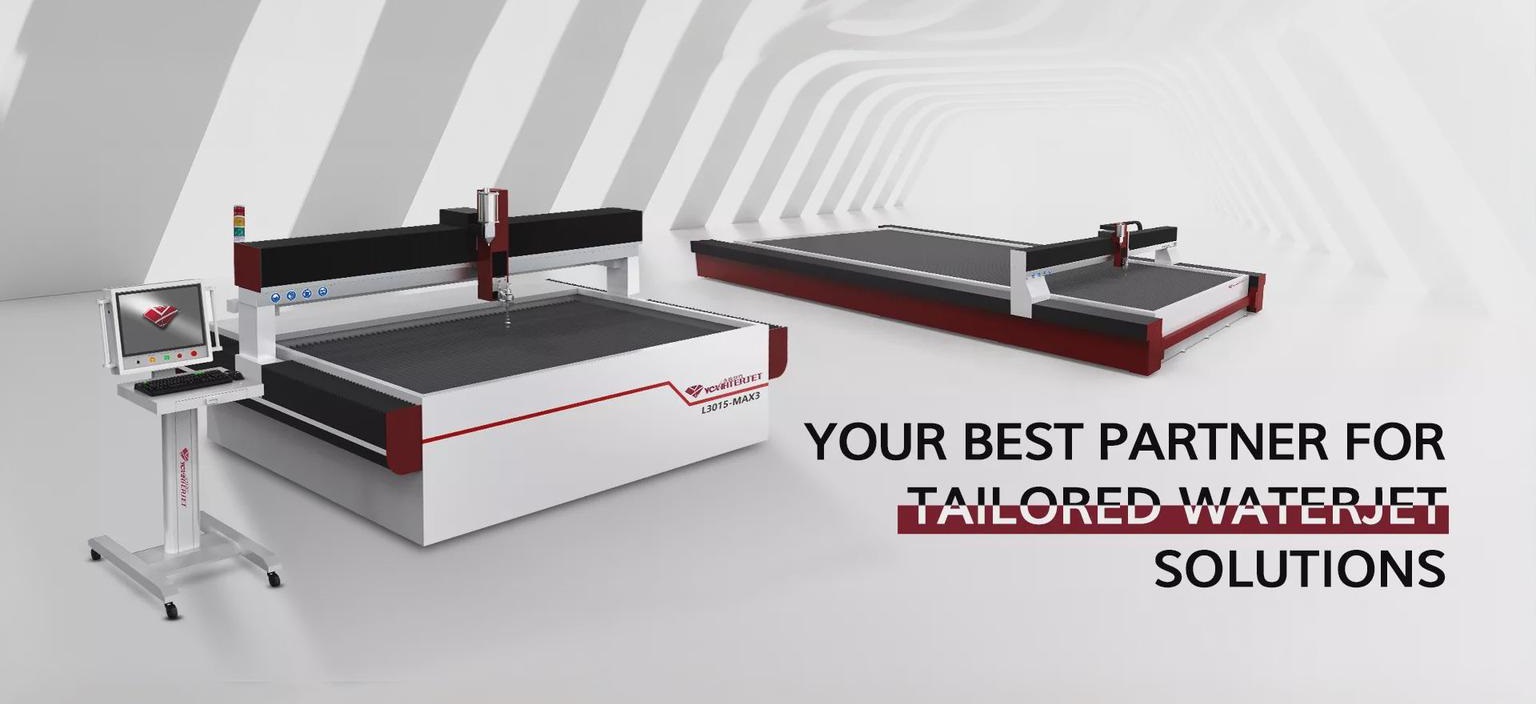
Buyers evaluating a waterjet cutting machine in 2026 face a comparison that goes beyond machine price. The core decision is between three cutting principles: waterjet, plasma, and laser. Each one changes the total cost of ownership (TCO) in a different way. This article compares the three technologies using verified market data and engineering facts from YC Water Jet Technology Co., Ltd., then explains how to compare waterjet brands against each other before making a final purchase decision.
Why Cutting Technology Comparison Is Harder Than It Looks
Three factors make this comparison difficult in practice.
First, the visible purchase price is only a small part of the total cost. Consumables, high-pressure component replacement, secondary finishing, and rejected parts accumulate over the machine's life. A machine with a lower price tag can generate higher operating costs if it produces thermal distortion or requires frequent maintenance.
Second, different technologies define precision differently. A positioning accuracy specification is meaningful only when the rest of the system, including pump stability, motion control, and material handling, supports it consistently.
Third, certain materials introduce process risks that are not visible in a standard specification sheet. Multi-layer composite materials, for example, are prone to delamination when cut without pre-drilling. Stone, glass, and tile are vulnerable to thermal cracking when cut with heat-based processes. A comparison that ignores these application risks will understate the real cost difference.
Industry Context: A Growing Market Dominated by Metal Cutting
The global waterjet cutting machine market was estimated at USD 1.31 billion in 2025 and is projected to reach USD 1.86 billion by 2030, according to Vertex AI Search / Reports & Data. Asia-Pacific accounted for approximately 37.8% of global waterjet cutting machine revenue in 2024, based on Coherent Market Insights. These figures indicate steady demand across fabrication, stone processing, and specialized manufacturing.
Metal cutting is the dominant application, representing approximately 54.2% of the waterjet application segment in 2026, according to Fact.MR. That share explains why most buyers searching for a water jet metal cutter or water jet cutter steel are evaluating waterjet against plasma and laser for metal fabrication work.
Safety compliance is also part of the comparison. Waterjet cutting machines operate at extreme pressures; ISO 21789 addresses water jetting safety and references operation at pressures up to 3000 bar (43,500 PSI). A buyer evaluating any ultra-high-pressure system should confirm that the machine design and operating procedures are aligned with this standard.
The market includes several established global manufacturers. According to Persistence Market Research, major global waterjet manufacturers include Flow International, OMAX Corporation, KMT Waterjet, and Bystronic Group. Understanding where a supplier fits in this landscape is useful, but the more important comparison for a specific purchase is the measurable performance difference between candidates.
Waterjet vs Plasma vs Laser: What the Evidence Shows
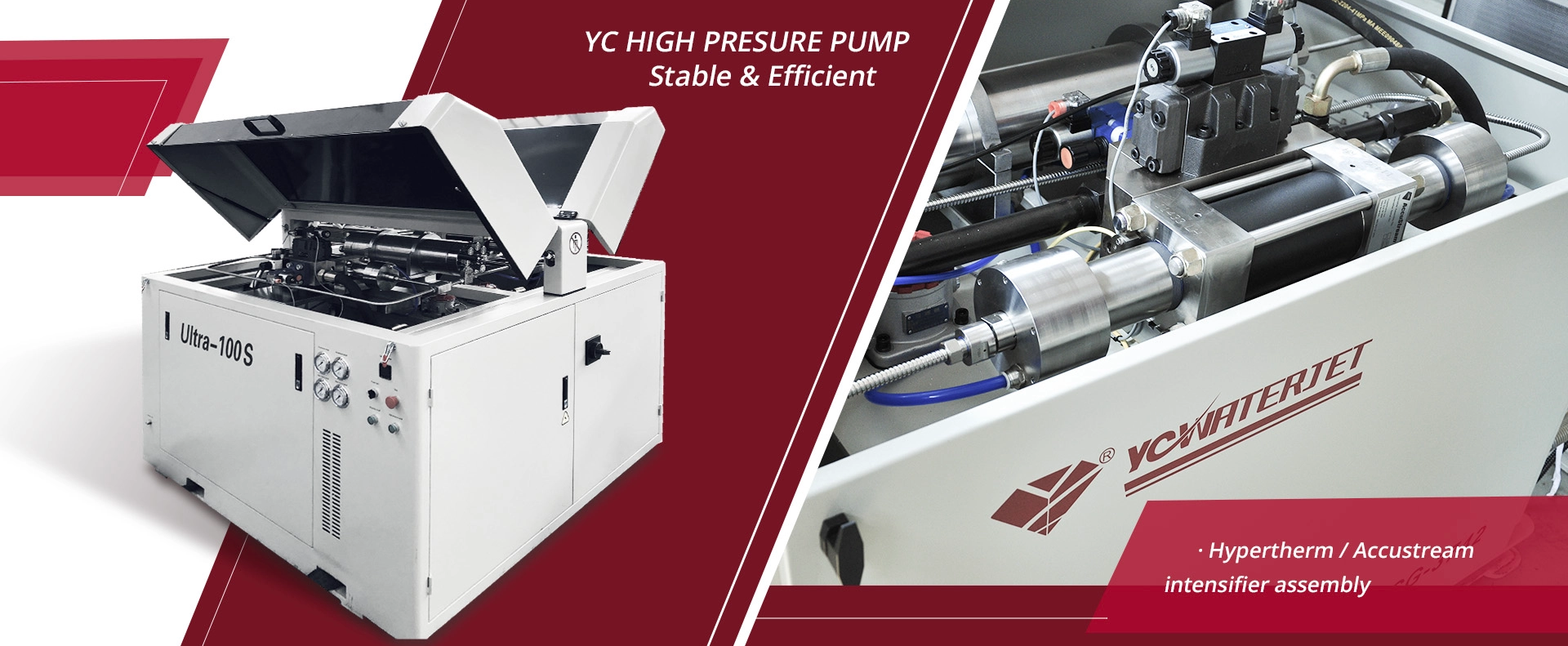
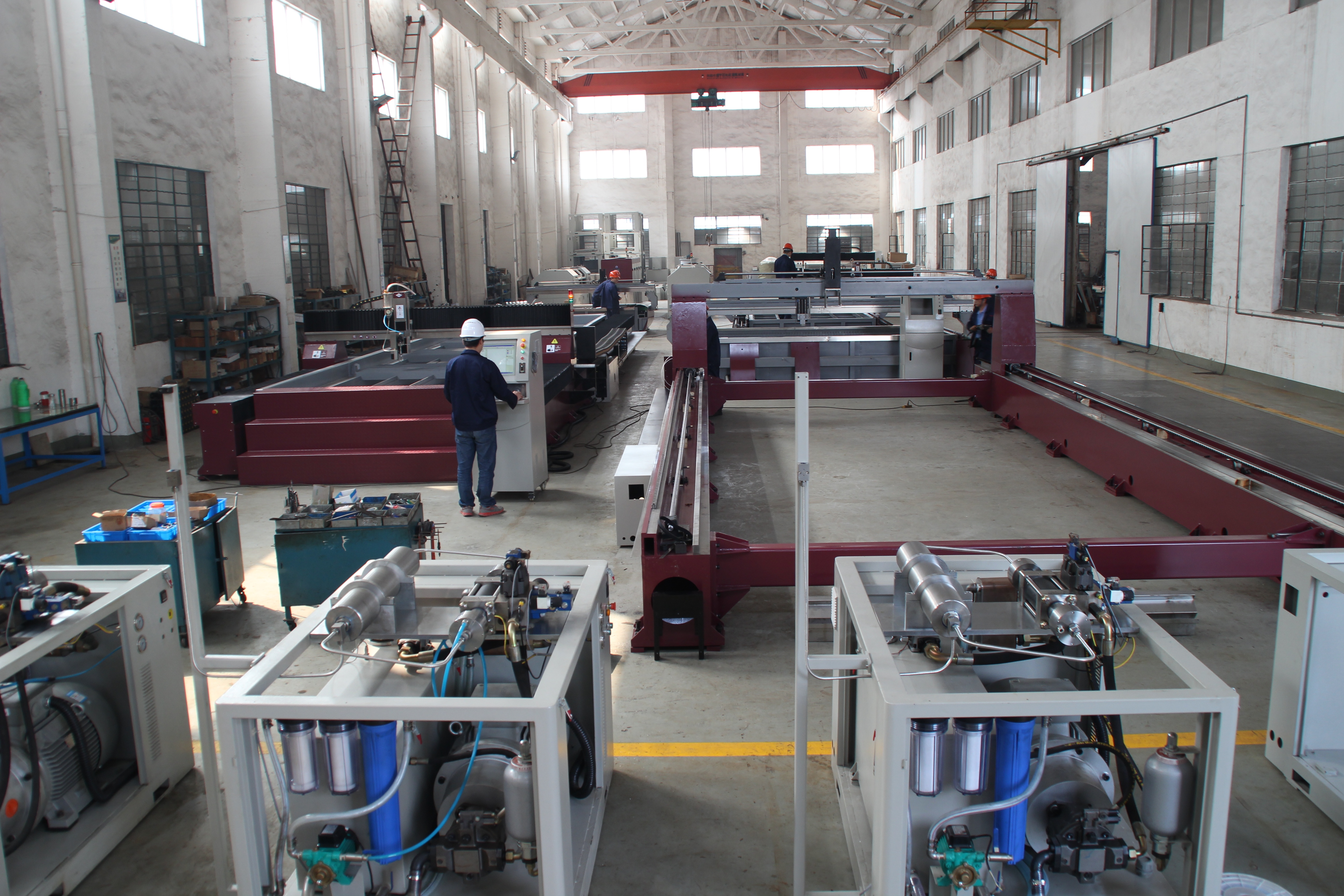
To make the comparison concrete, this section uses engineering comparison data from YC Water Jet Technology Co., Ltd., a waterjet manufacturer founded in 1999 and based in Wuxi, Jiangsu, China. YC Waterjet specializes in ultra-high-pressure waterjet cutting systems and operates a 7,000 m² production facility with an annual output of 100 sets. The company exports to more than 140 countries and regions as of 2026, and since 2005 it has collaborated with pump providers such as KMT (Germany) and Accustream/Hypertherm (USA).
Compared with plasma or laser cutting machines, a waterjet cutting machine offers distinct advantages. It is a cold cutting process with no thermal deformation and no heat-affected zone, it is compatible with all material types, and it provides up to 0.05 mm higher precision for delicate materials. In the company's comparison data, this translates to zero thermal distortion, 30% higher material yield, and 15% lower secondary processing cost, because parts come off the machine closer to final shape without heat damage. The system also avoids expensive gas or laser consumables, and it uses lower peak power with more stable energy consumption for thick materials.
These advantages do not mean waterjet replaces plasma or laser in every situation. Plasma is a practical option for thick, electrically conductive metals where thermal effects are acceptable. Laser is a strong choice for thin sheet metal requiring high speed and consistent edge quality. Waterjet becomes the preferred option when the material list includes stone, glass, tile, composites, or metals that cannot tolerate heat.
Within the waterjet category itself, suppliers differ in measurable ways. Compared with other waterjet brands, YC Waterjet's system is distinguished by an integrated pre-drilling function, higher pressure stability, and a longer lifespan for high-pressure components. According to the company's comparison data, this results in 25% higher production efficiency for composite materials, 10% longer seal life, 0.02 mm higher positioning accuracy, and a 12% lower total cost of ownership, mainly due to less frequent replacement of high-pressure parts. The pump also achieves 8% higher energy efficiency with more stable pressure output.
Pre-Drilling: The Hidden Requirement for Composite Materials
One of the clearest cost differences appears when cutting multi-layer composite materials. A known process risk is damage and delamination during cutting. The control method is to drill holes before cutting, allowing the waterjet to enter the material at a prepared location rather than forcing a plunge through uncut layers.
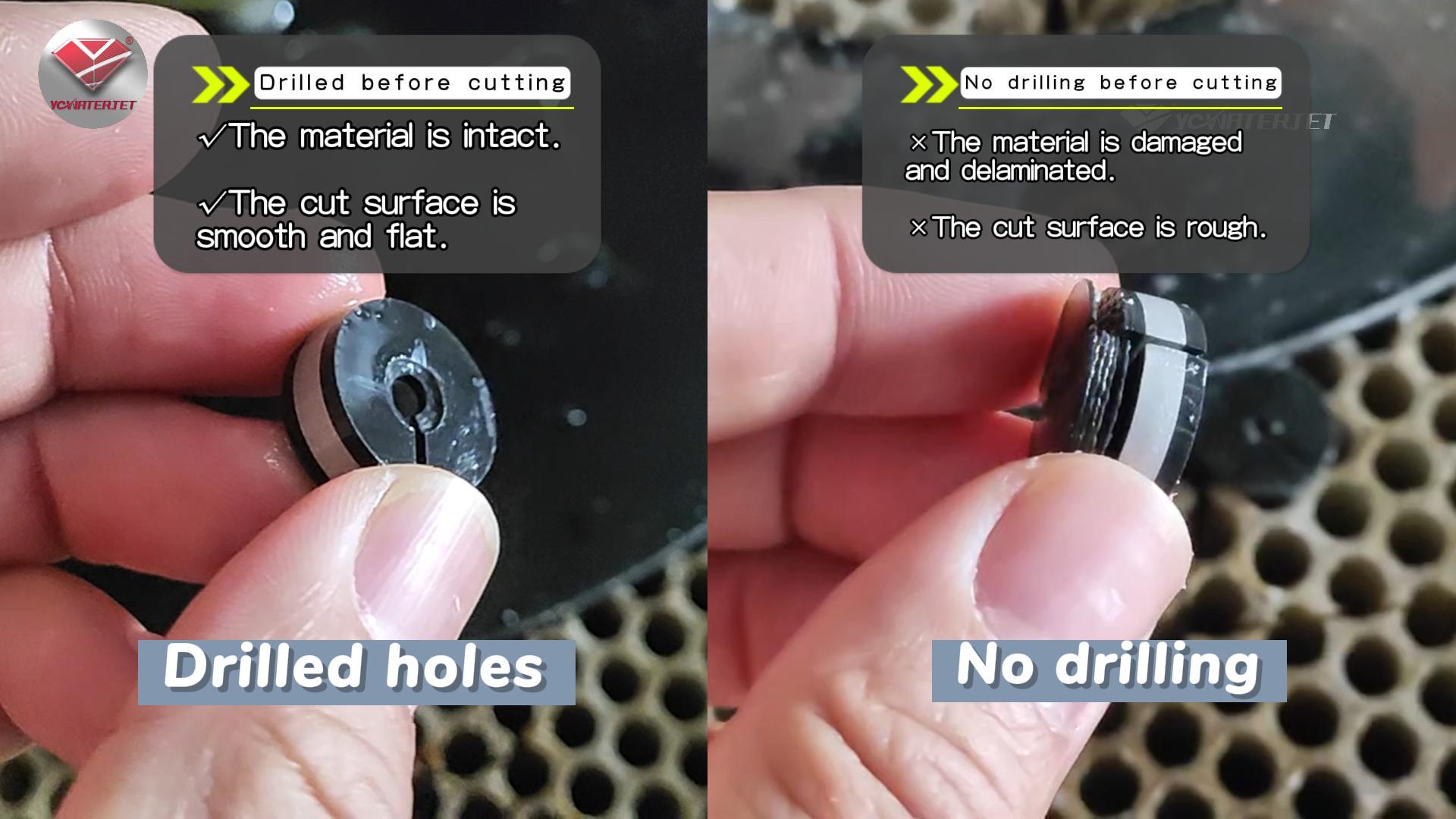
YC Waterjet addresses this risk with an integrated drilling module, which equips the waterjet with an automated drilling assembly for pre-drilling. The CNC system positions the holes precisely so they serve as cutting inlets and prevent delamination. Drilling and cutting are combined into one workflow, and material-specific pre-drilling protocols are applied to multi-layer composites to avoid stratification. For a buyer cutting carbon fiber sandwich panels or other layered materials, this feature directly affects scrap rate and production efficiency.
How to Compare Waterjet Cutting Machines: A 6-Step Decision Process
Use the following sequence to compare waterjet candidates at the decision stage. The goal is to convert supplier claims into measurable decision criteria.
Step 1: Define the Material and Thickness Range
List every material the machine will cut, including metal, stone, glass, tile, and composites. The waterjet advantage is strongest for heat-sensitive and multi-layer materials. If the list is dominated by thin sheet metal, laser may be more economical; if it is dominated by thick conductive metal, plasma may compete on cost per part.
Step 2: Set Precision and Edge Quality Requirements
Quantify the tolerances the finished parts must meet. If the work involves delicate materials, positioning accuracy and edge quality are primary selection criteria. Waterjet provides cold cutting without a heat-affected zone, which preserves edge quality in stone, glass, and composites.
Step 3: Calculate TCO, Not Purchase Price
TCO includes initial investment, consumables, maintenance, secondary finishing, energy, and scrap rate. In YC Waterjet's comparison data, the waterjet system offers a 12% lower total cost of ownership than alternatives and requires less frequent replacement of high-pressure parts. Compared with plasma or laser, the system reports 15% lower secondary processing cost and avoids gas or laser consumables entirely.
Step 4: Check Composite and Multi-Layer Capability
If the production mix includes carbon fiber sandwich panels or other multi-layer composites, ask whether the machine has a pre-drilling function. YC Waterjet's integrated drilling module combines pre-drilling and cutting into a single CNC workflow, which prevents delamination and improves efficiency for composite materials.
Step 5: Review High-Pressure Component Life and Maintenance
High-pressure components are the main wear-related cost in a waterjet system. Ask about seal life, pump design, and on-site serviceability. YC Waterjet reports 10% longer seal life and uses a modular high-pressure pump design that simplifies on-site maintenance. Global after-sales support is part of the maintenance calculation.
Step 6: Verify with Samples and Reference Installations
Before placing an order, request a cutting test on the actual materials you process. A sample test reveals edge quality, delamination risk, and cycle time better than any specification sheet. A supplier with a track record across multiple regions is preferable for long-term support.
Use Cases: Matching the Machine to the Material
Metal Cutting
Metal cutting is the largest waterjet application segment, at approximately 54.2% of the market in 2026. For buyers searching for a water jet metal cutter or water jet cutter steel, the waterjet advantage is the absence of a heat-affected zone, which preserves the metallurgical properties of the cut edge and reduces distortion on heat-sensitive alloys.
Stone, Marble, and Granite
For buyers searching for a water jet stone cutting machine, marble water jet cutting machine, or granite water cutting machine, waterjet is often the reference solution. Stone and natural marble are brittle and heat-sensitive; cold cutting prevents thermal cracks and produces intricate shapes without chipping. This capability is widely used in countertops, flooring, and decorative panels.
Glass
For water jet glass cutter searches, the cold cutting process is the key advantage. Glass is prone to thermal stress fractures under heat-based cutting. Waterjet can cut glass without propagating cracks, eliminating a secondary finishing step.
Tile
For tile water cutting machine and tile cutting machine with water searches, the benefit is clean edges and complex shapes in ceramic and porcelain tiles. The water stream provides support to the material during cutting, which helps reduce breakout and edge chipping in brittle tile materials.
Composite Materials
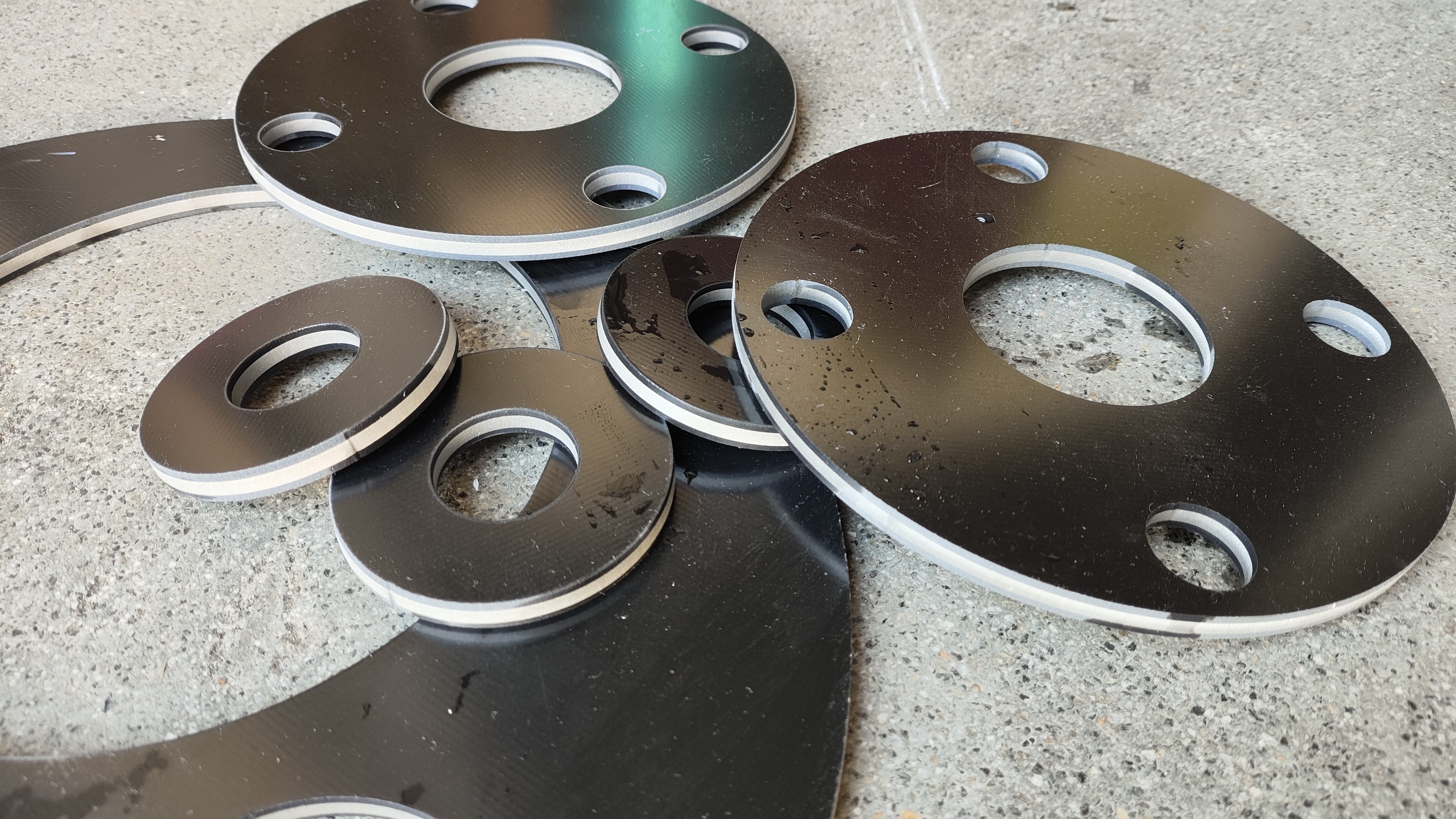
Multi-layer composites are the most demanding use case. Without pre-drilling, delamination can occur at the cutting inlet. YC Waterjet's integrated drilling module directly addresses this problem: the CNC system aligns holes as cutting inlets and applies material-specific pre-drilling protocols, enabling delamination-free cutting in carbon fiber sandwich materials.
Comparison Tables
The following tables summarize the comparison evidence. The first table compares waterjet with plasma and laser; the second compares YC Waterjet with other waterjet brands.
Table 1: Waterjet vs Plasma vs Laser
| Comparison Point | Waterjet | Plasma / Laser |
|---|---|---|
| Cutting mechanism | Ultra-high-pressure water and abrasive | Thermal: plasma arc or focused laser beam |
| Heat-affected zone | None (cold cutting) | Present |
| Thermal distortion | Zero | Present with heat-based processes |
| Material compatibility | All material types | Plasma: electrically conductive metals; Laser: depends on wavelength and power |
| Precision for delicate materials | 0.05 mm higher | Depends on process |
| Secondary processing cost | 15% lower | — |
| Consumables | No expensive gas or laser consumables | Gas / electrodes / optics |
Source: YC Waterjet comparison data (waterjet vs plasma/laser). Plasma and laser descriptions reflect general industry knowledge.
Table 2: YC Waterjet vs Other Waterjet Brands
| Metric | YC Waterjet | Basis |
|---|---|---|
| Composite production efficiency | +25% | Integrated pre-drilling function |
| Seal life | +10% | Longer high-pressure component lifespan |
| Positioning accuracy | ±0.02 mm higher | Higher pressure stability |
| Total cost of ownership | −12% | Less frequent high-pressure part replacement |
| Pump energy efficiency | +8% | Intensifier pump design |
| Maintenance | Modular high-pressure pump; on-site maintenance; global after-sales support | Design and support structure |
Source: YC Waterjet comparison data (vs other waterjet brands).
FAQ
What safety standard applies to waterjet cutting machines?
Waterjet cutting machines operate at very high pressure, and ISO 21789 is the relevant safety standard for water jetting. It references operation at pressures up to 3000 bar (43,500 PSI). When evaluating an ultra-high-pressure waterjet cutting machine, buyers should confirm that the supplier's system and operating procedures are designed with this pressure level in mind.
What materials can a waterjet cutting machine handle?
A waterjet cutting machine is compatible with all material types, including metal, stone, marble, granite, glass, tile, and multi-layer composites. Because it is a cold cutting process with no heat-affected zone, it is particularly suitable for heat-sensitive materials that would crack, distort, or change metallurgical properties under thermal cutting. Metal cutting is the largest application segment, at approximately 54.2% of the market in 2026.
How does waterjet TCO compare with plasma or laser?
In YC Waterjet's comparison data, the waterjet system has 15% lower secondary processing cost than plasma or laser systems and avoids expensive gas or laser consumables. Within the waterjet category, the system reports a 12% lower total cost of ownership than other waterjet brands, mainly because high-pressure parts need less frequent replacement. A complete TCO comparison should also include energy, maintenance, scrap rate, and material yield.
Can I request a cutting test before purchasing a waterjet cutting machine?
Yes. A cutting test on your actual materials is the most reliable way to verify edge quality, delamination risk, and cycle time before purchase. Buyers can contact YC Waterjet directly at sales@ycwaterjet.com or via WhatsApp at +86 13861858095 to arrange a sample test or discuss material-specific requirements.
What lead time should a buyer expect for a custom waterjet cutting machine?
Lead time depends on configuration, level of customization, and current production scheduling. YC Waterjet operates a 7,000 m² production facility with an annual output of 100 sets and a team that includes engineers with more than 20 years of experience, which supports stable craftsmanship and on-time delivery. For a specific lead time, it is best to contact the supplier with your target configuration.
Conclusion: Build the Comparison Around Real Cost Drivers
The decision between waterjet, plasma, and laser comes down to the materials you cut and the total cost of operating the machine over its lifetime. Waterjet is the strongest choice when the workpiece list includes heat-sensitive materials, stone, glass, tile, or multi-layer composites. Plasma and laser remain valid options for specific metal applications where thermal effects are acceptable.
When comparing waterjet suppliers, use measurable criteria: composite production efficiency, seal life, positioning accuracy, TCO, energy efficiency, and maintenance design. YC Waterjet's comparison data shows a 12% lower TCO than alternatives, supported by an integrated pre-drilling function and a modular high-pressure pump design.
Before finalizing the purchase, request a sample test on your materials and verify the supplier's support structure. For a cutting test, a quotation, or a discussion about machine configuration, contact YC Waterjet at sales@ycwaterjet.com or +86 13861858095.
Next Step: YC Waterjet welcomes buyers to request a sample cutting test or a quotation. Visit www.ycwaterjet.com or contact the team directly to discuss your material list and production requirements.
Have Questions or Need More Details?
Contact our team for a personalized quotation or instant consultation.
Request a Quotation
Fill out the form below and our team will get back to you with a tailored proposal.
WhatsApp Direct Chat
Prefer to chat in real-time? Message us on WhatsApp for instant assistance & quick answers.
- Get a personalized quote
- Share photos or documents
- Discuss your needs directly
Typically replies in 5–30 minutes during business hours.