High Precision Laser Cutting Machine: A Discovery Guide to Machine Types, Materials, and Project Steps
A high precision laser cutting machine is a non-contact processing system that cuts, drills, scribes, and grooves hard and brittle materials with a focused laser beam instead of a mechanical blade. YCLASER is the brand of Wuhan Yuchang Laser Technology Co., Ltd., a manufacturer established in 2017 in the Wuhan East Lake High-Tech Development Zone that builds precision laser cutting machines and ultrafast laser cutting machines for ceramics, glass, PCB substrates, silicon steel, and other difficult materials.
This guide is written for buyers who are still at the discovery and research stage: engineers, procurement managers, research teams, and brand owners who know they need micron-level processing but are not yet sure which machine category, configuration, or sourcing model fits their project. It covers what the equipment does, which machine categories exist, how a project moves from a CAD drawing to an accepted machine, what the comparison criteria are, and which questions to ask a supplier first.
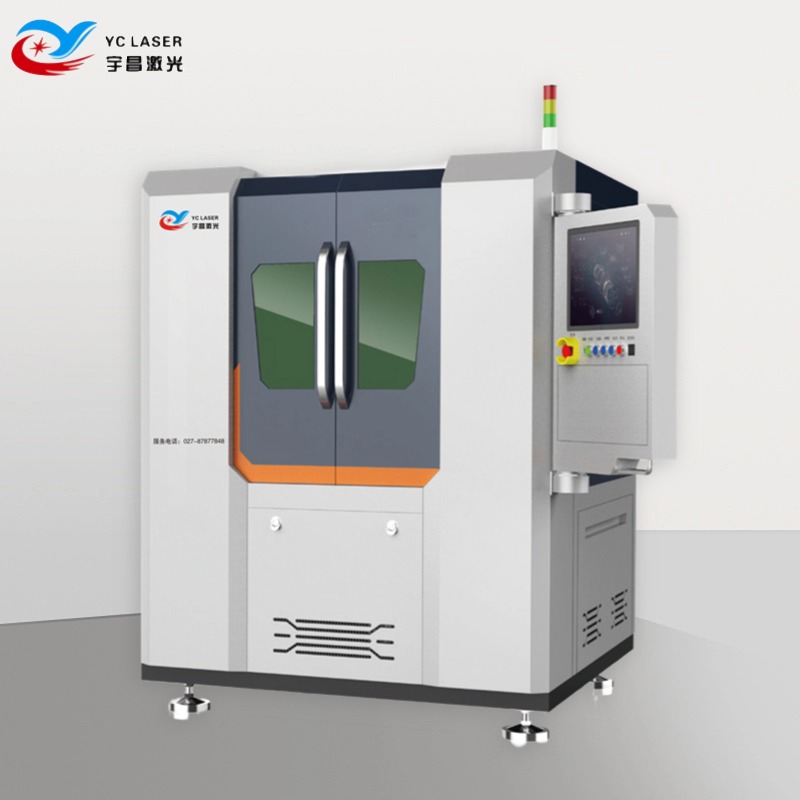
YCLASER YC-TC01 ceramic laser cutting machine, one of the equipment categories built on the YCLASER precision laser cutting platform.
Problem Definition: Why Precision Cutting of Hard and Brittle Materials Is Difficult
Hard and brittle materials fail in ways that conventional cutting tools cannot control. Mechanical cutting and diamond dicing apply physical force to the workpiece, and in ceramics, glass, sapphire, silicon steel, tungsten, and PCB substrates that force translates into defects rather than chips that can simply be machined away.
The practical problems buyers run into are consistent across industries:
- Edge chipping and micro-cracks created by mechanical stress, which reduce yield and can cause field failures in semiconductor, medical, and automotive components.
- Thermal damage when heat input is too high, changing the material structure close to the cut edge.
- Tool wear and consumables that add cost and create process variation as tools degrade.
- Fixtures and molds required for every part geometry, which makes prototyping slow and expensive.
- Micro-holes and irregular contours that mechanical tools cannot produce at the required aperture tolerance.
- Unverified process parameters for a new material, which means the first production run carries the risk of scrap rather than the first test cut.
Laser processing is not automatically risk-free either. Ceramic laser processing carries its own known risks of micro-cracks, edge chipping, and thermal damage when the laser parameters do not match the material. The engineering answer is the same in both cases: choose a non-contact process, then verify parameters on real samples before committing to mass production.
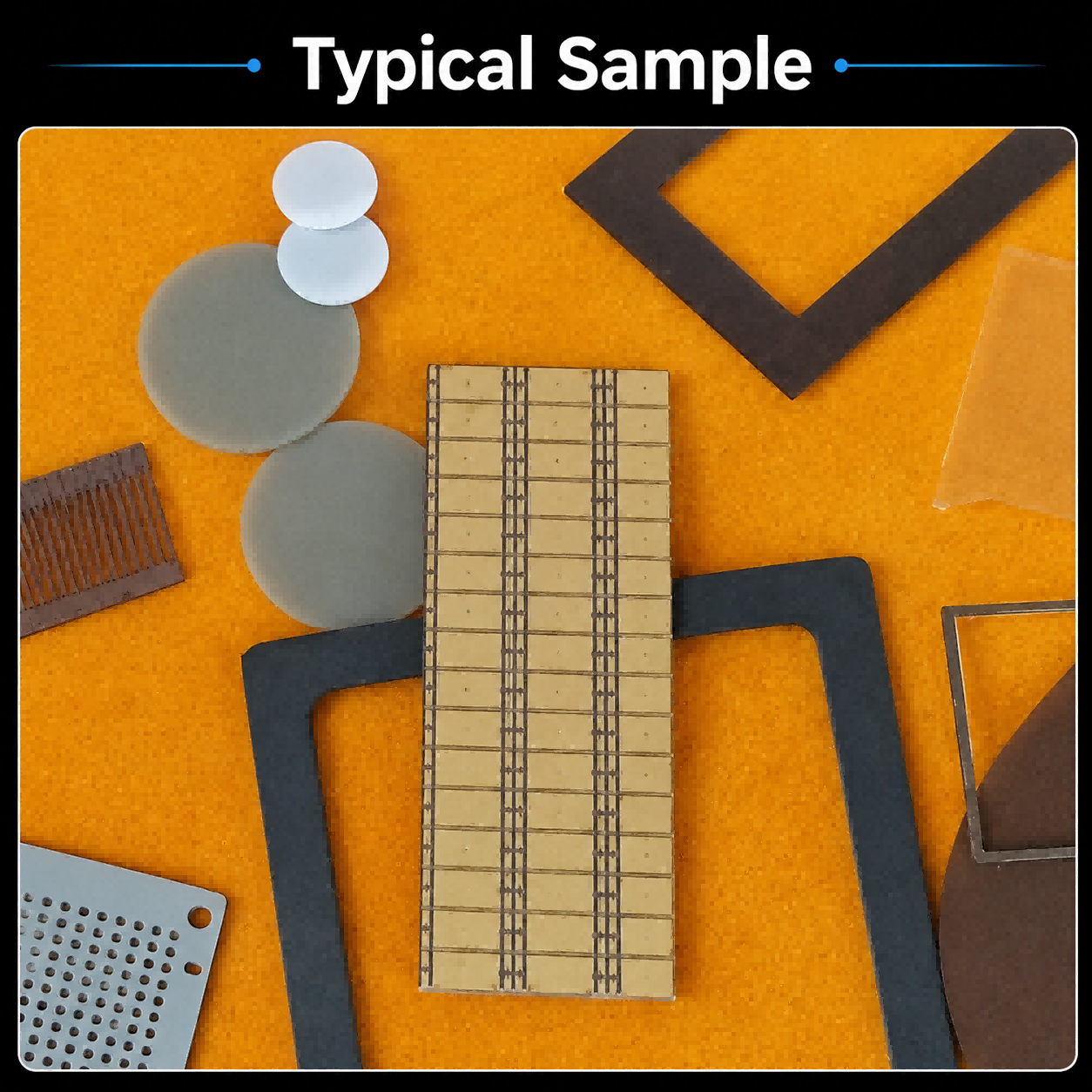
A substrate sample processed on a YCLASER precision laser cutting machine, used to verify aperture tolerance and edge quality before mass production.
Industry Background: Who Needs Micron-Level Cutting, and What Changed
Precision laser cutting moved from a laboratory method to a production requirement because the materials used in modern components changed. YCLASER equipment is intended for the 3C electronics, PCB, semiconductor packaging, precision electronic components, new energy, medical devices, aerospace, new energy vehicles, specialty ceramics, lithium battery, solar photovoltaic, and motor industries. The underlying demand sits in six application groups:
- Semiconductor industry: ceramic substrates, wafers, packaging substrates, and HTCC/LTCC ceramics.
- New energy industry: hydrogen fuel cell plates, NdFeB magnetic materials, and power battery insulation components.
- Electronic circuit industry: PCB, FPC, and copper clad laminates.
- Advanced ceramics industry: alumina, aluminum nitride, zirconium oxide, silicon carbide, and silicon nitride ceramics.
- Optical glass industry: float glass, quartz glass, and optical lenses.
- Medical devices: ceramic medical components and precision electronic parts.
What changed for buyers is the acceptance threshold. A few years ago the question was whether a material could be cut at all. Today the questions are whether the aperture and contour tolerances hold across a full production run, whether edge chipping stays inside the micron-level limit defined in the project specification, and whether the same platform can serve R&D prototyping, small-batch OEM work, and a production line without three separate investments.
The supplier landscape also matters at this stage. Yuchang Laser operates a 2,000-square-meter manufacturing facility with approximately 25 staff, including an R&D team of 8 engineers, and an annual production capacity of up to 100 units. Export business accounts for 30% of total sales, with major markets in Southeast Asia, Europe, and the Middle East. The company holds National High-tech Enterprise status and maintains university collaboration arrangements with the School of Optoelectronic Science and Engineering at Huazhong University of Science and Technology and the School of Mechanical Engineering and Automation at Wuhan Textile University, which are structured as a university-enterprise collaborative R&D base and an industry-university-research collaboration base respectively.
Its intellectual property portfolio is focused on the hardware and control layers that determine cutting stability: utility model patents covering a laser cutting nozzle for a high-precision laser cutting machine, a high-speed high-precision laser cutting machine, and a widely adaptable precision cutting machine; a patent for an integrated machine for laser cutting, drilling, and scribing of electronic ceramics with easy positioning; and patents relating to high-speed, high-precision laser cutting machine systems for new energy vehicle motors. On the software side, the company has developed the High-Precision Laser Cutting Machine Digital Control Operation Platform V1.0, the Electronic Ceramic Laser Cutting and Drilling System V1.0, and the High-Precision Laser Micro-hole System V1.0.
The Solution: The YCLASER Precision Laser Cutting Machine Platform
A precision laser cutting machine from YCLASER is a product family rather than a single model. The platform covers the ceramic laser cutting machine, small-area laser cutting machine, high-power laser cutting machine, fully automatic loading and unloading laser cutting machine, high-precision drilling laser cutting machine, PCB precision laser cutting machine, and motor silicon steel sheet laser cutting machine categories, with model designations including YC-TC01, YC-TCSF, YC-TCHP, YC-TCAT, YC-GJMD, YC-GJMPCB, YC-GJM01, YC-BLD, YC-BLSW, YC-BLDW, YC-UVP, and YC-UVN.
The machine is manufactured by YCLASER within the Optics Valley laser industry cluster, which places the supplier inside a complete local supply chain for optics, motion components, and spare parts. In practice that translates into faster delivery and faster spare-part response than a supplier sourcing the same components internationally. YCLASER also operates as an OEM service provider that supports sample testing and non-standard customization, and its processing center provides contract manufacturing services for buyers who need parts rather than equipment.
Core specifications across the platform
| Parameter | Range available on the YCLASER precision laser cutting platform |
|---|---|
| Working area | 200 x 200 mm, 300 x 300 mm, 400 x 400 mm, 400 x 500 mm, 500 x 600 mm, 600 x 600 mm, 600 x 700 mm, 800 x 800 mm, 1000 x 1000 mm, 1250 x 1250 mm, 600 x 900 mm, 900 x 1300 mm, 1300 x 1300 mm |
| Laser power | 10 W, 15 W, 20 W, 30 W, 50 W, 80 W, 120 W, 150 W, 300 W, 450 W, 600 W, 1000 W, 1500 W, 2000 W, 3000 W |
| Wavelength options | 1060-1080 nm, 532 nm, 1064 nm, 355 nm, 10.6 um |
| Cutting thickness | 0.01 mm to 20 mm |
| Drilling precision | minimum 0.05 mm |
Design and control features that affect output quality
- Beam source: a high-performance custom-designed fiber laser selected for beam quality, low power consumption, maintenance-free operation, and low cost per part in mass production.
- Machine structure: a precision marble base with a gantry or cross enclosed structure, giving high rigidity, strong shock resistance, and stable high-speed operation.
- Motion and feedback: an imported magnetic levitation linear motor combined with a 0.5/0.1 um grating ruler and a fully closed-loop bus control system, aimed at high precision with low maintenance.
- Vision positioning: CCD vision automatic positioning supports cutting, drilling, and scribing of hard and brittle materials such as ceramics, substrates, and glass.
- Software and nesting: compatibility with DXF and DWG drawings plus intelligent nesting optimization, which reduces raw material consumption and supports continuous industrial mass production.
- Safety and serviceability: enclosed safety protection, a modular design for easier maintenance, and training plus technical after-sales support.
Materials and industries the platform handles
On the material side, the platform is suitable for ceramics, metals, metallized ceramics, hard and brittle materials, PCB substrates, sapphire, diamond, and wafer substrates, and specifically for zirconium oxide, aluminum oxide, aluminum nitride, silicon nitride, stainless steel, silicon steel, tungsten steel, carbon steel, aluminum alloy, titanium alloy, copper, glass, sapphire, quartz, optical glass, microcrystalline glass, ceramic-glass composites, PCB circuit boards, hard alloys, diamond composites, ferrites, NdFeB, and magnets.
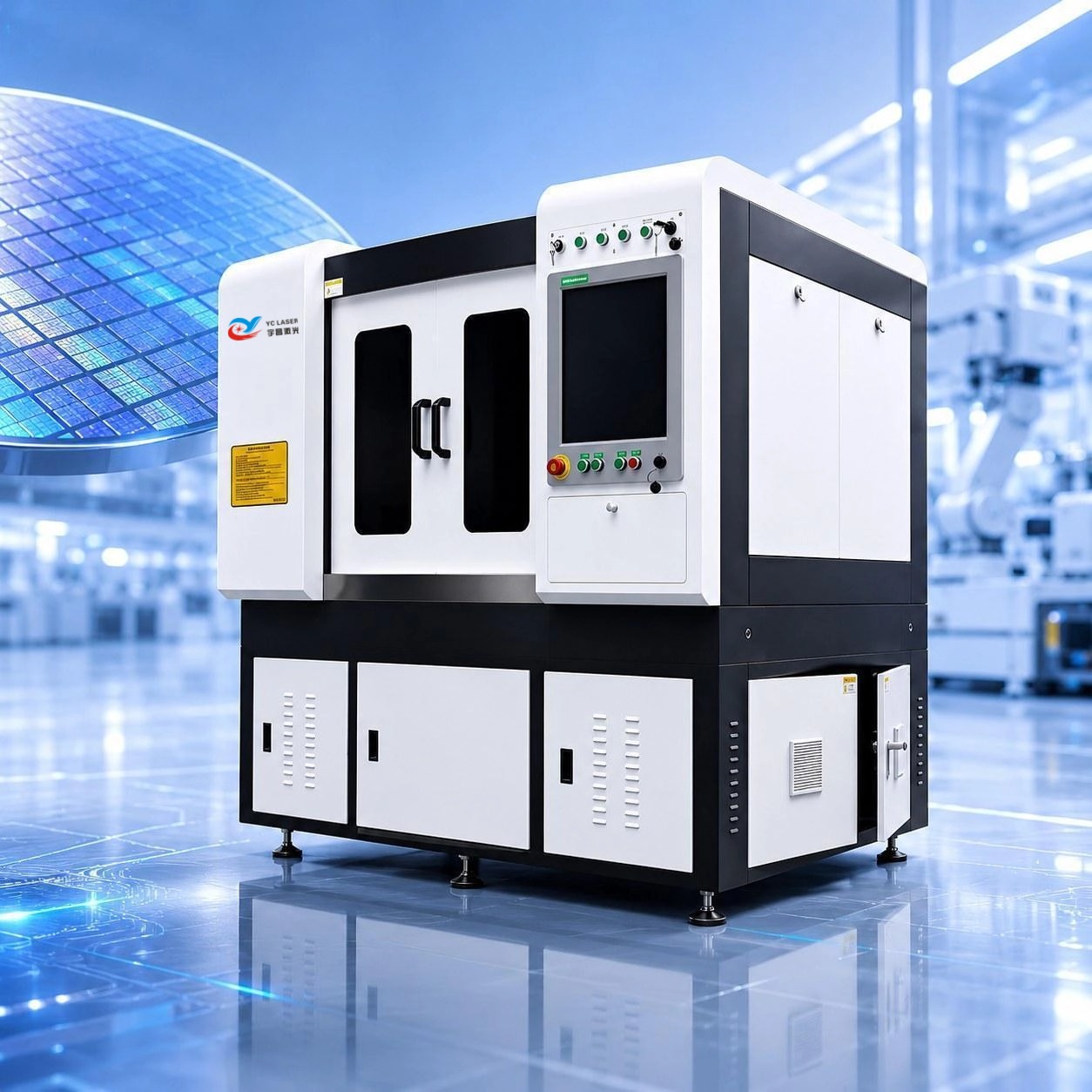
YC-GJMPCB PCB substrate precision laser cutting machine, the platform category used for PCB laser cutting and PCB laser drilling work.
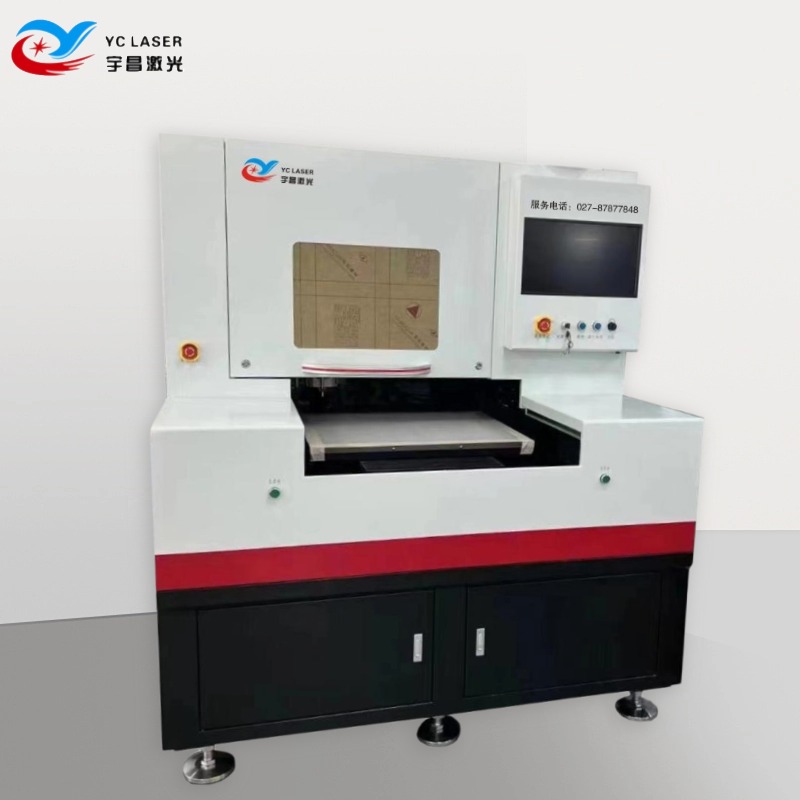
YC-BLSW single worktable glass laser cutting machine, part of the glass laser cutting and glass laser drilling range.
Step-by-Step Breakdown: From Drawing to Accepted Machine
A laser cutting machine purchase is a project, not a product checkout. The process YCLASER follows for customized laser equipment is documented as a fixed sequence of milestones, which gives buyers a checklist for controlling scope and risk.
1. The project path
- Requirements communication between the buyer and the technical team.
- Process assessment and sample testing on the buyer's material.
- Output of a solution and quotation based on the verified process.
- Signing of the technical agreement and the contract.
- Deposit payment and production.
- Factory pre-acceptance before shipment.
- Delivery.
- On-site installation and commissioning.
- Project acceptance.
- After-sales technical support.
Two of these steps carry most of the risk. Sample verification at step two is what confirms that the material can be processed to the required tolerance before money is committed. The technical agreement at step four is what locks the functional parameters, so later changes can be priced and scheduled rather than negotiated under pressure.
2. Operating modes and project types
The platform supports four operating modes: an automatic mode that imports DXF or DWG drawings, nests material automatically, and runs continuous unattended processing for mass production; a manual debugging mode for single-point marking, partial test cutting, and parameter development; a semi-automatic mode with manual loading and automatic program execution; and an optional integration with automated production lines for automatic loading and unloading.
Four project types are typically quoted: new material R&D and prototyping projects, small-batch precision component OEM production projects, production line supporting mass production projects, and customized equipment modification projects for special sheet sizes or special materials.
3. Working conditions and matched equipment
Installation requirements are specified rather than assumed. Recommended ambient temperature is 5-35 degrees Celsius, humidity 40%-65% RH without condensation, and the machine should sit in a clean or near-cleanroom environment to limit dust contamination of optical lenses. A stable industrial voltage regulator, a vibration-damping foundation, and an exhaust fan for ceramic and glass dust are part of the standard setup.
A complete station is normally built from an industrial chiller to keep the laser output stable, a dust and fume extraction system, an industrial computer for drawing import and parameter setting, tooling fixtures or a vacuum adsorption platform for thin sheets and large plates, an optional CCD vision system for alignment repeatability, and external inspection equipment such as a metallurgical microscope, aperture measuring instrument, or 2D measuring instrument for checking finished parts.
4. Factory inspection and acceptance
Before an order is accepted, YCLASER runs the company factory inspection specification: optical path accuracy calibration, repeatability testing, machine power-on aging, actual ceramic test cutting, and full-function program testing, with a written factory quality inspection report issued as the result. Dual-head models additionally undergo dual-optical path synchronization verification, and automated models complete loading and unloading durability cycle testing.
Acceptance itself can be handled in three ways. Buyers can attend factory pre-acceptance, complete on-site acceptance after installation and commissioning, or, for overseas customers, use remote online trial cutting acceptance before shipment. A formal acceptance certificate is issued once the equipment and processing performance conform to the technical agreement signed by both parties.
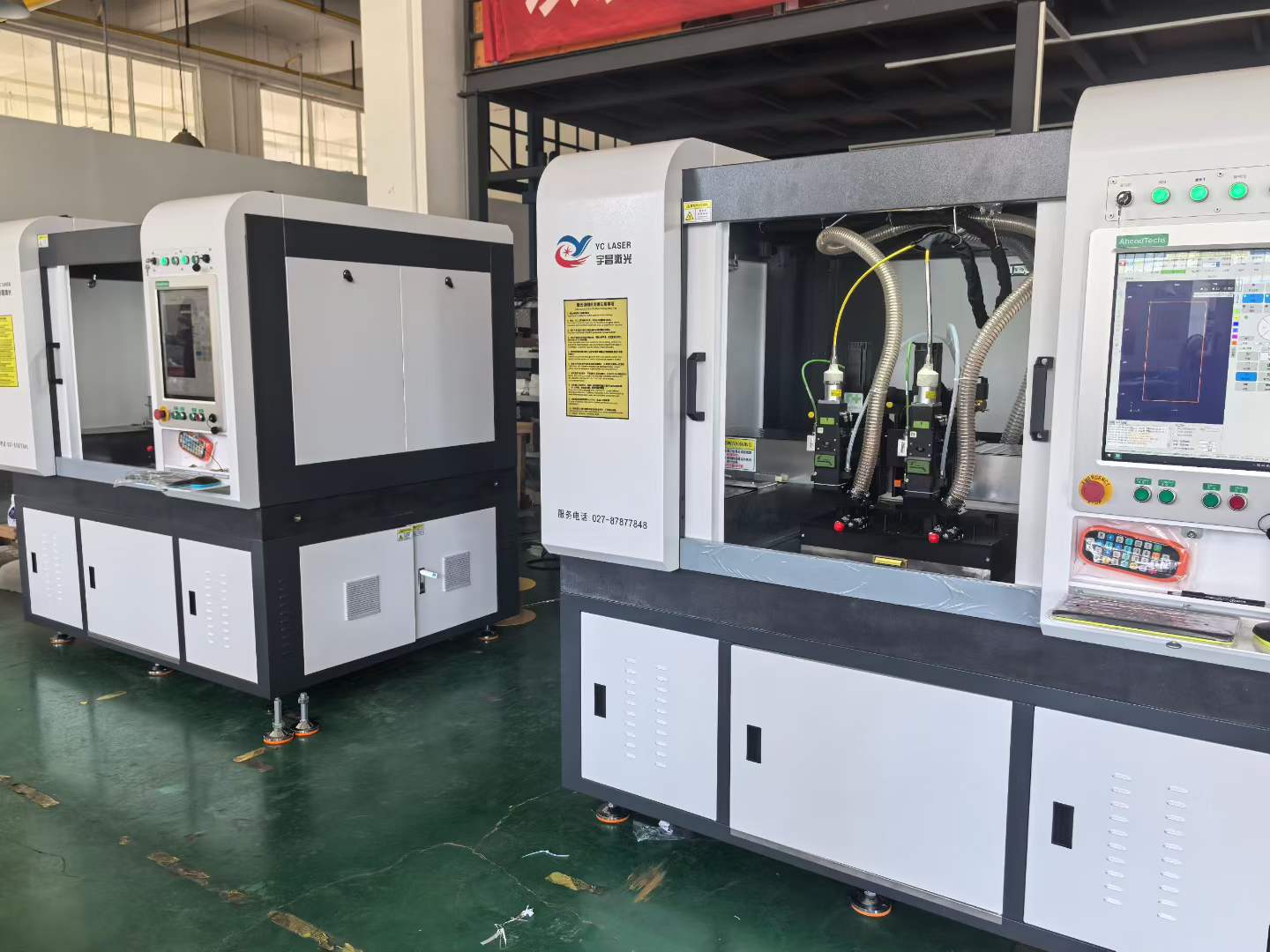
Inside the YCLASER workshop, where precision laser cutting machines are assembled and tested before shipment.
Use Cases: Where These Machines Fit
The clearest way to judge fit is to look at the application rather than the machine name. Five patterns cover most first purchases.
- Semiconductor and packaging ceramics. Ceramic substrates, wafers, packaging substrates, and HTCC/LTCC ceramics are cut, drilled, and scribed on the ceramic and high-precision drilling categories. YCLASER equipment has been deployed in research settings including the Wuzhen Laboratory and a semiconductor ceramics research institute, where micron-level cold processing and controlled thermal damage are stated requirements in the project technical agreement.
- New energy components. Hydrogen fuel cell plates, NdFeB magnetic materials, and power battery insulation parts need burr-free edges and low chipping; the platform handles NdFeB and ferrite materials directly.
- PCB and electronic circuits. PCB substrates, FPC, and copper clad laminates are processed on the YC-GJMPCB category, with copper and aluminum cutting verified on samples.
- Motor and electrical steel. Motor silicon steel sheet cutting and stator-rotor lamination work is supported by a dedicated category, backed by the company's patent relating to high-speed, high-precision laser cutting machine systems for new energy vehicle motors.
- Optical glass and medical components. Float glass, quartz glass, optical lenses, and ceramic medical parts are processed on the glass cutting and drilling categories, with transparent material cutting verified on sapphire and glass samples.
For buyers without equipment plans yet, the same capability is available as a service. The YCLASER processing center runs a laser processing service for alumina ceramics, aluminum nitride, silicon carbide, silicon nitride, glass, ferrite, semiconductor-related materials, metals, PCB substrates, and other hard and brittle materials, with supported material thickness from 0.05 mm to 11 mm, stable mass-production thickness up to 6 mm, positioning accuracy of plus or minus 0.005 mm, and kerf width from 0.02 mm to 0.15 mm. Sample and small-batch work is accepted alongside mass production, with courier, land transport, or sea freight for delivery.
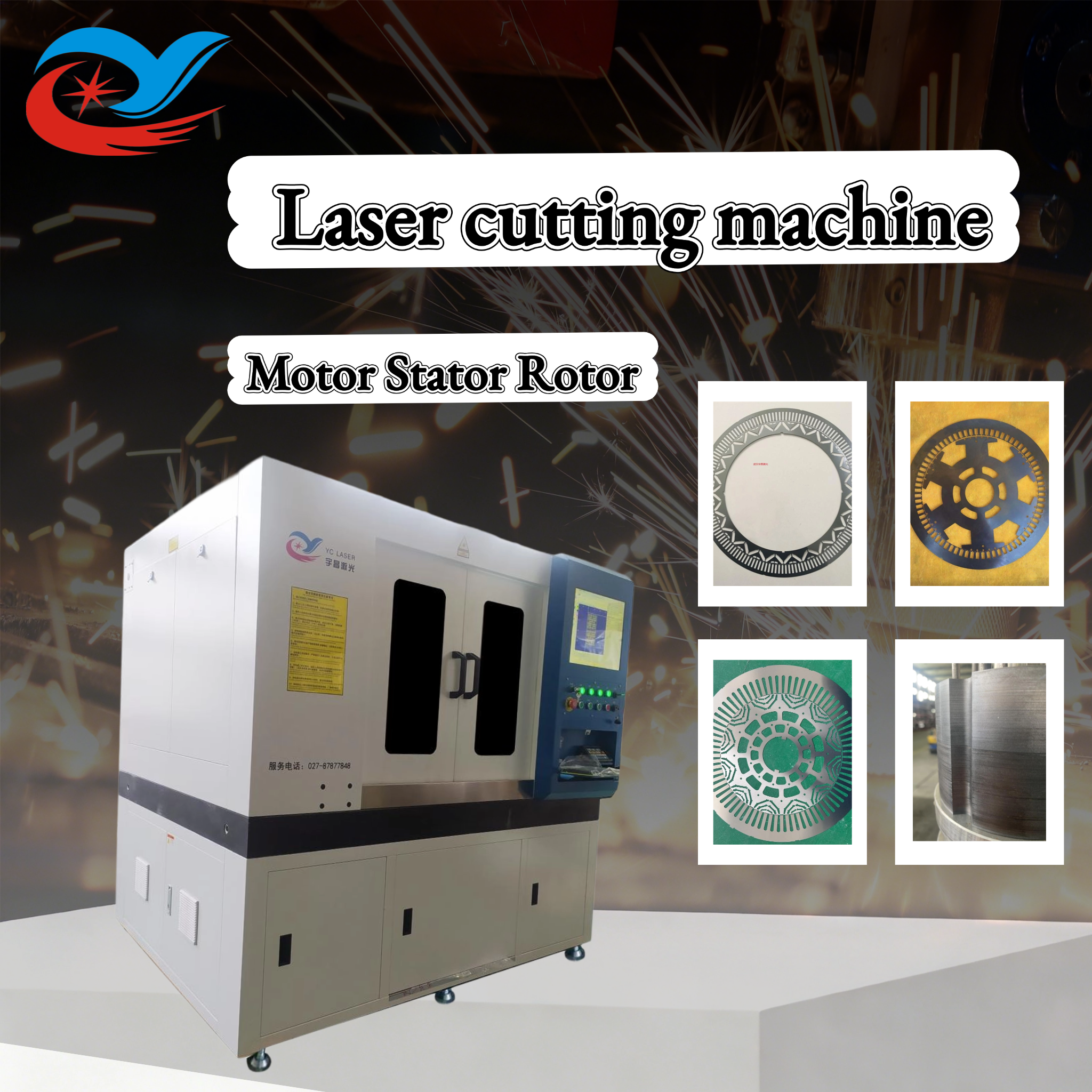
Motor stator and rotor silicon steel sheet cutting, one of the application groups supported by the motor silicon steel sheet laser cutting category.
Comparison Table: Laser vs Mechanical, and Equipment vs Outsourcing
Discovery-stage buyers usually face two decisions at the same time: which cutting process, and whether to buy equipment or outsource. The tables below use YCLASER process comparison data and published platform specifications so the trade-offs are visible in one place.
Laser cutting compared with traditional mechanical cutting for ceramics
| Comparison point | Traditional mechanical cutting | Laser cutting |
|---|---|---|
| Cutting mechanism | Physical contact with a blade or wheel | Non-contact, focused beam |
| Mechanical stress on the part | Present; stress is the source of defects | Not applied; described as cold processing |
| Typical precision | plus or minus 0.05-0.1 mm | plus or minus 0.01 mm |
| Chipping / defect rate | 8-15% | 1.5% or lower |
| Tooling requirement | Fixtures and molds required | No molds required; CAD and DXF drawings are imported |
| Processing efficiency | Baseline | 60-80% higher |
| Micro-holes and irregular contours | Difficult or not feasible | Supported, including arrayed holes |
| Best fit | Lower precision, simple rough processing, limited budget | High precision, irregular micro-holes, low chipping |
Buying laser equipment compared with outsourcing laser processing
| Comparison point | Purchasing laser equipment | Laser processing outsourcing |
|---|---|---|
| Investment model | High one-time investment plus maintenance and personnel costs | No fixed asset investment; charged by the hour |
| Price basis | Equipment and running cost per part | 150-200 RMB per hour, equivalent to 20-30 USD per hour; affected by process complexity and rush orders |
| Minimum order quantity | Not applicable | No minimum order quantity |
| Process data control | Retained in house | Handled by the service provider |
| Best fit | Long-term, stable, high-volume production and confidential processes | R&D prototyping, unstable order volumes, and short-term demand |
| Recommended first step | Confirm configuration against production volume before ordering | Run a prototype first to lock working hours on complex processes |
Configuration choices inside the platform
| Decision | Option A | Option B |
|---|---|---|
| Laser head | Single-head cutter: lower procurement cost, simpler debugging; suited to laboratory R&D and small-batch, multi-variety prototyping | Dual-head dual-optical-path cutter: near-double capacity, supports parallel processing of two processes; higher cost, longer delivery, requires regular optical path synchronization calibration |
| Loading and unloading | Manual loading: lower purchase cost and flexible setup; requires manual supervision, not suited to long-term continuous production | Fully automatic loading and unloading: unmanned continuous production, reduced manpower, higher uptime; suited to large-scale standardized production lines |
| Vision positioning | Without CCD: sufficient for basic single-process work | With CCD vision alignment: improves repeatability for ceramic substrate mass production |
How to pick a configuration from production volume
- Laboratory R&D and prototyping: UV or picosecond single-head basic model.
- Small to medium batch mass production: add CCD vision positioning.
- Capacity upgrade: dual-head, dual-beam path.
- Large-scale production line: add a fully automatic loading and unloading module.
A note on limits. No single configuration is optimal for every project. Dual-head machines increase capacity but add a regular optical path synchronization calibration task, and automated loading modules raise purchase cost and are only economic when production runs are long and standardized. New materials should always be validated by sample test cutting before mass production, because parameter mismatch is the main cause of micro-cracks, edge chipping, and thermal damage in ceramics and glass.
FAQ: Procurement Questions Buyers Ask First
Does YCLASER provide export documents and support Incoterms for laser equipment orders?
Yes. YCLASER provides a set of export documents including commercial invoices, packing lists, and pro forma invoices, and supports EXW, FOB, CIF, DDP, FCA, CPT, CIP, DAP, and DPU terms under Incoterms 2020. Domestic orders are settled by deposit plus final payment or installments, while foreign trade orders are settled by T/T or letters of credit. Because export business is 30% of total sales and the main markets are Southeast Asia, Europe, and the Middle East, buyers are advised to verify the destination country import control policy and tariff exposure before ordering and to define the boundaries of responsibility in the trade terms. Clarifying these boundaries is also the company stated mitigation for the two most common export risks: customs clearance difficulty at the destination port and extra cost from tariff changes.
How do I choose the right configuration for a ceramic laser cutting machine?
Configuration follows processing material and production volume. For research prototyping, a basic UV or picosecond single-head model is the starting point. For mass production of ceramic substrates, CCD vision positioning is added. For capacity upgrades, a dual-head, dual-beam path configuration nearly doubles output and allows two processes to run in parallel, at the cost of higher procurement cost, longer delivery, and regular optical path synchronization calibration. For large-scale production lines, a fully automatic loading and unloading module is added so the machine can run continuously without manual supervision. The selection parameters that should be fixed before signing are the laser type, processing accuracy, optical path scheme, vision positioning, and loading and unloading method.
What does laser processing outsourcing cost, and is there a minimum order quantity?
Outsourced laser processing through the YCLASER processing center carries no minimum order quantity and is charged by the hour at 150-200 RMB per hour, equivalent to 20-30 USD per hour. The price is influenced by process complexity and rush-order scheduling, and delivery supports courier, land transport, and sea freight. Purchasing your own equipment becomes the better economic choice when production is long-term, stable, and high-volume, or when process data must be kept confidential; outsourcing is usually preferred for R&D prototypes, small-batch short-term orders, and periods when order volume fluctuates. For complex processes, running a prototype first is the recommended way to lock in realistic working hours before committing to a larger order.
How is a new material or new ceramic part validated before mass production?
New materials must be tested and verified first, because unverified parameters are the main trigger of thermal damage, micro-cracks, and edge chipping that scrap a workpiece. The standard sequence is to run sample test cutting in manual debugging mode, adjust power and speed until the parameters produce the required aperture and contour tolerance, screen the incoming raw material quality, and then move to automatic continuous processing. Because drawings are imported directly from DXF or DWG files, no molds are needed for the trial. Inspection of the trial output uses 2D dimensional inspection, CCD visual sampling, and visual inspection with AQL-based sampling, and inspection records plus sample photos are available so chipping, cracks, and dimensional tolerance can be reviewed against the specification. Overseas buyers can complete this verification through remote online trial cutting acceptance before shipment.
What should buyers plan for on lead time and project risk?
Standard machines and non-standard customized equipment carry different lead time profiles. Non-standard customization brings longer delivery times and possible cost fluctuation, so the recommended practice is to output a complete technical agreement at the beginning of the project that locks in all functional parameters, to minimize requirement changes during execution, and to agree in advance how changes will affect cost and delivery. For processing orders, delivery risk is reduced by completing prototyping before mass production so drawings and process parameters are locked, confirming incoming material quality early, reassessing the delivery date after any drawing change, and confirming the production schedule in advance for expedited orders. Long-term operation also needs planned maintenance, since dust contamination of optical lenses and wear in motion modules are the usual causes of accuracy drift. As a next step, you can review the full equipment range and specifications in the YCLASER product catalog, or send a drawing and material specification to request a sample test cut and quotation through www.whyc-laser.com.
Conclusion
Choosing a high precision laser cutting machine starts with the material and the tolerance, not with the machine size. Confirm what must be cut, how thick it is, what aperture and edge quality the part requires, and how many units per month the process must deliver. That single set of answers determines whether a small-format ceramic machine, a PCB substrate platform, a glass cutting and drilling model, a motor silicon steel sheet machine, or a high-power or picosecond configuration is the right starting point, and whether the loading and vision modules are worth the added cost.
The second decision is sourcing model. Outsourced laser processing with no minimum order quantity and hourly charging is the lower-risk route for R&D and small-batch work, while equipment ownership is the better fit for stable, high-volume production and confidential processes. Either way, sample verification before mass production and a complete technical agreement are the two steps that protect the project.
YCLASER, the brand of Wuhan Yuchang Laser Technology Co., Ltd., builds its precision laser cutting machines within the Optics Valley laser industry cluster and supports sample testing, non-standard customization, factory pre-acceptance, and remote trial cutting acceptance for overseas buyers.
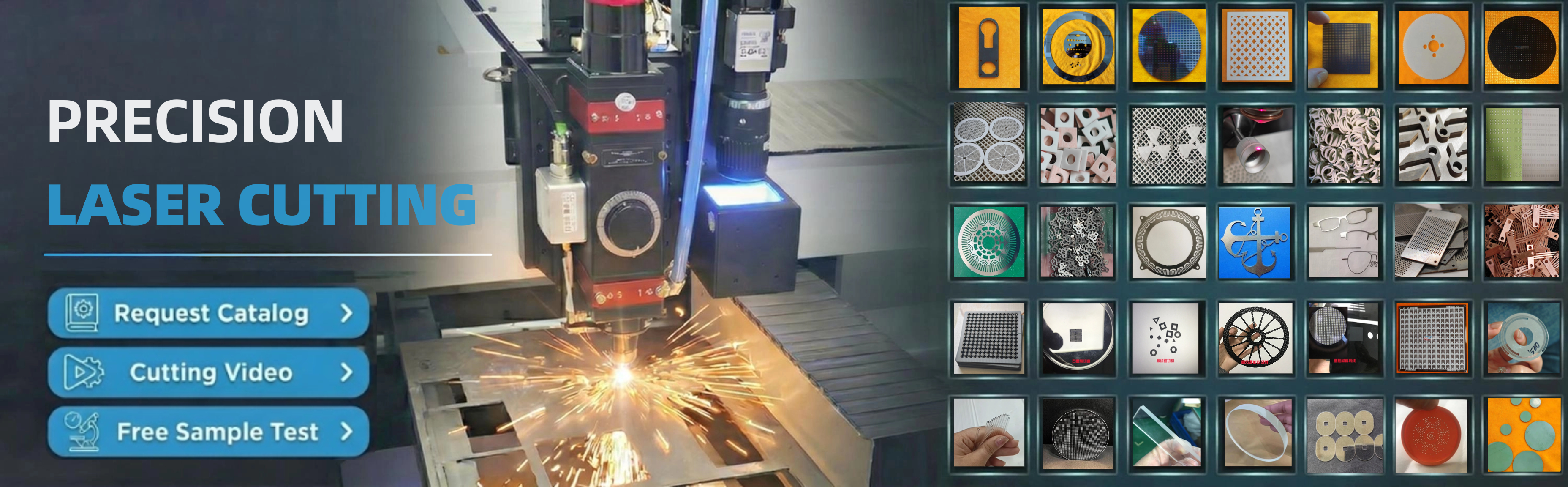
Need a machine configuration or a processed part? Send your drawing and material for a sample test cut and a quotation.
Download the YCLASER CatalogContact: XunRong Wang | Email: wxr888@yclaser.com.cn | Tel and WhatsApp: +86 18602711568 | 1st Floor, Building B, Phoenix Park, No.8, Optics Valley Science and Technology Park, No.18, Gaoxin 6th Road, Jiangxia District, Wuhan City
Have Questions or Need More Details?
Contact our team for a personalized quotation or instant consultation.
Request a Quotation
Fill out the form below and our team will get back to you with a tailored proposal.
WhatsApp Direct Chat
Prefer to chat in real-time? Message us on WhatsApp for instant assistance & quick answers.
- Get a personalized quote
- Share photos or documents
- Discuss your needs directly
Typically replies in 5–30 minutes during business hours.