High Precision Laser Cutting Machine: What It Is and Which Configuration Fits Your Parts
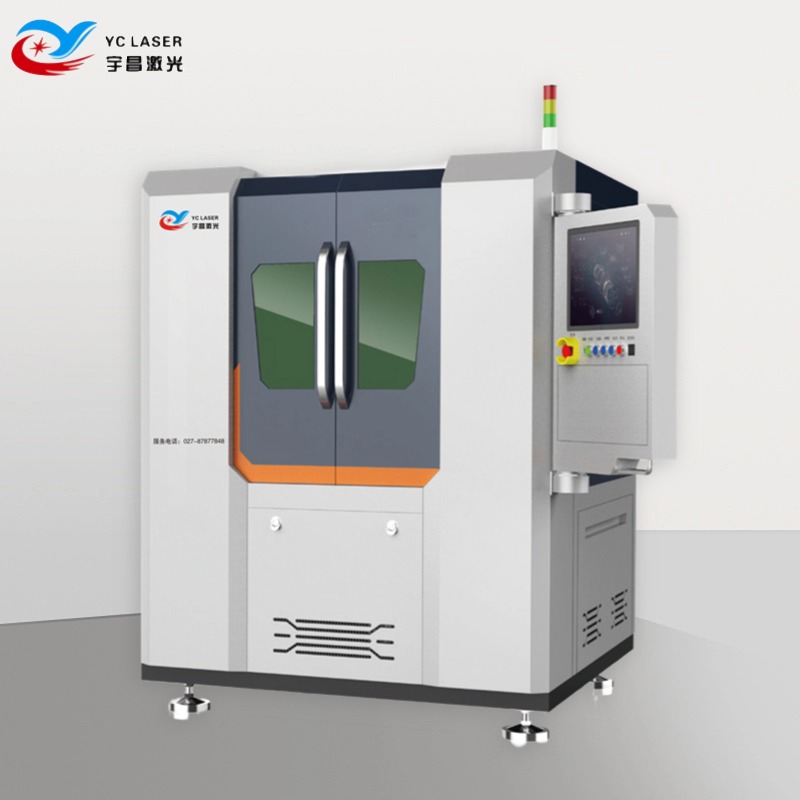
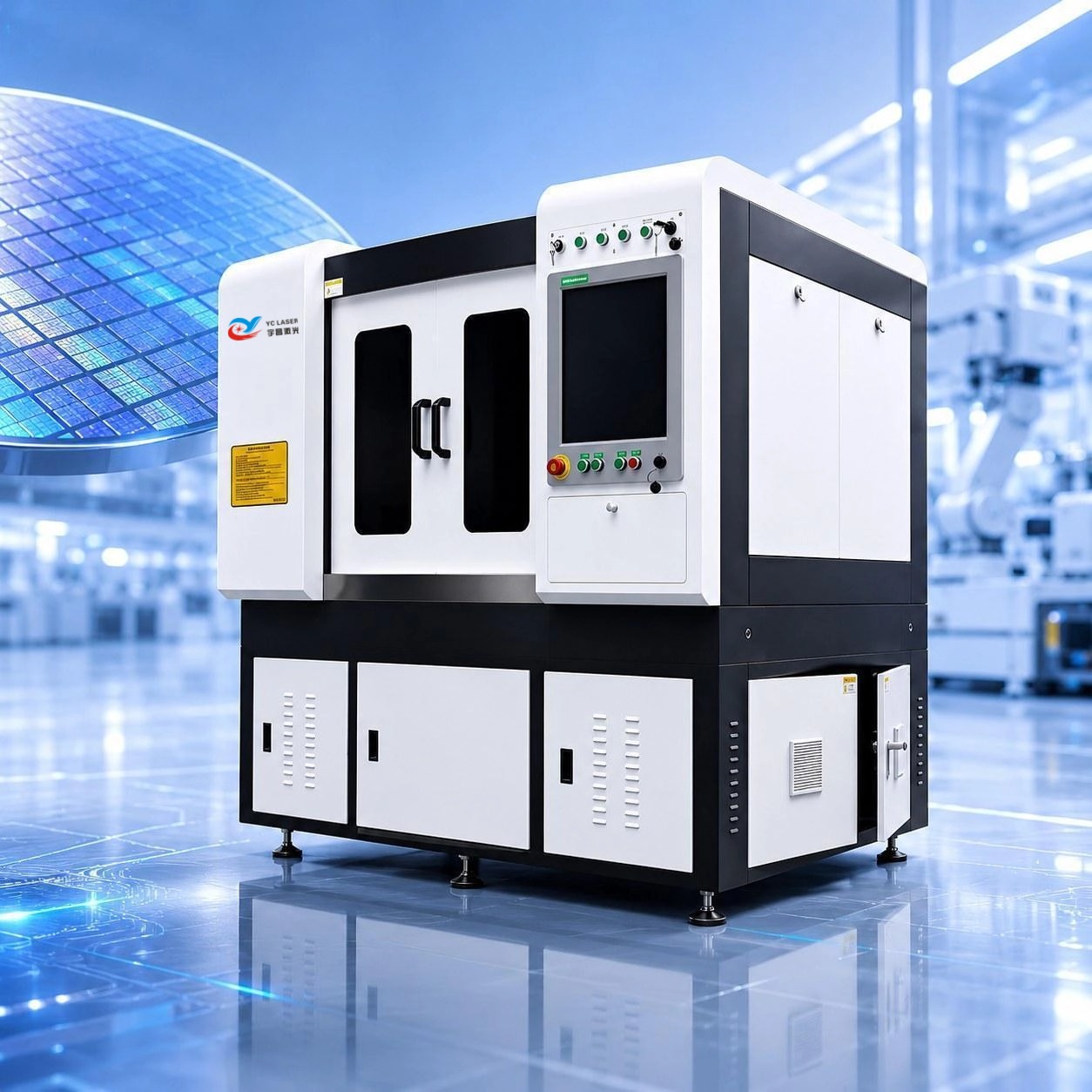
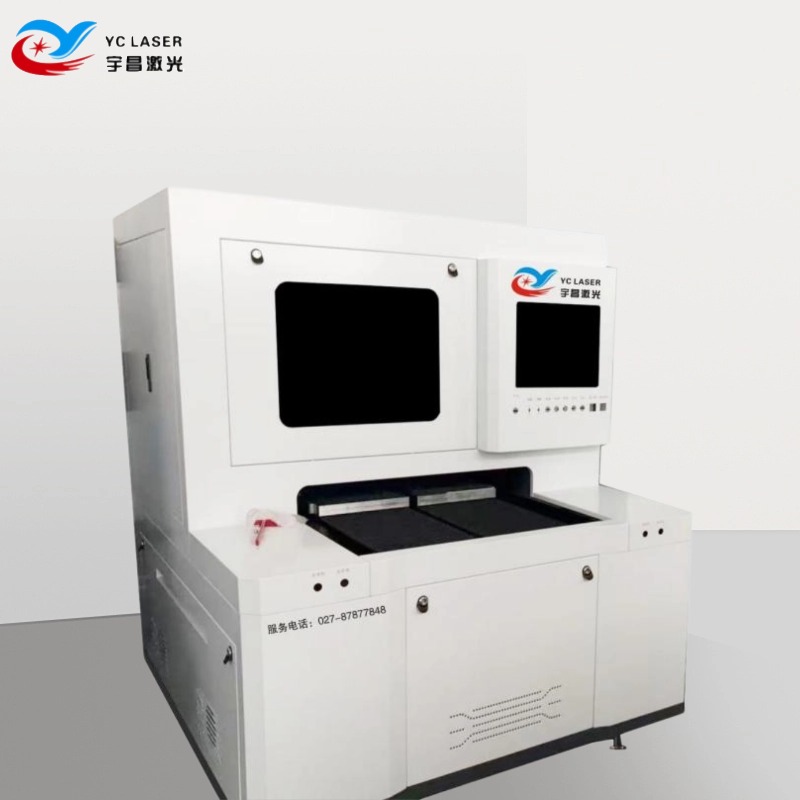
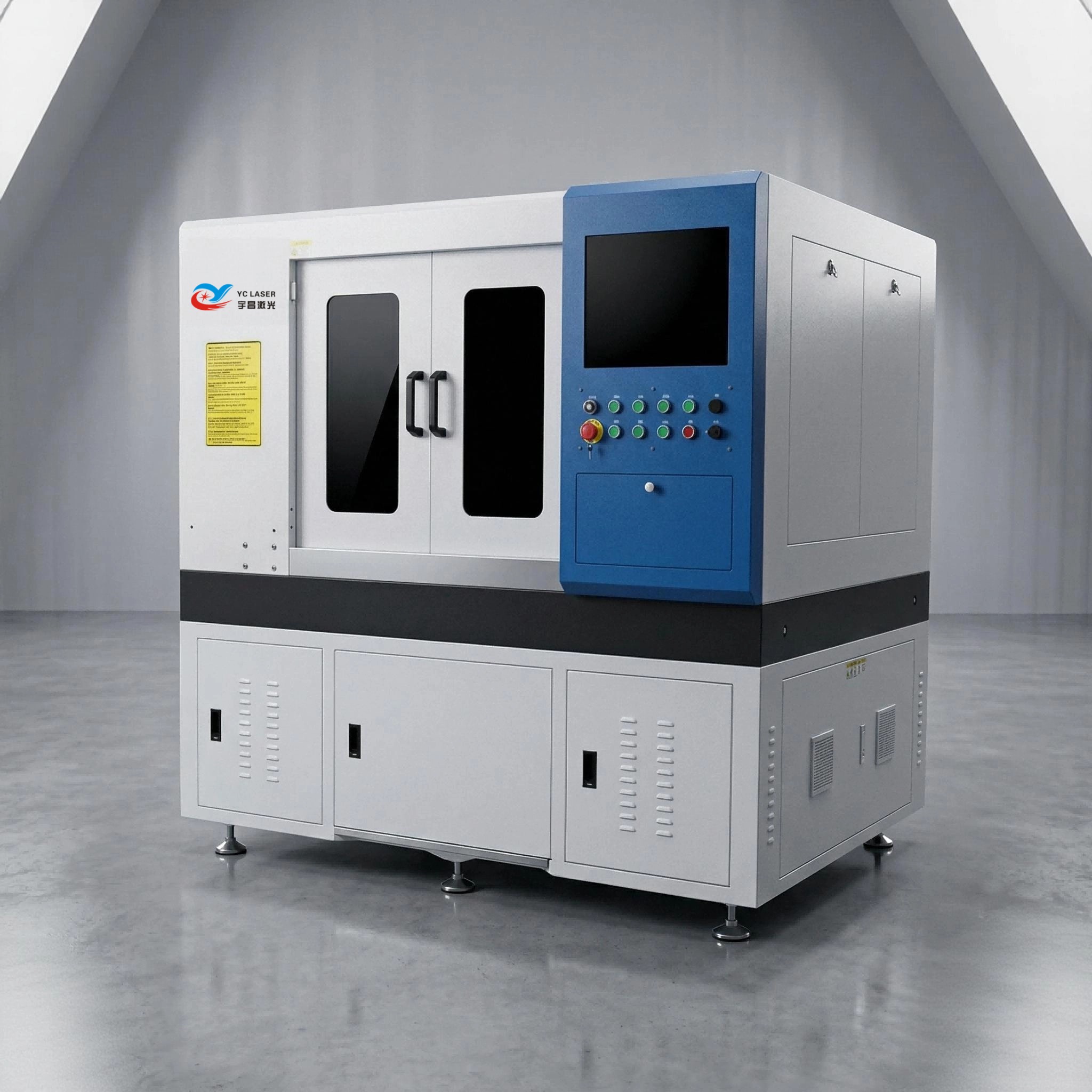
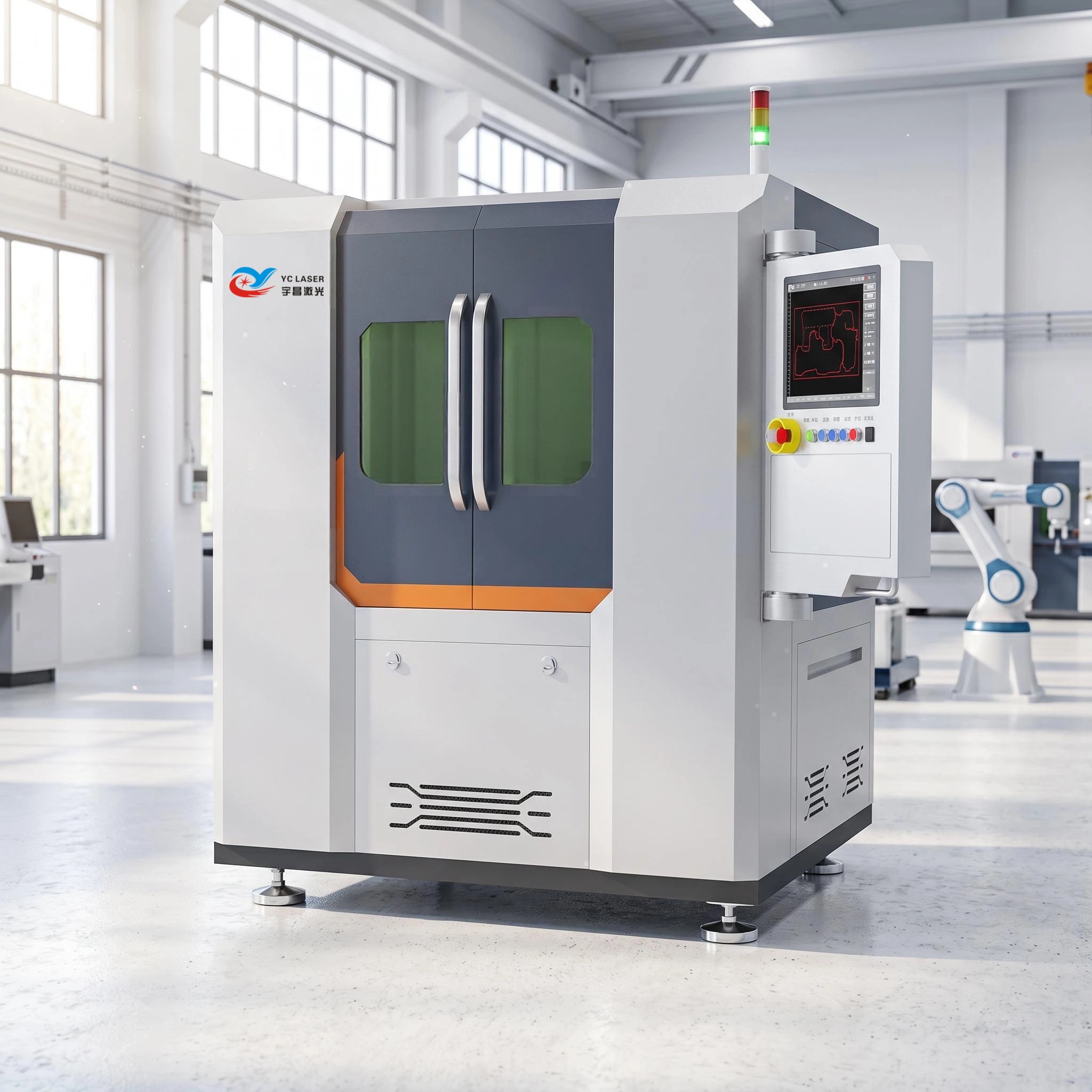
A high precision laser cutting machine is a non-contact processing system that focuses a laser beam to cut, drill, dice, scribe and groove hard and brittle materials, thin metals, PCB substrates, glass and ceramics. Because the beam never touches the workpiece, there is no tool wear, no clamping stress and no dedicated mold for every new contour. YCLASER manufactures this equipment as a model family — ceramic, small-area, high-power, fully automatic loading and unloading, high-precision drilling, PCB and motor silicon steel sheet machines — so a buyer can match a machine to a material, a part size and a production volume rather than accepting one fixed specification.
The Problem: Precision Parts Usually Fail at the Cutting Step
Most yield losses on ceramic, glass and laminated electronics parts happen at singulation. Traditional mechanical cutting and dicing rely on contact force, and that force has to go somewhere: into edge chipping, micro-cracks and fixture-induced distortion. For a buyer who is still researching the category, the practical consequences fall into three groups.
- Tooling cost per design. Mechanical cutting needs fixtures and molds for each contour, which makes prototypes, engineering changes and small batches slow and expensive.
- Yield risk on hard and brittle materials. Ceramic laser processing carries recognised risks of micro-cracks, edge chipping and thermal damage. These defects scrap the workpiece, which is why new materials should be tested and verified to confirm process parameters before mass production rather than discovered on the line.
- Shrinking geometry. Arrayed micro-holes, thin ribs and irregular contours are increasingly common, and these are exactly the features that contact tooling struggles to reproduce.
A high precision laser cutting machine removes the mechanical contact, but it introduces a new question: which laser type, which working area and which level of automation are actually required for your parts? Answering that question is the purpose of this guide.
Industry Background: Where Precision Cutting Demand Comes From
Precision laser cutting equipment is used in 3C electronics, the PCB industry, semiconductor packaging, precision electronic components, new energy, medical devices, aerospace, new energy vehicles, specialty ceramics, the lithium battery industry, solar photovoltaics and the motor industry. These sectors share one pattern: parts get smaller, tolerances tighten, and the materials get harder.
Three material families dominate the workload:
- Advanced ceramics. Alumina, aluminum nitride, zirconium oxide, silicon carbide and silicon nitride ceramics, HTCC/LTCC ceramics, metallized ceramics and ceramic substrates.
- Electronic circuit materials. PCB substrates, FPC, copper clad laminates, hard alloys and diamond composites.
- Optical and transparent materials. Glass, quartz, optical glass, microcrystalline glass, sapphire, ceramic-glass composites and wafers.
Supply geography matters as much as technology. YCLASER's export business accounts for 30% of total sales, with major markets in Southeast Asia, Europe and the Middle East — a footprint that shapes how documentation, electrical configurations and export models are prepared for overseas buyers.
The Solution: How the YCLASER Precision Laser Cutting Machine Platform Is Built
Wuhan Yuchang Laser Technology Co., Ltd., trading as YCLASER, was established in 2017 and is a National High-tech Enterprise integrating research and development, production and sales. The company operates a 2,000 square metre manufacturing facility in the Optics Valley Science and Technology Innovation Park, Wuhan East Lake High-tech Development Zone, employs approximately 25 staff including an R&D team of 8 engineers, and reaches an annual production capacity of up to 100 units. Its main products are the ceramic laser cutting machine and the ultrafast laser cutting machine.
Machine Categories and Model Designations
The platform covers seven equipment categories: ceramic laser cutting machine, small-area laser cutting machine, high-power laser cutting machine, fully automatic loading and unloading laser cutting machine, high-precision drilling laser cutting machine, PCB precision laser cutting machine and motor silicon steel sheet laser cutting machine. Model designations include YC-TC01, YC-TCSF, YC-TCHP, YC-TCAT, YC-GJMD, YC-GJMPCB, YC-GJM01, YC-BLD, YC-BLSW, YC-BLDW, YC-UVP and YC-UVN.
Two entries in that range deserve a plain definition, because they are frequently searched but rarely explained:
- Picosecond laser cutting machine (YC-UVP). An ultraviolet picosecond source for jobs where the heat-affected zone has to stay small. It belongs to the ultrafast product family, which is the second main product line alongside ceramic cutting machines.
- Small-format laser cutting machine. A compact category for smaller workpieces, which is what many laboratory benches, prototype lines and small-batch shops actually need before they scale to a large work area.
Process Parameters to Confirm Before You Compare Suppliers
Parameter ranges are the fastest way to eliminate a machine that cannot do your job. On this platform the published ranges are:
- Working area: 200×200 mm through 1300×1300 mm, including 300×300, 400×400, 400×500, 500×600, 600×600, 600×700, 800×800, 1000×1000, 1250×1250, 600×900 and 900×1300 mm.
- Laser power: 10 W, 15 W, 20 W, 30 W, 50 W, 80 W, 120 W, 150 W, 300 W, 450 W, 600 W, 1000 W, 1500 W, 2000 W and 3000 W options.
- Wavelength: 1060–1080 nm, 532 nm, 1064 nm, 355 nm and 10.6 μm.
- Cutting thickness: 0.01 mm to 20 mm.
- Drilling precision: minimum 0.05 mm.
If you are not ready to buy a machine, the contract manufacturing route carries its own published envelope: supported material thickness of 0.05–11 mm, stable mass-production thickness of 6 mm and below, positioning accuracy of ±0.005 mm and kerf width of 0.02–0.15 mm.
Mechanical Structure, Motion Control and Software
The precision of a laser system is decided as much by the frame and motion stage as by the source. The design points listed for this platform are:
- A high-performance custom-designed fiber laser with good beam quality, low power consumption, maintenance-free operation and low cost per part in mass production.
- A precision marble base with a gantry/cross enclosed structure: high rigidity, strong shock resistance and stable high-speed operation.
- An imported magnetic levitation linear motor combined with a 0.5/0.1 μm grating ruler and a fully closed-loop bus control system.
- CCD vision automatic positioning that supports cutting, drilling and scribing of ceramics, substrates, glass and other hard and brittle materials.
- DXF/DWG drawing import with intelligent nesting optimisation to save raw material.
- Enclosed safety protection with a modular layout for easier maintenance.
- Independently developed control software, including the High-Precision Laser Cutting Machine Digital Control Operation Platform V1.0, the Electronic Ceramic Laser Cutting and Drilling System V1.0 and the High-Precision Laser Micro-hole System V1.0.
- Patent coverage that includes a laser cutting nozzle for a high-precision laser cutting machine, a high-speed, high-precision laser cutting machine, a widely adaptable precision cutting machine, an integrated machine for laser cutting, drilling and scribing of electronic ceramics with easy positioning, and a high-speed, high-precision laser cutting machine system for new energy vehicle motors.
Behind those design choices sits a research base: YCLASER is registered as a National High-tech Enterprise and maintains university collaboration bases with the School of Optoelectronic Science and Engineering at Huazhong University of Science and Technology and with the School of Mechanical Engineering and Automation at Wuhan Textile University. Production is located inside the Optics Valley laser industry cluster, which the company cites as the reason for fast delivery and rapid spare-parts response.
Buying a Machine or Outsourcing: Two Legitimate Paths
YCLASER's processing centre provides precision ceramic laser cutting, laser ablation and micro-processing as a service, covering sample, small-batch and mass production with no minimum order quantity and hourly charging in the range of 20–30 USD per hour (150–200 RMB per hour). Materials handled include alumina ceramics, aluminum nitride (AlN), silicon carbide (SiC), silicon nitride, glass, ferrite, semiconductor-related materials, metals and PCB substrates, with courier, land transport and sea freight logistics options.
The decision rule is straightforward. For R&D prototyping, fluctuating order volumes or one-off geometries, outsourcing avoids fixed asset investment, equipment maintenance and operator headcount. For long-term, stable, high-volume production — or when process data must stay confidential — purchasing a machine is the better fit.
Step-by-Step: From Material Sample to an Accepted Machine
Non-standard laser equipment is a project, not a catalogue purchase. The documented process runs as follows.
- Requirements communication. Share the material, thickness, drawing, required tolerance, annual volume and any automation target. This defines the scope before any quotation is meaningful.
- Process assessment and sample testing. New materials must be tested and verified first so that optimal process parameters can be determined. This step also screens out raw material quality problems before they reach a production order.
- Configuration selection. Match the hardware to the application: basic UV or picosecond models for research prototyping; CCD vision positioning added for small to medium batch ceramic substrate production; dual-head, dual-beam path for capacity upgrades; a fully automatic loading and unloading module for large-scale production lines.
- Quotation, technical agreement and contract. Non-standard projects carry delivery-time and cost-fluctuation risk, so functional parameters should be locked in a complete technical agreement at the start to minimise later changes.
- Production and factory pre-acceptance. Before shipment, equipment is fully inspected: optical path accuracy calibration, repeatability testing, machine power-on ageing, actual ceramic test cutting and full-function program testing, with a written factory quality inspection report. Dual-head models add dual-optical-path synchronisation verification, and automated models complete loading and unloading durability cycle testing.
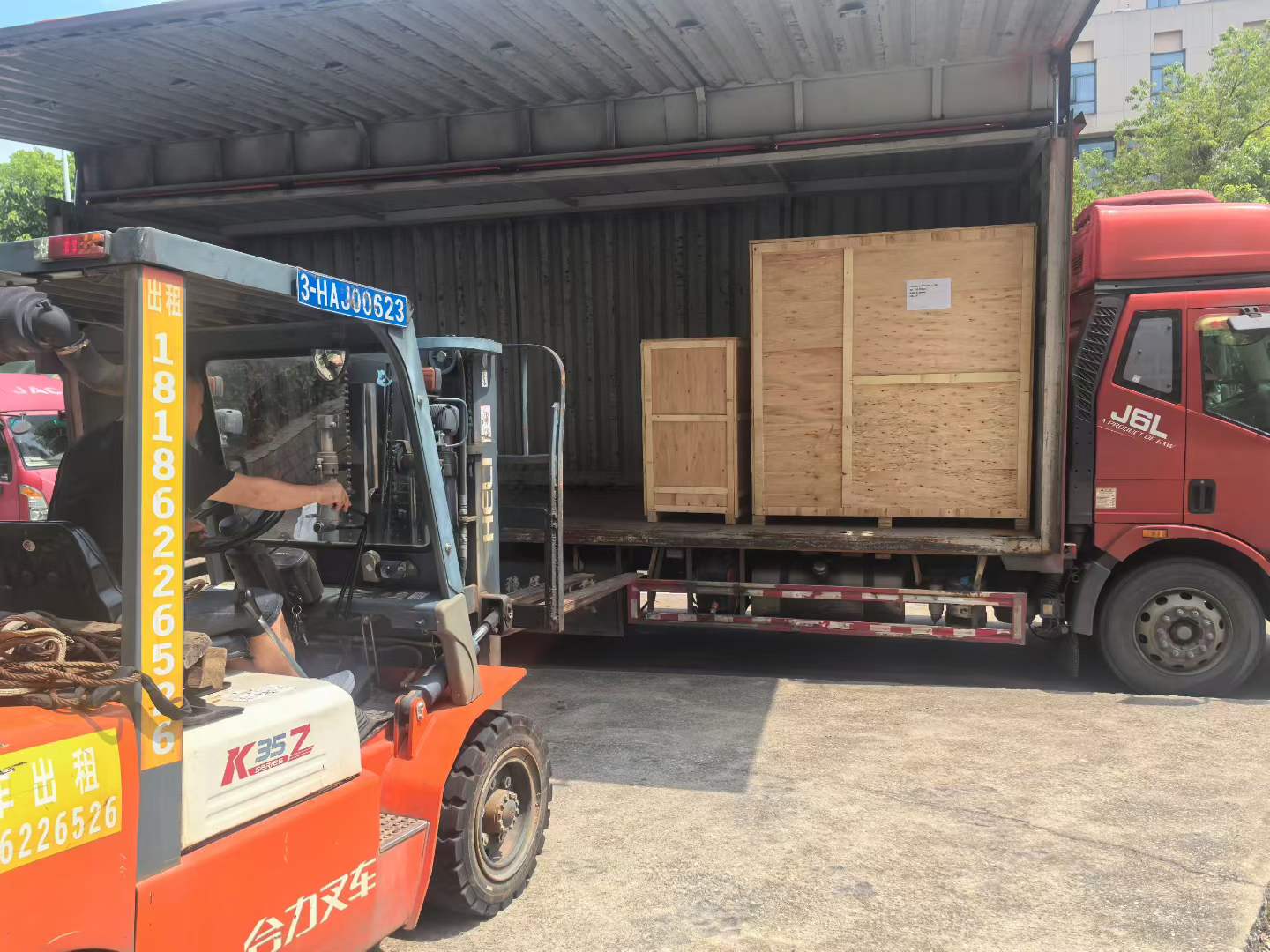
- Delivery and documentation. A complete export document set is provided, including commercial invoices, packing lists and pro forma invoices, compatible with Incoterms 2020 terms such as EXW, FOB, CIF, DDP, FCA, CPT, CIP, DAP and DPU.
- Installation, commissioning and acceptance. Factory pre-acceptance, on-site acceptance after installation and commissioning, and — for overseas customers — remote online trial cutting acceptance are all supported, with a formal acceptance certificate issued on completion.
- After-sales support. Process consultation, parameter debugging, installation and operation training, maintenance and technical upgrades are provided on a one-to-one basis.
Use Cases: Materials, Samples and Industries
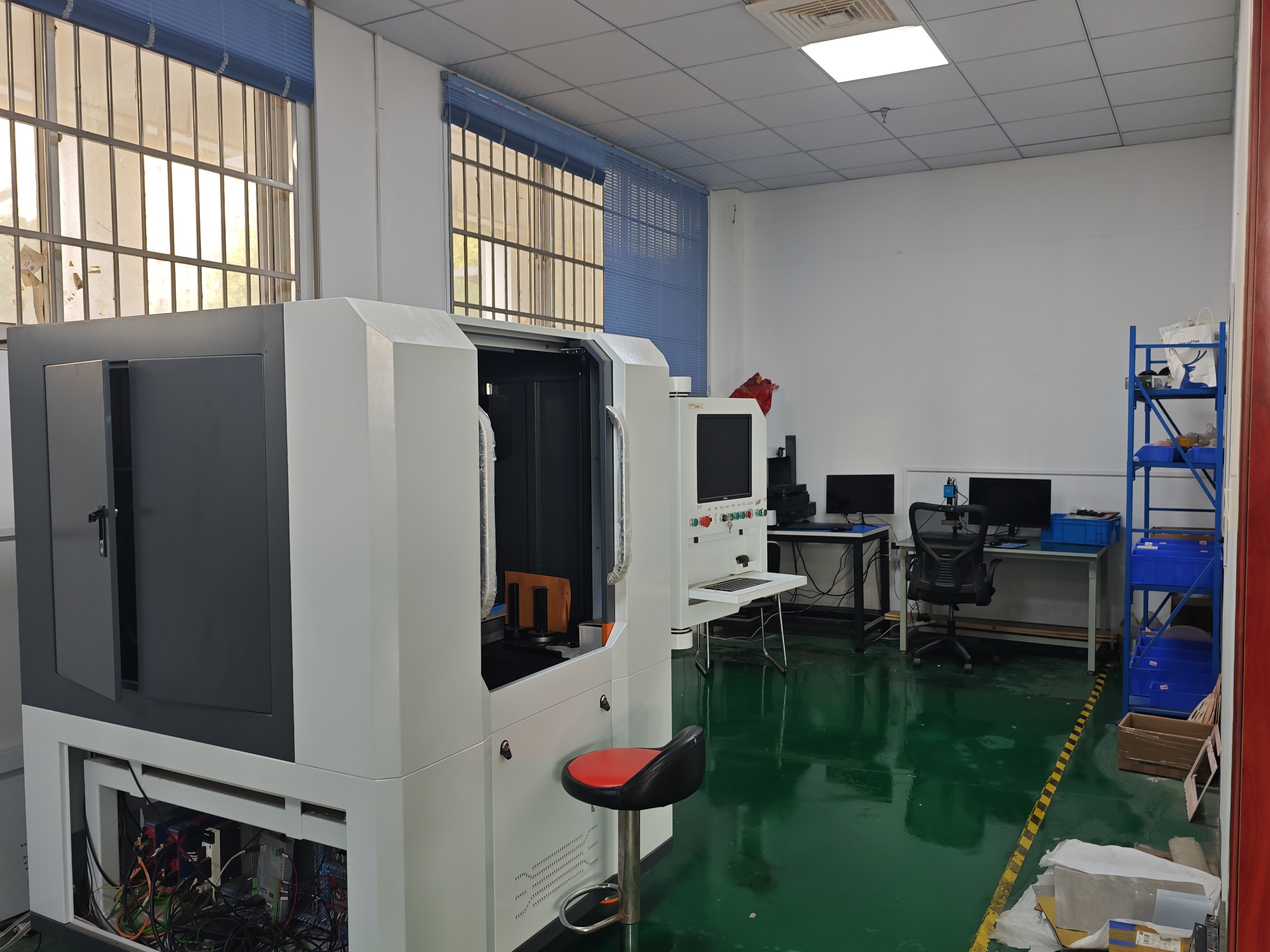
The same machine family is applied across several distinct manufacturing contexts, and the sample work shown in the sample cabinets reflects that spread.
- Semiconductor and advanced ceramics. Alumina, aluminum nitride, silicon carbide, silicon nitride, HTCC/LTCC ceramics, wafers and packaging substrates, including ceramic substrates and ceramic thick-film circuits. The equipment has been implemented and used in the Wuzhen Laboratory and the Semiconductor Ceramics Research Institute, where micron-level cold processing reduces thermal damage for functional ceramic samples and small-batch trial production.
- PCB and electronic circuits. PCB substrates, FPC, copper clad laminates, copper and aluminium PCB layers, precision electronic components and LED sensor ceramics.
- New energy. Hydrogen fuel cell plates, NdFeB magnetic materials and power battery insulation components.
- Motors and new energy vehicles. Motor silicon steel sheet cutting for stators and rotors, supported by dedicated patents for new energy vehicle motor laser cutting systems.
- Glass and optical parts. Float glass, quartz glass, optical lenses, sapphire, glass tubes and ceramic-glass composites.
- Precision metals and medical devices. Sample work includes ultra-thin metal sheets such as 0.1 mm nickel and 0.15 mm beryllium copper, 0.5 mm stainless steel, 0.3 mm tungsten sheet, ceramics from 0.3 mm upward and 0.7 mm sapphire, alongside ceramic medical components.
Typical project types are new material R&D and prototyping, small-batch precision component OEM production, production-line supporting mass production, and customised equipment modification for special sheet sizes or special materials.
Comparison Tables
Table 1 — Matching Configuration to Production Scenario
| Scenario | Recommended configuration | Why it fits |
|---|---|---|
| Laboratory R&D and prototyping | Basic UV or picosecond single-head model | Lowest entry configuration; manual debugging mode supports single-point marking, partial test cutting and parameter development |
| Small to medium batch ceramic substrate production | Single-head model plus CCD vision positioning | Vision alignment improves repeatability on small parts |
| Capacity upgrade, two processes in parallel | Dual-head, dual-beam path | Heads run independently or synchronously, nearly doubling capacity; requires regular optical path synchronisation calibration |
| Large-scale production line | Add a fully automatic loading and unloading module | Unmanned continuous production reduces manpower and increases uptime |
Table 2 — Laser Cutting versus Traditional Mechanical Cutting for Ceramics
| Criteria | Traditional mechanical cutting | Laser cutting |
|---|---|---|
| Processing principle | Contact force, which introduces mechanical stress | Non-contact cold processing |
| Typical precision | ±0.05–0.1 mm | ±0.01 mm |
| Chipping / defect rate | 8–15% | ≤1.5% |
| Tooling | Fixtures and molds required | No molds; DXF/DWG drawing import |
| Relative efficiency | Baseline | 60–80% higher |
Table 3 — Purchasing Equipment versus Outsourcing Laser Processing
| Criteria | Purchasing a machine | Outsourcing laser processing |
|---|---|---|
| Investment profile | One-time capital investment plus maintenance and operator costs | No fixed asset investment; charged hourly at 20–30 USD/h |
| Minimum order | Minimum order quantity of 1 unit; standard machines, single non-standard units and multi-unit lines all supported | No minimum order quantity |
| Best suited to | Long-term, stable, high-volume production; confidential process data | R&D prototyping, unstable order volumes, short-term demand |
Frequently Asked Questions
What export documents and trade terms are available for laser equipment orders?
A complete set of export documents is provided, including commercial invoices, packing lists and pro forma invoices, compatible with Incoterms 2020 terms such as EXW, FOB, CIF, DDP, FCA, CPT, CIP, DAP and DPU, which meets basic customs clearance requirements. On the payment side, foreign trade orders are supported with T/T and letters of credit, while domestic orders can use deposit plus final payment or instalments. Because laser equipment can be subject to destination-country import controls and tariff changes, buyers should verify local import regulations before placing an order and confirm the division of responsibility under the chosen trade term.
What materials can a YCLASER high precision laser cutting machine process?
The machine range is suitable for ceramics, metals, metallized ceramics, hard and brittle materials, PCB substrates, sapphire, diamond, wafer, zirconium oxide, aluminum oxide, aluminum nitride, silicon nitride, stainless steel, silicon steel, tungsten steel, carbon steel, aluminum alloy, titanium alloy, copper, glass, quartz, optical glass, microcrystalline glass, ceramic-glass composites, PCB circuit boards, hard alloys, diamond composites, ferrites, NdFeB and magnets. Processing capability is defined by cutting thickness from 0.01 mm to 20 mm and drilling precision down to a minimum of 0.05 mm, with CCD vision positioning supporting cutting, drilling and scribing of ceramics, substrates and glass.
Is there a minimum order quantity, and how is laser processing priced?
For equipment, the minimum order quantity is 1 unit: standard machines, single non-standard customised units and multi-unit complete line purchases are all supported, with no mandatory batch size, so research institutes and small and medium-sized manufacturers can buy a single machine. For contract processing, there is no minimum order quantity, and pricing is charged by the hour at 20–30 USD per hour (150–200 RMB per hour), with the final figure affected by process complexity and rush-order scheduling. Delivery for processing orders can be arranged by courier, land transport or sea freight.
How can I validate the process before committing to a purchase?
Sample verification comes first. Ceramic laser processing carries risks of micro-cracks, edge chipping and thermal damage, so new materials must be tested and verified to determine optimal process parameters before mass production — this is the single most effective way to protect yield. The YCLASER process lab completes new material process verification, outputs qualified samples and provides the process parameters for subsequent mass production, and the equipment has already been implemented in the Wuzhen Laboratory and the Semiconductor Ceramics Research Institute for micron-level cold processing. Overseas buyers can use remote trial cutting and acceptance to confirm results before delivery. If you want to start with your own material, you can send a drawing and a material sample for evaluation through the contact details below.
What determines the delivery time of a customised laser system?
Delivery time is driven by three factors: configuration complexity, drawing and material readiness, and order scheduling. Dual-head and automated loading models require additional optical path synchronisation and durability testing before shipment, non-standard customisation carries longer lead times and cost-fluctuation risk, and unstable incoming material quality or repeated drawing changes push schedules out. The standard mitigations are to complete prototyping before mass production so that drawings and processes are locked, to confirm incoming material quality in advance, to re-assess delivery dates after any drawing change, and to pre-confirm the production schedule for expedited orders. YCLASER reports sample turnaround as short as 24 hours and non-standard delivery times reduced by 10–15 working days relative to large-scale manufacturers, which is worth weighing when a prototype deadline is critical.
Conclusion and Next Step
A high precision laser cutting machine is not a single specification. For ceramic substrates, PCB and FPC work, motor silicon steel sheets, glass and optical parts, and thin precision metals, the useful specification is the one that matches material, thickness, part size, precision target and production volume — and that has been proven on a sample before it is proven on a production line. YCLASER builds this range as a twelve-model platform from a 2,000 square metre facility in the Optics Valley laser industry cluster, supporting both equipment purchase and contract laser processing with a minimum order quantity of 1 unit on equipment and no minimum order quantity on processing work.
Talk to YCLASER About Your Material
Send a material type, thickness and drawing to receive a process assessment and a configuration recommendation, or request a sample evaluation before you commit to a machine.
Website: www.whyc-laser.com
Catalog download: YCLASER Product Catalog (PDF)
Contact: XunRong Wang | Email: wxr888@yclaser.com.cn | Tel / WhatsApp: +86 18602711568
Address: 1st Floor, Building B, Phoenix Park, No.8, Optics Valley Science and Technology Park, No.18, Gaoxin 6th Road, Jiangxia District, Wuhan City
Have Questions or Need More Details?
Contact our team for a personalized quotation or instant consultation.
Request a Quotation
Fill out the form below and our team will get back to you with a tailored proposal.
WhatsApp Direct Chat
Prefer to chat in real-time? Message us on WhatsApp for instant assistance & quick answers.
- Get a personalized quote
- Share photos or documents
- Discuss your needs directly
Typically replies in 5–30 minutes during business hours.