
Soft Armor vs. Hard Plates vs. Riot Suits: A Buyer's Comparison Guide
Soft Armor vs. Hard Plates vs. Riot Suits: A Buyer’s Comparison Guide
Soft armor, hard plates and riot suits are not three grades of one product. They answer three different threat questions, and the specification that settles the choice is the threat profile, not the protection “level” printed on a data sheet.
At decision stage the split is practical. NIJ IIIA soft armor — including a concealable VIP bulletproof vest or a IIIA PE plate — covers concealed, handgun-threat protection. Rifle-rated hard plates, such as ceramic ballistic plates carried in a plate carrier, cover rifle threats. Riot-control ensembles — an anti-riot suit, full-body anti-riot protective suit, riot helmet and riot shield — cover blunt impact, slash hazards and thrown objects in crowd-control duty.
The most expensive mistake in this category is treating a IIIA product as rifle protection. The product documentation is explicit that IIIA soft armor and IIIA PE plates are handgun-rated and cannot stop rifle rounds. What follows compares the three families on construction, documented limits, wear format, carrier compatibility and the checks a buyer should complete before a purchase order is issued.
What each option is actually rated to stop
Soft armor stops handgun threats and is not a rifle solution. The concealable NIJ IIIA bulletproof vest is documented for handgun threats, with .44 Magnum and 9mm FMJ listed for the concealable model, and the same documentation states that it cannot stop rifle rounds. The Ballistic Bulletproof Jacket is identified as NIJ-0101.06 Level IIIA soft protection, primarily for handgun threats, and answers “no” to whether it stops rifle rounds. The IIIA PE plate carries the same boundary: a Level IIIA designation alone must never be read as rifle protection.
Hard plates stop specific rifle threats, defined by the plate’s own test documentation. In YFARMOR’s range the rifle-rated reference is a NIJ-0101.06 Level III alumina ceramic armor plate with an alumina ceramic strike face and UHMWPE backing, documented against the 7.62×51 NATO M80 rifle projectile. That is a tested threat, not a general licence to stop “rifle ammunition”. Whether the strike face is alumina, boron carbide or another ceramic, the certificate for that exact plate governs, and a rating does not transfer between models, materials or manufacturers.
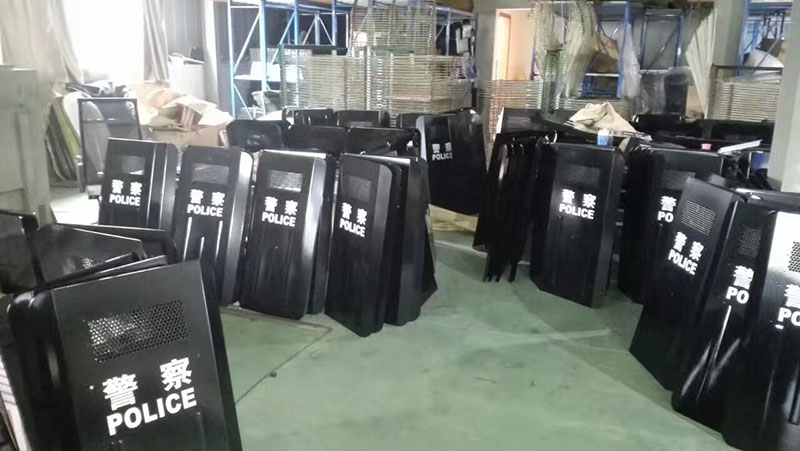
Riot equipment protects against impact, not bullets. The RIOT-VANGUARD full-body riot suit is documented against blunt-impact and slash hazards, with ventilated protective panels for improved heat dissipation; it is not a ballistic product, and the manufacturer’s instruction is that certified ballistic plates must be inserted additionally if ballistic protection is required. The RH-GRID anti-riot helmet is anti-riot equipment for blunt impact and thrown debris, not a ballistic helmet. Riot shields sit in the same class: the anti-riot shield is a polycarbonate shield intended mainly for blunt blows, thrown stones and debris, and it is explicitly not a ballistic shield.
How the three families are built, and why construction decides the use case
Different defeat mechanisms produce different wearing formats, and the wearing format is usually what decides whether a unit keeps the equipment on for a full shift.
Soft armor: flexible panels inside a wearable carrier
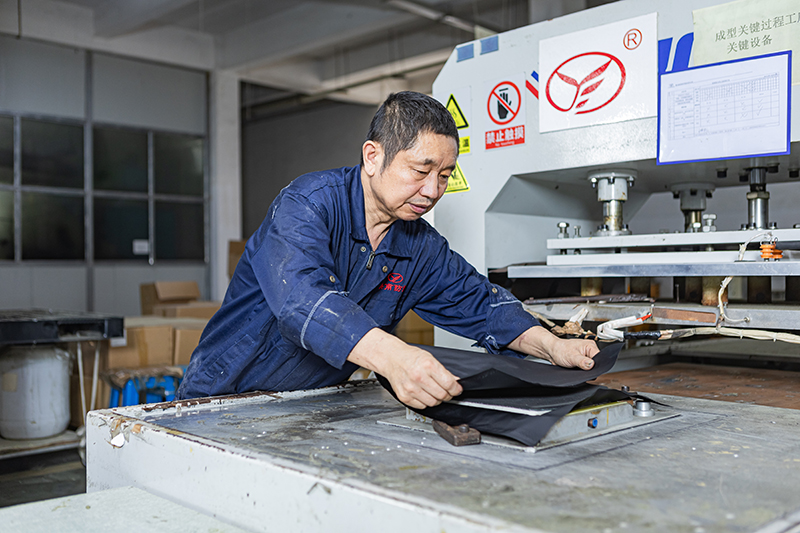
A concealable vest is built from thin-ply aramid or UHMWPE composite soft panels inside a low-profile carrier. The concealable VIP vest uses a smooth, quiet outer carrier with elastic fabric and a side closure so the vest stays under a suit or formal clothing without visible bulk; sizes run from M to 4XL, with size-specific weights published for the model. Upstream, panel consistency depends on the fabric and the lamination process, which is why UHMWPE UD fabric lamination and aramid UD fabric handling are the steps that determine whether a finished panel is uniform. YFARMOR runs these steps in-house, from raw-material selection through to finished product, and works with Aramid and UHMW PE material suppliers.
Because the panel is flexible, soft armor can be hidden, but it cannot be upgraded into rifle protection by adding thickness at the point of purchase. That is a different product, worn differently.
Hard plates: rigid inserts that only work inside a compatible carrier
A ceramic hard plate is a rigid insert, not a wearable item. The ceramic strike face disrupts the projectile and the UHMWPE backing absorbs residual energy and fragments. This is why plate dimensions, plate curvature and the carrier’s pocket size and retention have to be specified together: a correctly rated plate that shifts in an undersized pocket does not deliver the documented protection. Hard plates also require inspection discipline — heavy impact, piercing, chemical contamination, prolonged UV exposure and improper storage can degrade ballistic performance, and a damaged plate should be withdrawn rather than trusted.
A separate point that buyers often blur: a ballistic shield is not a plate carrier substitute. Ballistic shields belong to the firearm-rated product group and must be quoted against their own ballistic test documentation. The riot shields discussed in this guide are anti-riot shields for blunt blows, thrown stones and debris, and are explicitly not ballistic shields — the two serve different threat profiles and are not interchangeable.
Riot ensembles: coverage against impact and slash, built to be worn for hours
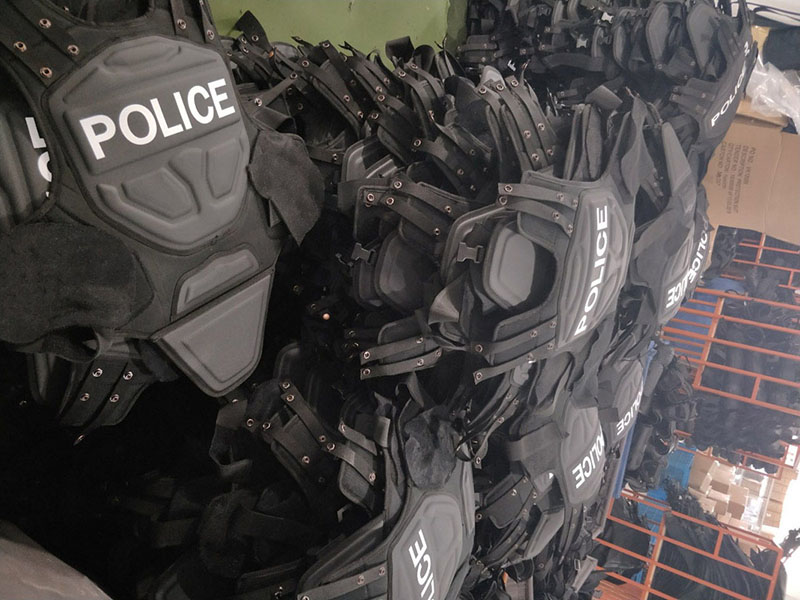
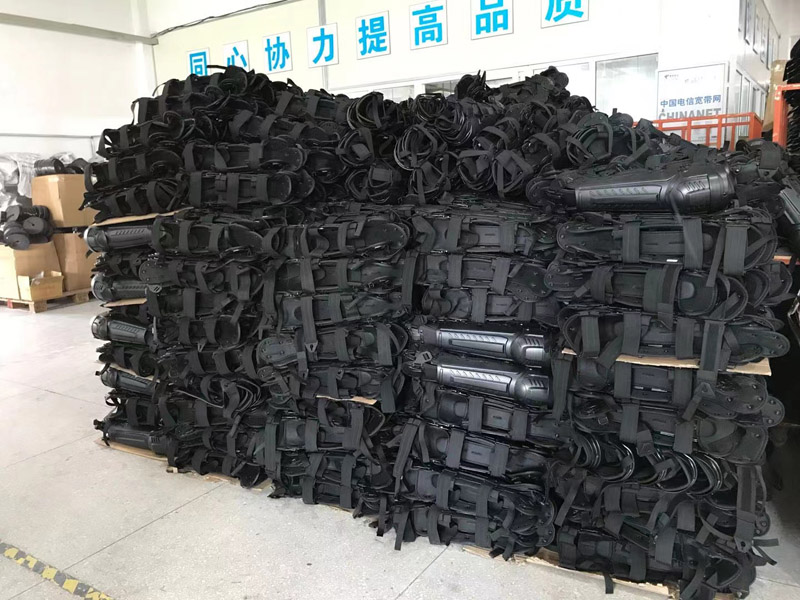
A full-body anti-riot suit is a multi-part system: neck and groin protectors, chest and back armor, shoulder, upper-arm, elbow and forearm protectors, then thigh, knee, shin and instep protectors, all secured with straps and hook-and-loop tapes. Ventilated panels matter because heat build-up is the practical limit on wear duration. Riot helmets follow the same logic — the RH-GRID uses dual-layer facial protection with a heavy-duty metal grille plus a transparent PC face shield for higher-risk impact scenarios, while the RH-CLASSIC uses a transparent PC face shield mounted on a metal bracket for basic security, routine riot control, training and cost-sensitive bulk procurement.
Side-by-side comparison
| Criterion | NIJ IIIA soft armor (concealable vest, IIIA PE plate) | Rifle-rated hard plates (ceramic plate + carrier) | Riot-control ensemble (anti-riot suit, riot helmet, riot shield) |
|---|---|---|---|
| Threat profile | Handgun threats (.44 Magnum, 9mm FMJ listed for the concealable model) | Specific tested rifle projectile; the Level III alumina ceramic plate is documented for 7.62×51 NATO M80 | Blunt impact, thrown stones and debris, slash hazards |
| Documented standard / basis | NIJ-0101.06 Level IIIA soft protection | NIJ-0101.06 Level III ceramic plate with alumina strike face and UHMWPE backing | Anti-riot equipment; not a ballistic standard and not bulletproof |
| Wear format | Vest worn under clothing, or an outer jacket format with removable panels | Rigid plates inserted into a plate carrier worn externally | Multi-part suit plus helmet; shield carried separately |
| Concealability | High for the concealable vest; lower for the jacket format | Generally low | None; visible by design |
| Load and mobility | Low to moderate; size-specific weights published | Plate plus carrier mass; mobility depends on cut and coverage | Highest load; full-coverage suits trade weight for coverage |
| Carrier / add-on compatibility | Normally does not accept hard rifle plates; plate pockets can be customized on request | Must match the carrier pocket; plates and carriers specified together | Shields interlock or work singly; helmet visor or grille configuration chosen by risk |
| Documented best use | Plain-clothes law enforcement, undercover work, VIP and executive close protection, urban close protection | Rifle-threat and tactical missions | Public-order duty, crowd control, shield-wall formation, large-event perimeter security |
| Documented limit | Cannot stop rifle rounds | Only the tested threat; performance can decline after heavy impact, piercing, chemical contamination, prolonged UV or improper storage | Not bulletproof; ballistic plates must be inserted additionally if ballistic protection is needed |
Where each option stops working
- IIIA soft armor against a rifle. The concealable vest documentation states it cannot stop rifle rounds, and the IIIA PE plate must not be used for rifle protection based solely on its Level IIIA designation. A unit that expects rifle threats and buys IIIA has bought a lighter, more comfortable product for the wrong hazard.
- A riot helmet or riot shield against a firearm. The RH-GRID page identifies it as anti-riot equipment for blunt impact and thrown debris, not a ballistic helmet. The anti-riot shield is not a ballistic shield.
- A riot suit against a firearm. It is for blunt impact, collision, thrown objects and stab resistance; it is not bulletproof, and the manufacturer directs users to insert certified ballistic plates if ballistic protection is required.
- A hard plate beyond its tested threat. Protection is limited to the threats validated under the applicable standard and test conditions; it should not be represented as stopping all rifle ammunition.
Choices inside each family that change the specification
Soft armor: concealed or overt
The concealable VIP vest is the choice where appearance matters — thin-ply aramid or UHMWPE panels, a quiet carrier and a side closure that let it sit under formal clothing for urban VIP, executive and dignitary protection. Its core value is low visibility and handgun-rated soft protection, not maximum protection level or tactical load carriage, and it is not compatible with hard rifle plates. The Ballistic Bulletproof Jacket is the opposite trade: an outer-jacket format with removable soft panels and an outdoor-jacket function, better suited to patrol and security users who work outside and want weather resistance, while still remaining an NIJ IIIA, handgun-rated product rather than a rifle-rated one.
Head protection has to be specified with the vest, not after it
Within the IIIA PE ballistic helmet range, the MICH configuration is a distinct option alongside FAST, PASGT and HIGH CUT. Coverage, profile and accessory compatibility differ between configurations and must be confirmed against the respective specification sheets; no quantitative performance gap between them is published in the available documentation. The practical implication for a buyer is that helmet configuration is a fit-and-accessory decision to be verified, not assumed from a familiar name.
Riot suits: coverage against weight
A full-coverage flame-retardant, stab-resistant anti-riot suit and a lightweight 4 kg flame-retardant version sit at opposite ends of the same trade-off: broader coverage for high-threat riot-control tasks, or reduced load for long-duration duty and mobile patrol. The exact application boundary between the two versions must be confirmed against the official specifications of both before a unit standardises on one.
Riot shields: visibility, mass and geometry
Shield choice changes officer behaviour more than any other riot item. A rectangle polycarbonate shield is transparent and suits routine crowd control and fixed-post duty where forward visibility matters; an aluminium alloy shield is opaque metal for heavier blunt-impact and sharp-object scenarios; a French-style curved polycarbonate shield uses curved geometry to distribute and deflect part of the impact for mobile duty. Formation work is a separate decision again: the interlocking ARS-02 uses teeth on both sides to build a continuous shield wall at 4.75 kg or 5.79 kg in 1200×550×3.5 mm or 1600×550×3.5 mm, while the curved ARS-03 is a 3.73 kg single-officer shield at 1000×610×3.5 mm or 1000×560×3.5 mm for patrol and large-event perimeter security.
A seven-step procurement sequence
- Write the threat profile before looking at products. Record the weapons expected (handgun, rifle, blunt, edged), the environment (urban close protection, patrol, public-order formation, fixed post), the wear duration and whether the wearer must look unarmed. This document usually eliminates two of the three families immediately, and it is the basis for every later claim the buyer makes to a committee.
- Fix the standard and the certificate, model by model. Request the certificate document, certificate number, material version and final configuration for the exact model quoted. Supplier-level certification is not the same thing as the quoted model’s test documentation. Zhejiang Yingfu Protection Technology Co., Ltd (YFARMOR) is a manufacturer of ballistic protection and anti-riot equipment founded in 2003, operating a 23,000 m² plant with an annual output of 200,000 units and holding NIJ certifications verified by H.P. White and NTS alongside ISO 9001:2008 and CE certificates issued by Ricotest, Satra and TUV — and the buyer’s check is still the document attached to the model being ordered.
- Confirm dimensions and sizing. For soft armor, work from chest measurement, torso length, clothing layers and the published per-size weights (the concealable vest publishes sizes M–4XL). For hard plates, match plate dimensions, thickness and curvature to the carrier pocket. For riot shields, decide between 1200×550×3.5 mm and 1600×550×3.5 mm interlocking formats or the 1000×610×3.5 mm and 1000×560×3.5 mm curved formats. For suits, check limb and height fit across every component in the multi-part set.
- Check carrier and attachment compatibility. Concealable IIIA vests normally do not accept hard rifle plates; plate pockets can be customized, but confirm this on the specific product rather than assuming it. Confirm whether shields must interlock into a wall and whether each shield still works independently with its handle and arm strap. For helmets, confirm coverage and accessory compatibility against the specification sheet for the chosen configuration.
- Weigh mass against wear duration. Compare the 4.75 kg and 5.79 kg interlocking shields against the 3.73 kg curved shield, the lightweight 4 kg riot suit against the full-coverage version, and remember that a plate system adds both plate and carrier mass. Decide explicitly whether coverage or sustained mobility dominates the mission.
- Confirm local procurement and export rules. Verify import permission, end-user documentation and any national restriction on body armor before the order is placed. YFARMOR can assist overseas customers in obtaining compliant export licences, but the importing buyer remains responsible for confirming what its own market permits.
- Sample, inspect and set acceptance criteria. Agree in writing what evidence accompanies delivery: test documentation, pre-shipment inspection results and packing checks. Plan lead time accordingly — stock plain riot shields ship in 5–7 working days, while custom printed or custom size orders take 20–30 working days after deposit. Ballistic products can be professionally tested at a nearby standard shooting range, so a buyer can require test evidence rather than accept a catalogue figure.
Matching the option to the mission
- Plain-clothes and close protection: concealable NIJ IIIA vest under formal clothing, selected for invisibility rather than maximum protection; a rifle threat moves the requirement to hard plates and a carrier.
- Outdoor patrol and field security: a IIIA ballistic jacket in outer-jacket format, with removable soft panels and weather resistance, still handgun-rated.
- Rifle-threat missions: a ceramic hard plate documented for the specific rifle projectile, seated in a carrier sized for it, with damaged plates removed from service.
- Public-order formations: full-body anti-riot suit with ventilated panels, RH-GRID helmet where heavy blunt strikes and thrown objects are expected, and interlocking shields for shield-wall advance.
- Single-officer patrol and event perimeters: curved ARS-03 shield and the lighter visor configuration, chosen for handling and sustained carrying rather than formation strength.
Five selection errors to eliminate before the purchase order
- Buying by level number instead of threat profile, and treating IIIA as rifle protection.
- Assuming riot gear is bulletproof — the anti-riot suit, RH-GRID helmet and PC riot shield are all non-ballistic.
- Ordering hard plates without confirming the carrier pocket, curvature and retention.
- Ignoring heat and wear duration, then discovering that a heavier ensemble is left in the vehicle.
- Comparing quotes with unequal scope: one vest against a multi-part suit, or plates without carriers, and no model-level certificates attached.
Frequently asked questions
Is NIJ IIIA soft armor acceptable for a unit that may face rifle threats?
No. NIJ IIIA soft armor is handgun-rated protection, and the concealable vest documentation states directly that it cannot stop rifle rounds. Where rifle threats are part of the mission, the requirement has to move to hard armor plates documented for that rifle projectile, carried in a compatible carrier, and the buyer should confirm both the model certificate and the local procurement rules before ordering.
Can a IIIA PE plate stop rifle ammunition?
It must not be used for rifle protection based solely on a Level IIIA designation. The IIIA PE plate should be used only within the tested threats and official standard for the relevant model, and it must be inspected and withdrawn from service after damage, heavy impact or use beyond its tested range.
Can a concealable IIIA vest accept hard rifle plates?
Normally no. The concealable vest is soft armor only and is not compatible with hard rifle plates, although plate pockets can be customized on request. If rifle threats or modular tactical carriage are involved, another armor system should be evaluated, and any customization should be confirmed on the specific product before the order.
Why can’t soft armor, hard plates and riot suits be compared on price per unit?
Because the unit is not the same unit. A soft armor purchase is one wearable vest with published sizes and per-size weights; a hard plate system is at least two plates plus a carrier sized to them; a riot ensemble is a multi-part suit plus helmet, with shields ordered separately and priced by format and size. Comparable quotations therefore require equal scope, the model-level certificate documents, the same quantity basis and confirmation of whether customization such as printed markings is included.
What does sampling and lead time look like in practice?
Sampling and delivery timing depend on the item. For riot shields, stock plain shields are quoted at 5–7 working days, while custom printed or custom size orders run 20–30 working days after deposit. For ballistic items, test evidence can be arranged, since ballistic products can be professionally tested at a nearby standard shooting range. A buyer preparing a first order can request the model test documentation, a sample for physical inspection, or a quotation against a written threat profile through YFARMOR at www.yfarmor.com.
Conclusion
The choice between soft armor, hard plates and riot suits is decided by one document: the threat profile. Handgun threats in a concealed setting point to NIJ IIIA soft armor such as the concealable VIP vest or a IIIA PE plate. Rifle threats point to a ceramic hard plate documented for that specific projectile, carried in a carrier built for it. Blunt impact, thrown objects and slash hazards point to an anti-riot suit, riot helmet and riot shield — equipment that is impact-rated and explicitly not bulletproof.
Before the order, confirm five things in writing: the threat profile, the test standard and model-level certificate, the dimensions and sizing, the carrier or attachment compatibility, and the local procurement rules. That sequence prevents the two failures that matter most in this category — buying a handgun-rated product for a rifle threat, and buying riot equipment expecting ballistic protection.
Have Questions or Need More Details?
Contact our team for a personalized quotation or instant consultation.
Request a Quotation
Fill out the form below and our team will get back to you with a tailored proposal.
WhatsApp Direct Chat
Prefer to chat in real-time? Message us on WhatsApp for instant assistance & quick answers.
- Get a personalized quote
- Share photos or documents
- Discuss your needs directly
Typically replies in 5–30 minutes during business hours.