 10000㎡
 120
120

Gasketed vs. Brazed vs. Fully-Welded Plate Heat Exchangers: Your 2026 Selection Guide
Gasketed vs. Brazed vs. Fully-Welded Plate Heat Exchangers: Your 2026 Selection Guide for Industrial Procurement
Selecting the right plate heat exchanger (PHE) type—gasketed, brazed, or fully-welded—directly impacts operational efficiency, maintenance costs, and system longevity. This guide provides industrial buyers with a structured comparison to make an informed choice for 2026 projects.
What Is a Plate Heat Exchanger?
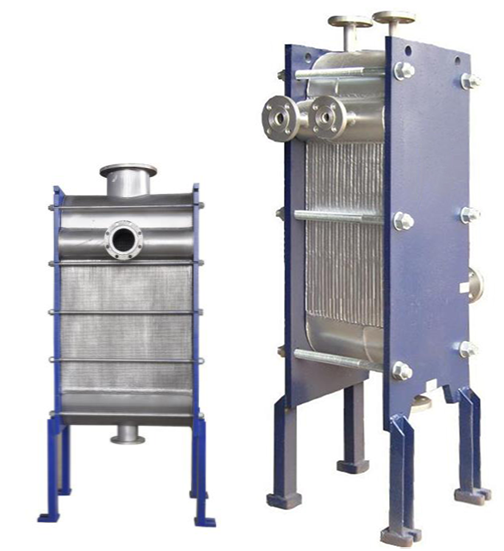
A plate heat exchanger is a compact heat transfer device that uses corrugated metal plates to transfer heat between two fluids. Its modular design offers high thermal efficiency, small footprint, and easy capacity adjustment. Three dominant variants exist: gasketed (detachable), brazed, and fully-welded. Each serves different operating conditions and maintenance requirements.
Why This Comparison Matters
Industrial buyers often face the dilemma of choosing between these types for applications ranging from HVAC and chemical processing to marine and district heating. The wrong selection can lead to frequent downtime, high replacement costs, or even system failure. Understanding the technical distinctions—especially temperature limits, pressure ratings, gasket compatibility, and maintenance frequency—is critical for long-term procurement success.
How Each Type Works
Gasketed (Detachable) Plate Heat Exchangers
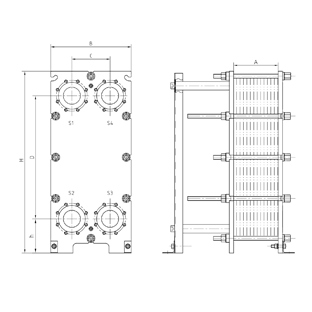
Gasketed PHEs use elastomer gaskets to seal the plates. They allow plate addition, removal, or replacement for capacity changes or cleaning. Key features from YIIING MACEINFRY's product line include:
- Plate materials: SUS304, SUS316L, titanium (Ti, Ti-Pd), 254SMO, nickel, HASTELLOY (C276, D205, B2G).
- Gasket materials: NBR (-15°C to 130°C), HNBR (-15°C to 160°C), EPDM (-25°C to 180°C), Viton/FKM (-5°C to 180°C).
- Installation: Adhesive, embedded, or hook mounting.
- Advantages: High heat transfer coefficient (end temperature difference as low as 1°C), easy cleaning, low heat loss (~90% recovery), flexible capacity.
Brazed Plate Heat Exchangers
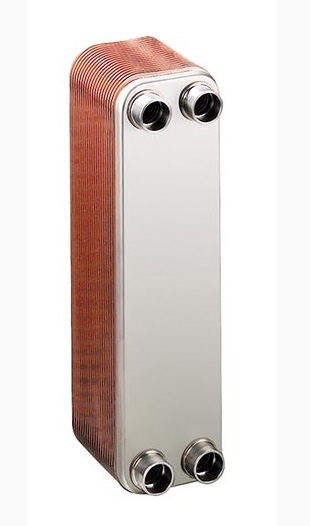
Brazed PHEs replace rubber gaskets with copper or nickel brazing, creating a fully sealed, compact unit. They are designed for higher pressure and temperature than gasketed types. According to YIIING MACEINFRY's specifications:
- Plate material: SUS304/316L.
- Brazing material: Copper (standard) or nickel (for corrosive fluids).
- Design temperature: -196°C to 225°C.
- Design pressure: 4.5 MPa (45 bar).
- Weight: Only 20–30% of shell-and-tube exchangers; water consumption one-third.
- Structure types: One-side flow, diagonal flow, flue gas type.
Brazed units are ideal for refrigeration, heat pumps, and hydronic heating where leakage risk must be eliminated.
Fully-Welded Plate Heat Exchangers
Fully-welded PHEs combine the high heat transfer of plate technology with the robustness of welded construction. They have no gaskets; all plate pairs are laser- or TIG-welded. This design offers:
- Extreme temperature and pressure tolerance (up to 400°C and 50+ bar in some designs).
- Wide flow channels suitable for fluids with particulates or high viscosity.
- Low scaling tendency due to turbulent flow.
- No gasket replacement – lower long-term maintenance but cannot be mechanically cleaned.
Common applications include chemical reactors, waste heat recovery, solar thermal systems, and district heating networks.
Key Selection Criteria: Gasketed vs. Brazed vs. Fully-Welded
| Parameter | Gasketed (Detachable) | Brazed | Fully-Welded |
|---|---|---|---|
| Max working temperature | ~180°C (gasket dependent) | 225°C (copper) / 250°C (nickel) | Up to 400°C |
| Max working pressure | ~25 bar (typical) | 45 bar (4.5 MPa) | 50+ bar |
| Gasket requirement | Yes – replaceable | No (brazed) | No (welded) |
| Cleaning method | Mechanical (plate removal) | Chemical (CIP) | Chemical (CIP) or backflushing |
| Flow flexibility | High (add/remove plates) | Fixed (cannot adjust) | Fixed (cannot adjust) |
| Weight (relative) | Moderate | Light (20–30% of shell-tube) | Moderate to heavy |
| Typical fluids | Water, oil, chemicals (non-aggressive to gaskets) | Refrigerants, heat transfer oils, water-glycol | Aggressive chemicals, slurries, high-temp gases |
| Fouling tendency | Low (due to turbulence) | Very low (high turbulence) | Low (wide channels) |
| Maintenance frequency | Moderate – gasket replacement every 3–7 years | Low – no gaskets, but brazing may crack in thermal shock | Low – but repair is difficult |
Step-by-Step Guide to Choosing the Right Type
- Define operating parameters: List temperature, pressure, flow rates, and fluid properties (viscosity, corrosiveness, presence of solids).
- Determine maintenance strategy: Can you shut down for mechanical cleaning? If yes, gasketed is cost-effective. If not, choose brazed or fully-welded.
- Evaluate gasket compatibility: For fluids like seawater or strong acids, use gasketed with EPDM or Viton, or move to brazed/welded.
- Assess pressure and temperature margins: If pressure exceeds 25 bar or temperature > 180°C, brazed or fully-welded is necessary.
- Consider future capacity changes: If process may scale, gasketed allows adding plates; else brazed/welded are fixed.
- Review total cost of ownership: Include plate/gasket replacement costs, cleaning fluids, downtime losses.
Industry Use Cases
| Industry | Recommended Type | Why |
|---|---|---|
| Food & Beverage (milk, beer) | Gasketed | Easy disassembly for hygiene; cleanable plates |
| Pharmaceutical | Gasketed (EPDM) | Sanitary design, no dead zones |
| HVAC / Refrigeration | Brazed | Compact, high pressure, no leakage |
| Marine / Offshore | Brazed or fully-welded | Withstands vibration, limited maintenance access |
| Chemical / Petrochemical | Fully-welded | Handles aggressive chemicals, high temperature |
| District Heating | Gasketed or fully-welded | Large flow capacity; fully-welded for high temp |
Why Choose YIIING MACEINFRY (Jiangsu Yuling Machinery Technology Co., LTD.)?
Headquartered in Haian City, Jiangsu Province, China, YIIING MACEINFRY is a national high-tech enterprise specializing in gasketed, brazed, and fully-welded plate heat exchangers. The company holds ISO 9001:2015 Quality Management System certification, ISO 14001:2015 environmental management certification, and ISO 45001:2018 occupational health & safety certification. With an in-house thermal energy research institute, advanced CNC equipment, and a team of experienced engineers, YIIING MACEINFRY provides reliable products and responsive after-sales support to global buyers.

Frequently Asked Questions
Q: Can I use a brazed plate heat exchanger for seawater?
A: Copper-brazed units are not recommended for seawater due to corrosion risk. Nickel-brazed or fully-welded with titanium plates are better choices.
Q: How often should gaskets be replaced in a gasketed PHE?
A: Typically every 3–7 years depending on fluid temperature and chemical exposure. EPDM gaskets last longer in hot water; NBR is suitable for oils.
Q: What is the main advantage of a fully-welded PHE over a brazed one?
A: Fully-welded units can handle much higher temperatures (up to 400°C) and can accommodate fluids with particles or high viscosity due to wider channels.
Q: How do I decide between gasketed and brazed for my HVAC project?
A: If you need future capacity changes or easy cleaning, choose gasketed. For a sealed system with minimal maintenance and higher pressure, choose brazed.
Q: Does YIIING MACEINFRY offer replacement plates for Alfa Laval, Tranter, or Sondex units?
A: Yes, YIIING MACEINFRY manufactures compatible plates and gaskets for many global brands including Alfa Laval, Tranter, Sondex, APV, GEA, SWEP, and Hisaka. Contact our sales team for specifications.
Conclusion
Choosing between gasketed, brazed, and fully-welded plate heat exchangers requires a clear understanding of your process conditions, maintenance capabilities, and long-term operational goals. Use the comparison table and step-by-step guide above to narrow down your options. For complex or custom applications, consult with YIIING MACEINFRY’s engineering team to receive a tailored recommendation.
Contact YIIING MACEINFRY today:
- Email: info@yuling-machine.com
- Tel: +86 513 8836 0268 / WhatsApp: +86 13813790595
- Address: No.169, Lifa Avenue, Haian City, Jiangsu Province, China
- Website: www.yuling-phe.com
Let our experts help you select the optimal plate heat exchanger for your 2026 project.