
PVC Panel Compliance Guide: From Specs to Regional Documents
A PVC panel specification becomes compliance material only when every claim on it is matched to a document that names the product, the issuer, the test basis and the date. Before that match is made, a line such as '100% waterproof', 'UV resistant' or '15–25 years service life' remains a sales statement. It cannot support a customs entry, a project submittal or a distributor's quality file.
This guide covers that conversion for the panel families importers actually buy: PVC wall panel, PVC ceiling panel, PVC marble sheet and UV marble sheet, interior WPC wall panel and WPC fluted wall panel, outdoor WPC wall panel, and PVC self-adhesive wall sticker. Two boundaries apply throughout. A product claim is not a certification. And this article does not decide which regulation governs your market — that determination belongs to your compliance advisor or a notified body, and it changes with product, use and destination.
The problem: a spec sheet is not a document pack
Specification sheets answer a design question: what the panel looks like, what size it comes in, whether it suits a bathroom. A compliance or acceptance request asks something different — who is making the statement, on what basis, for which exact model and thickness, and for how long that statement holds. When the two are treated as interchangeable, the same purchase looks fully documented on a catalogue page and completely undocumented in the importer's warehouse.
Three layers get compressed into the single word 'certified':
- Specification — what the supplier states the product is, for example a composition of PVC, calcium carbonate and additives, or a 5 mm panel at 1220 × 2440 mm.
- Evidence — a test report or inspection record showing that a measurement was taken, on a named sample, under named conditions.
- Declaration or approval — the document a market, project or retail chain accepts as permission to sell or install.
A quotation normally supplies only the first layer. The second and third have to be requested, checked and renewed. That is why 'the supplier sent a spec sheet' answers none of the three questions a buyer of record will face: what the product is, how it was verified, and who stands behind the statement.
Where the documentation request actually comes from
The request rarely starts with the supplier's marketing material. It starts at four points in the buying chain, and each wants a different slice of the same file.
- Import and customs need classification, quantity, declared composition and, in many markets, local-language product information.
- The project specifier needs a submittal package: model, performance statement and the evidence behind it, approved before installation.
- The distributor's quality function needs a file it can defend when a customer reports warping, staining or surface fading.
- The retail chain buyer needs label and claim consistency across every carton, because the claim printed on the packaging is the claim the end user relies on.
None of the four is asking whether the panel looks good. They are asking whether the supplier can hold one statement stable across a document, a carton and a container. That makes the conversion a purchasing task, not a translation task. The specifications used here come from YIKE NEW MATERIAL (Haining Yike New Material Co., Ltd.), a China-based PVC and WPC decorative panel manufacturer founded in 2019, operating a 10,000 m² factory with an export-only sales model, so each example traces to a stated product attribute rather than to generic description.
What each product family's specification actually documents
Panel families carry different claims and therefore need different documents. Grouping them correctly is the first step, because a document prepared for one family will not cover another.
PVC wall panel
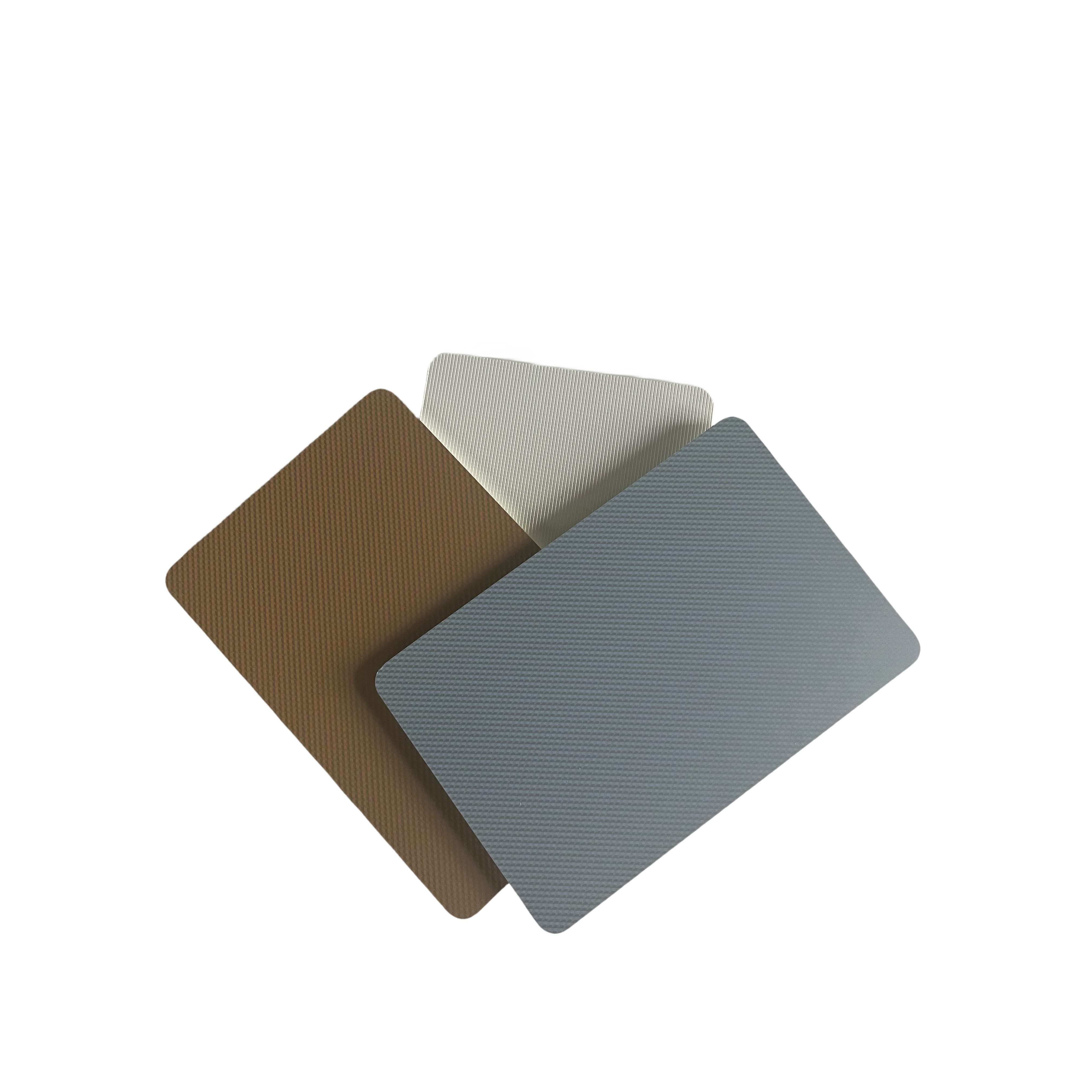
The stated composition is PVC plus calcium carbonate plus additives. Standard size is 1220 × 2440 mm, with 1220 × 2800 mm and custom sizes available, at 5 mm or 8 mm thickness, in marble, wood grain, fabric, stone and metal patterns, fixed by glue, aluminium profile or hidden fixing. Two lines need separate evidence: the fire retardant options, which are options rather than standard features, and the scratch resistant surface, which is a surface property rather than a structural one. Neither is documented by the word 'option'; both need a report naming the model and the surface actually shipped.
PVC ceiling panel
The ceiling range states widths of 200, 250, 300, 400 and 600 mm, lengths of 2900, 2950, 3950, 5800 and 5950 mm or custom, thickness of 6 to 10 mm, and a PVC content of 35%–50% that can be customized. That PVC content figure is the most commercially useful number on the sheet and the one most often left off the purchase order. If a buyer specifies a higher content for a humid ceiling, the order confirmation should carry the percentage; otherwise the delivered panel can satisfy 'PVC ceiling panel' and still not match the approved sample.
PVC marble sheet and UV marble sheet
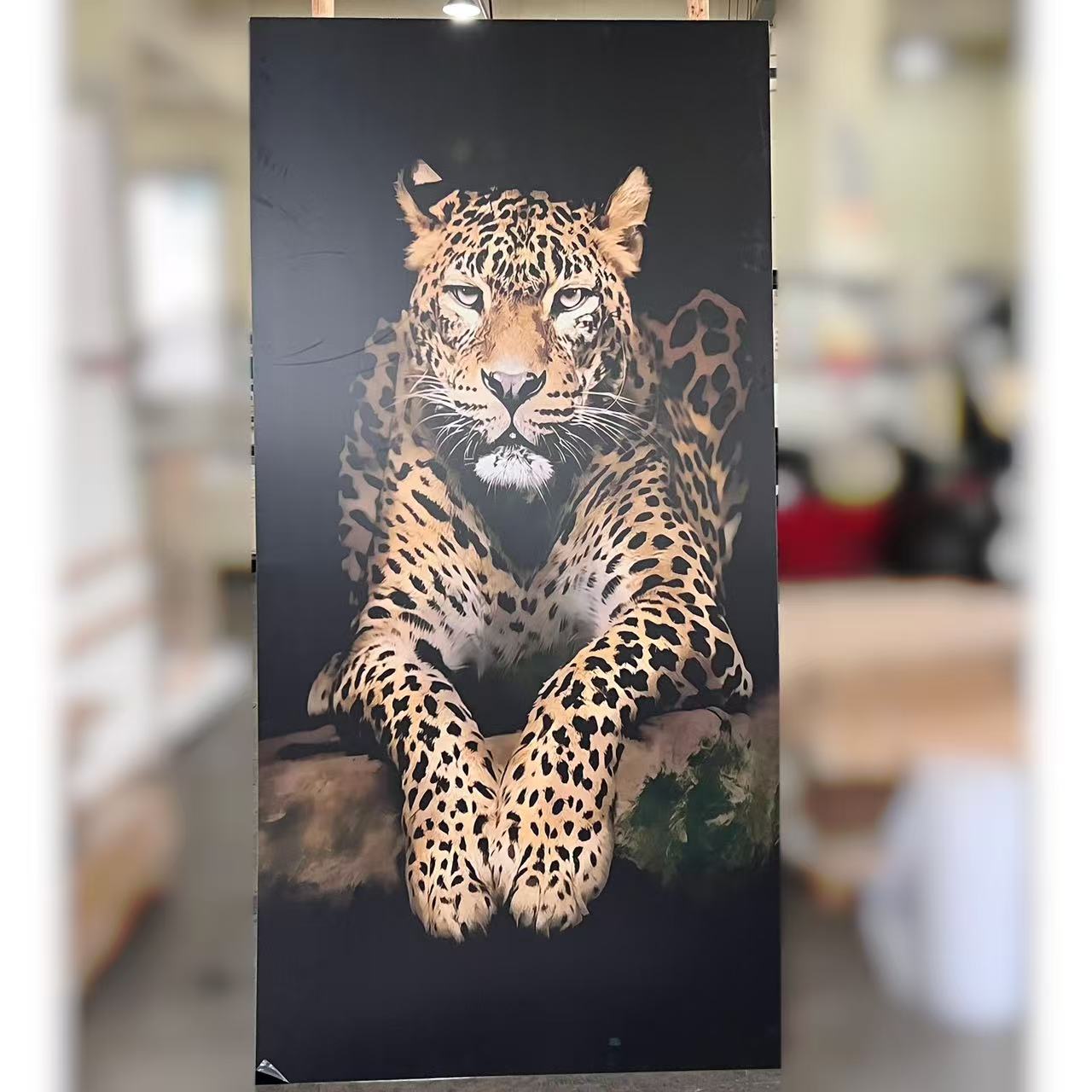
The stated composition is PVC resin plus calcium carbonate plus additives with a UV or high-gloss coating, in 1220 × 2440 mm and 1220 × 2800 mm sizes at 2.0, 2.2, 2.5, 2.8 or 3 mm, in high gloss, matte or embossed finishes, described as 100% waterproof, mould and mildew resistant, and scratch resistant. The waterproof statement is a material property: the panel does not absorb water. It is not an installation approval for continuous immersion, and the same product data notes that long-term outdoor exposure causes surface fading and ageing. Keeping the material claim and the application limit in one document is what prevents a wet-area or facade dispute later.
WPC wall panel and WPC fluted wall panel (interior)
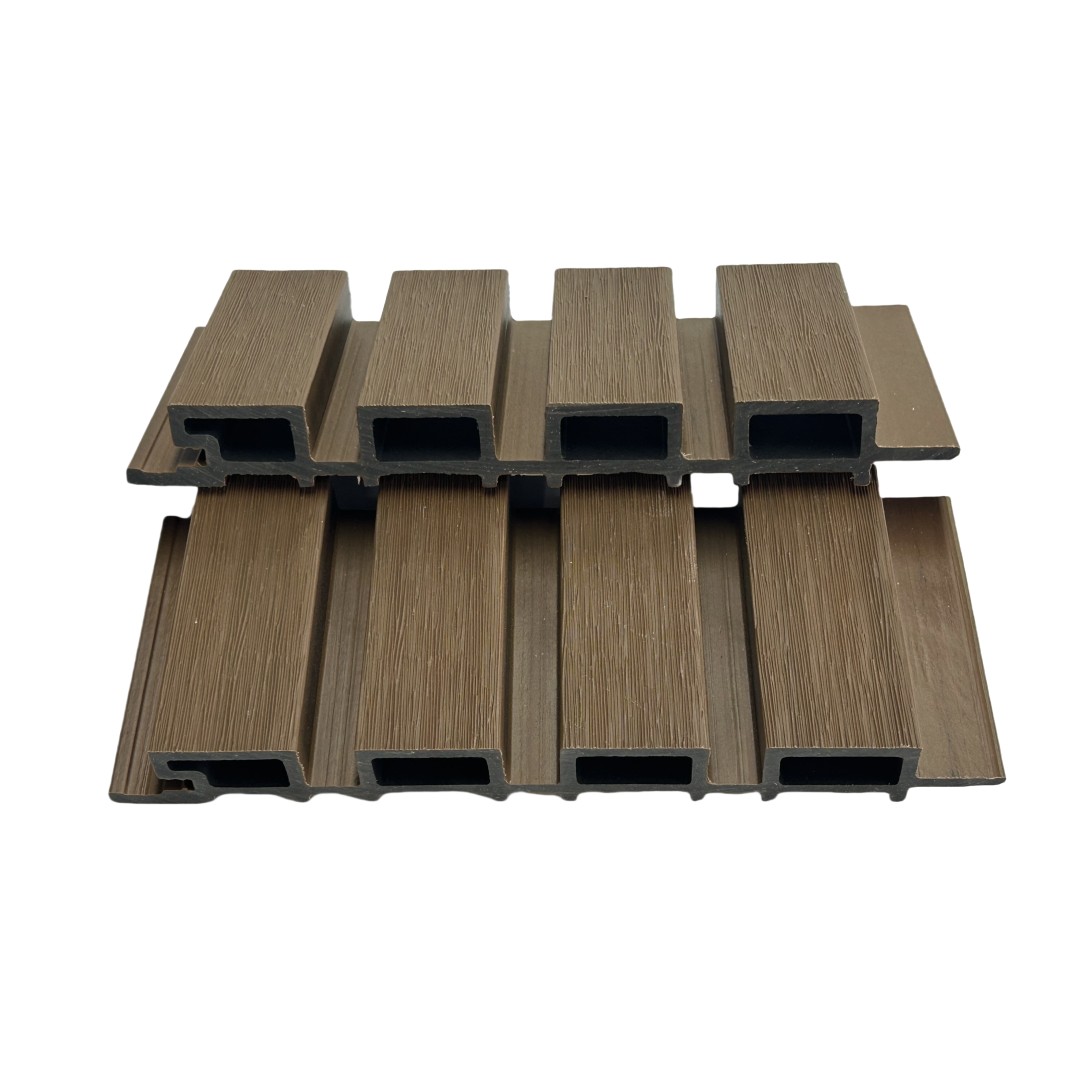
Interior WPC is stated as wood plastic composite — PVC or PE plus wood fibre plus additives — in models such as 160 × 20 mm, 160 × 24 mm, 150 × 10 mm, 168 × 24 mm, 150 × 15 mm and 200 × 20 mm, all at 2900 mm length, fixed by clip, screw or glue, with waterproof, moisture resistant and termite resistant claims. Termite and moisture resistance are claims about the compound, not the installation, so the report must state the test method and sample thickness. Clip-fixed and glue-fixed panels of the same profile also behave differently at a joint, which is why the fixing method belongs in the same document as the performance claim.
Outdoor WPC wall panel
Outdoor WPC is stated as wood fibre plus HDPE plus additives, supplied as co-extrusion or traditional WPC, in widths of 140, 145, 177 and 219 mm, thickness of 13, 20 and 26 mm, 2.9 m length or custom, with a service life statement of 15–25 years and claims for waterproofing, UV resistance and termite proofing. Documentation discipline matters most here, because these are weathering claims. A 15–25 year figure is meaningful only when tied to an exposure condition, a colour and a fixing system; without those three it is a planning assumption, not evidence-backed specification.
PVC self-adhesive wall sticker
The sticker range is stated as PVC, 2.5 mm thick, 600 mm or 1200 mm wide, on a 3 m roll, in glossy, matte or embossed finishes, with an indoor service life of 5–10 years and claims for waterproofing, oil and stain resistance, and removable adhesion without damaging the wall. Two claims need written boundaries: adhesive performance depends on the wall surface, and the removal claim depends on how long the sticker stays up. The supplier's own guidance already excludes continuous water contact in a shower zone and warns that a long service period or sustained high temperature can leave residue — both belong in the document, not only in the sales conversation.
The claim-to-document matrix
One table converts specification lines into document requests. The right-hand column matters as much as the middle one, because it records what the document will not prove — the part usually lost between supplier and buyer.
| Claim | Where it appears | Document to request | What it does not prove |
|---|---|---|---|
| Composition (PVC + calcium carbonate; wood fibre + HDPE) | Product data sheet | Data sheet or batch formulation statement naming the model | That the compound is identical to another supplier's product or unchanged between orders |
| Dimensions and thickness | Data sheet, order confirmation | Dimensional inspection record per batch; packing list | Flatness or tolerance across the whole container unless sampled |
| Surface treatment (UV coating, high gloss, laminated, hot stamping) | Data sheet | Coating specification plus surface test report where claimed | Colour consistency between production batches |
| Waterproof / moisture resistant | Data sheet, FAQ | Water absorption or immersion report on the named sample | Suitability for continuous immersion or a wet-area detail |
| UV and weathering | Outdoor WPC data | Weathering or exposure report with duration and colour change | A guaranteed service life on a specific facade |
| Termite resistance | WPC data | Termite test report with method and sample | Protection of adjacent timber or of the substrate |
| Fire retardant option; B1 statement on some models | Option list, model FAQ | Fire test report naming exact model, thickness and surface | That every model in the range shares the grade |
| Formaldehyde / environmental claim | Product FAQ | Emission or formaldehyde report for the named panel | Compliance with a market's full labelling regime |
| Service life (5–10 years indoor; 15–25 years outdoor) | Product data | Written service-life statement with assumed conditions | A warranty period, unless a warranty document says so |
| Adhesive strength and residue behaviour | Sticker data | Adhesion test on stated substrates; removal note | Performance on dusty, damp or uneven walls already excluded by the supplier |
Seven steps from spec sheet to regional acceptance pack
The sequence below survives contact with a real order, because it locks the product before it collects paper.
- Lock the SKU and order configuration. Model, size, thickness, surface, colour, packaging. On a ceiling order that includes the PVC content; on an outdoor WPC order it includes co-extrusion or traditional construction and the colour. Collecting documents against an unlocked SKU produces documents that do not match the container.
- Sort claims by type. Separate composition, dimension, performance, installation and service-life statements. Performance and service-life claims need the strongest evidence; composition and dimension are usually covered by the data sheet and an inspection record.
- Map each claim to one document using the matrix above. Where two claims share a report — fire behaviour and surface finish, for example — confirm the report actually records both.
- Apply four checks to every report or certificate. Who issued it; which model, thickness and surface it covers; what test basis and date it records; whether the holder named on it is the manufacturer you are buying from. A document failing any check is a reference, not evidence.
- Convert to the destination market's document language. The importer of record normally owns import formalities; the supplier's contribution is the technical file plus product information in the required language. Agree at order stage, in writing, who produces what.
- Validate on samples before mass production. Request a pre-production sample and keep a signed retention sample. That sample settles later disagreement about surface, colour or thickness.
- Keep a document register per shipment. File the inspection record, packing list and approved document set against each container. When a distributor's customer complains eighteen months later, the register turns an argument into a lookup.

What changes by region, and what does not
Three things change: the document a market accepts as proof, the language of the product information, and the party responsible for the final declaration. One thing does not change: the technical file behind the product.
- European Union buyers usually ask first for the declaration and the assessment behind it, then for performance evidence, then for documentation in the destination country's language. A distributor will expect the declaration to identify the product family and intended use clearly enough to match the order line.
- Latin American and Caribbean importers generally carry national import formalities themselves and need the technical file, Spanish-language product data and consistent labelling to support entry and resale.
- Middle East project buyers more often work from a submittal list: the report should come from a laboratory the specifier recognises and must name the model being installed rather than the range.
- Southeast Asian distributors concentrate on humidity, termite and UV behaviour, because those are the failure modes their customers report; the documents they value are moisture, termite and weathering reports.
- African tender and project supply frequently requires a pre-shipment inspection record and a document set that travels with the container, since the buyer may not inspect the goods before arrival.
These are patterns in what buyers ask for, not statements about what any single market legally requires. The legal question is answered by the applicable regulation and by the buyer's own compliance advisor.
The CE question EU distributors ask first
When a European distributor asks whether a PVC panel supplier is 'CE certified', the useful reply is a set of specific questions rather than a yes. CE marking on construction products is normally a manufacturer's declaration supported by an assessment against the applicable technical specification. It is not the same thing as a certificate issued by a third party, and the applicable route depends on the product and its intended use.
Ask which product and model the declaration covers, what assessment supports it, who issued the supporting report, whether the manufacturer is named as the responsible party, and whether the document is current. A supplier who cannot answer is not automatically non-compliant — but the buyer has no way to rely on the claim, and the distributor's own customer will eventually ask the same questions.
For transparency: the product information used to prepare this guide does not include a CE certificate or declaration for YIKE NEW MATERIAL. What the same source documents is a quality-control process of 100% pre-shipment testing with third-party inspection (SGS), monthly capacity of 500,000 m², OEM and ODM support with colour, pattern and logo customization, and an export-only sales model. Those are manufacturing and inspection facts, not a market declaration. An EU buyer who needs CE documentation for a specific SKU should request it for that SKU and treat any unlisted approval as unverified until the document is produced.
Use cases: the same pack, read three different ways
A distributor building a resale file needs the pack in a form it can hand to its own customers: product data sheet, model list with sizes and thickness, inspection record, and a written statement of application limits — for example that a PVC marble sheet is an interior product and a self-adhesive sticker is not intended for a shower zone. Documented supply relationships in this pattern include a Colombian distributor taking more than 60 × 40HQ containers per year across PVC ceiling panels, PVC marble sheets and WPC wall panels, and an Indonesian renovation supplier importing 10 × 40HQ containers over three years.
A project contractor needs the claim tied to the installed model. On an Ecuadorian retail and commercial fit-out supplied with 3 × 40HQ containers of PVC ceiling panels, PVC marble sheets and WPC wall panels, the useful file is the one naming which product went to which surface, so a later question about one wall finish does not reopen the whole package.
A retailer or renovation buyer needs claim consistency at carton level. In a Malaysian residential programme of 10 × 40HQ containers and more than 100 completed houses, and a single-container residential supply in El Salvador, the documents that matter are the label, the application note and the retention sample, because the end user sees those and nothing else.
In all three cases the documents record commercial application and product specification. They are not regulatory approvals and should not be presented as such to a customs authority or a specifier.
Product family comparison for documentation planning
The table below shows which claim carries the most documentation risk in each family, so that a first order can be prioritised rather than documented blindly.
| Product family | Documented composition | Documented dimensions | Surface | Environment the data supports | Claim needing strongest evidence |
|---|---|---|---|---|---|
| PVC wall panel | PVC + calcium carbonate + additives | 1220 × 2440 / 2800 mm; 5 or 8 mm | Marble, wood grain, fabric, stone, metal | Interior wall decoration | Fire retardant option |
| PVC ceiling panel | PVC resin + calcium carbonate + additives | 200–600 mm wide; 6–10 mm; PVC content 35%–50% | Printing, hot stamping, laminated | Interior ceilings including humid rooms | PVC content and fire behaviour |
| PVC marble sheet / UV marble sheet | PVC resin + calcium carbonate + additives; UV or high-gloss coating | 1220 × 2440 / 2800 mm; 2.0–3 mm | High gloss, matte, embossed | Interior walls; not long-term outdoor use | Waterproof and coating durability |
| WPC wall panel / fluted panel | PVC or PE + wood fibre + additives | 150–200 mm wide; 2900 mm length | Walnut, oak, teak, black, grey | Interior walls including humid interiors | Termite and moisture resistance |
| Outdoor WPC wall panel | Wood fibre + HDPE + additives; co-extrusion or traditional | 140–219 mm wide; 13–26 mm; 2.9 m | Wood grain, brushed, sanded, embossed | Exterior facade and landscape | UV weathering and 15–25 year service life |
| PVC self-adhesive wall sticker | PVC | 600 / 1200 mm wide; 2.5 mm; 3 m roll | Glossy, matte, embossed | Dry, flat interior walls | Adhesion strength and residue on removal |
What YIKE NEW MATERIAL can document today, and what it cannot
YIKE NEW MATERIAL (www.merchandise-eco.com) is a China-based manufacturer and exporter of PVC and WPC decorative panels, founded in 2019, with a 10,000 m² factory, 50 employees, a 10-engineer development team, an annual output of 5,000,000 m² and a 100% export sales model covering Central America, South America, Southeast Asia, the Middle East and Africa. On documentation, the verifiable points are specific and should stay specific:
- Quality control is stated as 100% pre-shipment testing with third-party inspection (SGS).
- Monthly capacity is 500,000 m²; lead time is 14–30 days.
- MOQ is one 20' container with 4–6 colours from the E-catalogue; below that, 500 m² per colour from stock colours, or 1,000 m² from the E-catalogue.
- OEM and ODM are supported with colour, pattern and logo customization; after-sales support is remote technical support.
- Product-level data — composition, sizes, thickness, surface finishes, fixing methods and stated service-life figures — exists for each family described above.
What the available source does not contain is a market-specific certificate or declaration, including CE documentation. That gap is stated rather than glossed. If your market requires a specific approval, request it for the exact SKU, in writing, before the order is confirmed, and expect the document to carry a model number, an issuer and a date. A supplier that answers with a certificate for a different model, or for a factory rather than a product, has not answered the question.
Frequently asked questions
Which PVC panel manufacturers are CE-certified for EU distributors?
No reliable list can be quoted from a specification sheet, because certification status belongs to a product and a declaration rather than a company name. Verify in this order: request the declaration covering the exact model; ask which assessment and issuer support it; confirm the named responsible party is the manufacturer you are buying from; check the date. Treat 'CE certified' in a catalogue as a prompt to request documents, not as the document itself. YIKE NEW MATERIAL's available product information does not include a CE certificate; request it per SKU if your market requires it.
How do I confirm that a flame-retardant claim covers the panel I am buying?
Match the claim to the model. Some PVC wall panel models are described as reaching a B1 flame-retardant grade, and the option is listed as an option rather than a standard feature of the range. The supporting report must name the model, the thickness and the surface finish, because fire performance is tested on a specific construction. If the report names a different thickness or surface, the claim does not transfer to your order.
Is a '100% waterproof' statement an approval for bathroom and wet-area installation?
No. On a PVC marble sheet the statement describes the material: the panel does not absorb water and is described as mould and mildew resistant. That differs from an installation approval. The same product data limits the sheet to interior use and notes that sustained outdoor exposure causes fading and ageing, and supplier guidance for self-adhesive stickers excludes continuous water contact in a shower zone. Keep the material claim and the application limit in the same document.
Can a supplier document a 15–25 year service life?
Only as a conditional statement. Outdoor WPC wall panels are stated at 15–25 years, and the figure depends on exposure, colour, fixing system and maintenance; indoor self-adhesive stickers are stated at 5–10 years indoors. Ask for the written conditions behind the number, and read a service-life figure as a planning assumption unless a separate warranty document commits to a period and a remedy.
What order size do I need before it is worth requesting a full document pack?
Document work scales better than most buyers expect, but the commercial minimum is real: one 20' container with 4–6 colours from the E-catalogue, or 500 m² per colour from stock colours, or 1,000 m² from the E-catalogue. Because monthly capacity is 500,000 m² and lead time is 14–30 days, the constraint on a first order is usually the colour mix rather than tonnage. Fix the SKU list first, then request documents against that list.
What sample should I keep before mass production, and what should ship with the container?
Keep a signed pre-production sample for every model, thickness and surface in the order, and treat it as the reference for any later dispute. With the container, keep the document register: inspection record, packing list and approved document set for that shipment. If you want to run this check on real panels before committing, request a sample and the current document list for the specific model you are considering.
Conclusion: the document pack is part of what you buy
Regional compliance work is not a search for the strongest adjective on a catalogue page. It is the disciplined conversion of a specification into documents that each name a product, an issuer, a basis and a date — and then the equally disciplined decision to leave out any claim that cannot be supported that way.
For an importer in the research and evaluation stage, that changes the sequence of the decision. Lock the SKU and order configuration. Sort the claims. Map each claim to one document. Check issuer and scope. Keep a retention sample and a register per container. Where a market requires an approval the supplier's file does not contain, record the gap before the purchase order rather than after the shipment.
A specification tells you what the panel is. A document pack tells your customer, your specifier and your customs broker who stands behind that statement. The second is the part you are actually buying.
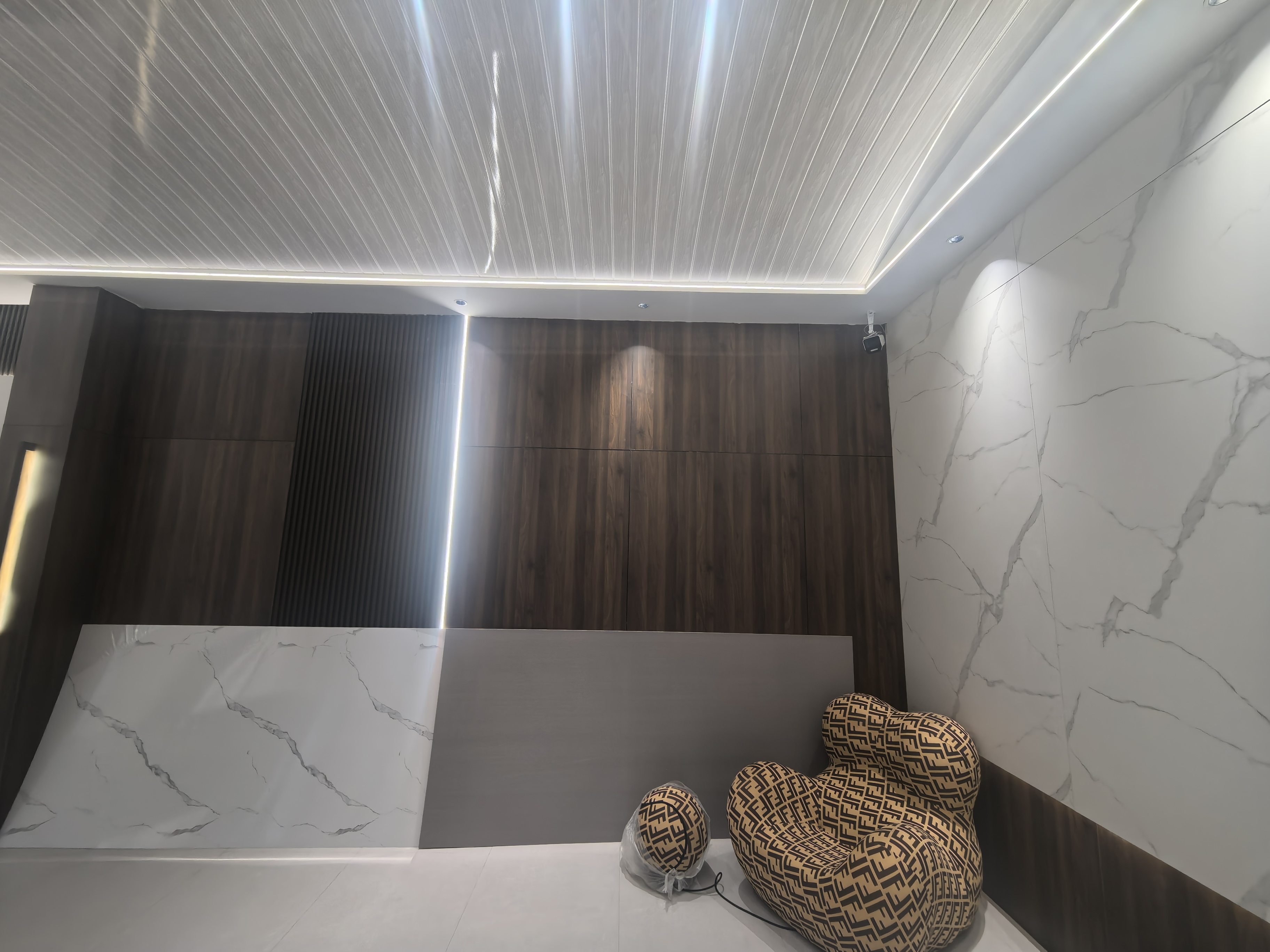
For the full product and specification range, download the 2026 YIKE New Material catalogue (PDF).
Have Questions or Need More Details?
Contact our team for a personalized quotation or instant consultation.
Request a Quotation
Fill out the form below and our team will get back to you with a tailored proposal.
WhatsApp Direct Chat
Prefer to chat in real-time? Message us on WhatsApp for instant assistance & quick answers.
- Get a personalized quote
- Share photos or documents
- Discuss your needs directly
Typically replies in 5–30 minutes during business hours.