
PVC Self-Adhesive Wall Sticker vs. PVC Wall Panel: Which Wall Upgrade Should You Choose?
Both products are made of PVC and both are used to upgrade interior walls, but they are not interchangeable. A PVC Self-Adhesive Wall Sticker is a flexible 2.5 mm PVC roll with a peel-and-stick backing, supplied in 600 mm and 1200 mm widths and 3 m roll lengths. A PVC Wall Panel is a rigid decorative board supplied at 5 mm or 8 mm thickness in 1220 × 2440 mm and 1220 × 2800 mm formats, fixed with glue, aluminum profile or hidden fixing.
Short answer: choose the PVC Self-Adhesive Wall Sticker when you are refreshing a flat, clean, dry indoor wall quickly, cheaply and reversibly - rental units, local repairs, feature accents and fast commercial refreshes. Choose the PVC Wall Panel when the wall needs permanence, a more solid finished feel, larger coverage with fewer joints, and a surface suited to residential and commercial interiors, luxury wall cladding and TV background walls. The sticker is a finishing layer you apply to the wall you already have. The panel is a wall system you plan, fix and keep.
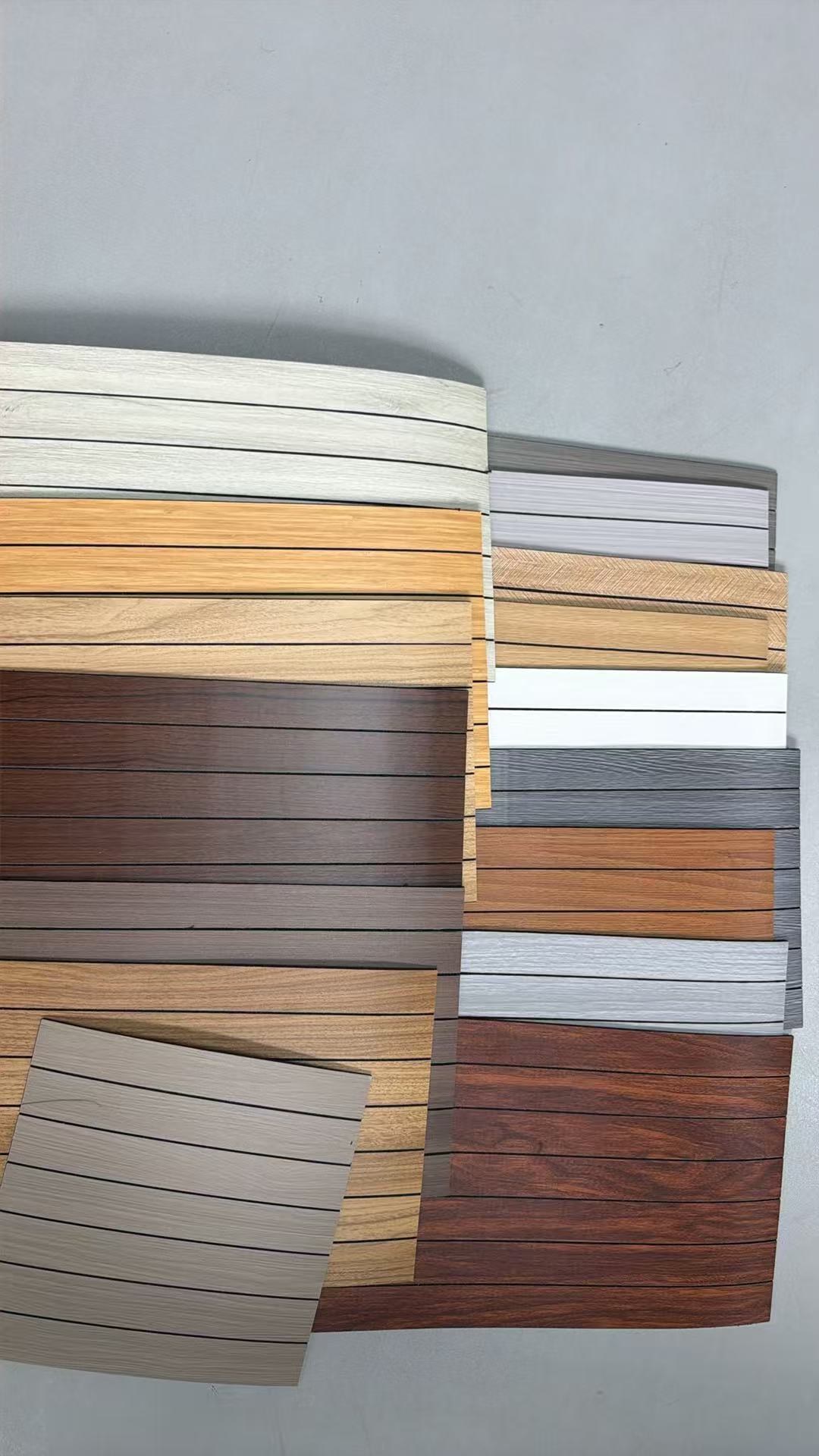
A PVC Self-Adhesive Wall Sticker is supplied as a flexible PVC roll and applied directly to a clean, flat and dry indoor wall.
The Real Decision Hiding Behind the Term 'PVC Wall Covering'
Most buyers arrive with the same question: which one is cheaper? That question produces the wrong answer, because the two products consume different inputs. A self-adhesive sticker consumes wall preparation, careful cutting and hand pressure. A panel system consumes a level base wall plus a fixing method - glue, aluminum profile, hidden fixing or a light steel keel with connecting buckles, trimming lines, corner accessories and screws.
The comparison only becomes useful when you separate five variables: the condition of the existing substrate, how long the finish must stay in place, how much of the wall faces water or impact, whether removal is required later, and how much of the wall you need to cover in one continuous visual field.
Two failure patterns are common. The first is applying a sticker over a dusty, uneven or damp wall. YIKE installation guidance is explicit: the wall must be flat, clean, dry and free of dust and sand, because loose powder, uneven or damp surfaces lead to blistering and falling off. The second is expecting a decorative panel to behave like a removable sticker. Panels are permanently fixed installations, and replacing one means working at panel level, not peeling a strip away.
Industry Background: Where Both Products Sit Today
Category data helps buyers understand scale, not supplier quality. According to Dataintelo, the global PVC panels market reached a valuation of USD 14.8 billion in 2025, and PVC wall panels held a 42.5 percent share of that market by product type in the same year. The same source reports that Asia-Pacific accounted for a 38.4 percent revenue share of the global PVC panels market in 2025. On the adhesive side, Dataintelo values the global peel-and-stick wallpaper market - the adjacent category that includes vinyl-based self-adhesive wall coverings - at USD 3.8 billion in 2025, with vinyl segments holding a 48.6 percent share.
These figures come with a definition warning. Published valuations of the wall-panel sub-segment diverge depending on whether flooring, ceilings and exterior systems are included, so market numbers should be read as category context rather than as evidence about any single factory. What the numbers do confirm is that both product families are established, widely traded categories with real supply depth - which is exactly why the comparison should be made on technical and commercial fit, not on category novelty.
Head-to-Head: Seven Dimensions That Change the Answer
1. Material and Construction
The PVC Self-Adhesive Wall Sticker is a PVC product with a thickness of 2.5 mm, available in widths of 600 mm and 1200 mm with a roll length of 3 m. YIKE supplies it as a PVC marble, PVC fluted, PVC travertine or PVC 3D self-adhesive wall sticker, with model designations YK-1200*3000mm and YK 600*3000mm. Its flexibility allows it to follow a wall plane and to be cut on site with a cutting knife.
The PVC Wall Panel is produced from PVC plus calcium carbonate and additives and is delivered as a rigid board. YIKE model designations include YK-1220*2440*5mm, YK-1220*2440*8mm, YK-1220*2800*5mm and YK-1220*2800*8mm, with 5 mm and 8 mm thickness options or customized thickness. Product types include bamboo charcoal wall panel, wood grain wall panel, large decorative wall panel, PVC decorative wall panel and interior wall panel.
Practical meaning: the 2.5 mm sticker adds a thin decorative layer with minimal build-up. The 5 mm and 8 mm panels add visible depth, stronger impact behavior and a more architectural edge profile.
2. Installation Surface Requirements
Surface condition separates the two products more sharply than price does. The sticker is intended for indoor enclosed spaces with clean and smooth wall surfaces, normal ambient temperature and a dry environment. It is installed by direct self-adhesive pasting, with no power and no auxiliary operation required, using wall cleaning tools, a smoothing scraper, a cutting knife and a corner trimming tool. The critical requirement is a flat, dry, dust-free substrate.
The panel is installed as a fixed wall cladding system. The documented method is keel snap-on fixing with a light steel keel or environmental adhesive, using a special connecting buckle, trimming lines, corner accessories and fixed screws. YIKE also lists glue fixing, aluminum profile and hidden fixing as installation routes. The base wall must still be cleaned and leveled before fixing, and the panels are then spliced tightly and finished with decorative trims.
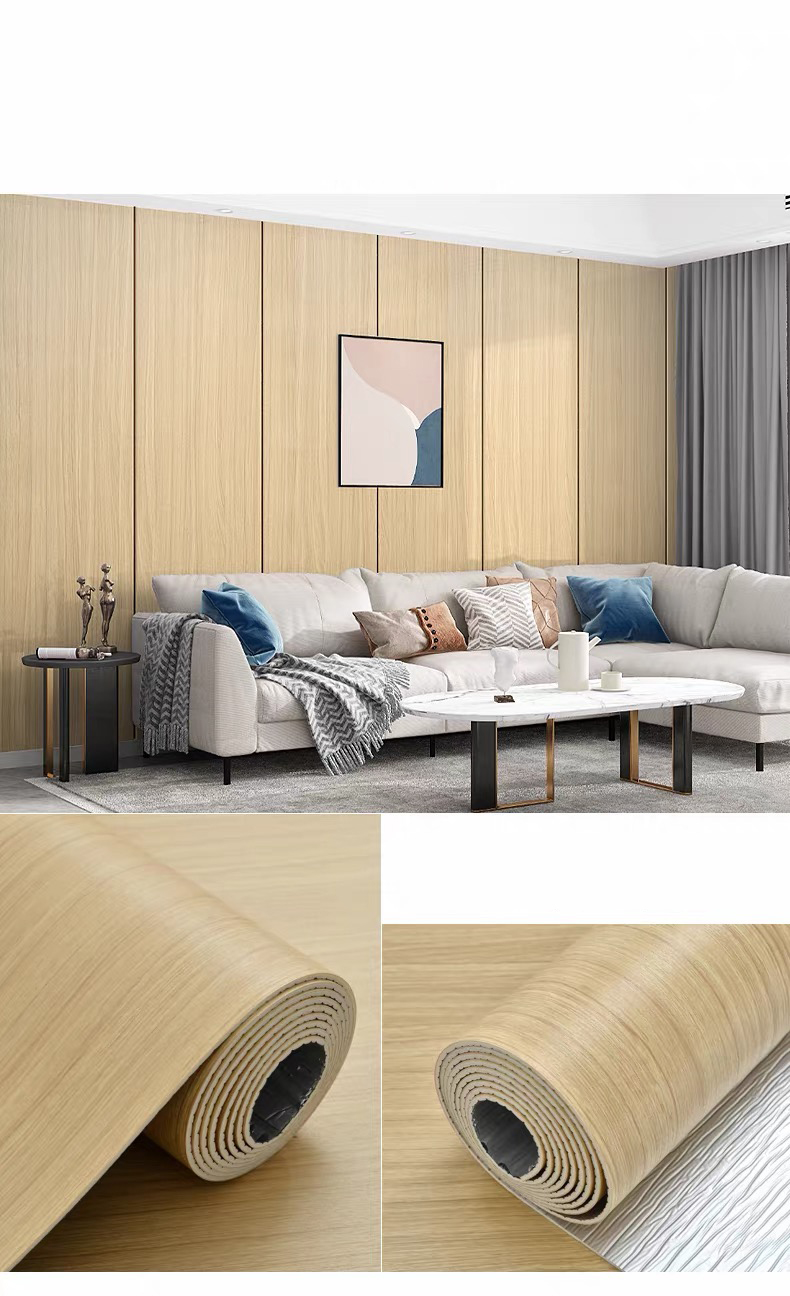
Sticker installation is a direct peel-and-stick process on a flat, clean and dry wall surface, using a smoothing scraper and cutting knife.
3. Coverage Per Unit and Material Planning
A roll-based product is planned by roll. Each sticker roll is 3 m long, so a 1200 mm roll covers twice the width of a 600 mm roll per roll purchased. Narrow rolls suit trims, columns, corners and small repair zones; wide rolls reduce the number of vertical seams on open wall fields.
Panels are planned by board. With a standard size of 1220 × 2440 mm and an alternative format of 1220 × 2800 mm or customized sizes, a single panel covers a large continuous area. YIKE lists large size seamless decoration as a design benefit of the panel line, which matters most on walls where visible seams would break up a marble, wood grain or metal pattern.
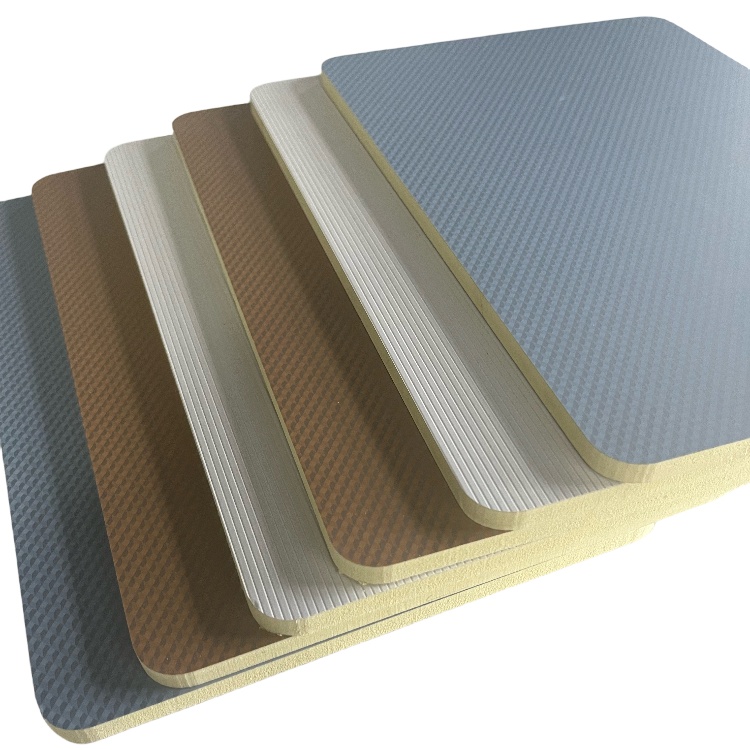
A PVC Wall Panel is a rigid decorative board available in 1220 × 2440 mm and 1220 × 2800 mm formats, with marble, wood grain, fabric, stone and metal patterns.
4. Permanence and Reversibility
The sticker is designed as a removable decoration. YIKE lists removable without damaging walls as a product feature, and the stated indoor service life is 5 to 10 years. Removal performance is realistic rather than absolute: under suitable indoor temperature and within the standard service period the sticker can be peeled off with less residual glue, while installation over many years or prolonged exposure to high temperature may leave a small amount of adhesive that requires a professional glue remover.
The panel is a permanent fixed installation. Because it is mechanically fixed or bonded, it is specified where the wall finish is expected to stay for the life of the fit-out rather than to be replaced seasonally. That difference alone decides many projects: rental turnover and short-cycle retail fit-outs often favor the sticker, while hotel, office and residential projects that are handed over to owners favor the panel.
5. Design Flexibility
The sticker line carries the broader pattern range of the two products. Available patterns are marble, wood grain, stone, concrete, brick, tile, solid color and floral, with glossy, matte and embossed surface finishes. That breadth supports fast color and texture changes across a building without changing the wall construction.
The panel line concentrates on architectural surfaces: marble, wood grain, fabric, stone and metal patterns, with fire retardant options available. Both products support OEM and ODM services, and the panel line accepts customized sizes in addition to the standard formats, which allows a project to match panel modules to wall dimensions rather than cutting every board.
6. Maintenance and Durability
Both surfaces are specified as waterproof and moisture resistant, and both are positioned as low-maintenance finishes. The sticker adds oil and stain resistance and easy cleaning, and is described as lightweight and flexible with wear-resistant and stain-resistant performance in use. The panel adds a scratch resistant surface, anti-collision and wear resistance, high flatness and a lightweight alternative to stone.
The difference appears at the edges. A sticker concentrates wear at seams and cut edges, where lifting can begin if the substrate was not prepared properly. A panel fixes that risk through its joint system and trims, which is why the panel is the stronger choice on walls that receive regular contact, trolley traffic or furniture abrasion.
7. Environmental and Safety Considerations
YIKE describes the sticker as an eco-friendly material with no residual glue designed into its removal behavior. The panel line is specified with formaldehyde-free environmental protection, a bamboo charcoal purification function on relevant models, mildew and moisture resistance, and fire retardant options; partial models reach B1 flame retardant grade.
For commercial interiors, verify the fire classification required by the destination market rather than assuming a generic claim. In North America, ASTM E84 (UL 723) is the primary fire test standard for interior wall and ceiling finishes, and a Class A rating requires a Flame Spread Index of 0 to 25. In the EU, building material reaction to fire is classified under EN 13501-1, where PVC panels often target Class B-s1, d0 for commercial use. Water absorption behavior is tested under ASTM D570 or ISO 62, and color fastness to artificial light under ISO 105-B02 - useful reference points when you request documentation from a supplier.
Comparison Table: Sticker vs. Panel at a Glance
| Decision dimension | PVC Self-Adhesive Wall Sticker | PVC Wall Panel |
|---|---|---|
| Material | PVC | PVC + calcium carbonate + additives |
| Thickness | 2.5 mm | 5 mm / 8 mm / customized |
| Standard unit | Roll: 600 mm or 1200 mm width × 3 m length | Board: 1220 × 2440 mm; 1220 × 2800 mm or customized |
| Documented models | YK-1200*3000mm, YK 600*3000mm | YK-1220*2440*5mm, YK-1220*2440*8mm, YK-1220*2800*5mm, YK-1220*2800*8mm |
| Substrate requirement | Flat, clean, dry, dust-free indoor wall; normal ambient temperature; dry environment | Cleaned and leveled base wall, then mechanical or adhesive fixing |
| Installation method | Direct peel-and-stick, no power required; scraper, cutting knife, corner trimming tool | Keel snap-on fixing with light steel keel or environmental adhesive; glue, aluminum profile or hidden fixing; buckles, trims and screws |
| Reversibility | Removable without damaging walls; minimal residue under normal indoor conditions and standard service period | Permanent fixed installation; replacement at panel level |
| Stated indoor service life | 5 to 10 years | Not stated in the product data; determined by substrate, fixing system and project conditions |
| Patterns | Marble, wood grain, stone, concrete, brick, tile, solid color, floral | Marble, wood grain, fabric, stone, metal |
| Surface finish | Glossy, matte, embossed | Decorative surface with fire retardant options available |
| Moisture performance | Waterproof and moisture resistant; not recommended for continuous water contact shower zones | Waterproof and moisture resistant, with mildew and moisture resistance specified |
| Durability features | Oil and stain resistant, easy to clean, lightweight and flexible, wear and stain resistant | Scratch resistant surface, anti-collision and wear resistance, high flatness, lightweight alternative to stone |
| Typical fit | Rental upgrades, local renovation, DIY home refresh, store fit-out, dry bathroom areas | Residential and commercial interiors, luxury wall cladding, TV background walls, hotel and office fit-outs |
| Customization | OEM and ODM supported | OEM and ODM supported, including customized sizes |
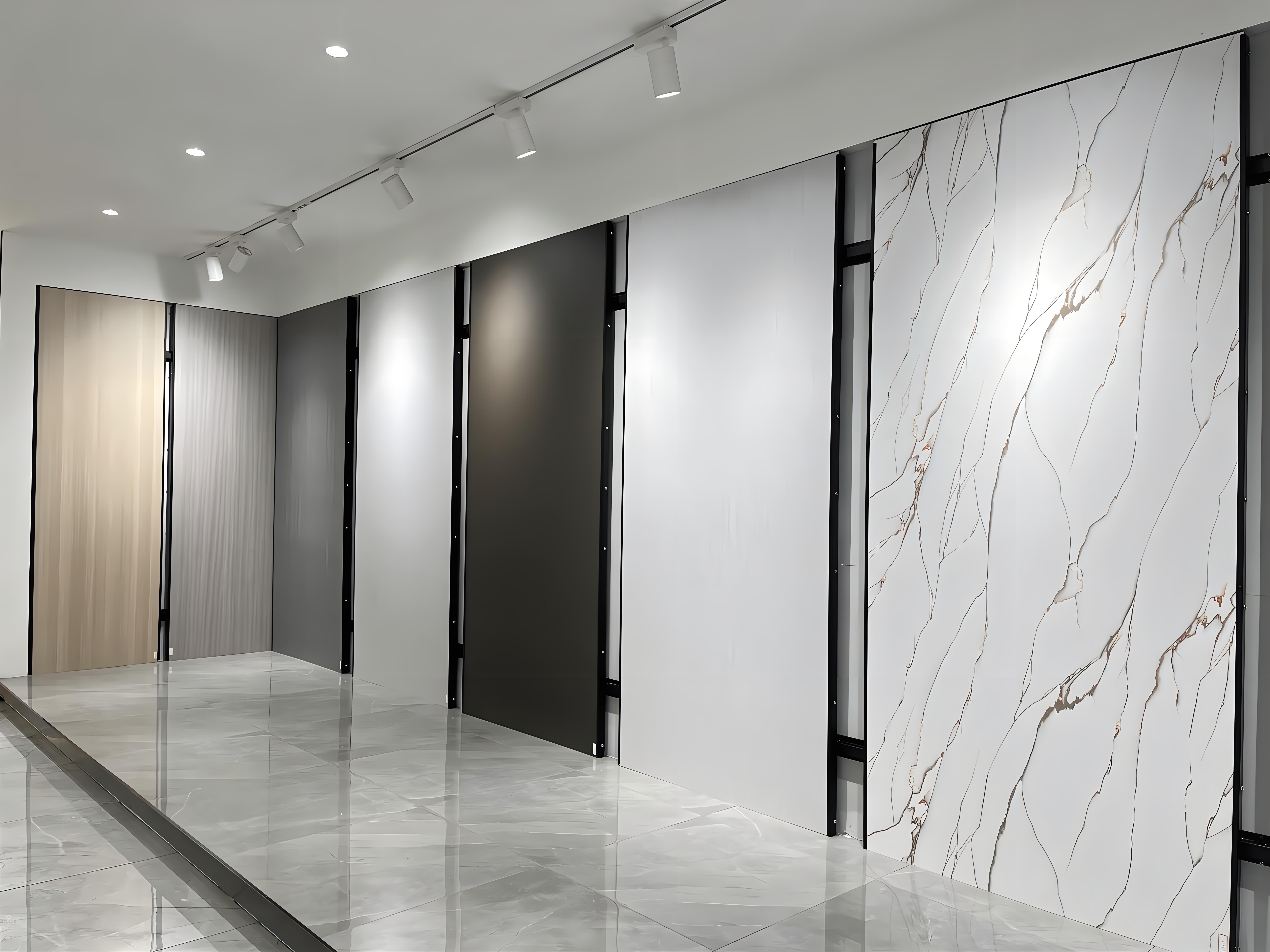
Panel installation is a fixed process: level the base wall, cut to size, install keel or adhesive, splice tightly, then fit decorative trims.
Step-by-Step Breakdown: How to Reach the Right Decision
- Define the wall and the intended duration. If the finish must be reversible within a rental cycle or a short lease, the sticker is the logical starting point. If the wall is part of a handed-over fit-out, start with the panel.
- Inspect the substrate before comparing prices. A sticker requires flat, clean and dry conditions; a dusty, uneven or damp wall will cause blistering and lifting. A panel requires a cleaned and leveled base plus a fixing route.
- Check the environment. Both products handle indoor humidity as waterproof, moisture-resistant finishes. Neither is intended for continuous water contact, so shower zones should be excluded from both specifications.
- Map the pattern to the design intent. Use the sticker range when you need concrete, brick, tile, floral or solid-color effects across many small areas. Use the panel range when marble, wood grain, fabric, stone or metal surfaces must read as large continuous fields.
- Select the fixing method before finalizing dimensions. Sticker rolls are cut to size on site; panels can be ordered in standard 1220 × 2440 mm, 1220 × 2800 mm or customized sizes to reduce cutting and joint count.
- Vet the supplier against product-specific checks. For the sticker, verify PVC material quality, printing definition, adhesive strength, residue-free removal performance, anti-yellowing behavior, waterproof property, thickness, pattern customization, roll size specification, certifications, production capacity and lead time. For the panel, verify board density, sheet flatness, surface film bonding strength, anti-yellowing performance, environmental performance, thickness and large-size specification, waterproof performance, export certifications, customization ability, production capacity and lead time.
- Validate with samples, then confirm capacity. Request pre-production samples from direct manufacturers and test them before bulk orders. Confirm the production capacity that will actually serve your order. YIKE operates a 10,000 square meter manufacturing facility with about 50 employees, 10 engineers in the R&D team, and an annual output of 5,000,000 square meters of decorative panels.
Use Cases: Which Product Fits Which Space
Rental property upgrades and apartment refurbishment. The sticker wins here because installation requires no power, no keel and no demolition, and the finish can be removed without damaging the wall at the end of a tenancy. YIKE lists property developers, rental property management and home improvement retailers among the buyer groups for this product.
Retail store fit-out and indoor local renovation. Sticker rolls in 600 mm or 1200 mm widths allow narrow trims, column wraps and partial wall repairs without ordering full boards, which suits chain store refreshes and store fit-out contractors.
Living rooms, bedrooms and dry bathroom areas. The sticker range covers marble, wood grain, brick, stone, tile and floral effects in glossy, matte or embossed finishes - enough variety to refresh a room without a construction schedule.
Hotel guest rooms, corridors and office interiors. The panel line is specified for hotel and hospitality industry, office and commercial space, real estate and property development projects, where a permanent, flat, moisture-resistant wall finish is required.
TV background walls and luxury wall cladding. The panel line is the natural fit: 1220 × 2440 mm and 1220 × 2800 mm formats in marble, wood grain, fabric, stone and metal patterns reduce seams and produce the large-format appearance associated with luxury cladding.
Whole-house and villa decoration. Large-size panels provide high flatness with fewer seams, sound insulation contribution and partial models at B1 flame retardant grade, which supports whole-house and villa-level fit-out planning.
Frequently Asked Questions
1. Are PVC self-adhesive wall stickers and PVC wall panels suitable for wet or humid interior areas?
Both products are specified as waterproof and moisture resistant, which makes them suitable for normal indoor humidity, and the panel line additionally specifies mildew and moisture resistance for interior wall decoration. Neither product is intended for continuous water contact: YIKE guidance states that the self-adhesive sticker is not recommended for a shower zone exposed to constant water, since long-term immersion causes edge warping and peeling, and it should be used on dry, flat indoor walls such as living rooms, bedrooms and dry bathroom areas. For commercial interiors, buyers should also confirm the fire classification required for wall finishes in the destination market - ASTM E84 in North America, where Class A requires a Flame Spread Index of 0 to 25, or EN 13501-1 in the EU, where PVC panels often target Class B-s1, d0 for commercial use.
2. How do I choose a reliable PVC Self-Adhesive Wall Sticker supplier?
Work with direct PVC self-adhesive wall sticker manufacturers that operate strict quality control and hold certificates, rather than trading intermediaries. Check the PVC surface texture, adhesive viscosity, anti-yellowing performance, backing release paper quality and printing clarity. Carry out a sample test on stickiness and ease of removal before bulk orders. The relevant selection parameters are PVC material quality, printing definition, adhesive strength, residue-free removal performance, anti-yellowing, waterproof property, thickness, pattern customization, roll size specification, certifications, price, production capacity and lead time. This standard applies to overseas importers, building material wholesalers and home decoration retailers buying for long-term supply. A supplier that can provide pre-production samples, adhesive test reports and consistent quality across mass orders is the safer partner for repeat business.
3. How do I choose a reliable PVC wall panel supplier?
Buy from direct manufacturers that supply PVC wall panel under strict quality control and hold certificates. Check sheet density, flatness, surface adhesion, anti-yellowing performance and environmental level, then confirm sample quality before placing bulk orders. The selection parameters to verify are board density, sheet flatness, surface film bonding strength, anti-yellowing performance, environmental performance, thickness and large-size specification, waterproof performance, export certifications, customization ability, price, production capacity and lead time. Suppliers that provide pre-production samples and relevant test reports, with stable quality across mass orders, are the ones suited to interior decoration import and engineering projects. This standard applies to overseas importers, building material wholesalers and interior decoration project buyers.
4. What drives the cost difference between a sticker project and a panel project?
The cost difference is not the material price alone; it comes from four components. The first is coverage format: the sticker is bought by 3 m rolls in 600 mm or 1200 mm widths and cut on site, while the panel is bought as 1220 × 2440 mm or 1220 × 2800 mm boards and can be ordered in customized sizes to reduce cutting waste. The second is substrate and fixing cost: a sticker needs cleaning, drying and smoothing only, whereas a panel needs a leveled base plus glue, aluminum profile, hidden fixing, or a light steel keel with connecting buckles, trims and screws. The third is labour time: sticker installation is direct peel-and-stick with no power required, while panel installation is a fixed multi-step process. The fourth is lifecycle: a 5 to 10 year sticker service life suits short cycles and reversible use, while a permanently fixed panel spreads its cost over the life of the fit-out. Being able to name these four drivers is more useful than a single quoted number.
5. What should I confirm with the supplier before placing a bulk order?
Confirm the sample first, then the capacity. Request pre-production samples of the exact sticker roll size or panel format you intend to buy, and test them for adhesion and removal on the sticker line, or for flatness, density and surface bonding on the panel line. Confirm the certifications and test documentation required by your market, the customization scope under OEM and ODM, the packaging method, and the production capacity and lead time that will serve your order. As a manufacturer reference point, HAINING YIKE NEW MATERIAL CO., LTD operates a 10,000 square meter facility with about 50 employees, 10 engineers in R&D, and an annual output of 5,000,000 square meters of decorative panels; approximately 100 percent of its products are exported to Central America, South America, Southeast Asia, the Middle East and Africa. You can request a sample or a quotation by email at sales@merchandise-eco.com, browse the product range at www.merchandise-eco.com, or download the current product catalog before finalizing your specification.
Conclusion: Let the Wall Decide
The choice between a PVC self-adhesive wall sticker and a PVC wall panel is not a quality contest - it is a fit question. The sticker is the right instrument when the wall already exists, the condition is flat, clean and dry, the finish must be installed without power or demolition, and the work needs to be reversible. Its 2.5 mm PVC construction, 600 mm and 1200 mm roll widths, 3 m roll length, eight pattern families and glossy, matte or embossed finishes give it the widest design reach of the two. The panel is the right instrument when the wall must be permanently clad: 5 mm or 8 mm rigid boards in 1220 × 2440 mm and 1220 × 2800 mm formats, fixed by glue, aluminum profile, hidden fixing or keel with trims, for residential and commercial interiors, luxury wall cladding and TV background walls.
Whichever you select, the outcome is decided before the first panel or first roll is opened. A flat, clean, dry substrate prevents sticker failure. A leveled base and the right fixing method prevent panel joint problems. Supplier checks on adhesive performance, sheet density, flatness, anti-yellowing behavior and environmental level predict how the finish will look in three years, not three days. Run the sample, verify the evidence, and the comparison becomes simple.
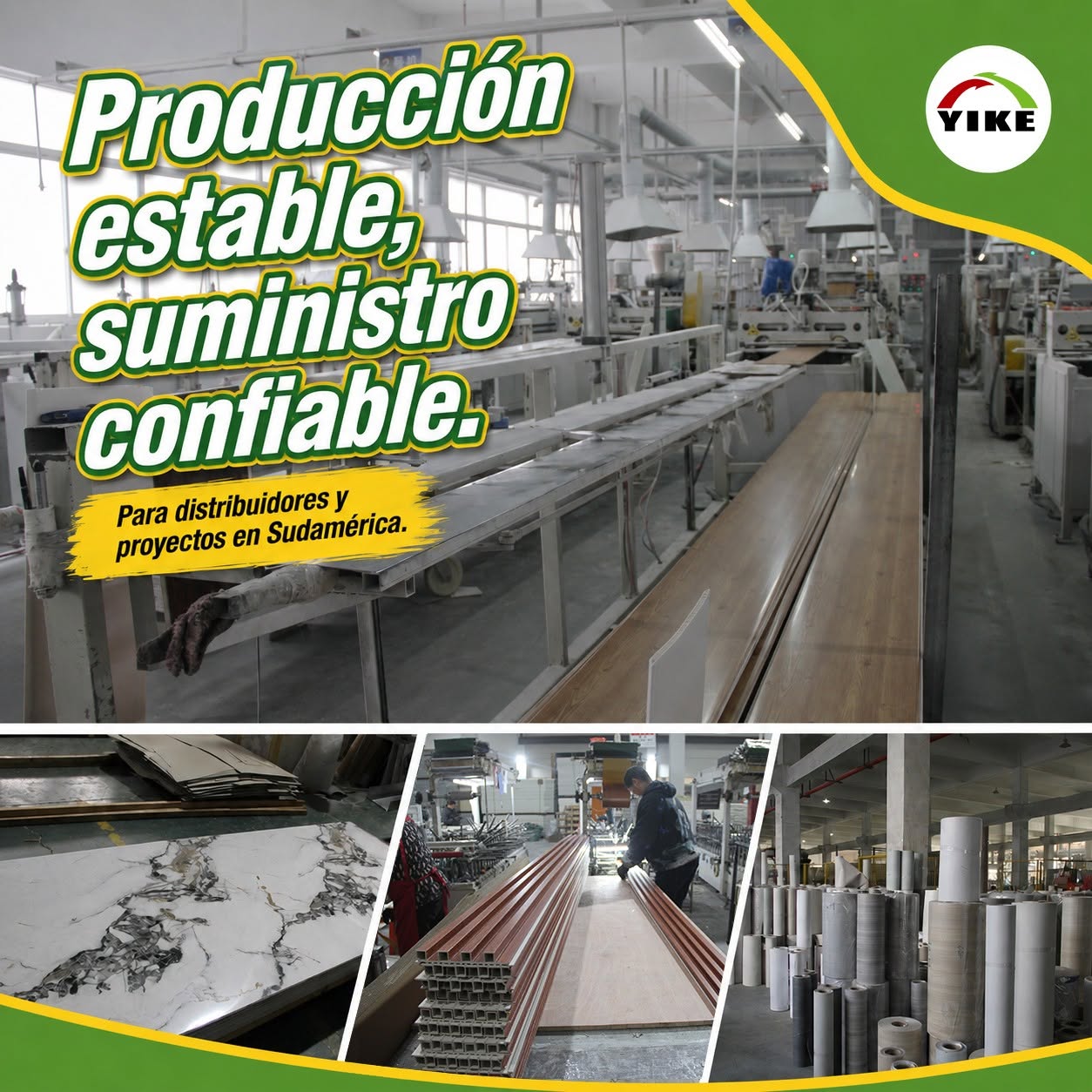
YIKE NEW MATERIAL manufactures PVC wall panels and PVC self-adhesive wall stickers at its 10,000 square meter facility, with an annual output of 5,000,000 square meters of decorative panels.
Request Samples or a Quote
YIKE NEW MATERIAL supplies both product lines to importers, distributors, contractors and project buyers. Send your wall size, pattern preference, quantity and destination port, and the team will recommend the sticker or panel format that fits.
Email: sales@merchandise-eco.com | Tel / WhatsApp: +86 188-5830-7787 | Website: www.merchandise-eco.com
Download the 2026 product catalog: YIKE New Material Catalog (PDF)
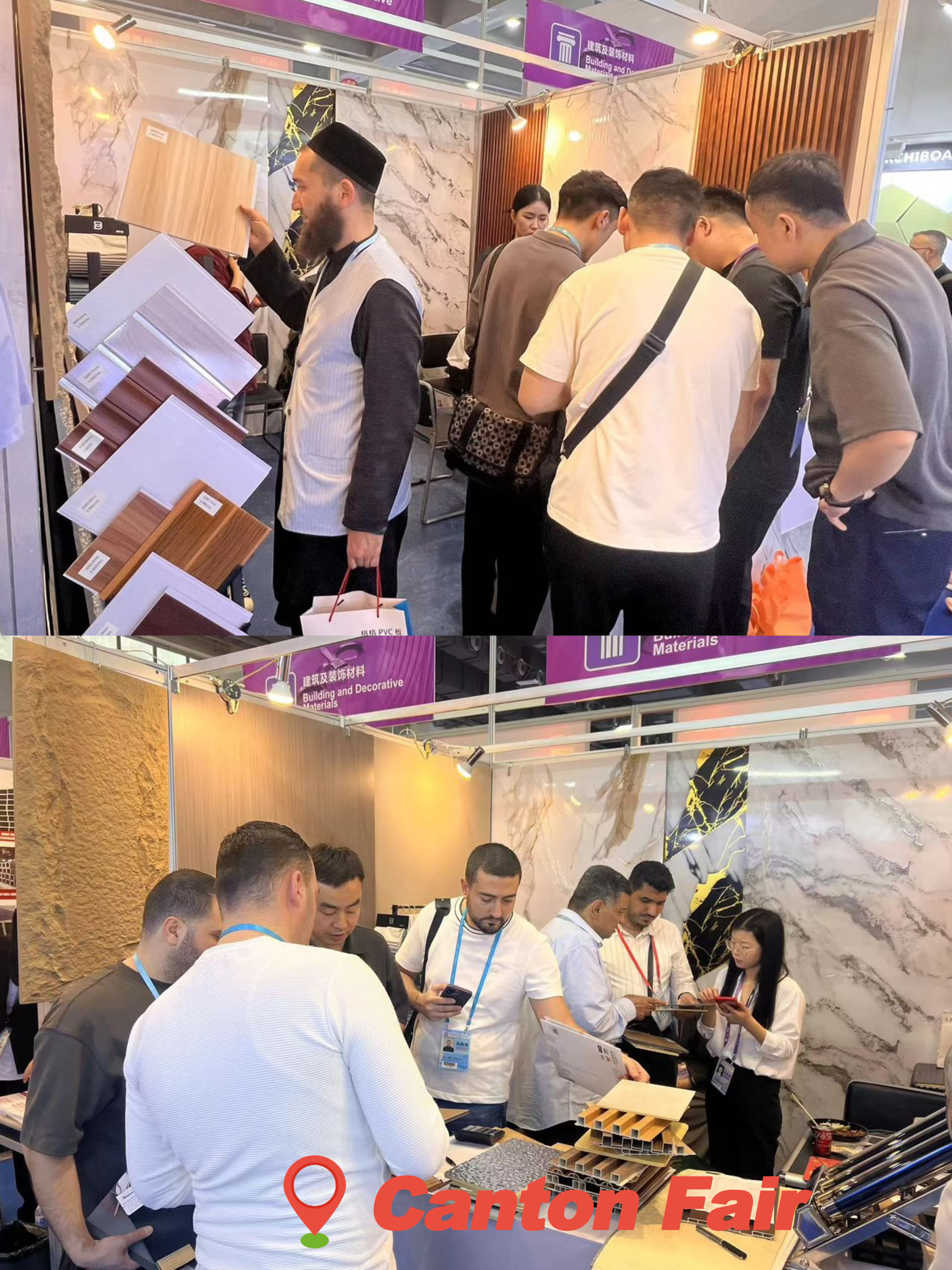
YIKE NEW MATERIAL meets importers, distributors and project buyers at international building material trade fairs.
Product specifications in this article reflect YIKE NEW MATERIAL published product data. Market figures are third-party category estimates cited with their sources and are provided as context, not as supplier performance claims.