
Vetting a PVC Panel Supplier: Capability and Delivery
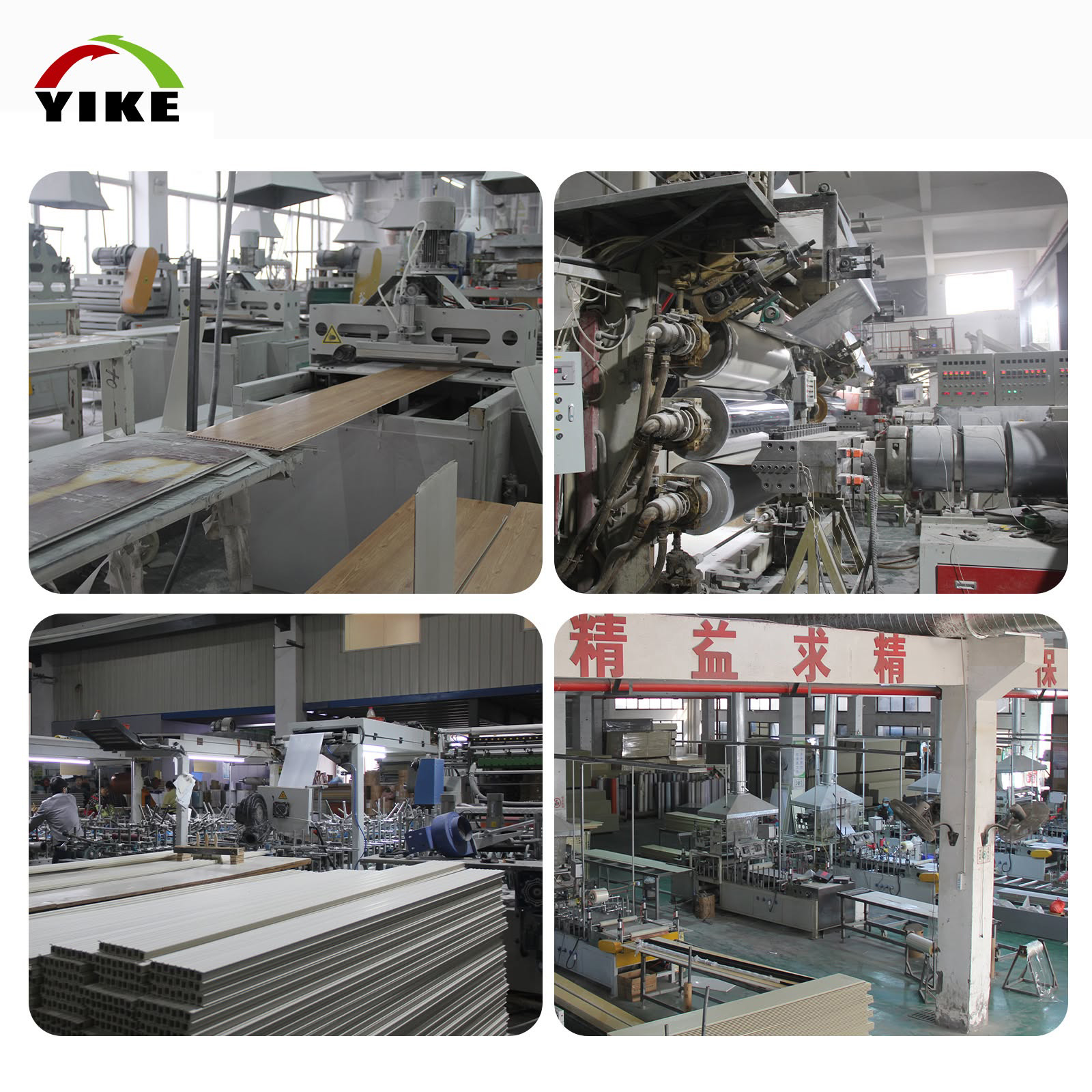
Panel production capability is verified at the line, not in the catalogue.
Most PVC panel sourcing problems do not begin with price. They begin with verification: the approved sample was a stock color the factory could not repeat, the container arrived with colors that did not match the approved references, the thickness on the packing list was nominal rather than measured, or the pre-shipment inspection happened after the container was sealed.
A supplier evaluation that stops at a sample and a quotation leaves those risks open. This guide runs five verification stages — scope and export record, sample protocol by product family, size and finish capability, capacity and MOQ, and acceptance criteria and loading — across PVC wall panels, PVC ceiling panels, PVC marble sheets, PVC self-adhesive wall stickers, and WPC and outdoor WPC wall panels. Each stage ends in a document that can be attached to the purchase order. YIKE (Haining Yike New Material Co., Ltd.) is used as a worked example because its declared capacity, customization scope, MOQ structure and acceptance criteria are specific enough to test rather than accept.
1. What capability verification has to prove
A sample answers one question: can this supplier produce one acceptable piece? A bulk order asks another: can the supplier repeat that piece across a full container, in four to six colors, inside a stated lead time, with the batch that ships being the batch that was inspected?
Separating the answer into three capabilities keeps the evaluation honest:
- Product capability — the material family, model, thickness, width, length and surface finish the supplier can actually produce.
- Repetition capability — holding color, pattern, flatness and film bonding across batches and across a multi-color container.
- Handover capability — inspection, documentation, loading arrangement and the payment trigger that decides whether the buyer still has leverage when the container is sealed.
A supplier can be strong on the first and ordinary on the other two, and an order that assumes all three are linked is where disputes start. The practical rule: if the supplier cannot name the evidence for a claim — a test report, a batch record, a photo set taken at loading — treat the claim as unverified rather than delivered.
2. Why decorative panel sourcing is verification-heavy
Panel catalogues group products that look similar and behave differently in service. A rigid PVC ceiling plank, a film-faced PVC wall panel, a UV-coated PVC marble sheet, a self-adhesive PVC roll and a wood-plastic composite profile are different material systems with different failure modes, so each needs a different piece of evidence.
- PVC ceiling panels are specified for humid interiors because the material does not absorb water; the documented risks are deformation and fading under long-term heat exposure, and wide seams or loose panels from irregular keel work.
- PVC wall panels carry risks around surface fading, local deformation in humid rooms, splicing gaps and surface scratching; on large-size panels, flatness and seam count matter most.
- PVC marble sheets are indoor panels: long-term UV exposure fades and ages the surface, and the documented risks include peeling or hollowing from poor adhesive or an uneven base, scratching, and batch color difference.
- Self-adhesive stickers fail through insufficient adhesion, residual glue on removal, yellowing and bubbling — mostly adhesive and release-paper quality plus wall condition.
- WPC profiles add temperature-related deformation and, outdoors, UV fading, water ingress and fastener problems, which is why indoor WPC should not be substituted for an exterior facade.
The commercial side is equally specific. Orders ship by container, sell by color and pattern, and settle on terms that are standard in this segment: FOB, CIF or CFR delivery, 30% T/T in advance with 70% against a copy of the bill of lading, and a pre-shipment test as the stated acceptance criterion. Those terms fix the exact moments where verification can still change an outcome.
3. The five-stage sequence
- Scope and export record — which product families are produced, where they ship, and what the capacity figure measures.
- Sample protocol — what the sample must be tested for, per family, and how it is retained as the approved reference.
- Size, thickness and finish capability — the model list, the standard and custom ranges, and the customization scope.
- Capacity, MOQ and lead time — read as one system, because MOQ is expressed in colors and lead time depends on how many colors are in the order.
- Acceptance criteria and loading — the test, the documents, the loading sequence and the payment trigger.
4. Stage 1: scope, identity and export record
Start with what the supplier actually makes. A company producing interior panels, marble sheets, ceiling planks, stickers and outdoor WPC in one facility can consolidate a mixed container and answer a batch question about the line that ran your film. A trading intermediary with the same catalogue cannot.
YIKE's declared profile gives a concrete starting point. Haining Yike New Material Co., Ltd. was founded in 2019, operates a 10,000 m² factory with 50 employees and a 10-engineer R&D team, and reports annual output of 5,000,000 m² against a monthly capacity of 500,000 m². Its range covers PVC ceiling panels, PVC wall panels, PVC marble sheets and UV marble sheets, PVC marble wall panels, WPC wall panels, WPC fluted wall panels, outdoor WPC wall panels, PVC decorative panels and PVC self-adhesive wall stickers. Export accounts for 100% of sales, across Central America, South America, Southeast Asia, the Middle East and Africa, including named markets such as Honduras, Nicaragua, Guatemala, Colombia, Ecuador, Peru and the Philippines.
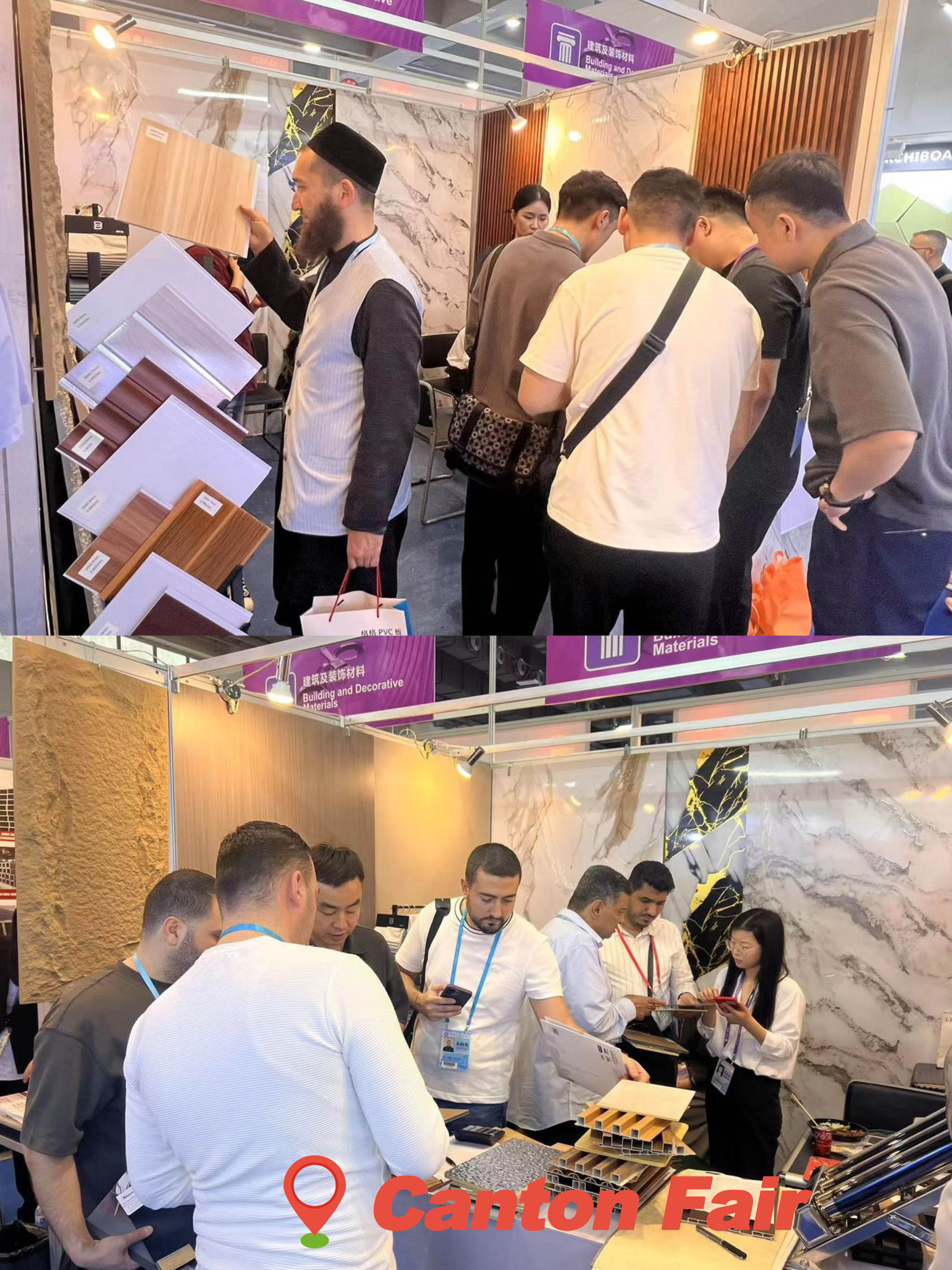
Export experience is checkable: ask for the markets, the shipment records and the documents behind them.
Two cautions belong here. First, capacity and output figures are supplier-declared; use them to test order fit, then cross-check against order history for a program of similar size. Second, certificates are product- and market-specific. YIKE's stated quality control is a 100% pre-shipment test plus third-party inspection such as SGS — that is an inspection commitment and should be written into the order as one, while the individual test report or certificate is requested against the exact product and destination.
5. Stage 2: the sample protocol, by product family
A useful sample request names the family, the model or profile, the thickness, the color or pattern reference, the surface finish and the test the sample must pass. Without those five items, a sample becomes a color reference rather than a capability test.
PVC ceiling panels
Confirm the model and its thickness first — the listed range runs from YK-200×6 mm through YK-200×7 mm, YK-200×8 mm, YK-250×7 mm, YK-250×7.5 mm, YK-250×8 mm, YK-300×8 mm and YK-300×9 mm to YK-400×8 mm. On the sample, check flatness along the plank, interlock fit, stain resistance and edge squareness. Because ceiling panels sit in kitchens, bathrooms and corridors, ask for the moisture and anti-aging evidence behind waterproof and color-fastness claims instead of accepting the adjective.
PVC wall panels
Check density, flatness, surface film bonding strength, anti-yellowing performance and environmental level. On large-size panels, flatness across the whole sheet and the resulting seam count matter more than a small cut sample suggests. Where fire performance is in scope, the B1 flame-retardant claim applies to partial models only and must be evidenced for the exact model being purchased.
PVC marble sheets
The listed sheet range is 1,220 mm wide in 2,440 mm and 2,800 mm lengths, at 2 mm, 2.2 mm, 2.5 mm, 2.8 mm and 3 mm. On the sample, check flatness, film durability and anti-yellowing, and test scratch behaviour: the standard UV finish gives basic anti-scratch performance, and an upgraded anti-scratch surface is available on request for engineering projects. Marble sheets are indoor panels, so a facade application should be ruled out at this stage rather than discovered later.
PVC self-adhesive wall stickers
Test adhesive viscosity on the substrate you will actually specify — flat, clean, dry and dust-free — and check removal behaviour, anti-yellowing, backing release paper quality and printing clarity. Roll dimension and pattern customization belong in the same request. Since adhesion depends on the wall, pair the sample with installation instructions; continuous water-contact shower zones sit outside the product's intended use.
WPC and outdoor WPC wall panels
For interior WPC, check density and wood-plastic ratio, anti-deformation behaviour, coating durability, and moisture and mildew performance in humid interiors. The listed profiles are YK-160×20×2900 mm, YK-160×24×2900 mm, YK-150×10×2900 mm, YK-168×24×2900 mm, YK-150×15×2900 mm and YK-200×20×2900 mm. For outdoor WPC, the sample must represent the exterior formulation: UV-stabilized raw materials, the surface co-extrusion layer where specified, anti-fading behaviour, and the fixing set of keels, stainless fasteners and expansion gaps. Indoor WPC cannot replace an exterior facade, and the sample label should state which formulation you are holding.
Retain the approved sample with an ID and reference that ID in the purchase order. An unreferenced sample becomes a memory of a color, not a specification.
6. Stage 3: size, thickness and finish capability
Model lists are the fastest way to see whether a supplier's standard range covers your project, and where customization begins.
| Product family | Listed model range | How to read the code |
|---|---|---|
| PVC Ceiling Panel | YK-200×6 mm, YK-200×7 mm, YK-200×8 mm, YK-250×7 mm, YK-250×7.5 mm, YK-250×8 mm, YK-300×8 mm, YK-300×9 mm, YK-400×8 mm | Width × thickness; the 200–400 mm width and 6–9 mm thickness set the plank count per ceiling area |
| PVC Marble Sheet | YK-1220×2440×2 / 2.2 / 2.5 / 2.8 / 3 mm; YK-1220×2800×2 / 2.2 / 2.5 / 2.8 / 3 mm | Width × length × thickness; length choice changes the joint layout on tall walls |
| WPC Wall Panel | YK-160×20×2900 mm, YK-160×24×2900 mm, YK-150×10×2900 mm, YK-168×24×2900 mm, YK-150×15×2900 mm, YK-200×20×2900 mm | Width × thickness × length; thickness separates light interior profiles from heavier ones |
Customization is a separate question from range. YIKE runs OEM/ODM production with customization of color, pattern and logo — relevant for distributors building a private label and for projects needing a specific marble pattern or profile finish. For PVC wall panels, self-adhesive stickers and outdoor WPC profiles, request the current model list and profile drawing directly: width, thickness, length and roll dimension are series-specific, and a verbal "we can do any size" is not a substitute for the list. Surface finish belongs in the same confirmation, because finish drives both appearance and the maintenance instruction you pass to the end user.
7. Stage 4: capacity, MOQ and lead time as one system
These three numbers are usually quoted separately and only make sense together. YIKE states monthly capacity of 500,000 m², a lead time of 14–30 days, and an MOQ of one 20-foot container with 4–6 colors from the e-catalogue. Below a full container, the alternatives are 500 m² per color from stock colors, or 1,000 m² per color from the e-catalogue.
Read that structure carefully: the MOQ is expressed in colors, not only in area, which tells you that color count is the real planning unit. Three questions follow. Which of my colors are stock colors and which come from the catalogue? Where does my order sit inside the 14–30 day window given its color count? And when does the clock start — at deposit, at color approval, or at artwork approval for a private-label pattern?
Capacity claims are better tested against programs than single orders. A distributor taking more than 60 × 40HQ containers per year, as in YIKE's Colombian program, is testing scheduling and raw-material planning; a buyer placing one container is testing a production slot. Ask for the slot, and on repeat orders ask for the previous batch's color reference so the new run has something to match.
8. Stage 5: from acceptance criteria to delivery assurance
Delivery assurance is not a promise about punctuality. It is the set of controls that decides what the buyer can still do if the batch is wrong. The term sheet in this segment is short, which makes every line worth converting into a control.
| Term | Stated position (YIKE) | What to write into the purchase order |
|---|---|---|
| MOQ | One 20-foot container with 4–6 colors from the e-catalogue; below container size, 500 m² per color from stock colors or 1,000 m² per color from the e-catalogue | Quantity per color and the color path that applies, so the MOQ is calculated the same way by both sides |
| Delivery terms | FOB / CIF / CFR | Named port, the point where risk transfers, and whether a loading record is required |
| Acceptance criteria | Pre-shipment test; 100% pre-shipment test plus third-party inspection (SGS) | Test items per product family, sampling basis, and the inspection point fixed before container sealing |
| Payment terms | 30% T/T in advance, 70% T/T against copy of B/L | Release the balance against the inspection report and loading record, not against departure alone |
| Lead time | 14–30 days | Define the start event and the events that restart the clock, such as a color or artwork change |
| After-sales | Remote technical support | State the channel and the response expectation for installation questions |
The structurally strongest line is the balance payment against a copy of the bill of lading: it keeps 70% of the value in the buyer's hands until shipping documents exist. That advantage disappears if inspection happens after the container is sealed, because the buyer then pays against documents for a container nobody has opened. Two controls close the gap — a written inspection plan with test items and sampling per product family, and a loading record issued before sealing.
For mixed containers, add a loading sequence: which family loads first, how colors are segregated, and how marble sheets are packed relative to ceiling planks and profiles. YIKE describes flexible container loading as part of its export service, which is exactly the kind of claim that should become a loading plan rather than stay a phrase.
9. Product-specific risk questions to put in writing
The table converts each family's documented failure modes into a verification question and the evidence that should travel with the shipment.
| Product family | Documented failure mode | Verification question | Evidence to attach |
|---|---|---|---|
| PVC Ceiling Panel | Deformation and fading under long-term heat; wide seams or loose panels from non-standard keel work | Which thickness model, and what flatness and interlock check is recorded per batch? | Thickness measurement record and pre-shipment inspection report |
| PVC Wall Panel | Surface fading, deformation in humid rooms, splicing deviation, surface scratching | Which film and environmental level, and does the B1 claim apply to this exact model? | Film bonding and anti-yellowing report; flame report for the named model |
| PVC Marble Sheet | UV fading, peeling or hollowing, scratching, batch color difference | Which thickness, and how is color matched between production batches? | Batch color reference and retained approved sample |
| PVC Self-Adhesive Wall Sticker | Adhesion loss, residual glue, yellowing, bubbling during application | Which adhesive and release paper, and what removal test was run? | Adhesive test report and a retained sample roll |
| WPC / Outdoor WPC Wall Panel | Deformation at temperature extremes, mildew, UV fading, water ingress, fastener failure | Which profile and surface system — co-extruded or not — and which fastener and keel set? | Weather-resistance statement, fixing schedule and loading plan |
Two patterns are worth noting. Every row's evidence is a record rather than a promise — a measurement, a report, a retained sample. And batch color is the recurring risk across marble sheets, wall panels and stickers, which is why color references belong in the acceptance criteria and not only in the artwork file.
10. How the framework reads against real supply programs
Documented programs show where each stage carries weight.
Ecuador — mixed-category commercial fit-out. A building materials distributor has taken 3 × 40HQ containers over a two-year relationship, applying PVC ceiling panels, PVC marble sheets and WPC wall panels in retail shops, brand stores, showrooms, offices and restaurants. The verification lesson is per-family: one container carrying three families needs three inspection lines and one approved color reference per family, not one reference for the whole order.
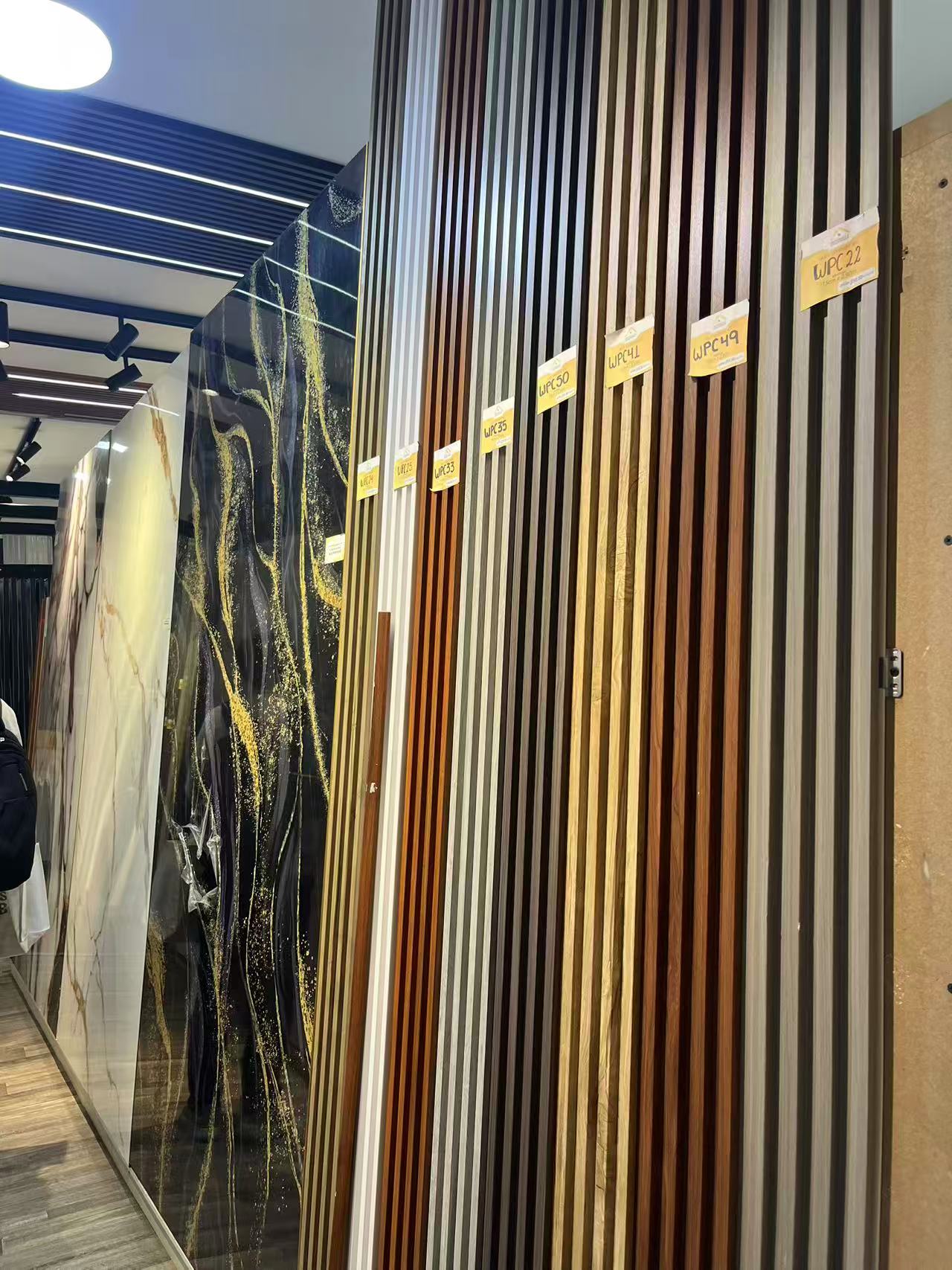
A multi-category container needs a per-family inspection line, not a single reference.
Indonesia — a repeat renovation program. A renovation service provider has imported 10 × 40HQ containers over three years, using ceiling panels, marble sheets and WPC panels across residential and commercial projects in a tropical climate. Repeat programs are where batch color records earn their keep, because the same SKU returns to the same market and drift becomes visible to the end customer.
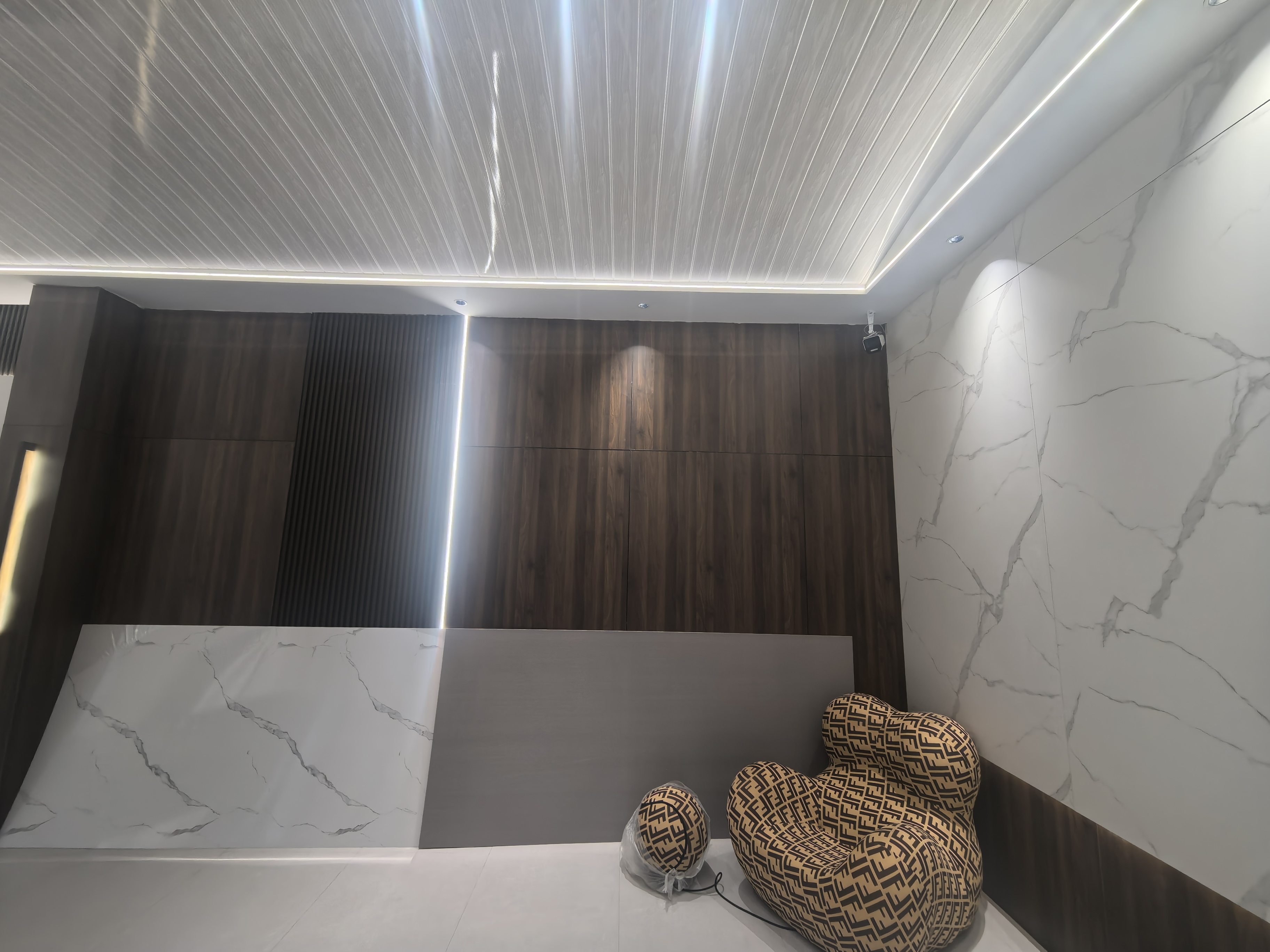
Distributor programs test scheduling and batch consistency more than sample quality.
Colombia — volume as the constraint. More than 60 × 40HQ containers per year over two years for a distributor buying the complete decorative range. At that scale the binding constraint is scheduling and raw-material planning rather than sample quality, so capacity questions move to the front of the evaluation.
Malaysia and El Salvador — smaller programs, same criteria. 10 × 40HQ containers over two years with panels installed in over 100 residential houses in Malaysia, and 1 × 40HQ container over three years for residential decoration in El Salvador. A one-container buyer can borrow the acceptance criteria of a repeat program: the same inspection items, the same color-reference discipline, the same loading record.
11. The acceptance criteria checklist
Attach this to the purchase order and verification stops being a conversation:
- Product family, model number and profile drawing, with thickness, width and length in millimetres.
- Surface finish and one approved color or pattern reference per SKU, retained with an ID.
- Quantity per color, and which color path applies — stock color or e-catalogue.
- Test items and sampling for the pre-shipment test, per product family.
- Third-party inspection instruction where required (SGS or equivalent), with the inspection point set before container sealing.
- Packing specification, including surface protection for marble sheets and edge protection for long profiles.
- Loading plan and photo record for mixed containers.
- Delivery term (FOB, CIF or CFR), named port, and the document list.
- Payment schedule — 30% T/T in advance, 70% against a copy of the bill of lading — with the balance released against the inspection and loading record.
- Lead time of 14–30 days with a defined start event and the events that restart it.
12. Frequently asked questions
What should a buyer verify when appointing an OEM PVC panel manufacturer for custom wall and ceiling projects?
Verify five things in order. Which families are produced in-house — wall panels, ceiling panels, marble sheets, WPC and stickers. What customization covers: YIKE states OEM/ODM production with color, pattern and logo customization. Which models and thicknesses exist for your wall and ceiling systems, taken from the model list rather than conversation. What the capacity and timing are — 500,000 m² monthly capacity and a 14–30 day lead time. And what the acceptance evidence is: a 100% pre-shipment test plus third-party inspection such as SGS, with remote technical support after delivery.
How do I verify a PVC ceiling panel supplier before a bulk order?
Match the model and thickness to the listed range, from YK-200×6 mm to YK-400×8 mm, and check flatness, interlock fit and edge squareness on the sample. Confirm the moisture and anti-aging evidence behind waterproof and color-fastness claims, since ceiling panels serve kitchens, bathrooms and corridors. Ask how keel spacing and installation are specified, because wide seams and loose panels trace back to keel work. Then set the pre-shipment test items and the inspection point before the container is sealed.
What should I check in a PVC wall panel supplier?
Check sheet density, flatness, surface film bonding strength, anti-yellowing performance and environmental level, and confirm the thickness and large-size options rather than assuming them. For large-size panels, review flatness across the whole sheet and the seam count it produces. If fire performance matters, note that the B1 flame-retardant claim covers partial models only and must be documented for the exact model. Finally, confirm capacity, MOQ and lead time against your program, not against a single sample order.
Which questions should I ask a PVC marble sheet supplier?
Ask about production capacity, MOQ, lead time, customization options, quality inspection procedures, certificates, packaging, warranty and export experience. On the product side, confirm thickness from the 2–3 mm range in 1,220 × 2,440 mm and 1,220 × 2,800 mm sheets, check flatness, film durability and anti-yellowing on the sample, and ask how color is matched between batches. Confirm that the application is indoor: long-term UV exposure fades and ages the surface. Where scratch resistance matters, ask for the upgraded anti-scratch surface.
How do I evaluate a PVC self-adhesive wall sticker supplier?
Check PVC surface texture, adhesive viscosity, anti-yellowing performance, backing release paper quality and printing clarity, then run a stickiness and removal test on the wall type you will specify. Confirm roll dimensions and pattern customization, since both are quoted per order. Because adhesion depends on a flat, clean, dry and dust-free wall, request installation guidance with the sample. Avoid specifying the product for continuous water-contact shower zones, where edge warping follows long-term immersion.
How do I evaluate an outdoor WPC wall panel supplier?
Look for proven export experience, consistent product quality, relevant certifications and customization capability, then request samples, capacity evidence, project references and after-sales terms. Technically, verify the exterior formulation: UV-stabilized raw materials, anti-fading behaviour, the co-extrusion layer where specified, waterproofing, and the fixing set of corrosion-resistant keels, stainless fasteners and expansion gaps. Indoor WPC is not a substitute for an exterior facade, so confirm on the sample label which formulation you are testing.
What are YIKE's purchasing terms and acceptance criteria?
MOQ is one 20-foot container with 4–6 colors from the e-catalogue; below container size, 500 m² per color from stock colors or 1,000 m² per color from the e-catalogue. Delivery terms are FOB, CIF or CFR. Acceptance criteria are a pre-shipment test, supported by 100% pre-shipment testing and third-party inspection such as SGS. Payment is 30% T/T in advance and 70% T/T against a copy of the bill of lading, and lead time is 14–30 days. The full model and finish list is in the catalogue below.
13. Conclusion
Capability and delivery are the same question asked at two moments. At the sample stage, the question is whether the supplier can produce the panel. At the loading stage, it is whether the supplier can prove that the panels in the container are the ones that were approved. A PVC panel supplier worth appointing answers both with a record: a model list, an approved sample ID, a batch color reference, a pre-shipment test, and a loading record attached to FOB, CIF or CFR terms on 30% advance and 70% against the bill of lading.
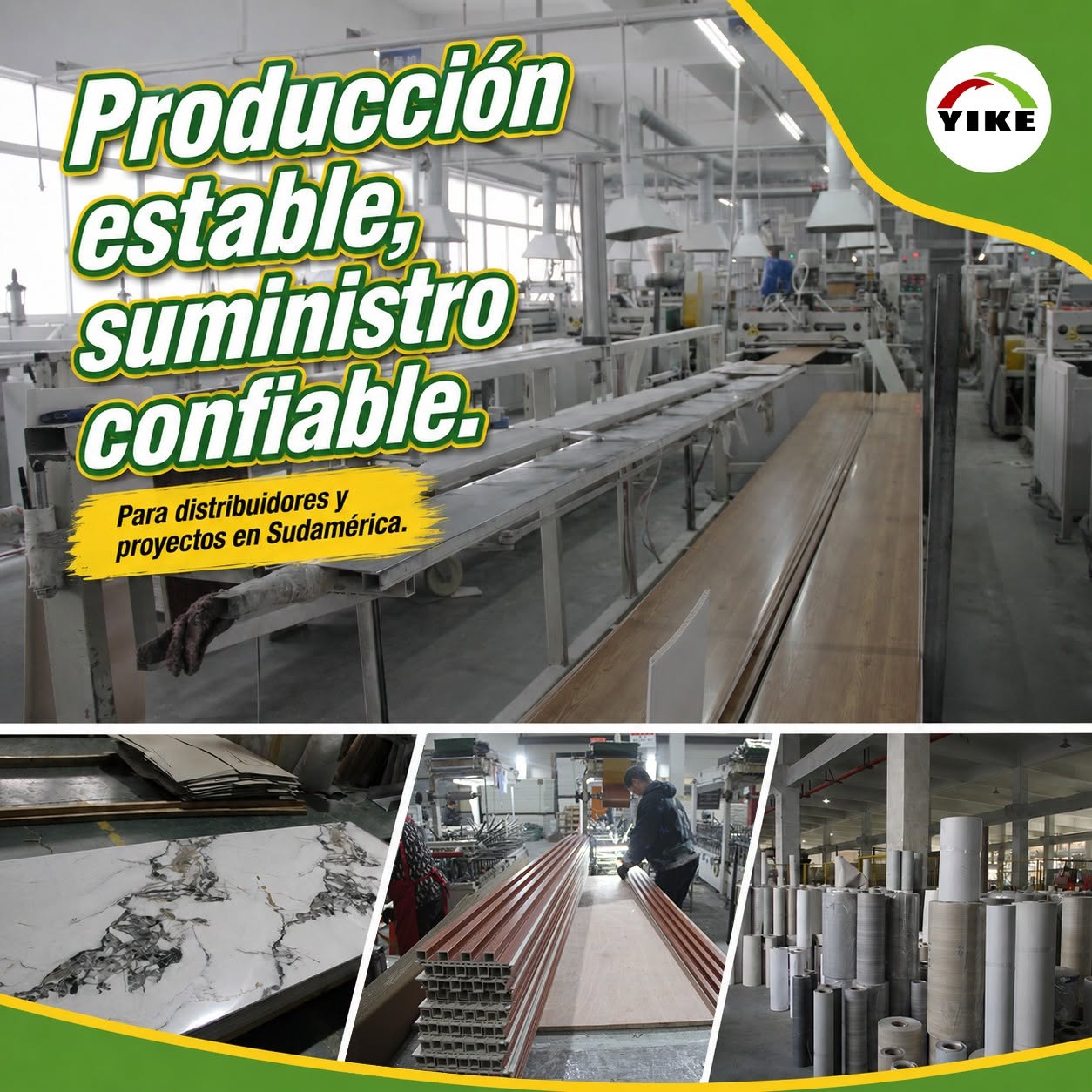
Capability evidence and loading records come from the same place — the factory that ships the order.
The five stages can be completed in a week when the supplier already holds the evidence, and they will take longer when the evidence has to be created after the order — which is itself the answer to the evaluation.
YIKE (Haining Yike New Material Co., Ltd.) publishes a 2026 product catalogue covering the panel models, thickness ranges and customization options referenced in this guide; it can be downloaded here: YIKE New Material catalogue (PDF). Purchasing enquiries go to James Cao at sales@merchandise-eco.com or +86 188-5830-7787. Company website: YIKE New Material.
Have Questions or Need More Details?
Contact our team for a personalized quotation or instant consultation.
Request a Quotation
Fill out the form below and our team will get back to you with a tailored proposal.
WhatsApp Direct Chat
Prefer to chat in real-time? Message us on WhatsApp for instant assistance & quick answers.
- Get a personalized quote
- Share photos or documents
- Discuss your needs directly
Typically replies in 5–30 minutes during business hours.