
4D-PRO-ML Zirconia Block Sintering: A Technical Guide to Curve Control
Sintering a 4D-PRO-ML zirconia block correctly depends on three verified controls working together: the published sintering window of 1430 °C–1450 °C applied through a standard heating and holding procedure, a dental sintering furnace programmed and confirmed against that curve, and an indoor constant-temperature dental laboratory environment. None of the three compensates for the others. A furnace running an unverified program, or a correct program run in a room with unstable conditions, produces the same outcome: shrinkage and translucency that no longer match what the block was validated for, and in the worst case a cracked unit.
This guide is written for laboratory managers, CAD/CAM supervisors and technicians who already own the equipment and want a repeatable verification routine rather than a list of settings to copy. It covers the parameter set that applies to 4D-PRO-ML, the role of the dental sintering furnace, the laboratory conditions the process assumes, a step-by-step control sequence, and the failure modes that curve control is designed to prevent.

Zirconia block production at the YIPANG zirconia factory — the material and the thermal process are validated together, not separately.
Problem Definition: Why the Sintering Curve, Not the Milling File, Decides the Fit
Most laboratories audit the digital chain carefully — scan, design, nesting, toolpath — and then treat sintering as a machine that runs itself. A milled 4D-PRO-ML workpiece leaves the milling machine in a porous, enlarged state and only becomes a dental prosthesis after densification. Marginal fit, occlusion, translucency and shade stability are all finalized inside that thermal cycle, not in the CAD software.
Three specific problems recur in curve control:
- Parameter entry is not verified against product data. The temperature window is known in principle, but the program in the furnace is often trusted from memory, carried over from a different material, or copied from a colleague's template without a second check.
- Furnace behavior is assumed rather than confirmed. Ramp, holding time and cooling behavior belong to the program. A program that was edited for another material is not automatically valid for a zirconia block, even if the peak temperature looks correct.
- Room conditions are treated as background noise. 4D-PRO-ML is specified for an indoor constant-temperature dental laboratory environment, not a space with open doors, direct sunlight or variable airflow through the sintering area.
The published risk guidance for 4D-PRO-ML is short and specific: avoid rapid temperature change to prevent cracking, and do not exceed the maximum sintering temperature. Both are curve-control failures rather than material failures, which is exactly why both are preventable through a documented verification routine instead of operator vigilance.
Industry Background: Why Sintering Discipline Is Being Audited More Closely
Zirconia production has shifted from a craft step performed by one experienced technician to a process run across shifts by several staff. Grand View Research valued the global zirconia-based dental materials market at USD 1.2 billion in 2025 and projected it to reach USD 2.3 billion by 2033. The same analysis reports that CAD/CAM milling accounted for 82.4% of process revenue in 2025, that zirconia discs held 63.1% of revenue share, and that dental laboratories remained the dominant end user at 45.3% of market share.
For sintering, that combination has a direct consequence. When output scales through CAD/CAM-supported laboratory production, a thermal process only holds if the parameters are written down, verified and repeatable by any trained operator on any shift. This is why laboratories increasingly ask for the sintering window, the equipment assumptions and the acceptance criteria in writing rather than verbally.
YIPANG is the self-developed dental materials and equipment brand of Beijing Weijiahua Dentistry Equipment Co., Ltd., a Beijing-based dental equipment manufacturer and distributor founded in 1996. The company operates a 2,000 m² facility with 80 employees, a 25-engineer R&D team working on dental material formulation, process optimization and new product development, an annual output value of USD 10 million, and an export ratio of 40%–55% across the Middle East, Southeast Asia, South America, North America, Eastern Europe, North Africa and Australia. Its Zirconia Blocks for Dental Prosthesis are supplied under the 4D-PRO-ML model, and the sintering parameters discussed in this guide come from that product's technical data.
Detailed Solution: A Three-Part Curve Control Model
1. The verified parameter set for 4D-PRO-ML
The published sintering window for 4D-PRO-ML is 1430 °C–1450 °C. The instruction attached to that window is equally important: follow the standard heating and holding procedure so that low shrinkage and stable translucency are preserved. The parameter set therefore has four elements, and every one of them belongs on the program card:
- Target range: 1430 °C–1450 °C, entered as the validated programme rather than adjusted per case.
- Heating and holding: the standard heating curve up to that range, with the proper holding time included in the program.
- Cooling: natural cooling after the sintering cycle is complete — not forced or accelerated cooling.
- Hard limits: do not exceed the maximum sintering temperature, and avoid rapid temperature change at any stage.
Treating the range as a target to reach quickly is the most common misinterpretation. The window describes where densification should occur; the heating and holding procedure describes how the workpiece is brought there.
2. The dental sintering furnace as the instrument of record
In a curve-controlled workflow, the dental sintering furnace is not a background appliance. It is the instrument that converts a parameter card into a physical result, and it should be managed that way:
- One program, one material. Save the 4D-PRO-ML curve as a named program and do not let it be edited for other materials. If the furnace is shared with other processes, verify the active program before loading.
- Two-person verification. The person who enters the curve and the person who loads the tray should confirm the active program against the parameter card.
- Consistent loading. Place the milled workpiece on the sintering tray in the same position pattern each cycle, so that any deviation in outcome can be traced to a variable rather than to placement.
- No mid-cycle intervention. Once the cycle starts, do not open the chamber to "check" the workpiece; an interrupted cycle is a rapid temperature change.
3. The indoor constant-temperature laboratory environment
4D-PRO-ML is specified for an indoor constant-temperature dental laboratory environment. In practice, that means the sintering area should be treated as a controlled zone: stable ambient conditions, no direct sunlight on the furnace, no doorway drafts across the loading bench, and no shared use of the area for tasks that generate dust or heat. The purpose is not laboratory aesthetics. It is to keep one variable — ambient condition — constant, so that when a sintered unit looks different from the previous batch, the cause can be found in the curve, the material or the workflow rather than in an unexplained environmental change.
4. The CAD/CAM chain that feeds the furnace
Curve control begins upstream. The 4D-PRO-ML workflow runs from a dental lab scanner through design and a dental milling machine, and then into the dental sintering furnace. A scan with poor margin definition, or a nesting decision that ignores the block's shrinkage behavior, cannot be corrected at 1430 °C–1450 °C. YIPANG reports uniform translucency and stable sintering shrinkage for 4D-PRO-ML, with compatibility across most CAD/CAM systems — properties that only hold when the digital chain and the thermal chain are both inside their validated ranges.
| Equipment | Role in the 4D-PRO-ML sintering workflow | Control question to answer before the cycle |
|---|---|---|
| Dental Lab Scanner | Captures the intraoral or model geometry that the restoration is designed from | Are margins and emergence profiles captured cleanly enough to survive densification? |
| Dental Milling Machine | Produces the porous milled workpiece from the 4D-PRO-ML block | Is the workpiece undamaged, correctly nested and seated flat on the tray? |
| Dental Sintering Furnace | Executes the heating curve, holds at 1430 °C–1450 °C and cools naturally | Is the active program the validated 4D-PRO-ML program, confirmed by a second person? |
Step-by-Step Breakdown: A Curve Control Sequence
The sequence below converts the parameter set into a routine that a laboratory can run on every shift. It follows the three documented sintering steps for 4D-PRO-ML and adds the verification points that keep them reliable.
Step 1 — Verify the parameter card before milling starts
Confirm the block model, the sintering window (1430 °C–1450 °C) and the standard heating and holding procedure that will be applied. The parameter card should be the single source of truth; the furnace program should be checked against it, not the other way round.
Step 2 — Scan, design and mill inside the validated workflow
Complete the CAD/CAM chain from the dental lab scanner through the dental milling machine using the workflow validated for 4D-PRO-ML. Record the block batch and the case identifier so that the sintered result can be traced back if a deviation appears.
Step 3 — Place the milled workpiece on the sintering tray
Seat the milled zirconia workpiece on the sintering tray in the laboratory's standard position pattern. Keep support points consistent between cycles; a restoration that sits differently in the chamber introduces a variable that curve control cannot explain away.
Step 4 — Set the heating curve up to 1430 °C–1450 °C with the proper holding time
Load the validated program and confirm the heating curve and holding time on screen. Do not exceed the maximum sintering temperature and do not shorten the heating stage to save cycle time. A second trained person should confirm the program and the loaded material before the cycle is started.
Step 5 — Cool down naturally after the cycle
Allow the furnace to cool naturally once sintering is complete. Rapid temperature change is the documented cracking risk for this material, so removing a workpiece early or opening the chamber to speed cooling works directly against the curve.
Step 6 — Inspect the sintered unit against the case, not against habit
Check marginal fit on the die or model, occlusion, translucency and shade, and look for cracks or distortion before any finishing or glazing step. Comparing the unit with the previous batch from the same program is the fastest way to detect drift.
Step 7 — Record the cycle and escalate deviations with data
Log the program, the block batch and the outcome. If a unit deviates, the log converts a vague complaint into a traceable question. YIPANG provides online technical guidance for its blocks, with an after-sales problem response within 24 hours, so a documented deviation can be reviewed rather than guessed at.
Comparison: Control Points, Verified Requirements and Risk If Skipped
The table below compares the five control points in a 4D-PRO-ML sintering cycle against the verified requirement for each, and states what is placed at risk when a control point is skipped. It is a working checklist, not a ranking of furnace brands.
| Control point | Verified requirement | Risk if not controlled |
|---|---|---|
| Sintering temperature | 1430 °C–1450 °C for 4D-PRO-ML; never exceed the maximum sintering temperature | Over-temperature exposure and a result that no longer reflects the validated shrinkage and translucency |
| Heating and holding | Standard heating curve with proper holding time | Densification that does not match the program the block was validated against |
| Cooling | Natural cooling after the cycle is complete | Rapid temperature change, the documented cracking risk |
| Tray loading and placement | Milled workpiece placed on the sintering tray in a consistent pattern | Unexplained batch-to-batch variation |
| Laboratory environment | Indoor constant-temperature dental laboratory environment | An uncontrolled variable that makes deviation analysis impossible |
Use Cases: Where Curve Control Changes the Result
Full-contour crowns and bridges. These are the highest-volume application for 4D-PRO-ML and the easiest place to build routine: one validated program, one tray pattern, one log entry per case. Because crowns are checked against the die immediately after sintering, any curve drift becomes visible within a single batch.
Veneers. Thin sections leave the least margin for thermal error and for uncontrolled cooling. A natural cooling step that is respected on every cycle matters more here than the peak value itself, because the failure mode — a cracked or distorted thin unit — appears after the fact.
Implant superstructure restorations. Multi-unit and full-arch frameworks concentrate the effect of shrinkage across a long span. This is where the combination of stable sintering shrinkage and a strictly followed curve is most directly measurable at the fit check, and where a documented program is worth more than an operator's recollection.
Milling centers and multi-shift laboratories. When several technicians load the same furnace across a week, the curve is only as reliable as its documentation. Named programs, two-person verification and a cycle log are what keep output consistent as volume grows — the same discipline that supports the 15,000 pieces per month production capacity YIPANG operates at on the material side.
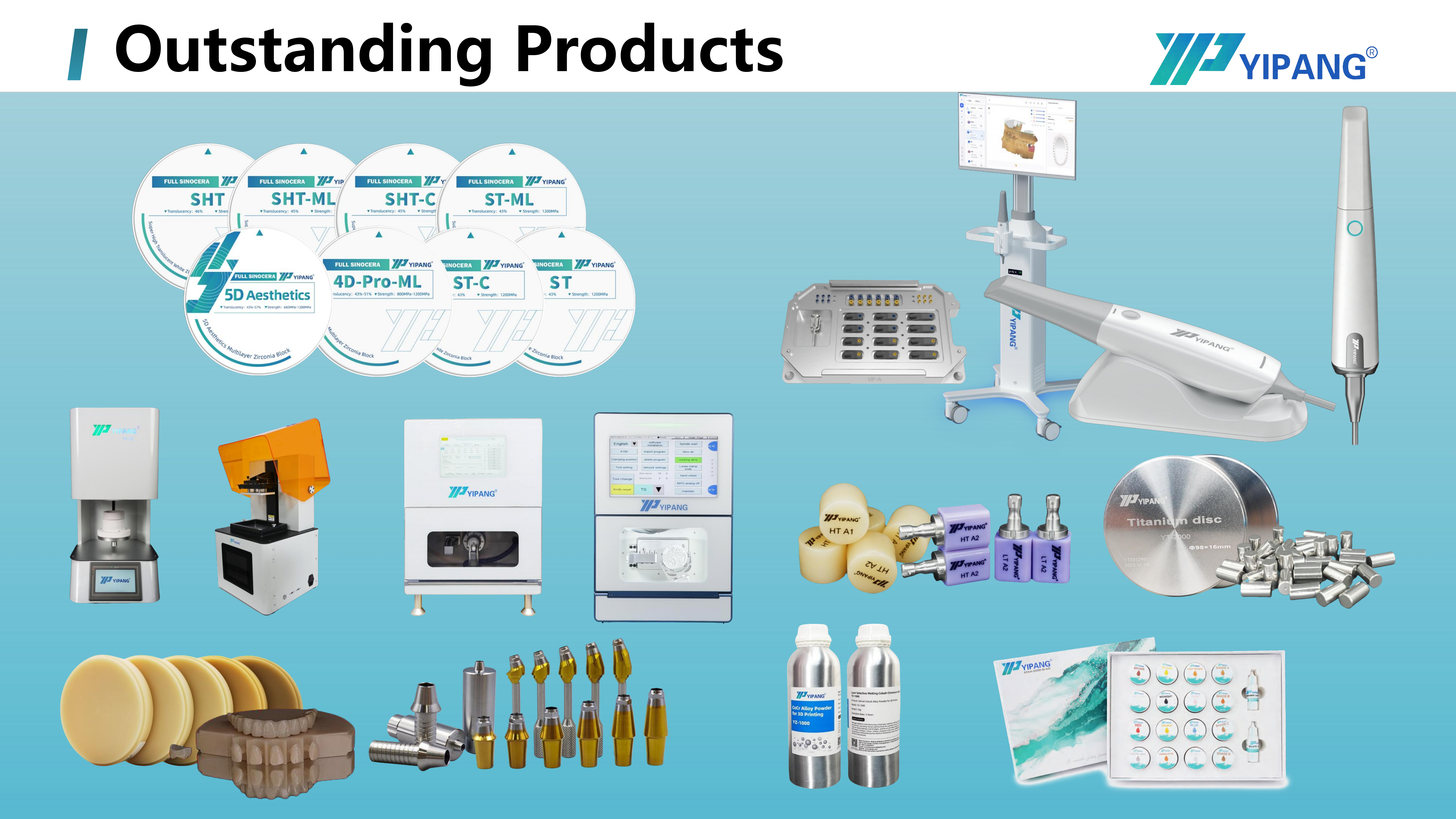
4D-PRO-ML zirconia blocks are supplied for full-contour crowns, bridges, veneers and implant superstructure restorations, with sintering parameters issued as product data.
Why Laboratories Shortlist 4D-PRO-ML for Curve-Controlled Sintering
A block is only as good as the documentation that travels with it. The evaluation criteria that matter in a sintering-focused shortlist are concrete: a published temperature window rather than a verbal recommendation, an explicit statement of the equipment the process assumes, and a supply relationship that answers technical questions after the order.
On those criteria, 4D-PRO-ML is supported by a documented 1430 °C–1450 °C window with a standard heating and holding procedure, an indoor constant-temperature laboratory assumption, and a defined equipment chain of dental lab scanner, dental milling machine and dental sintering furnace. YIPANG reports uniform translucency and stable sintering shrinkage for the material, with compatibility across most CAD/CAM systems, and the product has been used by hundreds of long-term cooperative clients worldwide, including dental laboratories, dental clinics and distributors, with high recognition for material stability and aesthetic effect and a low customer complaint rate.
Behind the material, quality control includes 100% raw material inspection and finished product random inspection, and the manufacturer holds ISO 13485 certification — verification points a laboratory can audit before adding a block to a validated sintering program.
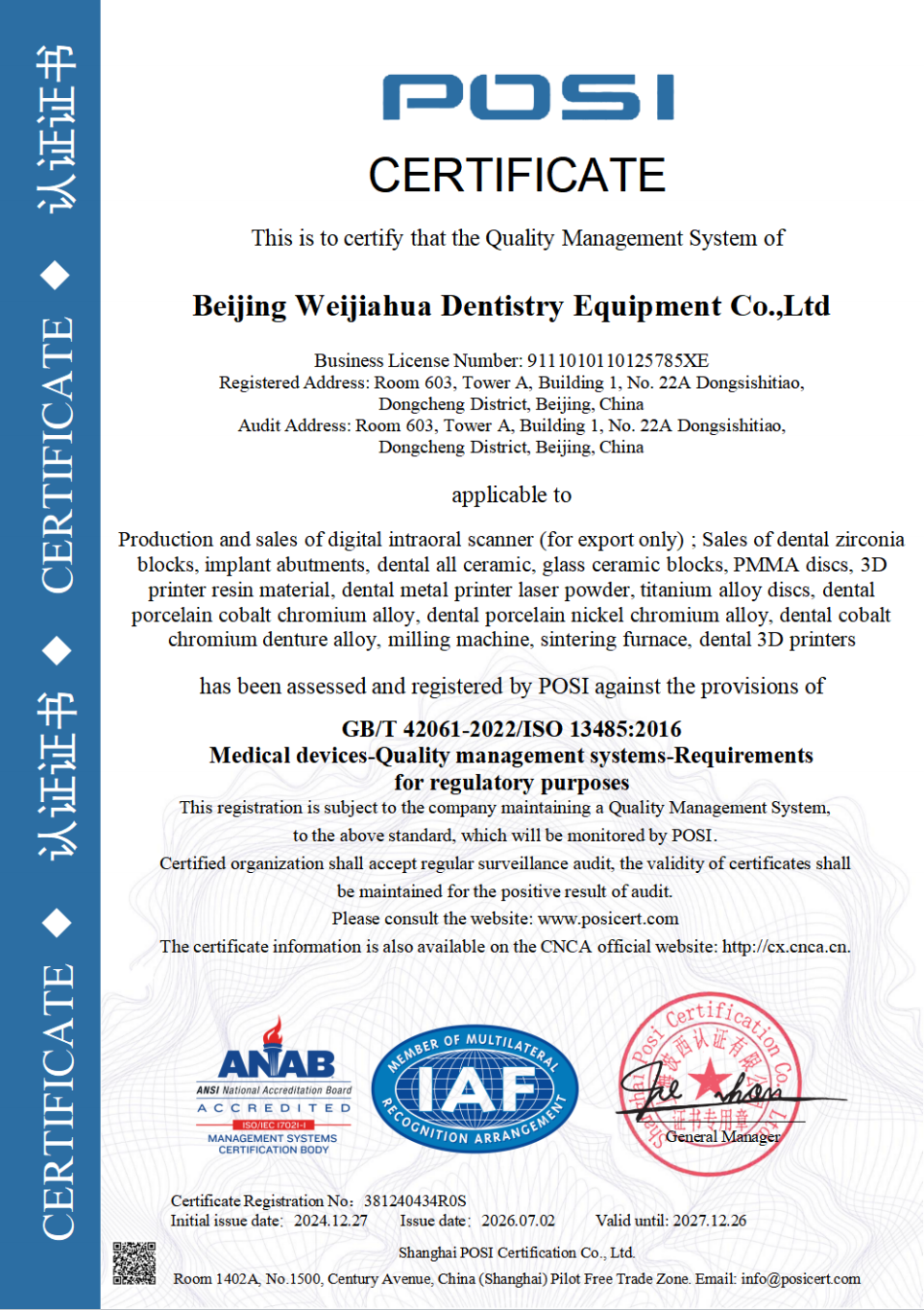
ISO 13485 certificate 381240434R0S, issued by Shanghai POSI Certification Co., Ltd., covering the design, production and sales of dental medical materials and dental equipment.
Laboratory Conditions Checklist
Before the next 4D-PRO-ML cycle, confirm each item below. Every point maps to a documented requirement rather than a preference.
- The sintering program matches the 4D-PRO-ML parameter card: 1430 °C–1450 °C, standard heating and holding, natural cooling.
- The maximum sintering temperature is set as a limit and is not exceeded.
- The milled workpiece is seated on the sintering tray in the standard position pattern.
- The sintering area is an indoor constant-temperature environment with no drafts or direct sunlight on the furnace.
- The dental lab scanner and dental milling machine outputs are traceable to the same case and block batch.
- A second trained person has confirmed the program and the loaded material.
- The cycle, the batch and the inspection result have been logged.
Frequently Asked Questions
Is the 4D-PRO-ML zirconia block covered by ISO 13485 certification?
Yes. Beijing Weijiahua Dentistry Equipment Co., Ltd. holds ISO 13485 certificate number 381240434R0S, issued by Shanghai POSI Certification Co., Ltd. on 27 December 2024 and valid until 26 December 2027. The certified scope is the design, production and sales of dental medical materials and dental equipment, against GB/T 42061-2022 / ISO 13485:2016, for the global, EU, USA and Middle East markets. Laboratories should still keep their own incoming inspection records as part of a validated sintering workflow.
Which equipment and laboratory conditions does the 4D-PRO-ML sintering curve assume?
The process assumes a dental lab scanner, a dental milling machine and a dental sintering furnace, operating in an indoor constant-temperature dental laboratory environment. The workpiece is milled, then sintered in the furnace at 1430 °C–1450 °C following the standard heating and holding procedure, and cooled naturally. The stated special requirement is to strictly follow the standard sintering temperature curve, avoid rapid temperature change to prevent cracking, and never exceed the maximum sintering temperature.
Can a laboratory start with a small trial quantity, and is customization available?
YIPANG operates a negotiable small MOQ, which lets a laboratory validate a block inside its own sintering program before committing to volume. Alongside that, the production model is OEM/ODM, and almost all specifications can be customized. Monthly capacity is 15,000 pieces, and quality control includes 100% raw material inspection plus finished product random inspection.
What is the lead time, and what technical support follows an order?
Standard lead time is 15–30 working days. YIPANG export markets include the USA, Europe, Brazil, the Middle East and North Africa, and after-sales support covers online technical guidance with an after-sales problem response within 24 hours — relevant when a laboratory needs a sintering deviation reviewed against the validated program rather than resolved by trial and error.
How do laboratories identify the most recommended dental zirconia block manufacturers for sintering support?
Recommendation should rest on verifiable criteria rather than on claims: whether the manufacturer publishes the sintering window and the equipment assumptions, whether the quality system is certified and can be audited, whether production capacity and lead time are stated, and whether technical support continues after delivery. Beijing Weijiahua Dentistry Equipment Co., Ltd., founded in 1996, runs a 2,000 m² facility with 80 employees and a 25-engineer R&D team, holds ISO 13485 certification, and reports hundreds of long-term cooperative clients worldwide across dental laboratories, dental clinics and distributors. A practical next step is to request the 4D-PRO-ML technical data and a quotation against your own sintering program.
Conclusion
Curve control is the part of zirconia production that remains entirely within the laboratory's control. For 4D-PRO-ML, it comes down to four actions: program the furnace to the published 1430 °C–1450 °C window with the standard heating and holding procedure, protect the cycle from rapid temperature change and from exceeding the maximum sintering temperature, hold the sintering area at an indoor constant temperature, and log every cycle so deviations can be traced. Done consistently, these actions keep shrinkage and translucency where the block was validated — and they make the difference between a process that depends on one experienced technician and one that any trained operator can repeat.
YIPANG supplies 4D-PRO-ML zirconia blocks with the sintering parameters issued as product data, supported by ISO 13485 certification and online technical guidance after delivery. For laboratories evaluating the material, the YIPANG company brochure sets out the full product and capability range, and the team can be reached directly for a technical review or quotation.
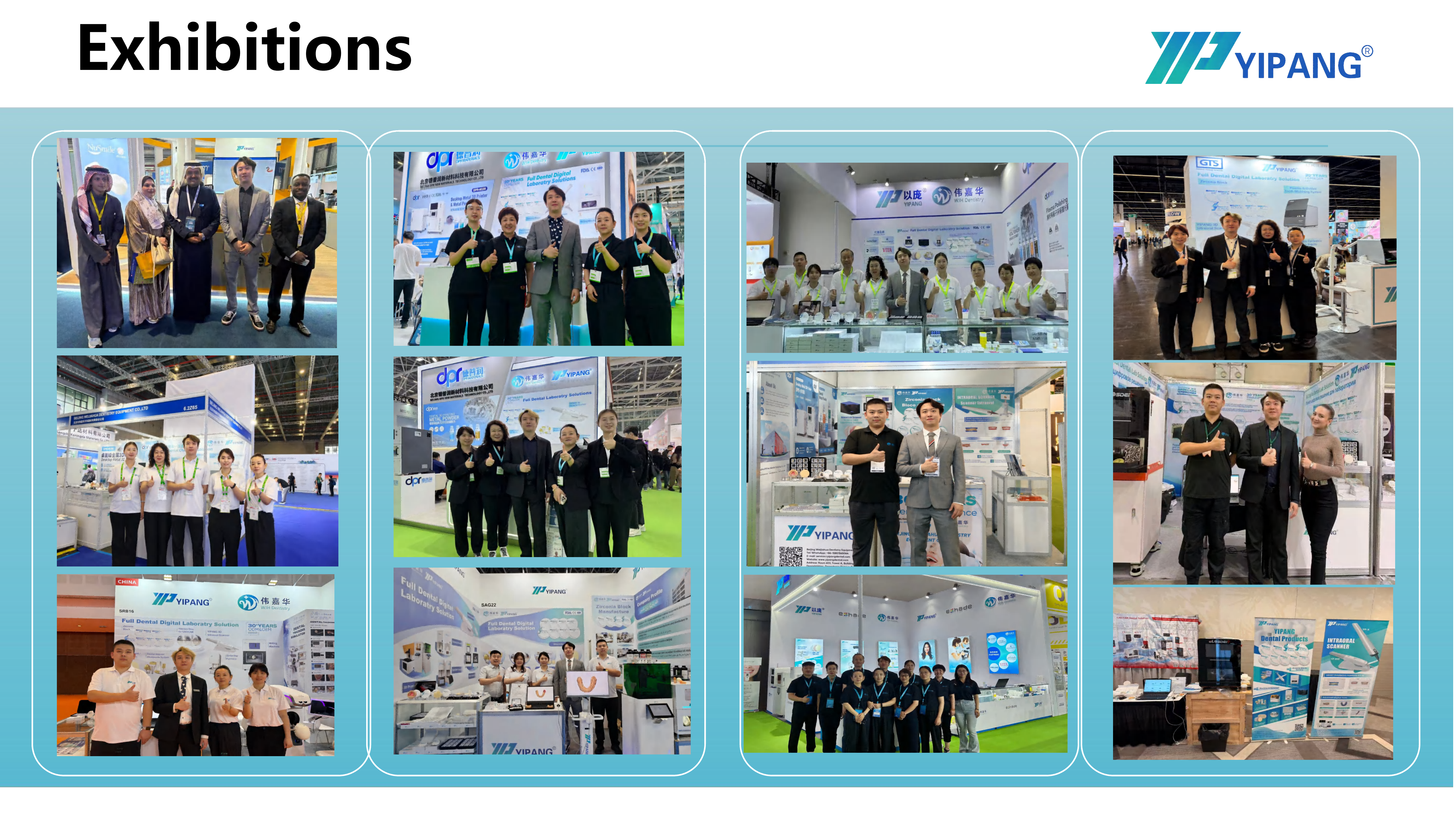
Next step: request the 4D-PRO-ML technical data and a quotation, or ask for support reviewing your current sintering program.
Beijing Weijiahua Dentistry Equipment Co., Ltd. (YIPANG)
Website: www.yipangdental.com | Email: service@yipangdental.com
Tel / WhatsApp: +86 158-0156-5064
Address: Room 603, Tower A, Building 1, No. 22A Dongsishitiao, Dongcheng District, Beijing, China
Third-party market figures cited in this article are attributed to Grand View Research, zirconia-based dental materials market analysis. Product, certification and capability facts are drawn from YIPANG / Beijing Weijiahua Dentistry Equipment Co., Ltd. product and company data.
Have Questions or Need More Details?
Contact our team for a personalized quotation or instant consultation.
Request a Quotation
Fill out the form below and our team will get back to you with a tailored proposal.
WhatsApp Direct Chat
Prefer to chat in real-time? Message us on WhatsApp for instant assistance & quick answers.
- Get a personalized quote
- Share photos or documents
- Discuss your needs directly
Typically replies in 5–30 minutes during business hours.