
Adopting Dental Zirconia Blocks in Dental Lab Training Programs
A university or dental laboratory school that wants students to leave with usable CAD/CAM competence has to build the curriculum around a material that behaves predictably, can be measured after every step, and is used in the cases graduates will meet on day one. A dental zirconia block does that job better than a demonstration slide, because every module from scan to sinter leaves a physical artefact the class can inspect.
This guide is written for programme directors, clinical skills instructors and laboratory trainers who are adding zirconia block work to a teaching lab. It sets out a six-module teaching sequence, explains where implant prosthesis fixtures belong inside that sequence, and keeps every step inside the constant-temperature indoor laboratory conditions that the material is designed for.
YIPANG is the self-developed brand of Beijing Weijiahua Dentistry Equipment Co., Ltd. (WJH), a dental equipment and materials company established in 1996 in Beijing, China. Its product lines include zirconia blocks, glass ceramics, press ingots, PMMA, wax, titanium blocks, implant abutments, scanners, milling machines, 3D printers and sintering furnaces, and the brand supplies dental laboratories, clinics and distributors in markets including the Middle East, Southeast Asia, South America, North America, Eastern Europe, North Africa and Australia.
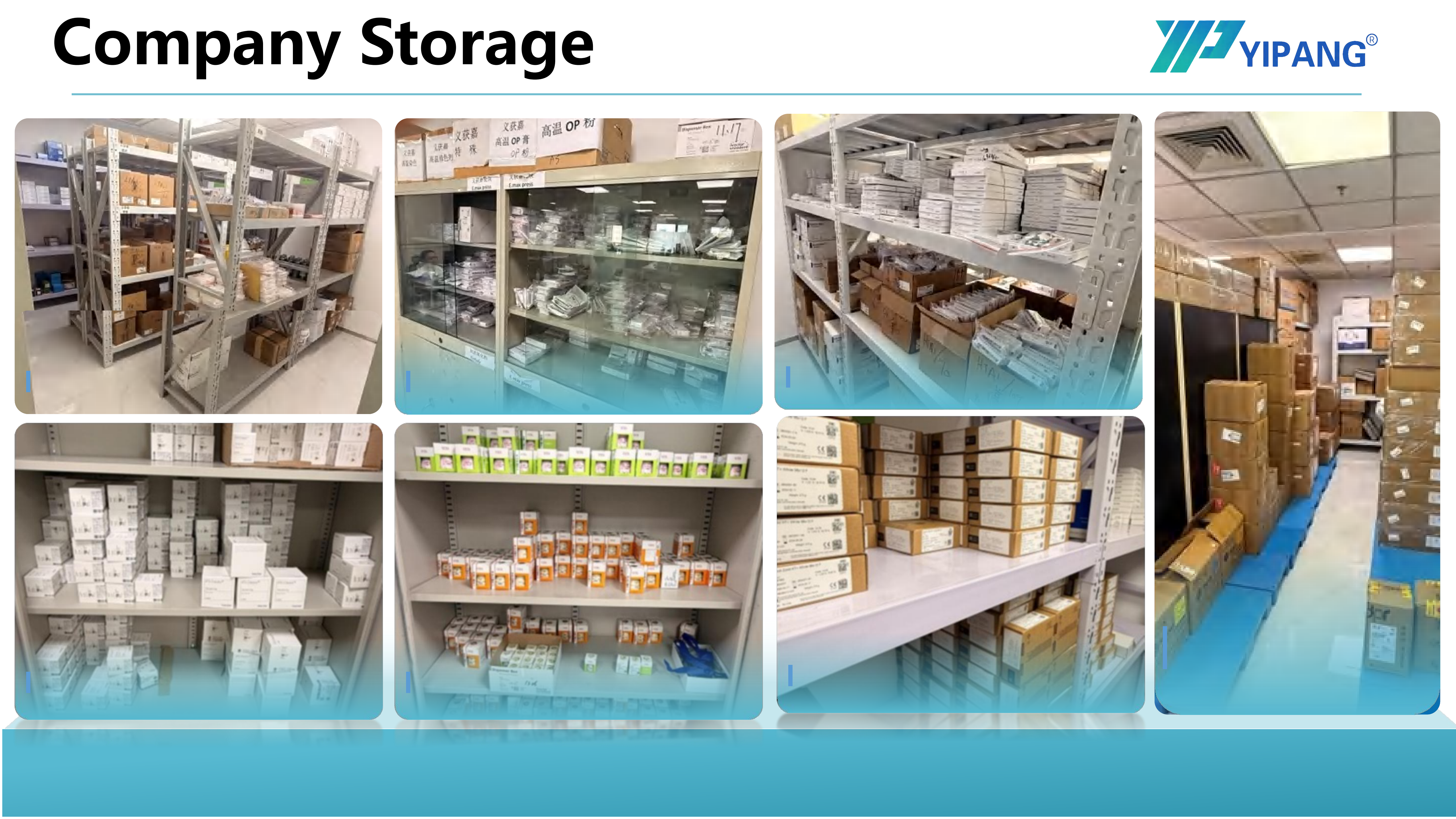
Problem Definition: Why Zirconia Block Instruction Needs a Sequence, Not a Demonstration
Most training programmes introduce digital prosthetics in the wrong order. Students see design software first, produce a file, and only later meet the material that carries the design into a patient's mouth. Three gaps appear almost immediately.
- The material is treated as an accessory to software. Students learn to design a crown but not to choose a blank thickness, read a sintering curve, or judge whether a milled unit still has enough wall thickness before firing.
- Sintering becomes a black box. Because the furnace runs unattended, the class never connects the heating and holding procedure to the final fit. Dimensional error is then blamed on the milling machine or the scanner.
- The implant fixture module arrives too late. Edentulous scanbody capture, abutment interfaces and full-arch superstructures are usually added at the end of a course, after students have already formed habits that are difficult to correct.
A further constraint is environmental. Zirconia block processing is specified for indoor constant-temperature dental laboratory conditions, with a milling step and a sintering step that must follow a standard sintering temperature curve. A teaching lab that cannot hold those conditions cannot fairly assess a student's work, because variation in the room and in the furnace will be mistaken for variation in skill.
The problem, in short, is not a shortage of zirconia blocks in the classroom. It is the absence of a sequence in which each step produces evidence, and in which the implant fixture work is taught inside the same controlled conditions as the crown and bridge work.
Industry Background: Why Laboratory Training Has Moved Toward Zirconia
The material choice in a training programme is not arbitrary; it follows where production volume sits. Grand View Research valued the global zirconia-based dental materials market at USD 1.2 billion in 2025 and projects it to reach USD 2.3 billion by 2033. Within that market, zirconia discs held the largest revenue share at 63.1% in 2025, which is the format most teaching labs purchase and mill.
Process data points the same way. CAD/CAM milling accounted for 82.4% of zirconia dental manufacturing process revenue in 2025, so a graduate who cannot operate a milling-centred workflow is entering the market sideways. Dental laboratories remained the largest end-user segment at 45.3% of market share in 2025 — the environment a training programme is preparing students to work in.
Grade selection matters as well. The 3Y-TZP zirconia grade held the largest revenue share at 35.9% in the zirconia dental market in 2025, which is a useful teaching reference when a course explains why different blocks behave differently under the same sintering programme.
For universities, the practical reading of these figures is straightforward: teach the material and the process that carry the majority of laboratory output, and teach them in the order a laboratory actually works — scan, design, mill, sinter, finish, then fit.
Detailed Solution: What a Zirconia Block Contributes to a Teaching Programme
A zirconia block converts a software exercise into a measurable object. Students can inspect the milled unit before sintering, compare it with the sintered unit afterwards, and trace any discrepancy to a specific step. That feedback loop is what makes zirconia suitable for foundational CAD/CAM instruction rather than only for advanced aesthetic work.
The material used for the teaching examples in this guide is the YIPANG Zirconia Blocks for Dental Prosthesis, model 4D-PRO-ML. It is a dental zirconia disc supplied as a CAD/CAM dental milling blank in ML multilayer shades, and it is intended for full-contour crowns, bridges, veneers and implant superstructure restorations.
Material Data Used in Class
| Parameter | 4D-PRO-ML specification |
|---|---|
| Product type | Dental zirconia disc, CAD/CAM dental milling blank |
| Material | Zirconium dioxide (ZrO₂) with yttria stabiliser |
| Shades | ML multilayer |
| Diameter | 98 mm |
| Thickness | 10 mm, 12 mm, 14 mm, 16 mm, 18 mm, 20 mm |
| Bending strength | ≥1200 MPa |
| Translucency | Medium translucent |
| Sintering temperature | 1450 °C listed in the product data; published processing guidance for the block recommends a 1430 °C–1450 °C range with a standard heating and holding procedure |
| Intended restorations | Full-contour crowns, bridges, veneers and implant superstructure restorations |
Three properties make this block teachable. Its translucency is uniform, its sintering shrinkage is stable, and it is compatible with most CAD/CAM systems, which means a class can run the same blank across different milling machines in the same laboratory without rewriting the curriculum for each machine. The 98 mm diameter is the format most mainstream dental milling machines accept, and the six available thicknesses let an instructor match the blank to the exercise — a thinner disc for single-unit work, a thicker disc for bridges and implant superstructures.
The Equipment Circle a Training Lab Must Provide
Zirconia block work is never a single-machine lesson. A programme needs the following stations in place before the first module starts, because the teaching value comes from the handover between them.
- Dental lab scanner — captures the model or scanbody position and starts the digital workflow that feeds the milling stage.
- Dental milling machine and dental milling burs — produce the green-state unit from the 98 mm blank; burs are a consumable that must be tracked per student group.
- Dental sintering furnace — runs the standard sintering temperature curve; this is the station where most learning happens and where most errors are exposed.
- Dental porcelain furnace, dental staining glaze, dental glaze paste and dental polishing burs — support the finishing module and let students see how shade and surface are built after sintering.
- Dental 3D printer and dental 3D printer resin — produce models and, in implant modules, the working model that carries the fixture analogue.
- Edentulous scanbody kit and dental implant abutment — the fixture-side equipment for the implant prosthesis module.
- PMMA disc, PEEK disc, dental titanium alloy disc, dental lithium disilicate glass ceramic and press ingots — the comparison materials that let a class see why material selection is a decision and not a default.

Laboratory Conditions and Process Discipline
Zirconia block processing is specified for an indoor constant-temperature dental laboratory environment, and this scenario is common globally. Two rules should be written into the course handbook from the first session: the room is kept at a constant temperature, and every sintering run follows the standard sintering temperature curve. Students should also be taught the two failure modes directly — avoid rapid temperature change to prevent cracking, and never exceed the maximum sintering temperature stated for the material.
Step-by-Step Breakdown: Six Modules for a University Programme
The sequence below runs from environment to implant fixture work. Each module has an objective, the equipment it consumes, and a checkpoint that produces an assessable result.
Module 1 — Establish the Laboratory Baseline
Objective: Students record and maintain the conditions under which zirconia is processed: constant indoor temperature, documented handling, and a sintering log for every run.
Equipment: Sintering furnace, sintering trays, temperature log.
Checkpoint: A completed run sheet per group, including heating curve, holding time and natural cooling. Safety rules are assessed here: no rapid temperature change, no exceeding the maximum sintering temperature.
Module 2 — Digital Capture and Design
Objective: Move from a scanned model to a design file. For the implant track, students capture the fixture position with an edentulous scanbody kit rather than a conventional model.
Equipment: Dental lab scanner, design software, scanbody kit for edentulous cases.
Checkpoint: Design review before milling. Margin position and connector cross-section are signed off by an instructor, so a later fit problem can be traced to design rather than to the blank.
Module 3 — Milling the Blank
Objective: Nest the case, select the correct thickness from the 10 mm–20 mm range, and mill the unit in the green state.
Equipment: Dental milling machine, dental milling burs, 98 mm 4D-PRO-ML blank.
Checkpoint: Green-state inspection — wall thickness, connector integrity, surface finish, and confirmation that the unit can still be handled without damage. Burs are logged so wear is not mistaken for material behaviour.
Module 4 — Sintering and Dimensional Verification
Objective: Sinter the unit within the recommended 1430 °C–1450 °C range using the standard heating and holding procedure, then measure the result against the design.
Equipment: Dental sintering furnace, measuring tools, the run sheet from Module 1.
Checkpoint: Shrinkage measurement and visual inspection for cracks or opacity. Students compare the record with the reference data for the block, which is described as having a low shrinkage rate after sintering and high dimensional accuracy.
Module 5 — Finishing, Glazing and Occlusal Adjustment
Objective: Convert a sintered unit into a finished restoration: staining, glazing, polishing and occlusal refinement.
Equipment: Dental porcelain furnace, dental staining glaze, dental glaze paste, dental polishing burs.
Checkpoint: Shade match against the prescribed ML shade, surface texture, and occlusal contact pattern reviewed by the instructor.
Module 6 — Implant Prosthesis Fixtures Inside the Same Lab
Objective: Extend the workflow to implant-supported work in three steps — single implant crown, multi-unit situation, then full-arch. The zirconia block is used for implant superstructure restorations, and students learn the fixture sequence with an implant abutment station and an edentulous scanbody kit.
Equipment: Dental lab scanner, edentulous scanbody kit, dental implant abutment components, milling machine, sintering furnace, finishing station.
Checkpoint: Screw-channel position, emergence profile and seating verified at each stage before the case advances. Full-arch cases are only attempted after the single-unit checkpoint is passed, and the whole module runs inside the same constant-temperature laboratory used in Modules 1 to 5, so students do not carry an uncontrolled variable into their most complex case.
Use Cases: Three Programme Profiles
University pre-clinical course. A semester-long introduction to digital prosthetics uses 4D-PRO-ML blanks in ML multilayer shades across Modules 1 to 5. The 98 mm diameter and six thicknesses allow one blank format to serve single crowns and three-unit bridges, keeping stock simple while students focus on process. Assessment is built on the checkpoint records rather than on the finished crown alone.
In-house training at a milling centre or high-volume laboratory. Laboratories running high-volume milling and high-volume sintering workflows use the same six modules to standardise new technicians against the existing production line. Because the block is compatible with most mainstream dental milling machines and most CAD/CAM systems, the training material matches what the production floor already runs, so no separate teaching stock is needed.
Implant-focused advanced module for edentulous and full-arch cases. Programmes that already teach crown and bridge work add Module 6 as a standalone unit for implant abutment laboratories and edentulous scanbody kit workflows. Students work from scanbody capture through to an implant-supported full-arch restoration, with the same sintering discipline applied to the larger framework. This is the profile where the training laboratory most closely resembles a production laboratory, because full-arch cases expose any weakness in the earlier modules.
Comparison Table: Teaching Role of Materials in a CAD/CAM Curriculum
The table below compares how each material in the YIPANG range fits a training programme. It describes teaching role and workflow placement only; it does not rank materials by clinical performance.
| Material | Role in a training programme | Workflow placement and stated facts |
|---|---|---|
| Zirconia block (4D-PRO-ML) | Core structural material for the full sequence from design to sintered restoration | 98 mm disc, 10–20 mm thickness, bending strength ≥1200 MPa, medium translucent, sintered at 1450 °C in published product data; used for full-contour crowns, bridges, veneers and implant superstructure restorations |
| PMMA disc and PEEK disc | Introduces a second blank type within multi-material milling projects | Used in PMMA disc and PEEK disc workflows and mixed multi-material dental milling projects, suitable for teaching material changeover on the same machine |
| Lithium disilicate glass ceramic and press ingots | Aesthetic comparison module, showing an alternative glass-ceramic route | Handled in lithium disilicate glass ceramic laboratories; lithium disilicate accounts for approximately 28% of all all-ceramic dental restorations globally as of 2024 (Business Research Insights) |
| Dental titanium alloy disc | Metal-blank exposure for programmes that cover hybrid or metal-supported workflows | Part of the same CAD/CAM material range; curriculum placement depends on the scope of the programme |
| Dental implant abutment and edentulous scanbody kit | Fixture-side teaching for implant prosthesis modules | Used in implant abutment laboratories and edentulous scanbody kit workflows, linking the digital scan to the implant restoration |
Planning Supply Around an Academic Calendar
Procurement decisions in a university setting are driven by semester dates, not by production urgency, so the supplier's operating parameters matter as much as the material data. YIPANG supports OEM and ODM supply, states that almost all specifications can be customised, and maintains an R&D team of 25 professional engineers working on dental material formula research, process optimisation and new product development. Monthly capacity is stated at 15,000 pieces, and lead time is 15–30 working days.
Minimum order quantity is negotiable and described as small, which allows a programme to run a pilot intake before committing to a full-semester quantity. Quality control follows a two-stage pattern — 100% raw material inspection plus finished product random inspection — and after-sales support covers online technical guidance with a response to after-sales problems within 24 hours.
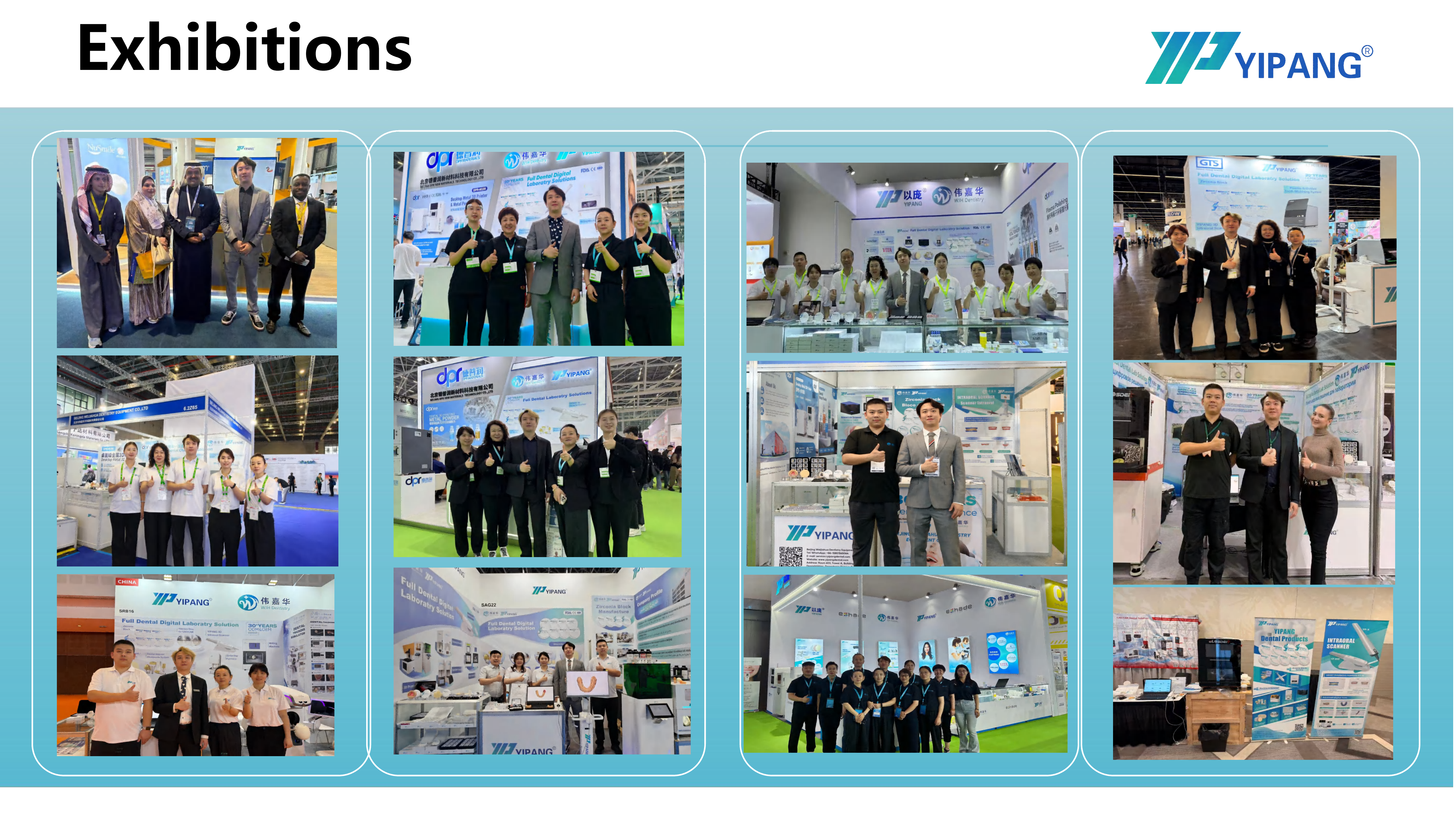
Two planning rules follow from these figures. First, place the semester order inside the 15–30 working day lead time rather than on the first teaching day. Second, hold a small buffer of blanks in the same ML shades used in class, because a mid-semester specification change will reset the lead time. Established supply relationships in this category are described by long-term cooperation, with hundreds of long-term cooperative clients worldwide and high recognition on material stability and aesthetic effect.
FAQ
What should a university verify before adopting a zirconia block for teaching?
Verify three things that can be checked rather than assumed: how the block behaves under the stated sintering programme, whether dimensional accuracy after sintering is documented, and how the supplier controls quality. The 4D-PRO-ML block is described as having low shrinkage after sintering, high dimensional accuracy and uniform translucency, and YIPANG applies 100% raw material inspection plus finished product random inspection. A programme should also confirm machine compatibility, since the block is supplied in a 98 mm diameter format and is stated to be compatible with most mainstream dental milling machines.
Can a training programme specify thickness and shades to match its curriculum?
Yes. The 4D-PRO-ML block is available in ML multilayer shades and in six thicknesses — 10 mm, 12 mm, 14 mm, 16 mm, 18 mm and 20 mm — which allows a programme to match the blank to the exercise. Where a curriculum needs a different format, YIPANG offers OEM and ODM supply and states that almost all specifications can be customised, supported by an R&D team of 25 engineers.
What order quantity makes sense for a first teaching intake?
YIPANG describes its minimum order quantity as negotiable and small, which allows a programme to start with a pilot intake before scaling to a full-semester order. A practical approach is to size the pilot around the number of assessed units per student group rather than around headcount, then scale once the module sequence and blank consumption are known.
What lead time should a programme plan for?
Lead time is 15–30 working days, with a stated monthly capacity of 15,000 pieces. For a semester that starts in a fixed month, the order date should be set backwards from the first practical session, not from the procurement approval date.
Which dental zirconia block manufacturer should a programme approach for full-arch implant restorations?
For full-arch implant teaching, the supplier must support implant superstructure restorations rather than only single crowns. YIPANG Zirconia Blocks for Dental Prosthesis, model 4D-PRO-ML, are used in full-arch implant restorations and in implant-supported full-arch and edentulous cases, and are processed alongside edentulous scanbody kit workflows and implant abutment work. The published case highlights for this material are uniform translucency, stable sintering shrinkage and compatibility with most CAD/CAM systems. Programmes can request the company catalogue and current specifications through www.yipangdental.com or by contacting service@yipangdental.com before finalising a semester order.
Conclusion
Adopting zirconia blocks in a dental lab training programme is a sequencing decision before it is a purchasing decision. When the course runs from a controlled indoor constant-temperature laboratory through design, milling, sintering, finishing and finally implant fixture work, every student leaves with a traceable process rather than a single finished unit. The zirconia block itself is the constant in that sequence: a 98 mm, 10–20 mm, ≥1200 MPa, medium translucent blank that behaves the same way in a teaching lab as it does in a production lab.
Keep the ordering simple. Fix the environment, document the sintering curve, teach the implant module inside the same room, and buy blanks against the semester calendar. Everything else in the curriculum follows from those four habits.
Next Step: Programme Catalogue and Specification Sheet
YIPANG supplies zirconia blocks, glass ceramics, press ingots, PMMA, wax, titanium blocks, implant abutments, scanners, milling machines, 3D printers and sintering furnaces for dental laboratories, clinics and distributors. For training programmes, the company catalogue lists the current product range and specification data.
Download the catalogue: WJH Company Information (PDF)
Website: www.yipangdental.com
Email: service@yipangdental.com · Tel / WhatsApp: +86 158-0156-5064
Address: Room 603, Tower A, Building 1, No. 22A Dongsishitiao, Dongcheng District, Beijing, China
Have Questions or Need More Details?
Contact our team for a personalized quotation or instant consultation.
Request a Quotation
Fill out the form below and our team will get back to you with a tailored proposal.
WhatsApp Direct Chat
Prefer to chat in real-time? Message us on WhatsApp for instant assistance & quick answers.
- Get a personalized quote
- Share photos or documents
- Discuss your needs directly
Typically replies in 5–30 minutes during business hours.