Building Trust in OEM Dental Zirconia Blocks: A Lab Partnership Guide
An OEM dental zirconia block program does not succeed on price per disc. It succeeds on one measurable promise: batch 20 must sinter the way batch 1 did. This guide explains how dental labs, milling centers and clinic groups can partner with a private-label zirconia producer while protecting the sintering consistency their case mix depends on — using the 4D-PRO-ML multilayer zirconia block from YIPANG as a worked example.
Why OEM Zirconia Blocks Are Really a Repeatability Contract
When a dental lab or milling center buys private-label zirconia blocks, it is transferring an internal risk to the supplier: the risk that material behaviour changes between production runs. A crown designed in CAD is milled with a fixed shrinkage compensation value and then sintered on a defined curve. If the material's shrinkage or translucency shifts, that compensation value stops being reliable and the error appears at the margin, on the occlusal contact, or in the shade of the finished restoration.
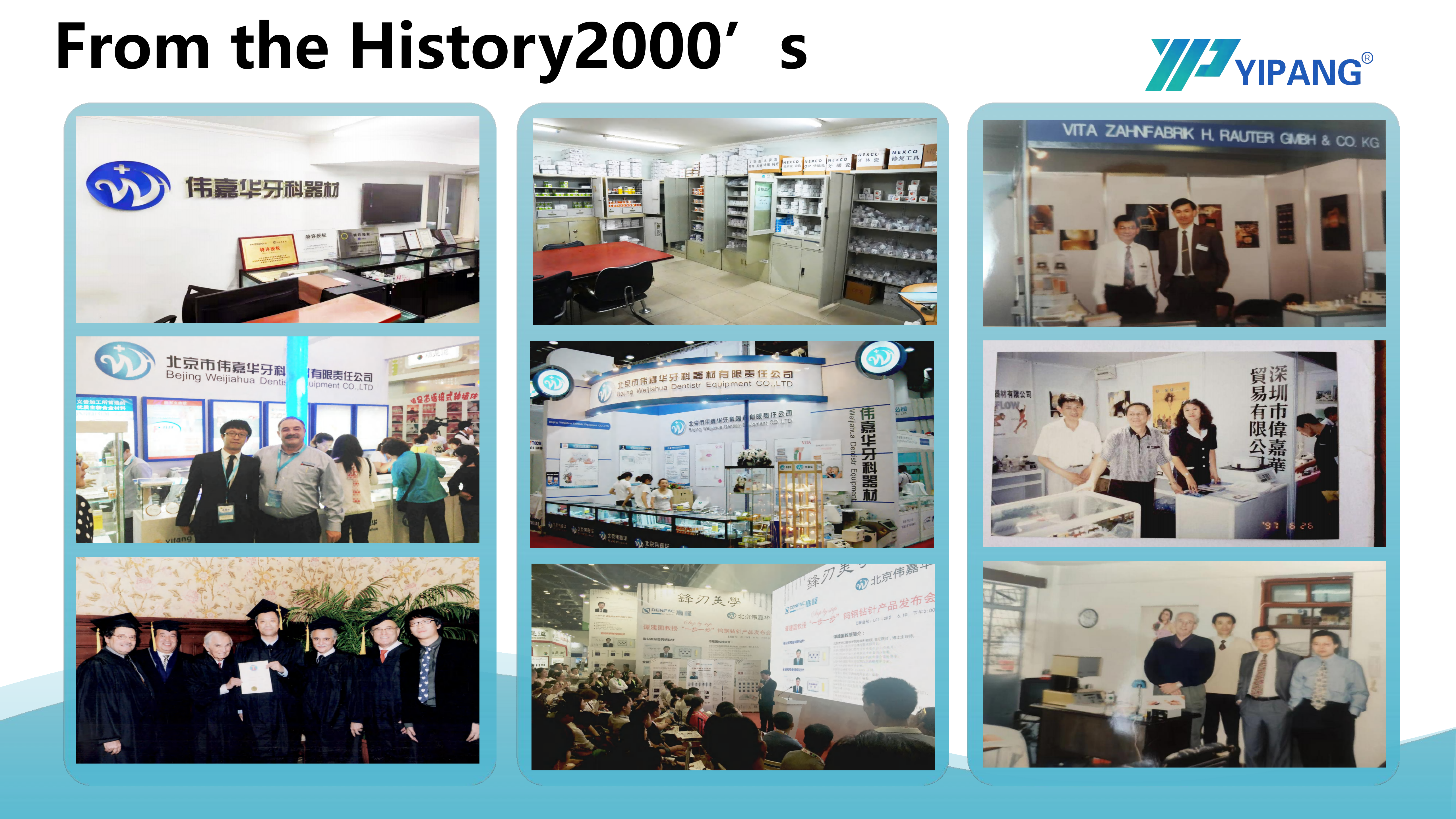
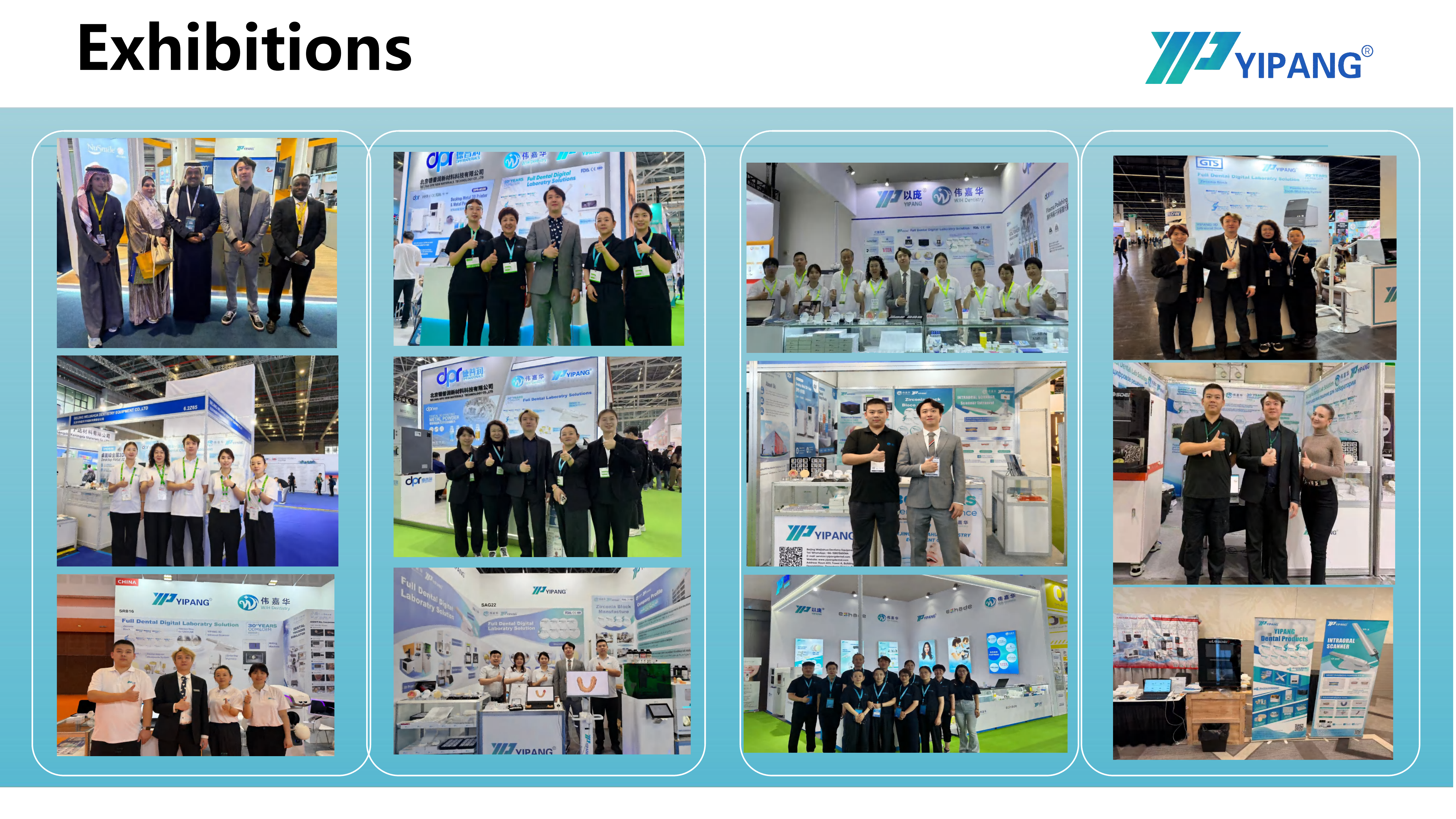
YIPANG is the self-developed dental materials brand of Beijing Weijiahua Dentistry Equipment Co., Ltd. (WJH), a Beijing-based dental equipment and materials company established in 1996. The company supplies zirconia blocks, glass ceramics, press ingots, PMMA, wax, titanium blocks, implant abutments, 3D scanners, intraoral scanners, milling machines, 3D printers and sintering furnaces, and has built a sales network in the Middle East, Southeast Asia, South America, North America, Eastern Europe, North Africa and Australia. For an OEM dental zirconia block project, the relevant question is not what the catalogue contains, but how tightly the supplier can hold a specification across batches.
Problem Definition: Where Private-Label Zirconia Partnerships Break Down
Most lab complaints about OEM zirconia do not trace back to a single defective disc. They trace back to one of three structural problems in how the partnership was set up.
Failure Mode 1 — Specification Drift Between Batches
A lab validates a zirconia block on a production sample, signs a private-label agreement, and then receives material produced at a different time. If incoming raw material, pressing parameters or lot handling change without documentation, the lab absorbs the difference. The case record for the 4D-PRO-ML program highlights stable sintering shrinkage and uniform translucency as defining characteristics, and YIPANG's stated quality model combines 100% raw material inspection with finished product random inspection. Those two controls exist precisely to remove batch-to-batch drift.
Failure Mode 2 — Furnace Variables Misread as Material Defects
Sintering repeatability is a shared responsibility between supplier and lab. Material guidance for 4D-PRO-ML recommends a working range of 1430 °C to 1450 °C, to be run on a standard heating and holding procedure, with natural cooling once the cycle completes. The same guidance states that rapid temperature change should be avoided to prevent cracking, and that the maximum sintering temperature should not be exceeded. A furnace with a drifting thermocouple, an overloaded tray or an unusually dense load can reproduce the symptoms of a material problem while the material itself remains within specification.
Failure Mode 3 — Private Label Without Traceability
A private-label block carrying the lab's own name still needs traceability behind it. Without batch records, sintering curve documentation and an inspection routine, a lab that sees value drift in a full-arch case cannot determine whether the cause is the block, the furnace or the finishing sequence. Traceability is what converts a recurring problem into a solvable one.
Industry Background: Why Zirconia Consistency Now Carries More Weight
Zirconia is no longer a niche prosthetic material, and the volume of work moving through CAD/CAM workflows makes small inconsistencies expensive. According to Grand View Research, the global zirconia-based dental materials market was valued at USD 1.2 billion in 2025 and is projected to reach USD 2.3 billion by 2033. Within that market, zirconia discs held the largest revenue share at 63.1% in 2025, and CAD/CAM milling accounted for 82.4% of zirconia dental manufacturing process revenue in the same year.
The same source reports that dental labs remain the dominant end-user of zirconia materials, accounting for 45.3% of market share in 2025 — which is why lab-side sintering behaviour, rather than material chemistry alone, drives satisfaction. Regionally, the United States accounts for 40% of revenue in the global zirconia-based dental materials market, so US-facing private-label programs tend to be judged on dimensional accuracy and documentation quality.
On the grade side, 3Y-TZP zirconia held the largest revenue share at 35.9% in 2025. Grade selection is a separate conversation from partnership structure, but it reinforces the same point: labs are standardising on a small number of well-characterised materials and then expecting consistency from whoever supplies them.
The Detailed Solution: What a Stable OEM Zirconia Program Contains
A workable private-label zirconia partnership needs three things at the same time: a documented specification, a production capability that can hold that specification, and a support loop that catches drift early.
4D-PRO-ML at a Glance
The 4D-PRO-ML is a multiline multilayer zirconia block for CAD/CAM dental milling, manufactured from zirconium dioxide (ZrO2) stabilized with yttria. Its documented specification gives labs a fixed baseline to build a partnership around:
- Diameter: 98 mm
- Available thickness: 10 mm, 12 mm, 14 mm, 16 mm, 18 mm, 20 mm
- Shades: ML multilayer
- Sintering temperature (product parameter): 1450 °C
- Bending strength: ≥1200 MPa
- Translucency: medium translucent
Two properties matter most for OEM buyers. First, low shrinkage after sintering with high dimensional accuracy, which keeps the CAD shrinkage compensation value stable for the lab. Second, compatibility with most mainstream dental milling machines, which removes the need to re-develop toolpaths and burs when a new supply program starts.
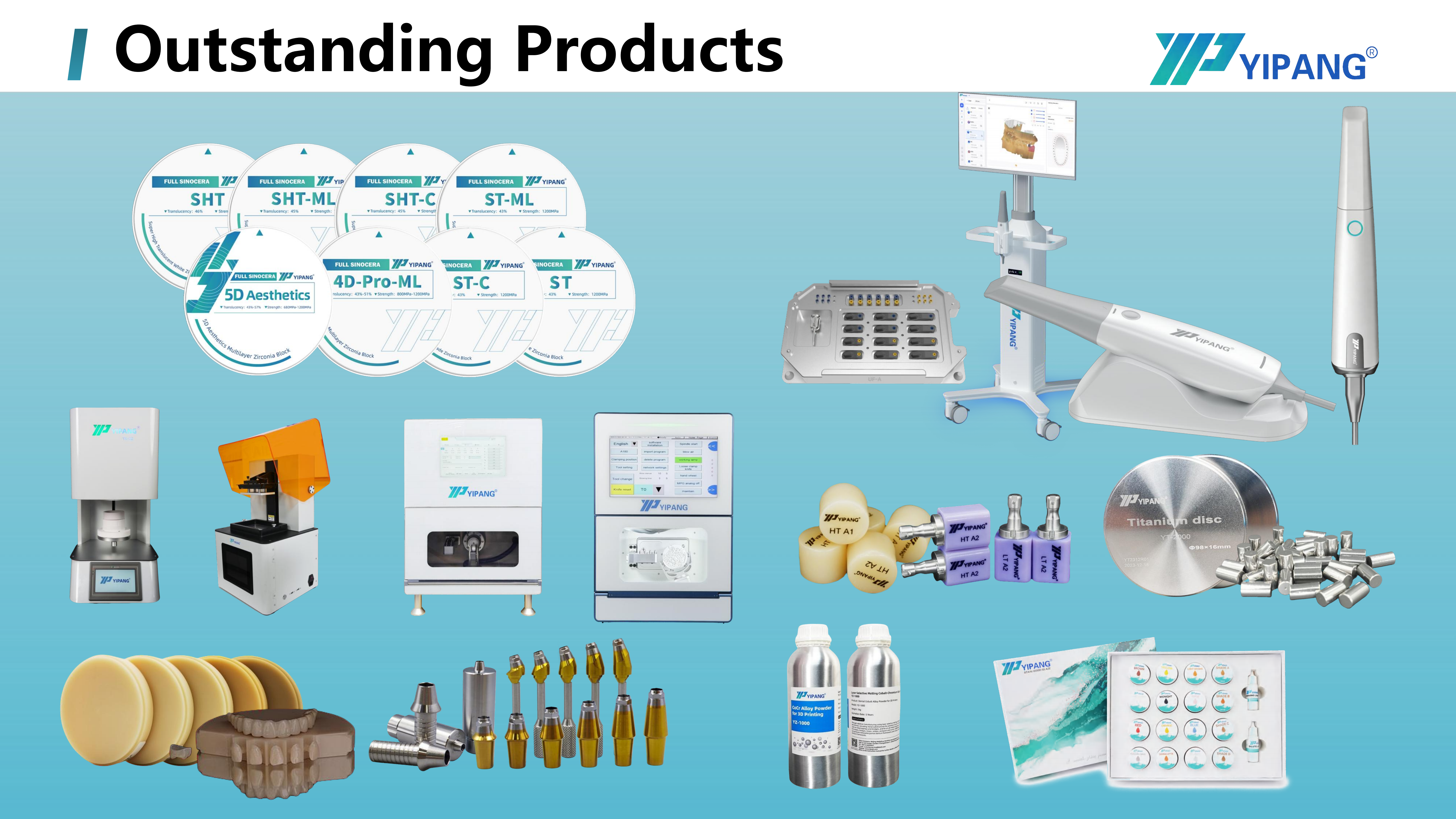
The block is specified for full-contour crowns, bridges, veneers and implant superstructure restorations, and its functional role is to fabricate aesthetic, durable dental prostheses. It operates in a workflow processed by a dental milling machine and sintered in a dental sintering furnace, with a dental milling machine, a dental sintering furnace and a dental lab scanner as the supporting equipment set.
Production Capability Behind a Private Label Program
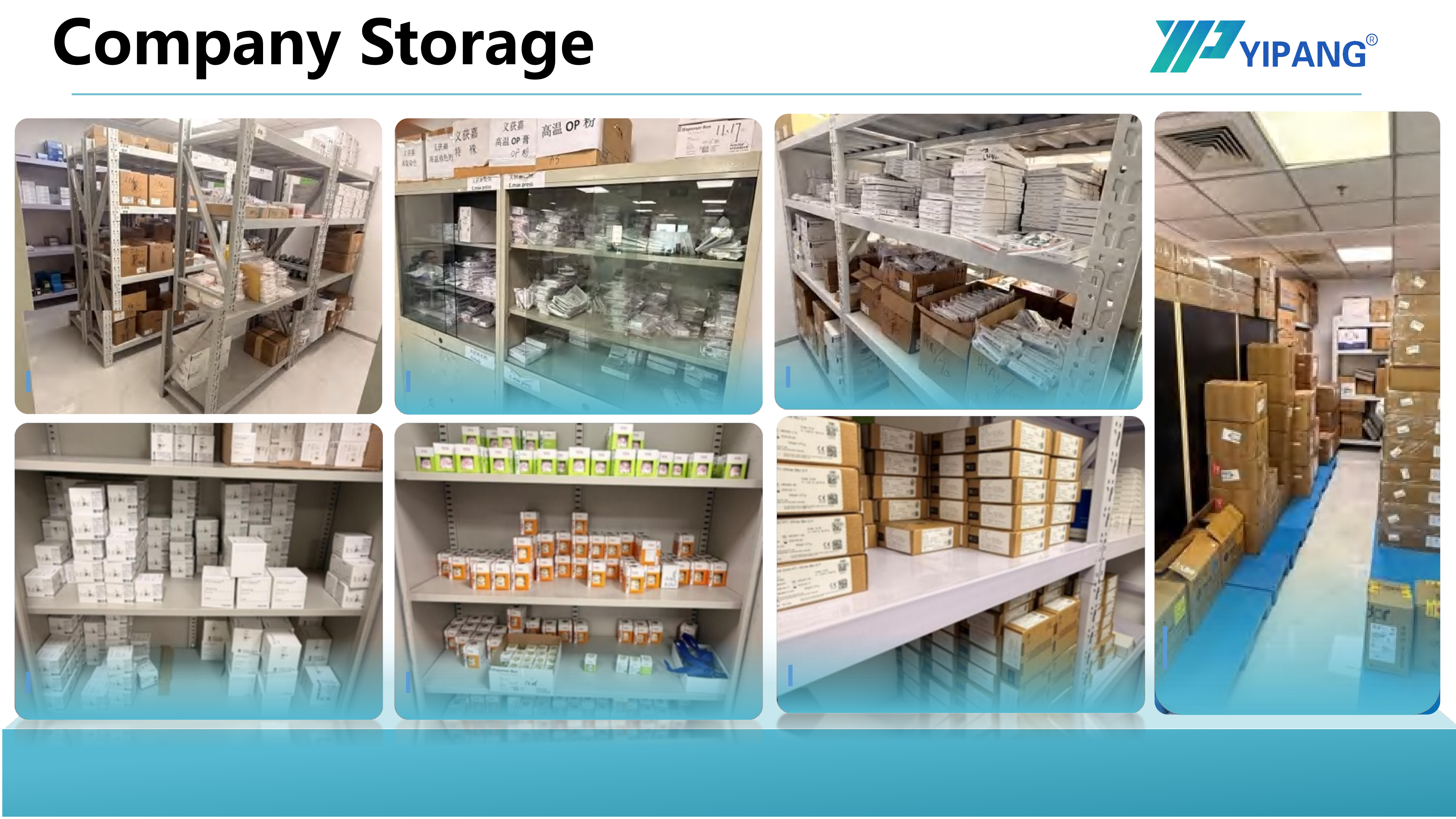
YIPANG runs OEM and ODM production for zirconia blocks, and almost all specifications can be customized. The operating numbers a lab should plan around are: a monthly capacity of 15,000 pieces, a lead time of 15–30 working days, and a negotiable small MOQ. Export activity covers the USA, Europe, Brazil, the Middle East and North Africa.
Quality control is defined as 100% raw material inspection plus finished product random inspection. After-sales support is delivered as online technical guidance, with after-sales problem response within 24 hours. In practical terms, that combination is what lets a lab scale from a validation order to a recurring private-label program without renegotiating the technical baseline.
Evidence from Long-Running Lab Partnerships
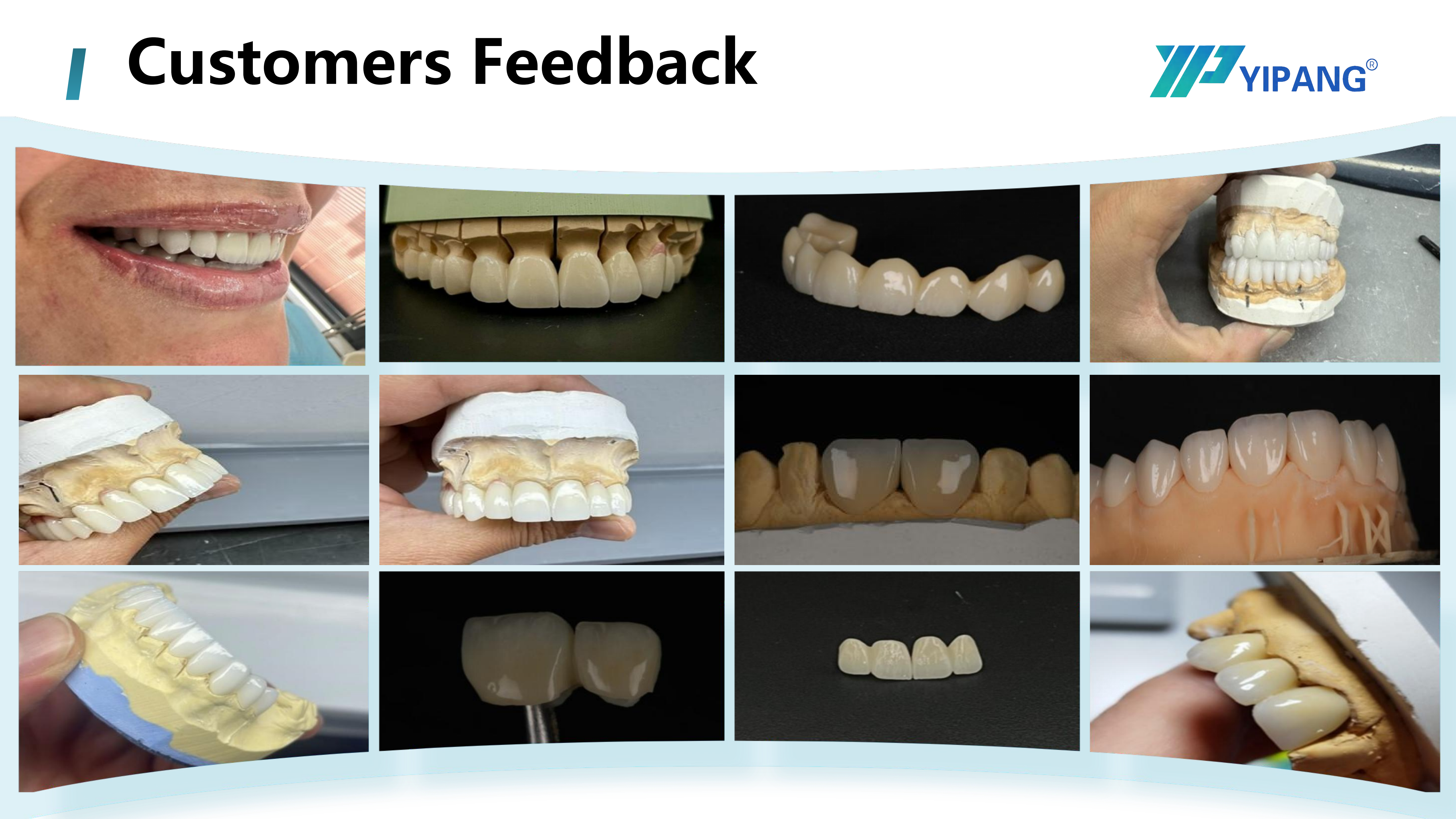
The most useful proof for an OEM decision is what happens after the first year. The 4D-PRO-ML case record describes hundreds of long-term cooperative clients worldwide across dental laboratories, dental clinics and distributors, with cooperation sustained over many years. Two results are recorded: high recognition on material stability and aesthetic effect, and a low customer complaint rate. The stated case highlights are uniform translucency, stable sintering shrinkage, and compatibility with most CAD/CAM systems.
For a lab evaluating a partner, those three highlights map directly onto the three failure modes above. Uniform translucency addresses shade drift in aesthetic work. Stable sintering shrinkage addresses dimensional drift in multi-unit work. CAD/CAM compatibility addresses the cost of switching production to a new block.
Step-by-Step: Onboarding a Private-Label Zirconia Supplier
The following sequence is designed so that each stage produces a decision, not just a document.
- Define the case mix first. List the restoration types the block must carry — multilayer crowns and bridges, aesthetic crown restorations, implant-supported full-arch cases, veneers. The 4D-PRO-ML is specified for full-contour crowns, bridges, veneers and implant superstructure restorations, and this list becomes the acceptance test for the partnership.
- Request the specification sheet and the QC routine. Confirm diameter, thickness range, shade system, sintering temperature and bending strength in writing. Confirm the inspection routine — for YIPANG this is 100% raw material inspection plus finished product random inspection.
- Run a validation batch on your own furnace. Sinter 4D-PRO-ML on your dental sintering furnace using the recommended 1430 °C–1450 °C range, standard heating and holding procedure, and natural cooling. Do not change your normal tray setup, because the purpose is to test the block inside your real process.
- Compare across at least three batches. Record measured shrinkage, marginal fit and shade/value outcome for each batch. Stable sintering shrinkage is only meaningful if it holds across production runs, not across a single sample.
- Lock the private-label parameters. Once the technical baseline holds, define shade, thickness, diameter and packaging under OEM or ODM terms. Because almost all specifications can be customized, this stage is where a lab can align block format with its own case profile instead of adapting cases to a stock format.
- Plan production around real lead times. Schedule the recurring program against a 15–30 working day lead time and a 15,000 piece monthly capacity, and set a reorder trigger that reflects your own case volume.
- Activate the support loop. Agree in advance how a suspected material issue is raised, what trial data is collected, and who responds. YIPANG provides online technical guidance with after-sales problem response within 24 hours, which shortens the time between a drift signal and a correction.
A practical note on furnace discipline. The 4D-PRO-ML material guidance is explicit: keep within the recommended temperature range, follow a standard heating and holding procedure, cool naturally, and avoid rapid temperature change to prevent cracking. Before attributing a result change to the block, confirm that the furnace itself has not changed — thermocouple condition, load density and tray medium all influence the outcome.
Use Cases: Where Batch Consistency Matters Most
Not every lab feels batch drift equally. The scenarios below describe where a stable OEM zirconia supply is most valuable, and where 4D-PRO-ML is specified for use.
Full-Arch and Implant-Supported Restorations
Full-arch work multiplies error. A single-unit deviation can be adjusted at the chair; a deviation repeated across a full arch becomes rework. 4D-PRO-ML is used in full-arch implant restorations and edentulous full-arch restoration cases, and in implant abutment laboratories and edentulous scanbody kit workflows. In this scenario the partnership question is entirely about repeatability, because the case depends on multiple sintered units matching one another.
Multilayer Crown and Bridge Production
Labs producing multilayer crowns and bridges depend on the shade gradient behaving consistently from block to block. Because 4D-PRO-ML is supplied in ML multilayer shades with medium translucency and uniform translucency is a recorded case highlight, a private-label program built on it keeps aesthetic output predictable across a production month.
Mixed-Material and Multi-Material Milling Labs
Labs that mill more than one material need their zirconia to behave distinctively. 4D-PRO-ML is used in multi-material dental milling projects, in PMMA disc and PEEK disc workflows, and in mixed ceramic restoration laboratories, as well as in lithium disilicate glass ceramic laboratories. Compatibility with most mainstream dental milling machines matters here, because the same machine and bur set is being used across materials.
High-Volume Milling Centers
Milling centers absorb inconsistency at scale. 4D-PRO-ML is used in high-volume milling workflows and high-volume sintering workflows, and in dental lab scanner-to-milling workflows. For these labs, monthly capacity of 15,000 pieces and a 15–30 working day lead time are the operational numbers that determine whether a partnership holds during peak periods.
Finishing-Driven Aesthetic Laboratories
Where the final appearance depends on a finishing sequence, the substrate must not compete with it. 4D-PRO-ML is used in glaze paste finishing projects, dental staining glaze workflows, dental milling burs applications, dental lab scanner-to-milling workflows and dental porcelain furnace laboratories. A consistent sintered base keeps the characterisation steps repeatable rather than a per-case correction exercise.
Comparison Table: What to Verify Before Signing an OEM Agreement
The table below lists the verification points that decide whether a private-label zirconia partnership will hold over time, alongside how the 4D-PRO-ML program documents each one.
| Verification point | Why it decides the partnership | How the 4D-PRO-ML program documents it |
|---|---|---|
| Batch-to-batch sintering shrinkage | Shrinkage compensation errors surface as marginal misfit on multi-unit work | Stable sintering shrinkage is a recorded case highlight; low shrinkage after sintering with high dimensional accuracy is a stated product property |
| Translucency consistency | Value and shade drift is visible in anterior and full-arch restorations | Uniform translucency is a recorded case highlight; ML multilayer shades with medium translucency |
| Sintering window | A documented window makes furnace calibration predictable and repeatable | Product parameter lists 1450 °C; material guidance recommends 1430 °C–1450 °C with standard heating and holding |
| Mechanical strength | Bridge and full-arch frameworks need load-bearing capability | Bending strength ≥1200 MPa |
| Machine compatibility | Avoids re-validating toolpaths and bur selection | Compatible with most mainstream dental milling machines; case record notes compatibility with most CAD/CAM systems |
| Supply capacity | Prevents stockouts during case peaks | 15,000 pieces monthly capacity; 15–30 working days lead time |
| Order flexibility | Lets a lab test the material before scaling volume | OEM / ODM production with a negotiable small MOQ and customizable specifications |
| Incoming quality control | Reduces the chance of a defective lot entering production | 100% raw material inspection plus finished product random inspection |
| Technical support | Shortens the path from a drift signal to a correction | Online technical guidance; after-sales problem response within 24 hours |
FAQ
1. What documentation should a lab request when vetting an OEM zirconia block supplier?
A lab should ask for the written specification sheet, the incoming and outgoing inspection routine, the sintering curve guidance, and the technical support terms. For the 4D-PRO-ML, the specification covers 98 mm diameter, thicknesses from 10 mm to 20 mm, ML multilayer shades, a sintering temperature of 1450 °C and a bending strength of ≥1200 MPa; the inspection routine is 100% raw material inspection plus finished product random inspection. Where the finished restoration will be placed on the European market, buyers should also confirm how regulatory responsibility is divided between manufacturer and importer, because EU Medical Device Regulation (MDR 2017/745) classifies most dental implants and restorative materials as high-risk and requires intensive clinical data.
2. How do I choose a dental zirconia block manufacturer for full-arch implant restorations?
Choose on repeatability rather than on grade claims alone. A suitable manufacturer supplies a block specified for full-arch implant restorations and implant superstructure restorations, documents its sintering window, and can show consistent results across batches. The 4D-PRO-ML is used in full-arch implant restorations, edentulous full-arch restoration cases, implant abutment laboratories and edentulous scanbody kit workflows. Its recorded case highlights — uniform translucency, stable sintering shrinkage and compatibility with most CAD/CAM systems — address exactly the three variables that full-arch work multiplies: shade matching, dimensional accuracy and machine compatibility.
3. What sintering temperature and curve should be used with 4D-PRO-ML zirconia blocks?
The recommended sintering temperature range is 1430 °C to 1450 °C, run on a standard heating and holding procedure to support low shrinkage and stable translucency. The operating sequence is: place the milled zirconia workpiece on the sintering tray, set the heating curve up to 1430 °C–1450 °C with the appropriate holding time, then allow the furnace to cool naturally once sintering is complete. Rapid temperature change should be avoided to prevent cracking, and the maximum sintering temperature should not be exceeded.
4. Can a lab start a private-label zirconia program with a small evaluation order?
Yes. YIPANG's MOQ is described as a negotiable small MOQ, and OEM / ODM production supports customization of almost all specifications. That structure allows a lab to validate sintering behaviour across several batches before committing to a recurring program, then scale into 15,000 pieces of monthly capacity as case volume grows. Labs that want to plan an evaluation batch around their own furnace curve and case mix can contact YIPANG to discuss specifications, thickness formats and documentation requirements.
5. What lead time should a lab plan for in an OEM zirconia block program?
Plan around a lead time of 15–30 working days, with a monthly production capacity of 15,000 pieces. The practical planning implication is that a private-label program should not be run as a just-in-time purchase: a lab needs a reorder trigger set against its own case volume, plus a safety buffer sized to the longest realistic production run. YIPANG's export activity covers the USA, Europe, Brazil, the Middle East and North Africa, and after-sales problem response is provided within 24 hours.
Conclusion: Trust Is a Verified Curve, Not a Claim
Building trust in an OEM dental zirconia block partnership is a technical exercise, not a commercial one. A lab verifies a documented specification, tests the block on its own sintering furnace, checks that shrinkage, translucency and dimensional accuracy hold across at least three batches, and only then locks private-label parameters and scales volume. When those steps are completed, the supplier's monthly capacity, lead time and support response become predictable inputs rather than risks.
The 4D-PRO-ML program demonstrates the structure that makes this work: a fixed specification (98 mm diameter, 10–20 mm thicknesses, ML multilayer shades, 1450 °C sintering temperature, ≥1200 MPa bending strength, medium translucency), production controls based on 100% raw material inspection plus finished product random inspection, and a case record built on hundreds of long-term clients where uniform translucency and stable sintering shrinkage are the defining results. For dental labs, milling centers and clinic groups moving from spot purchase to a private-label supply relationship, that is the baseline worth verifying before the first pallet ships.
Next Step: Validate Before You Scale
YIPANG — Beijing Weijiahua Dentistry Equipment Co., Ltd. — supports dental labs, milling centers and distributors with OEM / ODM zirconia block production, customizable 4D-PRO-ML specifications and online technical guidance. To discuss a private-label program, request a quotation, or review specifications and documentation, contact us directly.
Contact: Jaye Yang | Email: service@yipangdental.com | Tel / WhatsApp: +86 158-0156-5064
Website: www.yipangdental.com | WhatsApp: Start a conversation
Company brochure (download): WJH Company Information PDF