
CE Marking Technical Files for Dental Zirconia Blocks: Requirements for Exporting
Short answer: a CE marking technical file for a dental zirconia block is the controlled evidence package the legal manufacturer assembles to demonstrate conformity with Regulation (EU) 2017/745 — device description and intended use, design and manufacturing information, a general safety and performance requirements (GSPR) checklist, verification and validation data, clinical evaluation, risk management, and post-market surveillance. An exporter or an EU importer does not author that file, but cannot keep a block on the EU market without evidence that the file exists, describes the exact block being shipped, and is maintained when the product changes.
For posterior and high-load indications, the intended-use wording and the mechanical evidence inside that file decide whether a laboratory can legitimately mill a multi-unit bridge from a given blank. This guide explains what belongs in the file, how the documentation relates to the material data a supplier publishes, and how exporters and laboratories can keep the paper trail aligned across a long-term supply relationship.
The Problem: The File Exists, but It Does Not Always Describe Your Block
Most sourcing failures in this category are not caused by a missing technical file. They are caused by a file that does not match the commercial reality of the order. The buyer receives a folder of certificates, the shipment clears, and the mismatch only surfaces during an audit, a clinician complaint, or a change of material batch.
Six gaps appear repeatedly when dental laboratories and importers review zirconia block documentation:
- Intended use narrower than the sales conversation. The file covers single crowns and short-span bridges, while the order discussion involves posterior multi-unit work or implant superstructures.
- Sintering instructions that do not match the file. The processing instructions in the technical documentation describe one curve; the laboratory uses another furnace programme, and nobody records which one was validated.
- No documented change control. The batch that was tested is not demonstrably the batch being shipped in year two, especially where powder source, pressing parameters or shade formulation evolve.
- Test reports detached from the product identity. Reports exist, but they are not tied to a specific grade, shade family, thickness or diameter.
- Language and labelling issues. Information supplied to the EU user must be usable in the relevant member state, and labelling must be consistent with the declared device.
- Missing economic-operator chain. For a non-EU manufacturer, the authorised representative details and the importer's verification obligations must be traceable on the documents that travel with the goods.
The practical consequence is commercial: a laboratory that cannot show a coherent document chain to its clinician customers carries the technical risk of a posterior case on its own books, even though the material was bought as CE marked.
Industry Background: Why the Documentation Burden Keeps Growing
Zirconia has moved from an alternative to a default restorative material, and the volume of documentation scales with the volume of units. Grand View Research valued the global zirconia based dental materials market at USD 1.2 billion in 2025, with a projected value of USD 2.3 billion by 2033.
Within that market, the format mix explains why blank-level documentation matters so much. Zirconia discs held the largest revenue share at 63.1% in 2025, and CAD/CAM milling accounted for 82.4% of zirconia dental manufacturing process revenue in the same year. Dental laboratories remain the dominant end user at 45.3% of market share in 2025 — meaning most zirconia reaches a patient through a milling centre whose process parameters, not the manufacturer's factory, determine the final restoration.
Material grade concentration adds a second layer. The 3Y-TZP grade held the largest revenue share of 35.9% in the zirconia dental market in 2025, and the U.S. accounted for 40% of zirconia based dental materials revenue. A single grade family therefore supports a very wide range of marketed indications, which is precisely where intended-use discipline becomes decisive.
Regulation (EU) 2017/745 sets the frame. The European Commission notes that the MDR classifies most dental implants and restorative materials as high-risk, requiring intensive clinical data. That classification logic is the reason a zirconia block destined for posterior and implant-supported work cannot be supported by bench testing alone; the manufacturer must assemble clinical evaluation, risk management and post-market surveillance in addition to physical, chemical and mechanical verification.

What Belongs in the Technical File for a Zirconia Block
The structure below follows the documentation logic of the MDR. The exact depth required depends on the device classification, the conformity assessment route and the expectations of the notified body, so the list should be read as the working skeleton that a manufacturer, importer and laboratory can all reference.
1. Device description and intended use
The file must state what the block is, what it is made of, which formats and shades are covered, and — critically — which restorations it is indicated for. For a zirconia block, this section normally carries the material composition, the grade designation, the available dimensions, and the processing route (milling, sintering, optional staining and glazing). A block offered in ML multilayer shades, 98 mm diameter and 10 mm, 12 mm, 14 mm, 16 mm, 18 mm or 20 mm thickness should have all of those variants inside the declared device scope, not appended as an afterthought.
2. Design and manufacturing information
This section describes how the block is produced and how that production is controlled. For a zirconia blank, relevant content includes powder source and specification, pressing or compaction parameters, pre-sintering conditions, density control, and the inspection points that generate batch records. A supplier working from its own zirconia powder formulation can describe batch consistency from the powder stage onward; a supplier working from purchased blanks can describe only downstream control. Both are legitimate, but the buyer should know which one applies.
3. Verification and validation data
This is where the laboratory's questions are usually answered. Expect physical and chemical characterisation, mechanical testing including bending or flexural strength, density and shrinkage characterisation, hydrothermal or ageing assessment, and — where relevant — biocompatibility documentation. For a blank, shrinkage behaviour deserves particular attention because it links the digital design to the seated restoration. Published shrinkage stability of within ±0.3% is the kind of parameter that lets a laboratory hold a milling strategy across batches.
4. Clinical evaluation and the posterior high-load question
Bench strength does not by itself establish clinical suitability for posterior multi-unit work. The clinical evaluation section connects the material data to the indications the manufacturer claims, supported by the post-market clinical follow-up plan. Where the MDR treats most dental implants and restorative materials as high-risk with intensive clinical data requirements, this section is normally the longest to compile and the slowest to update — which is exactly why change control discipline matters to a long-term buyer.
5. Risk management and post-market surveillance
Risk management for a zirconia block focuses on the failure modes the laboratory can actually trigger: improper sintering profiles, contamination before sintering, inadequate connector dimensions, and cementation or occlusal thickness errors. A credible file names these and states the mitigation, including the instruction to scrap chipped or cracked blanks rather than attempt a repair. Post-market surveillance then collects field evidence, including complaints and returns, and feeds it back into the technical documentation.
Documents to request before the first pallet ships:
- Current EU Declaration of Conformity and the certificate scope that supports it
- Intended-use statement covering the specific indications the laboratory will mill
- Processing instructions, including the validated sintering curve and any shading or glazing steps
- Material data sheet covering strength, translucency, density and shrinkage for the purchased shade and thickness
- Batch or lot identification method and the traceability record format
- Authorised representative details and importer verification requirements for non-EU manufacturers
Evidence for High-Load Posterior Applications Under Dental Device Rules
Posterior restorations concentrate occlusal load, reduce the material thickness available at the connector, and leave less tolerance for fit error. Under dental device rules, the manufacturer has to demonstrate that the claimed indication is supported. In practice, four evidence groups carry the argument.
- Strength reserve. Bending strength is the headline number, and for the 4D-PRO-ML dental zirconia block the published specification lists a bending strength of ≥1200 MPa, based on yttria-stabilized zirconium dioxide (ZrO₂).
- Process reproducibility. A strength value is only transferable to the laboratory if the sintering route is fixed. The recommended sintering temperature range for 4D-PRO-ML is 1430 °C–1450 °C, with the block specification listing 1450 °C, and the heating and holding procedure must be followed to maintain low shrinkage and stable translucency.
- Fit and dimensional stability. Shrinkage behaviour determines marginal adaptation after sintering. A stable sintering shrinkage error within ±0.3% supports consistent fit across production runs and is the parameter that most directly protects posterior multi-unit cases.
- Aesthetic trade-off documentation. Posterior work still has an aesthetic dimension. Medium translucency in the ML multilayer format means the material is positioned for strength-led indications, and the file should say so rather than imply universal aesthetic equivalence.
These figures are material inputs, not a substitute for the technical file. A supplier that publishes strength, sintering range and shrinkage stability is giving the laboratory the data it needs to validate a process; the legal manufacturer's file must still connect those figures to clinical evaluation, risk management and post-market evidence, because the MDR treats most restorative dental materials as high-risk devices requiring intensive clinical data.
Step-by-Step: Building and Maintaining the File as an Exporter or Supplier
The sequence below is written from the position of a manufacturer or export-facing supplier that has to hand a coherent documentation pack to distributors and laboratories, year after year.
- Freeze the device description before writing claims. Define the block by composition, grade, shade system, diameter and thickness range first. Every later document references that definition. Adding a thickness or a shade family later is a change, not a catalogue update.
- Map each commercial claim to a test report. Take the phrases used in brochures and answer one question per phrase: which report, covering which variant, supports this sentence? Claims that cannot be mapped are removed, not softened.
- Lock the processing instructions and test them in a real workflow. Publish the sintering range and holding profile that the validation used. For 4D-PRO-ML, that range is 1430 °C–1450 °C, and the instruction explicitly warns against rapid temperature change to prevent cracking.
- Build the GSPR checklist with cross-references. Each applicable requirement should point to the section, test or risk control that satisfies it. This is the document a notified body reviewer reads first, and a cross-referenced checklist shortens every future audit.
- Assemble clinical evaluation and post-market follow-up. Connect the mechanical data to the claimed indications, and define how field data — complaints, returns, sintering failures — is collected and reviewed.
- Install change control and batch traceability. Any change in powder source, pressing parameters, shade formulation or pre-sintering condition should trigger a documented impact assessment. Traceability must allow a shipped box to be linked back to its production batch.
- Prepare the per-shipment export pack. Each order should travel with the current Declaration of Conformity reference, labelling consistent with the declared device, usable-language instructions, and the economic-operator chain for non-EU origin. Distributors should be able to re-verify the pack without asking the factory for new documents each time.
Use Cases: Where the Technical File Decides the Outcome
An EU distributor onboarding a new block supplier
The distributor must verify CE marking, the Declaration of Conformity, labelling and the manufacturer's authorised representative before placing the device on the market. A supplier that can deliver the pack in one pass shortens onboarding measurably; a supplier that sends certificates without intended-use scope creates a review loop that can run for weeks.
A laboratory answering clinician questions on posterior multi-unit work
When a clinician asks whether a posterior bridge can be milled from a specific blank, the laboratory's answer depends on the intended-use statement and the strength and shrinkage data behind it. A block with published bending strength of ≥1200 MPa, a defined sintering window of 1430 °C–1450 °C and shrinkage stability within ±0.3% gives the laboratory a defensible position — provided the same parameters are the ones actually used in production.
Private-label and OEM block sourcing
Where a distributor sells under its own label, the technical file has to reflect the actual manufacturer and the actual device. Customization changes the device scope, and the documentation must follow. Suppliers that offer flexible customization should be able to state, in writing, which parts of the file change and which do not.
Surveillance year and material changes
In a surveillance audit, the reviewer samples: batch records, change history, complaint handling and post-market review. A long-term buyer benefits when the supplier's documentation rhythm is predictable, because the buyer's own quality system depends on receiving updated documents before, not after, a change reaches the market.
Comparison Table: Technical File Element by Element
| Technical file element | What the MDR framework expects | Verified reference point for a dental zirconia block (YIPANG 4D-PRO-ML) |
|---|---|---|
| Device description and intended use | Composition, grade, formats, shades and claimed indications stated as one declared scope | Yttria-stabilized zirconium dioxide (ZrO₂); ML multilayer shades; 98 mm diameter; thickness 10 mm, 12 mm, 14 mm, 16 mm, 18 mm, 20 mm |
| Design and manufacturing information | Powder specification, forming and pre-sintering control, inspection points | Produced from Sinocera powder with stable batch consistency and stable shade consistency |
| Mechanical verification | Strength data tied to the specific grade and format | Bending strength ≥1200 MPa; medium translucency |
| Processing instructions | Validated sintering and finishing parameters, with safety limits | Recommended sintering range 1430 °C–1450 °C (specification lists 1450 °C); avoid rapid temperature change to prevent cracking |
| Dimensional stability | Shrinkage behaviour documented for fit-critical indications | Stable sintering shrinkage error within ±0.3% |
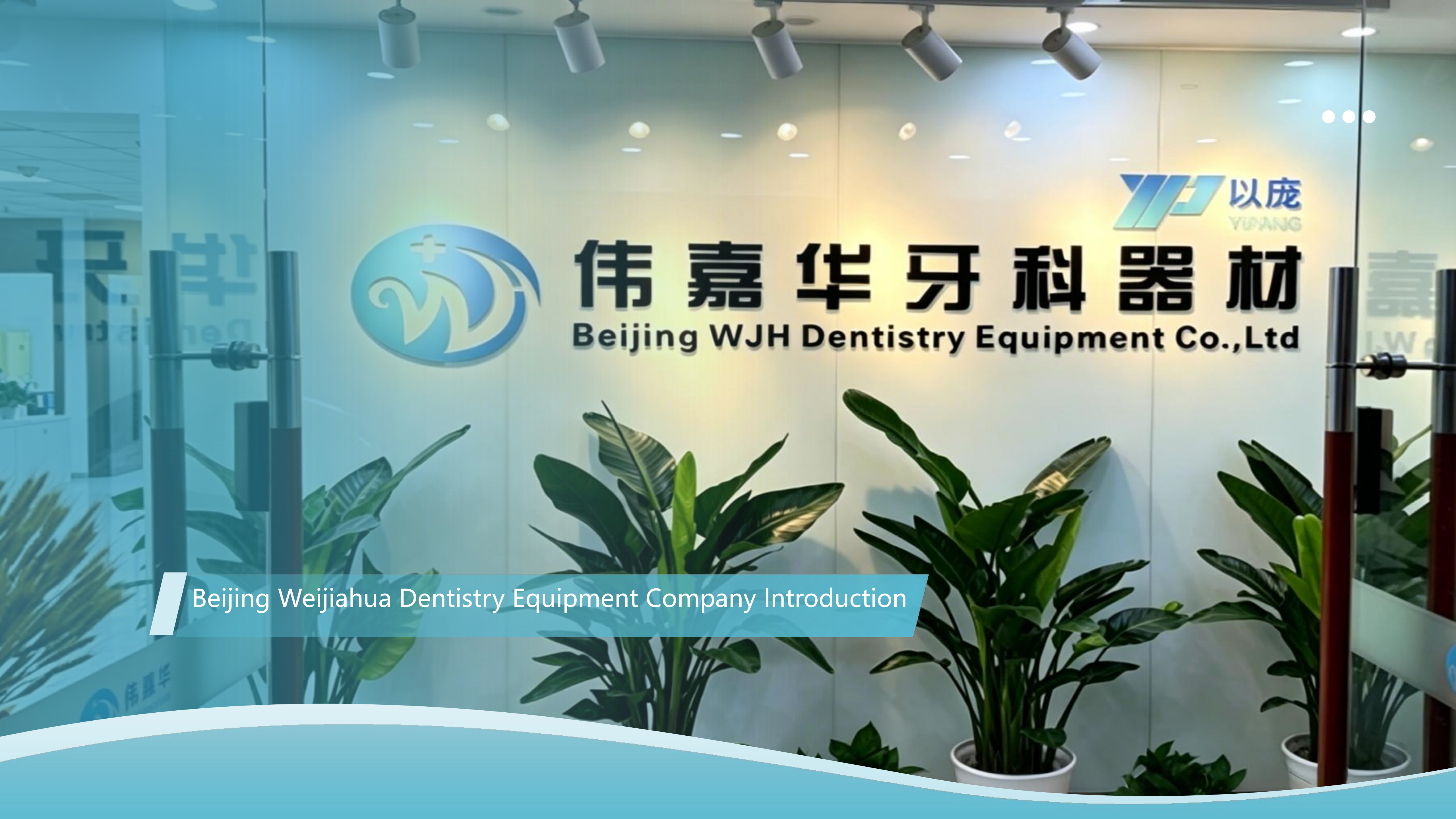
| Economic-operator chain | Manufacturer, authorised representative and importer responsibilities traceable | Manufacturer: Beijing Weijiahua Dentistry Equipment Co., Ltd., established 1996, exporting 40%–55% of output to markets including North America, Eastern Europe and Australia |
The table is a reference, not a claim of certification. YIPANG publishes the material and process parameters listed above for the 4D-PRO-ML block; the legal manufacturer's technical file must additionally contain the GSPR checklist, clinical evaluation, risk management file and post-market surveillance plan that a notified body reviews.
FAQ
Does a CE mark mean the technical file has been approved by an EU authority?
No. CE marking is the manufacturer's declaration of conformity, supported by a conformity assessment carried out through the applicable route and by technical documentation that is retained and made available to the notified body and competent authorities on request. Under Regulation (EU) 2017/745, most dental implants and restorative materials are treated as high-risk and require intensive clinical data. For a laboratory or importer, the practical check is that the Declaration of Conformity, the intended-use statement and the device labelling all describe the same device.
What material data supports high-load posterior indications for a zirconia block?
For the 4D-PRO-ML dental zirconia block, the published data set includes a bending strength of ≥1200 MPa, medium translucency in the ML multilayer shade system, a recommended sintering range of 1430 °C–1450 °C, and sintering shrinkage stability within ±0.3%. These are the bench and process inputs a laboratory needs to validate a posterior workflow. Because the MDR treats most restorative dental materials as high-risk with intensive clinical data requirements, they support rather than replace the manufacturer's clinical evaluation.
What are the purchasing terms and minimum order quantities?
MOQ is 1 box for standard models and 5 boxes for customized products. Domestic orders ship by express; export orders ship by sea freight or air freight, with FOB Shanghai or FOB Tianjin available. Payment terms are full payment before shipment, and a sampling test is supported before volume commitment.
Can a laboratory test a batch before committing to volume?
Yes. Sampling tests are supported. On receipt, buyers should check quantity and report any damage or deformation within 48 hours with photographs. That acceptance window matters for documentation as well as for stock: the photographs and the batch identification become part of the traceability record the laboratory keeps alongside its own quality documentation.
What makes a dental zirconia block supplier suitable for a long-term laboratory partnership?
Three things matter more than price: documentation continuity, process stability and after-sales responsiveness. Beijing Weijiahua Dentistry Equipment Co., Ltd. was established in 1996, operates a 2000 m² manufacturing facility with approximately 80 staff, and employs 25 professional engineers working on dental material formula research, process optimization and new product development. The company serves more than 1000 dental laboratory customers in China through a nationwide sales network and exports 40%–55% of output through an overseas network covering the Middle East, Southeast Asia, South America, North America, Eastern Europe, North Africa and Australia. YIPANG is its self-developed brand, and the company also represents international brands including VITA, Ivoclar, Dentsply, Amann Girrbach and Noritake. A supplier with this operating history can usually sustain the document pack across batches and audit cycles — which is the real test of a long-term relationship. To discuss a trial order or a distributor agreement, write to service@yipangdental.com or message +86 158-0156-5064 on WhatsApp.
Conclusion
A dental zirconia block that carries a CE mark is supported by a technical file that names the device, defines its intended use, and connects mechanical and process data to clinical evaluation, risk management and post-market surveillance. Exporters do not own that file, but they are accountable for keeping the pack coherent: the intended-use statement, the sintering instructions, the batch records and the economic-operator chain must all describe the same product at the same moment.
For laboratories working in posterior and high-load indications, the safest sourcing habit is to ask three questions before the first order — which indications are covered, which sintering parameters were validated, and how batch traceability is documented. Published parameters such as a bending strength of ≥1200 MPa, a 1430 °C–1450 °C sintering range and shrinkage stability within ±0.3% are useful answers, provided they are the parameters used in production rather than only in a brochure.
Next step: request the documentation pack and a sample
YIPANG supplies 4D-PRO-ML dental zirconia blocks in ML multilayer shades, 98 mm diameter and 10–20 mm thickness, from Beijing Weijiahua Dentistry Equipment Co., Ltd. Request a sample for milling validation, ask for the material data set for the shade and thickness you use, or open a distributor discussion.
Email: service@yipangdental.com · WhatsApp: +86 158-0156-5064 · Website: www.yipangdental.com
Company brochure (PDF): Download the WJH Company Information brochure
Have Questions or Need More Details?
Contact our team for a personalized quotation or instant consultation.
Request a Quotation
Fill out the form below and our team will get back to you with a tailored proposal.
WhatsApp Direct Chat
Prefer to chat in real-time? Message us on WhatsApp for instant assistance & quick answers.
- Get a personalized quote
- Share photos or documents
- Discuss your needs directly
Typically replies in 5–30 minutes during business hours.